Inspiration
SafeSend was inspired by the idea of making digital payments safer and helping people avoid common mistakes while transferring money. Sending money to the wrong person, falling for number-related errors, or facing difficulties recovering a payment can be stressful. We wanted to build a solution that not only helps prevent these mistakes but also provides users with a clear way to respond when something goes wrong.
What it does
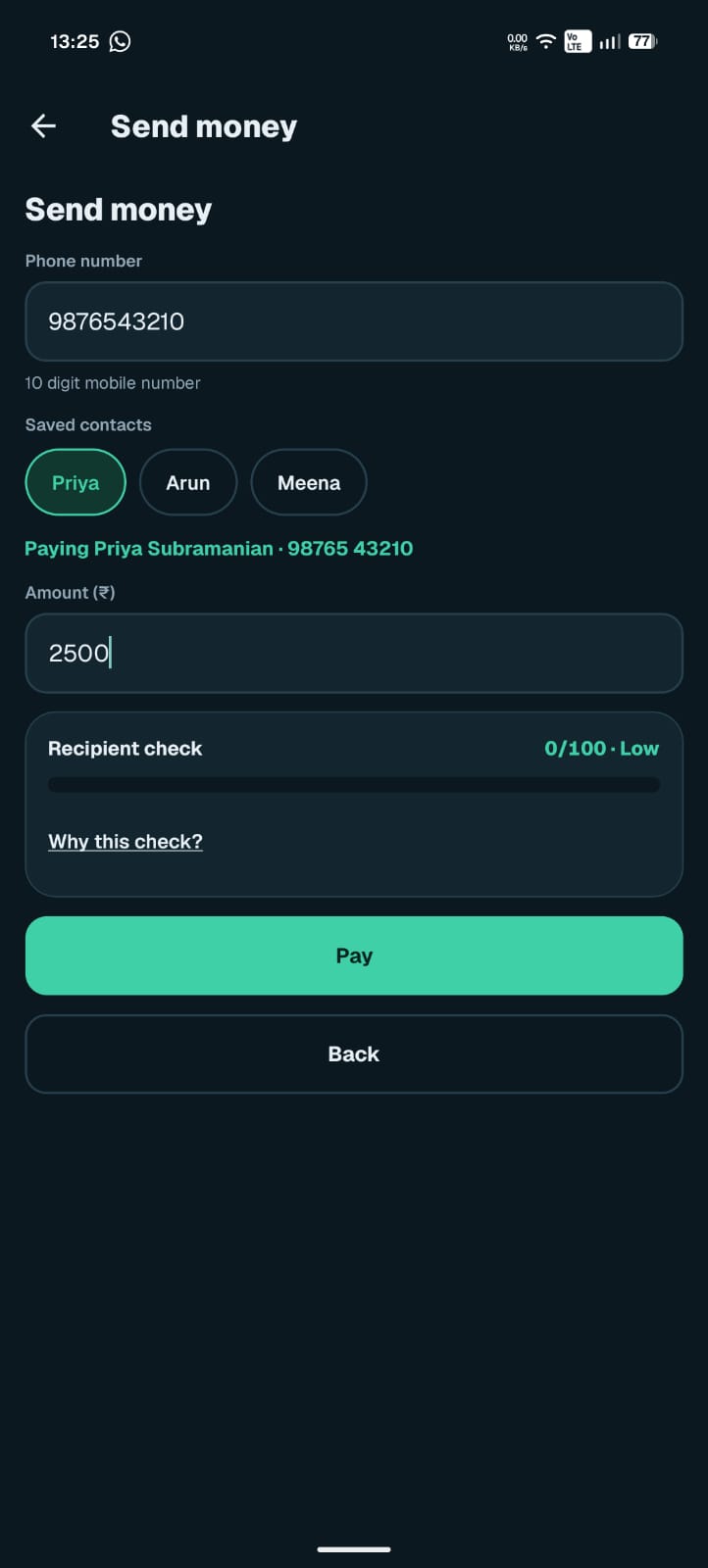
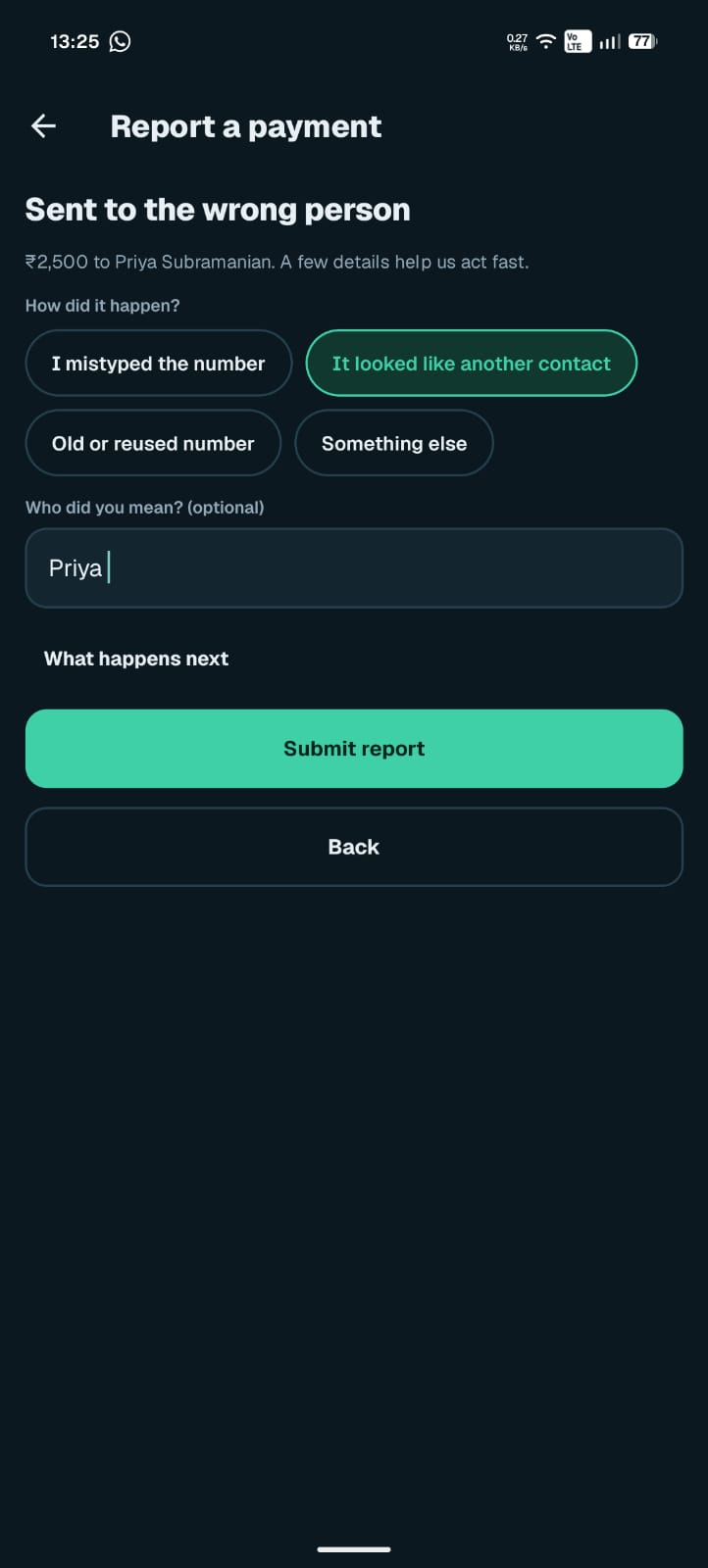
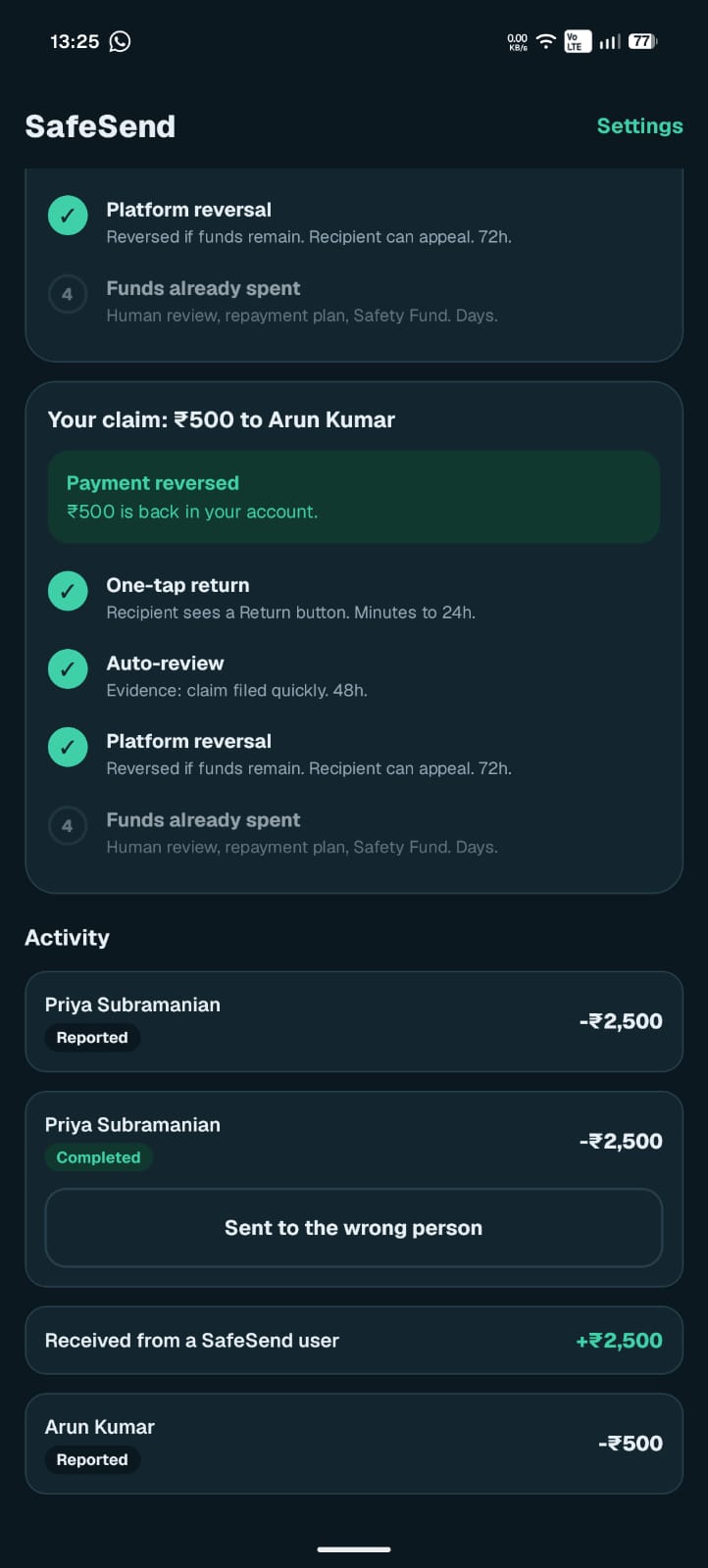
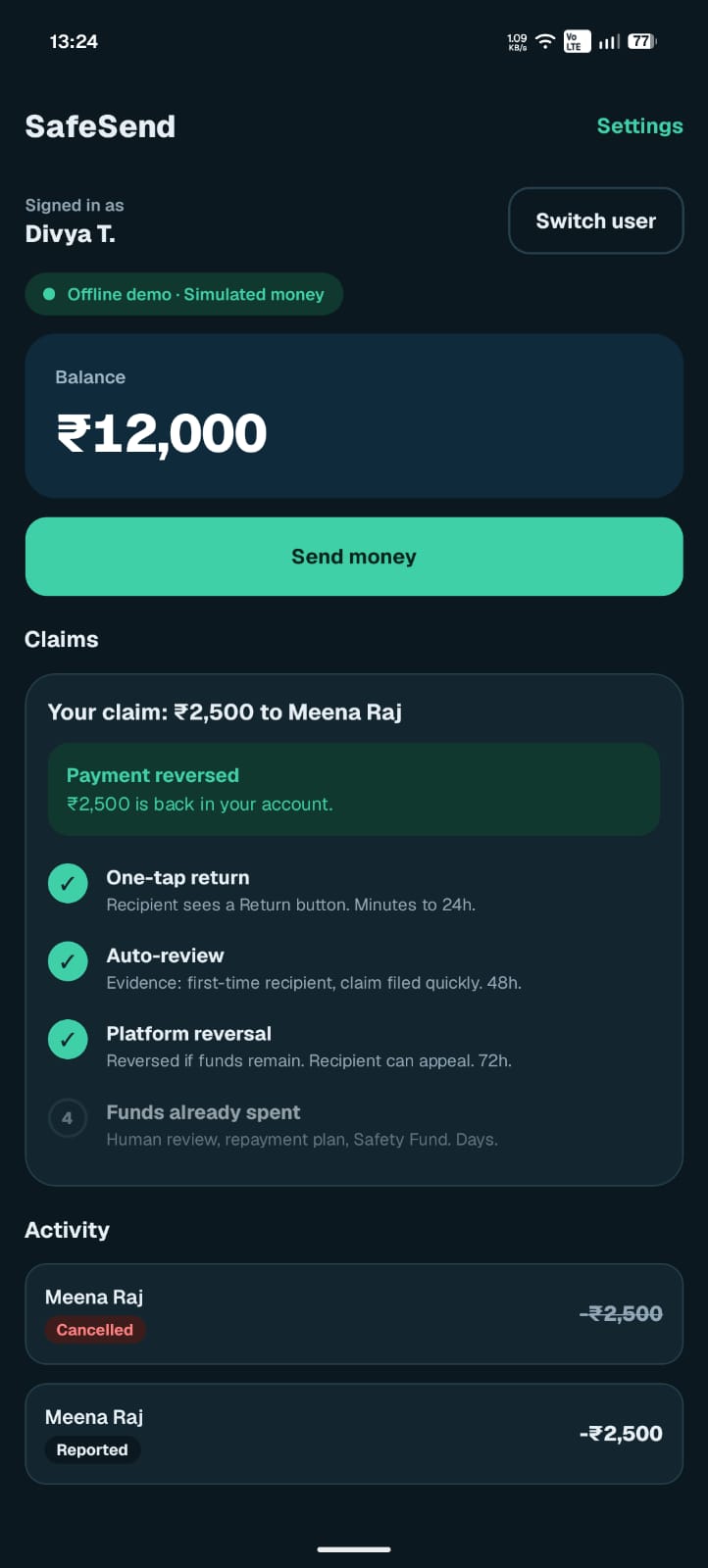
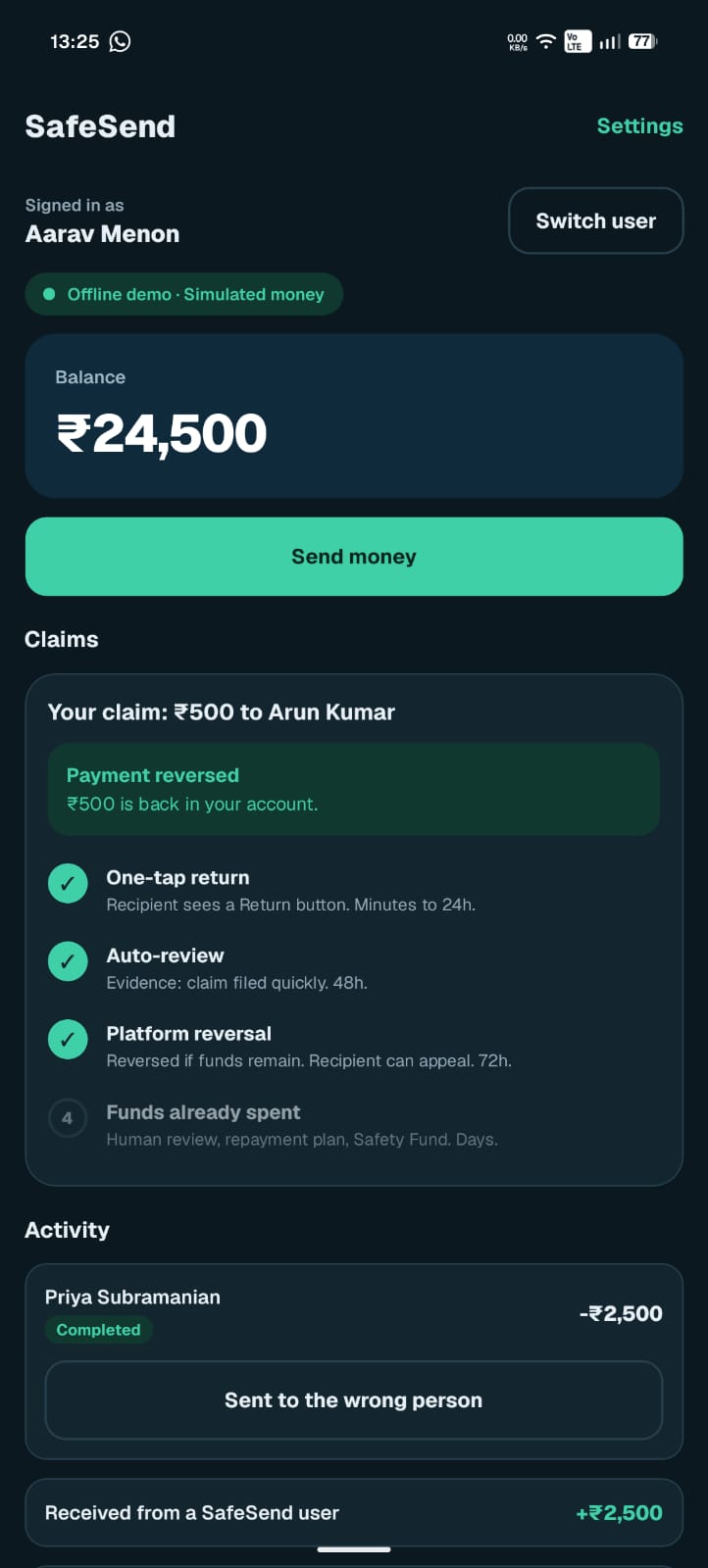
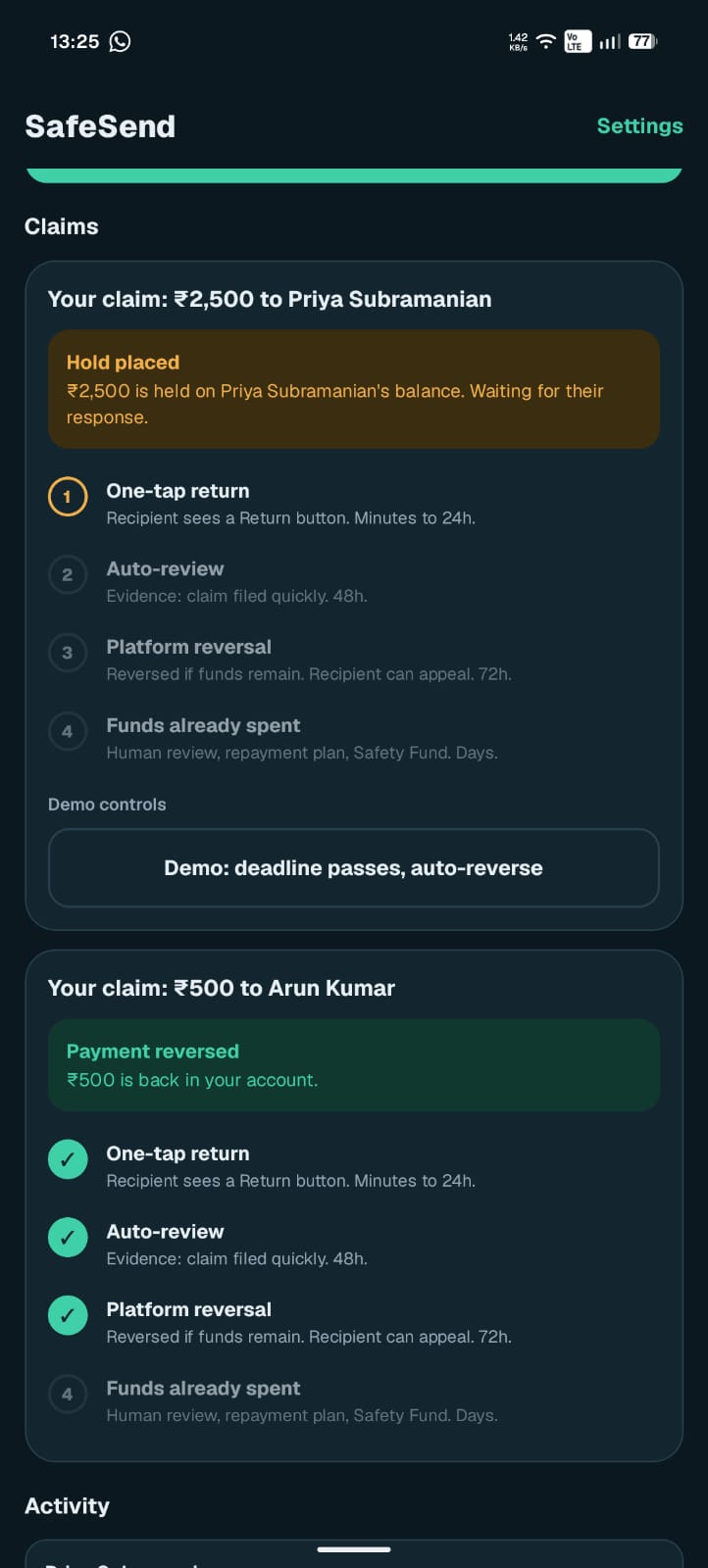
SafeSend is a mobile payment safety application designed to make money transfers more secure and reliable. Smart Risk Checks: Identifies potentially risky transactions before they are completed. Look-alike Number Detection: Warns users when the entered phone number closely resembles a saved contact's number. Reused Number Alerts: Notifies users when a phone number has recently changed ownership. Safe First-time Payments: Offers a small initial payment option for large transfers to new recipients. Payment Undo and Cancellation: Provides a 30-second window to cancel a payment. Wrong Payment Recovery: Allows users to report incorrect transfers and track the recovery process. Recipient Response: Supports returning money, submitting appeals with proof, and handling already-spent payments. Live Updates: Keeps payment statuses synchronized across devices and provides updates when connectivity is restored.
How we built it
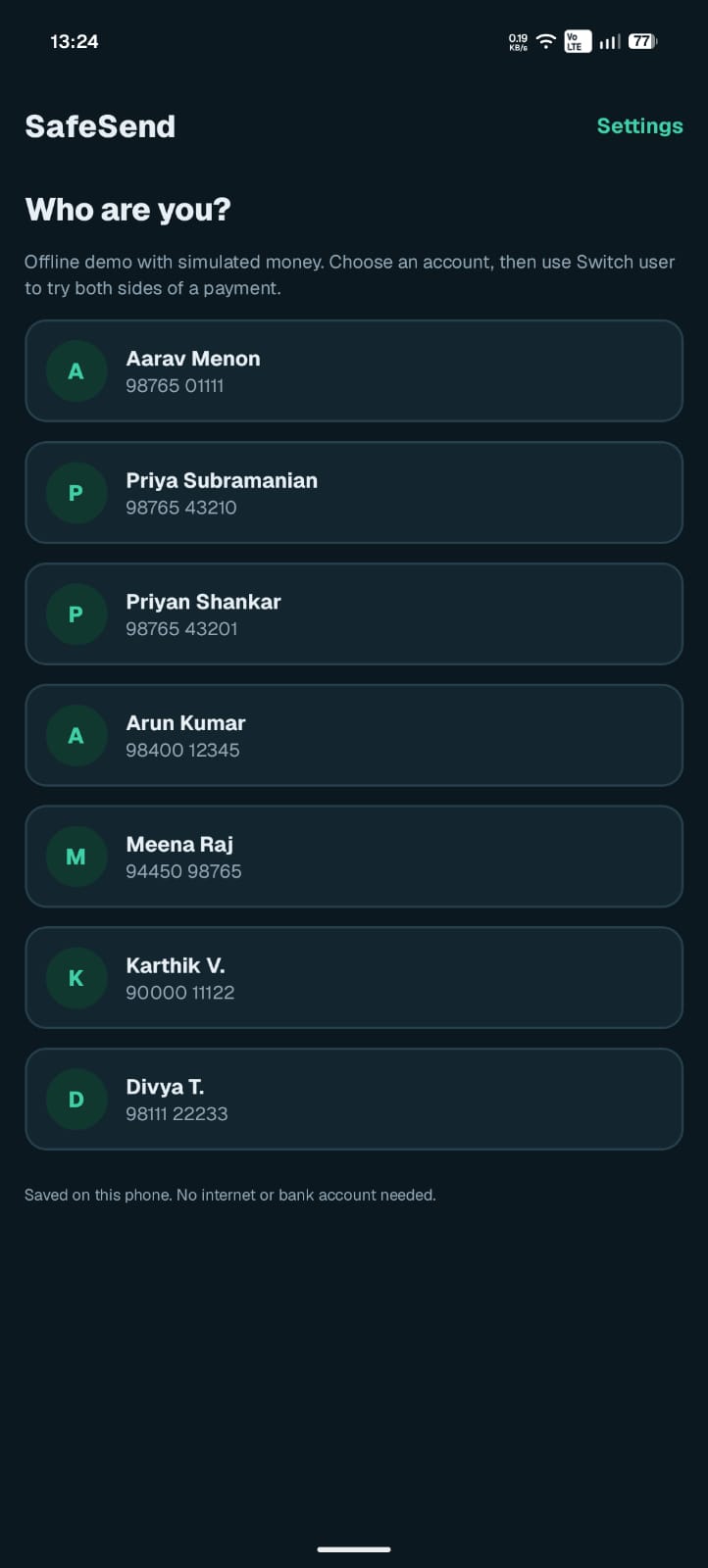
We built SafeSend as a mobile application using Expo, React Native, and TypeScript, connected to a backend powered by Node.js. The mobile application handles the user interface, payment interactions, settings, and status tracking, while the backend manages payment data and risk checks. We used: Expo & React Native – For cross-platform mobile app development. TypeScript – For structured and maintainable code. Node.js – For backend services and API handling. Server-Sent Events (SSE) – For receiving live payment updates. Polling Fallback – To keep data synchronized when the live connection is interrupted. We also implemented configurable server connections to support Android emulators, iOS simulators, and real mobile devices.
Challenges we ran into
One of our biggest challenges was establishing reliable backend connectivity across different environments. Android emulators, iOS simulators, and physical phones require different server addresses. We addressed this by implementing platform-specific default addresses and allowing users to configure their server address through the app settings. Another challenge was maintaining consistent payment updates when the live connection was interrupted. We implemented automatic reconnection and a polling fallback that checks for updates every three seconds. Designing a clear payment recovery flow was also challenging because different situations require different responses from senders and recipients.
Accomplishments that we're proud of
Successfully developed a functional cross-platform mobile application. Implemented risk-based payment checks to help prevent common transfer mistakes. Built a 30-second payment cancellation mechanism. Developed a multi-step wrong-payment reporting and recovery workflow. Enabled live synchronization of payment updates across multiple devices. Implemented automatic reconnection and offline status handling. Created a system that considers both sender and recipient experiences during payment recovery. We are especially proud of building SafeSend beyond a basic payment interface by focusing on payment safety, transparency, and recovery.
What we learned
Through SafeSend, we learned that building a reliable payment experience involves much more than simply transferring money.
We gained practical experience in: Cross-platform mobile application development using React Native and Expo. Connecting mobile applications with backend APIs. Managing real-time communication using Server-Sent Events. Handling network interruptions and implementing fallback synchronization. Designing risk-checking and payment recovery workflows. Managing application state and maintaining consistent data across multiple devices. Most importantly, we learned that clear communication, reliable connections, and recovery options are essential when building applications that deal with people's money.
What's next for SafeSend
We aim to make SafeSend more robust, scalable, and accessible by exploring the following improvements:
Enhanced Risk Detection: Improve risk identification using more advanced fraud-detection techniques. Secure Backend Deployment: Deploy the backend with HTTPS and reliable cloud infrastructure. Improved Authentication: Introduce stronger user authentication and security mechanisms. Transaction History: Provide detailed transaction records and recovery history. Better Accessibility: Improve the experience for users with different accessibility needs. Real Payment Integration: Explore integration with secure payment systems and UPI-based payment workflows. Scalability: Prepare the application to support more users and higher transaction volumes. Our long-term vision is to make SafeSend a trusted payment safety companion that helps users send money confidently and provides a reliable recovery path when things go wrong.
Built With
- android
- ios
- javascript
- native
- node.js
- react
- rest-api
- server-sent-events(sse)
- typescript
