-
-
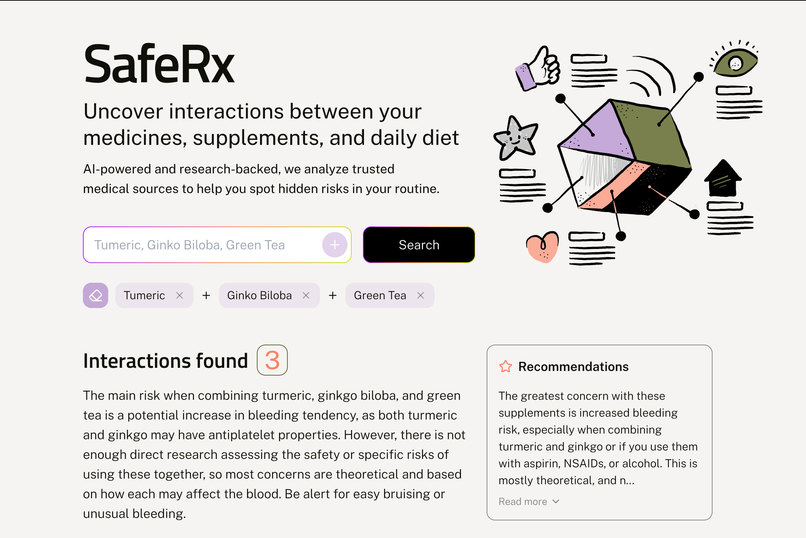
SafeRx Website - 1
-
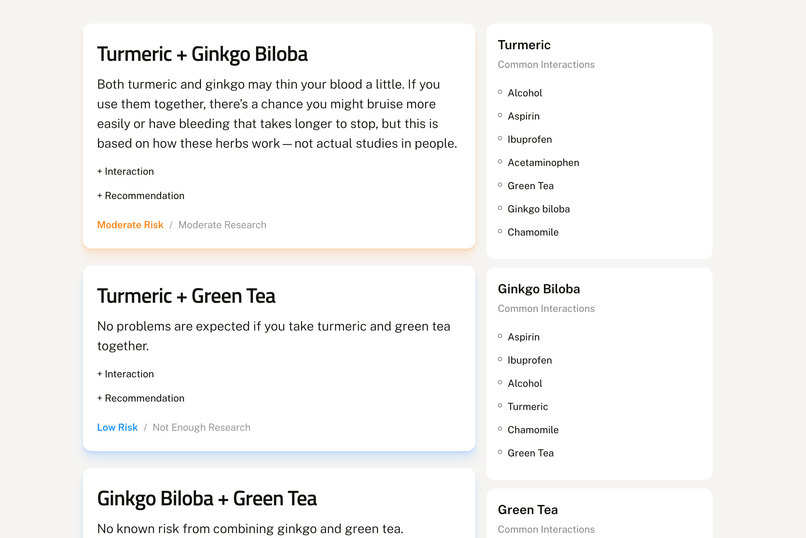
SafeRx Website - 2
-
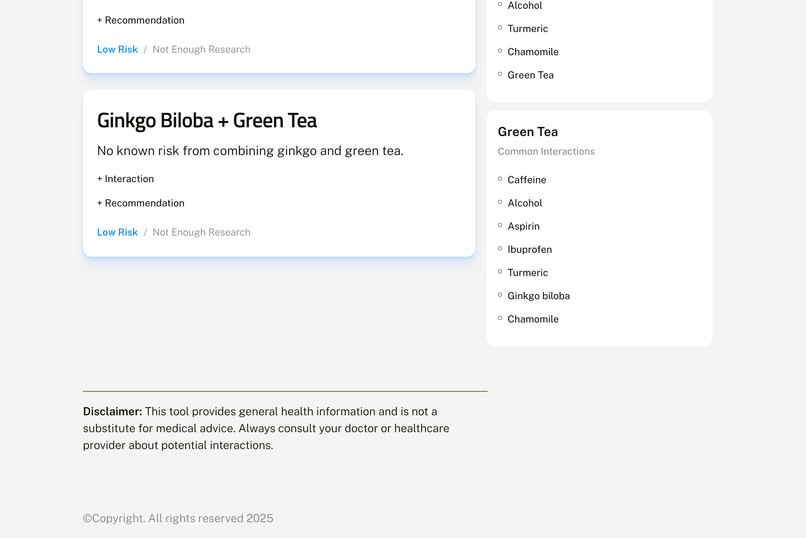
SafeRx Website - 3
SafeRx started from a personal journey of mine. For years, I struggled with chronic pain and, like many others in a similar situation, I found myself trying an endless array of medications, supplements, and natural remedies in hopes of finding some relief. Each time I wanted to explore something new, it felt like a grind, researching potential interactions and asking myself a million questions: What if this supplement interferes with my medications? Can I drink coffee with this? Could anything I try actually make my condition worse? With so much information scattered across forums, medical journals, and health websites, it was overwhelming and time-consuming. I was constantly worried about missing something crucial.
What It Does
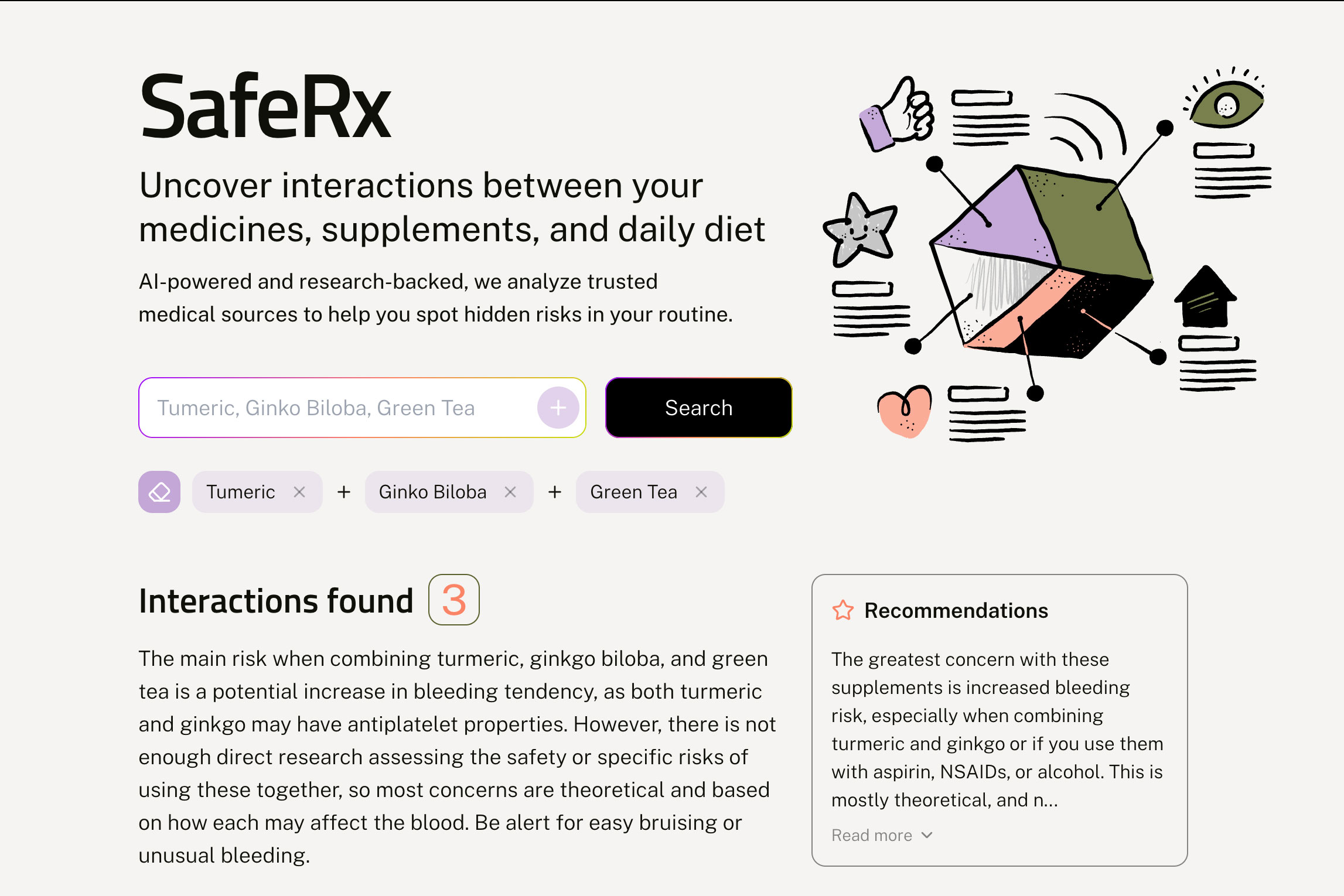
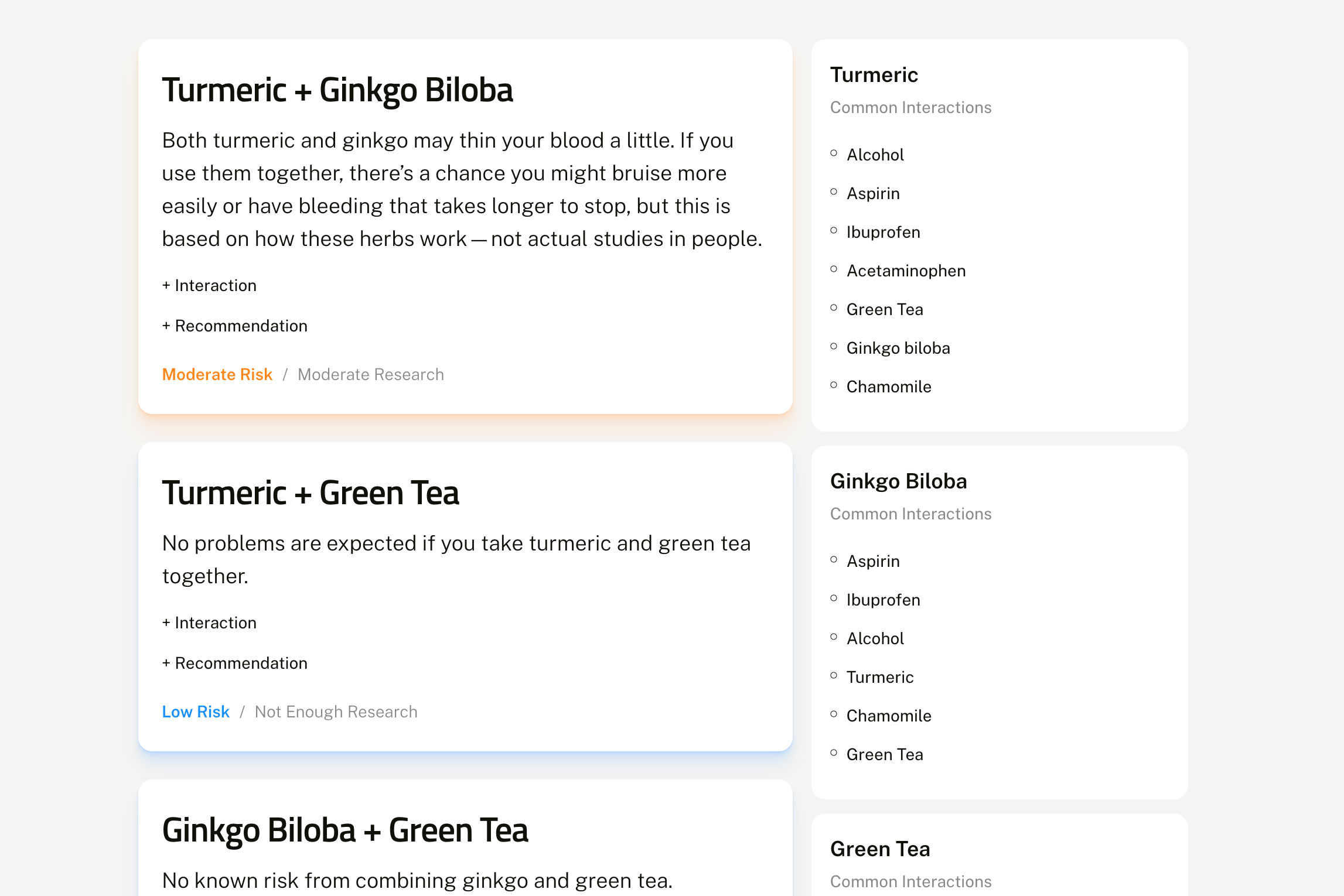
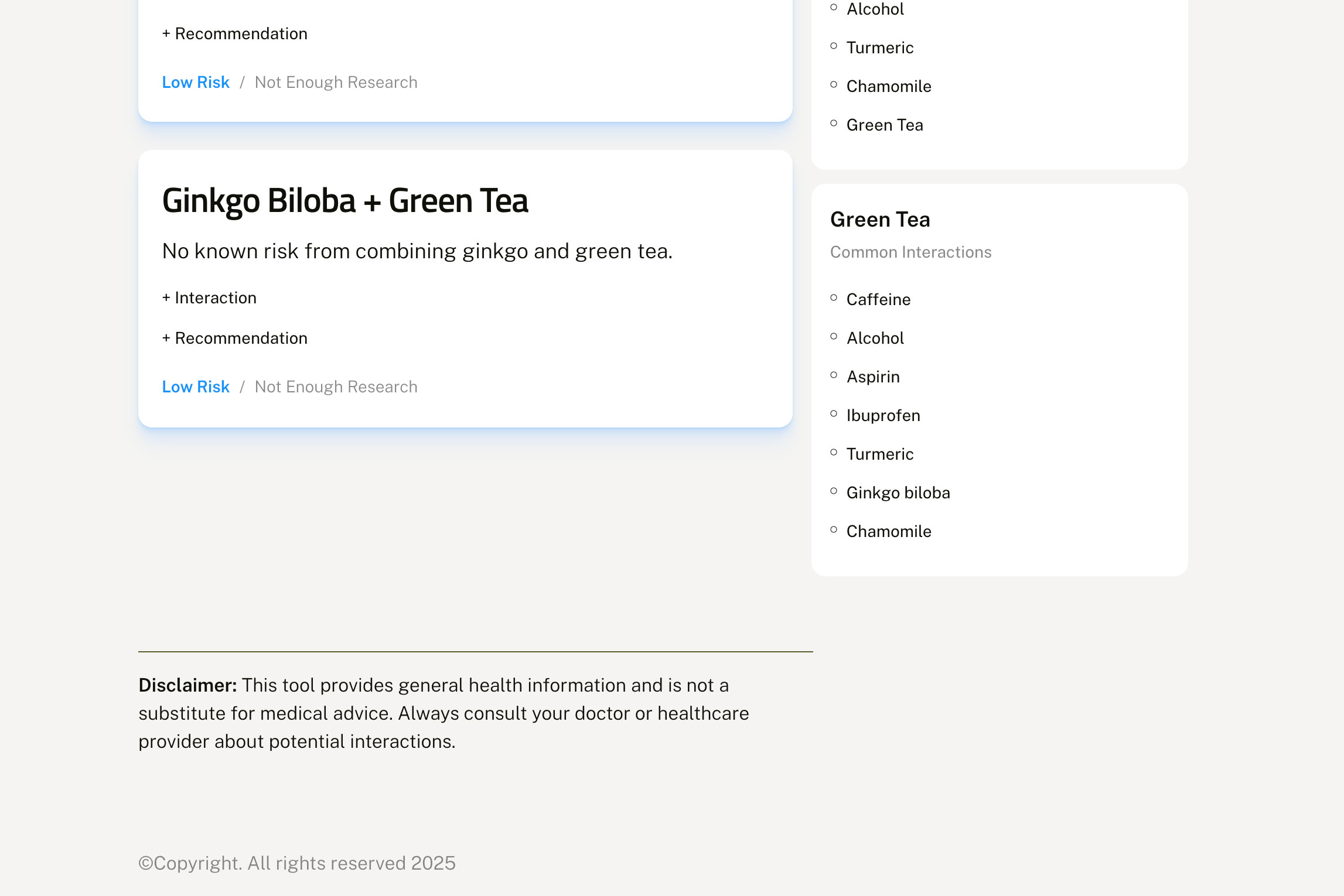
SafeRx is here to help you quickly check for potential interactions between your medications, supplements, and even common foods. All you have to do is enter what you’re taking, and SafeRx will: - Analyze trusted medical sources like PubMed, Mayo Clinic, and Drugs.com - Highlight any potential risks, whether minor or severe - Provide easy-to-understand summaries and practical advice - Include citations so you can verify the information yourself. The primary goal is simple: to make checking for interactions fast, reliable, and straightforward, so you can make informed choices with confidence.
How It Was Built
For the frontend, I chose Next.js and hosted it on Vercel. The app features a clean, accessible design, complete with color-coded risk levels that help users grasp results quickly. On the backend, the interaction logic is embedded in Next.js API routes, allowing for seamless real-time prompts and responses. I integrated Perplexity’s Sonar Pro API for the AI engine because it consistently provided accurate citations and formatted responses well. It focuses solely on trustworthy sources and presents the information in a clear and organized way. The UI/UX is designed for people like me who want straightforward information without any complicated jargon. Each card displays the risk level, explains it, and links to actual studies for reference.
What I Learned
Working with language models has proven to be incredibly helpful for research, especially when you provide clear guidelines. Crafting a good prompt is a thoughtful and iterative process, and I spent a significant amount of time refining it.
Challenges
I encountered several challenges, such as steering clear of fabricated or unverified sources and ensuring that the responses remained consistent and medically sound. It was also crucial to communicate medical risks clearly without overwhelming users. Developing the UX took a lot of time, from the prompt structure to the interface, because making sure the information was presented clearly was essential.
What’s Next
I have plans for an account system so users can save and organize their previous searches. I’m also considering adding a feature to export searches to PDF for easy sharing.
Built With
- nextjs
- sonar
- tailwind
- vercel

Log in or sign up for Devpost to join the conversation.