-
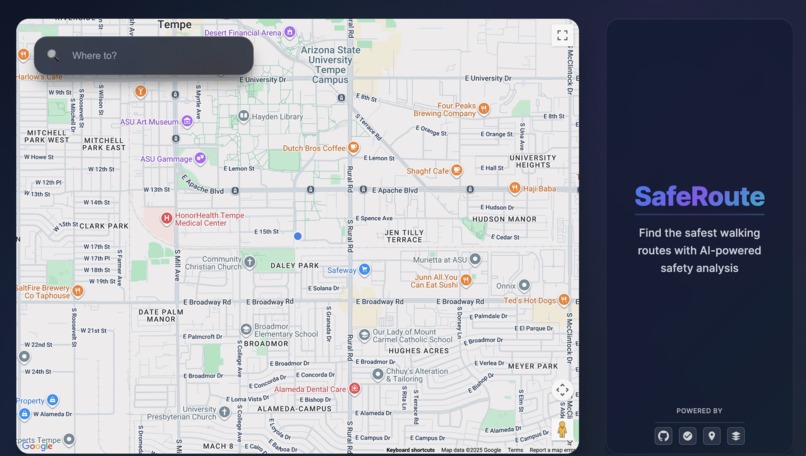
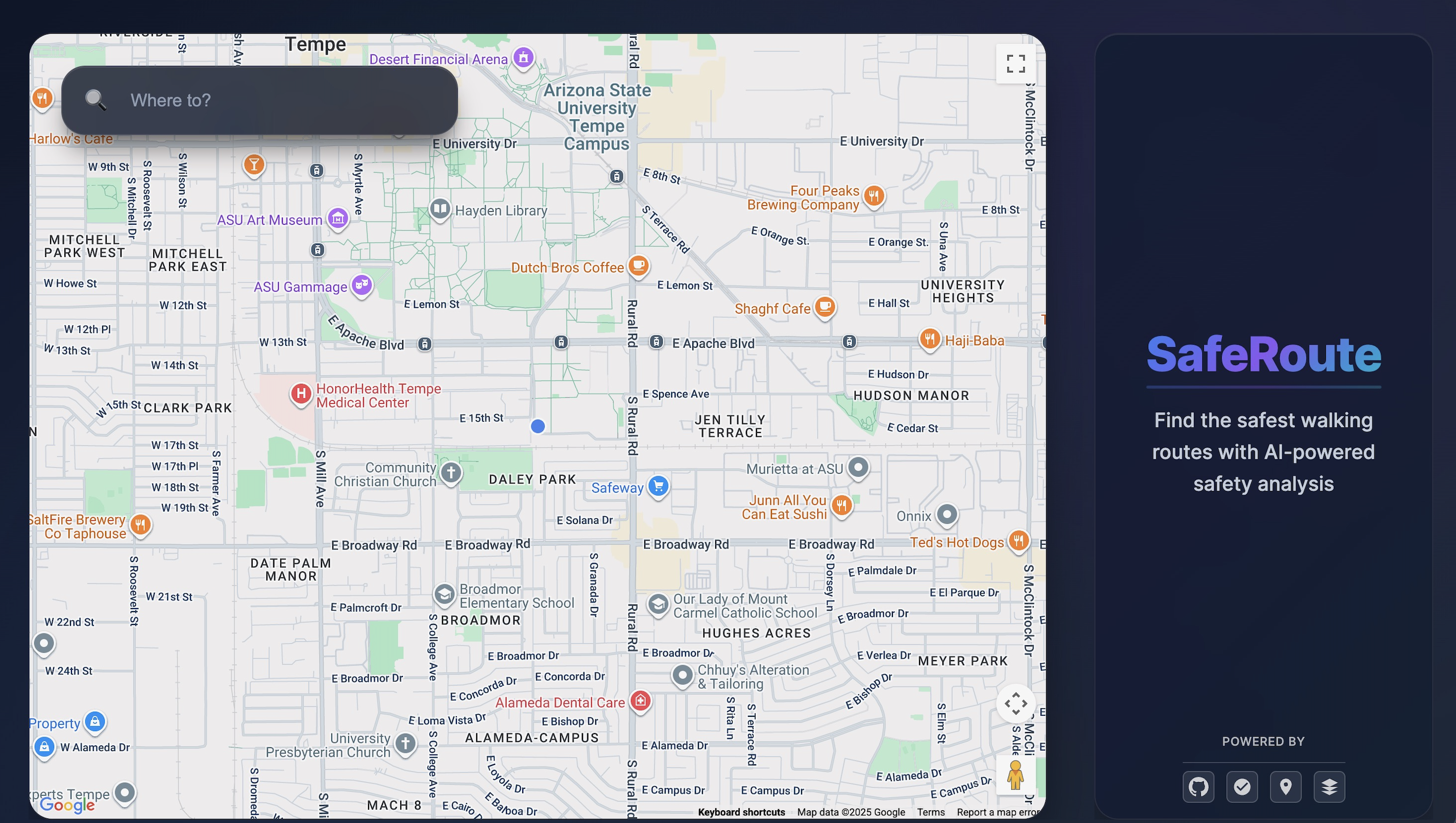
Home Page
-
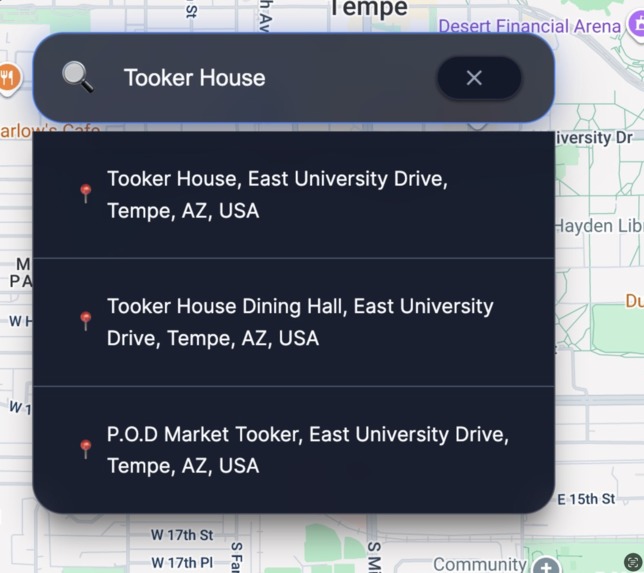
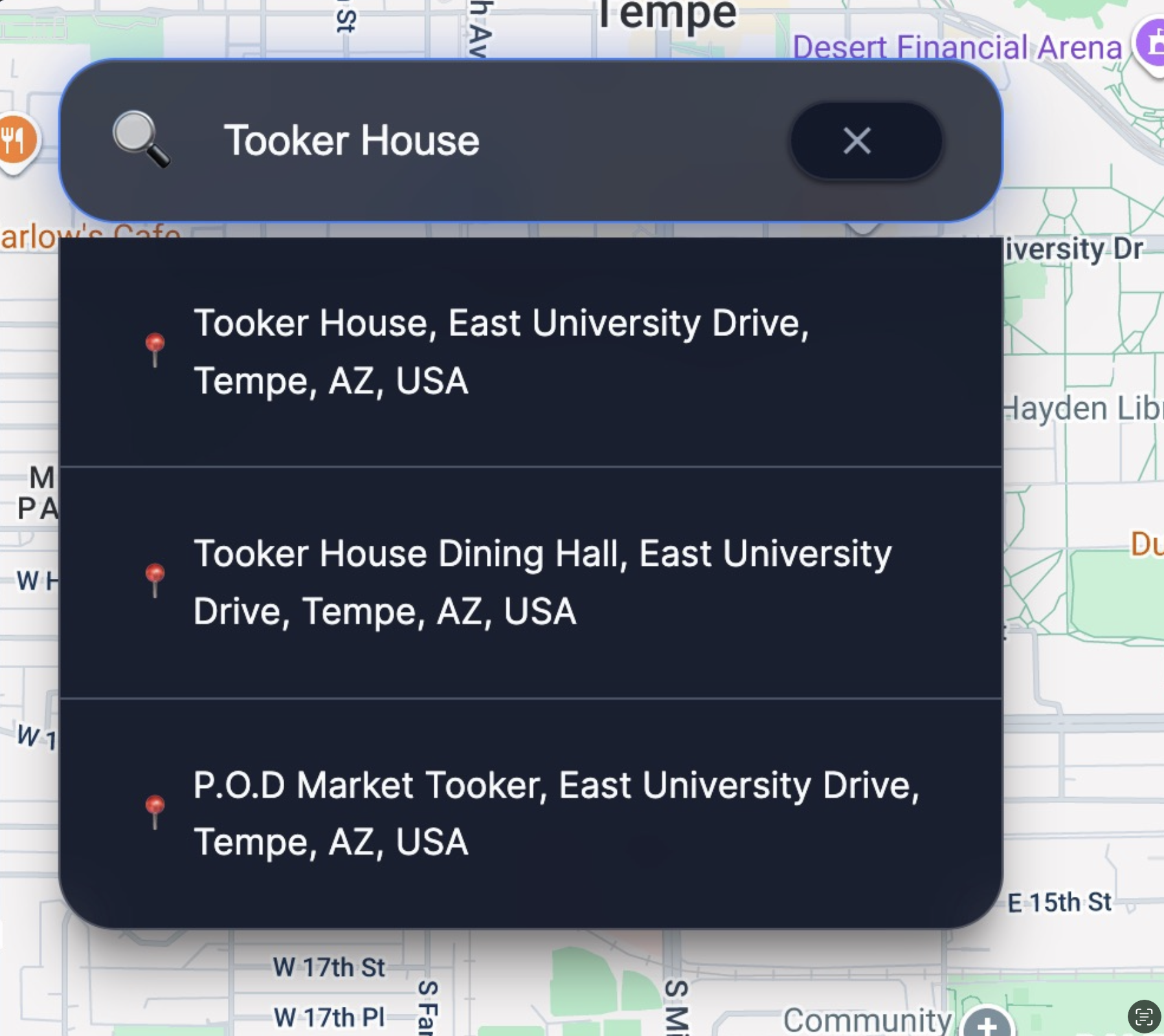
Search Bar
-
-
Inspiration
Walking home late at night or exploring a new area can feel uncertain, especially on college campuses where students are vulnerable to risks like theft, assault, and even human trafficking. We wanted to create a tool that empowers people to make safer choices every day. By starting small with our own community in Tempe, SafeRoute aims to show how AI can help prevent real-world harm and build trust in the spaces we live, study, and explore.
What it does
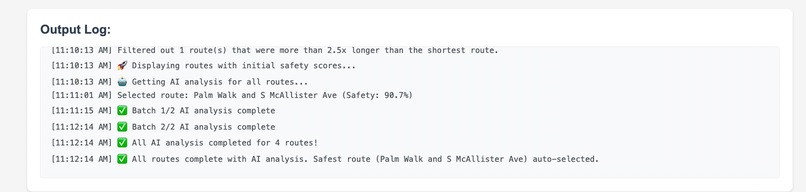
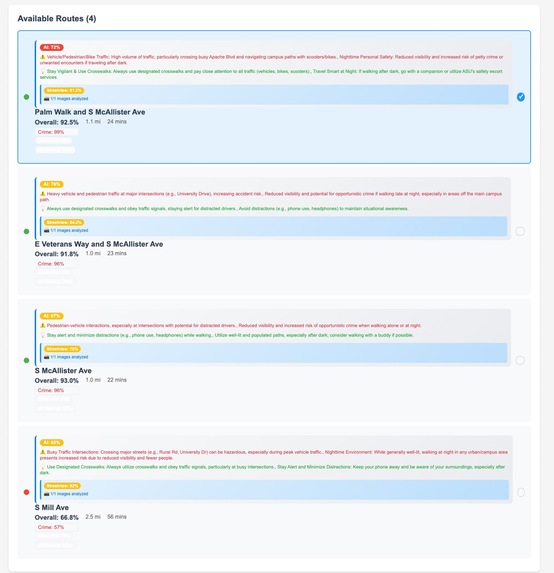
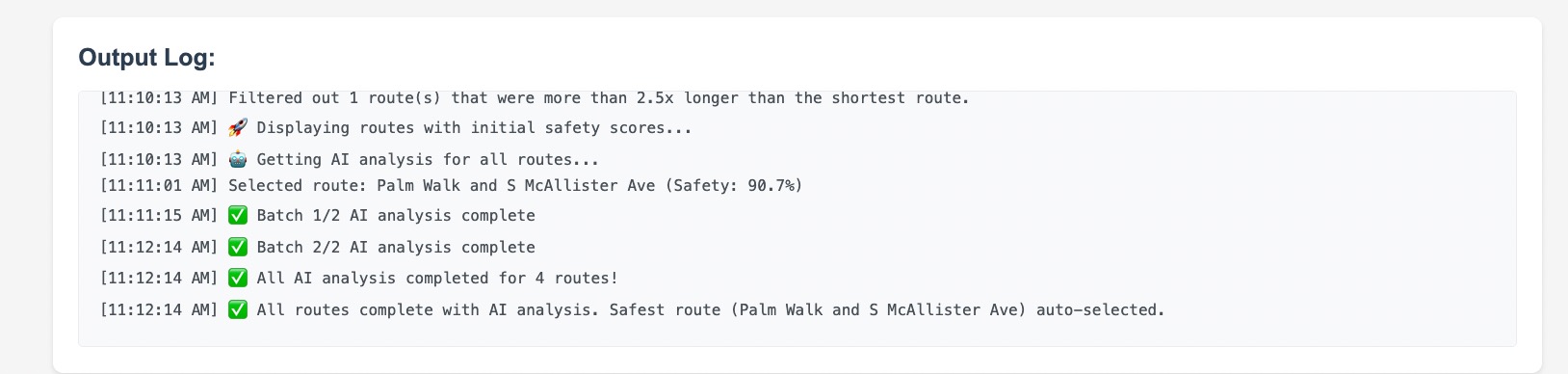
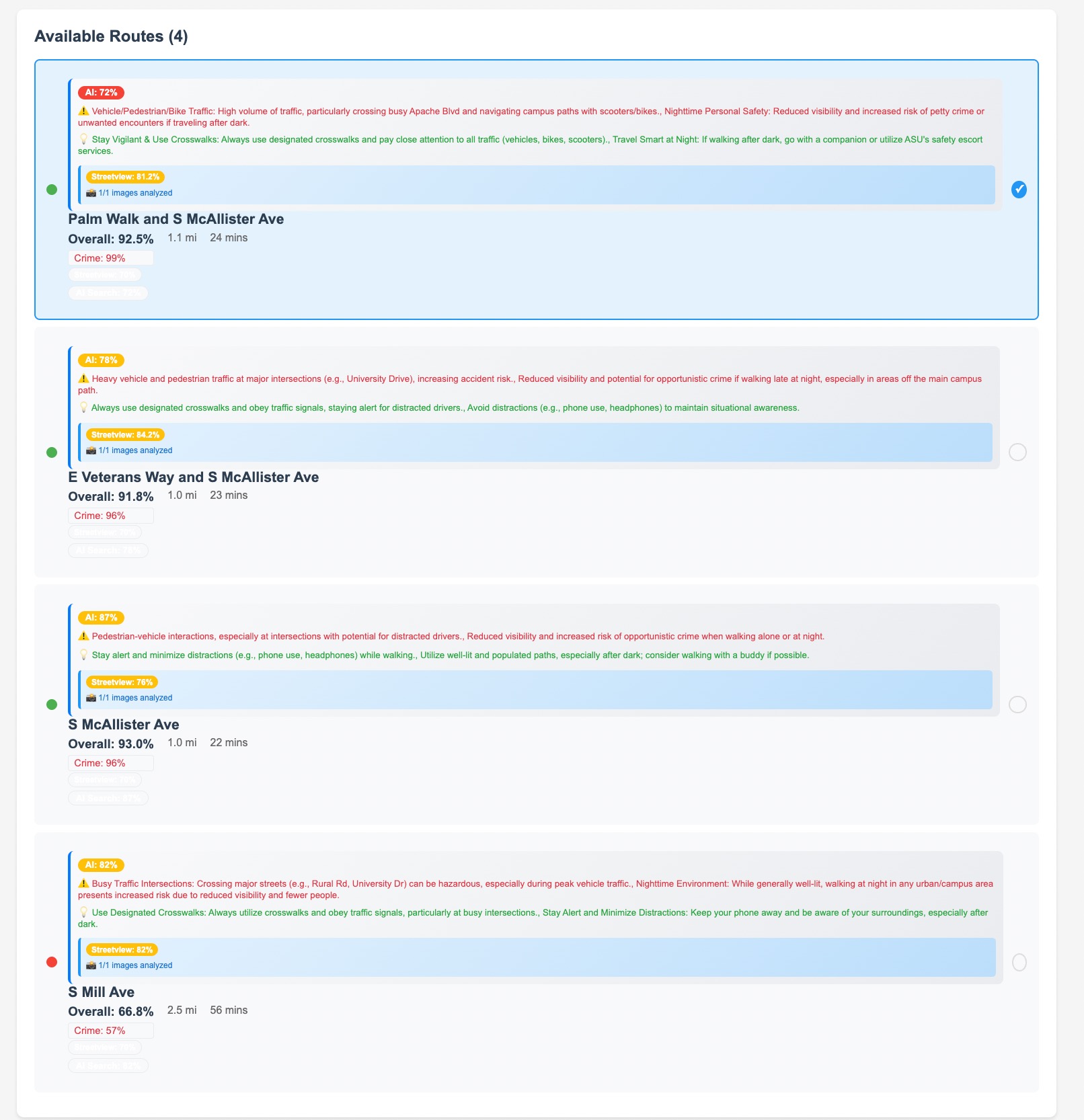
SafeRoute calculates and compares safety across all possible walking routes so users can make informed decisions. For each route, our system generates three safety scores: one derived from the public Tempe government database of police reports, another from a Gemini AI agent’s summarized safety analysis (validated through a second agent), and a third from a Gemini agent that inspects Google Maps Street View imagery. These scores are combined and displayed to the user, highlighting the safest route while still showing all available options.
How we built it
We approached SafeRoute with detailed, low-level planning. Using a structured framework, we first identified the major components (organisms), then broke them down into smaller modules (molecules), and finally into core functions (atoms). This layered approach gave us clarity on how each piece fit together. From there, we leveraged AI-powered development tools like Cursor and Gemini to help generate, refine, and debug our code, accelerating the build process during our time constraint.
Challenges we ran into
Setting up Cloudflare for caching through a worker endpoint was tricky, and cleaning datasets to ensure reliable results took longer than expected. Getting our AI agents to work consistently was another challenge, especially when validating responses and analyzing Google Map's Street View. On the technical side, connecting the frontend to the backend introduced integration issues, while high API latency and API key management slowed development.
Accomplishments that we're proud of
We’re proud that we successfully set up three AI agents working in tandem, for analysis, validation, and search, creating a system of checks that improves reliability. We also built an algorithm that calculates the safest routes by combining multiple data sources (AI and public records), reducing bias and improving accuracy in results. Most importantly, we managed to integrate all of the working parts into a platform that delivers on our original vision.
What we learned
Throughout this project, we gained hands-on experience with agentic AI and how to design effective multi-agent systems. We learned how to optimize AI pipelines, implement parallel processing, and cut down generation times by 4–6x. Beyond the technical side, we also deepened our understanding of how to balance innovation with reliability when building safety focused tools.
What's next for SafeRoute
We want to take SafeRoute beyond Tempe and expand our dataset to provide safety across the U.S. To make the platform more accessible on the go, we plan to build iOS and Android versions. Future features include emergency SOS calls, account validation to ensure encryption and privacy, and a live map that displays safety scores for all nearby streets, empowering users with real-time awareness wherever they are.


Log in or sign up for Devpost to join the conversation.