-
Cover Photo
-
-


https://github.com/aliisona/maps-extension
Inspiration
Safety is a universal concern—whether it's fear of car accidents or walking through unsafe areas. For many, these fears have already become their reality.
In the U.S. alone, 6 million car accidents occur annually, and 40,000 lives are lost in these crashes. Meanwhile, 50% of women fear walking alone at night. Despite the nation's access to cutting-edge technology and resources, safety remains a pressing issue in our communities.
We’ve personally faced these dangers and seen friends become victims of avoidable incidents. With the power of big data, we knew we could engineer a solution. Why not use the resources available to make a real difference?
What it does
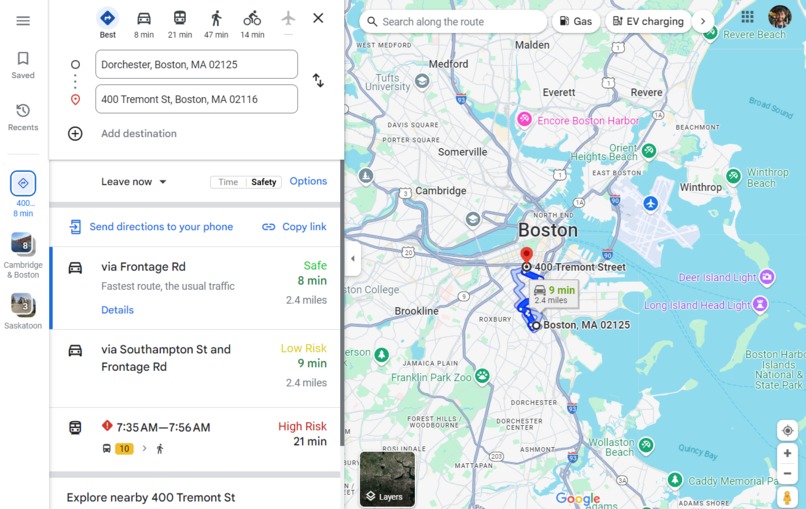
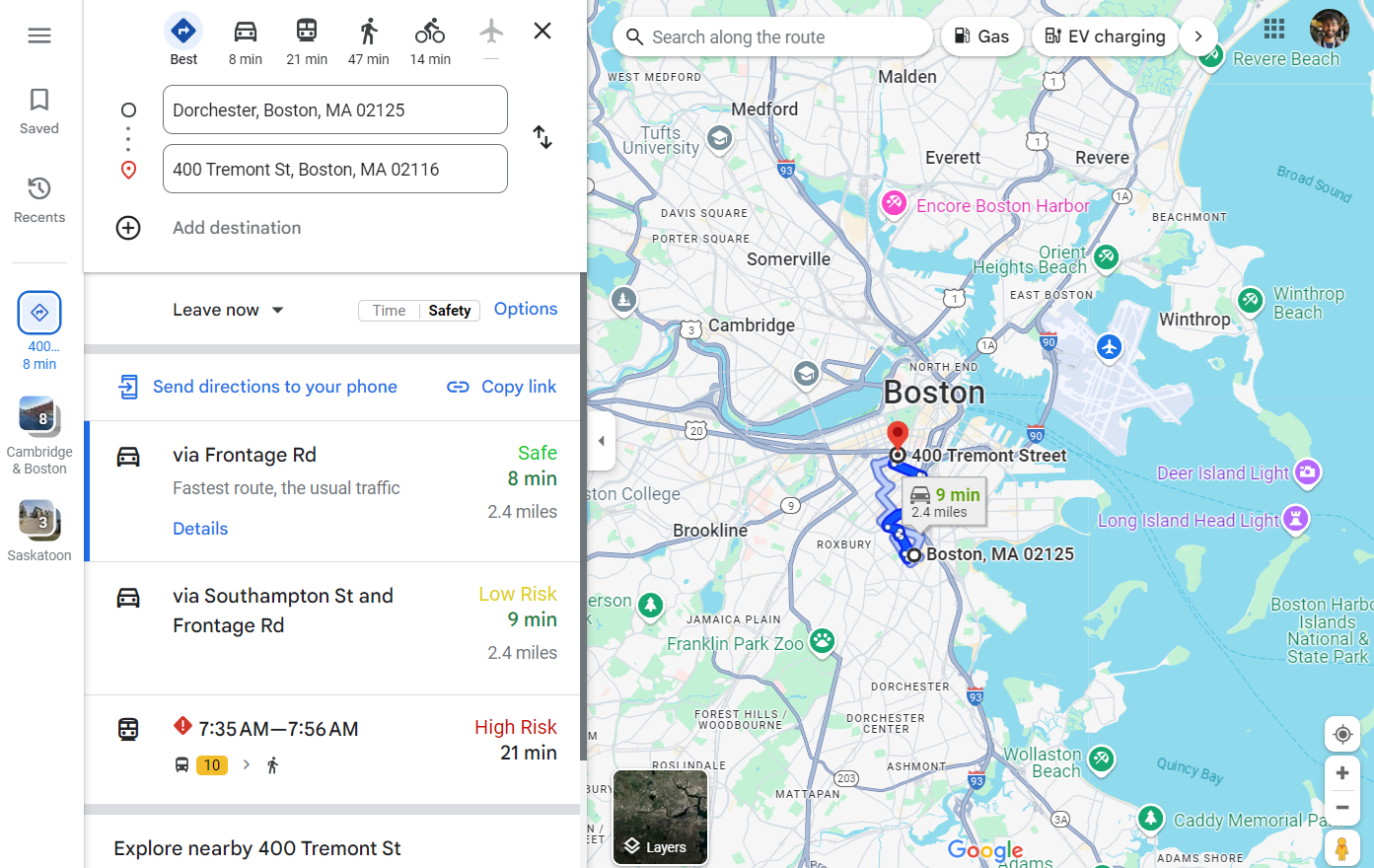
SafeRoute is a Google Chrome extension that enhances Google Maps by integrating a safety-first approach to route planning. Once users activate "Safety Mode," routes are ranked based on safety rather than just speed. The extension utilizes factors like historical crime data, accident history, and real-time weather conditions to guide users through safer paths.
How we built it
Back-end: We used Python to collect, analyze, and model data. Leveraging libraries like Requests and Beautiful Soup, we pulled crime and weather data via REST APIs and analyzed it with Pandas and Matplotlib. To rank the safety of each route, we used a Decision Tree Regressor (Sklearn) to process crime rates, historical accidents, and weather. Historical accident data was especially challenging—we converted a massive 60,000-row CSV into a 350,000-row JSON file to link accidents with geographic data along routes, generating a comprehensive safety score for each path.
Front-end: Built with JavaScript, HTML, and CSS, the extension seamlessly integrates into Google Maps, allowing users to switch between "Safety Mode" and regular navigation with ease.
Challenges we ran into
Handling 350,000 lines of data required us to optimize performance. Initially, our algorithm took 2 minutes to calculate a route, but through caching, refactoring loops, and efficient data handling, we cut it down to just 7 seconds.
Integrating the back-end and front-end posed its own difficulties. Team communication and alignment were key to overcoming these obstacles, ensuring the code was both functional and cohesive.
Our machine learning model also presented a steep learning curve, particularly around data cleaning, encoding qualitative data, and fine-tuning the model for accuracy.
Accomplishments that we're proud of
We’re proud of overcoming technical challenges, diving into unfamiliar technologies, and efficiently collaborating to break a massive project into smaller, manageable parts. The result is a functioning product that can truly make an impact on user safety.
What we learned
Analyzing and cleaning up data before using it was huge, as we didn't parse the crash CSV file properly the first time, which caused headaches. We learned how Chrome extensions are deployed, how they manage data and how to manipulate info on a browser page.
What's next for SafeRoute | Safety Prioritized in Google Maps
We plan to refine our safety model further, integrating more real-time data sources like police reports and user feedback. We also envision expanding SafeRoute’s functionality to more platforms, enabling safer navigation experiences across different modes of transport and regions.


Log in or sign up for Devpost to join the conversation.