





Based on your repo, here's content for each Devpost section:
Inspiration
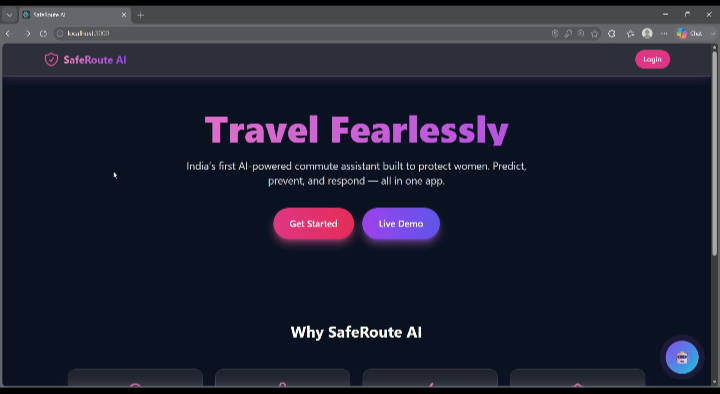
In India, 56% of women feel unsafe commuting alone (NFHS-5). We wanted to build more than a navigation app — something that actively watches out for women on their daily commutes, whether that's a late-night walk home, an unfamiliar route, or a moment of real danger where they can't even reach for their phone. That's what pushed us to build SafeRoute AI: a guardian that travels with every woman, not just a map that shows directions.
What it does
SafeRoute AI is an AI-powered commute safety platform for women that:
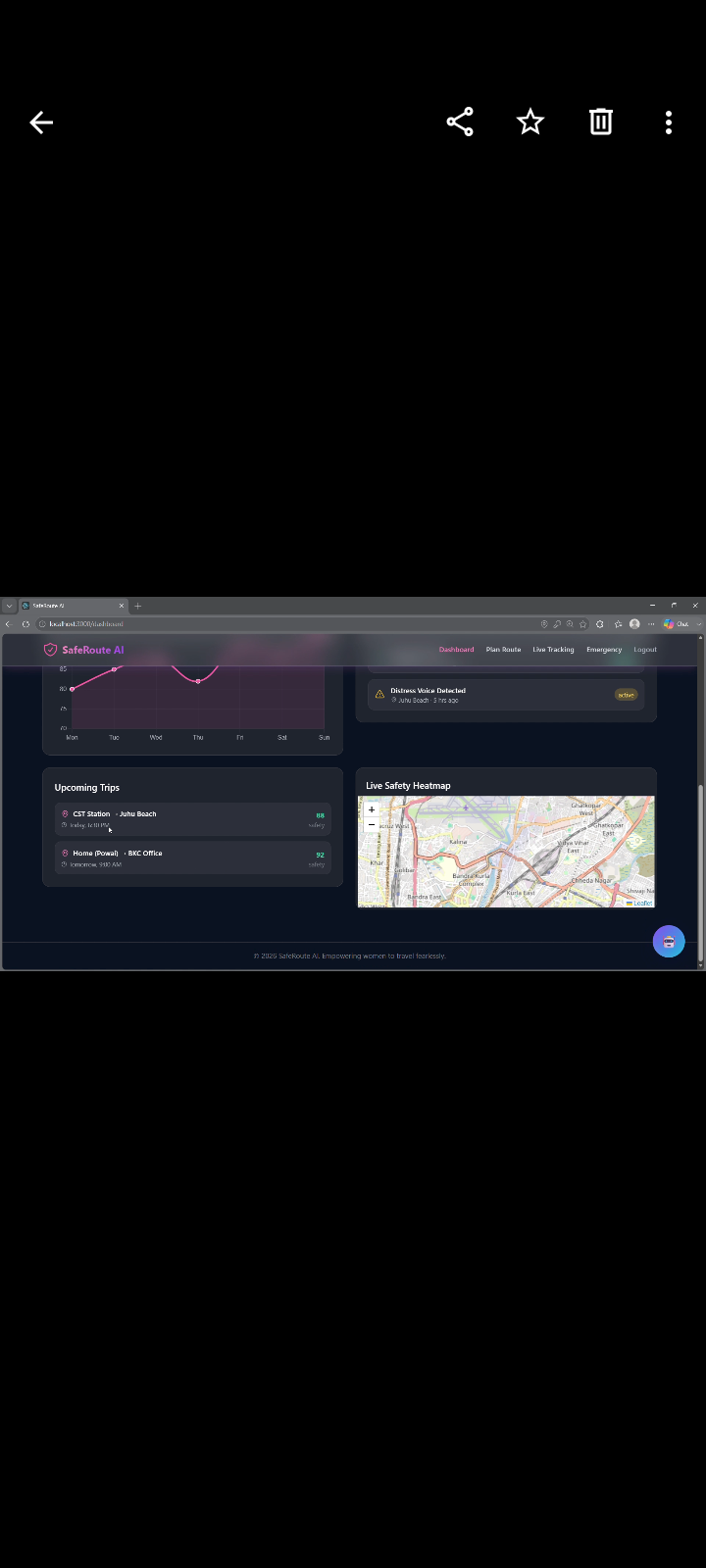
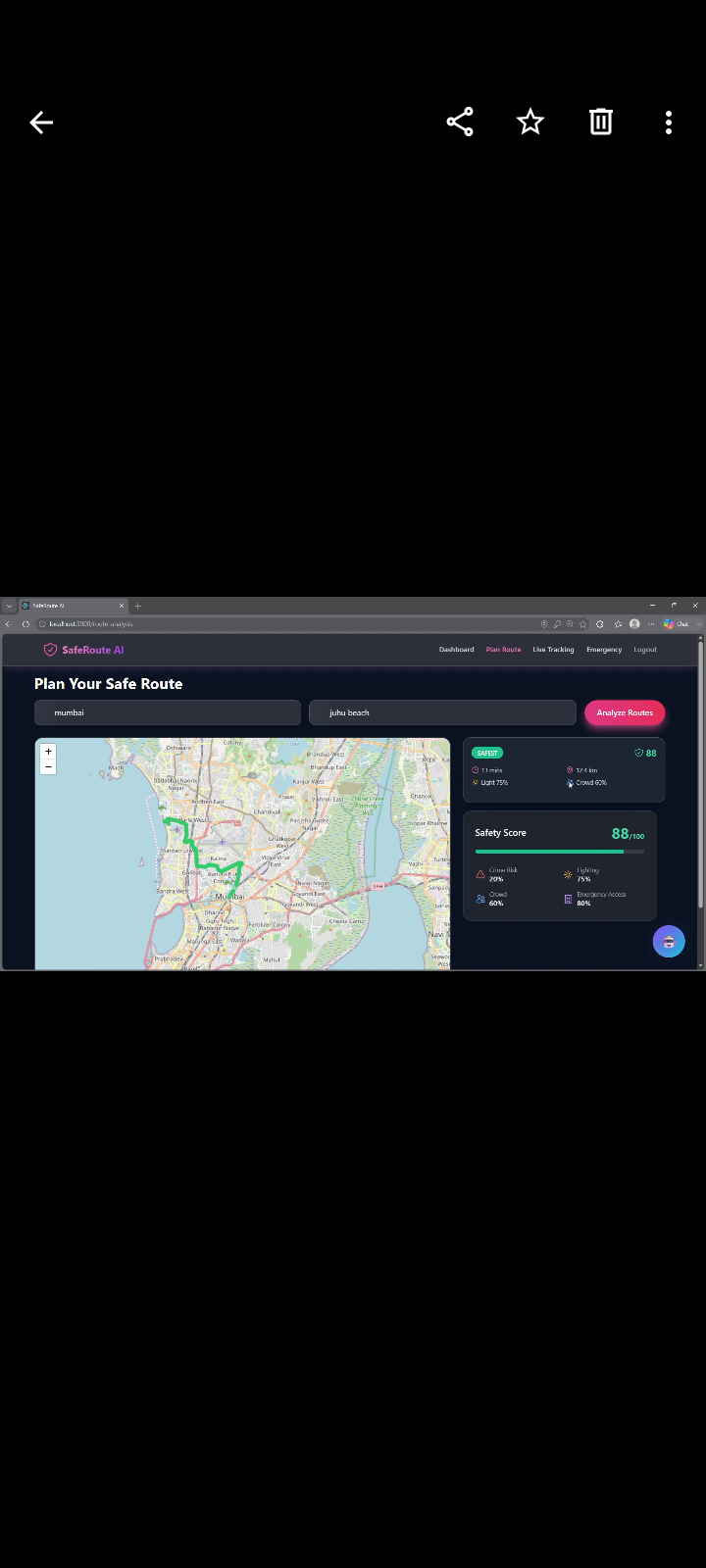
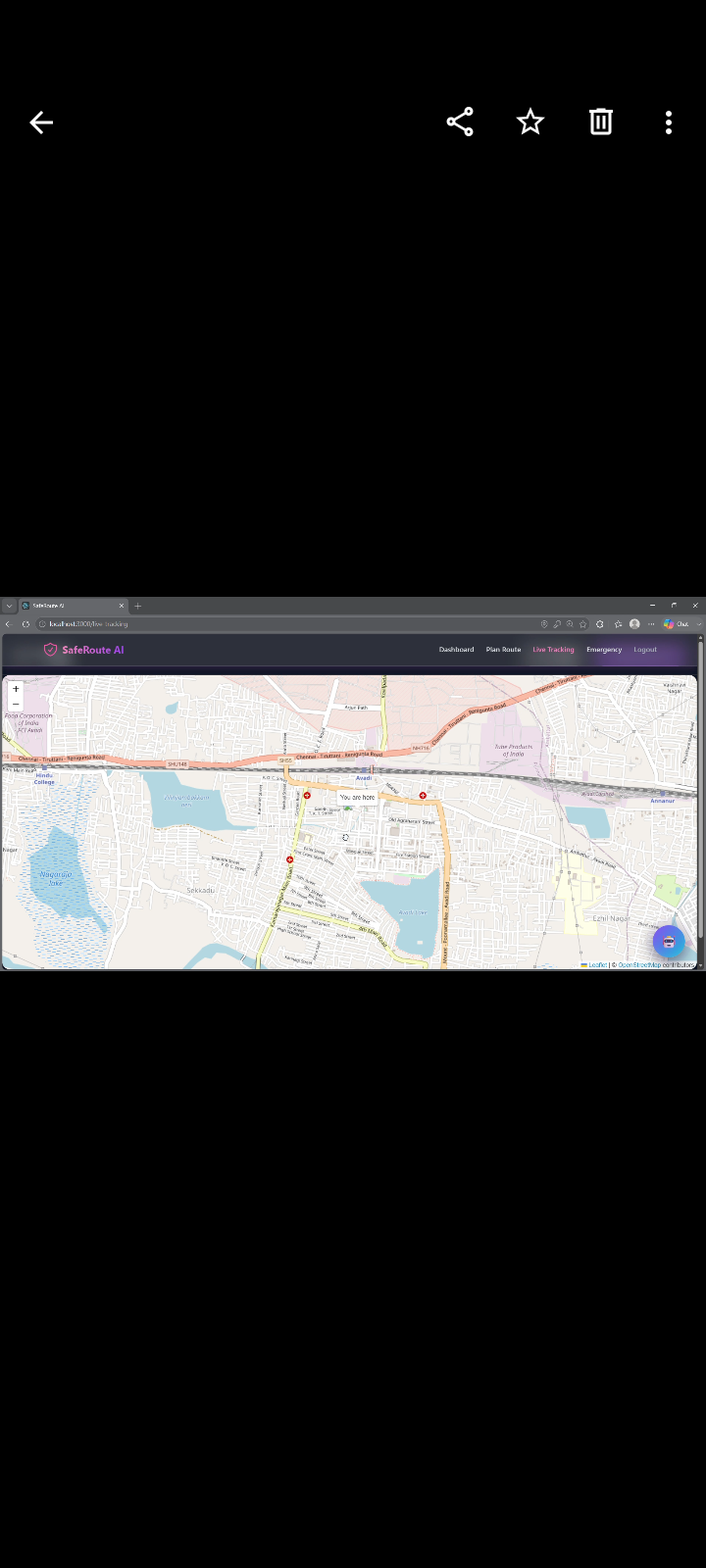
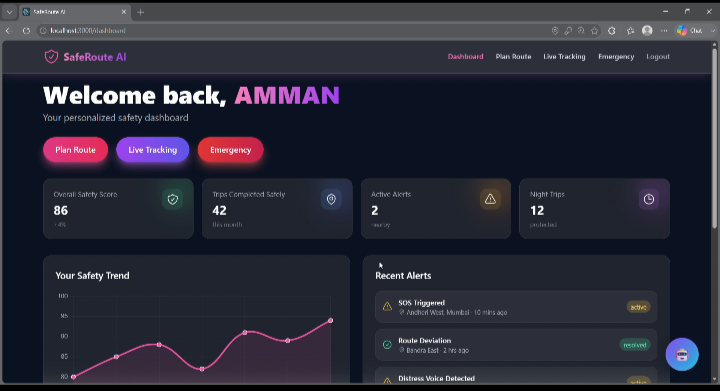
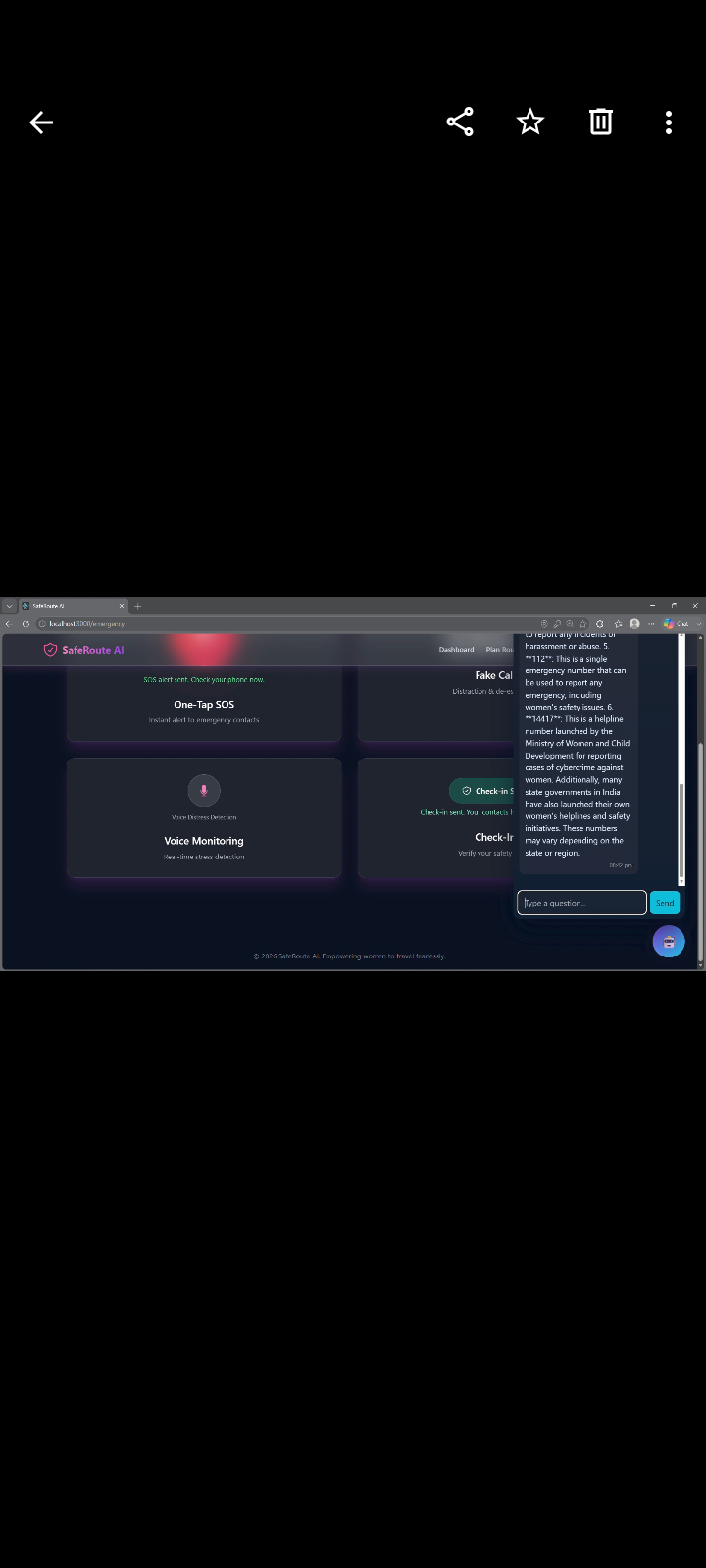
Predicts safe routes by analyzing crime-prone areas, lighting, crowd density, and time of day Tracks journeys live, sharing location with trusted contacts and alerting them if the user deviates from the expected path Detects voice distress in English, Hindi, and Tamil — picking up on panic keywords or stressed tone Triggers one-tap SOS, instantly sending live location, route, and audio to emergency contacts Scores every route on a Safety Score based on crime data, lighting, crowd levels, and emergency access Responds via smart voice assistant to queries like "nearest police station" or "safe spot," in multiple languages Simulates a fake call to help de-escalate or exit an uncomfortable situation Enables Night Protection Mode, automatically increasing check-in frequency after dark Visualizes risk through an admin heatmap dashboard showing dangerous zones in real time How we built it Frontend: React.js, Tailwind CSS, Framer Motion for animations, Chart.js for data visualization, and @react-google-maps/api for maps Backend: Node.js and Express.js, with MongoDB + Mongoose for data storage and Socket.io for real-time tracking AI/ML: Python 3.10+ microservices built with Flask, using Scikit-learn (Random Forest) for route risk scoring and TensorFlow for voice stress detection External Services: Google Maps API for navigation, Twilio for SMS alerts, SendGrid for email notifications, and Firebase Auth for authentication Challenges we ran into
(You'll want to fill in specifics here — but common ones for a project like this might include:)
Sourcing or synthesizing reliable Indian urban crime/safety data since public datasets are limited Building a voice stress detector that works accurately across three languages (Hindi, Tamil, English) Coordinating real-time location tracking and SOS triggers without draining battery or lagging Balancing false-positive rates on distress detection so the system doesn't over-alert Accomplishments that we're proud of Building a genuinely multilingual voice distress detection system Combining several AI modules (route scoring, crowd prediction, safety heatmaps) into one cohesive platform Designing a full emergency-response pipeline — from detection to SOS to real contact notification — that works end-to-end Creating an experience that feels emotionally supportive, not just functional What we learned How to fuse multiple real-time data signals (crime data, lighting, crowd density) into a single actionable safety score The complexities of building reliable multilingual voice/speech models How to architect a system where frontend, backend, and ML microservices talk to each other in real time The importance of designing for genuine emotional trust, not just technical accuracy, when building safety tools What's next for SafeRoute AI Expanding the Voice Stress Detector from keyword-based detection to a full CNN-based audio emotion classification model Partnering with local police departments and municipal bodies for verified, real-time crime data feeds Scaling beyond Indian cities to other regions with high commute-safety concerns Adding community-driven incident reporting to keep safety data continuously updated Building out the Admin Heatmap Dashboard for city planners and law enforcement to identify and act on high-risk zones

Log in or sign up for Devpost to join the conversation.