-
-
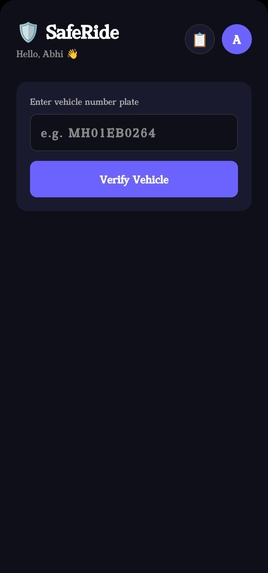
Home Screen
-
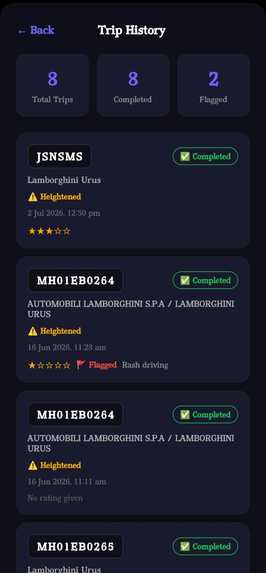
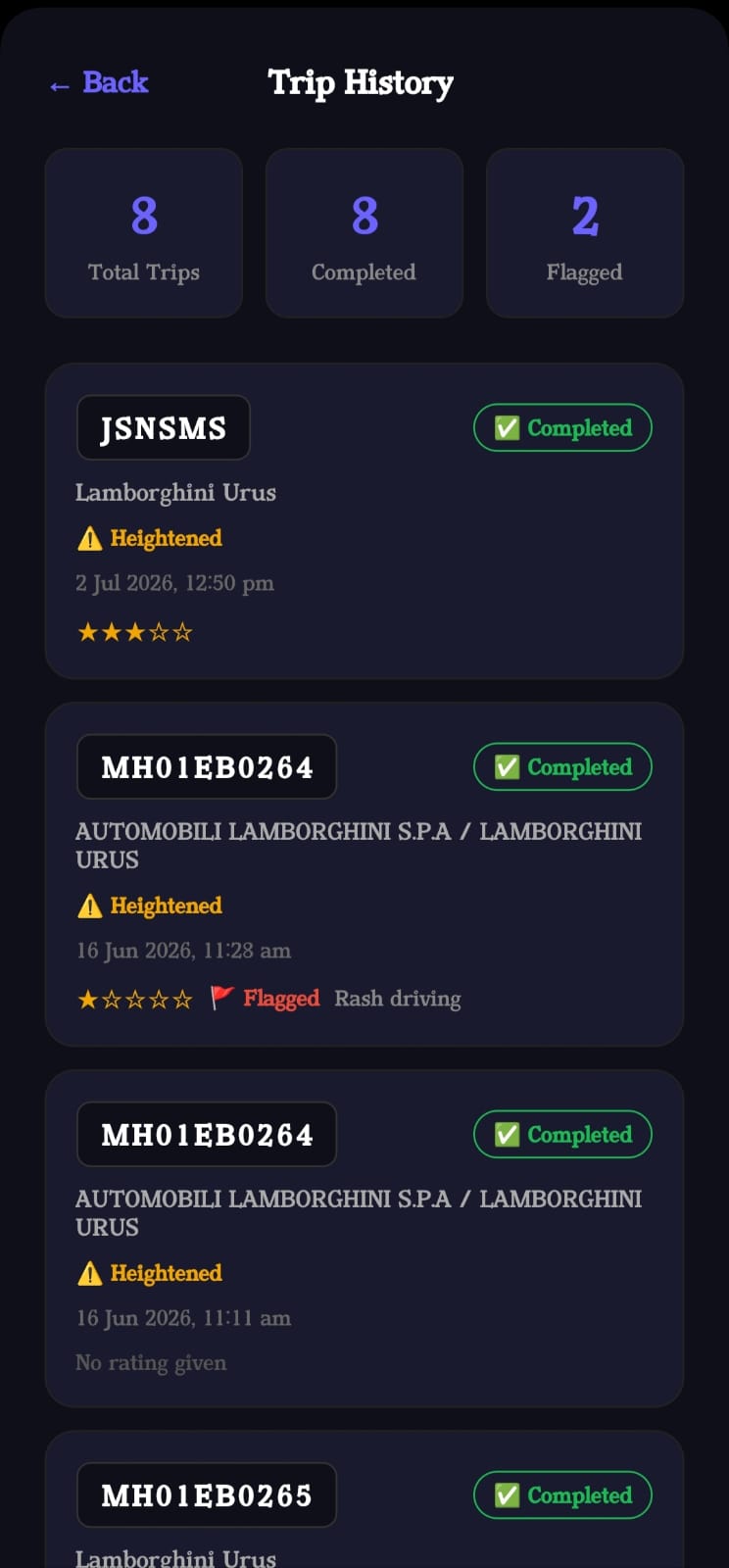
User History
-
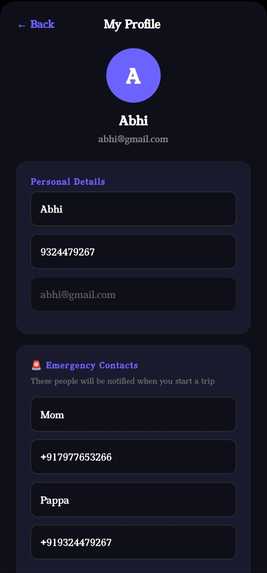
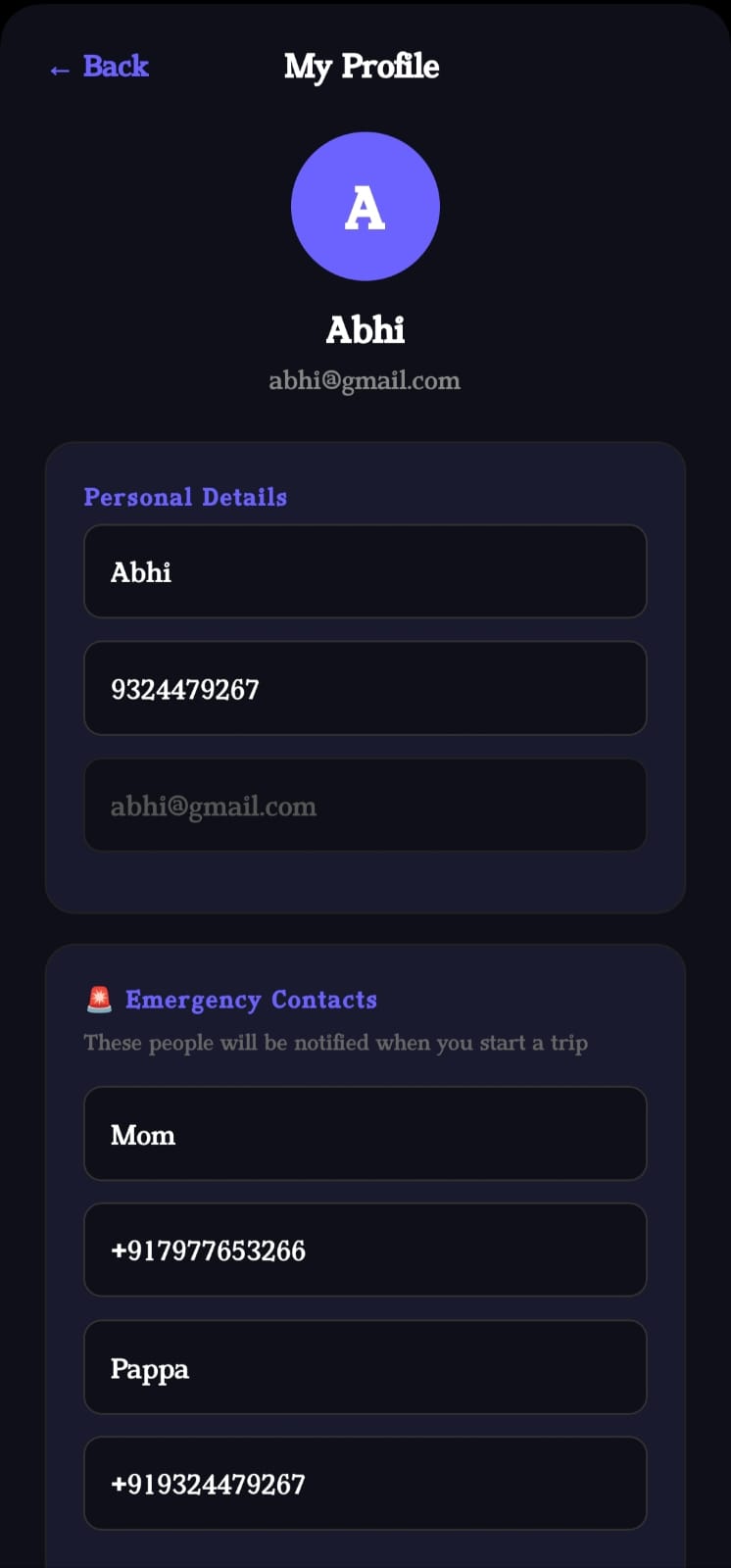
Profile
-
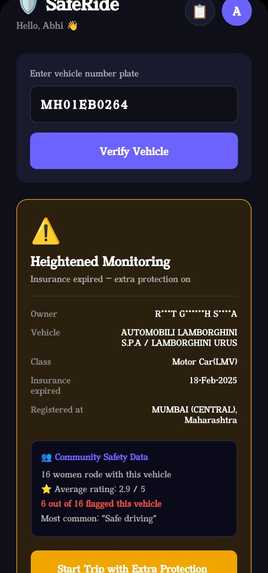
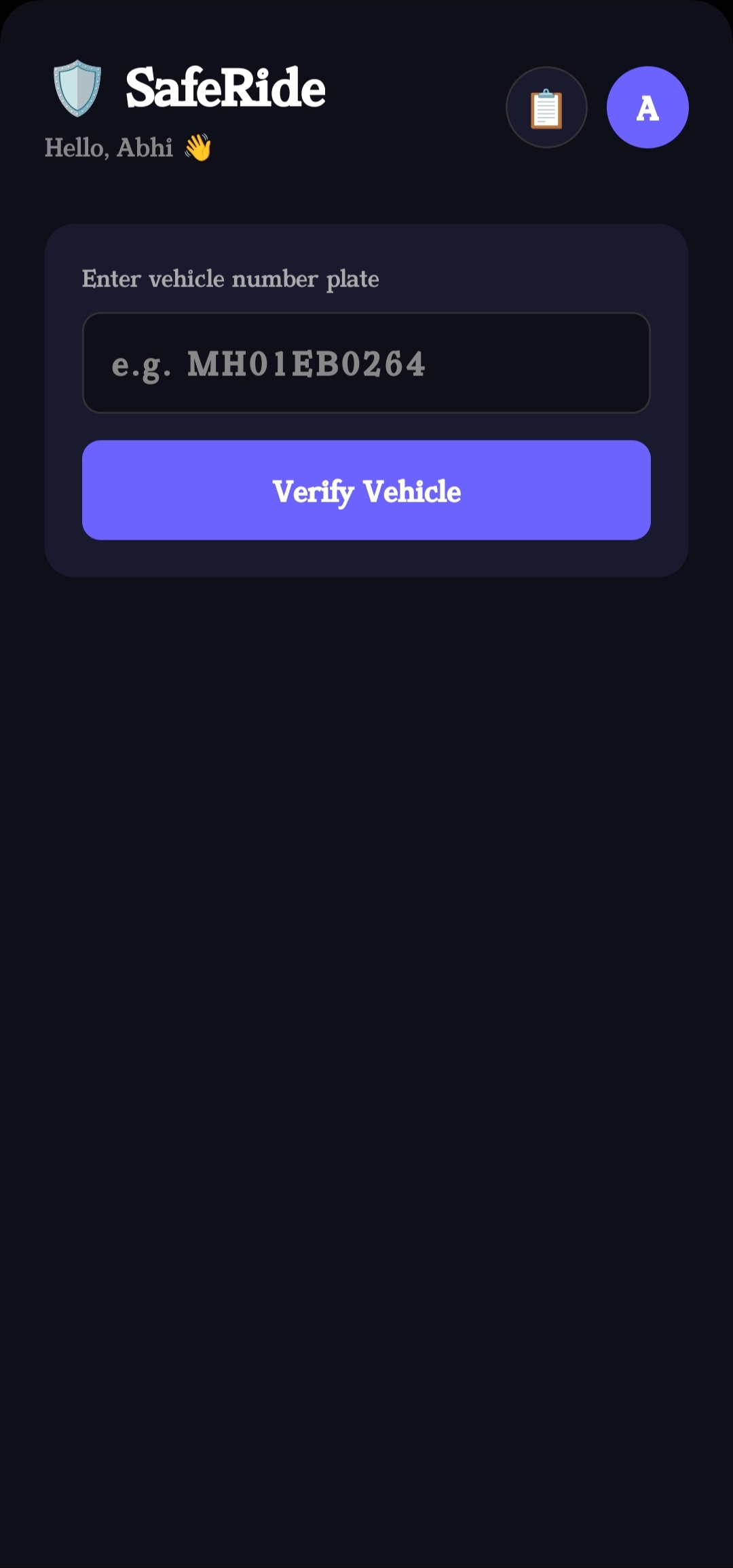
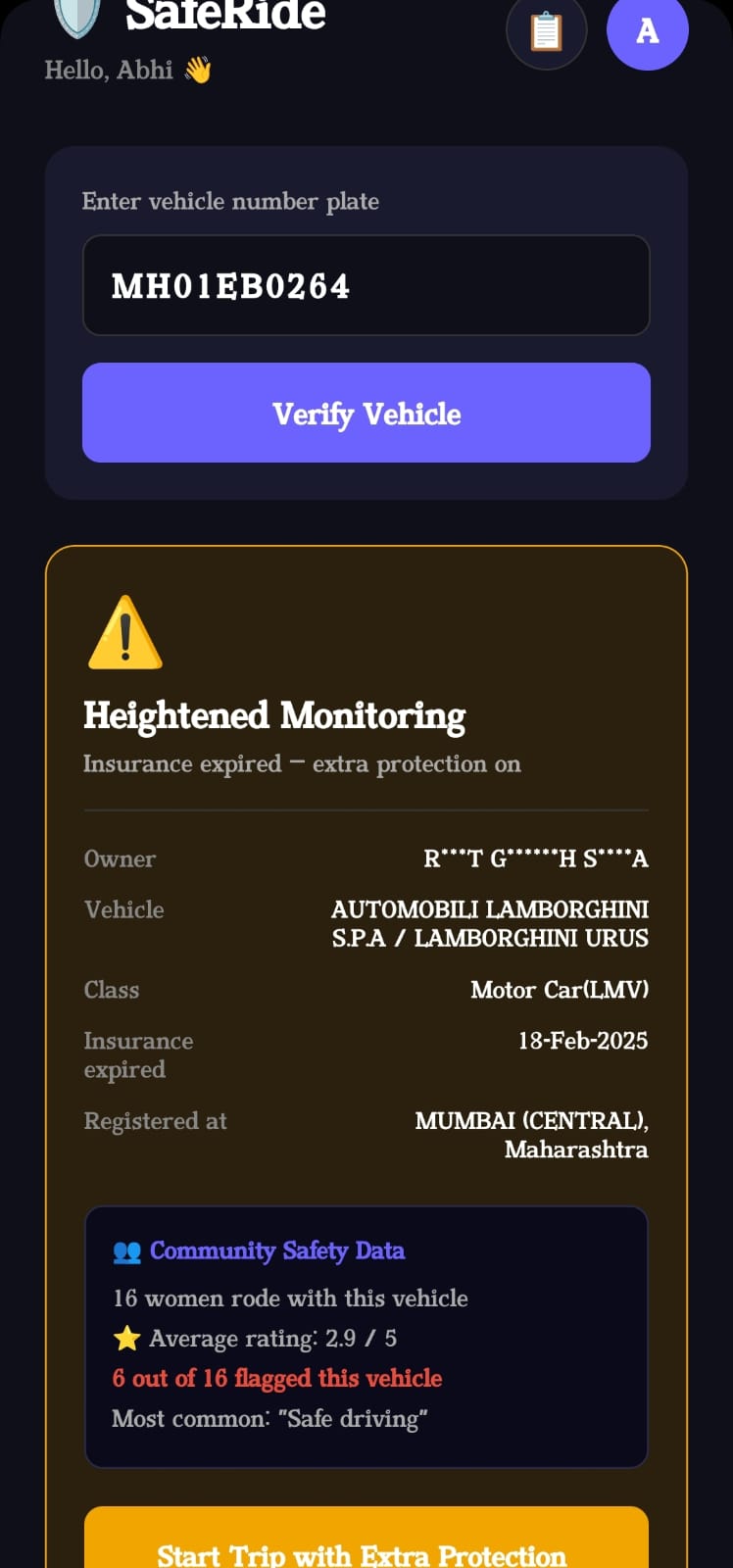
Verify Driver
-
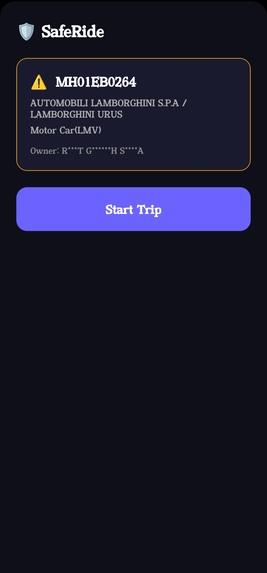
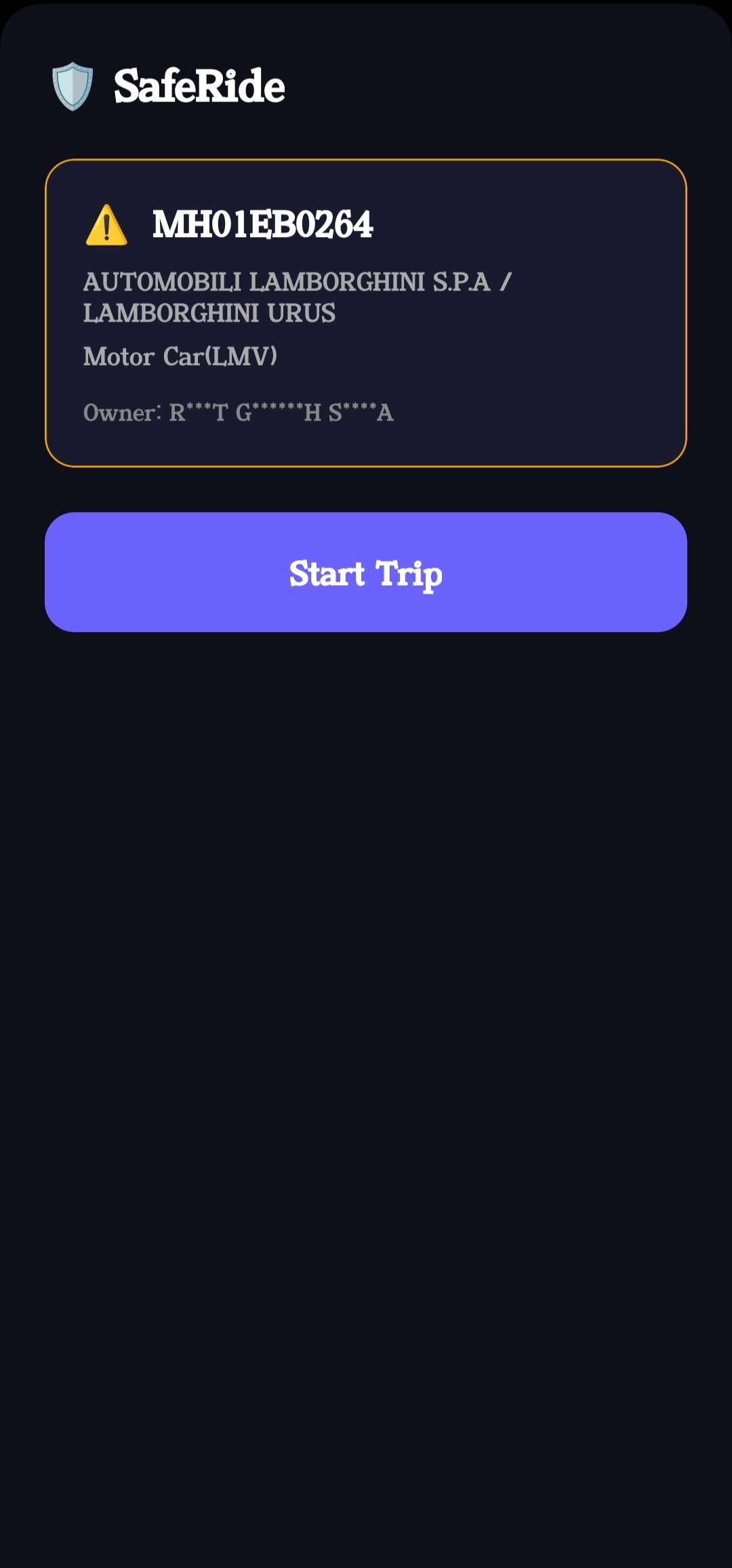
Start Trip
-
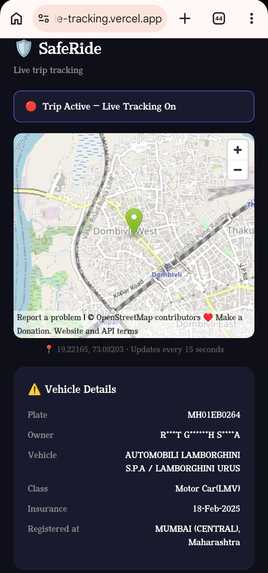
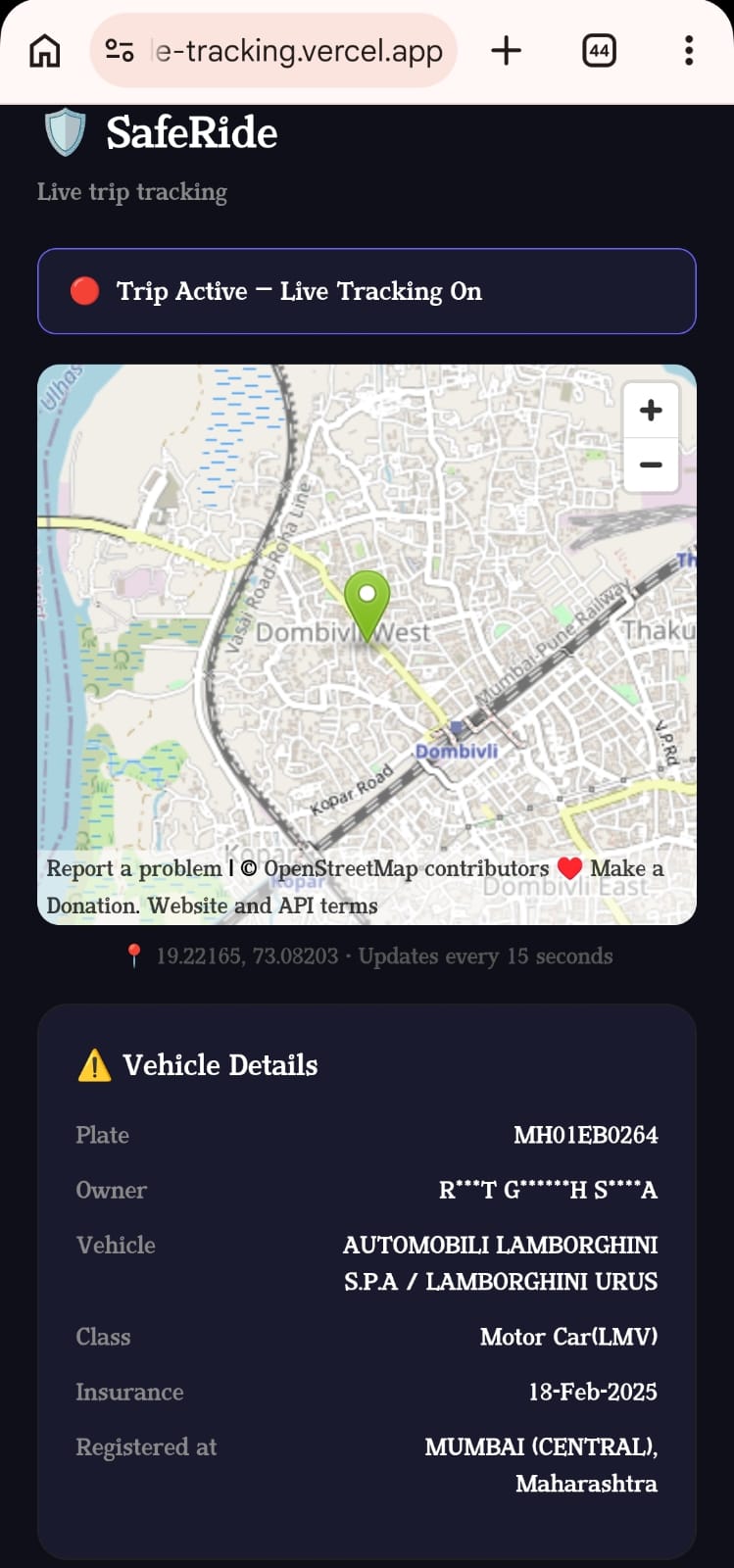
Live tracking
-
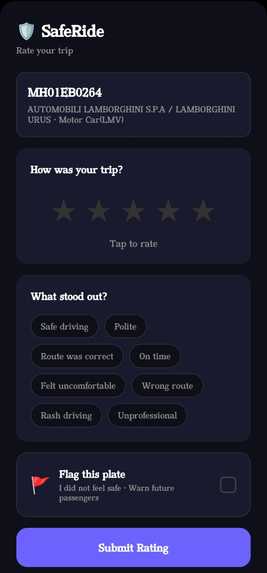
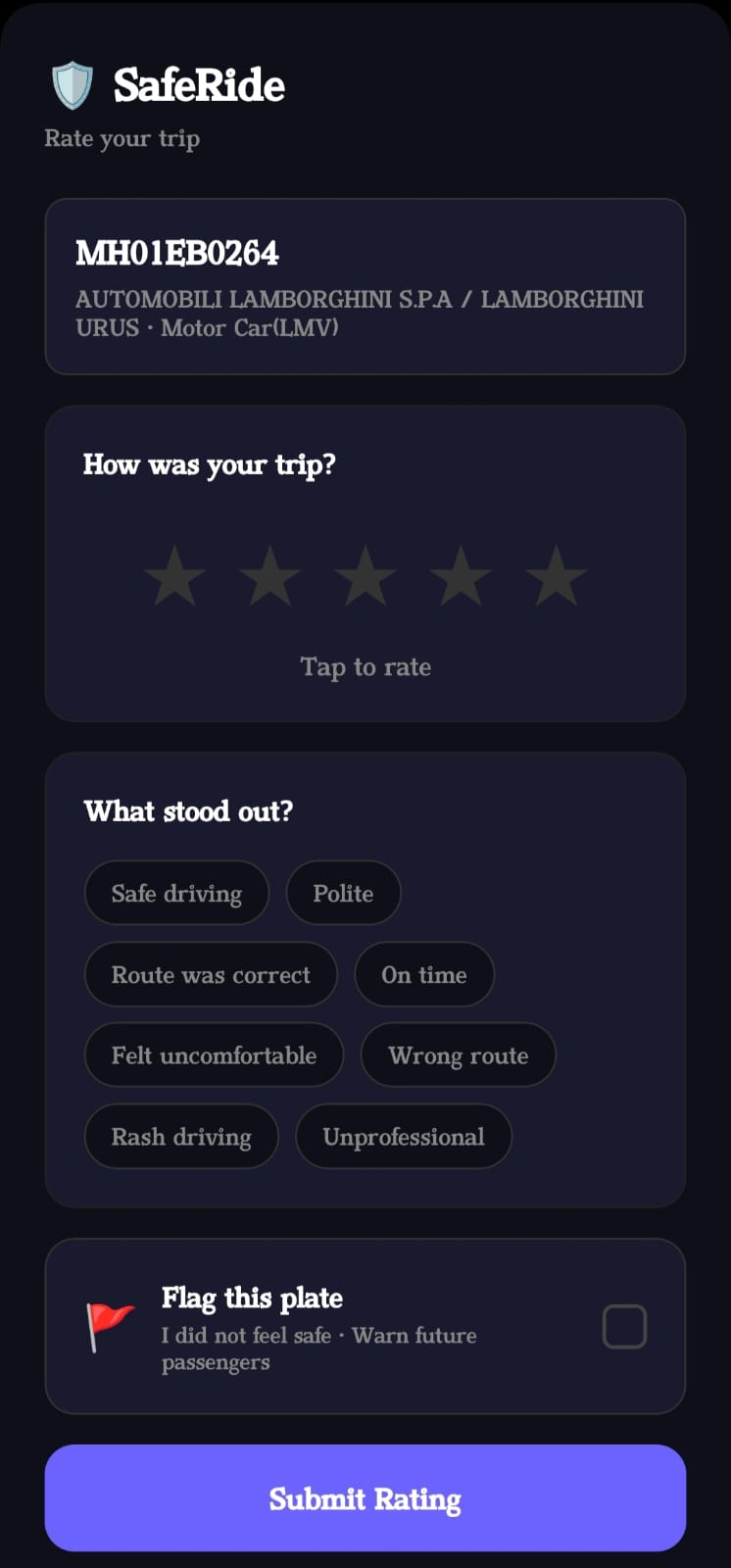
Feedback
Inspiration
Women frequently face safety concerns during daily commutes in cabs or auto-rickshaws. Most existing safety applications rely on a reactive approach requiring users to press an SOS button or navigate complex menus during a high-stress emergency. We wanted to flip this paradigm and create a proactive guardian. The inspiration for SafeRide was to build a system that verifies the safety of a vehicle before the passenger even boards, and then completely automates the tracking process so the user doesn't have to worry about it during their ride.
What it does
SafeRide acts as an automated transit security system with three core pillars: 1) Instant Verification: Passengers enter a vehicle's license plate to instantly query real-time RTO databases, confirming the vehicle's registration, insurance validity, and model.
2) Automated Tracking: Once a trip is initiated, the app automatically triggers a Twilio-powered WhatsApp alert to pre-selected emergency contacts, providing vehicle details and a live tracking link.
3) Community Defense: A built-in rating and flagging engine allows passengers to log suspicious behavior, updating a shared database to warn future riders about potentially unsafe drivers.
How we built it
We engineered SafeRide using a modern full-stack mobile architecture: 1) Frontend: Built with React Native and Expo (utilizing Expo Router) for a seamless, cross-platform native experience, optimized with a high-contrast dark-mode UI for quick readability.
2) Backend: Powered by Firebase Authentication for secure user onboarding and Firestore for managing real-time trip states and community ratings.
3) APIs: Integrated RapidAPI's Vehicle RC Information endpoint for live Indian RTO data, and the Twilio Sandbox API for automated WhatsApp and SMS alerts.
4) Deployment: Compiled the React Native application for the web and deployed it via Vercel to ensure judges could easily evaluate the prototype across any device without downloading an APK.
Challenges we ran into
Our biggest hurdle was dealing with third-party API restrictions. The live Indian RTO database API we integrated had a highly restrictive free-tier limit of just 3 requests per month. During testing, we rapidly exhausted our quota, resulting in 429 Rate Limit errors that broke the app flow. Additionally, we faced strict CORS policy blocks when trying to fetch data directly from the client-side browser on Vercel.
To solve this, we engineered a serverless fallback layer and a smart state-management system. We configured API rewrites in our vercel.json to bypass CORS, and implemented a "Graceful Degradation" protocol in our code. Now, if the real API crashes or hits its limit, the app instantly catches the error, serves high-fidelity simulated vehicle metrics, and displays a transparent warning banner to the user.
Accomplishments that we're proud of
We are incredibly proud of the UI/UX design. We managed to create an interface that feels incredibly premium but remains highly functional and uncluttered exactly what is needed in a high-stress situation. We are also proud of our defensive programming approach; rather than letting an API limit ruin the live demo, we successfully built an unbreakable fallback architecture that ensures the core user flow is always testable for the judges.
What we learned
This project was a massive learning curve in handling asynchronous API limits and state management. We deepened our understanding of React Native's Expo Router, complex API error handling, and Firebase database querying. We also learned how to successfully bridge mobile-first codebases into live web deployments using Vercel, and how to properly configure server-side route proxies.
What's next for SafeRide: Verify Before You Board. Track Until You Arrive.
Our immediate next step is graduating from the Twilio Sandbox to a verified WhatsApp Business account so emergency contacts no longer need to opt-in with a code. We also plan to secure an enterprise-level RTO database subscription to remove the API constraints, and integrate a live map view directly into the app dashboard using the Google Maps API. Ultimately, we want to partner with local transit authorities to make this the standard safety verification tool for daily commuters.
Built With
- expo.io
- firebase
- firestore
- javascript
- rapidapi
- react-native
- twilio
- vercel

Log in or sign up for Devpost to join the conversation.