-
band
-
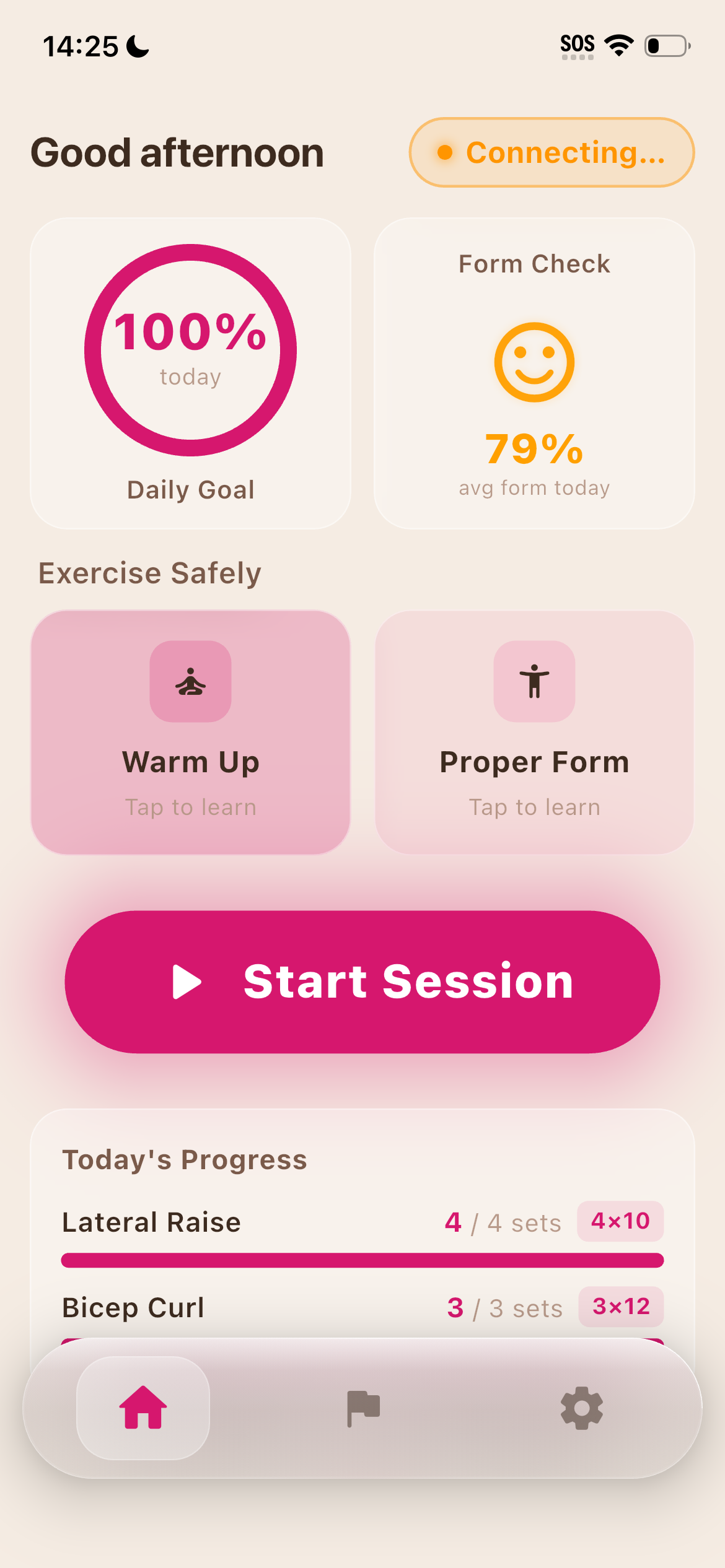
app
-
app
-
app
-
app
-
band2
SafeReps: Movement Intelligence for Home Strength Training
Inspiration
When you work out at home, you're training blind. You follow a video on a screen, but the screen can't see you back — and it definitely can't tell you that your back is rounding or that you stopped hitting full range of motion three reps ago.
That's the problem we set out to fix. Not another rep counter. Not another heart rate monitor. A system that actually understands quality — the kind of intelligent feedback you only get from a coach standing in the room with you.
What It Does
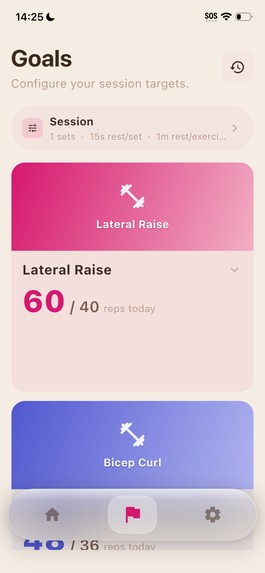
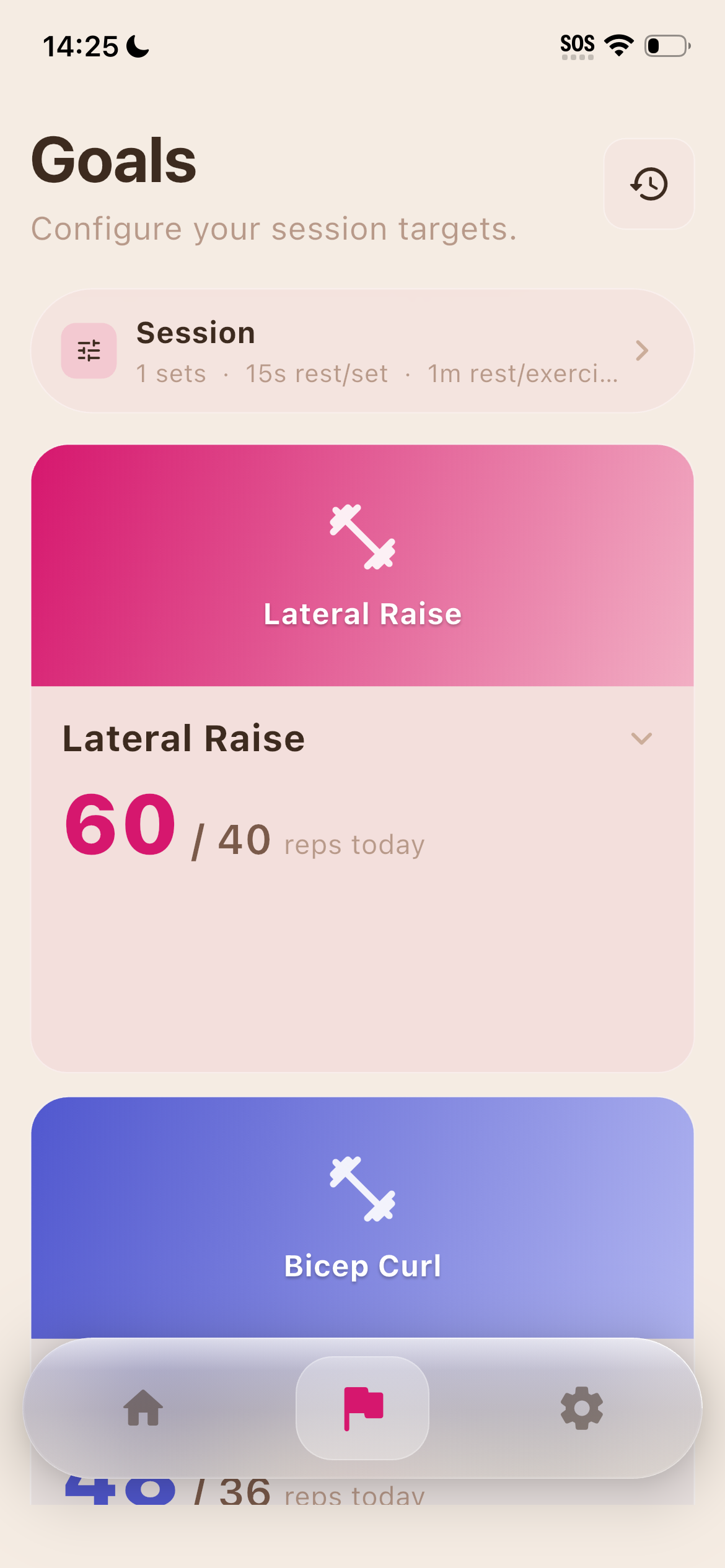
SafeReps is a dual-stream coaching ecosystem that fuses two data sources into a single real-time picture of your movement:
- Phone camera (vision) — Google ML Kit tracks 33 skeletal landmarks at 30 FPS, calculating joint angles and range of motion in real time.
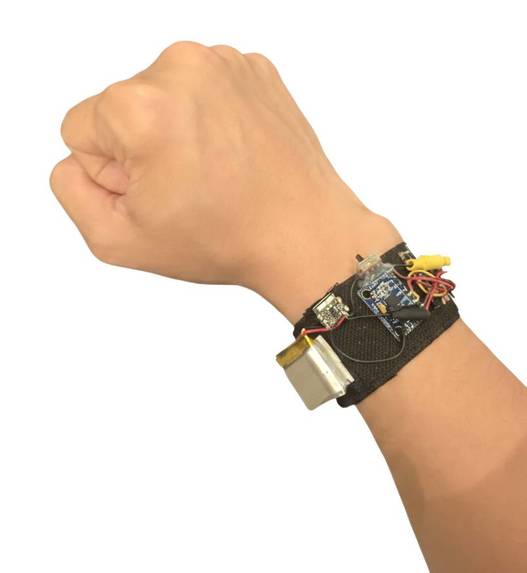
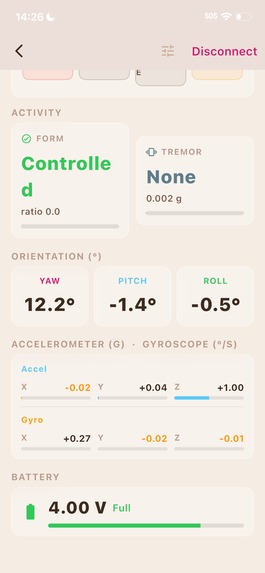
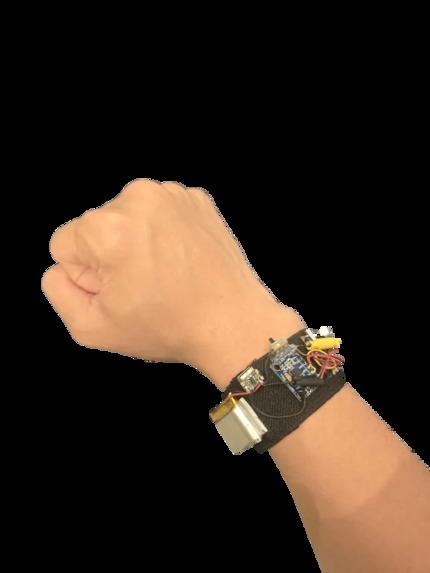
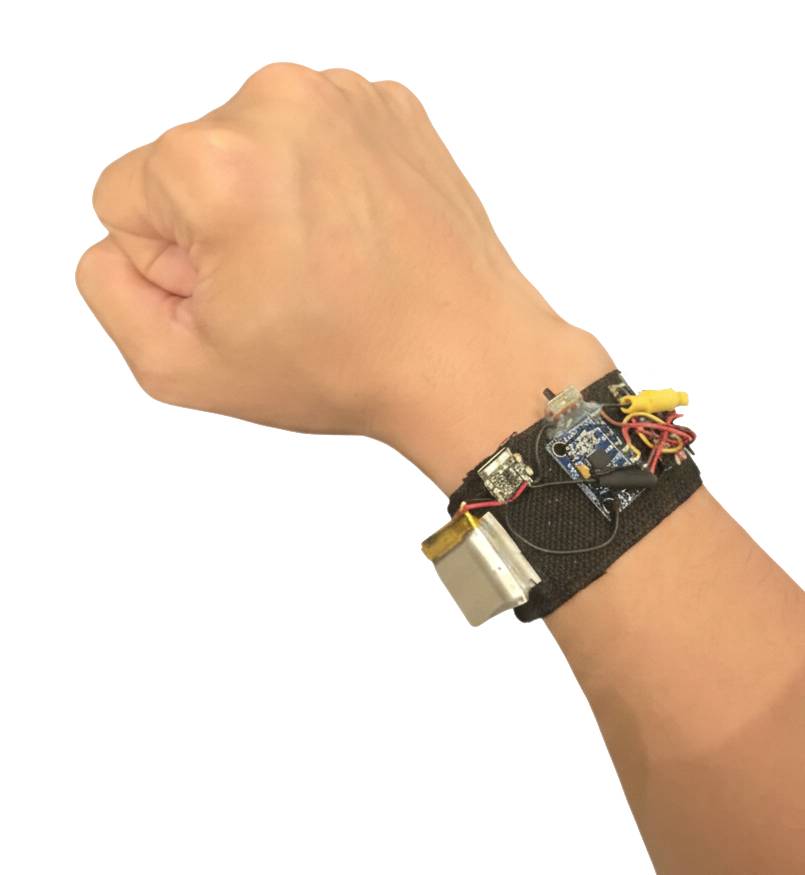
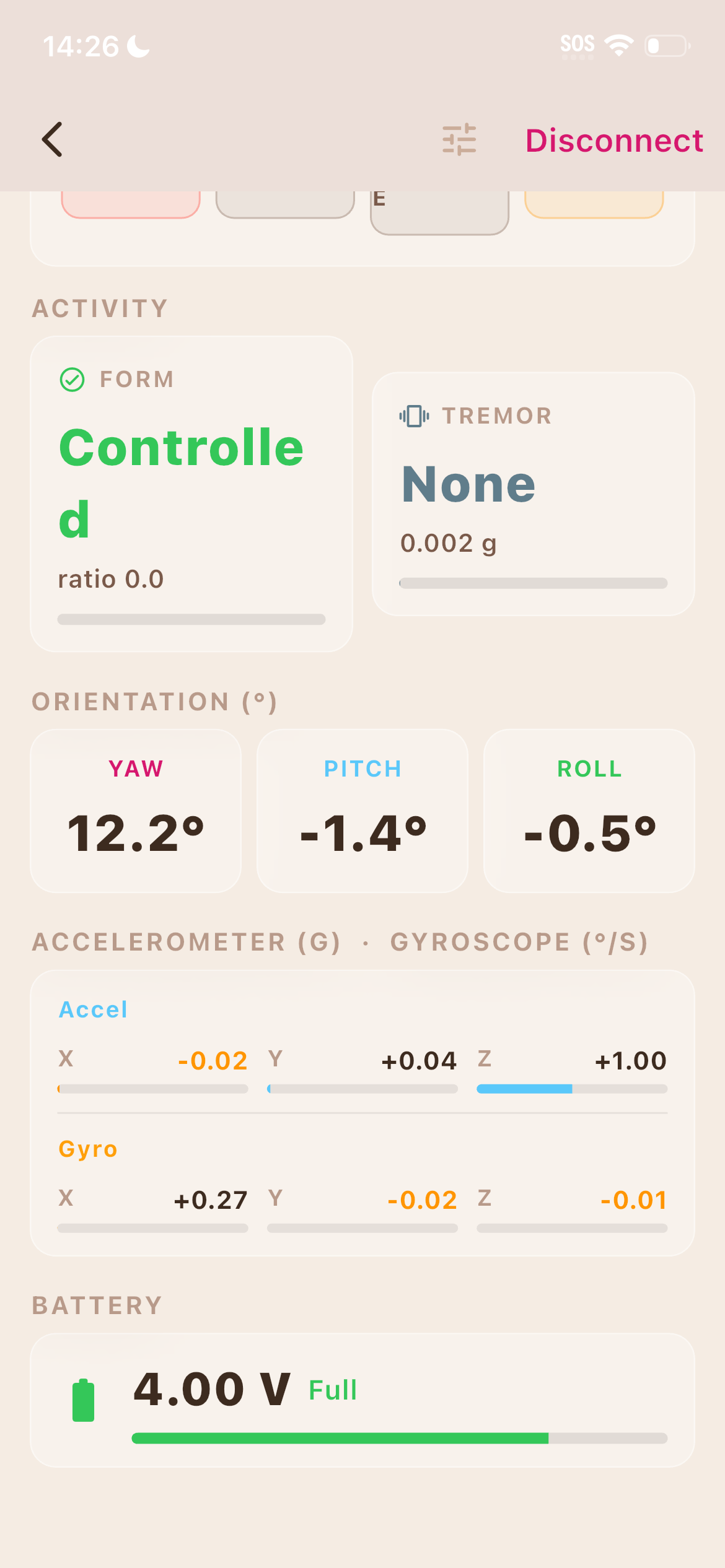
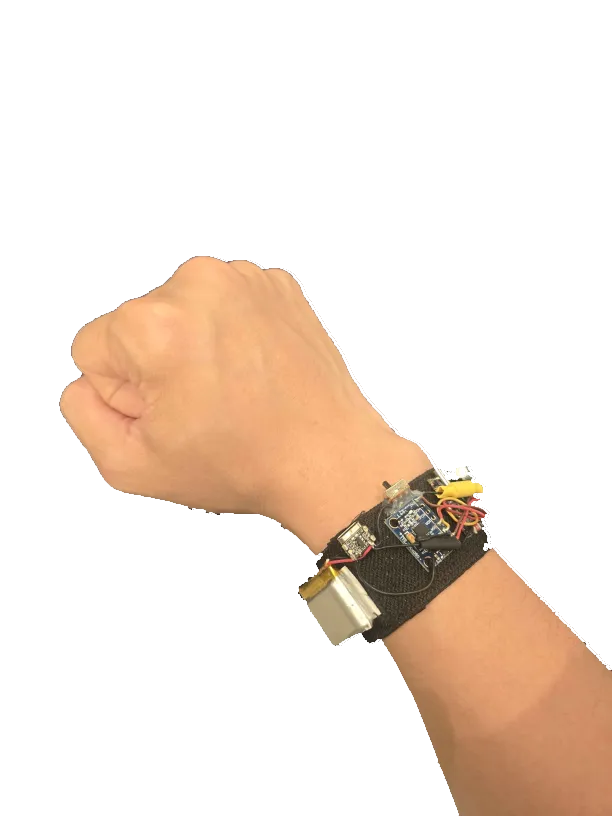
- Custom wrist wearable (senses) — A 100Hz IMU sensor detects the "invisible" physics of a rep: momentum cheating, muscle tremors, and plane-of-motion drift that no camera can catch.
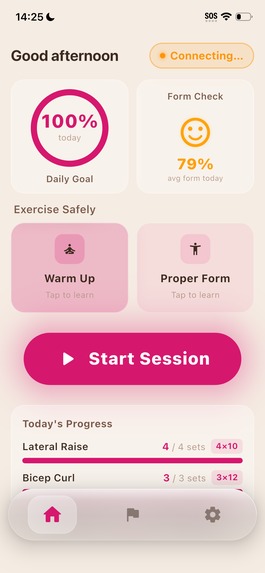
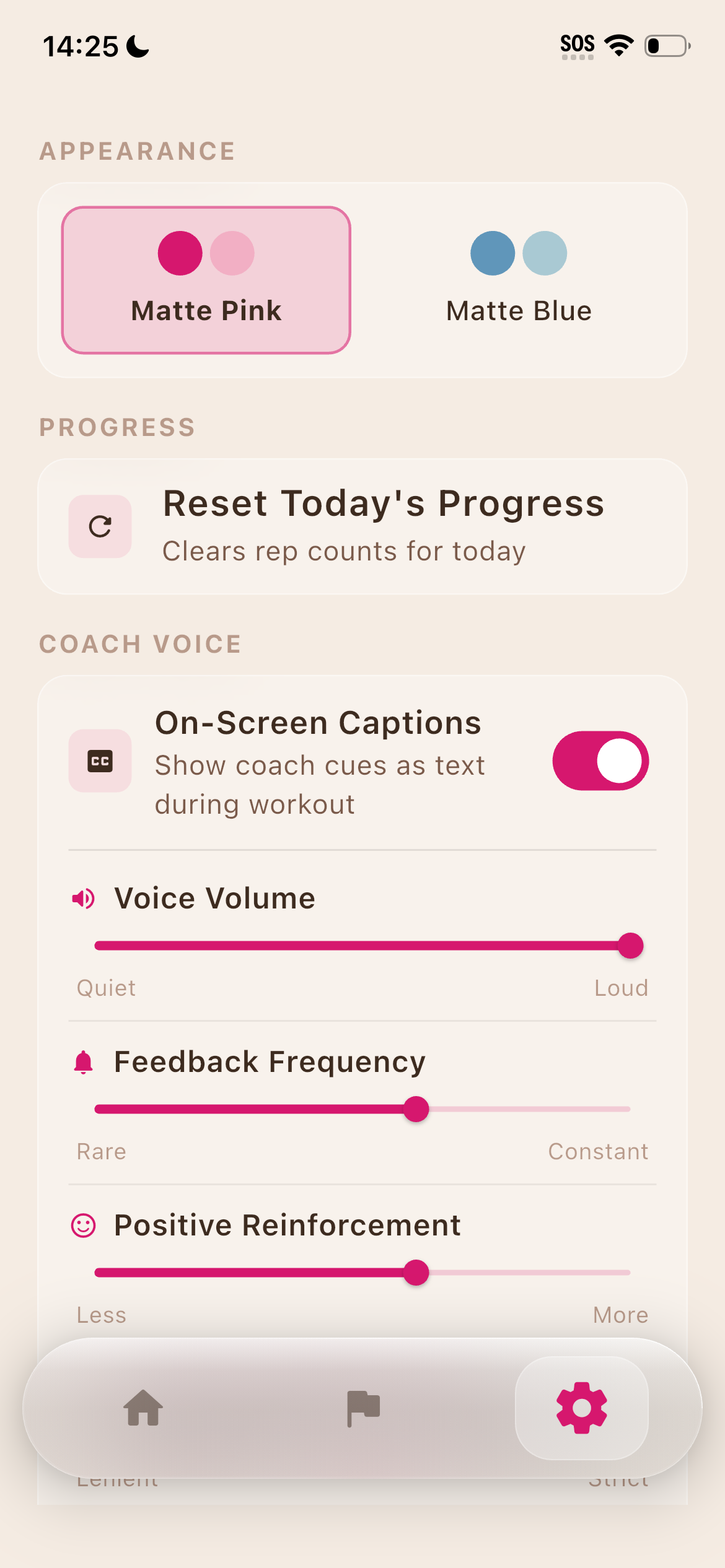
When these two streams align, SafeReps builds a live Digital Twin of your workout. The moment your form degrades, the AI voice coach fires immediately: "Slow your descent" or "Straighten your arm" — not after the rep is already over.
How We Built It
| Layer | Technology |
|---|---|
| Mobile app | Flutter + Google ML Kit (pose landmarks at 30 FPS) |
| Wearable MCU | ESP32-C3 with BLE |
| Motion sensor | MPU6050 6-axis IMU at 100Hz |
| DSP | On-chip high-pass filter (tremor isolation) + angular/linear velocity ratio (cheat detection) |
| State machine | 5-stage FSM: Idle → Top → Descending → Bottom → Ascending |
| Voice coach | Priority-gated audio engine with Fisher-Yates shuffled cue pools |
| Calibration | 1-second T-Pose routine for automatic sensor-to-limb alignment |
Data streams from the wearable to the phone over low-latency BLE, where it's timestamp-aligned with the vision frames and fed through the rep state machine.
Challenges We Ran Into
Sensor alignment — No one mounts a wrist tracker perfectly straight. We built an automatic calibration routine that uses the user's T-Pose to software-align the sensor's coordinate system to their specific limb geometry — no manual setup required.
The latency gap — 30 FPS vision and 100Hz sensors don't sync naturally. We built a custom data-handling bridge so that coaching cues fire within milliseconds of a violation, not after the rep is already finished.
Physical noise — IMUs drift and treat gravity as signal. We implemented on-chip calibration caching and targeted DSP to ensure only intentional muscle movement gets analyzed.
Accomplishments We're Proud Of
Detecting the invisible — We can flag neuromuscular fatigue tremors before the user consciously feels them — a genuine leading indicator of injury risk.
Hardware economics that change the game — Our working prototype costs under $5 in components. With a custom PCB at volume, the BOM drops to ~$3, making a $50 retail price realistic. A $1,500 smart mirror does less. We proved that coaching-grade hardware doesn't have to be a luxury product.
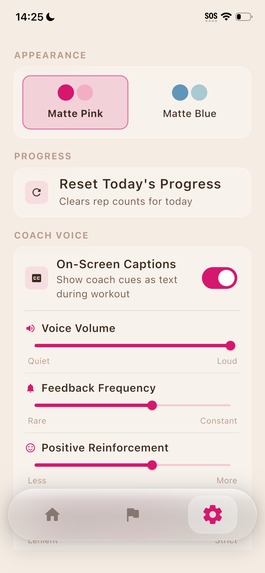
A voice engine that doesn't annoy you — Priority-gating ensures corrections always cut through over encouragement. Fisher-Yates shuffled cue pools mean you won't hear the same line twice until the entire deck has played. It feels like a coach, not a broken record.
What We Learned
Latency is the UX. In fitness, 500ms is the difference between a useful cue and one that arrives after the injury. Optimizing the sensor-to-coach pipeline was the most impactful work we did.
Cameras see position. Sensors feel effort. Vision tells you where a limb is. A 100Hz IMU tells you how hard the muscles are working and how stable the movement is. You need both.
Calibration beats features. The T-pose auto-alignment routine matters more than any individual detection algorithm. If setup is hard, users skip it — and the whole system falls apart.
What's Next for SafeReps
LiDAR-enhanced tracking — Newer iPhones carry a front-facing LiDAR scanner. Integrating it would replace 2D landmark estimation with true depth-aware skeletal tracking, enabling sub-centimeter joint positioning and far more precise plane-of-motion analysis.
Shadow boxing — High-speed strike velocity and "snap" analysis for combat sports training.
AR coaching overlays — Projecting "ghost reps" over the live camera view so users can see the ideal movement path in real time.
Physical therapy — Expanding the exercise library for home-based rehabilitation and clinical-grade recovery tracking.
Full-body sensor arrays — Multiple wearables working in concert to track complex compound movements like squats and deadlifts.


Log in or sign up for Devpost to join the conversation.