Inspiration
I was inspired to create SafePlate after seeing how stressful and risky grocery shopping can be for people with food allergies , especially children and those with physical challenges. I wanted a simple tool that could instantly detect allergens and make eating safer, whether at home, in schools, or in cafeterias.
What it does
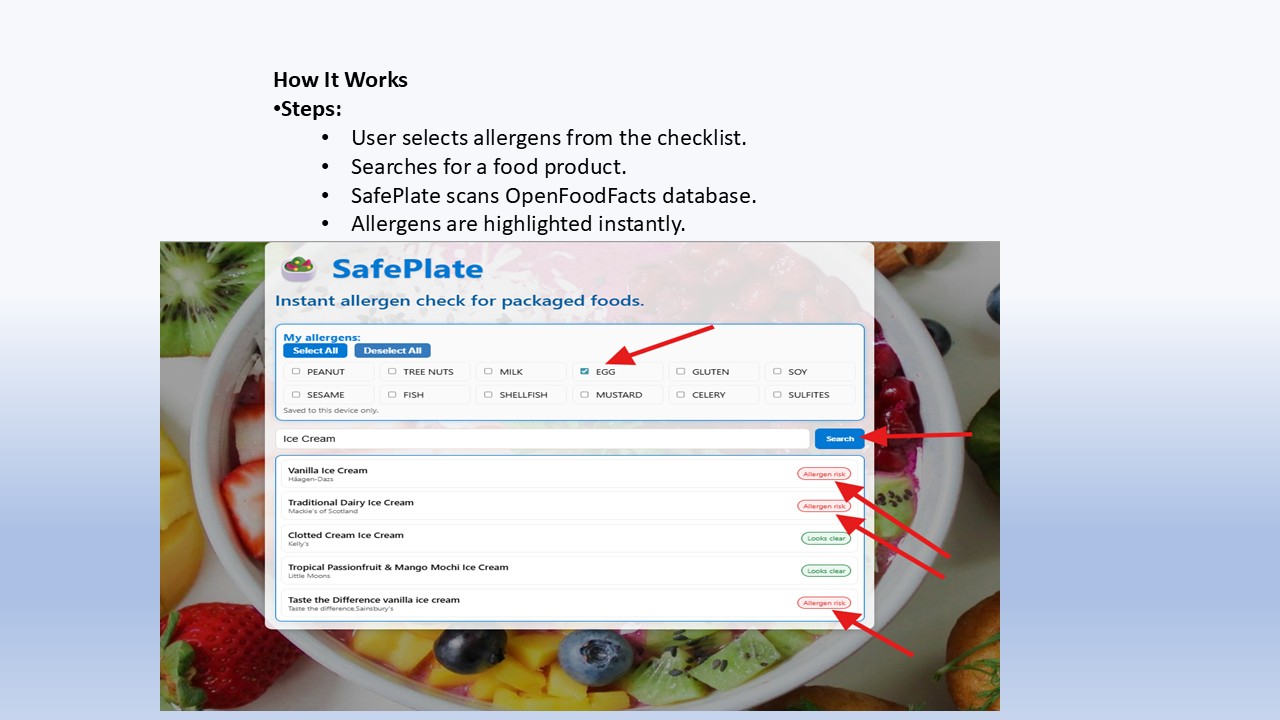
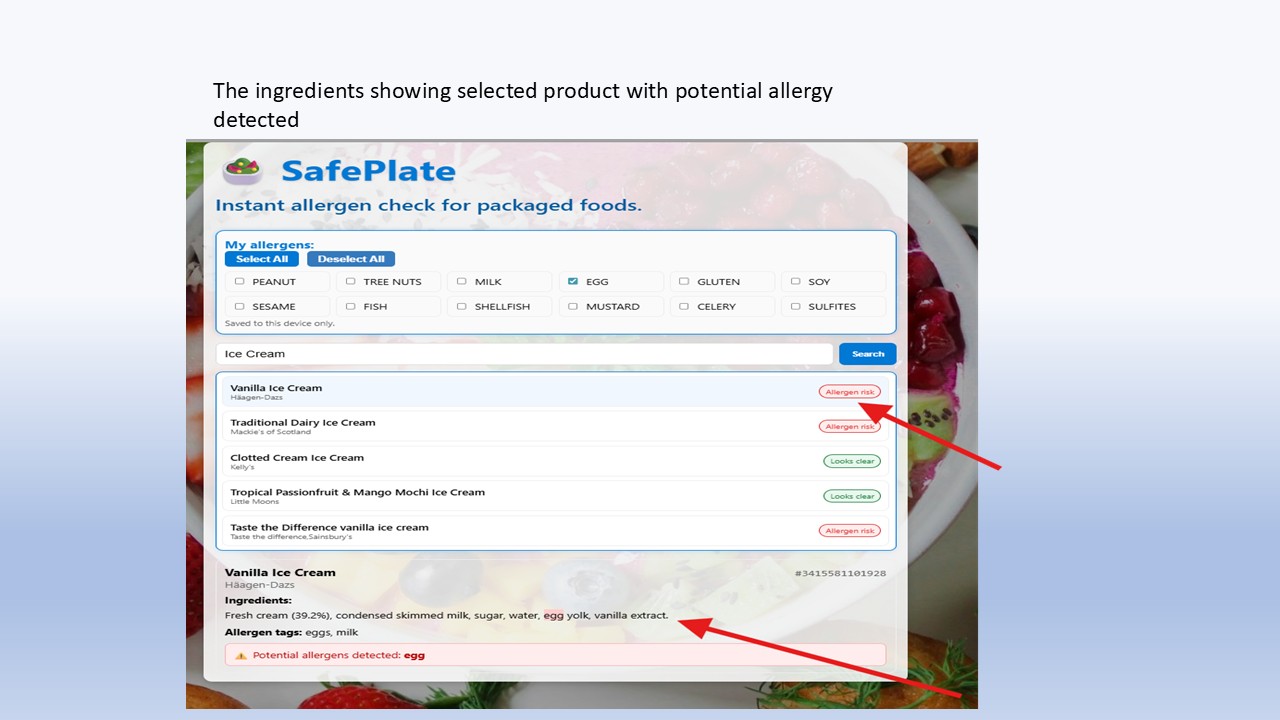
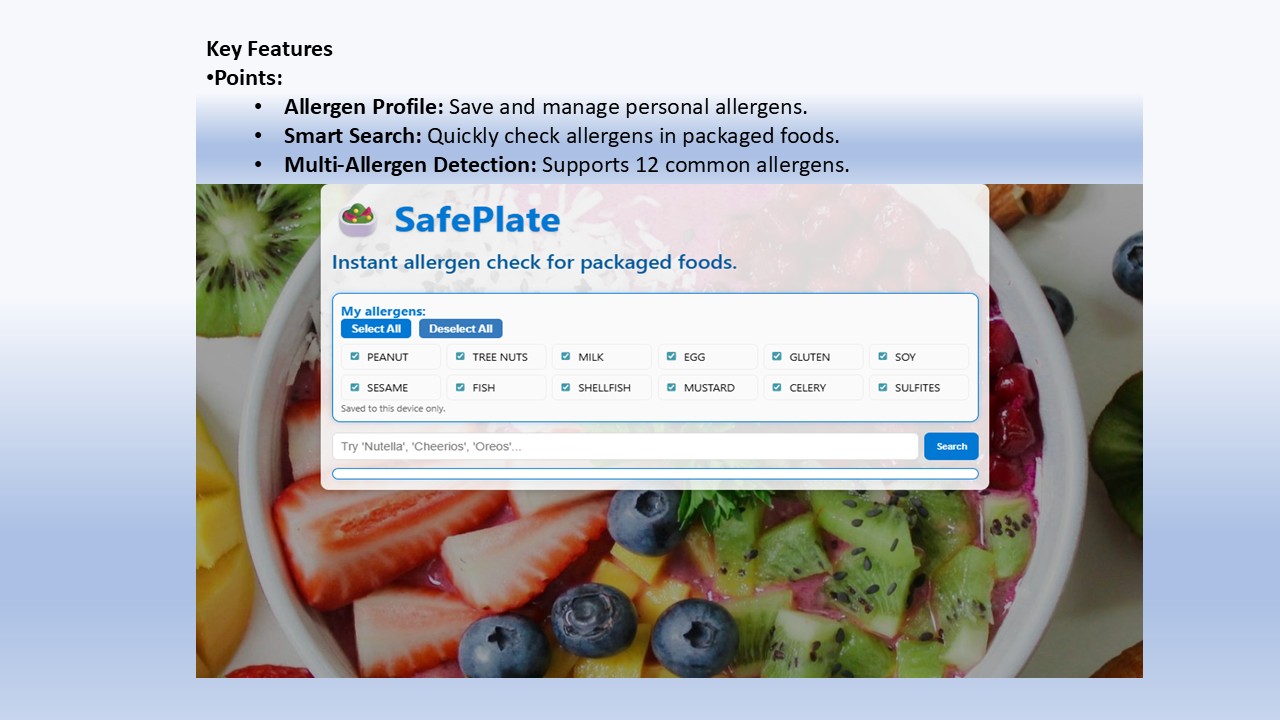
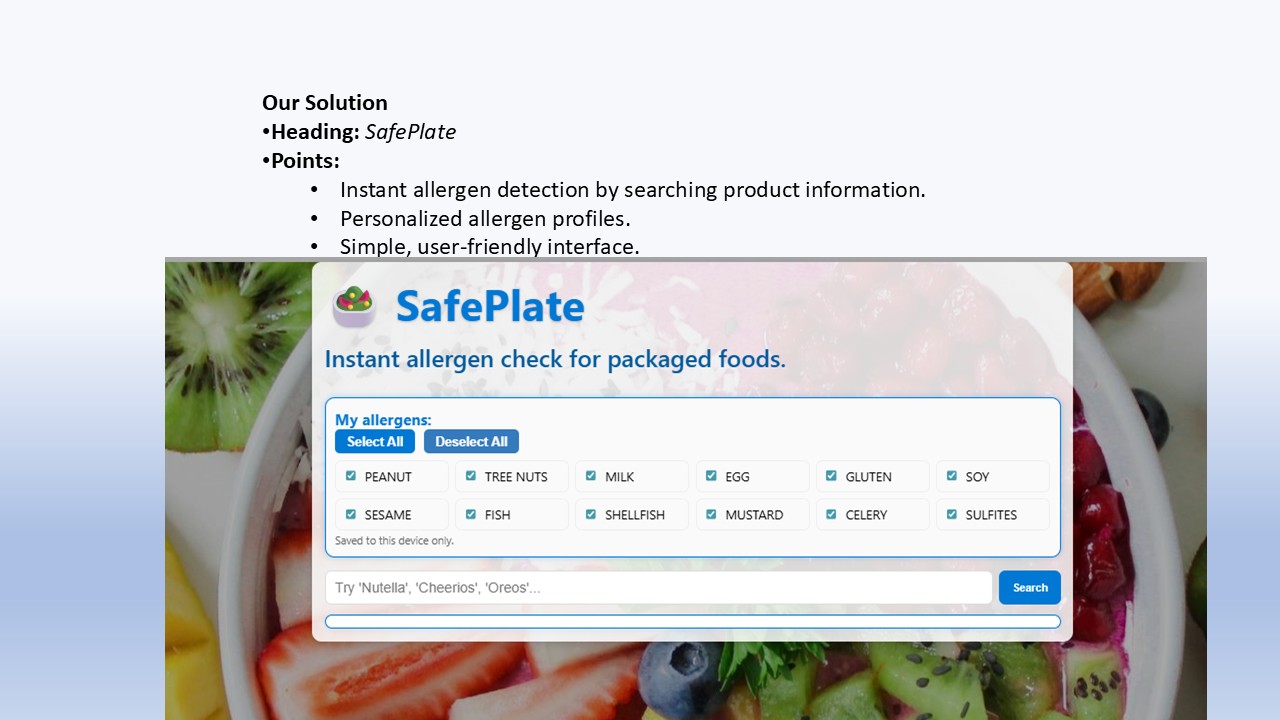
SafePlate lets users select their allergens, search for any packaged food, and instantly see if it contains risks. It highlights allergens in the ingredients list and works in grocery stores, schools, cafeterias, and more- helping people with allergies make safer food choices in seconds.
How we built it
We built SafePlate using React and TypeScript for a fast and interactive front end. The OpenFoodFacts API provides real-time product and ingredient data, while LocalStorage saves each user’s allergen profile in their browser. We developed a custom allergen detection system that scans both ingredient text and allergen tags, then highlights potential risks directly in the ingredient list. The UI is fully responsive, making it accessible on desktops, tablets, and mobile devices.
Challenges we ran into
One challenge was ensuring the allergen detection logic worked across different ingredient formats and naming variations. Filtering results to prioritize relevant products without excluding valid ones was also tricky. We had to handle missing or incomplete API data and design a clean, accessible UI that works on all devices. Balancing accuracy, speed, and ease of use was a constant challenge throughout development.
Accomplishments that we're proud of
We are proud to have built a working prototype that instantly detects allergens and highlights them clearly in ingredient lists. We successfully integrated the OpenFoodFacts API, implemented Local Storage to remember user preferences, and designed an intuitive, responsive interface. Most importantly, we created a tool with real potential to make grocery shopping and meal selection safer for millions of people with food allergies.
What we learned
We learned how to work with third-party APIs, manage and store user preferences locally using LocalStorage, and implement custom text matching to detect allergens accurately. We also gained experience in designing accessible, responsive interfaces and balancing technical functionality with real-world usability. Most importantly, we learned how technology can be leveraged to address a meaningful social cause.
What's next for SafePlate
Next, we plan to add a barcode scanner for instant allergen checks, multi-language support, and cloud syncing so profiles can be used across devices. We also aim to integrate with school and cafeteria menus, introduce offline mode for previously scanned items, and expand our database to include more verified food safety sources. Our long-term goal is to make SafePlate a trusted everyday tool for anyone managing food allergies.


Log in or sign up for Devpost to join the conversation.