-
-
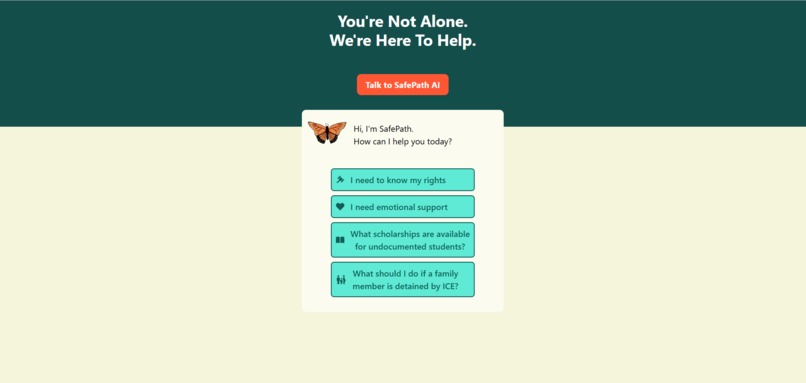
SafePath Homepage
-
SafePath Chatpage
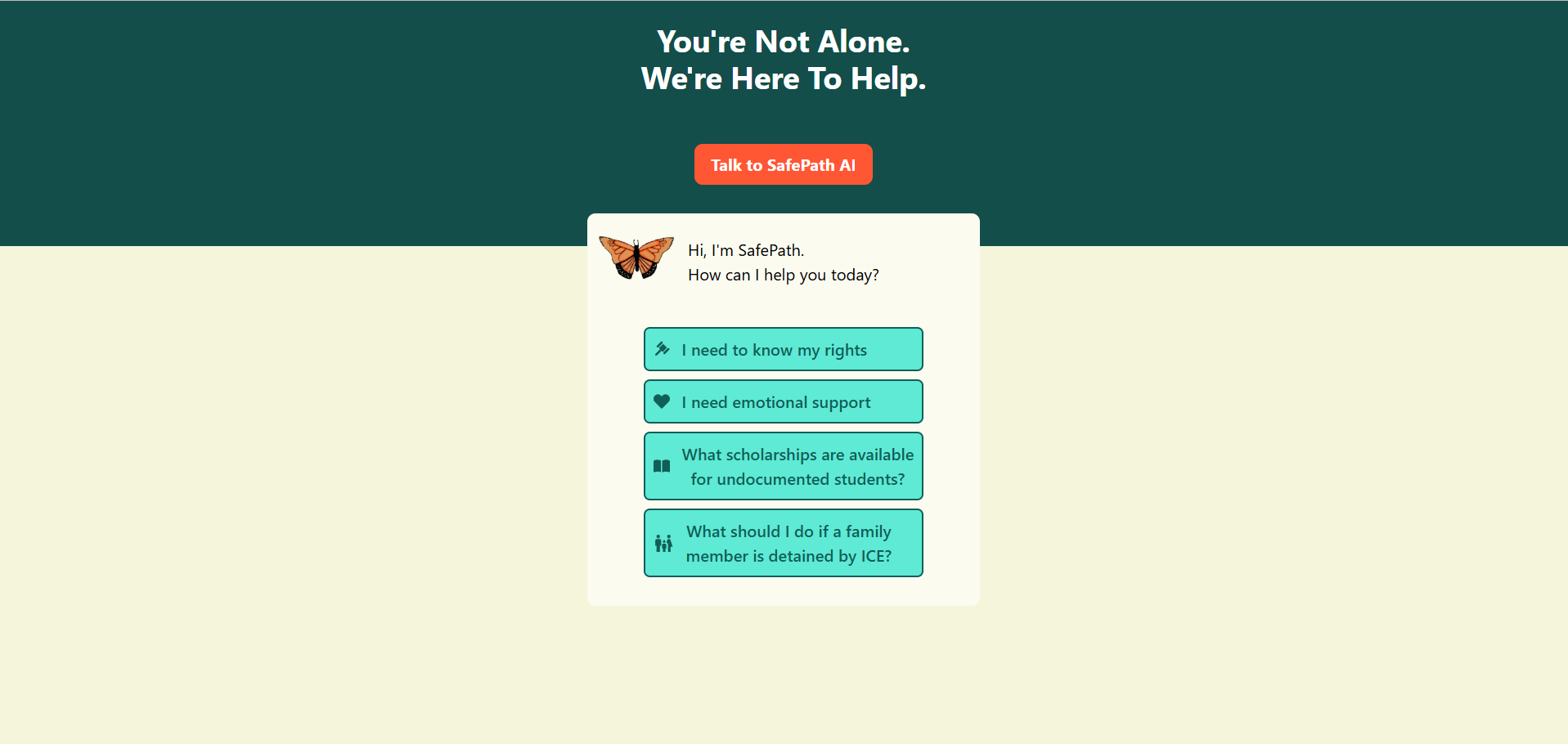
Inspiration
As a Hispanic first-generation student directly impacted by current immigration laws, I’ve developed a strong passion for helping others—especially students who may feel scared, isolated, or uncertain simply because they don’t know where to turn. Growing up in a large family, I often found myself in that position, and I know how important it is to feel seen and supported. SafePath AI is a deeply personal project. While it may not change the larger systems at play, my hope is that it can provide comfort, clarity, and access to basic information for students who are afraid to ask or unsure of where to begin.
How we built it
SafePath AI is an AI-powered chatbot designed to support undocumented students and others in similar situations. It offers answers to basic legal questions related to immigration and provides empathetic, emotionally supportive responses to help users feel heard and less alone. It serves as a judgment-free space where users can ask sensitive questions without fear.
SafePath AI was built using:
Frontend: React for the user interface, styled with Tailwind CSS
Backend: Flask to handle API requests and communicate with the AI model
AI Integration: GROQ API to generate intelligent, context-aware responses
Hosting: Local development environment during the hackathon, with plans to deploy via Render or Vercel
Version Control: Git and GitHub for collaboration and project tracking
Challenges we ran into
Prompt engineering: Crafting prompts that balanced factual legal information with emotional sensitivity was tricky. I had to iterate multiple times to avoid generic or unhelpful responses.
Data sensitivity: Finding a way to serve undocumented users without collecting personal data was important, so we kept everything anonymous and focused on general questions.
Balancing tone: Making the chatbot feel supportive and human without making it seem like a replacement for therapy or legal advice was a constant balancing act.
Accomplishments that we're proud of
Designing an empathetic, accessible, and user-friendly interface
Building a project that reflects a real need in our community
Staying focused on user experience for a sensitive topic
Learning how to integrate multiple tools and frameworks efficiently
What we learned
How to use AI responsibly when dealing with sensitive subjects
The importance of user-centered design in emotionally charged use cases
How to manage time and scope effectively during a hackathon
That personal projects can have powerful impact when tied to real-world problems
What's next for SafePath AI
Mobile Version: Create a mobile-friendly app for easier access
Resource Integration: Link users to local support organizations, helplines, and legal clinics
Deployment: Host it on a public platform so it can reach real users who need it

Log in or sign up for Devpost to join the conversation.