-
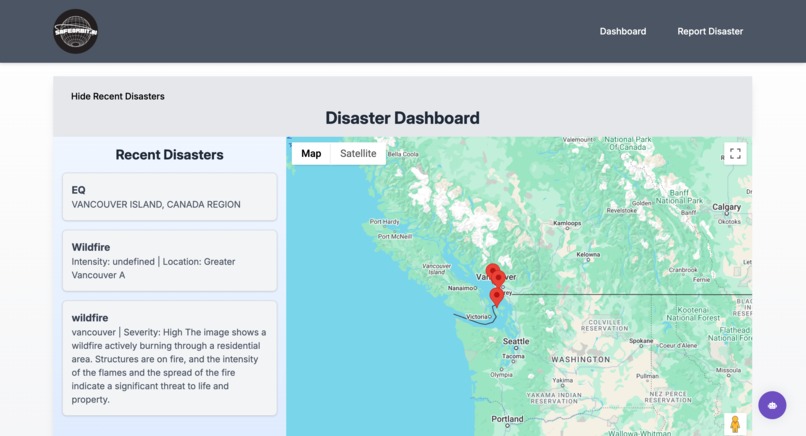
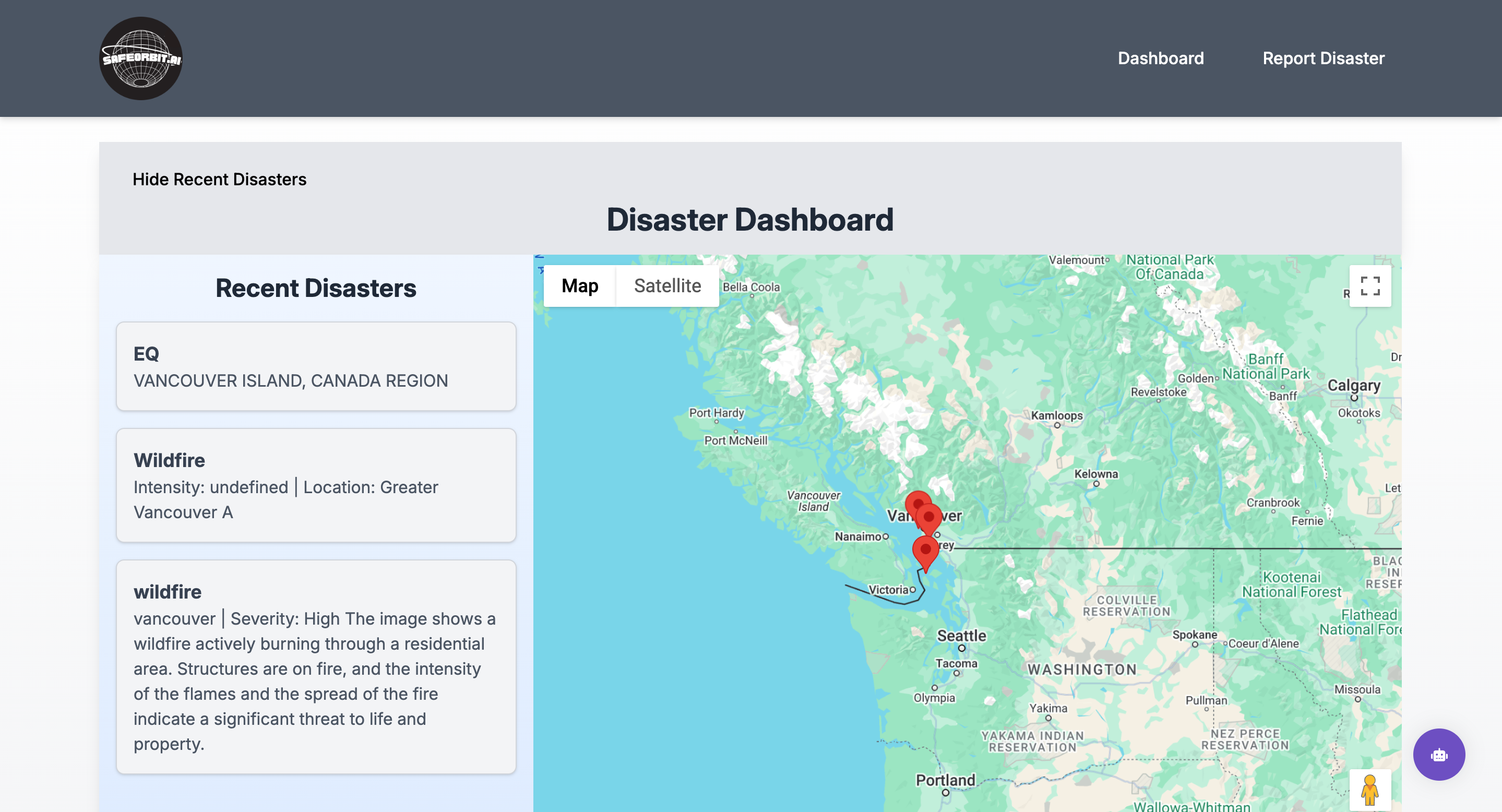
Home Dashboard
-
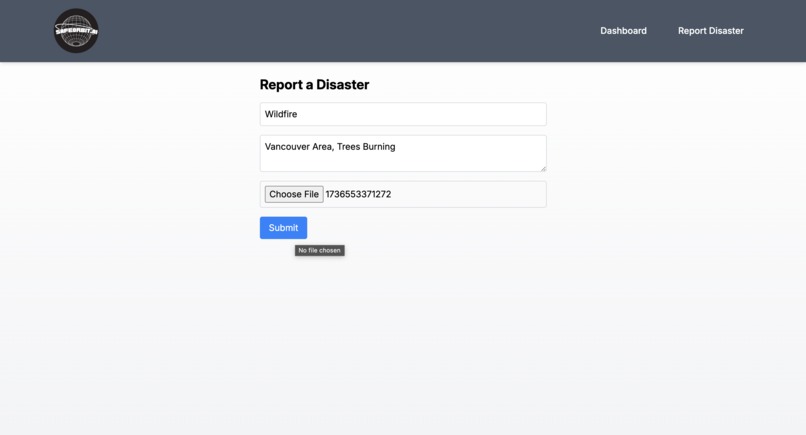
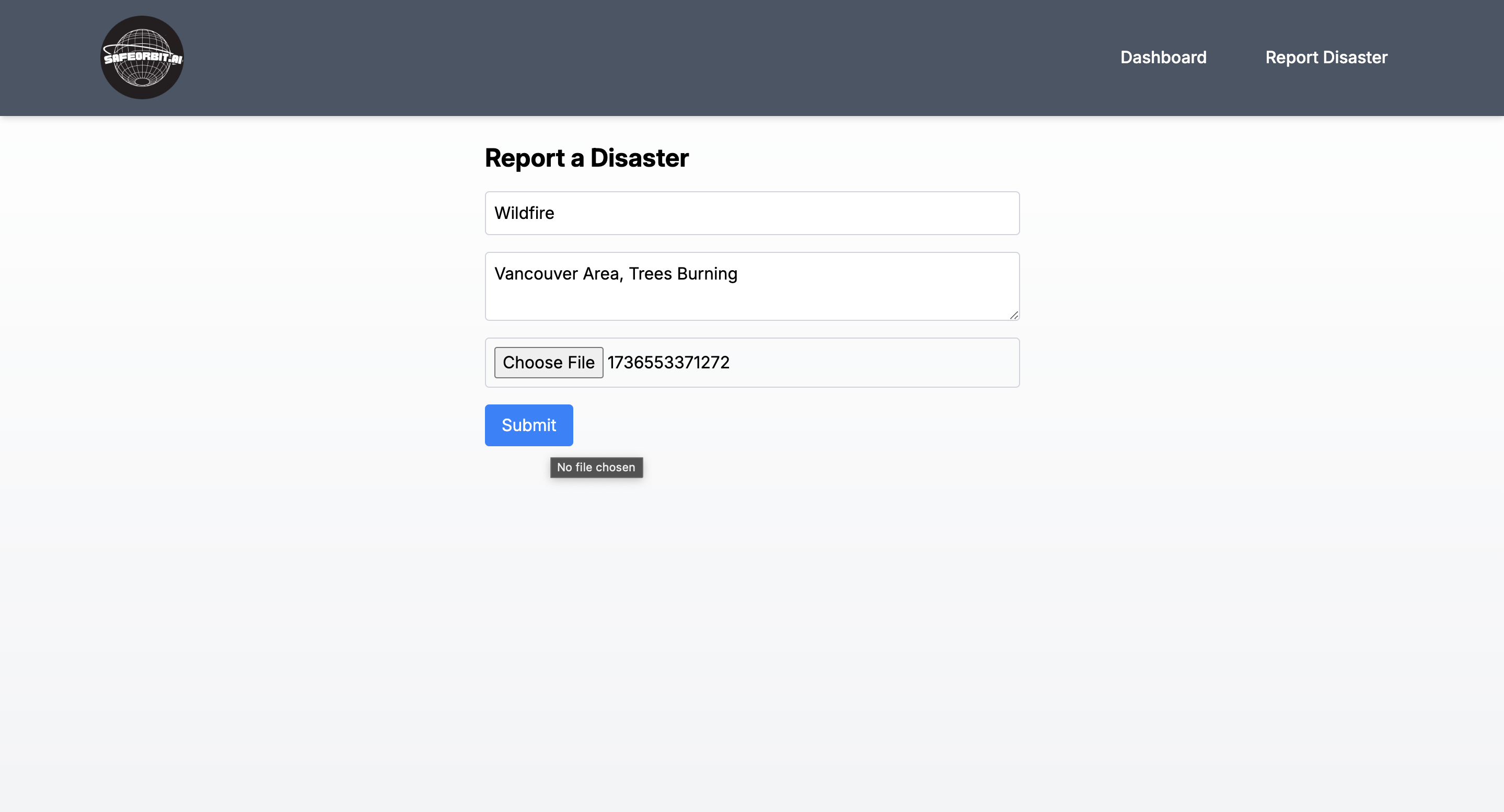
Report Incident
-
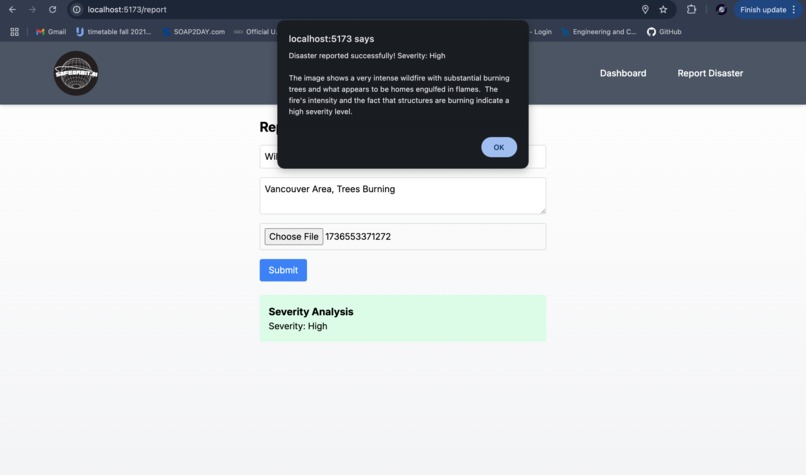
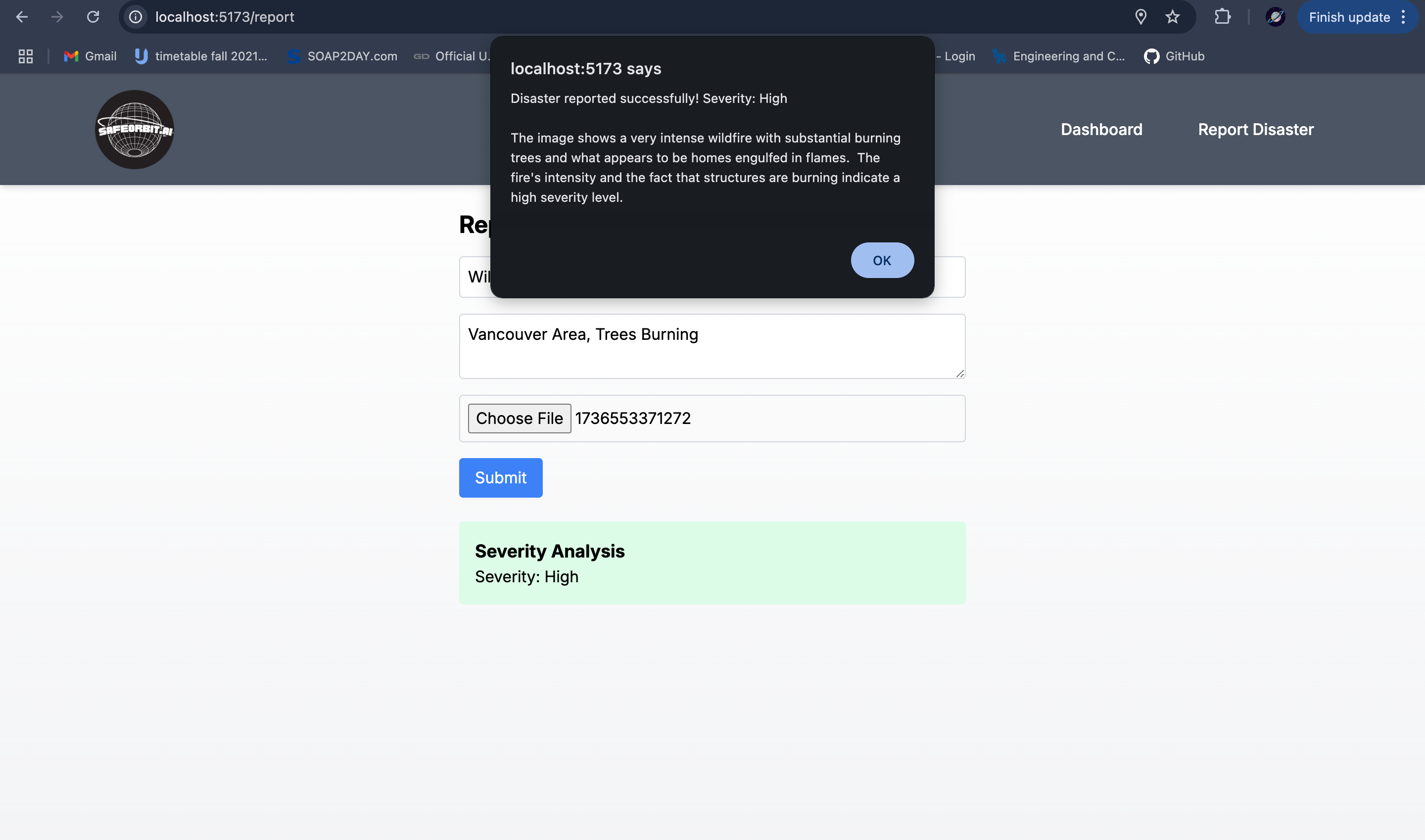
Gemini Analyzing intensity and adding to firestore
-
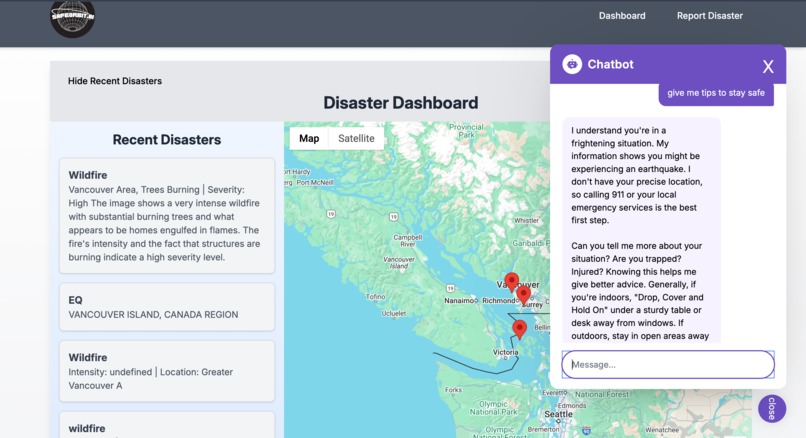
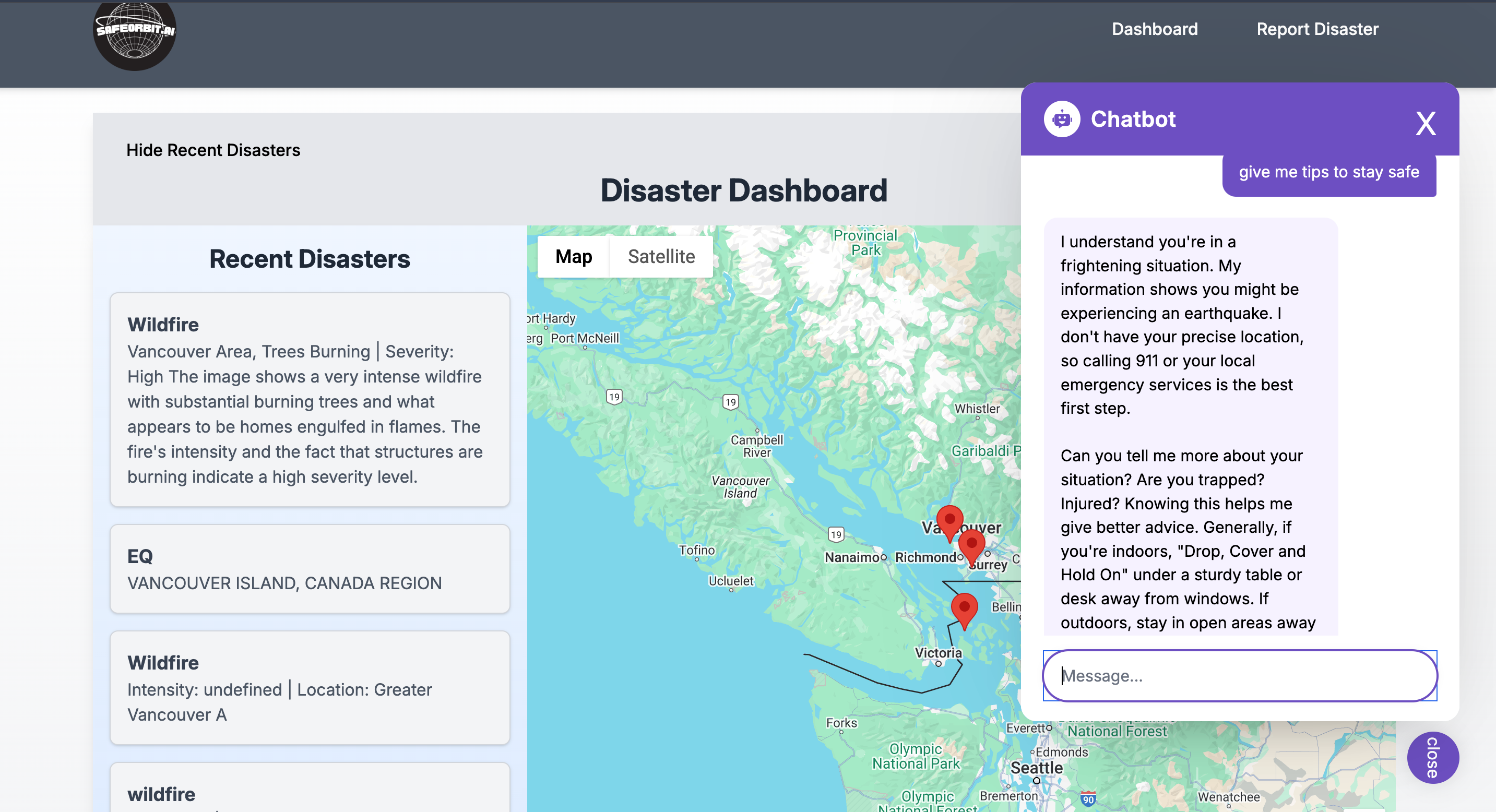
Gemini Chatbot for help in tough situations
SafeOrbit.ai
Inspiration
The increasing frequency and severity of natural disasters inspired us to create SafeOrbit.ai. In crises, timely and reliable information can make the difference between safety and peril. We envisioned a solution powered by cutting-edge AI to help individuals navigate emergencies with real-time insights and actionable guidance.
What it does
SafeOrbit.ai is a real-time disaster management platform that:
- Provides live updates on nearby disasters like wildfires, floods, and earthquakes.
- Offers AI-powered severity analysis based on user-reported incidents and images.
- Guides users to the nearest shelters, medical facilities, or other essential resources.
- Empowers users to report disasters, including images, descriptions, and locations, to contribute to the platform’s growing database of incidents.
- Features a chatbot powered by Google Generative AI (Gemini) to assist users in real-time during emergencies.
How we built it
Frontend:
- Built using React with Tailwind CSS for styling.
- Integrated Google Maps API for interactive location tracking and disaster mapping.
- Implemented Firebase Firestore to manage disaster reports and user-generated content.
Backend:
- Powered by Google Generative AI (Gemini) for analyzing user-reported disasters and assigning severity levels.
- Leveraged Ambee APIs for fetching real-time disaster and wildfire data.
APIs and Services:
- Google Generative AI (Gemini):
- Used for analyzing disaster reports, including images and descriptions, to determine the severity level (Low, Medium, High).
- Powers the chatbot feature for real-time user assistance.
- Ambee Disaster and Wildfire APIs:
- Fetched real-time data on natural disasters and wildfires near user locations.
- Google Maps Geocoding API:
- Converted latitude and longitude coordinates into human-readable locations (e.g., nearest city).
- Firebase Firestore:
- Stored user-reported disasters and their associated metadata like type, severity, and location.
- Firebase Storage:
- Managed uploaded disaster images (planned/optional).
- Google Vision API (Optional):
- Planned for advanced analysis of disaster-related images to extract meaningful insights.
- Google Generative AI (Gemini):
How we used Google Generative AI (Gemini)
Severity Analysis:
- When users report a disaster, they provide details such as a photo, description, and location. This data is processed by Gemini using carefully crafted prompts.
- Gemini analyzes the data and determines the severity of the disaster, returning a score categorized as Low, Medium, or High. This helps users assess the urgency of the situation.
Real-Time AI Assistance:
- Gemini powers the chatbot feature, enabling it to assist users in real-time.
- Based on user queries and location data, Gemini provides context-aware responses, such as locating nearby shelters, offering safety tips tailored to the disaster, and guiding users toward critical resources.
Challenges we ran into
- CORS Issues: While integrating third-party APIs like Ambee, we faced challenges with cross-origin resource sharing.
- Image Analysis Integration: Handling and processing large base64-encoded images for AI input required optimization.
- Prompt Engineering for AI: Creating effective prompts for Google Gemini to ensure meaningful severity analysis was a learning curve.
- Real-Time Updates: Synchronizing live disaster data from APIs with user-reported incidents in real-time posed technical challenges.
Accomplishments that we're proud of
- Successfully integrated AI-powered severity analysis into a disaster management platform.
- Enabled user contributions through a seamless disaster reporting interface with location and image uploads.
- Developed a clean, user-friendly UI that prioritizes accessibility during emergencies.
- Created a scalable platform that combines multiple APIs to provide comprehensive disaster assistance.
- Implemented a real-time chatbot that provides personalized assistance during emergencies.
What we learned
- AI Integration: Learned how to utilize Google Generative AI for real-world applications effectively.
- API Usage: Improved our understanding of API integration, handling authentication, and optimizing requests.
- User-Centered Design: Designed a system focused on simplicity and clarity to support users in high-stress situations.
What's next for SafeOrbit.ai
- Make it available as a multi-platform mobile app!
- Enhanced Image Analysis: Integrate Google Vision API for advanced disaster detection in images.
- Offline Support: Add offline capabilities to ensure users can access critical information during power outages.
- Community Features: Users can mark safe zones, shelters, or road closures.
- Predictive Analysis: Use AI to predict disaster risks based on historical and real-time data trends.
- Multilingual Support: Expand accessibility by supporting multiple languages.
Built With
- ambee(disaster)
- firebase
- gemini
- google-geocoding
- node.js
- react
- tailwind

Log in or sign up for Devpost to join the conversation.