Inspiration
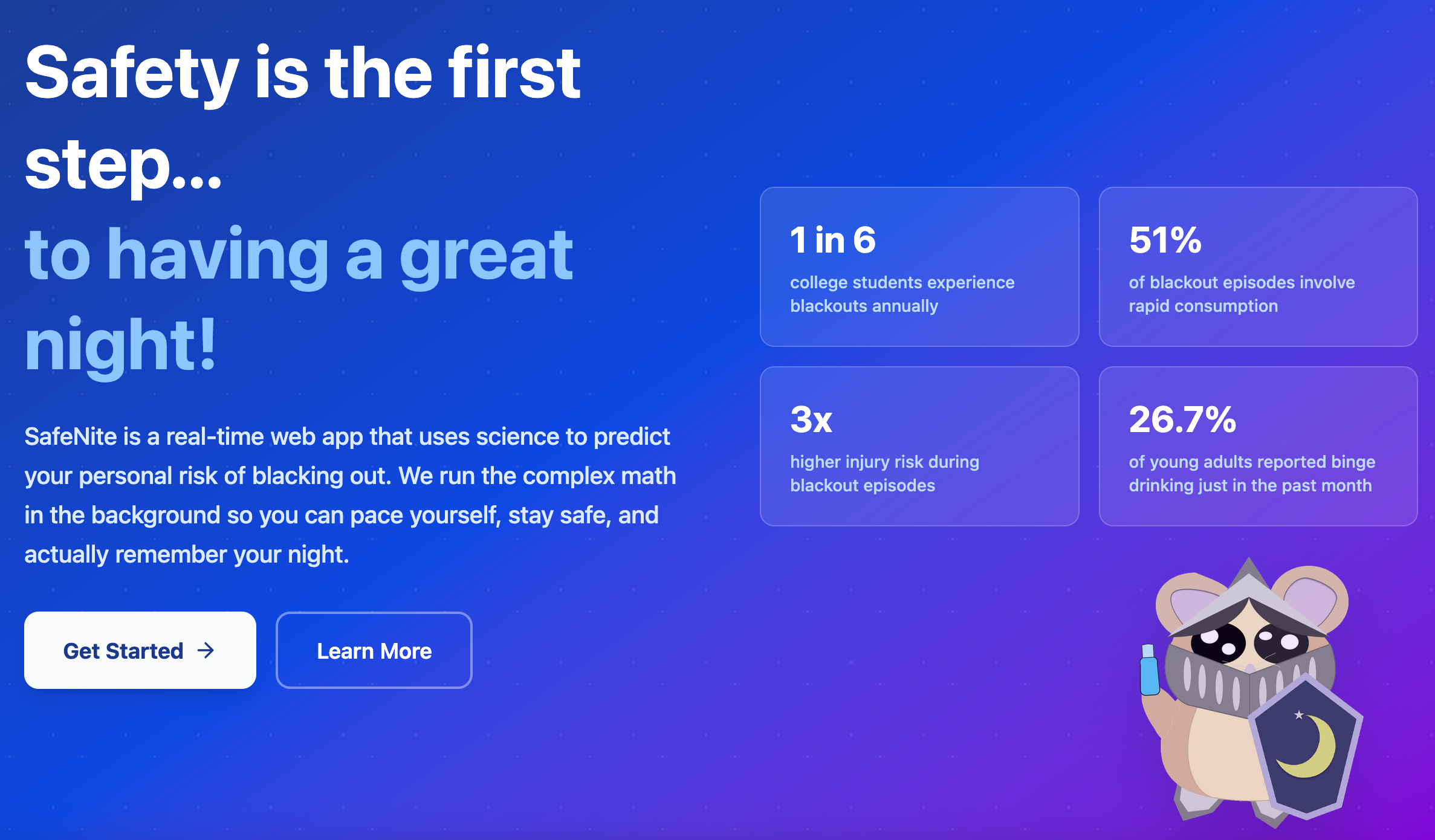
Ethan: As college students who have drank alcohol and had to face negative consequences because of poor planning and lack of proper drinking strategy, we wanted to create a web app for others like us to address the negative effects of drinking. We wanted to inform students the consequences of poor drinking habits and provide them a unique resource to hopefully reduce alcohol induced blackouts and hopefully instill good drinking habits.
What it does
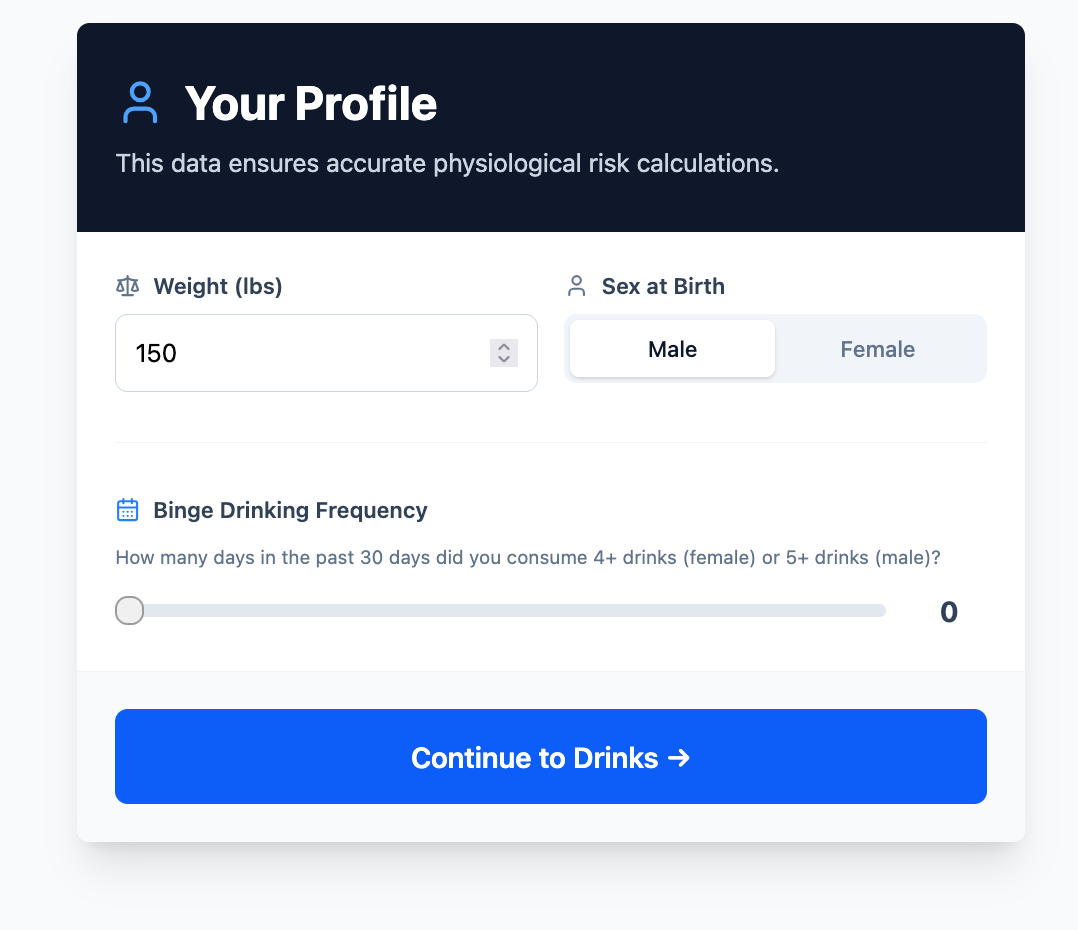
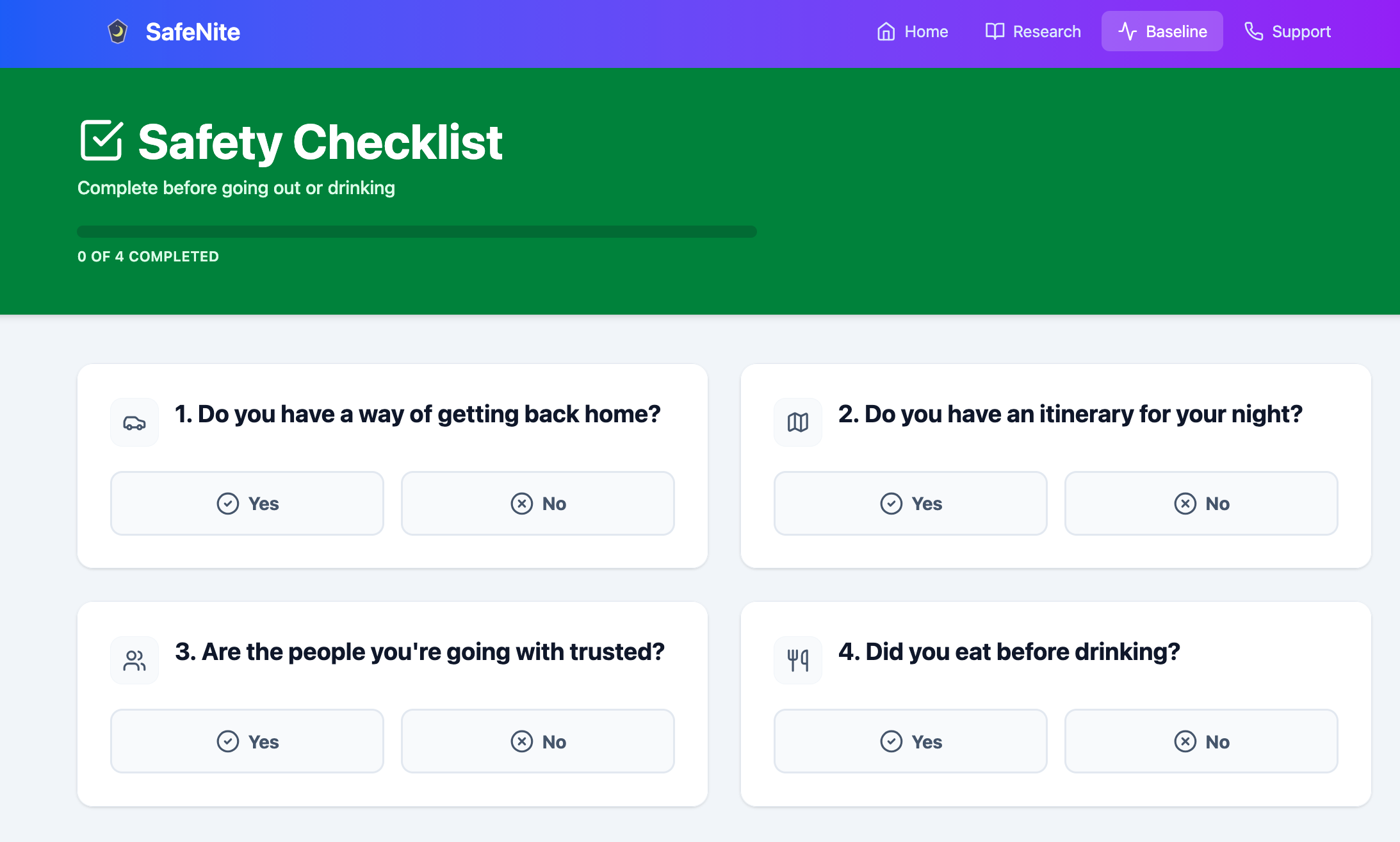
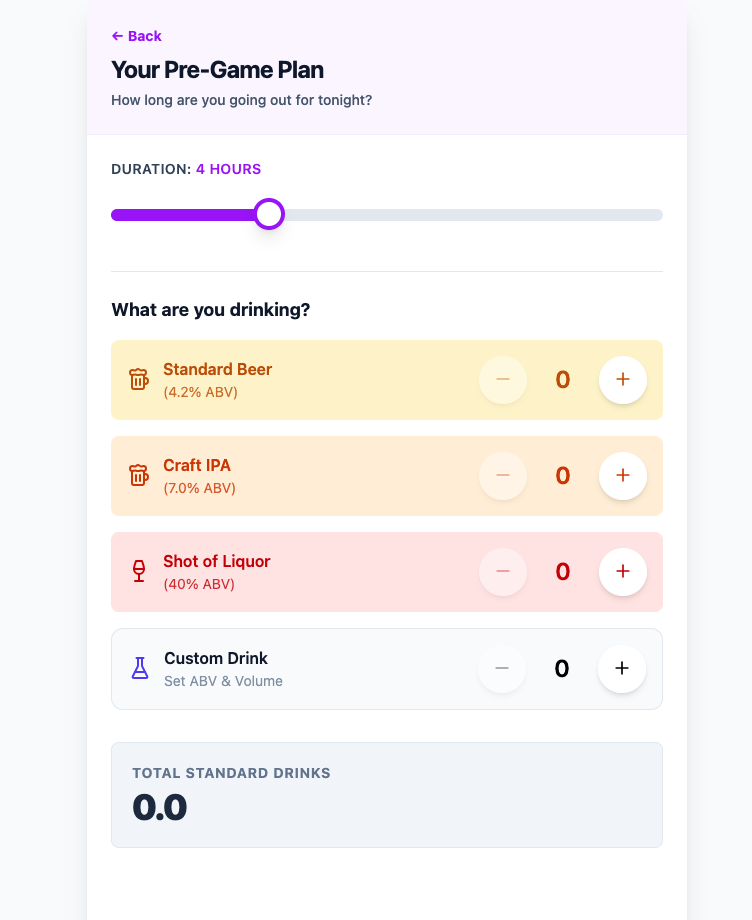
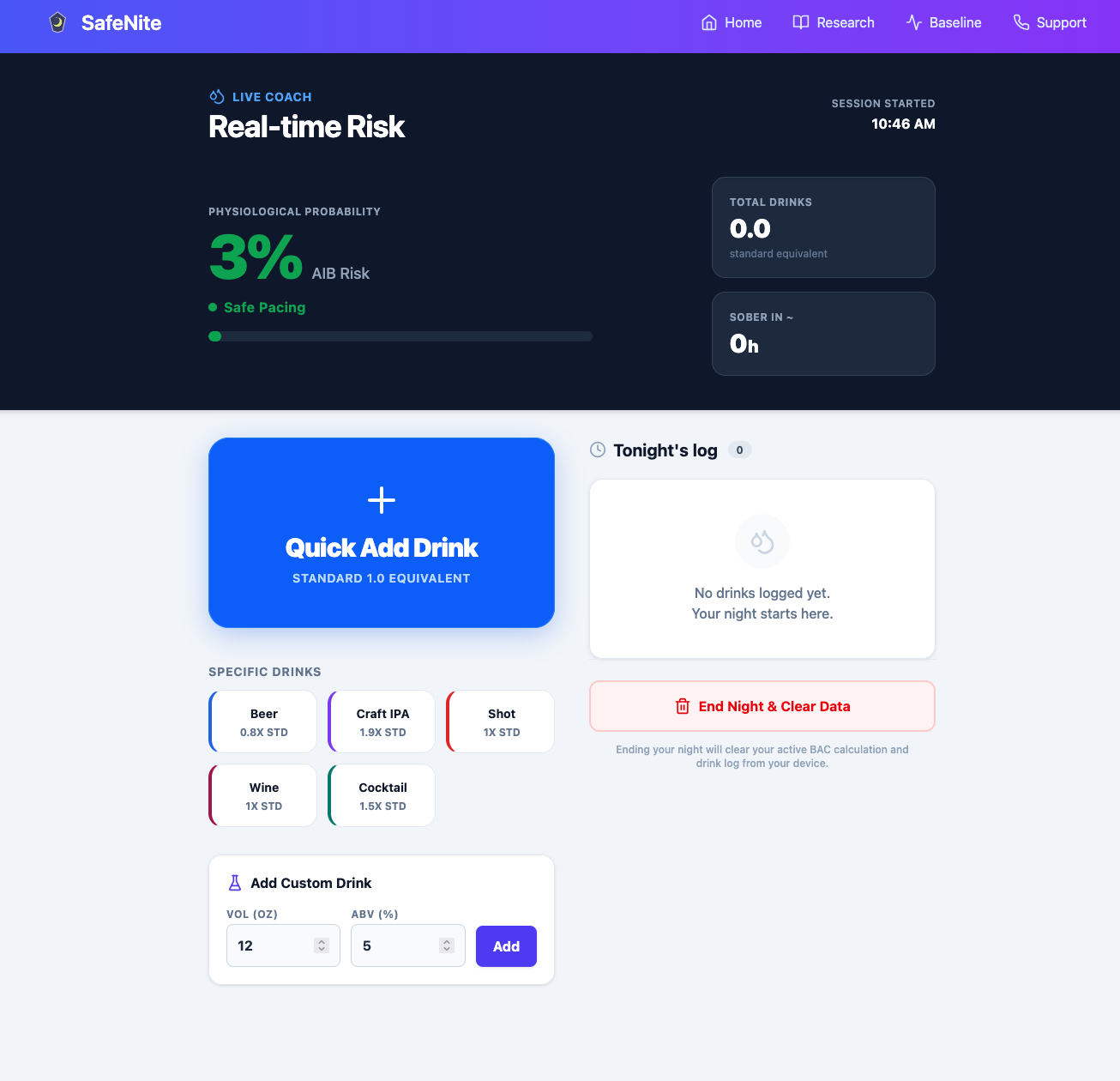
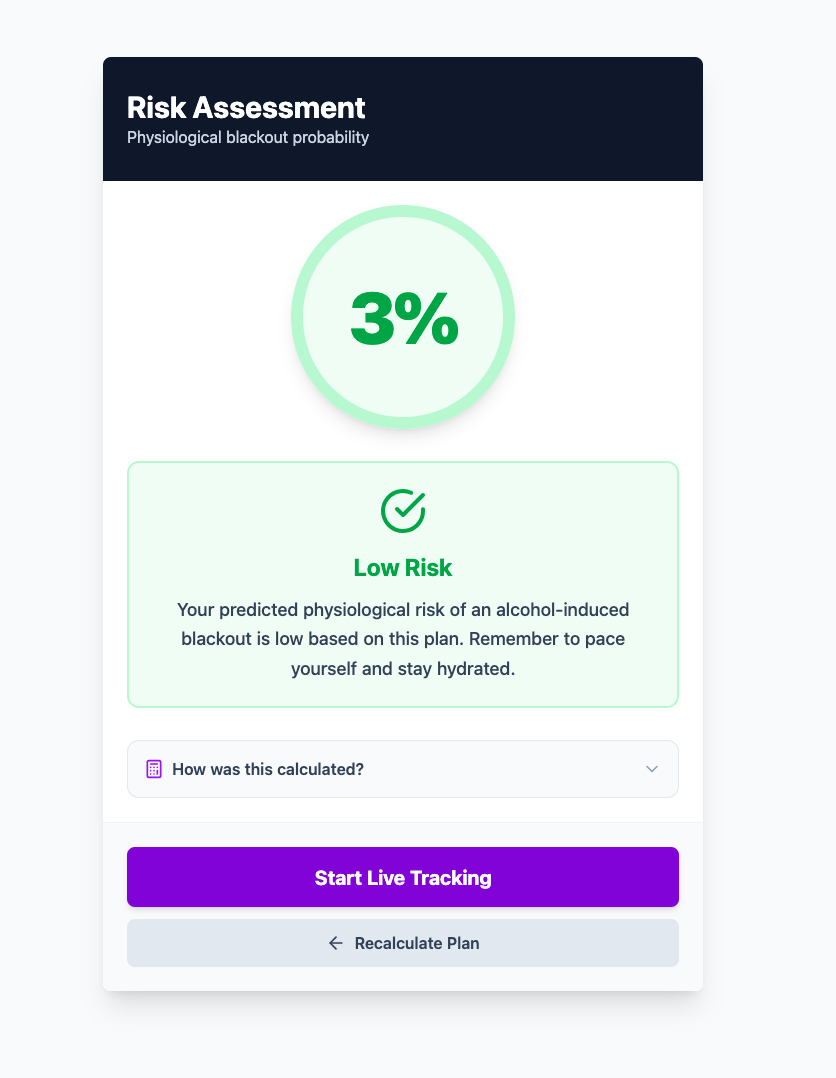
Ethan: SafeNite is a web app that using Bayesian reasoning to calculate probability of the risk of an AIB (alcohol induced blackout). Users must go through a 4-step checklist to support proper safety before drinking and then they must fill out their background information for their profile. From there, users can model their risk of AIB after specifying how long they plan on drinking for and what drinks they plan on consuming. This gives user a game-plan of an estimated safety threshold before they actually begin drinking. Lastly, users can move onto the live tracking portion for when they begin drinking. Users may add drinks as they go to see their risk of AIB live and will be given proper warnings if they proceed into a high risk of AIB.
How we built it
Horacio: We built SafeNite by first getting a visualization and a good base of the site from Figma. With that, ideas came flowing in on how to move things around and customizing the site. After creating the git and clearing up some issues, we started editing files on VScode that included plenty of Typescript, Python and CSS. We also worked on our logo and mascot and came up with a shield with a moon that encapsulates SafeNite, a shield people can use to protect themselves from an intense night out. Our mascot, Cornelius protects the user and gives them hope and strength to stick to the plan and keep the strategy going. Throughout the 24 hours, we coordinated with each other to let us know when and what we were committing so we don't get caught up doing the same thing and we even shared new ideas and concepts to add. We built SafeNite to ensure users that everyone can have fun night out and be safe simultaneously. Ethan: I built the Bayesian Logistic Regression Model using the bambi library on Python using the NSDUH dataset.
Challenges we ran into
Horacio: Throughout the Hackathon, our team had a few issues with pushing a few commits where some commits were pushing nearly 7000 files that the team and I couldn't figure out. After a while we identified that 7000 node_modules were trying to get added, which in this case was unnecessary and not needed. After waiting for nearly 2 hours to push those unknown files, we decided to hard reset the git and create anew. From there, the node_modules were ignored and we were able to commit our work throughout the day with ease. There was a rough patch as well where we couldn't access all the files on each other's laptop but as time went on, they were easily accessible.
Accomplishments that we're proud of
Ethan: I am proud of how much we learned throughout this hackathon. This was our first hackathon and we all had to learn so much about coding and web development. In the end, we were able to create an end-to-end product that we were all happy with.
What we learned
Horacio: We learned a lot more about the issues of alcoholism and how poor drinking habits can really affect someone mentally and physically. Along with the issues we faced, we were able to learn more about each other as we worked under pressure and worked as a team for the first time. We were able to see our flaws in things when it came to customizing, speed and handling of stress. In the end, all of these were necessary to learn about each other and we are glad that we learned more about each other and our skills. Ethan: I took my knowledge of Logistic Regression from econometrics and amplified it with what I learned Bayesian statistics. I also had to take on what I knew about the data science process and incorporate a new type of model that I never worked with. Justin: SafeNite is quite a heavy subject, so it required some thinking around how the app should emotionally impact the user. Our thinking was to be calm, supportive, and nonjudgmental, while clearly indicating risk
I learned how important it is to not overwhelm the user with too many details by offering them only the necessary information in the form so they wouldn’t be overwhelmed. With the use of visual drink presets we discovered the importance of big, inviting, and purposeful buttons combined with simple navigation to ensure the user isn’t making too many decisions at once and is focusing solely on their safety.
Additionally, I learned how to work on a real team project under a tight schedule. Learning I needed to compromise and design based on your team’s capacity to complete the app, making the most difference with the least effort in the least amount of time.
What's next for SafeNite
Justin: The next steps we would take with SafeNite would be that we would focus on validation and trust, such as trialing the app with students to determine if the information is understandable and helpful rather than judgmental, if the drink presets are appropriate, and if the Safe Ride interaction works at the right moment. Longer term, we will keep fortifying the research side of SafeNite by both refining the risk model and the science behind it. In further expanding SafeNite, we could consider including features like saved emergency contacts, roommate text alerts, campus-specific safe ride numbers, and post-night check-ins. The idea is not to calculate risk, but to provide students with a simple, clear safety step when they need it most.
Built With
- bambi
- nextjs
- python
- react
- typescript

Log in or sign up for Devpost to join the conversation.