-
-
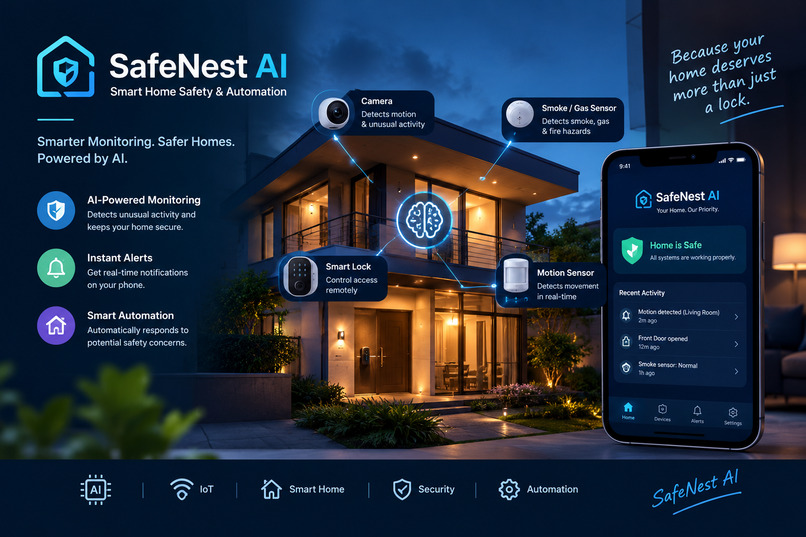
We were inspired by the idea of making homes safer and smarter through artificial intelligence and automation
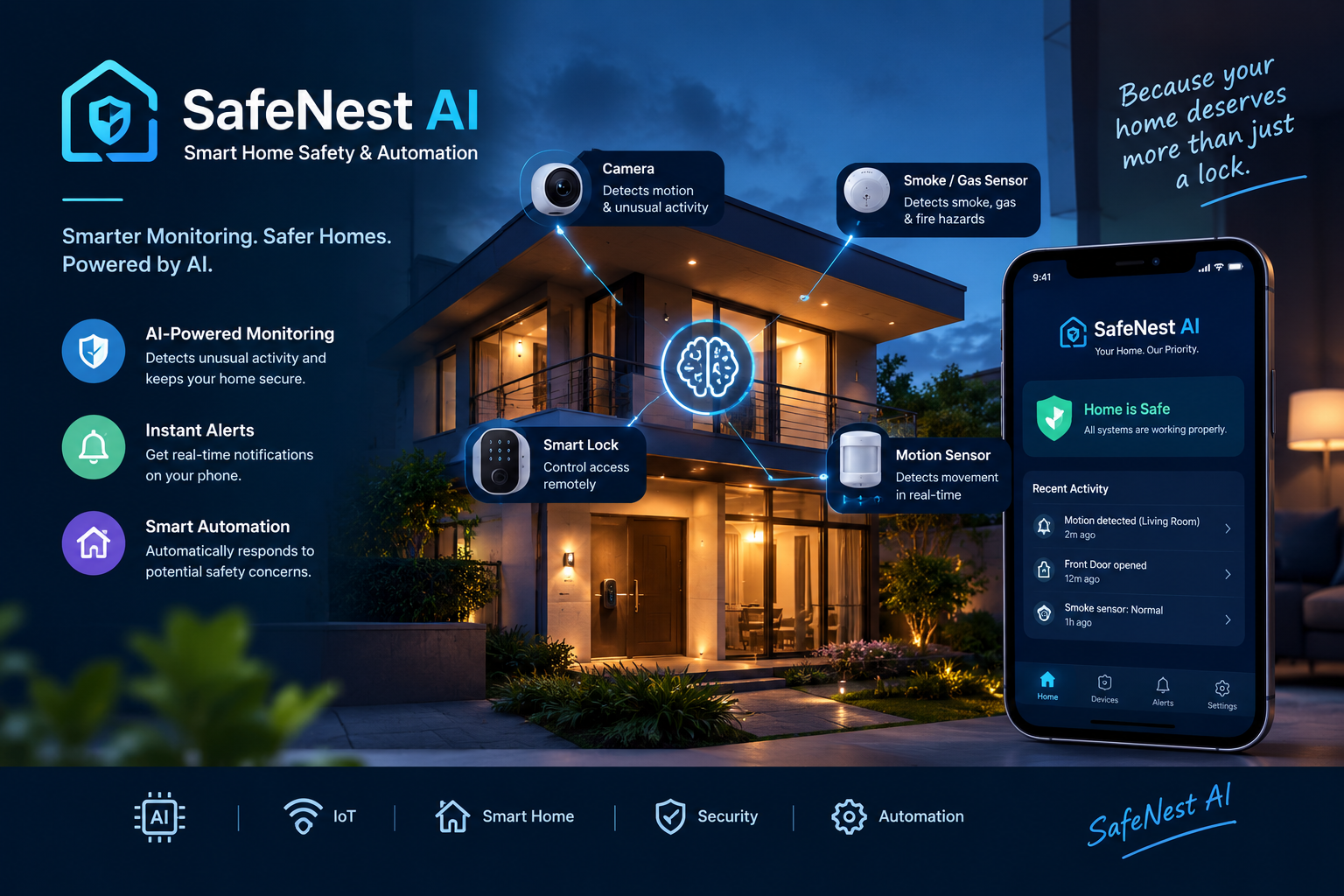
Inspiration
We were inspired by the idea of making homes safer and smarter through artificial intelligence and automation. In our daily lives, people cannot always monitor their homes, and important events may go unnoticed. We wanted to explore how AI and smart home technology could help make home monitoring more intelligent, convenient, and accessible.
What it does
SafeNest AI is a smart home safety concept that aims to combine AI-powered monitoring, intelligent alerts, and automation in one system. Its vision is to help users monitor important events, receive timely notifications, and explore automated responses to potential safety concerns. The project focuses on making smart home safety easier to understand and use.
How we built it
We approached SafeNest AI by breaking the problem into smaller components: smart home monitoring, event detection, alert generation, and automation. Our development approach focuses on exploring suitable technologies and designing a simple, user-friendly system. We aim to integrate compatible sensors, software logic, and notification features as the project develops.
Challenges we ran into
One of our biggest challenges was understanding how AI, IoT devices, and automation can work together in a reliable system. We also had to consider how to distinguish important events from ordinary activity, deliver useful alerts, and keep the solution simple for users. Turning the initial idea into a practical implementation is an important part of our learning process.
Accomplishments that we're proud of
We are proud to have developed a clear project vision around a real-world problem. SafeNest AI gives us an opportunity to explore the practical applications of AI and automation beyond theory. We have also identified the key components needed to move from an initial concept toward a functional smart home safety solution.
What we learned
Through this project, we are exploring the fundamentals of AI, IoT, event-driven systems, and smart home automation. We are learning how to break down complex problems, evaluate technical approaches, consider user needs, and plan a solution that could be tested and improved through practical development.
What's next for SafeNest AI
Our next steps are to develop a working prototype, integrate compatible sensors where available, implement event-based alerts, and create a simple monitoring dashboard. We also plan to explore voice-assistant integration, improve the reliability of event detection, and test the system under different scenarios. Our long-term goal is to make SafeNest AI a practical, accessible, and intelligent home safety solution.

Log in or sign up for Devpost to join the conversation.