-
-
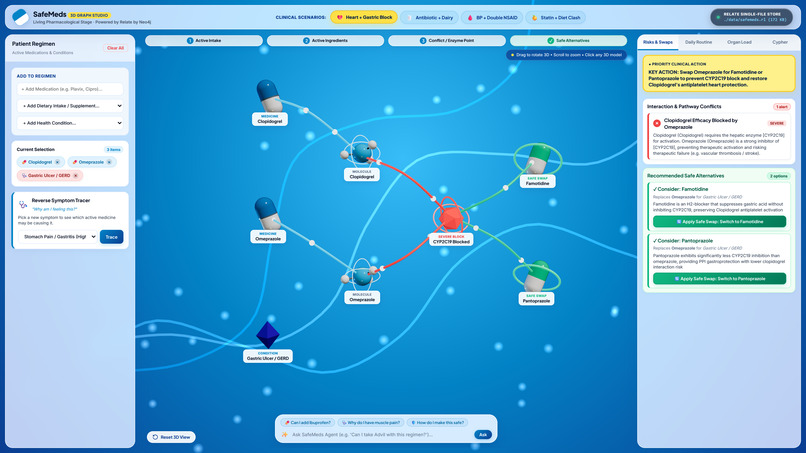
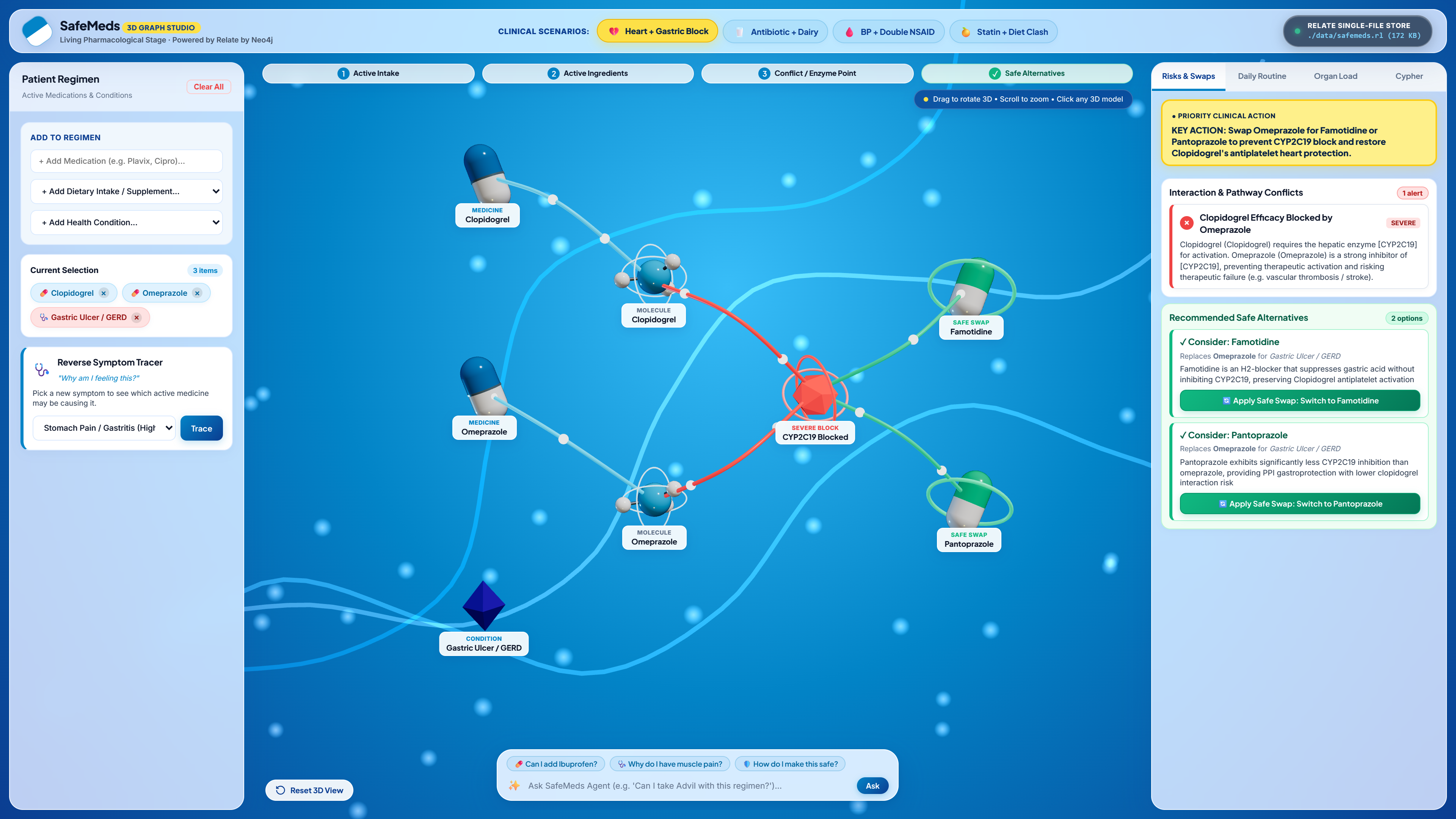
1. Heart + Gastric Block: 4-lane 3D graph exposing 3-hop CYP2C19 enzyme inhibition between Clopidogrel and Omeprazole.
-
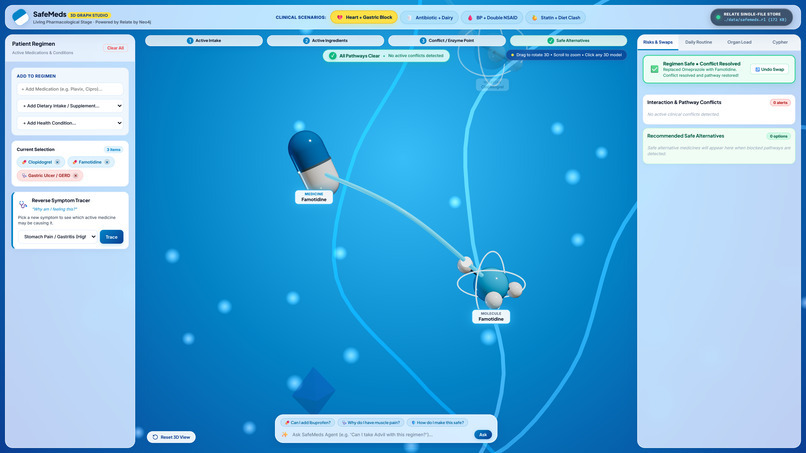
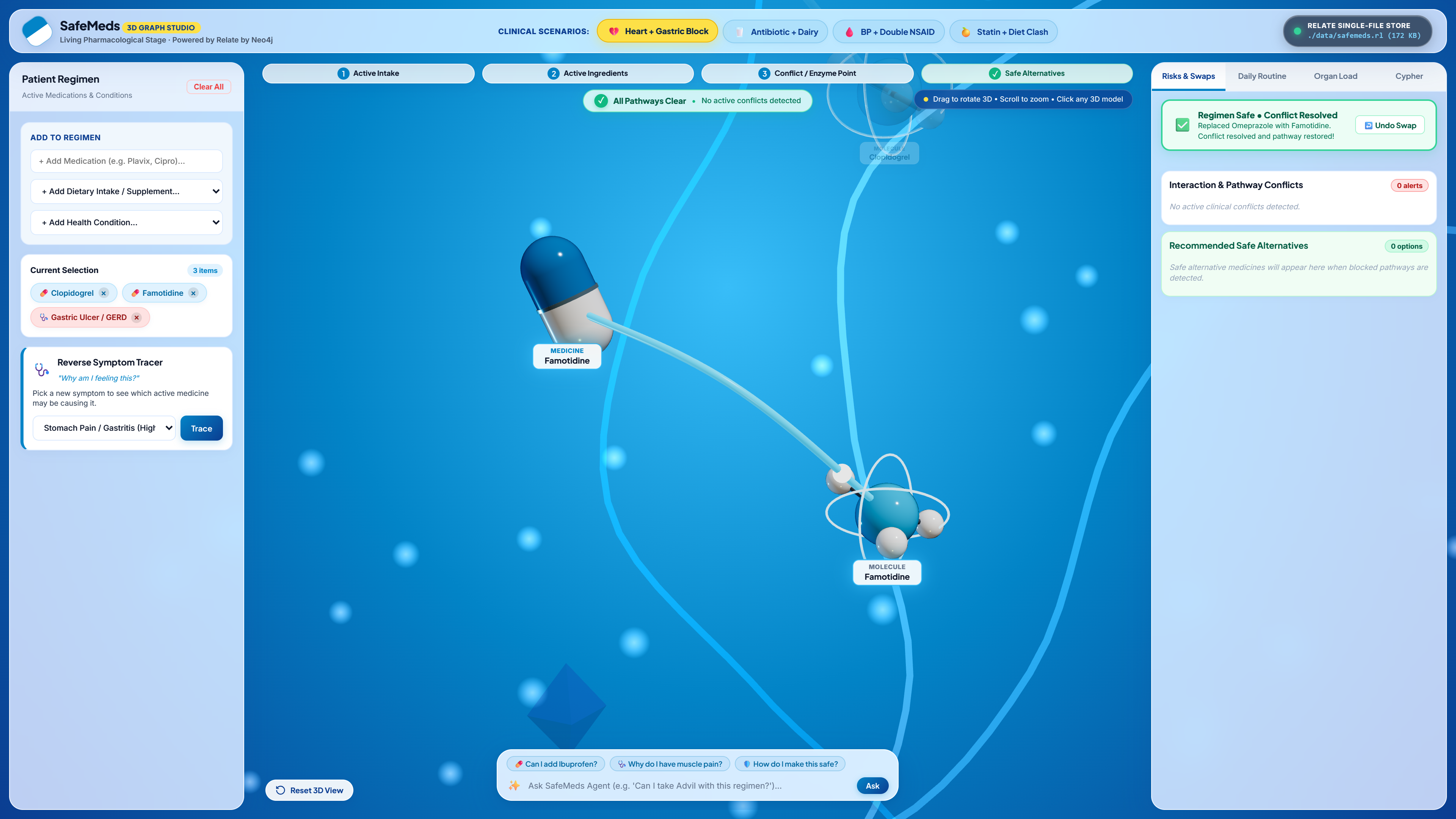
2. Live Safe Swap Resolved: One-click switch to Famotidine clears the CYP2C19 block and activates the emerald All Pathways Clear state.
-
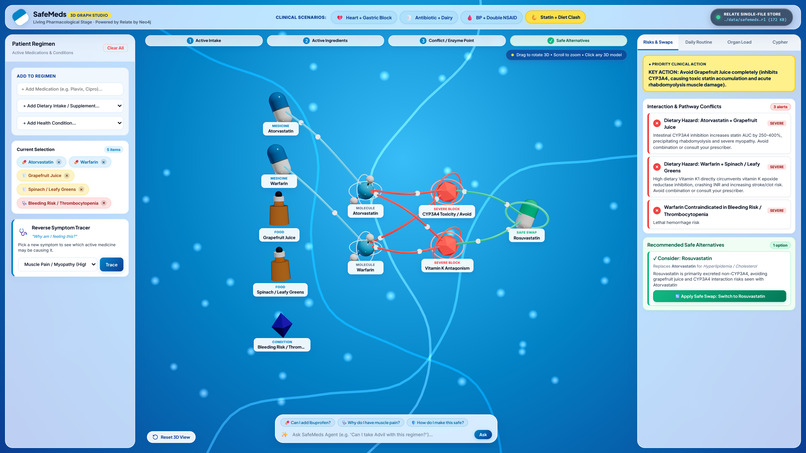
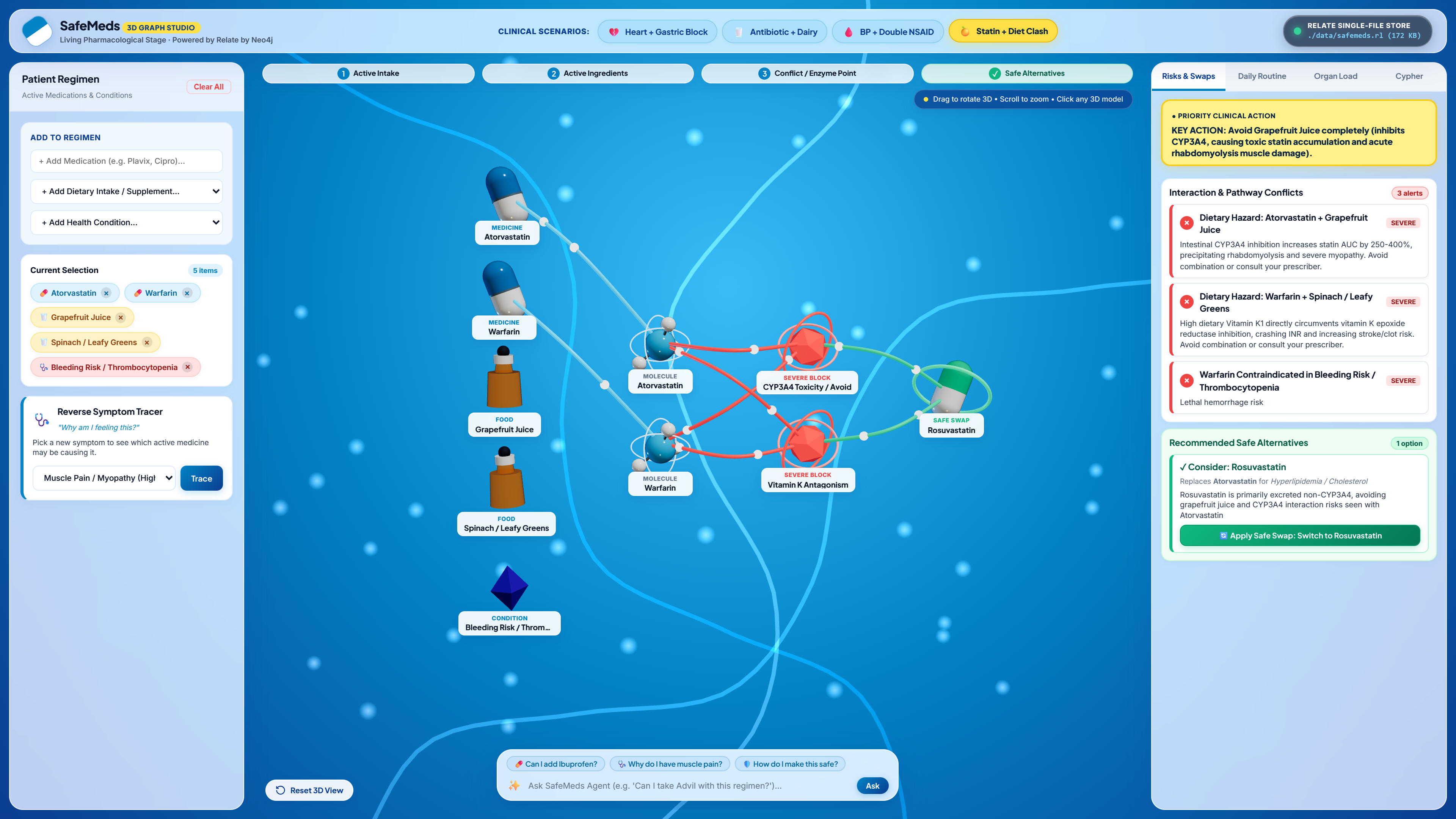
3. Polypharmacy Statin + Diet Clash: 5-item 3D graph mapping Atorvastatin, Warfarin, Grapefruit CYP3A4 block, and Spinach K1 interaction.
-
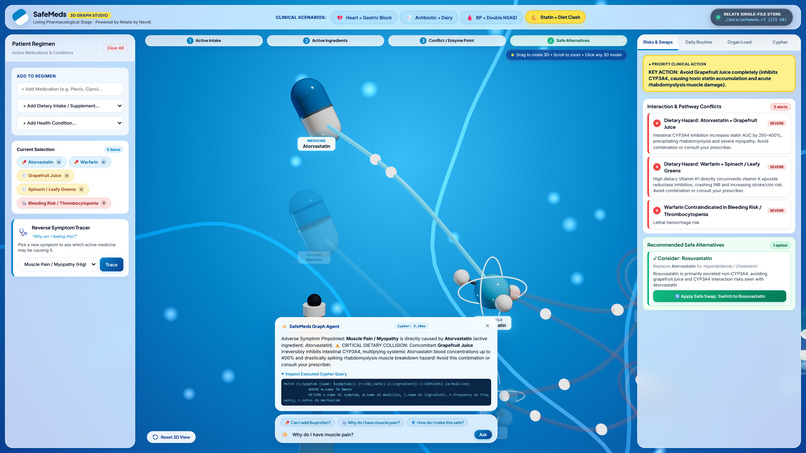
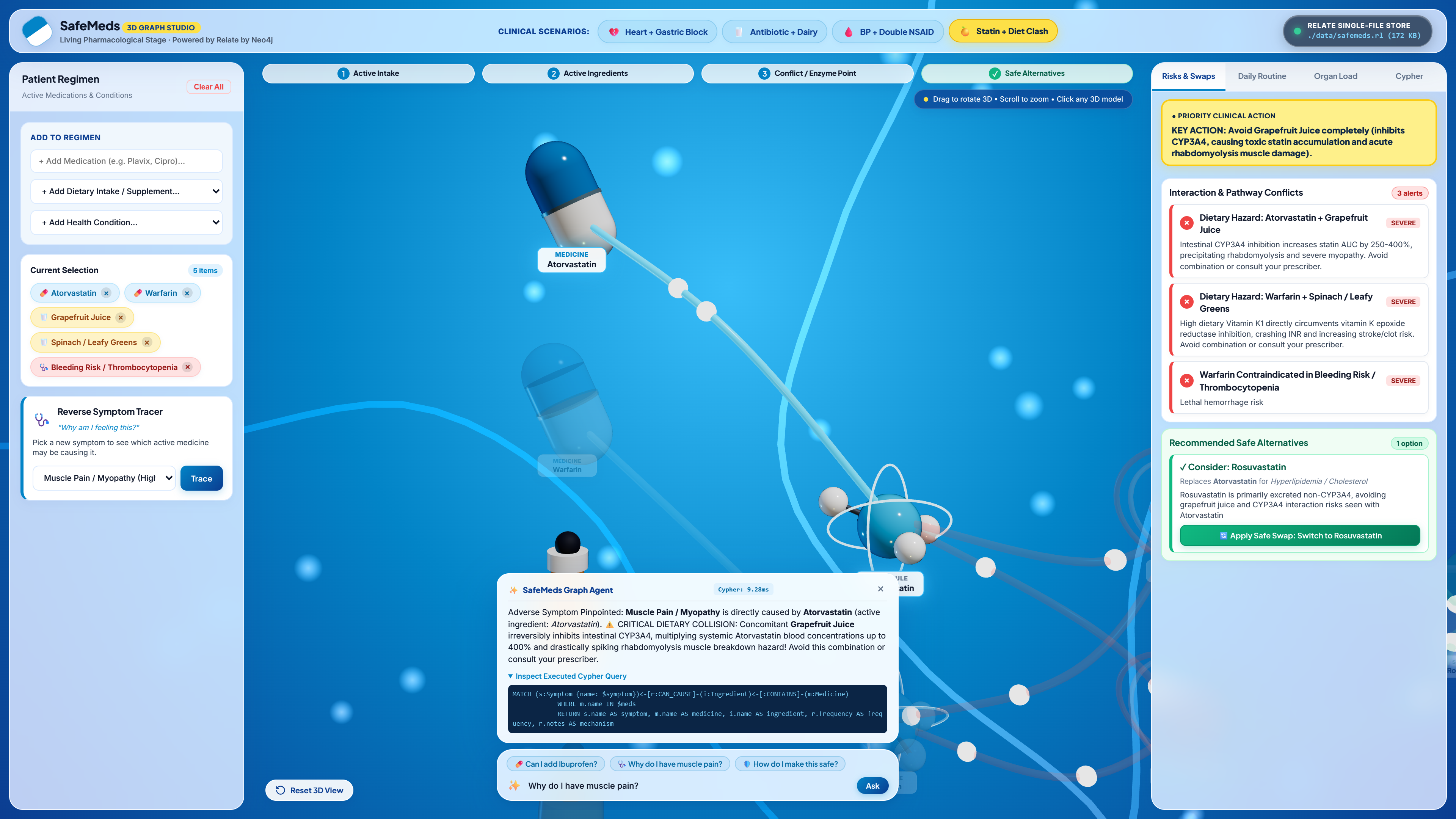
4. Ask SafeMeds Agent: Natural-language clinical Q&A backed by live <9ms openCypher traversal and inspectable query trace.
-
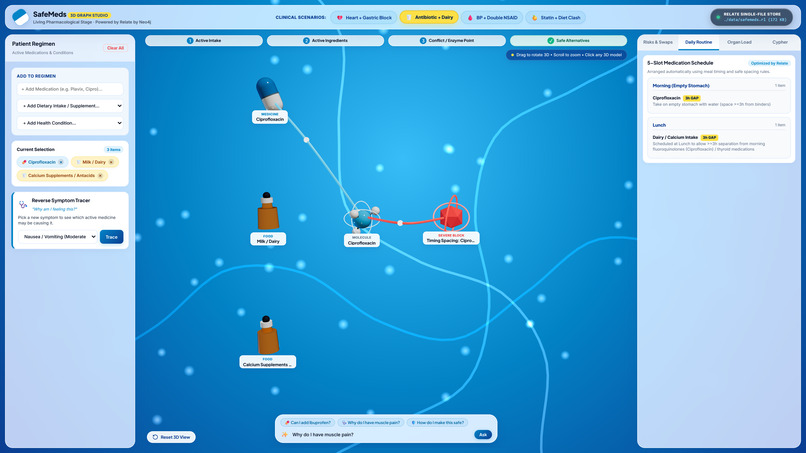
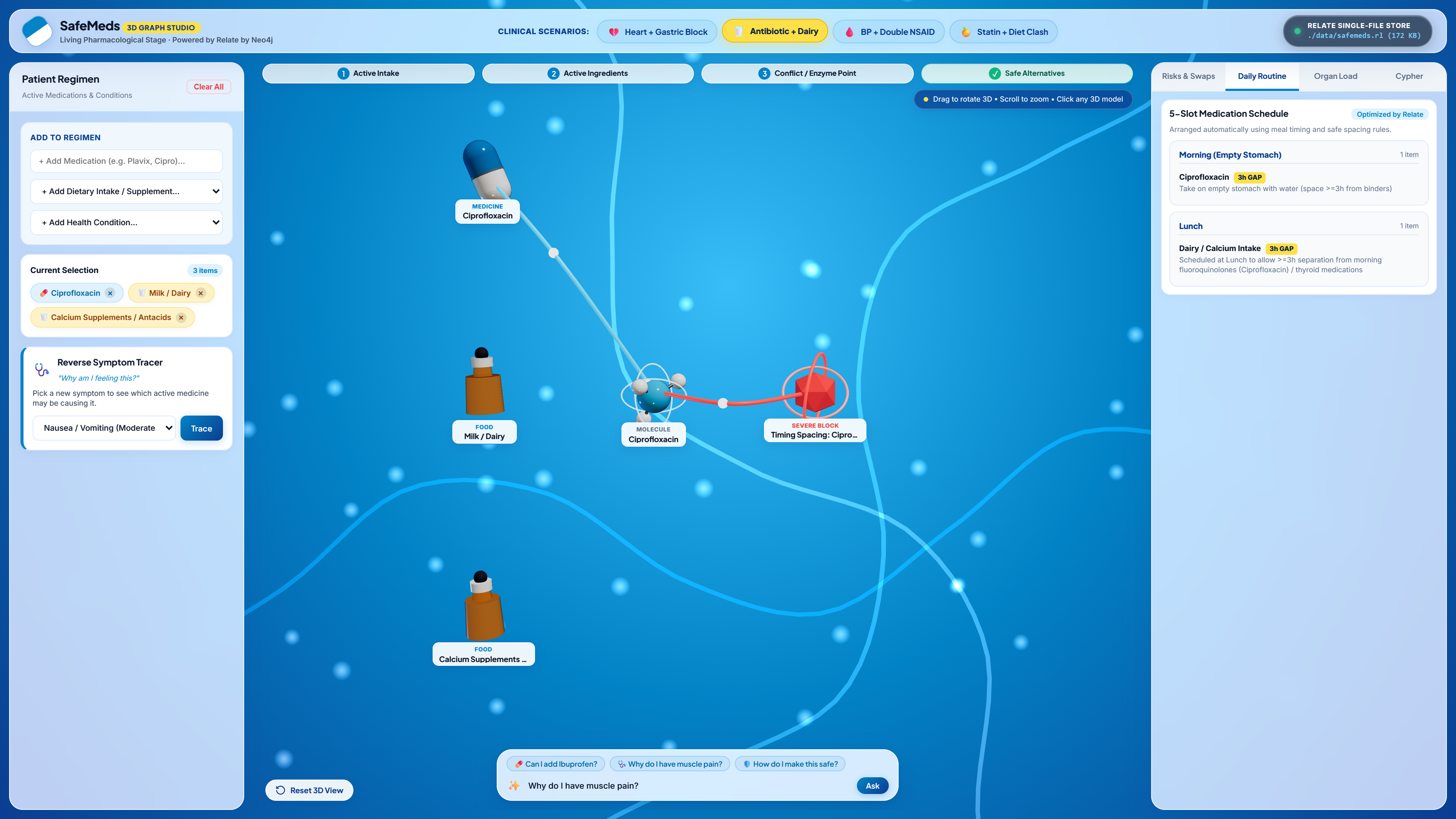
5. 5-Slot Smart Daily Routine: Automated 3-hour chelation spacing between Ciprofloxacin and dairy/calcium to preserve absorption.
-
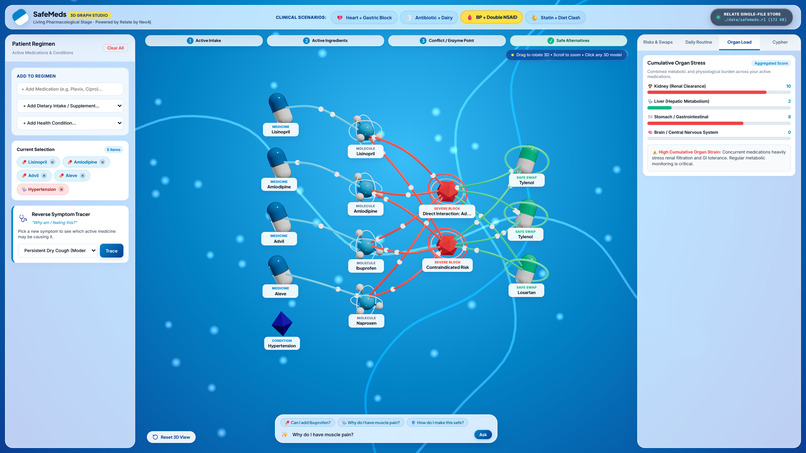
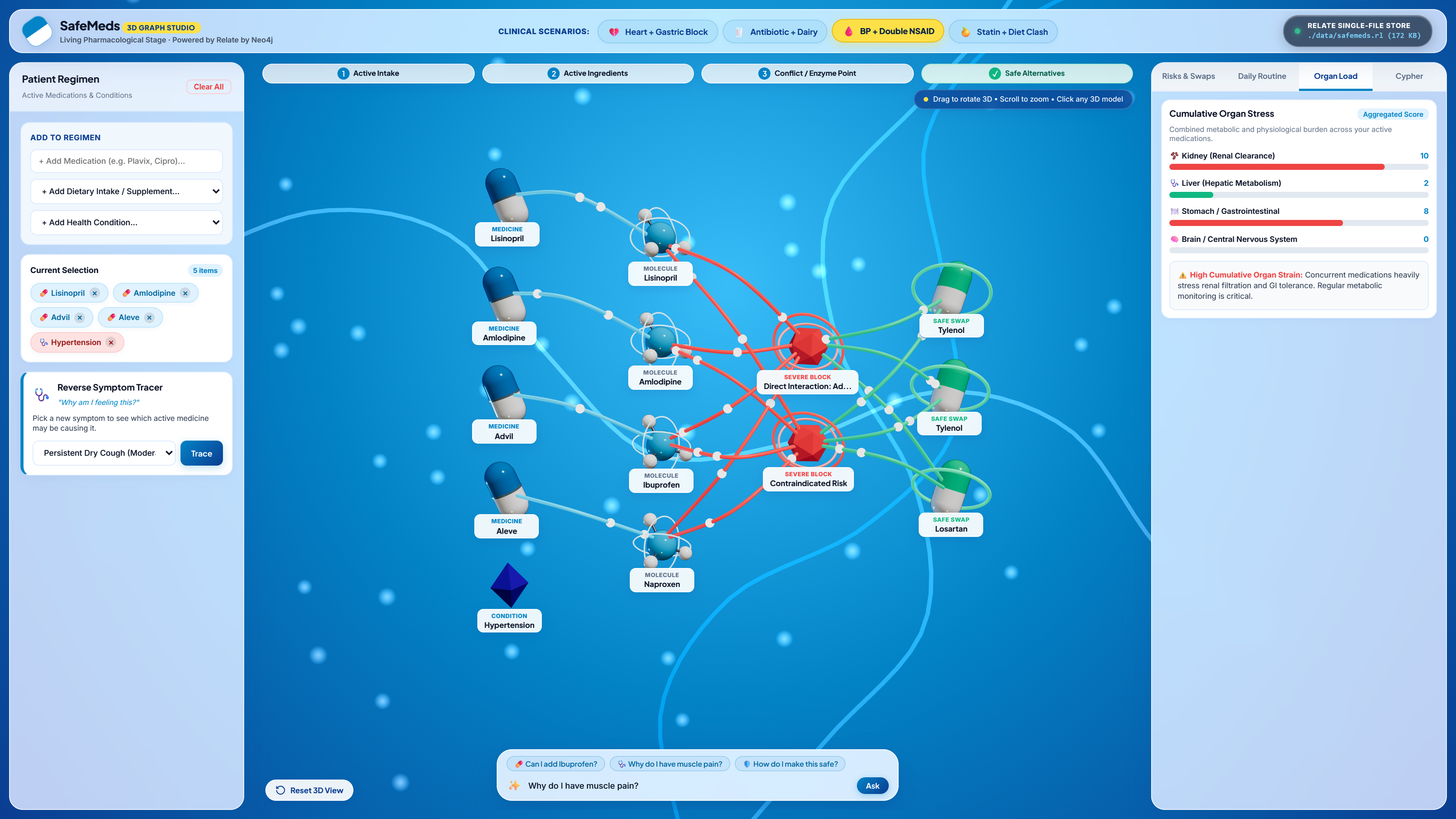
6. Vital Organ Load Dashboard: Cumulative Kidney, Liver, GI, and CNS toxicity meters flagging double-NSAID + ACE-inhibitor strain.
Inspiration
What it does
How we built it
Challenges we ran into
Inspiration
Over 40% of older adults take 5 or more concurrent medications (polypharmacy), leading to over 1.3 million emergency room visits annually from preventable adverse drug events. Traditional clinical decision-support tools rely on flat, pairwise lookup tables that miss 3-to-4-hop biological collisions—such as Omeprazole inhibiting the hepatic CYP2C19 enzyme needed to activate Clopidogrel—while depending on high-latency cloud APIs that compromise patient privacy in rural or bedside clinics.
What it does
SafeMeds 3D Graph Studio embeds Relate by Neo4j directly in-process via a single portable 176 KB graph file (./data/safemeds.rl) paired with an interactive Three.js WebGL 3D Pharmacological Stage:
- 4-Lane 3D Spatial Graph & One-Click Safe Swap: Visualizes Active Intake, Active Molecules, Red Enzyme/Conflict Nodes, and Safe Alternatives in 3D. Clinicians or patients can resolve severe blocks in one click with animated 3D transitions and instant Undo.
- Sub-9ms "Ask SafeMeds Agent" & Reverse Symptom Tracer: Compiles natural-language safety questions into read-only AST-guarded openCypher queries (
< 9ms) and traces adverse symptoms backward ((:Symptom)<-[:CAN_CAUSE]-(:Ingredient)<-[:CONTAINS]-(:Medicine)) to pinpoint the exact culprit drug. - 5-Slot Smart Daily Routine & Vital Organ Load Meters: Enforces food-drug chelation spacing gaps (e.g., 3-hour separation between Ciprofloxacin and dairy) and tracks cumulative Kidney, Liver, GI, and CNS strain.
How we built it
- Graph Engine: Rust-powered Relate by Neo4j single-file store (
safemeds.rl) modeling 53 medications, 25 active ingredients, 5 hepatic CYP450 enzymes, 12 dietary items, 10 chronic conditions, 15 adverse symptoms, and 4 vital organ systems. - Backend & Safety Guardrails: Python + FastAPI serving deterministic openCypher traversals protected by a strict read-only Cypher AST validator (
403 Forbiddenon write mutations). - 3D Frontend & Deployment: Three.js (WebGL) spatial stage with dynamic bounding-box camera framing, deployed on Hugging Face Spaces (ZeroGPU) with Docker and GitHub CI sync.
Challenges we ran into
- 3D Camera Framing Across Regimen Sizes: Scaling dynamically from 2-drug regimens to 5-item polypharmacy graphs initially caused peripheral nodes to clip outside the viewport. We solved this by computing real-time 3D bounding boxes and automatically adjusting camera distance and vertical offsets.
- Stateless Container Persistence & ZeroGPU Runtime: Serving a custom Three.js + FastAPI app with local
.rlgraph persistence inside Hugging Face ZeroGPU required a customGradio Blocks+ FastAPI route-injection entrypoint with automatic non-root storage fallback.
Accomplishments that we're proud of
- Achieving deterministic multi-hop openCypher queries in < 9ms inside a self-contained 176 KB database file with zero cloud roundtrips.
- Delivering a transparent clinical interface where every AI answer and Safe Swap recommendation is backed by an inspectable, real-time Cypher execution trace.
What we learned
Modeling pharmacology natively as a property graph makes 3-to-4-hop enzyme inhibition, food-drug chelation, and reverse symptom attribution dramatically faster, simpler, and more explainable than relational SQL JOINs.
What's next
- Adding FHIR / HL7 electronic health record (EHR) import, pharmacogenomic CYP450 metabolizer phenotypes (poor vs. ultra-rapid metabolizers), and offline PWA tablet support for bedside clinical teams. ## Accomplishments that we're proud of

