
Havenly
Track: Community Kitchen
Inspiration
Dating apps make it easy to meet new people, but users may have little reliable information about someone before meeting in person. A ProPublica and Columbia Journalism Investigations review of 157 reported sexual-assault incidents involving dating apps found that 10% involved someone previously accused or convicted of sexual assault. The investigation also documented a case involving a person listed on Massachusetts’s sex-offender registry who was matched with women on Plenty of Fish. The 2025 murder of Kayli Arseth by a man she met through a dating app further highlights the human cost of dating-related violence. (Hennepin County Attorney's Office, 2026). These reports point to an information gap; they do not mean a background check can predict whether someone is dangerous or guarantee safety.
Havenly grew from a simple idea: people shouldn’t have to become private investigators to make informed choices. We want to make relevant public information easier to find and understand while respecting the limits of background checks.
What it does
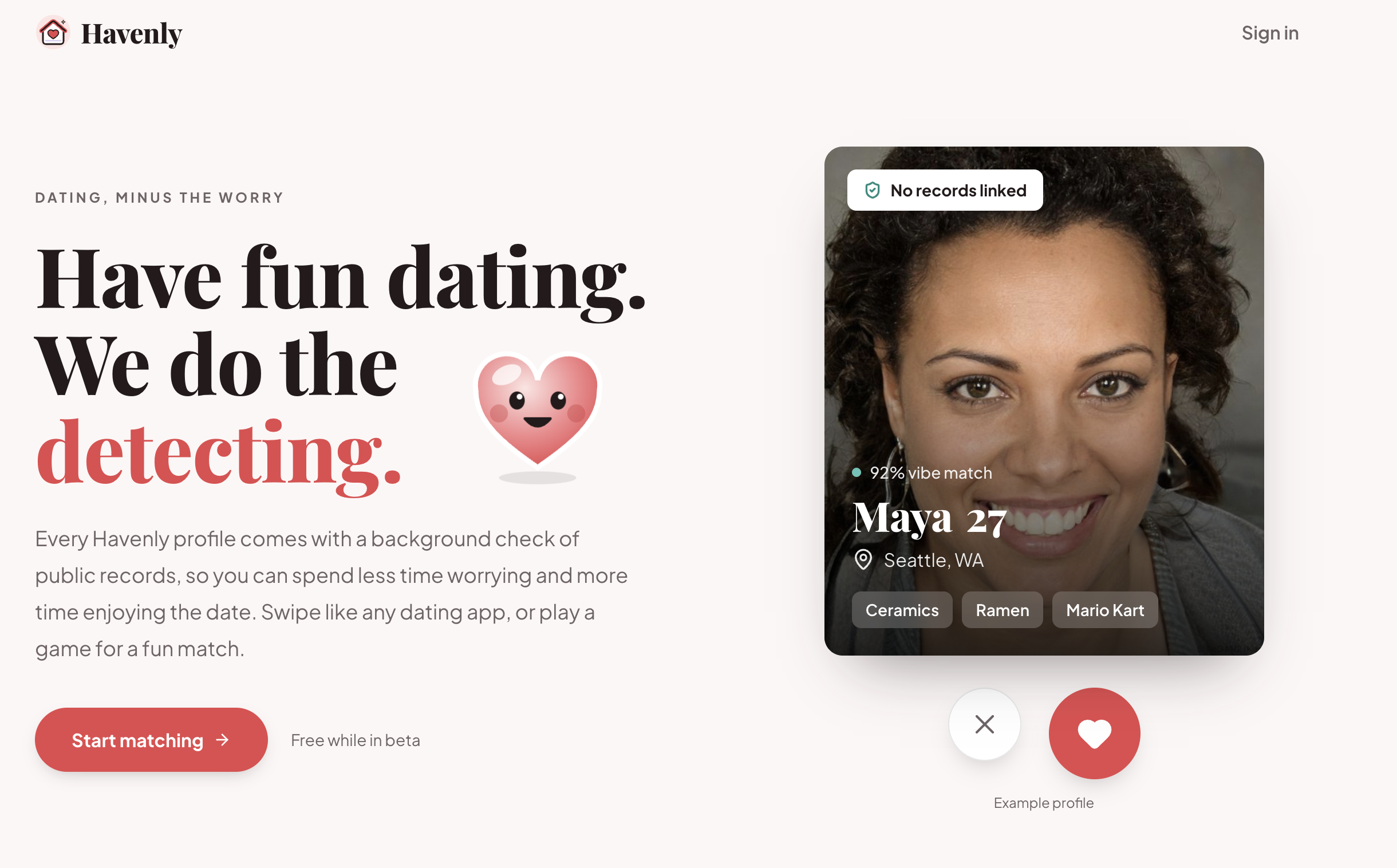
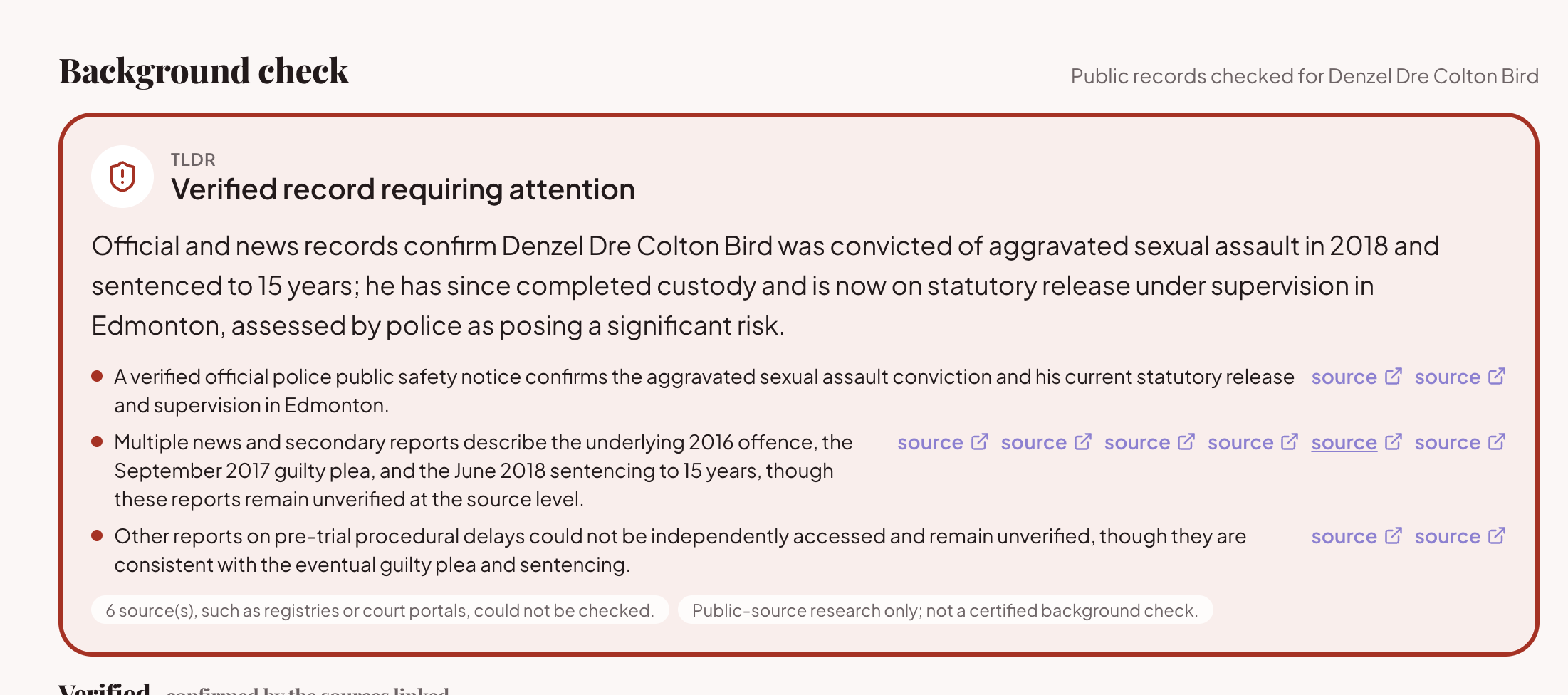
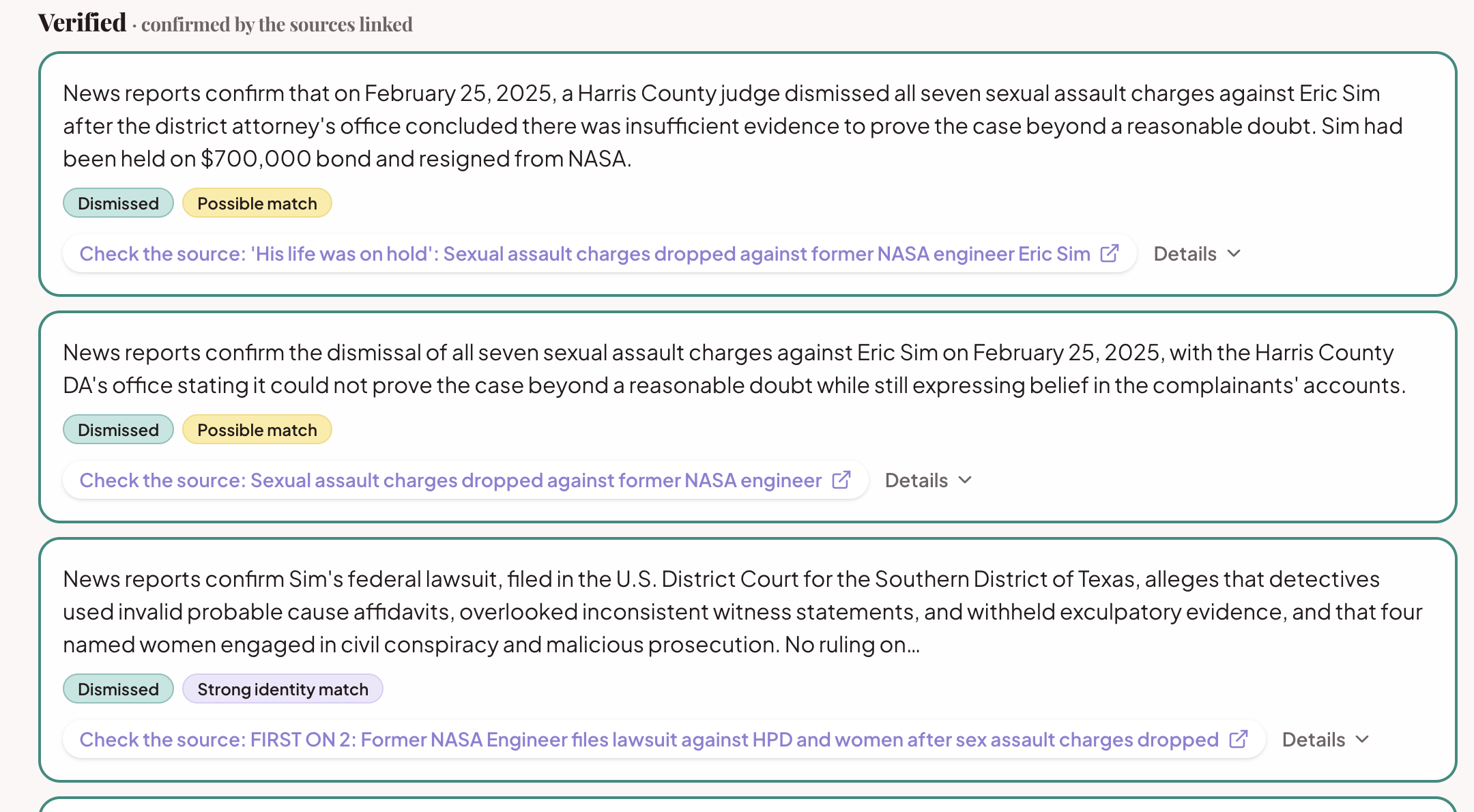
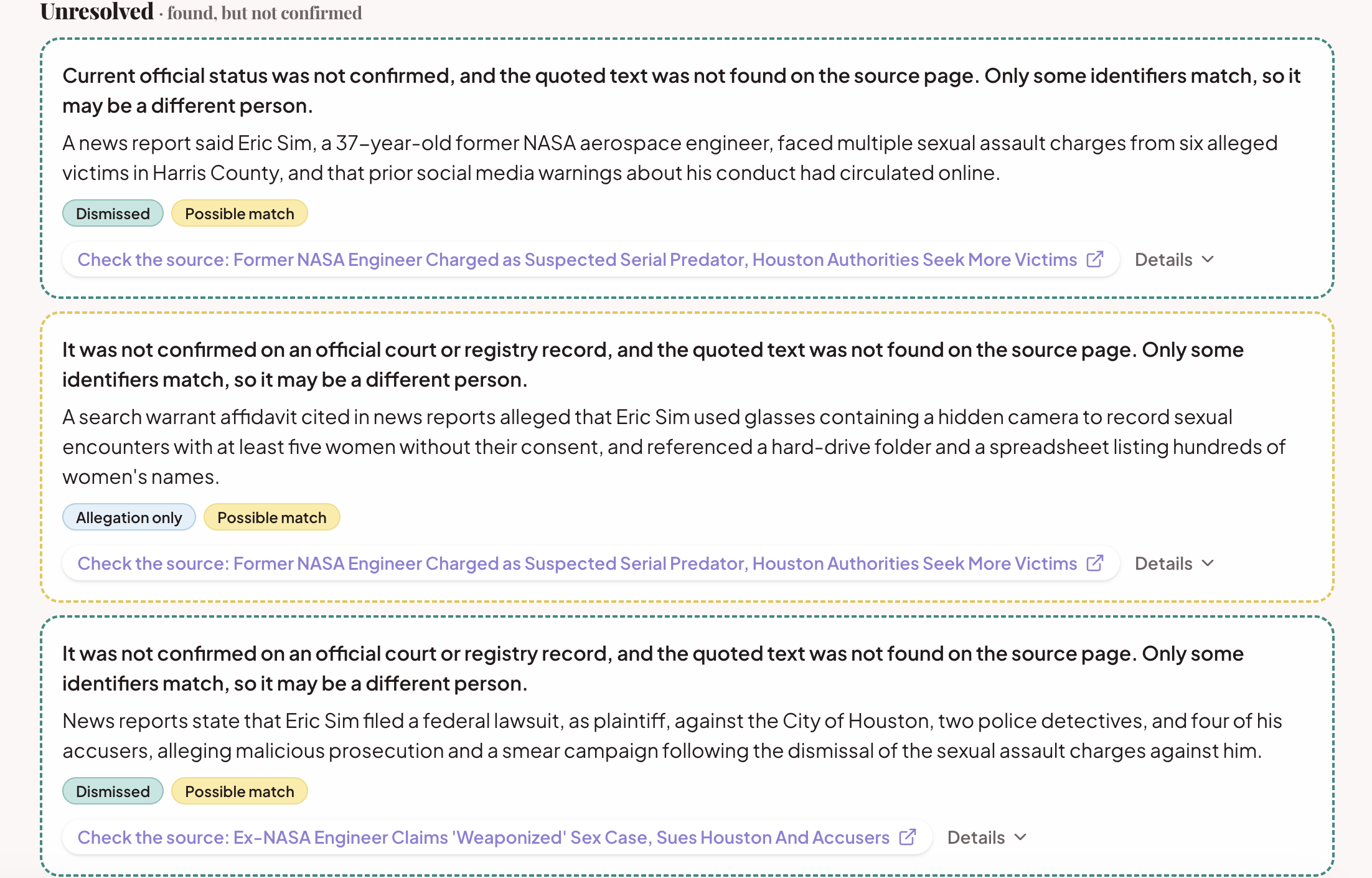
Havenly combines a dating experience with a source-backed AI safety report. The user provides a name and a location voluntarily. Havenly’s AI agents search supported public sources, assess whether records may refer to the right person, and organize findings into verified facts, possible matches, conflicting information, and unknowns.
Each finding includes a link to its source and a plain-language explanation of the record’s status. Reports distinguish allegations from convictions and explain that a case may have been dismissed or may involve someone else with a similar name. Users review the information and make their own decisions.
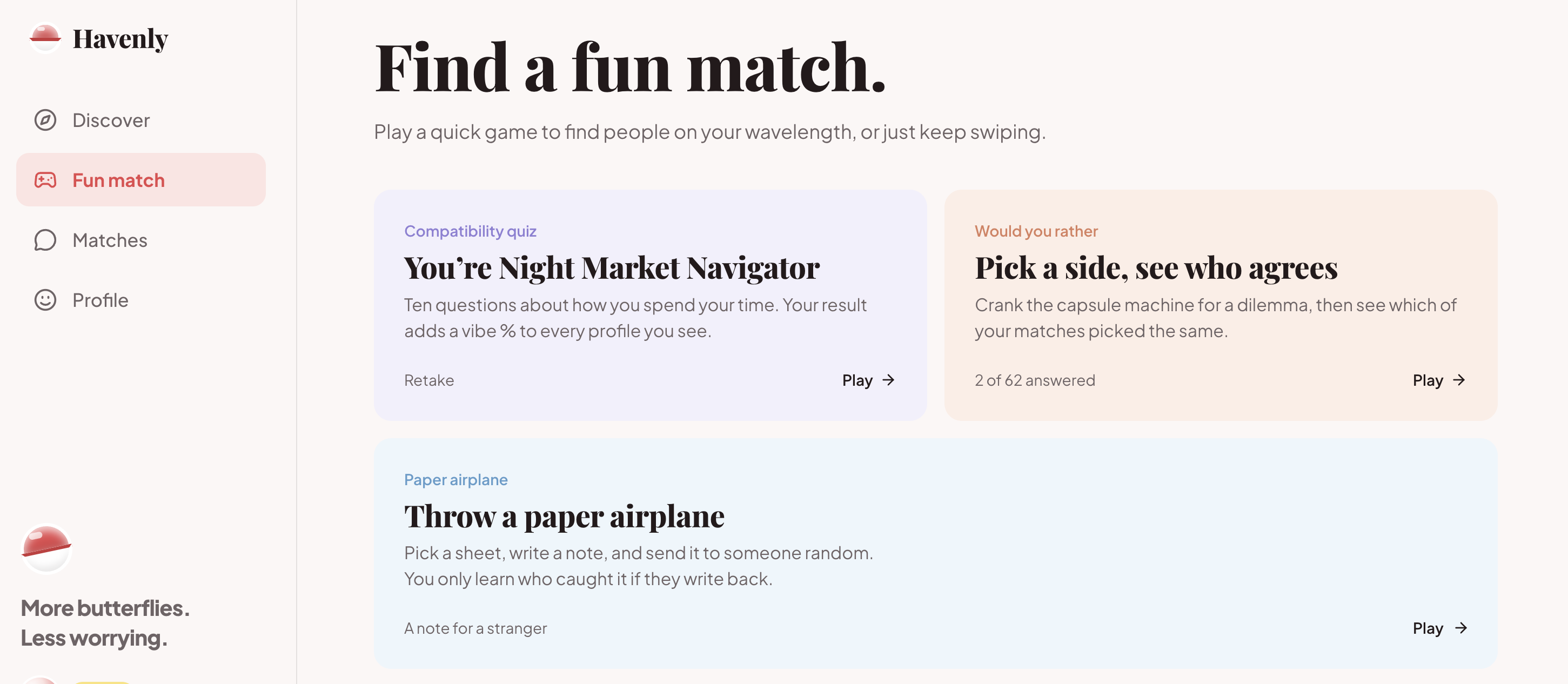
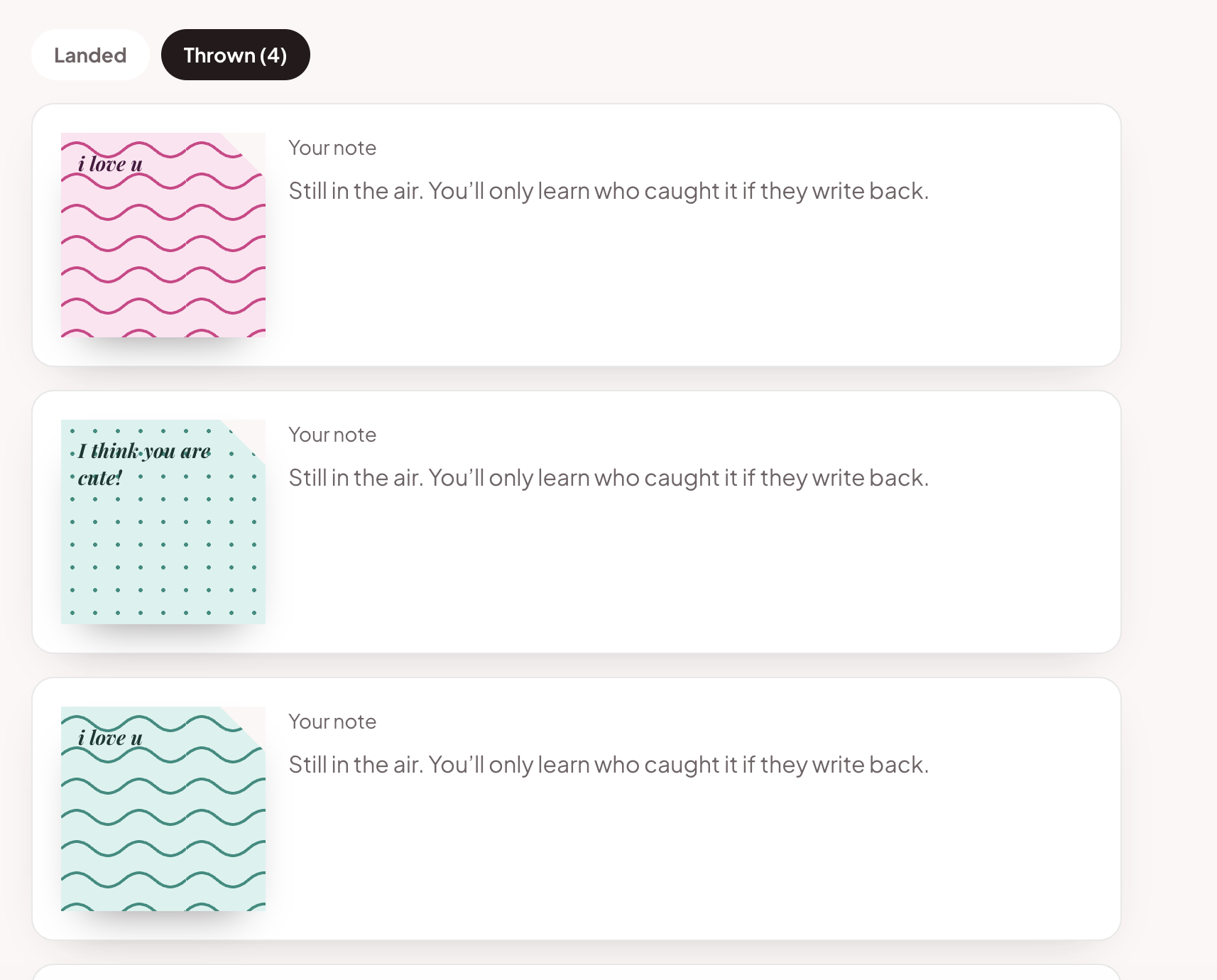
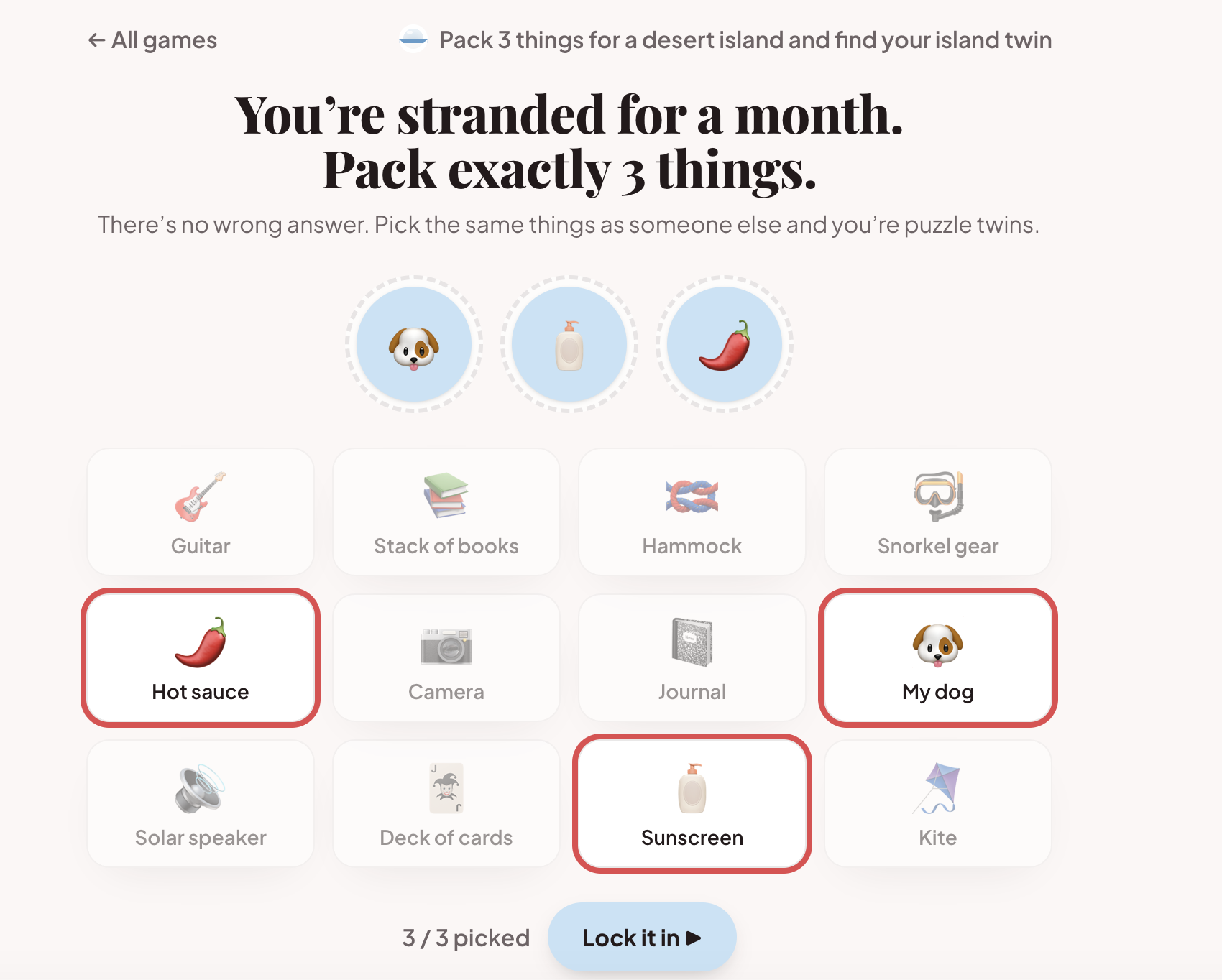
The app also includes lighter ways to connect: users can send a paper-airplane letter to a random person, answer “would you rather” prompts from a capsule machine, or take BuzzFeed-style quizzes.
How we built it
Havenly is a Next.js web app hosted on Firebase. Firebase handles Google sign-in and the Firestore database. The AI workflow uses three agents, powered by Claude Code CLI, web search, and the CourtListener API:
- Searcher / Investigator finds relevant public pages and records, then links to sources.
- Verifier assesses whether a record may match the person and explains uncertainty.
- Analyzer / Synthesizer organizes findings, conflicts, and unknowns into a readable report.
We tested the agents against known criminal cases, false positives, and ordinary individuals to examine how they handled matches and uncertainty.
A Python background-check pipeline runs through a Firebase Cloud Function after a member consents. Its Investigator, Verifier, and Synthesizer agents use Claude through a headless CLI workflow to gather information, check potential matches, and produce a structured report. Demo mode uses fictional profiles and clearly labeled synthetic reports. During onboarding, users provide a self-reported birthdate and a city or region; the app does not collect a precise location.
Challenges we ran into
A name or photo alone is not enough to confidently match a person to a public record. Records can be incomplete, difficult to access, or about someone with a similar identity. Court documents can describe allegations, dismissals, and other outcomes, so presenting a record without its context could mislead users.
We also had to keep the product’s claims within what public records can support. A public-record search is not a complete criminal-history report, and finding no record does not prove that none exists. Some official sources require fees, consent, or identity verification.
Accomplishments that we're proud of
We brought together a playful dating prototype and a multi-agent research workflow that produces source-linked reports. The report format makes uncertainty visible by separating verified facts, possible matches, conflicting information, and unknowns.
We’re proud that the app treats safety information carefully: it explains case outcomes, avoids presenting allegations as convictions, and leaves decisions to users instead of generating a danger score.
What we learned
We learned that a useful safety report needs to show how it reached its conclusions, not just provide a summary. Sources, case outcomes, and uncertainty all matter, especially when records may be incomplete or refer to the wrong person.
We also learned that safety features need clear limits. Havenly can help people find and interpret some public information, but no background check can guarantee someone’s safety.
What's next for Havenly (Ultra-Secure Dating App)
- Build a mobile app so people can use Havenly’s matching and connection features on the go.
- Evaluate the record-search workflow on carefully selected cases where relevant records may be difficult to find, while measuring both missed results and false matches.
- Explore reverse-image search to find copies of profile photos. We would not use facial recognition or connect a stranger’s face to sensitive records.
- Continue improving source coverage, identity matching, and explanations of uncertainty before expanding access.
Sources
Sources: ProPublica investigation, Associated Press coverage of the Sade Robinson case, Pew Research Center’s report on online dating.

