Inspiration
Phishing links are the #1 way people get hacked. I got job offers and when they provide me the link , i am dare to open it , the first thought comes in my my is what if it is a scam. I built SafeLink Check so anyone can paste a link and know if it's dangerous in 2 seconds — no tech skills needed.
What it does
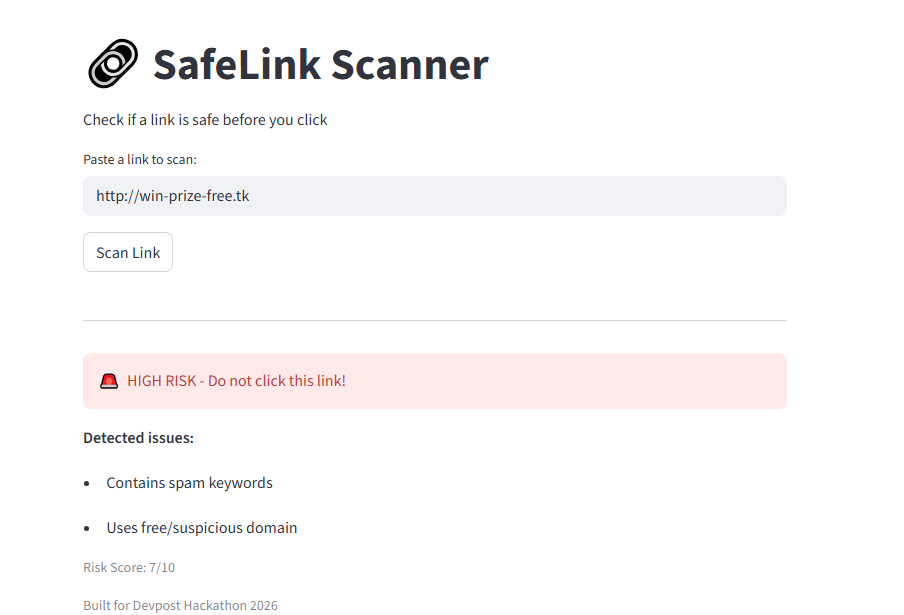
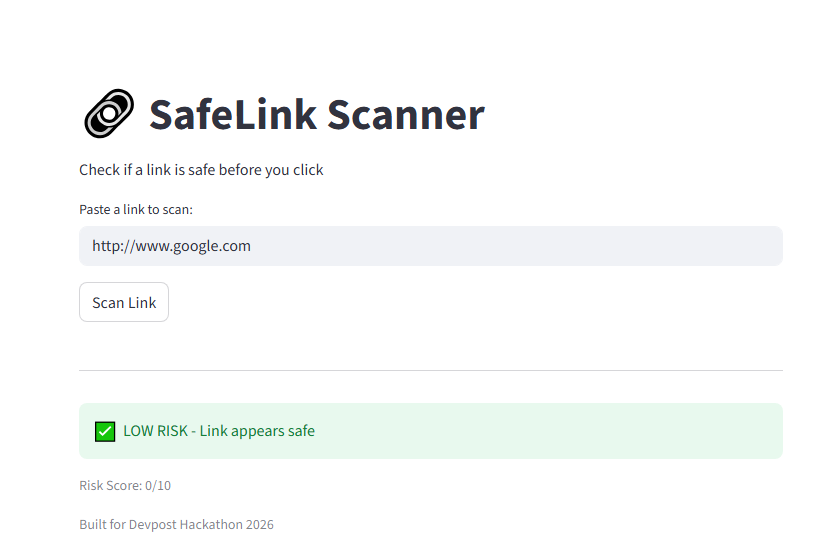
SafeLink Check scans URLs for phishing red flags. Paste a link → Get instant HIGH, MEDIUM, or LOW risk rating with reasons. Checks spam words, shady .tk/.ml domains, too many hyphens, and IP addresses. Stops scams before you click.
How we built it
Built with Python + Streamlit for fast web deployment. The app runs 4 security checks on each URL and calculates a risk score. Each check adds points: spam keywords +3, suspicious domains +4, excessive hyphens +2. Deployed to Streamlit Cloud + GitHub in 24 hours.
Challenges we ran into
2hours before deadline, the app crashed with 'ModuleNotFoundError'. I had to debug live, delete the broken code, and rewrite the entire app as a single self-contained file. Redeployed under pressure and got it working before submission.
Accomplishments that we're proud of
Shipped a working security tool from idea to live URL in 24 hours. It correctly flags real phishing patterns like .tk domains and 'free prize' scams. Fixed a critical crash minutes before deadline. Most proud that it helps non-technical users stay safe online.
What we learned
I learned how phishing attacks work: scammers use free domains, spam words, and deceptive URLs. Technical side: I learned Streamlit deployment, GitHub version control, and debugging production errors fast. Big lesson: simple tools solve real problems.
What's next for safelink-check-2026
Next: Add VirusTotal API for real-time threat database checks. Build a Chrome extension for 1-click scanning. Add email header analysis to catch phishing emails. Goal: protect 10,000+ users from scam links in 2026.


Log in or sign up for Devpost to join the conversation.