-
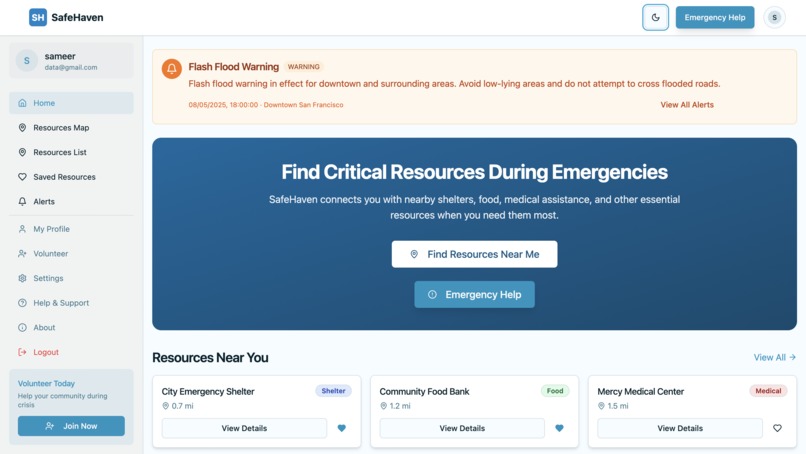
Home
-
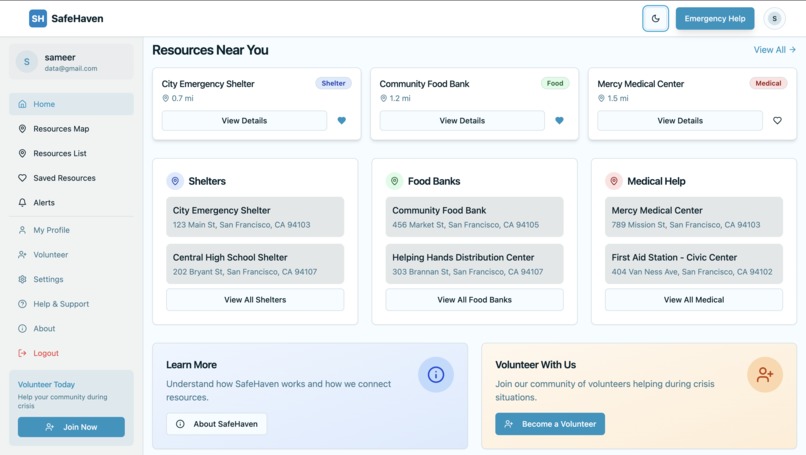
Home Scroll
-
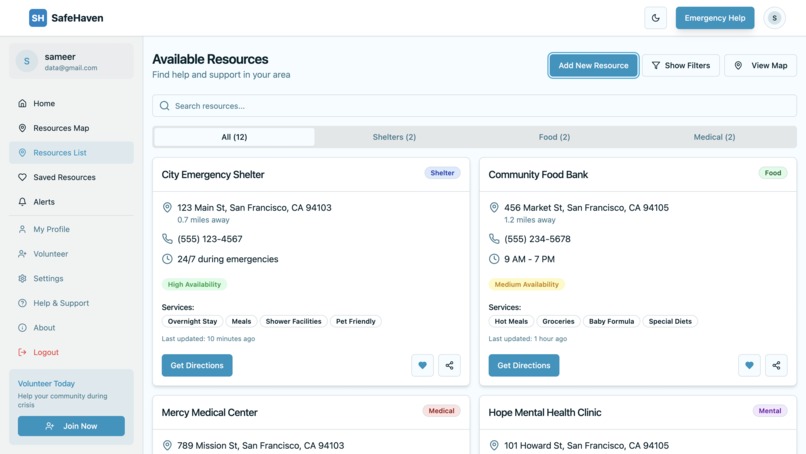
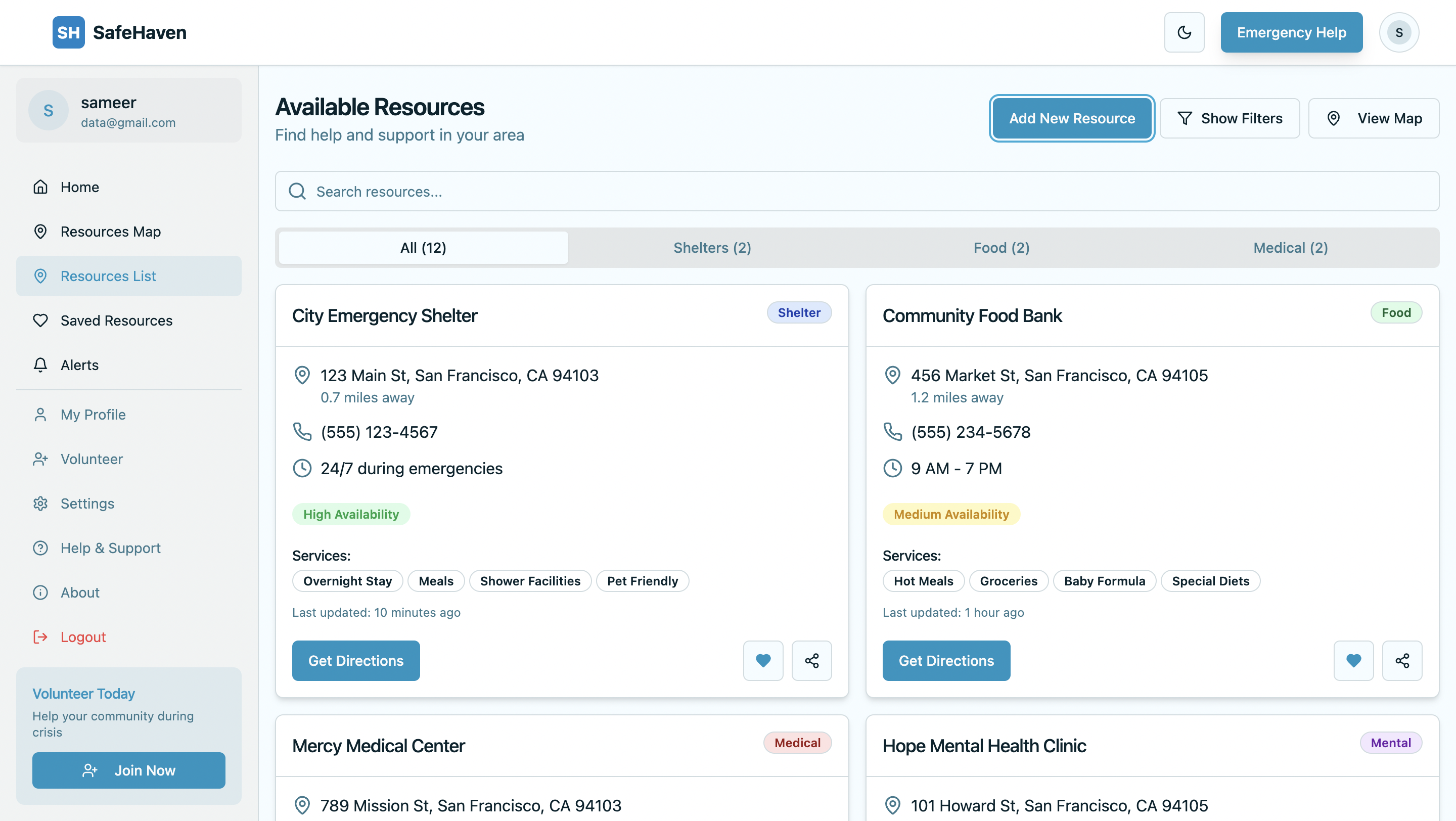
Resources List
-
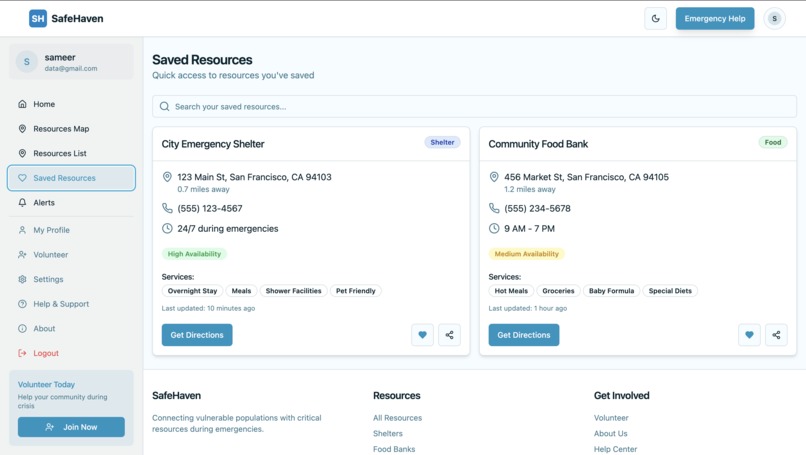
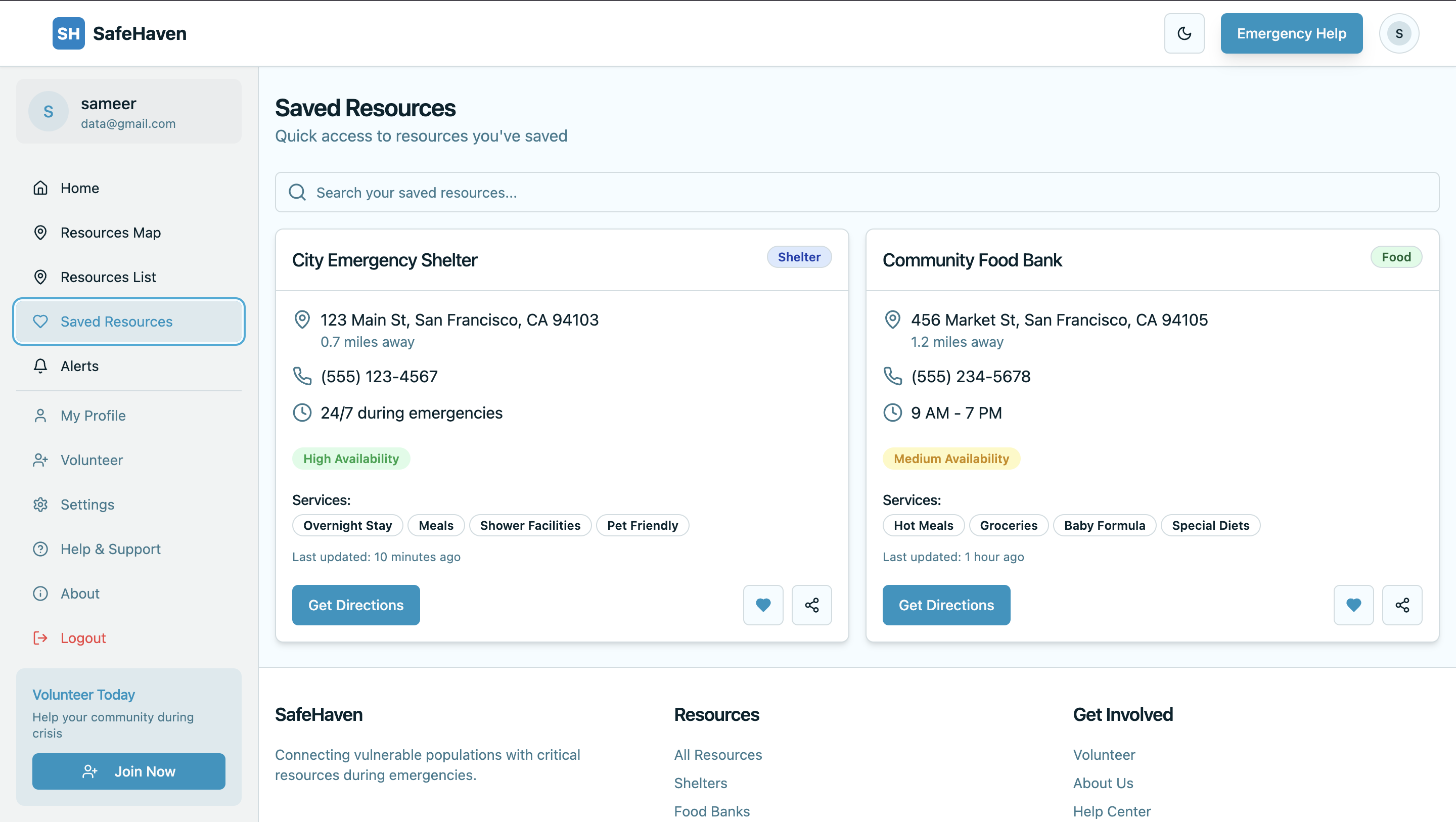
Saved Resources
-
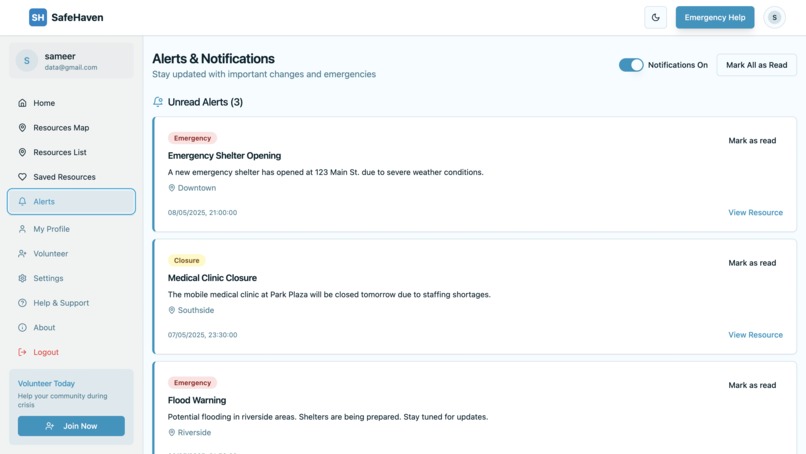
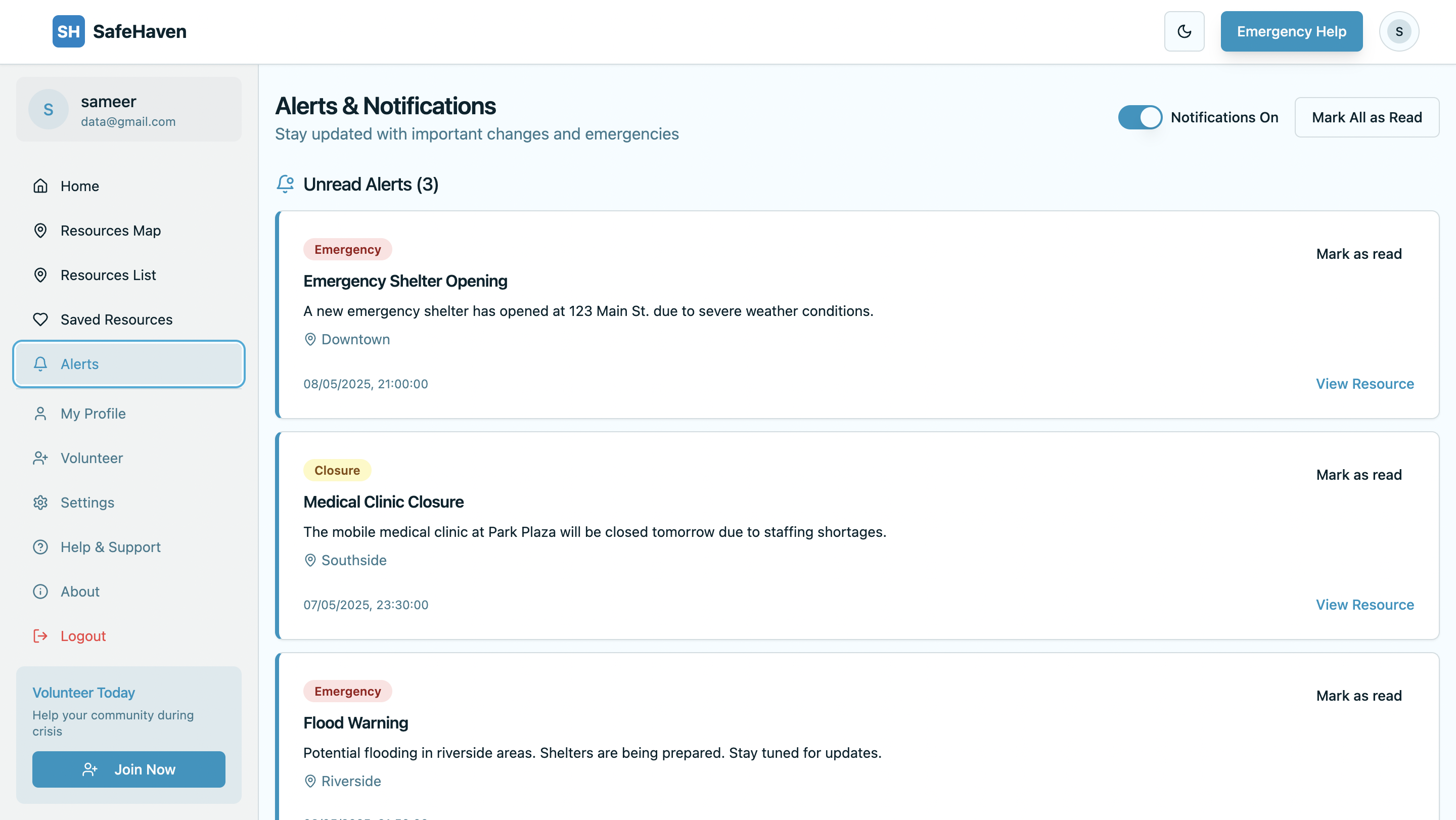
Alerts & Notifications
-
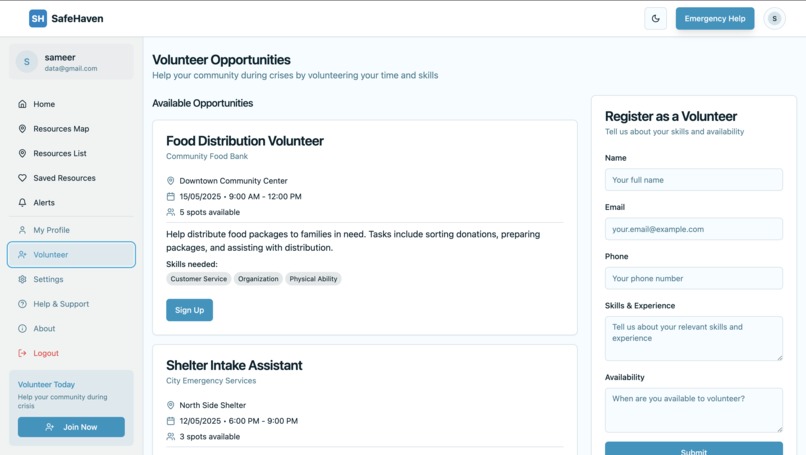
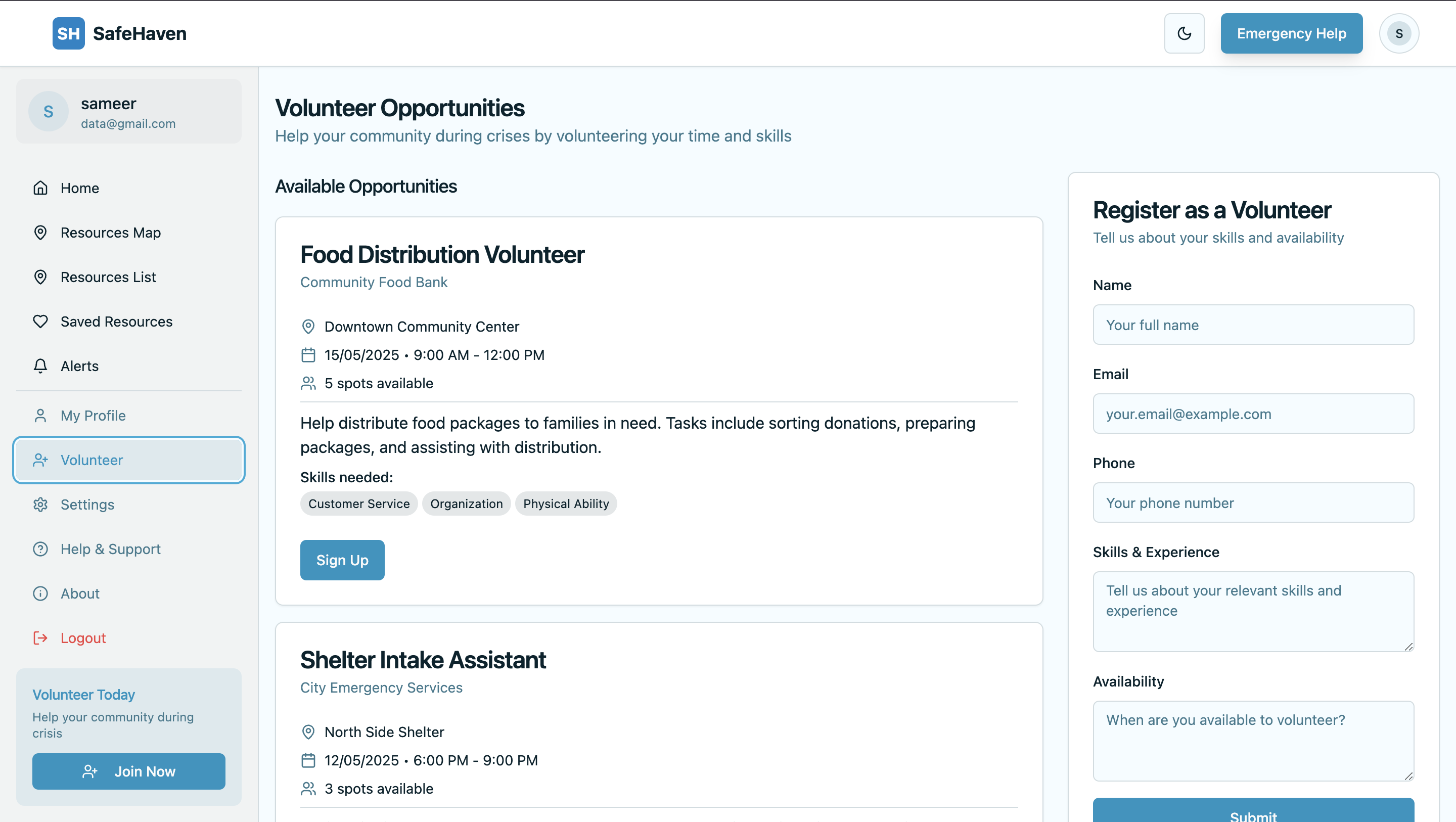
Volunteer Opportunities
-
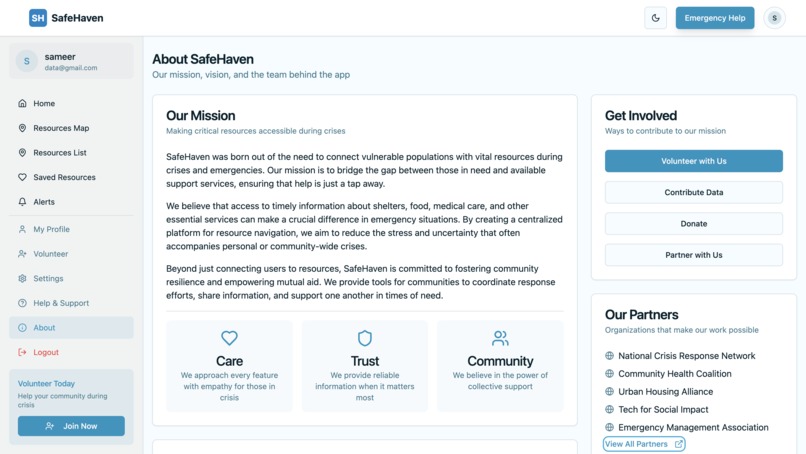
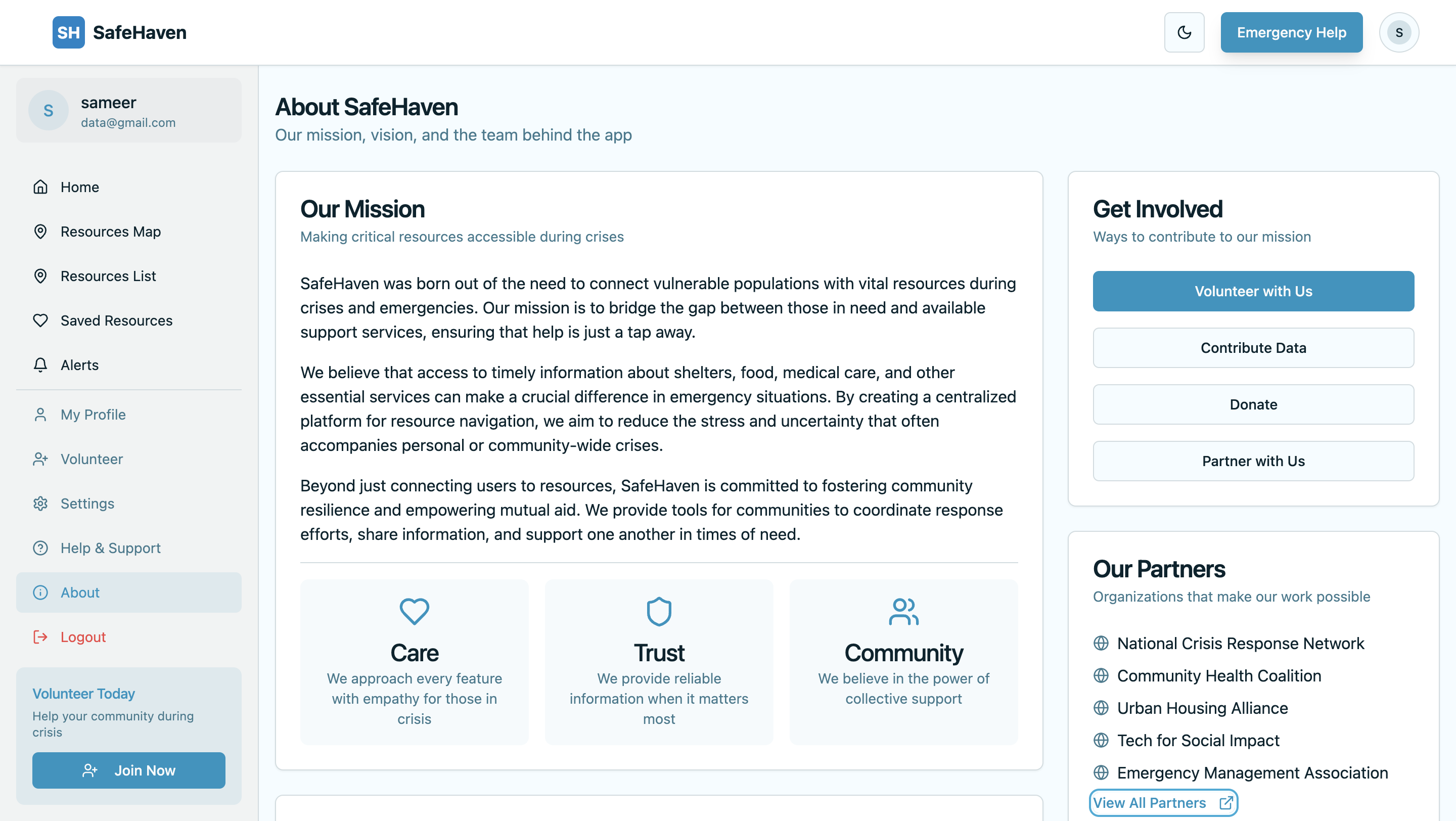
About SafeHaven
-
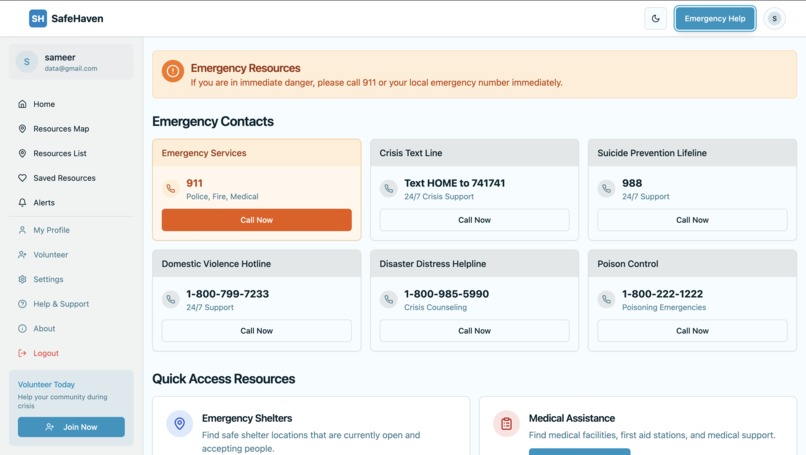
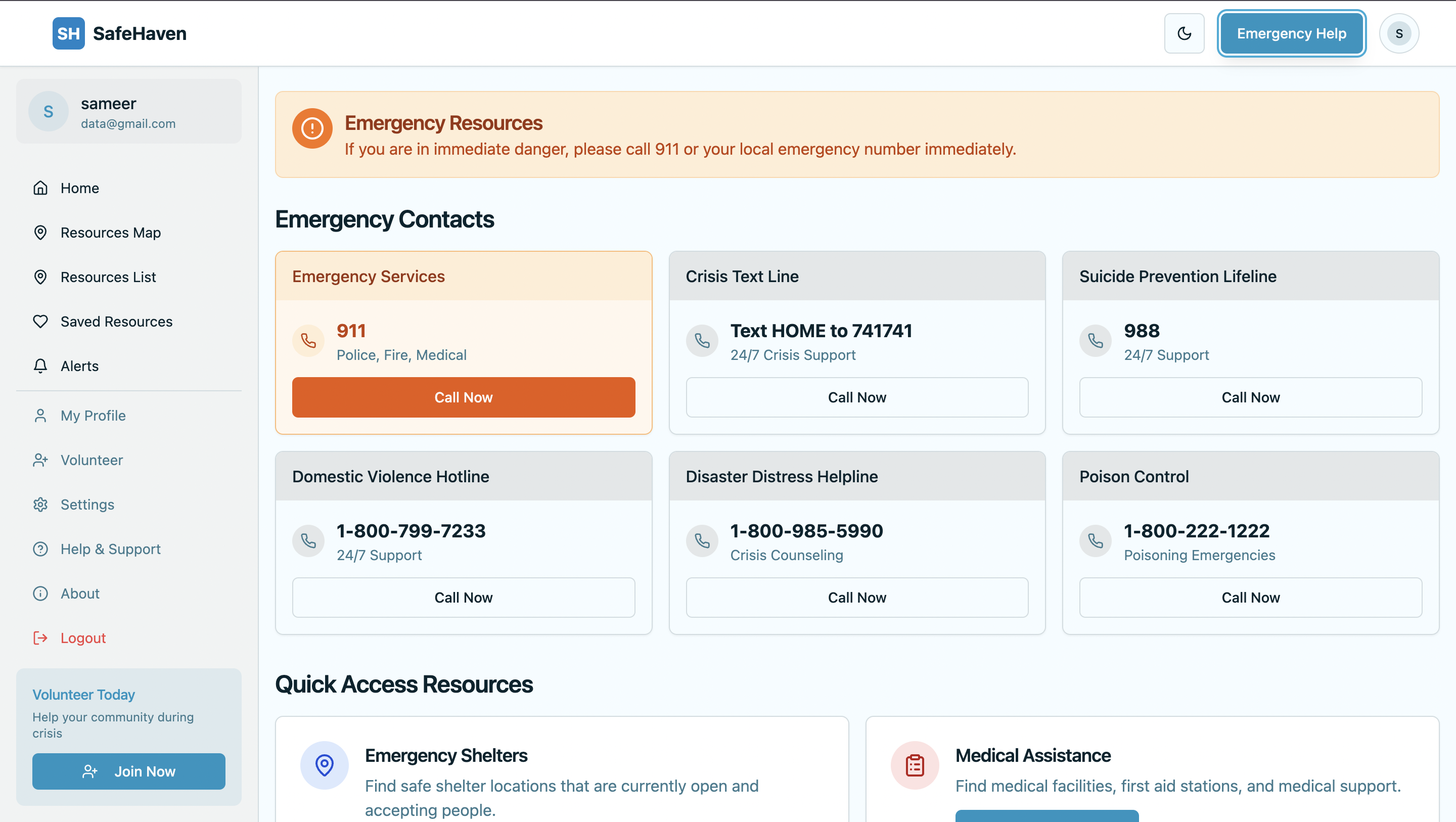
Emergency Help
-
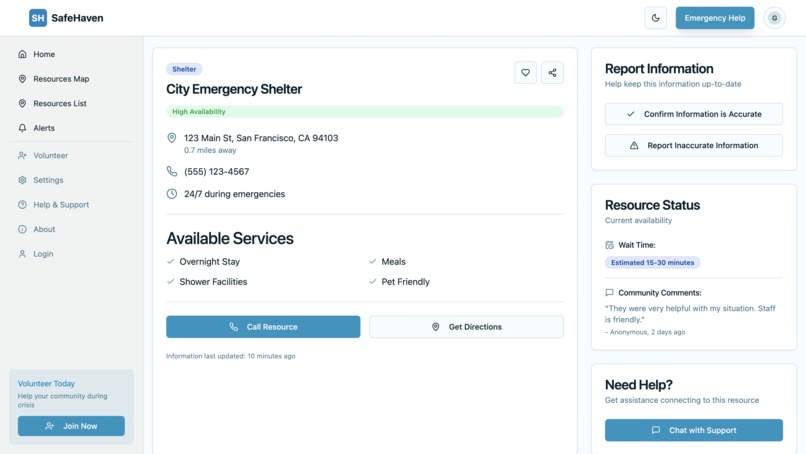
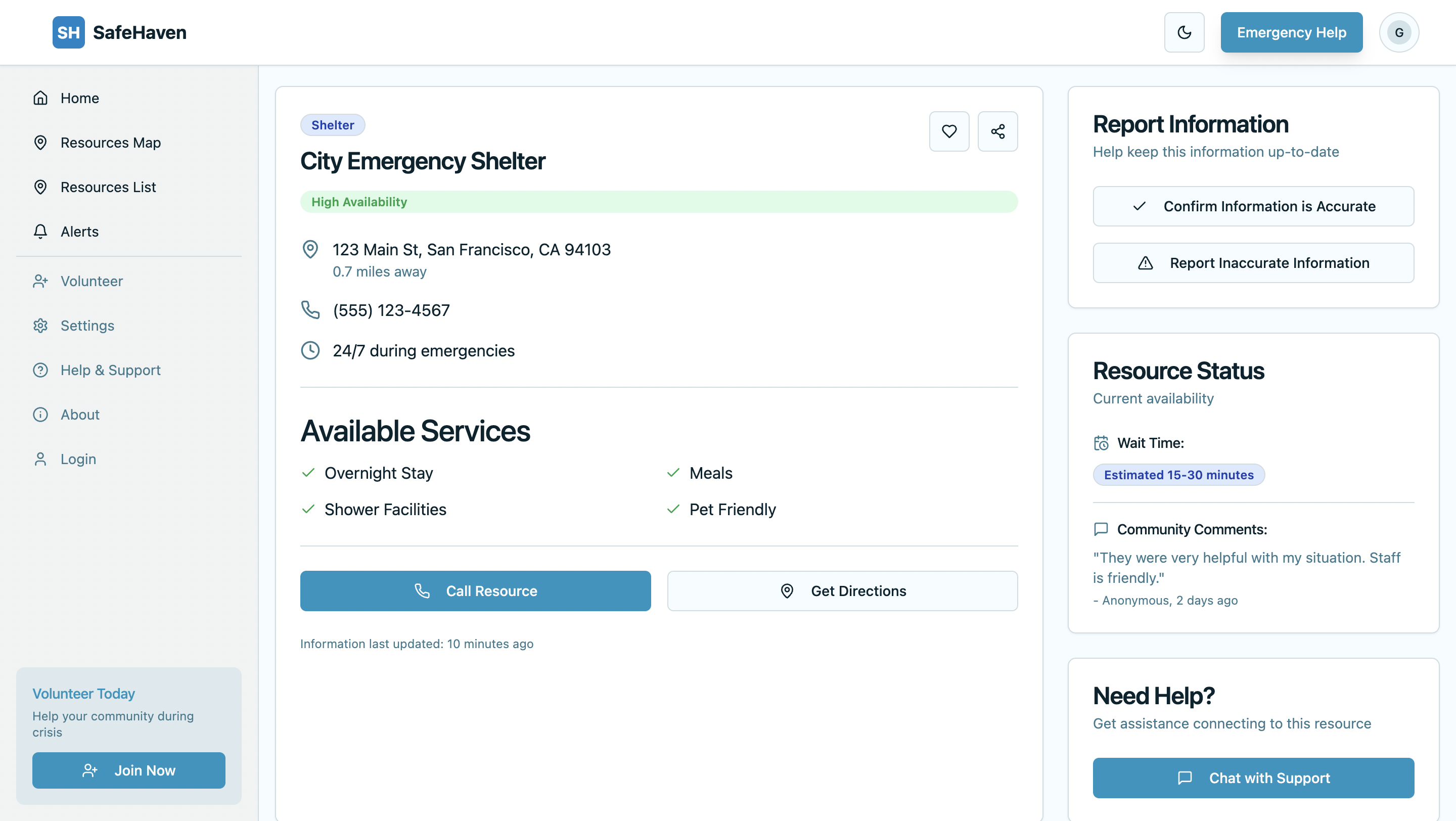
Resource Detail Page
-
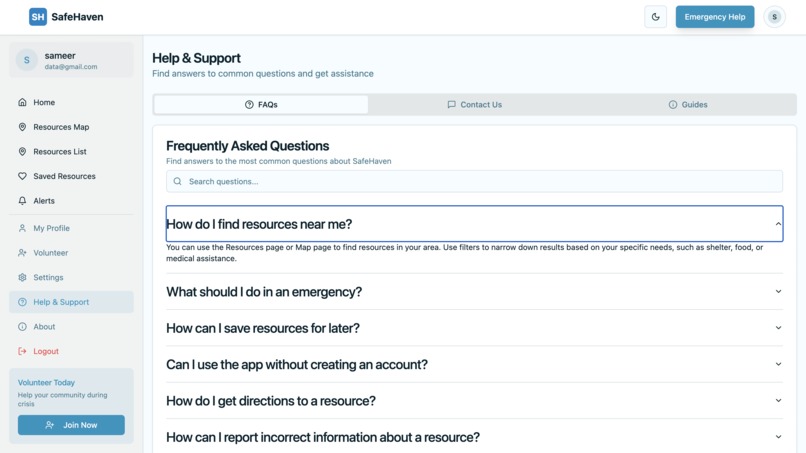
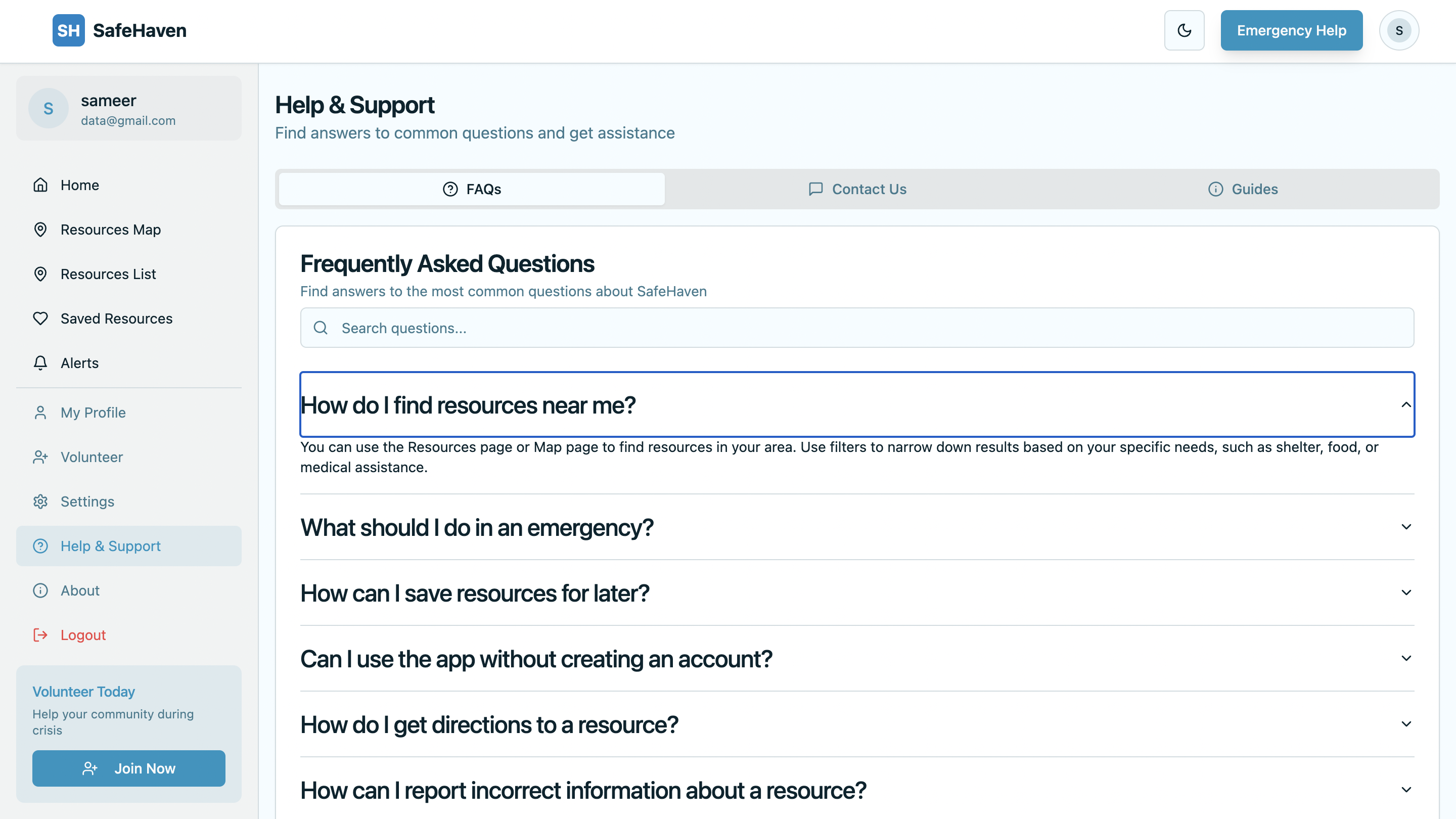
Help & Support
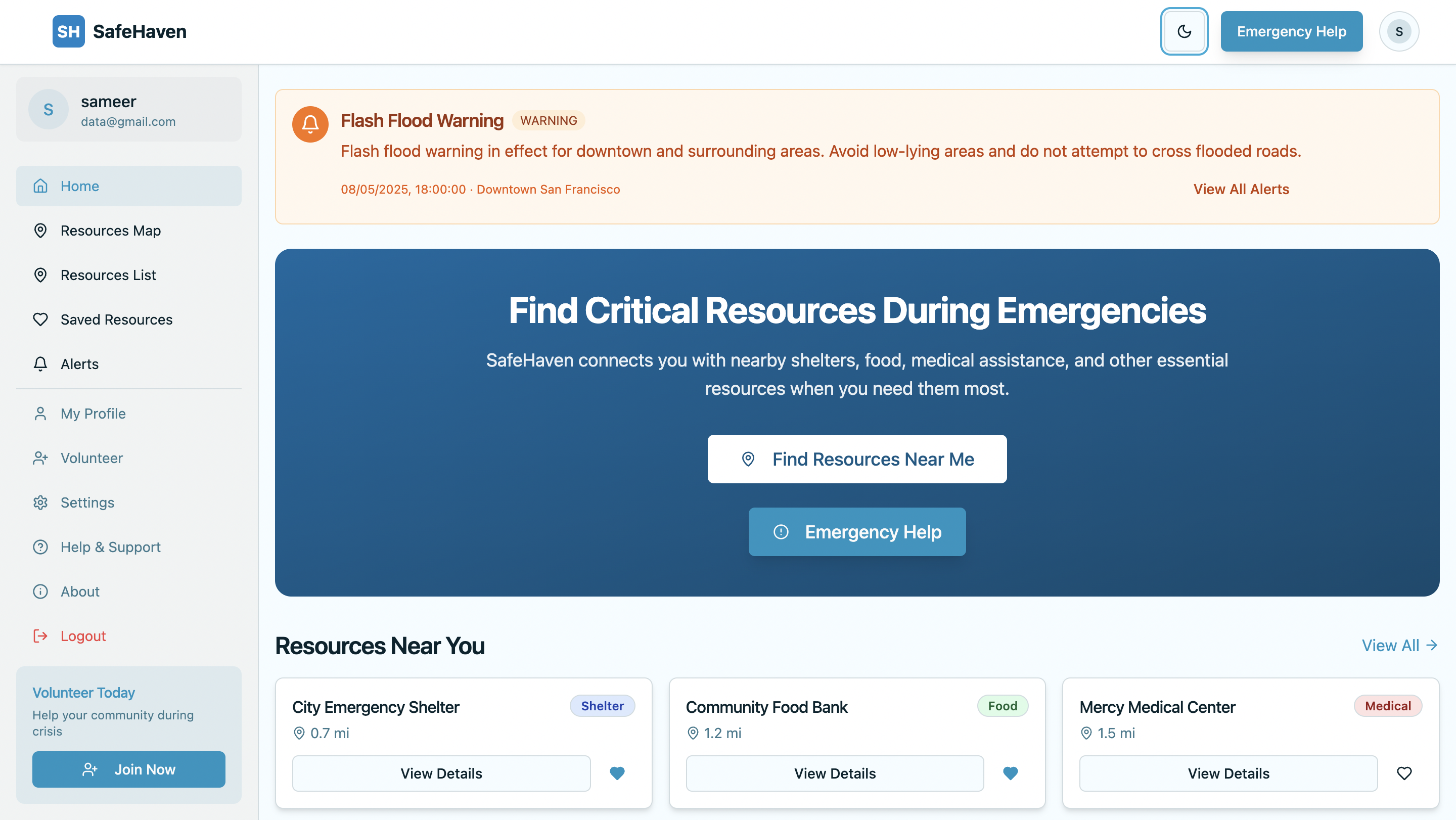
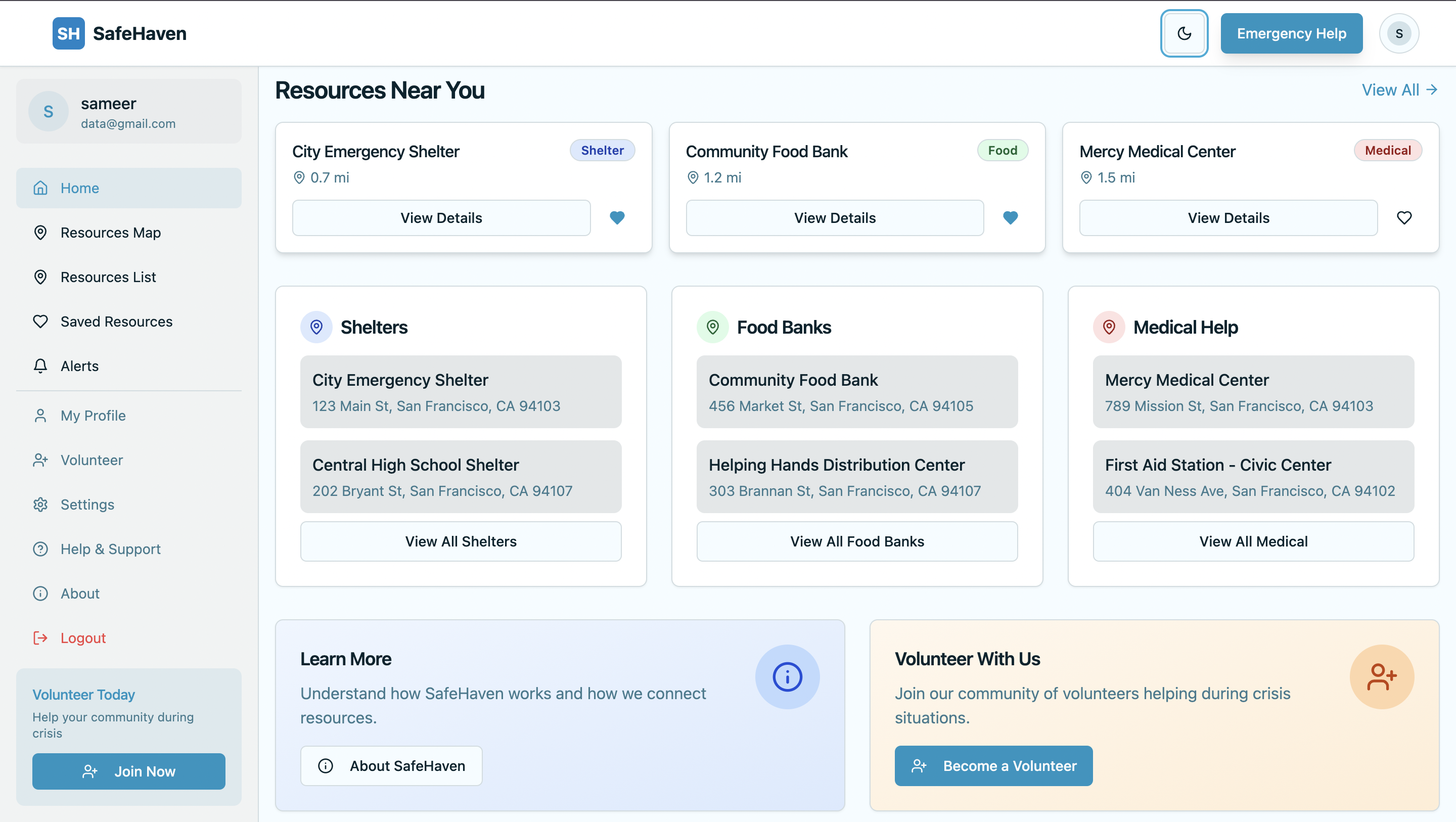
Inspiration
The idea for SafeHaven emerged from witnessing the communication breakdown during recent natural disasters and humanitarian crises. During these events, we observed a critical disconnect: resources were often available in affected areas, but vulnerable populations struggled to locate and access them when they needed them most. We were particularly moved by stories of communities organizing impromptu relief efforts through social media, messaging apps, and hand-drawn maps—powerful but fragmented solutions that couldn't reach everyone in need. The vision for SafeHaven came from a simple question: How might we harness technology to bridge the gap between available resources and the people who urgently need them, while empowering communities to coordinate more effectively during crises?
What it does
SafeHaven serves as a comprehensive crisis resource navigator:
- Real-time resource mapping: Displays up-to-date locations of essential services (shelters, food distribution, medical aid, charging stations) on an interactive map
- AI-powered recommendations: Suggests specific resources based on a user's self-reported needs, location, and current resource availability
- Offline functionality: Works without internet connection by caching critical resource data
- Multilingual support: Automatically translates content into the user's preferred language
- Resource provider portal: Allows organizations to update resource availability and capacity in real-time
- Community reporting system: Enables users to report road closures, dangerous areas, or new ad-hoc resources
- Volunteer coordination: Matches volunteers with specific skills to where they're most needed
- Accessibility features: Screen reader compatibility, high contrast mode, and simplified interface options
How we built it
We developed SafeHaven as a modern web application focused on crisis resource navigation to ensure maximum accessibility across devices:
- Frontend: Built with React 18 and TypeScript for a robust, type-safe foundation, using Vite as our build tool and React Router for navigation
- UI Design: Implemented with Tailwind CSS for styling, shadcn/ui for accessible components, and Lucide Icons for clear visual communication
- Mapping: Integrated Mapbox GL for interactive maps with custom color-coded resource markers and geolocation services
- State Management: Utilized React Context API for global state and React Query for efficient data fetching and caching
- Architecture: Organized with a feature-based component structure and unidirectional data flow
- AI Component: TensorFlow.js for the resource recommendation engine
- User Experience: Designed with careful attention to loading states, error handling, and accessibility features
- Development Process: Followed user-centered design principles based on research with vulnerable populations and emergency response professionals
- Future-Ready: Structured data models and interfaces for seamless backend integration and offline functionality in future iterations
Our approach prioritized creating an intuitive interface that remains functional even in challenging crisis conditions, with performance optimizations to ensure smooth operation across all devices.
Challenges we ran into
Developing SafeHaven presented several significant technical and design challenges:
- Resource data reliability: Ensuring accurate, up-to-date information during rapidly changing crisis scenarios required implementing a "last updated" mechanism and verification protocols
- Map performance optimization: Rendering numerous resource markers while maintaining smooth performance, especially on low-end devices, demanded careful optimization of our mapping implementation
- Complex resource categorization: Creating an intuitive taxonomy that properly classified diverse emergency resources while remaining user-friendly under stress
- Mobile-first constraints: Designing for small screens while maintaining critical information visibility and touch-friendly interfaces
- Accessibility in crisis: Building interfaces that remain accessible during high-stress situations and for users with various disabilities required multiple design iterations
- Intermittent connectivity: Structuring the application to gracefully handle unreliable internet connections typical during emergencies
- User privacy protection: Balancing the need to collect location data for relevant recommendations while protecting sensitive information of vulnerable populations
- Information architecture: Organizing complex resource data and features in a way that remains clear and navigable during crisis situations
These challenges pushed us to prioritize simplicity, reliability, and accessibility throughout our development process, resulting in more thoughtful design decisions.
Accomplishments that we're proud of
Despite the challenges, we achieved several milestones that make us particularly proud:
- Creating an interface simple enough to be used under extreme stress, yet powerful enough to coordinate complex resource matching
- Developing a robust offline system that maintains critical functionality even when networks fail
- Designing a solution that works across language barriers and accessibility needs
- Building a recommendation system that gets smarter about matching people to appropriate resources over time
- Implementing privacy-by-design principles that protect vulnerable users while still delivering personalized assistance
- Achieving a lightweight application that performs well even on older, low-spec devices
What we learned
The development process taught us valuable lessons:
- The critical importance of inclusive design from day one, not as an afterthought
- How to architect systems that gracefully degrade rather than completely fail when conditions deteriorate
- The complexities of humanitarian tech and the ethical considerations it demands
- The need to balance technological sophistication with simplicity and reliability
- How cross-disciplinary collaboration improves solutions for complex social problems
- The value of direct input from emergency responders and community organizers in the design process
What's next for SafeHaven
Looking forward, we plan to expand SafeHaven's impact through:
- Developing partnerships with emergency management agencies and humanitarian organizations for official adoption
- Creating an open API to allow integration with existing crisis response systems
- Implementing predictive analytics to anticipate resource needs before they become critical
- Expanding language support and cultural adaptations for global deployment
- Building a customizable deployment package that local communities can adapt to their specific needs and resources
- Developing training materials to help communities prepare before crises strike
- Exploring mesh networking capabilities to function in areas with completely destroyed infrastructure
Built With
- css3
- github
- html5
- javascript
- lucide
- mapbox
- react
- react18
- reactrouterv6
- shadcn
- tailwind
- typescript
- vite

Log in or sign up for Devpost to join the conversation.