-
-
-
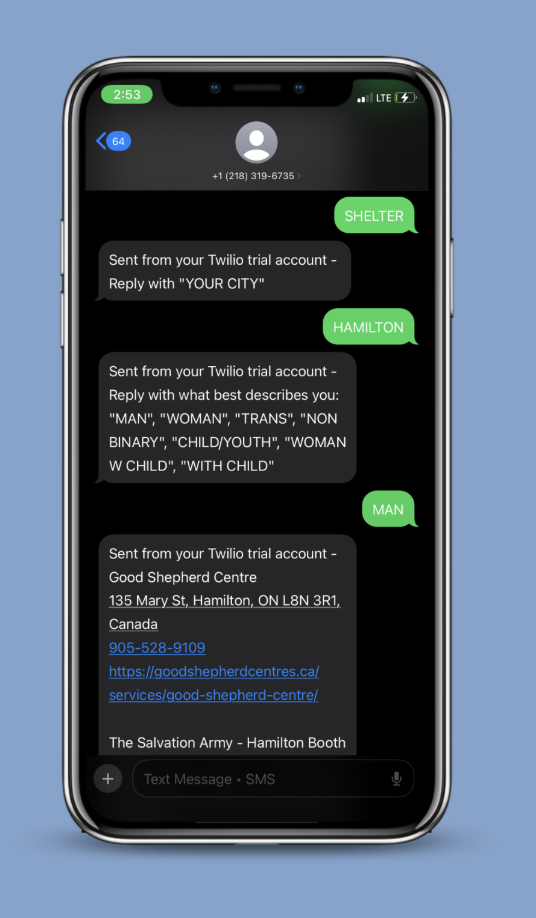
SMS Service
-
-
Inspiration
One of our team members, whose sister is a community therapist, has seen patients in crisis calling for help, struggling to find resources—even with the support of a licensed professional. This highlighted just how fragmented the system is. Resources are scattered across websites, pamphlets, and flyers, making it nearly impossible for those in need to find the right help.
That’s where we came in. We wanted to create a solution to bridge the gap, making these crucial resources easy to access for anyone, no matter their situation.
What it does
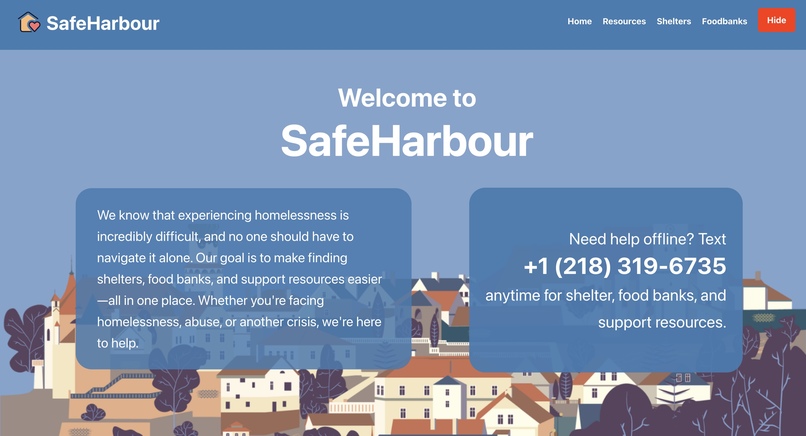
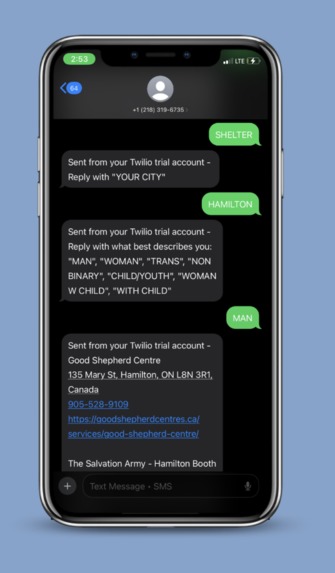
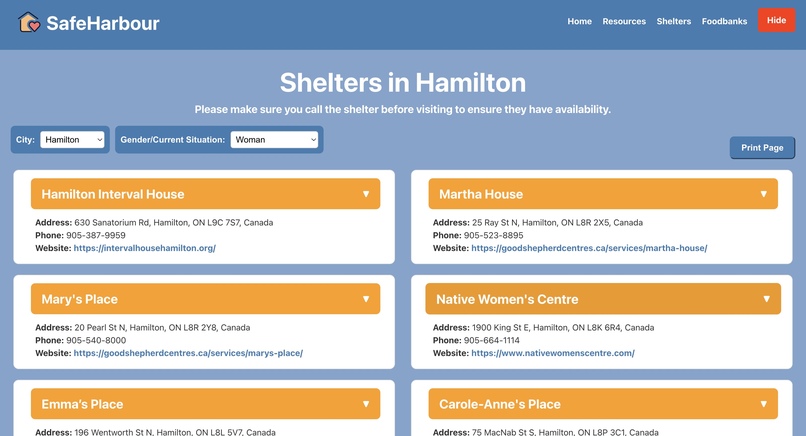
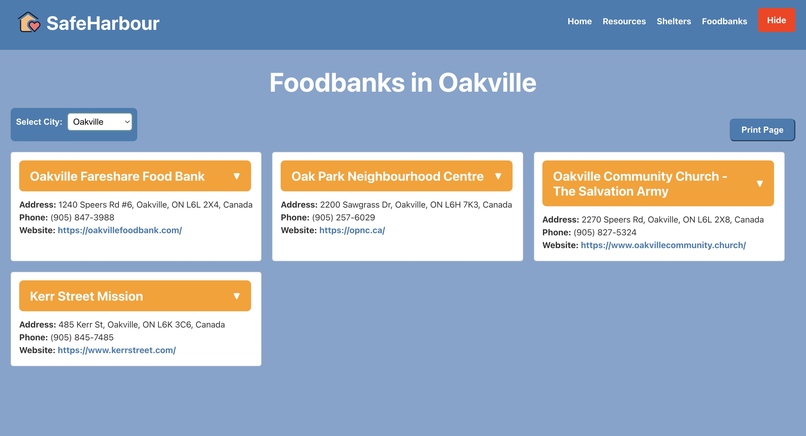
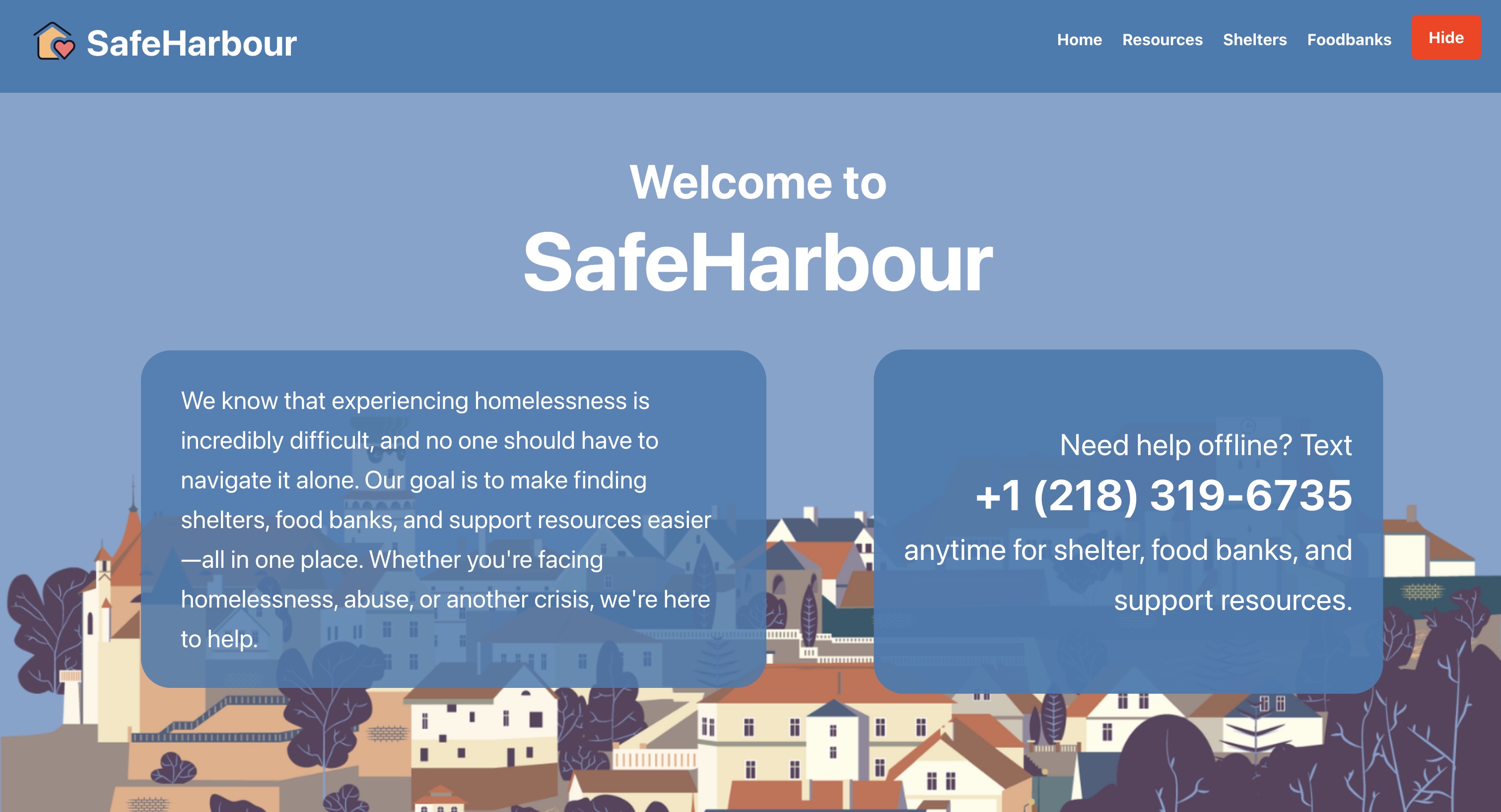
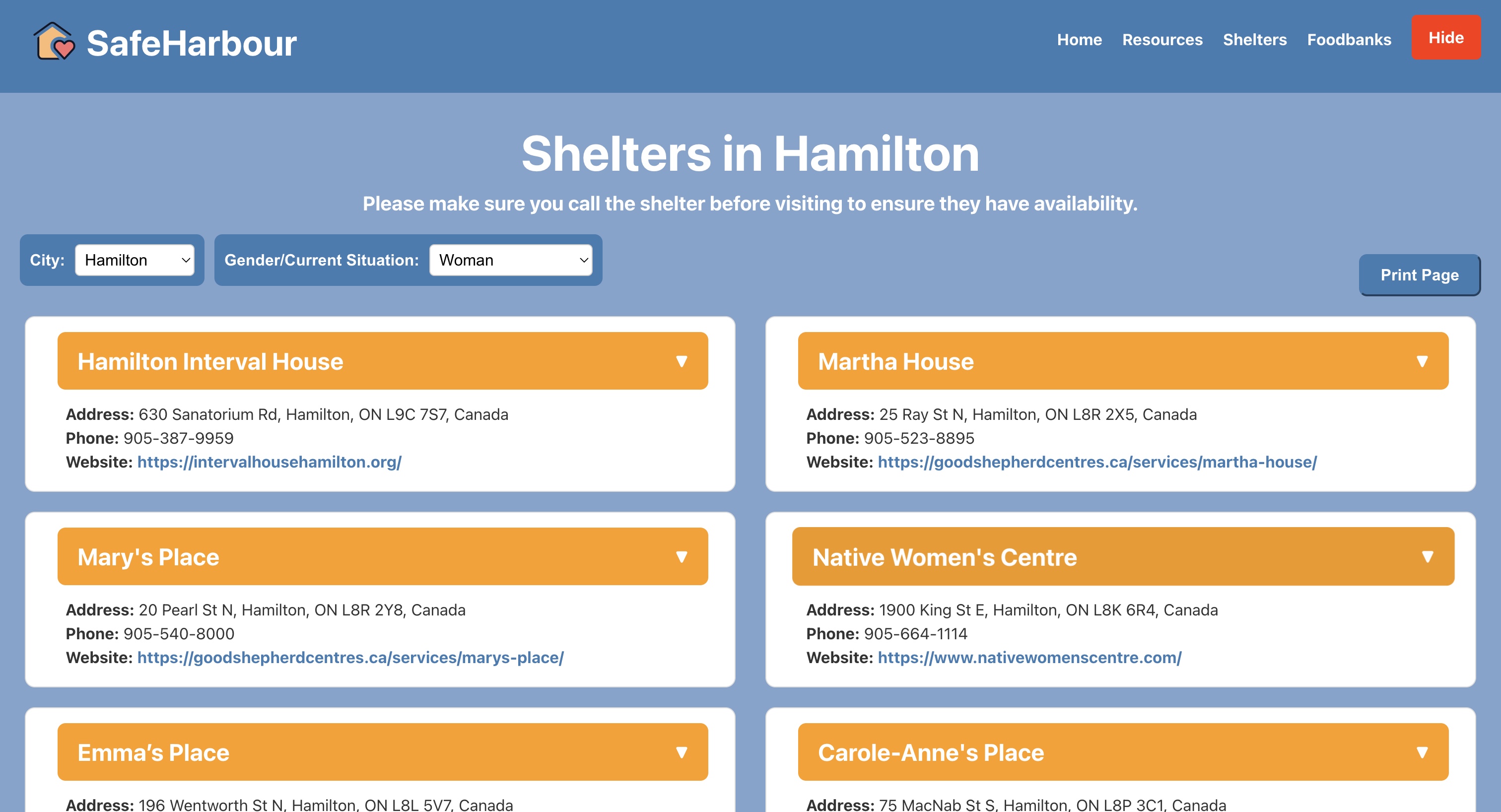
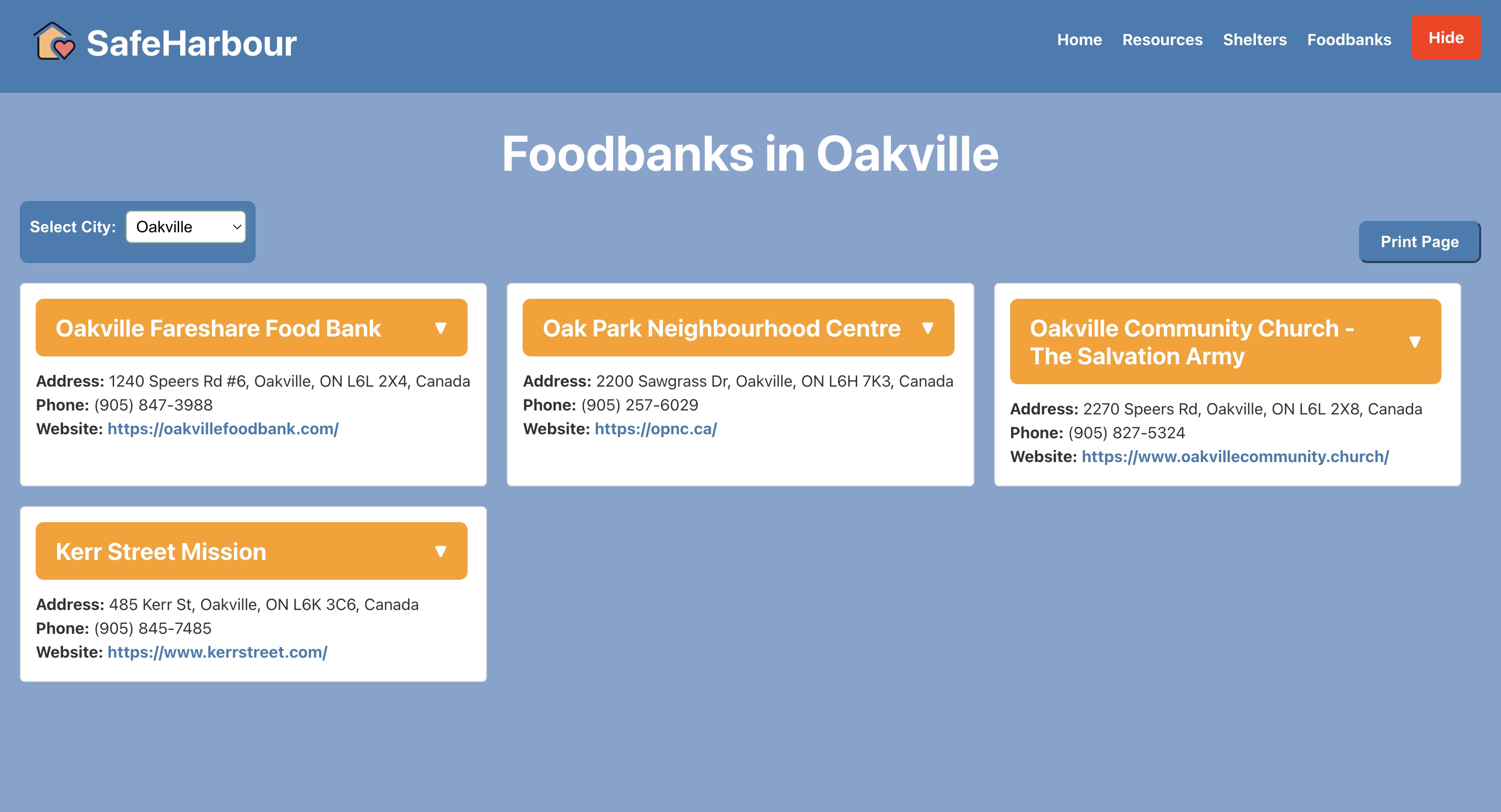
SafeHarbour is a website and SMS-based service that provides quick, easy access to shelters, food banks, and crisis resources. Users can filter results by location, gender, and other needs to find relevant support. Our SMS system allows those without the internet to receive the same information via text. Individuals with smartphones may access the website using their own Wi-Fi or public Wi-Fi and download the information to their device for offline use. Otherwise, public computers at libraries and other centers could be used to browse and print any necessary information. Additionally, we’ve included an emergency hide button for individuals in unsafe situations, and a download option to store resource data offline.
How we built it
We set up a server, built a MongoDB database, and connected it to our backend using NodeJS. To populate the database, we leveraged the Google Places API to gather information on shelters and food banks, filtering by location and other criteria. We then structured and formatted this data using Mongoose, along with manual entries and research. We then integrated the Twilio API to enable SMS functionality, connecting it to our database and Node.js server using Ngrok. Finally, we developed the frontend using the React framework, connecting it to our backend and MongoDB database to display the data for users.
Challenges we ran into
We encountered two main challenges during the hackathon. The first was managing multiple servers: one to keep our backend updated, another to connect the backend to the frontend of the website, and a third to link the database to our SMS system. Connecting all three servers seamlessly proved to be difficult, but after a lot of debugging and with the help of some fantastic mentors, we managed to get everything working smoothly.
The second challenge was related to retrieving data from our database in the correct format. There were several instances where the data we retrieved wasn’t fully compatible with the visual layout we wanted to implement on our site, which caused some issues. However, we were able to quickly resolve the problem and get things back on track.
Accomplishments that we're proud of
During this hackathon, we pushed ourselves to learn and implement several new technologies such as MongoDB, Twilio, Ngrok, Google Places API, ReactJS, and NodeJS all within just 24 hours. None of us had prior experience with these tools, so successfully integrating them into a working solution was incredibly rewarding. In a previous hackathon, we struggled with Google APIs not connecting with our server, but this time, not only did we seamlessly connect to Google Places, but we also integrated MongoDB, Twilio, and Ngrok without any major issues.
Most importantly, we transformed a fragmented and overwhelming system of resources into something simple, accessible, and easy to use. Seeing our idea come to life and knowing it has the potential to make a real impact is something we’re truly proud of, especially given that it was just the two of us working together to make it happen.
What's next for SafeHarbour
Technical Enhancements We plan to improve the website and integrate an SMS application for broader accessibility. By partnering with shelters and food banks, we will provide real-time updates on availability and directly connect individuals with the resources they need. A chatbot powered by AI will help users find tailored solutions based on their specific situation. Additionally, multilingual support and a map feature for directions to shelters will enhance accessibility.
Future Aspirations We envision kiosks or public computers at shelters and community centers to ensure SafeHarbour is accessible to all. With printable information and offline access, people can gather essential details without relying on internet access. Our goal is to create a direct connection between shelters, food banks, and individuals in need, streamlining access to services and improving the overall experience. In the long run, we hope to expand SafeHarbour’s partnerships and integrate with other support systems, building a unified network that makes accessing resources easier and more efficient.
Built With
- css
- express.js
- github
- google-places
- html
- javascript
- mongodb
- mongodb-atlas
- mongoose
- ngrok
- node.js
- react
- twilio
- vscode


Log in or sign up for Devpost to join the conversation.