-
-
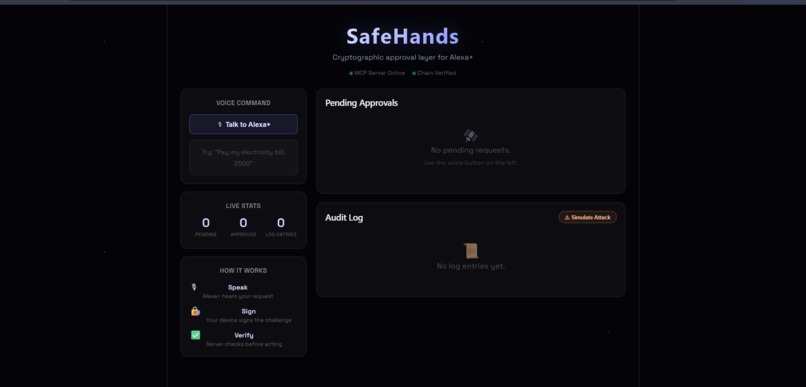
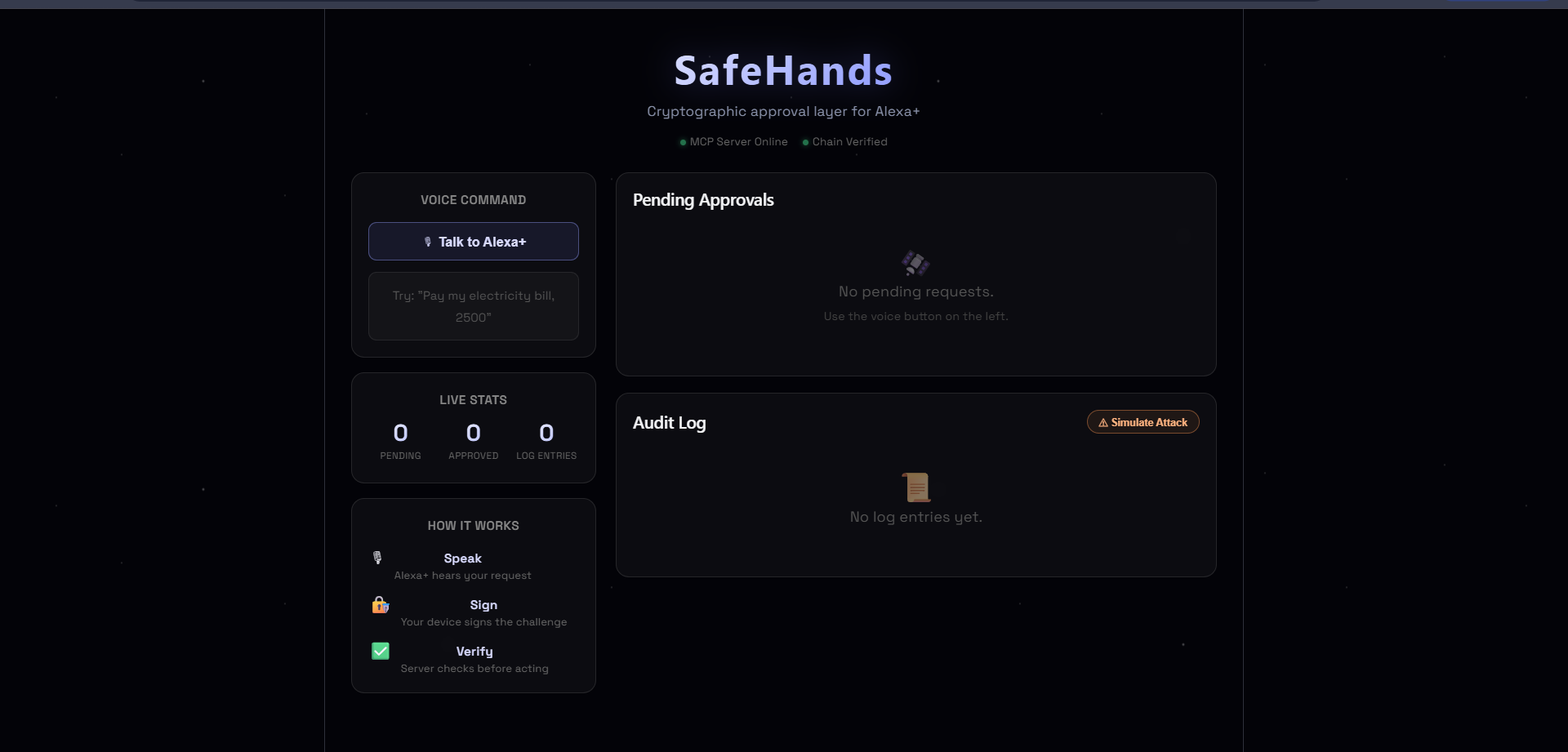
Dashboard
-
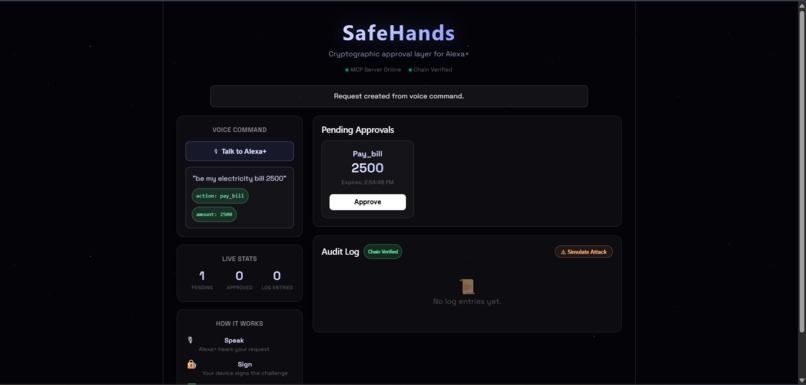
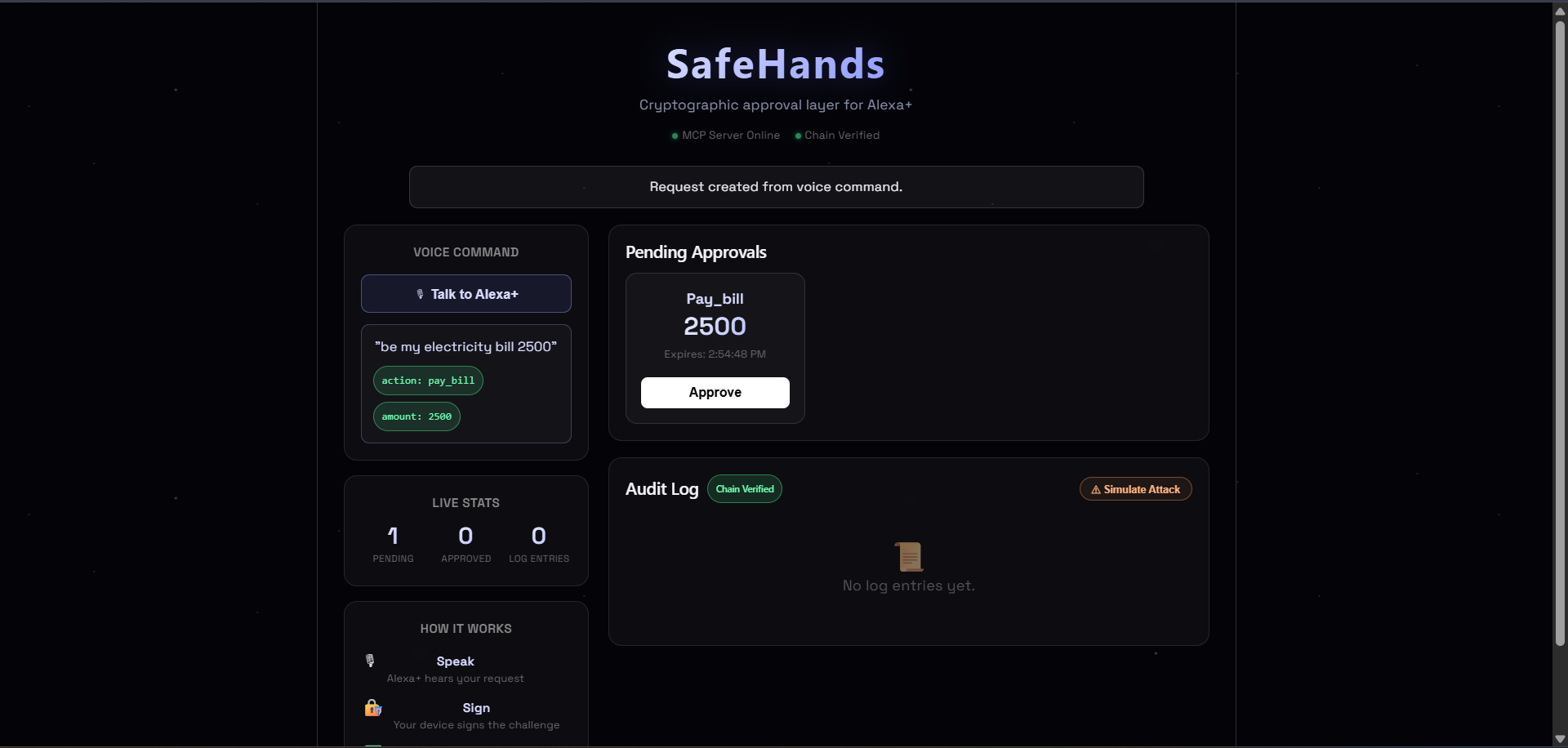
voice command working
-
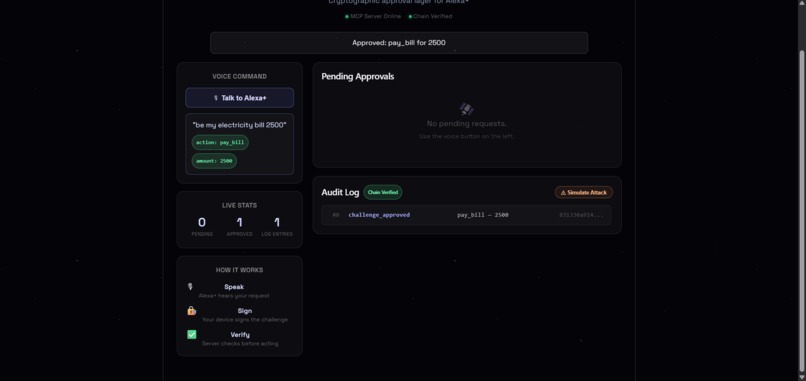
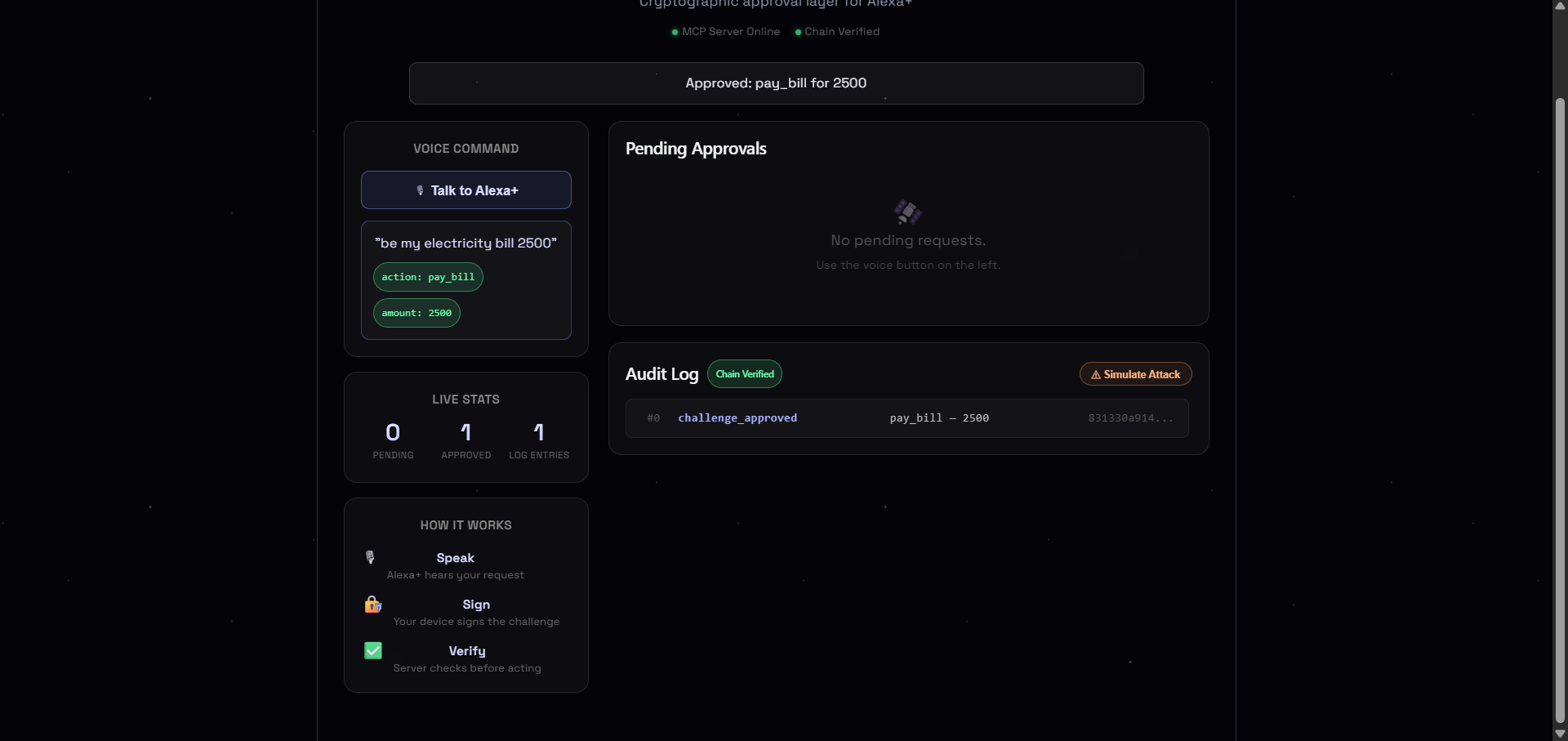
challenge approval and getting listed in the audit trail
-
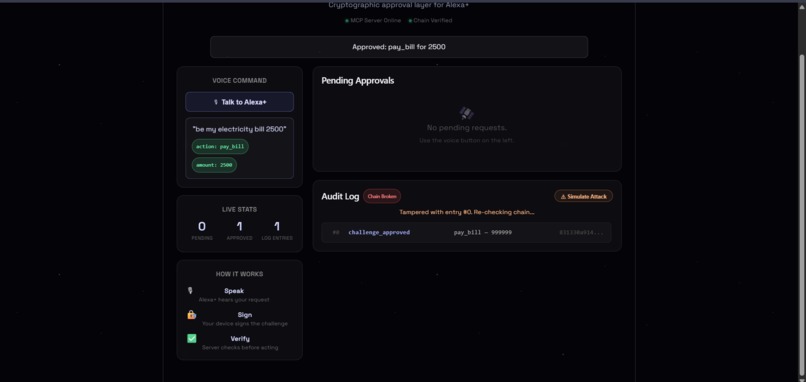
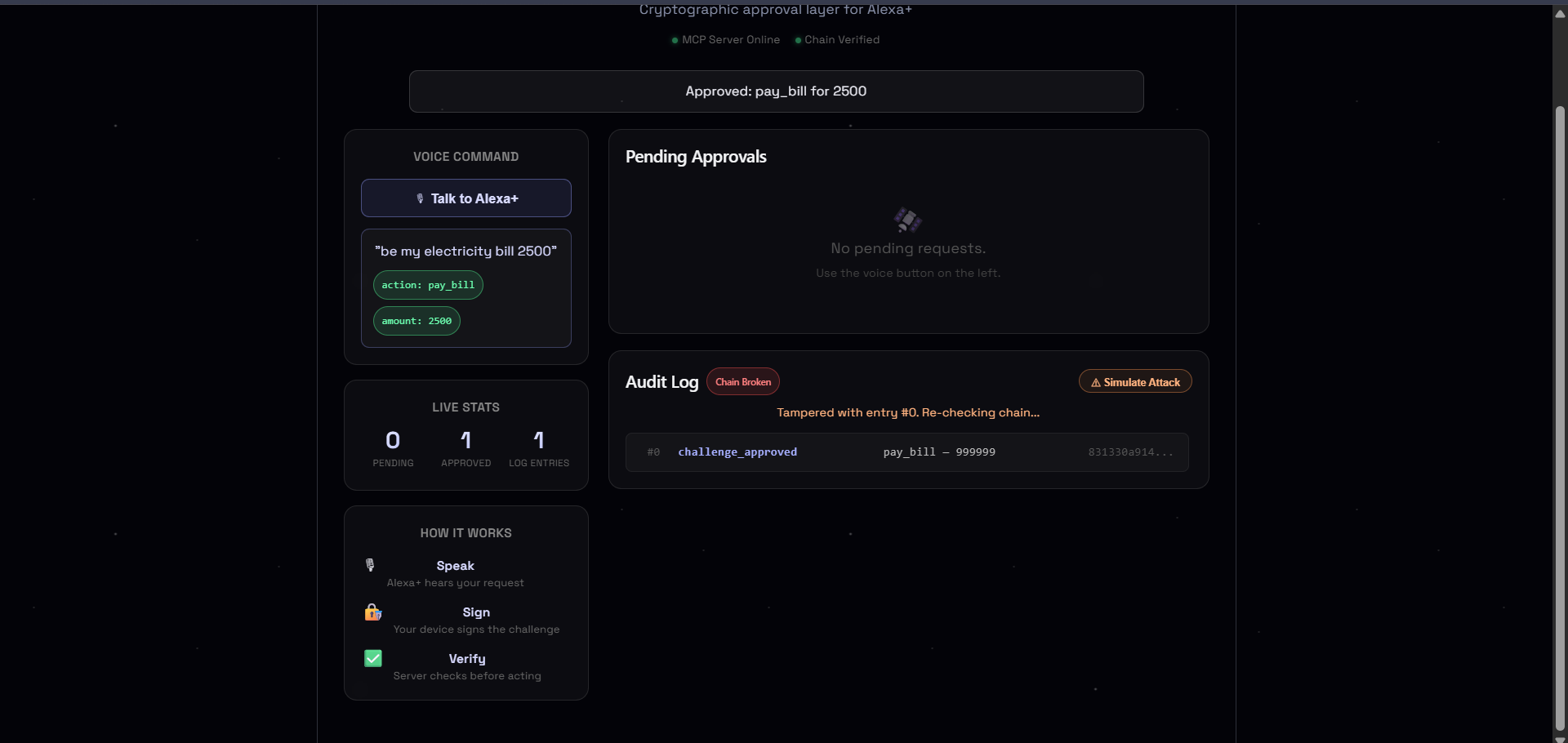
audit trail tempering
Inspiration
Alexa+ is moving from answering questions to doing things: paying bills, ordering, sharing information. But a voice alone is weak proof of identity. Anyone in the room, a guest, a child, even a recording, could trigger a sensitive action just by speaking. We wanted to explore what a cryptographic trust layer for voice assistants could look like.
What it does
SafeHands sits between Alexa+ and sensitive actions. When a user requests something risky (like paying a bill), SafeHands:
- Creates a one-time challenge with a random nonce and expiry
- Requires the owner's device to sign that exact challenge with ECDSA (P-256) before anything executes
- Verifies the signature server-side, with atomic replay protection
- Records every event in a hash-chained, tamper-evident audit log
We also built a "Simulate Attack" button that deliberately corrupts a log entry, so anyone can watch the chain detect tampering live.
How we built it
- A self-hosted MCP server (Streamable HTTP, spec 2025-11-25+) exposing
request_action,check_status, andapprove_pendingtools that Alexa+ can call - A Flask API bridging a React dashboard to the same security core
- ECDSA (P-256) signing done client-side in the browser via the WebCrypto API, so the private key never leaves the device
- A hash-chained audit log (SHA-256) in MongoDB Atlas, verifiable end-to-end
- A voice input simulation (Web Speech API) that lets anyone trigger a request by speaking, calling the same underlying MCP logic Alexa+ would use
Challenges we ran into
- The
mcpPython SDK released a v2 that renamedFastMCPtoMCPServermid-build; we adapted the code to match the new API. - JavaScript and Python format whole-number floats differently (
2500vs2500.0), which silently broke cross-language signature verification until we standardized both sides to fixed 2-decimal formatting. - MongoDB auto-assigns an ObjectId when no
_idis given, which Flask'sjsonify()can't serialize; this caused a silent failure in our audit log endpoint until we excluded_idfrom the query projection.
What we learned
Combining applied cryptography (ECC, signatures, hash chains) with a real AI agent protocol (MCP) taught us that security has to sit before the AI decides to act, not after, and that the exact same tampering guarantees you'd want in a blockchain-style log are achievable with a few dozen lines of hash-chaining code.
What's next for safehands
Multi-user support with per-device key registration, real device-bound key storage (secure enclave / Android Keystore) instead of a single demo key pair, and deeper Alexa+ account-linking for production use.
Built With
- alexa-plus
- cryptography
- ecdsa
- flask
- hash-chain
- javascript
- mcp
- model-context-protocol
- mongodb
- mongodb-atlas
- python
- react
- rest-api
- sha-256
- streamable-http
- vite
- web-speech-api
- webcrypto

Log in or sign up for Devpost to join the conversation.