Inspiration
Illegal wildlife poaching and habitat loss are still huge problems in India. When villagers, tourists or forest staff see something suspicious, there is usually no simple, fast and safe way to report it. Most information travels through calls and word of mouth, so by the time it reaches the right ranger, the damage is often done. I wanted to see if a lightweight web app built entirely on Base44 could turn these scattered reports into structured, real-time data.
What it does
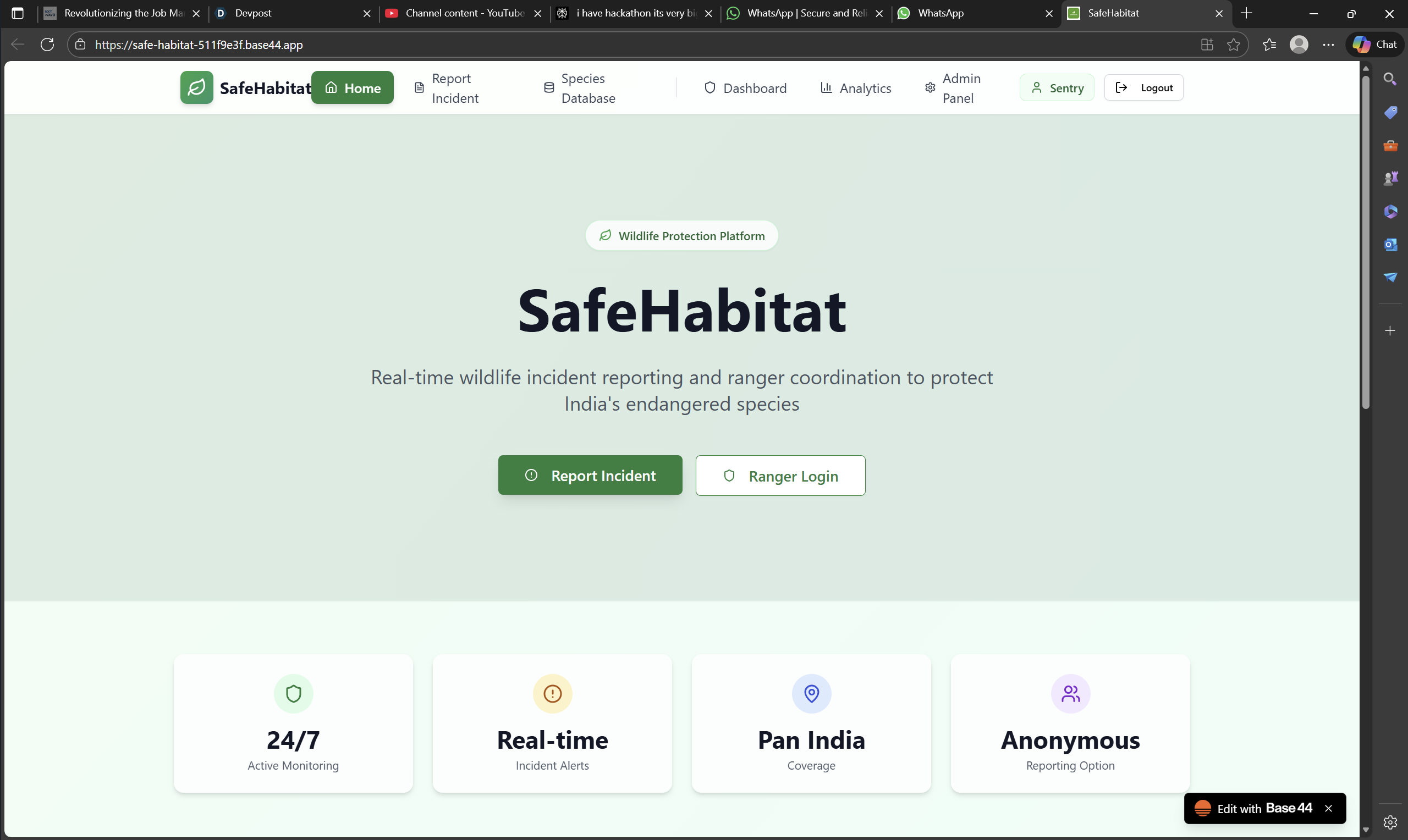
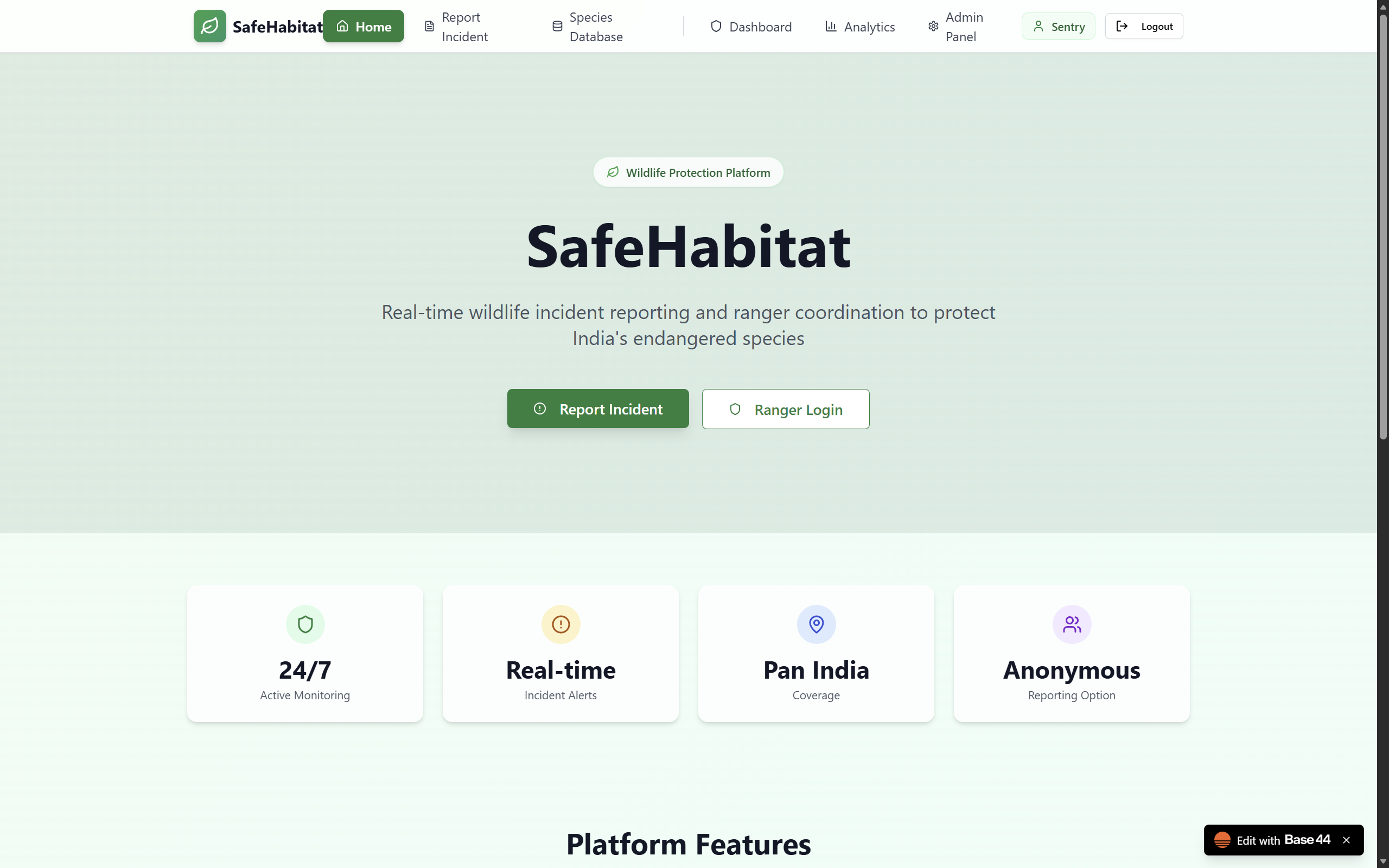
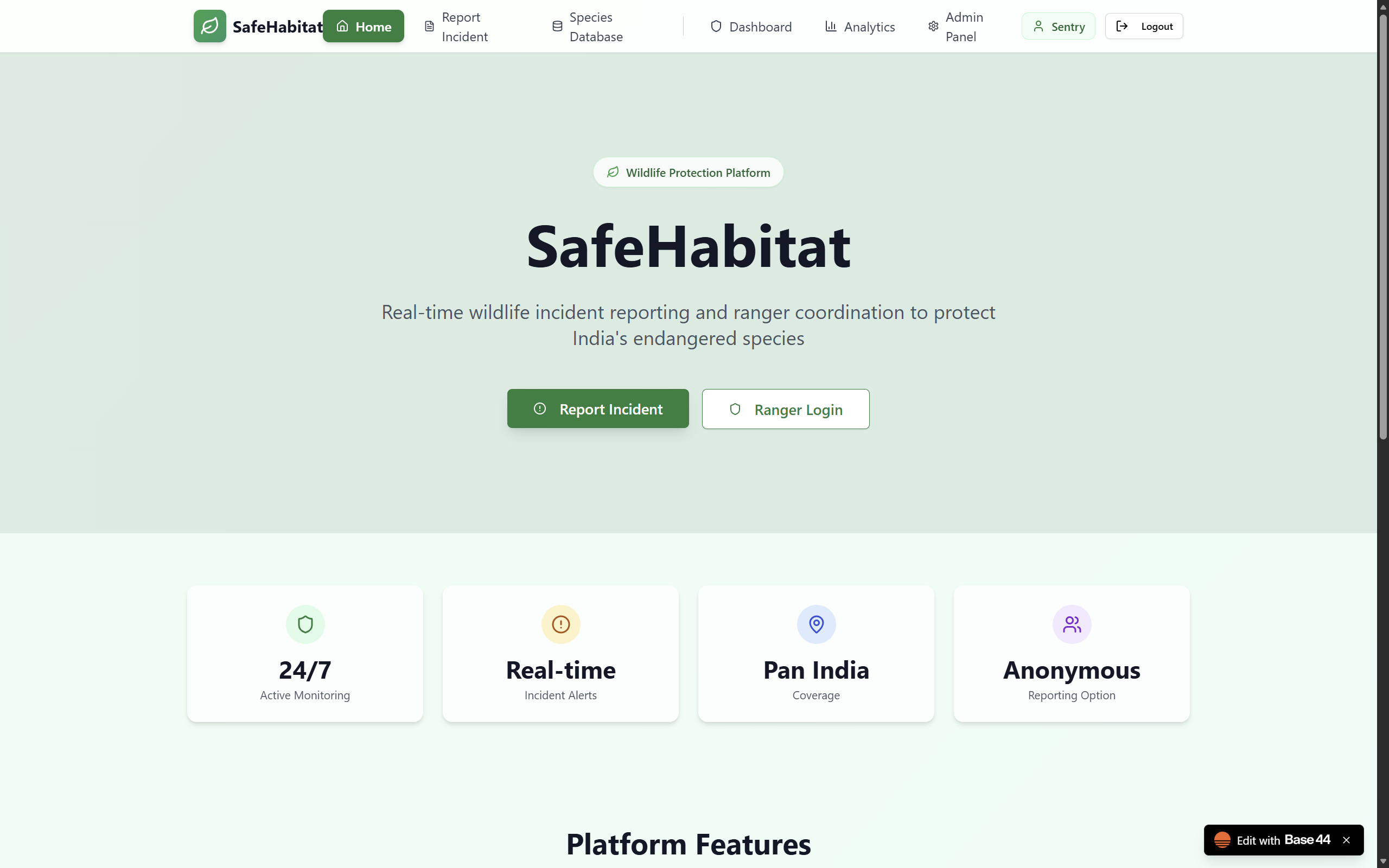
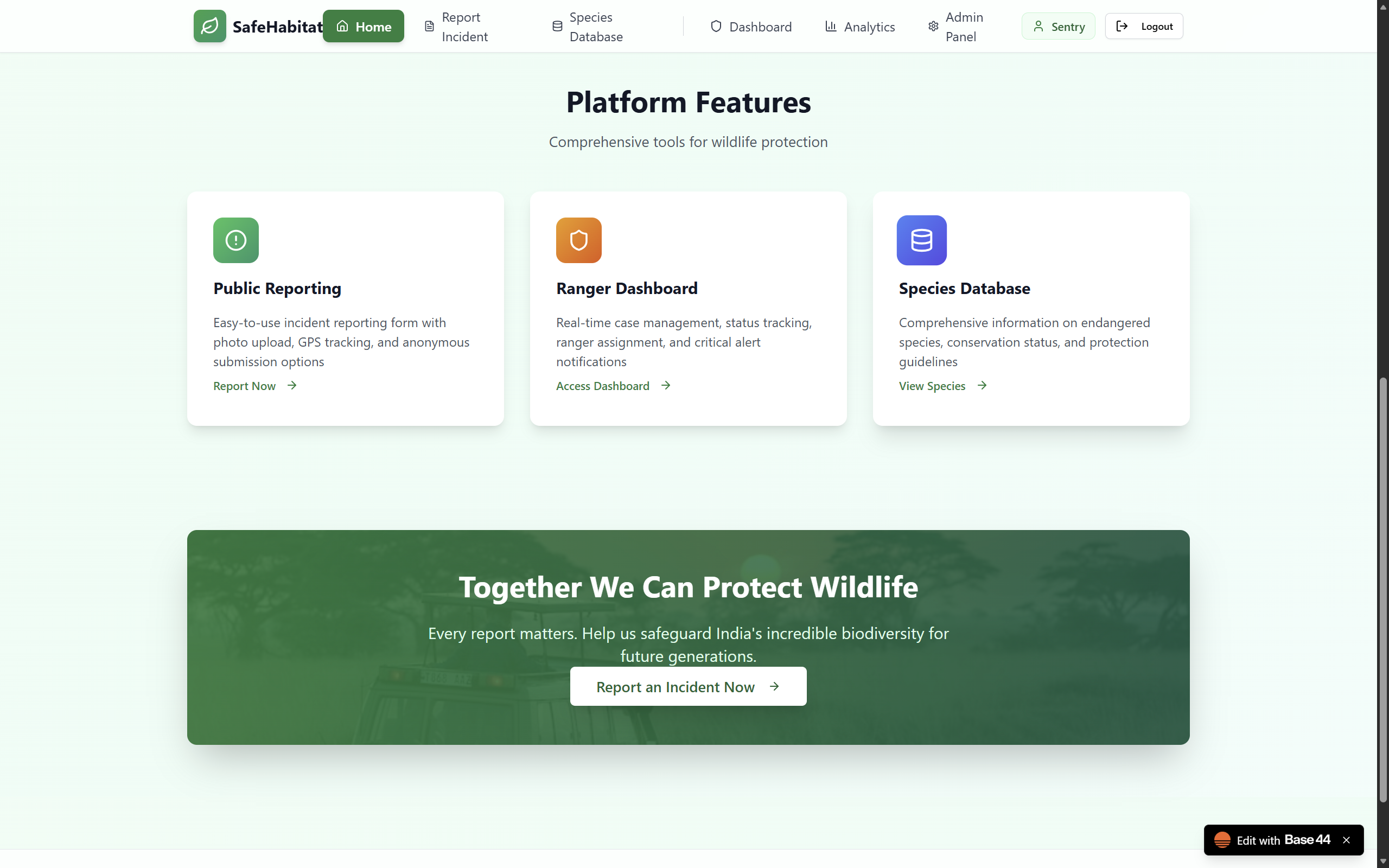
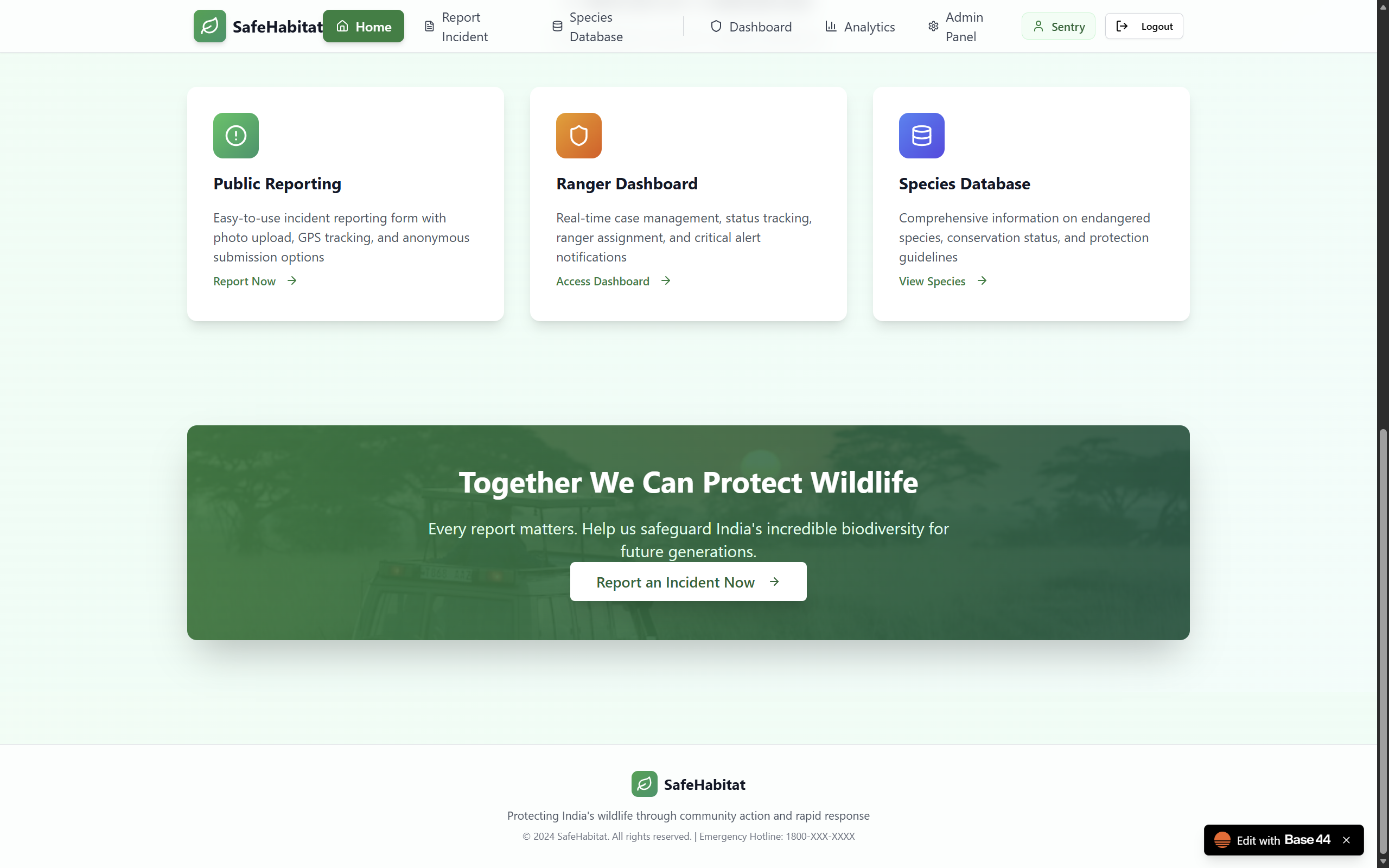
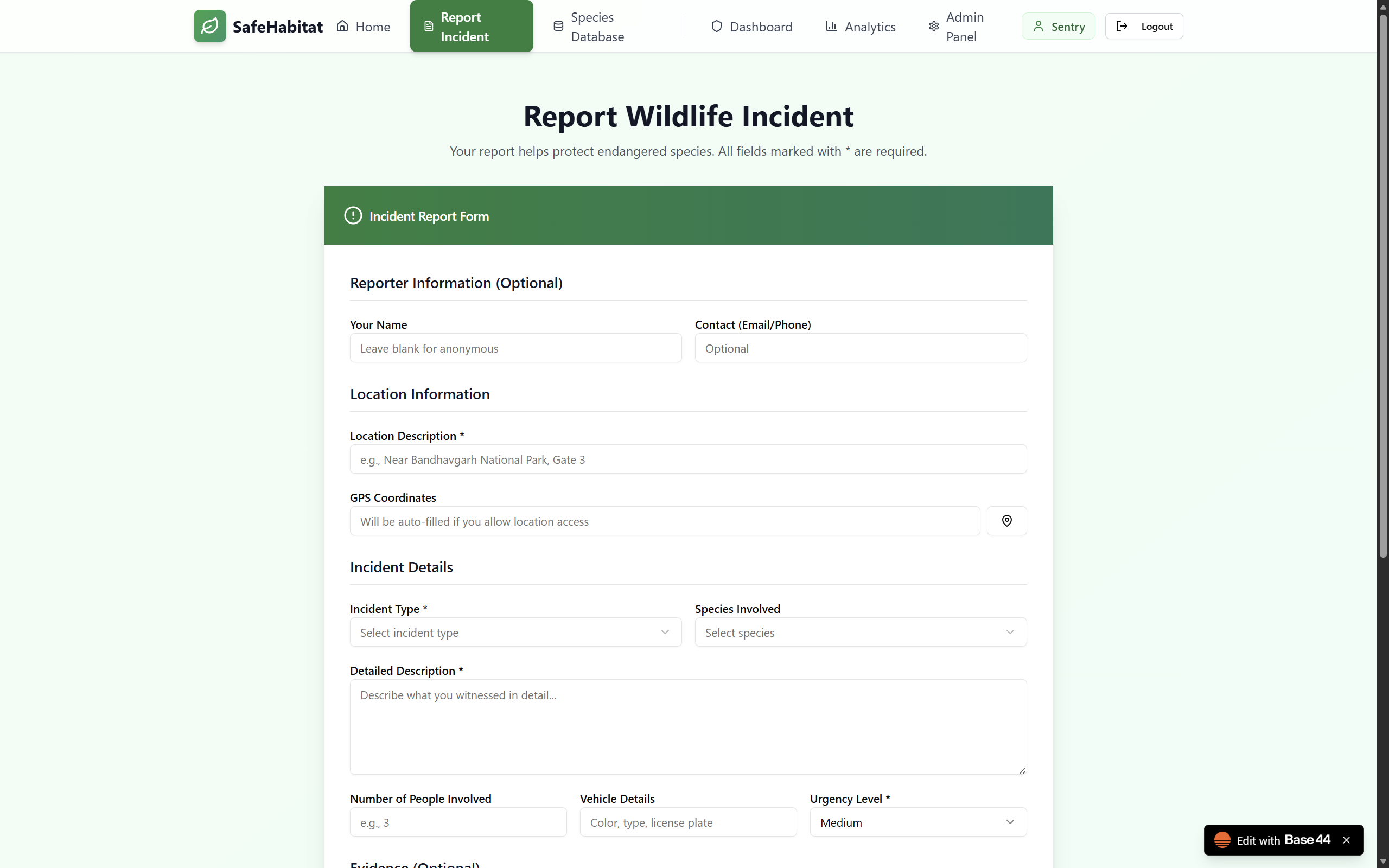
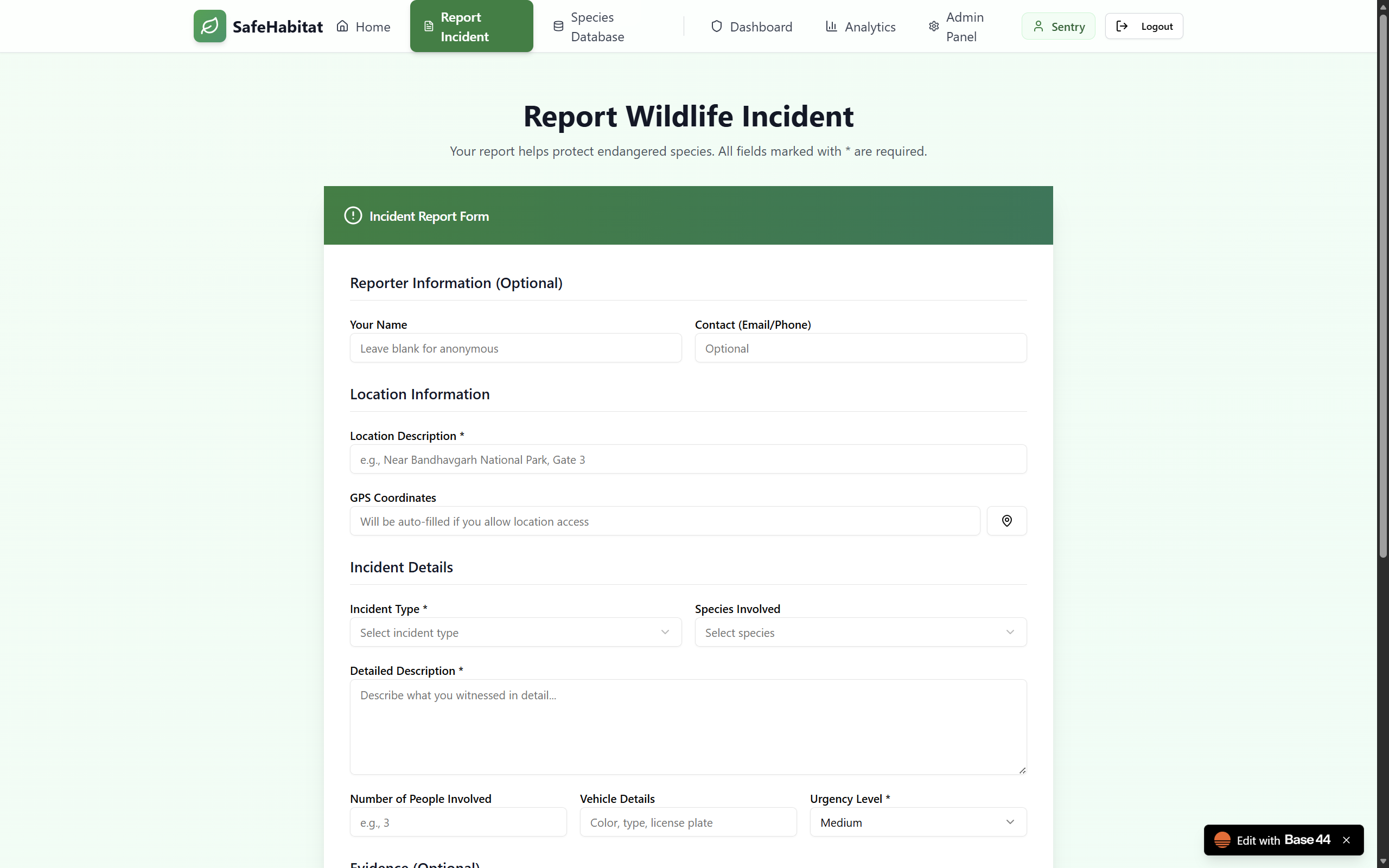
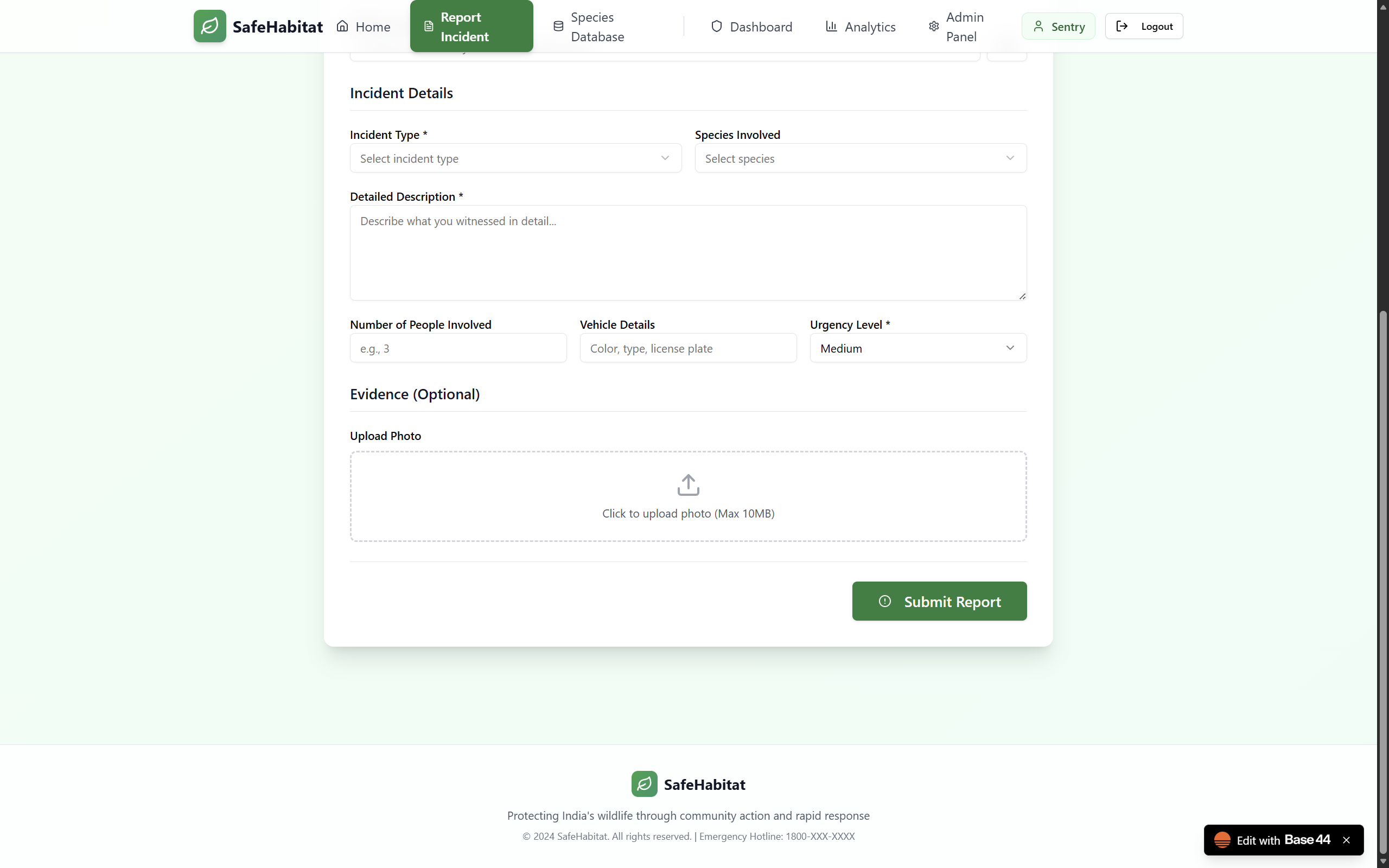
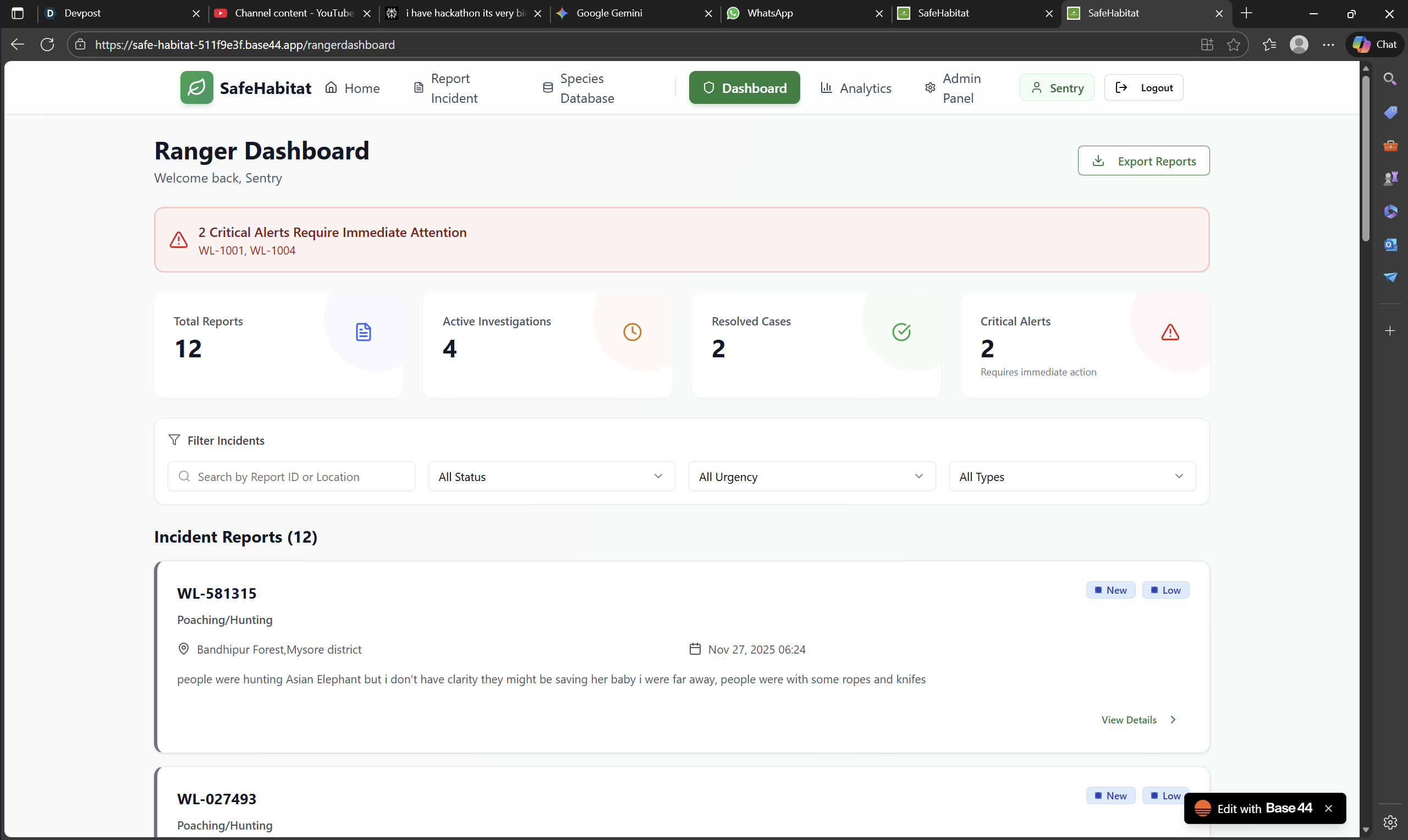
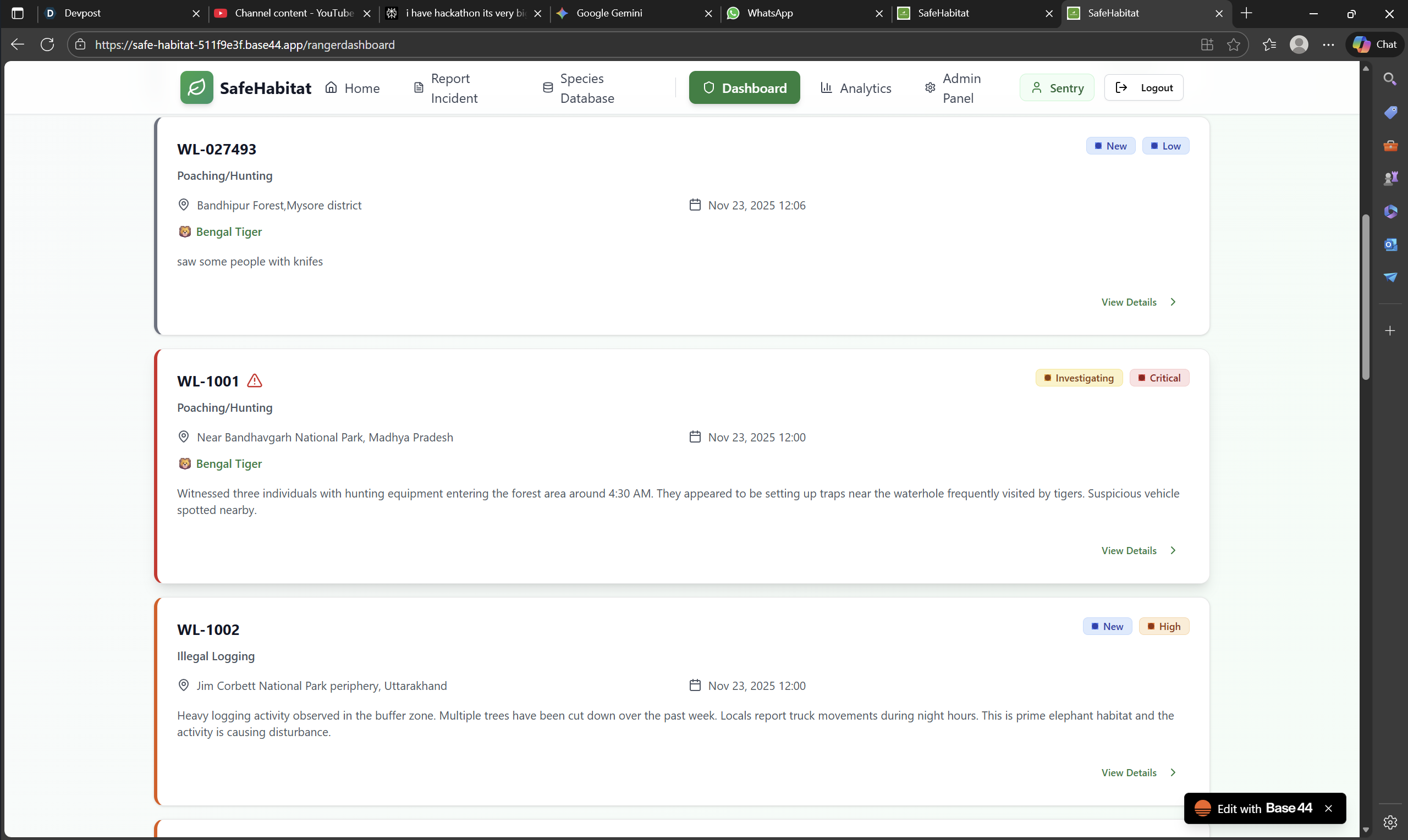
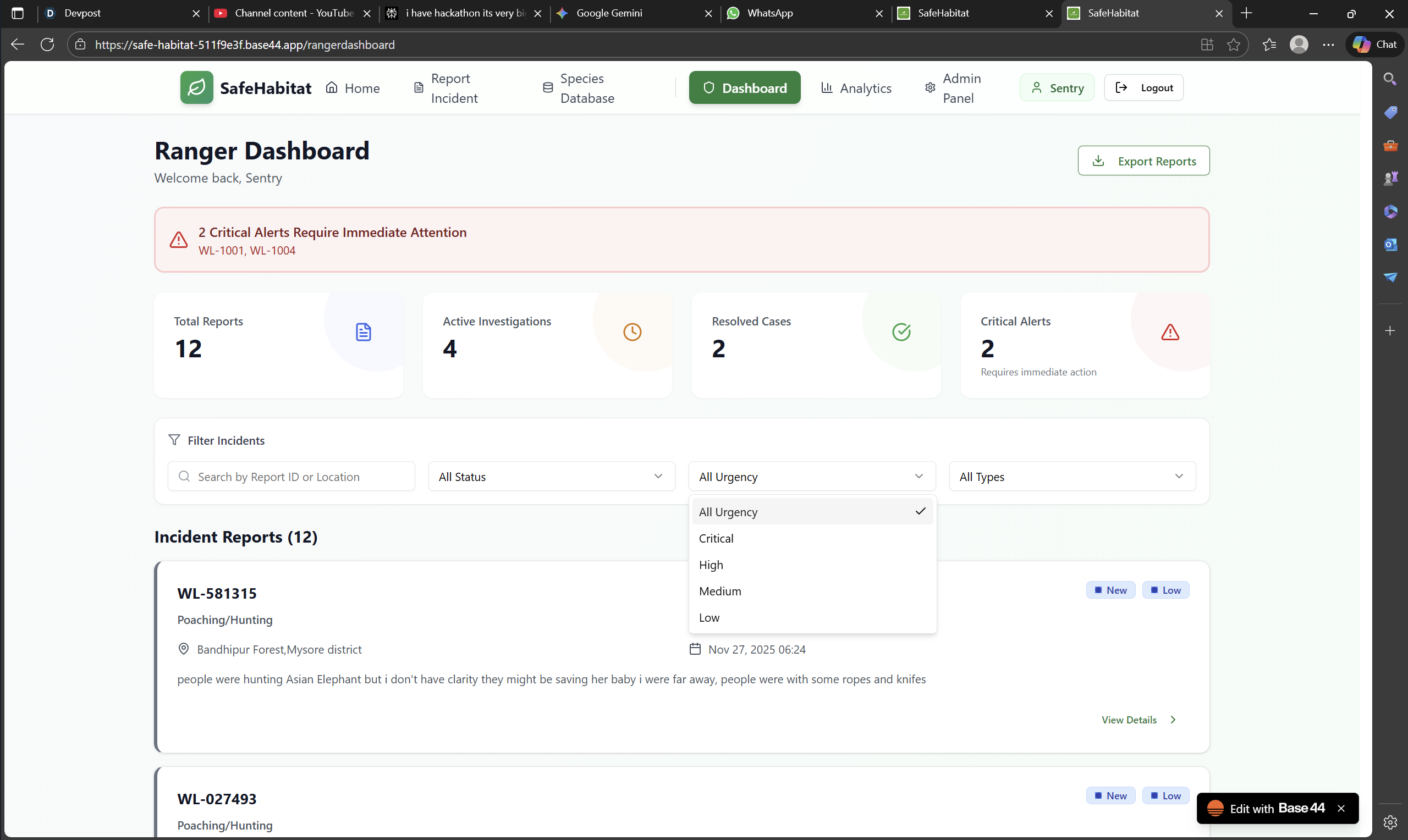
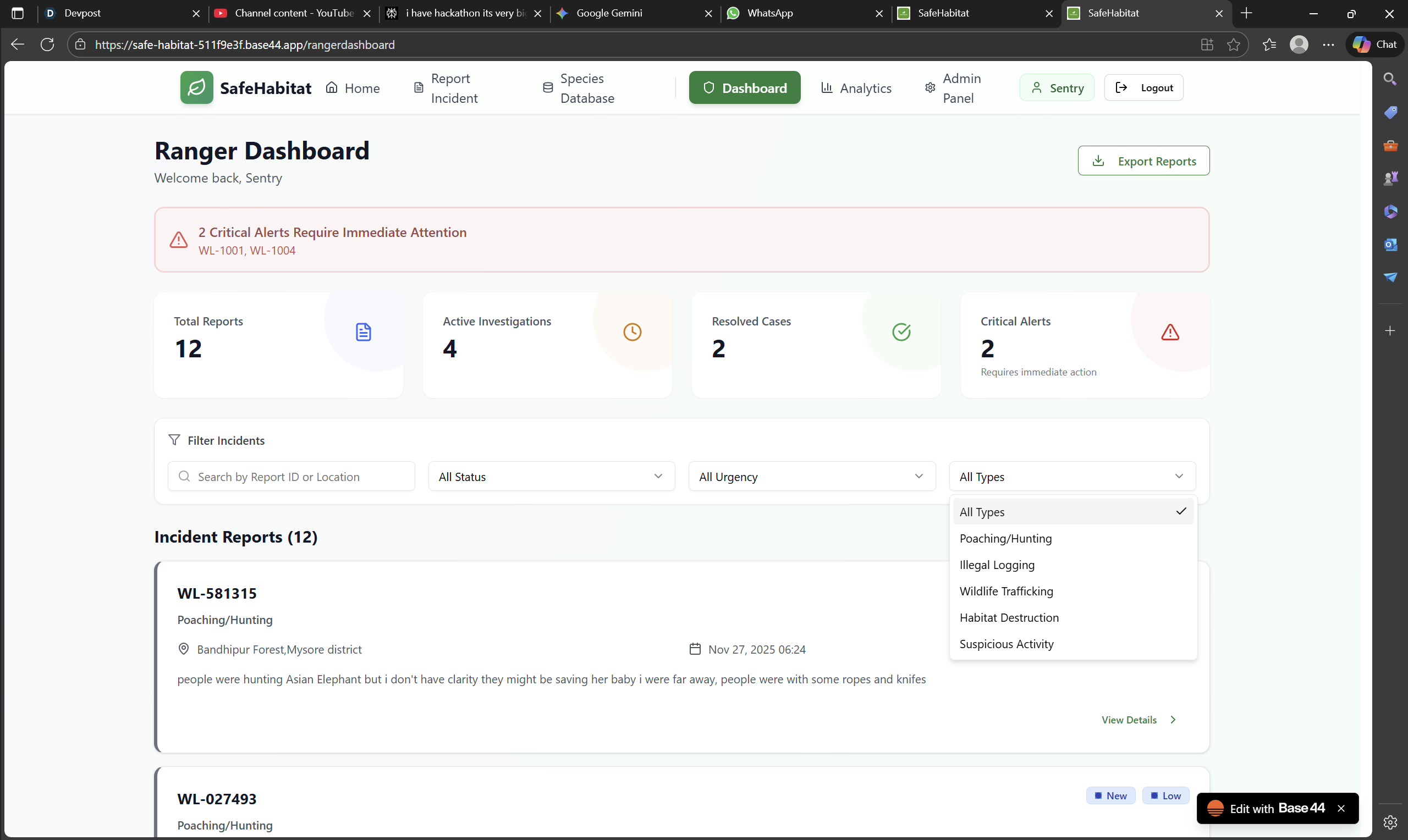
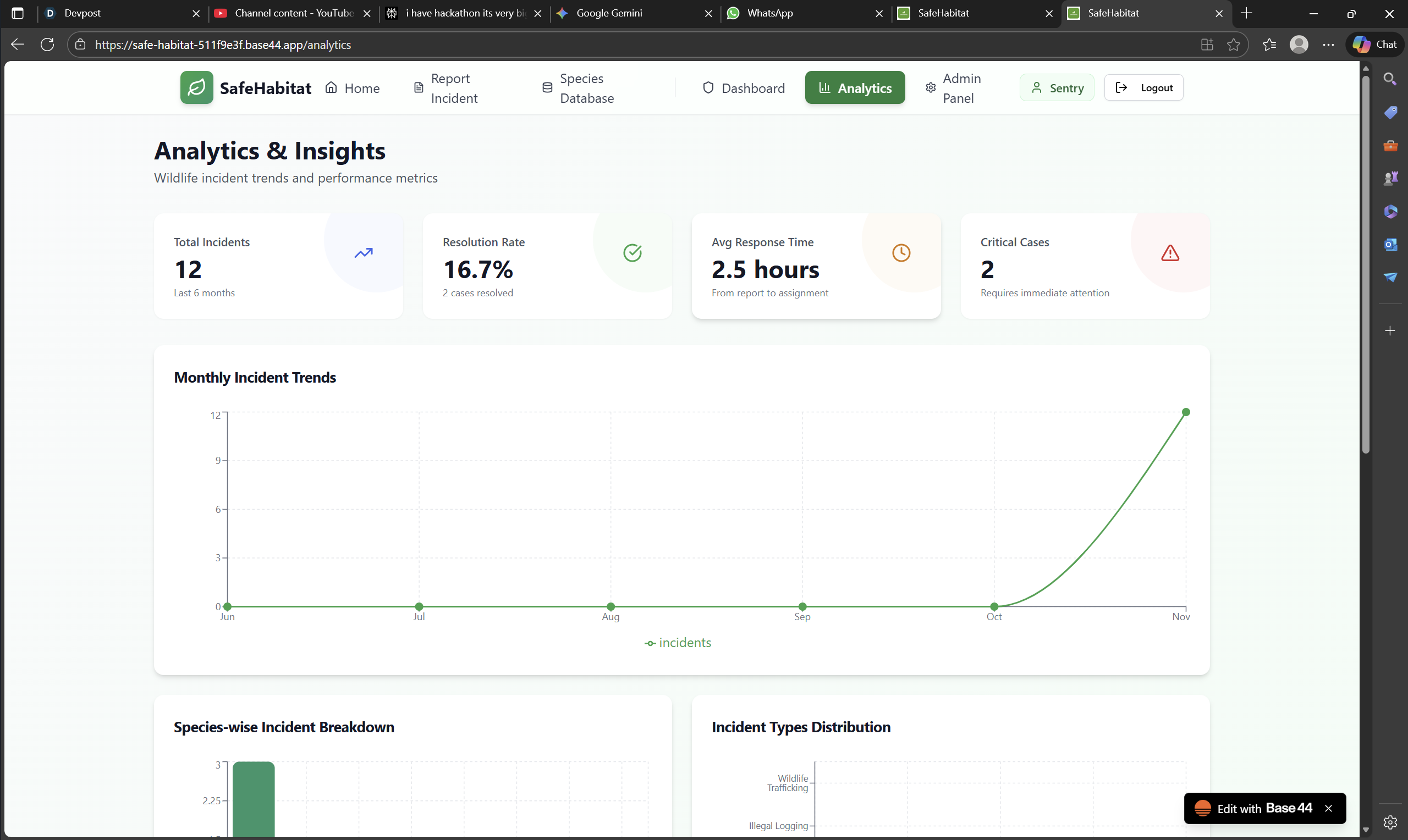
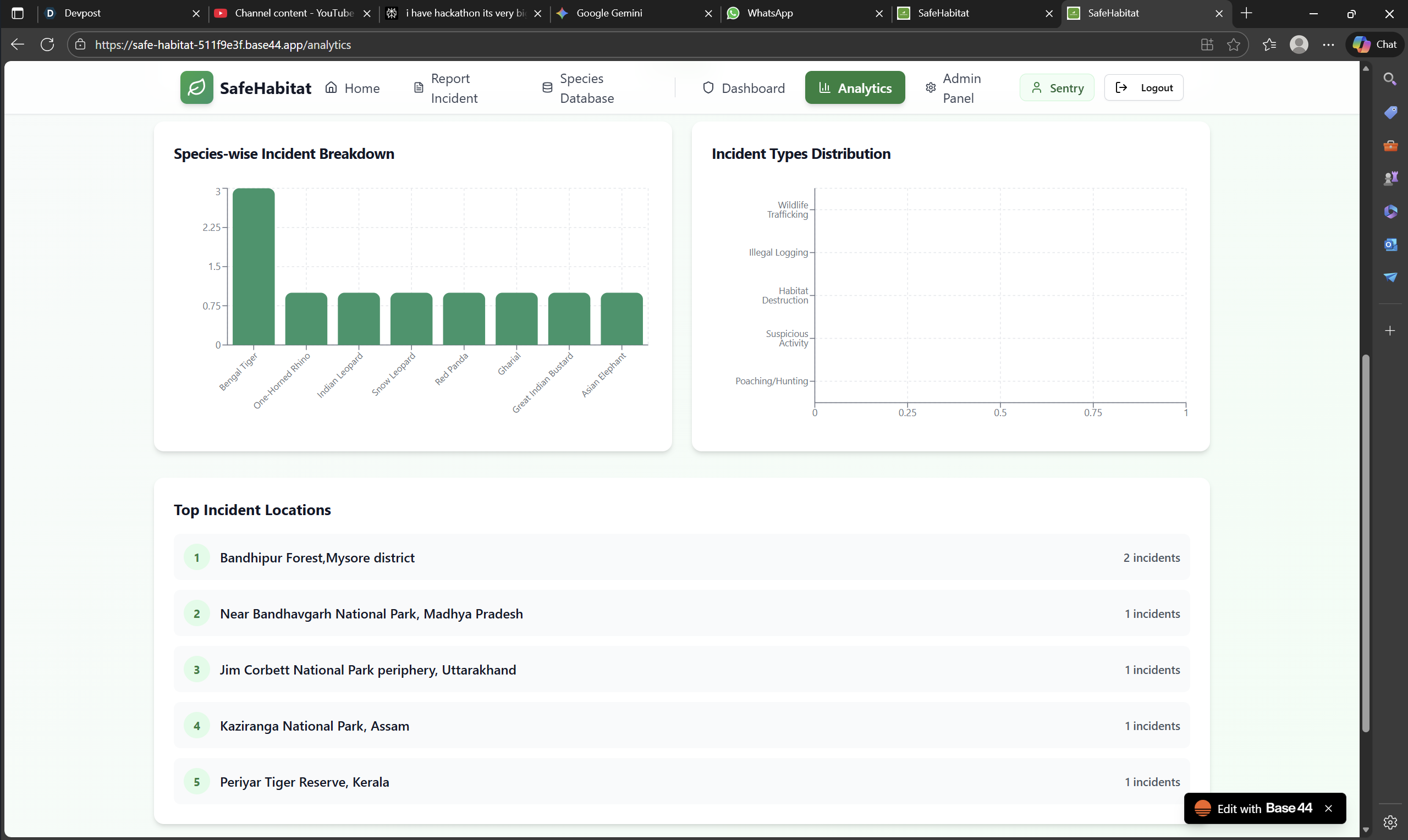
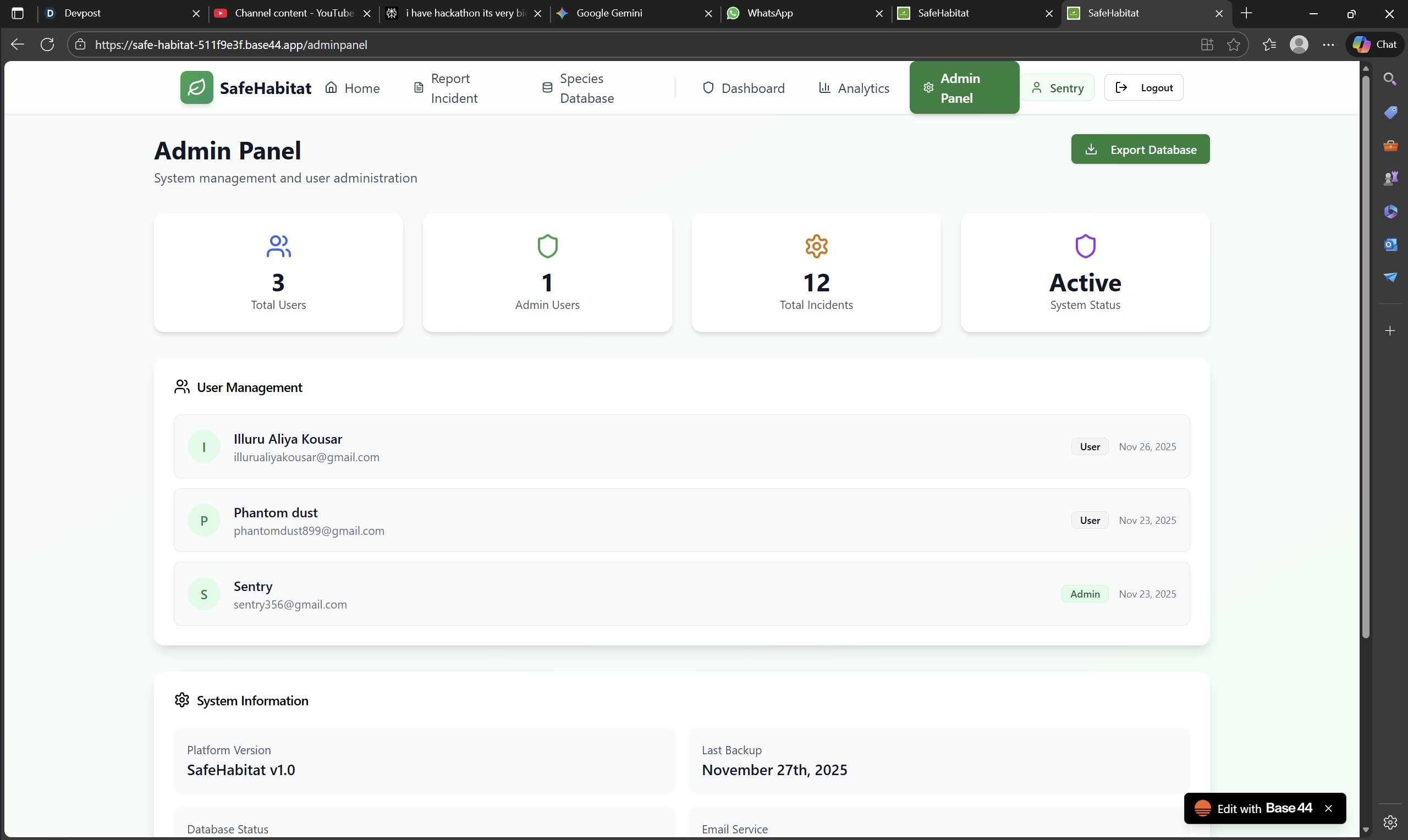
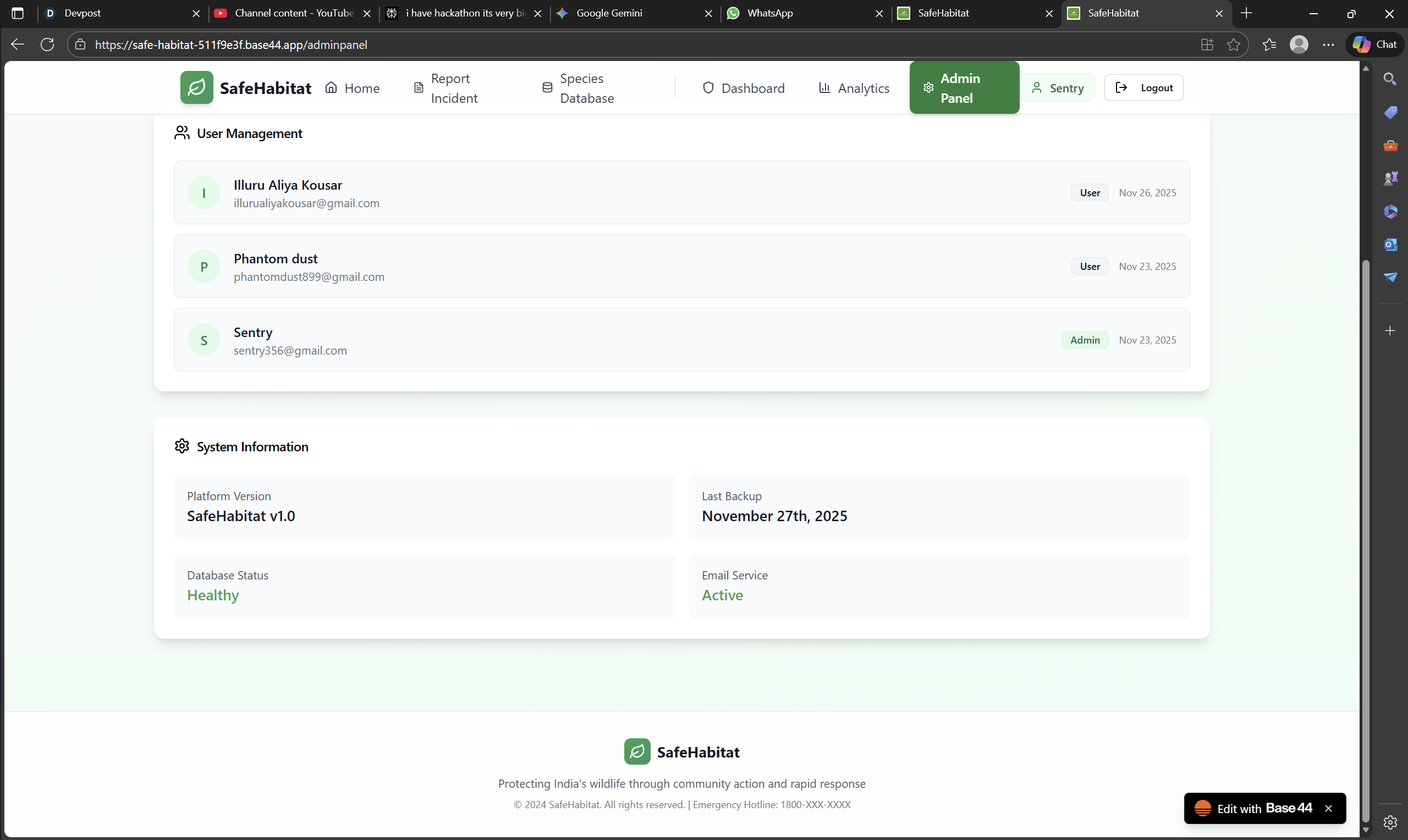
SafeHabitat is a community wildlife protection network. Anyone can submit an incident report from their phone or laptop, even anonymously, with details like location, GPS coordinates, species involved, urgency and photos. Forest rangers log in to a secure dashboard where they see a live feed of reports, update case status, assign themselves to incidents and view simple analytics like hotspots and trend charts. The app aims to make wildlife crime reporting as easy as sending a message, but with the structure and tracking that officials actually need.
How we built it
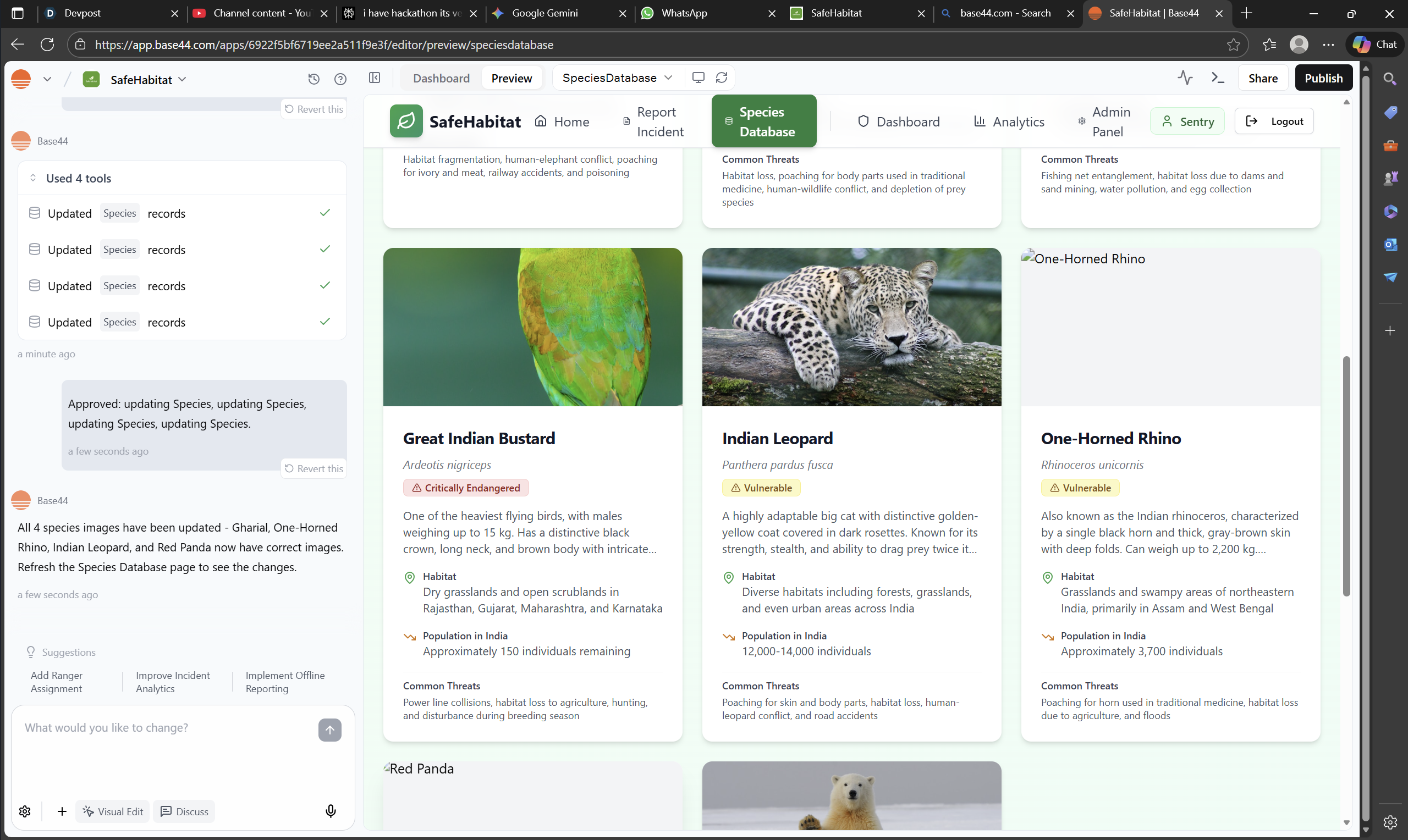
I built SafeHabitat completely in Base44 using a single detailed prompt. Base44 generated the full-stack app with database tables for incidents, users and species, plus authentication and role-based access for rangers and admins. I then iterated on the prompt to refine the reporting form, the ranger dashboard views and the analytics section. Because Base44 also handles hosting, I could focus on the workflow and UX rather than server setup or deployment.
Challenges we ran into
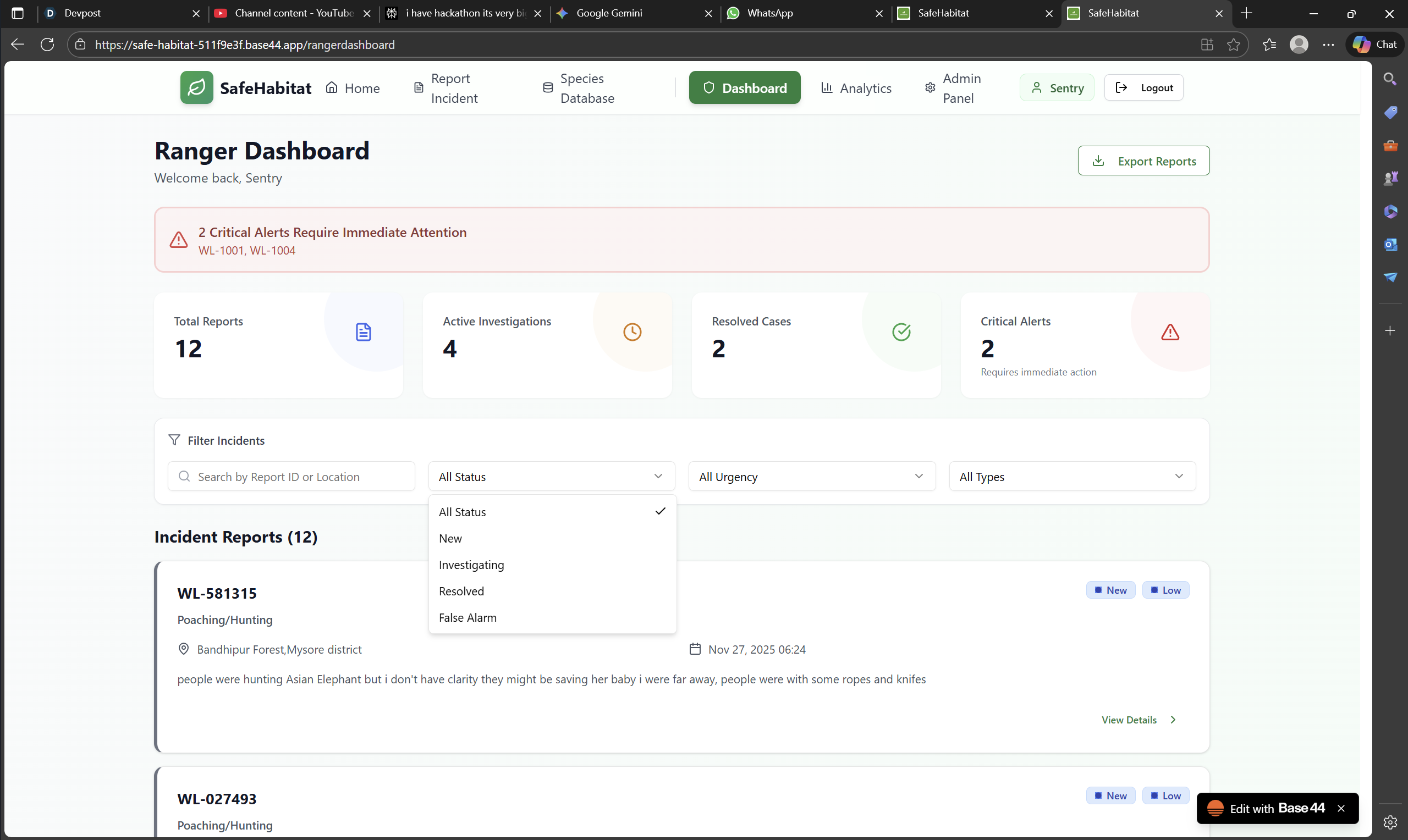
One challenge was balancing a simple public form with the detailed data that rangers require. Too many fields can scare away users, but too few make reports useless. Another challenge was deciding which analytics actually help on the ground instead of adding flashy but meaningless charts. I also had to tune the prompts, so Base44 created clean status flows (New → Investigating → Resolved) without over-complicating the app.
Accomplishments that we're proud of
I’m proud that the app already works end-to-end: someone can submit a real incident, a ranger can see it instantly, change the status and later review it in analytics. The project stays focused on one clear user journey instead of trying to solve everything. Building this much functionality in a short time, using only Base44 as the tech stack, also showed how powerful AI app builders can be for social impact ideas.
What we learned
I learned how important it is to design around specific users: villagers and tourists on one side, rangers and officers on the other. I also understood that “AI app builder” success depends more on the clarity of the prompt and data model than on fancy features. Good defaults, simple flows and clear status labels matter more than complex AI magic.
What's next for SafeHabitat – Community Wildlife Protection Network
Next, I want to connect SafeHabitat with real forest divisions and NGOs to test it on the ground. The roadmap includes SMS-based reporting for low-connectivity areas, automatic email confirmations for reporters, and deeper analytics like repeat locations and time-of-day patterns. With feedback from rangers and communities, the app can evolve into a practical tool to support frontline wildlife protection teams.
Built With
- base44


Log in or sign up for Devpost to join the conversation.