-
-
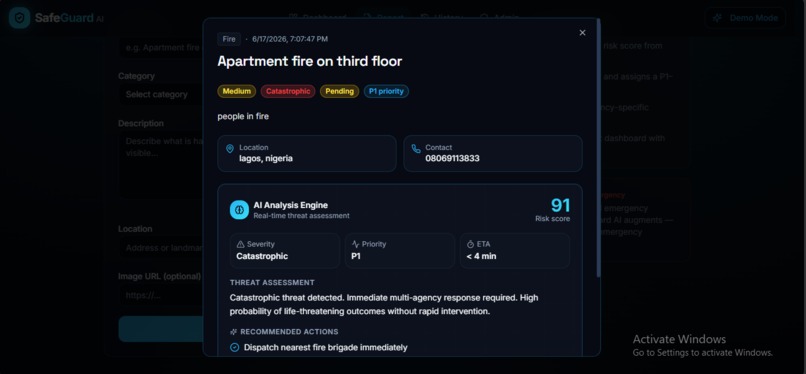
AI analysis page
-
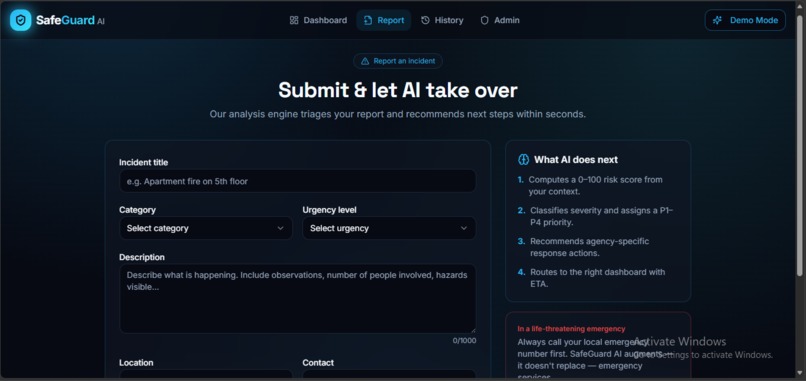
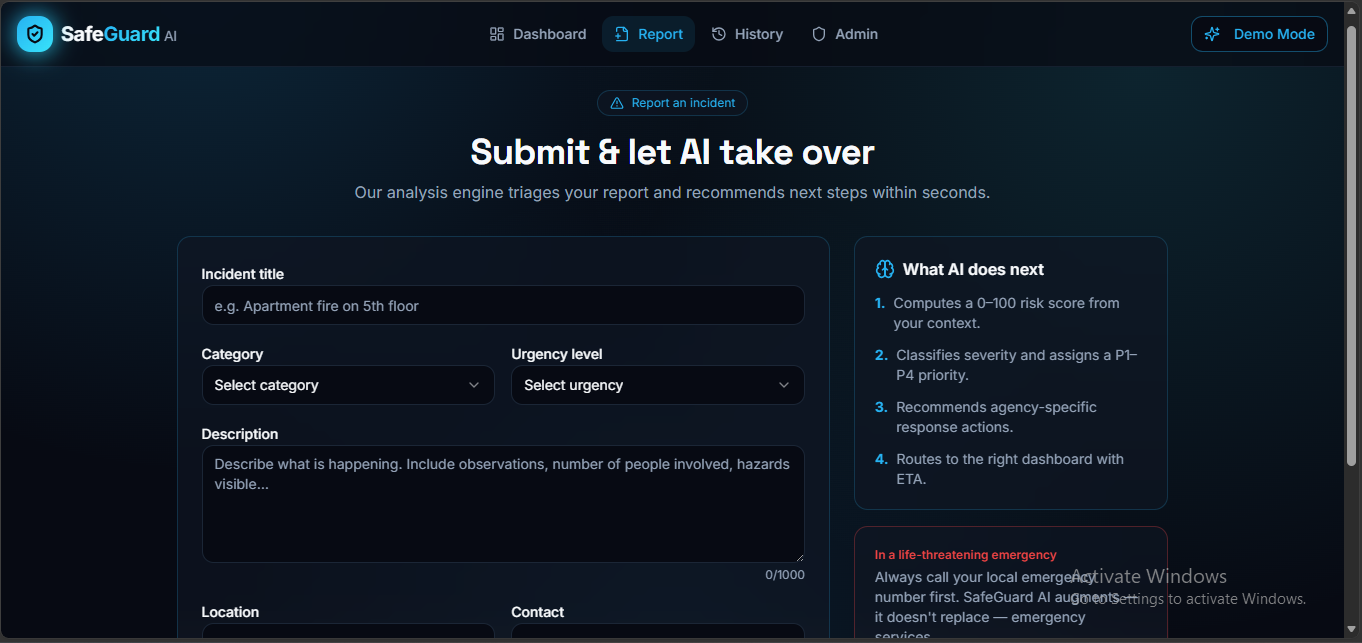
Incident Report Form
-
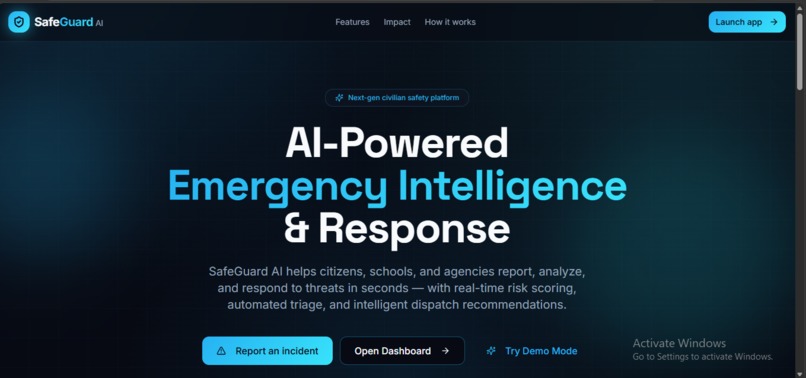
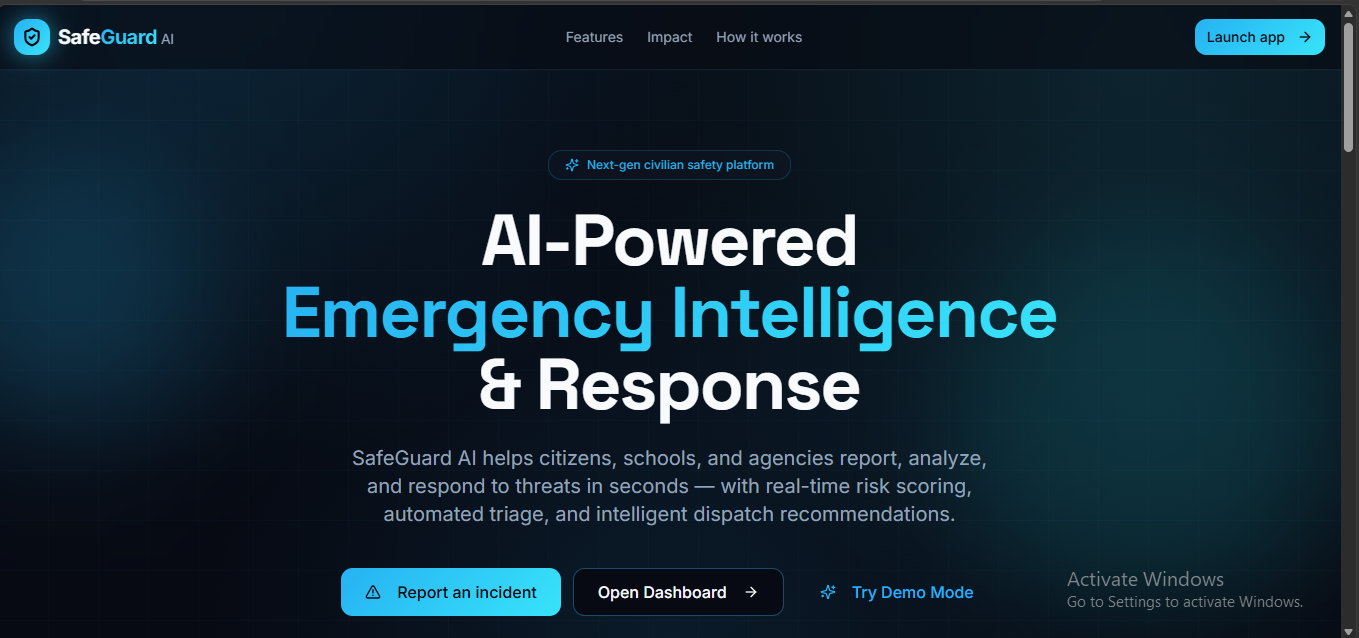
Landing Page
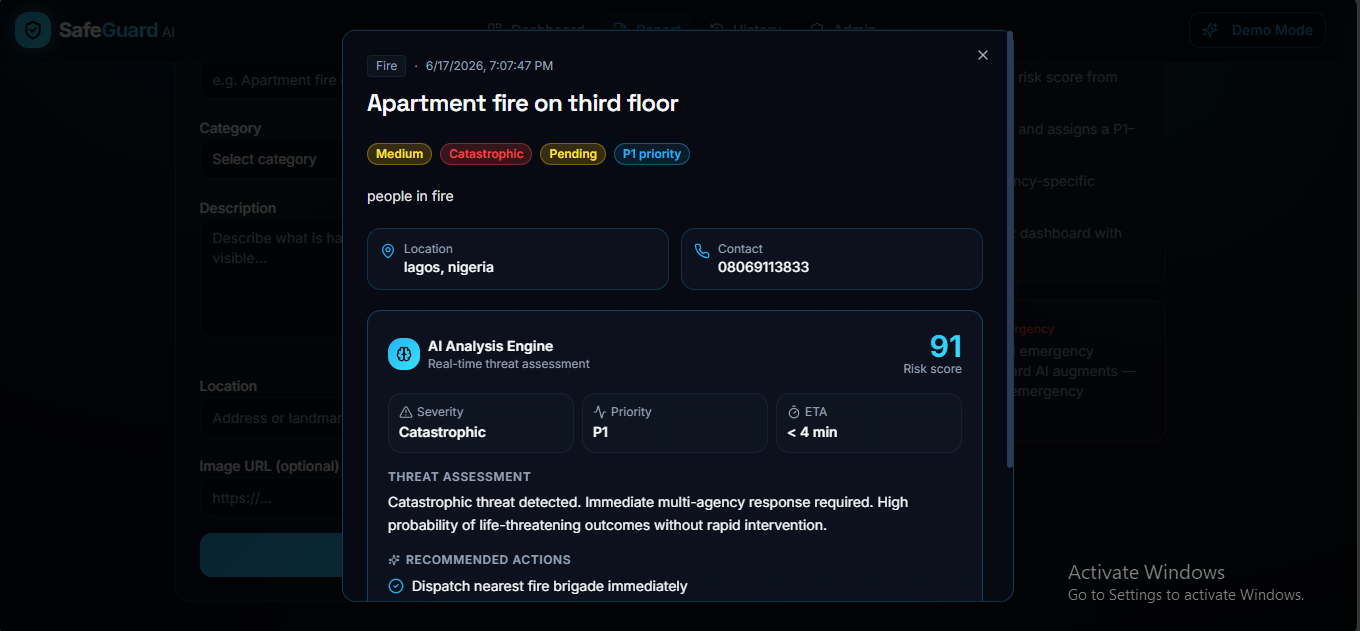
SafeGuard AI
Inspiration
Emergencies such as fires, accidents, crimes, medical incidents, and natural disasters often require quick decision-making. However, many reports are unstructured, delayed, or difficult to prioritize, leading to slower response times.
We wanted to explore how Artificial Intelligence could help transform emergency reporting into actionable intelligence. The idea behind SafeGuard AI was to create a platform that not only collects incident reports but also analyzes them instantly, helping users understand the severity of a situation and the best actions to take.
Our goal was to build a solution that could improve safety, support emergency response efforts, and demonstrate how AI can be used for real-world social impact.
What it Does
SafeGuard AI is an AI-powered emergency intelligence and response platform.
Users can submit incident reports such as:
- Fire outbreaks
- Medical emergencies
- Road accidents
- Security threats
- School safety incidents
- Natural disasters
The platform then uses AI to:
- Analyze the incident description
- Generate a risk score
- Assess the threat level
- Classify the severity
- Recommend immediate response actions
- Prioritize incidents for faster decision-making
The system also provides dashboards, incident tracking, analytics, and historical records to help users monitor safety trends.
How We Built It
We designed SafeGuard AI as a modern web application focused on usability and impact.
The platform includes:
- A responsive landing page
- Incident reporting forms
- AI-powered analysis engine
- Emergency recommendation system
- Analytics dashboard
- Incident history and tracking system
- Administrative monitoring tools
The user interface was designed with a modern dashboard experience, making critical information easy to understand during emergencies.
Challenges We Ran Into
One of the biggest challenges was designing a system that could simplify complex emergency situations while remaining user-friendly.
We also had to think carefully about:
- Incident categorization
- Risk assessment logic
- Prioritization of emergencies
- Dashboard usability
- Creating a realistic workflow for emergency response
Balancing technical functionality with a clean and intuitive user experience was a key challenge throughout development.
What We Learned
Through this project, we learned:
- How AI can support decision-making in critical situations
- The importance of user-centered design
- How data visualization improves understanding
- How technology can be used to address public safety challenges
- The value of building solutions with real-world impact
We also gained experience in combining AI concepts, web technologies, and modern design principles into a single platform.
Future Plans
We plan to expand SafeGuard AI with:
- Real-time emergency alerts
- WhatsApp and SMS notifications
- Location-based incident mapping
- Integration with emergency agencies
- Predictive risk analysis
- Community safety monitoring
Our vision is to make SafeGuard AI a scalable platform that helps communities respond faster, smarter, and more effectively during emergencies.
Impact
SafeGuard AI demonstrates how Artificial Intelligence can move beyond automation and become a practical tool for protecting lives and improving emergency response.
By turning emergency reports into intelligent insights, the platform helps users make informed decisions when every second matters.
Built With
- analytics
- artificial
- css
- css3
- dashboard
- data
- design
- html5
- intelligence
- javascript
- lovable
- react
- responsive
- tailwind
- typescript
- vite
- web


Log in or sign up for Devpost to join the conversation.