Inspiration
Road accidents continue to be one of the major causes of injuries and fatalities around the world. While modern vehicles are becoming more intelligent, many systems still focus mainly on detecting objects rather than understanding how dangerous a situation is. During our research, we realized that a vehicle may detect a pedestrian or another vehicle, but it still needs to decide whether a collision is likely to happen in the next few seconds and what action should be taken.
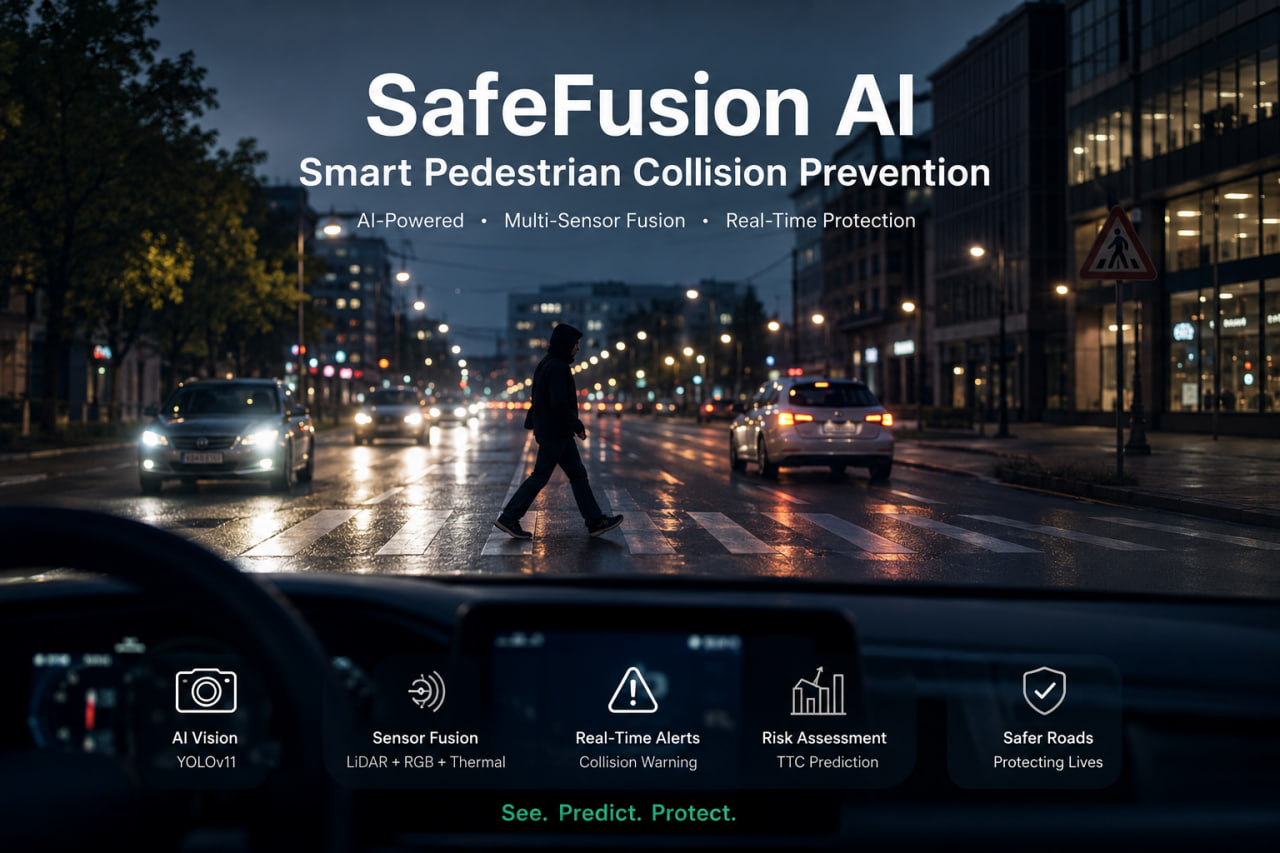
This inspired us to build SafeFusion AI X, a system that not only detects objects but also predicts collision risk and provides understandable safety recommendations. Our goal was to create a practical AI solution that could support future autonomous vehicles and advanced driver-assistance systems.
What it does
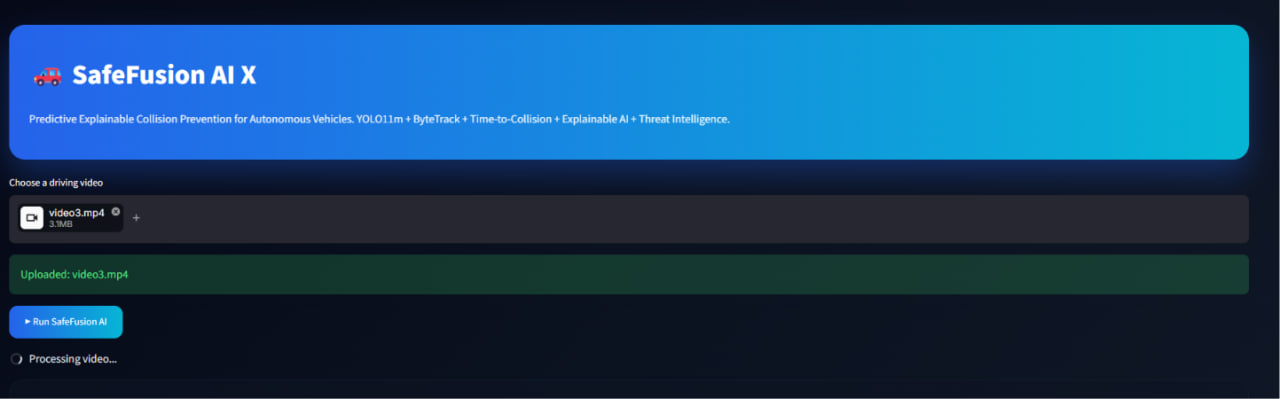
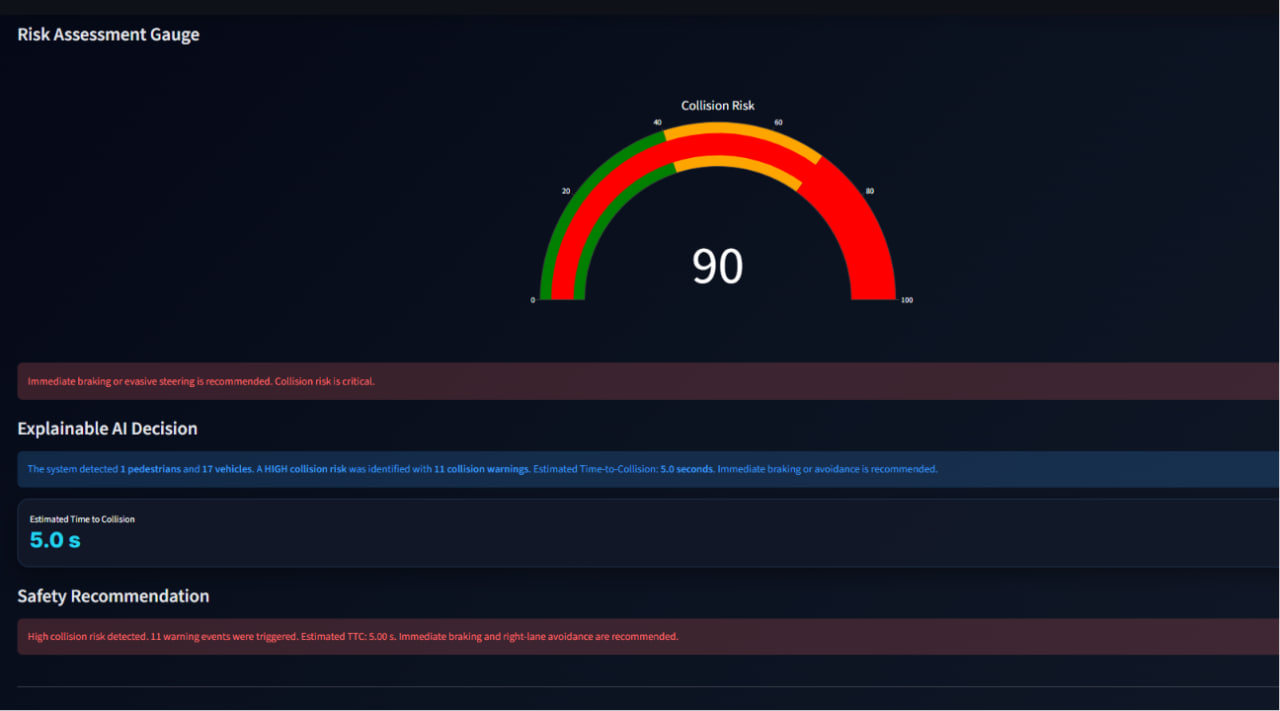
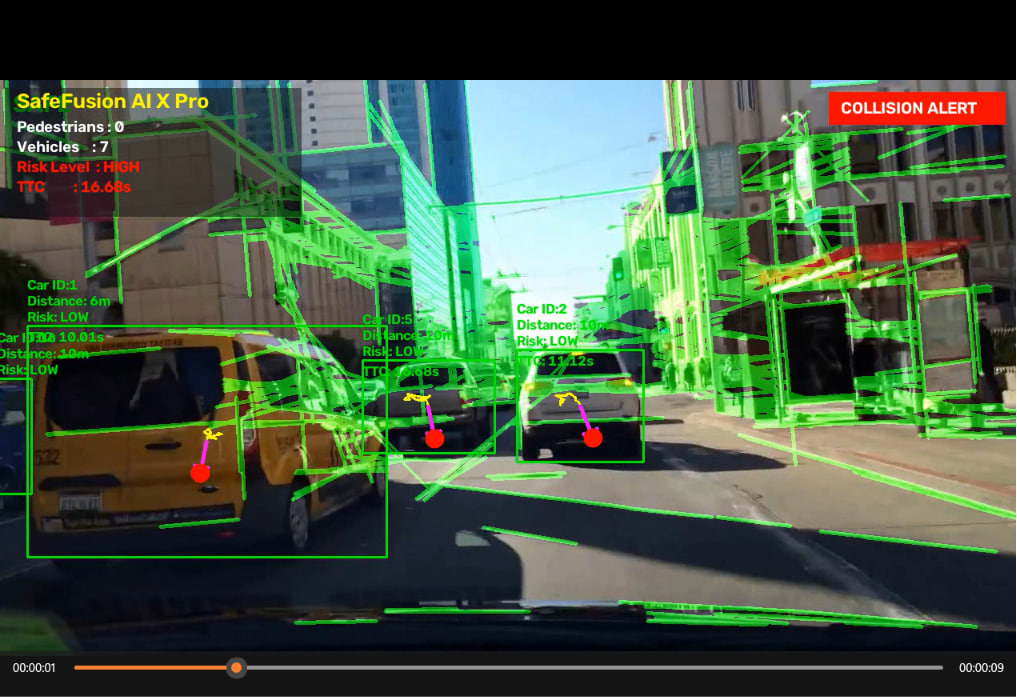
SafeFusion AI X is an AI-powered predictive collision prevention system that analyzes driving videos in real time. The user uploads a driving video, and the system automatically detects pedestrians and vehicles, tracks their movement, estimates their distance, calculates Time-to-Collision (TTC), classifies the risk level, and generates a visual safety dashboard.
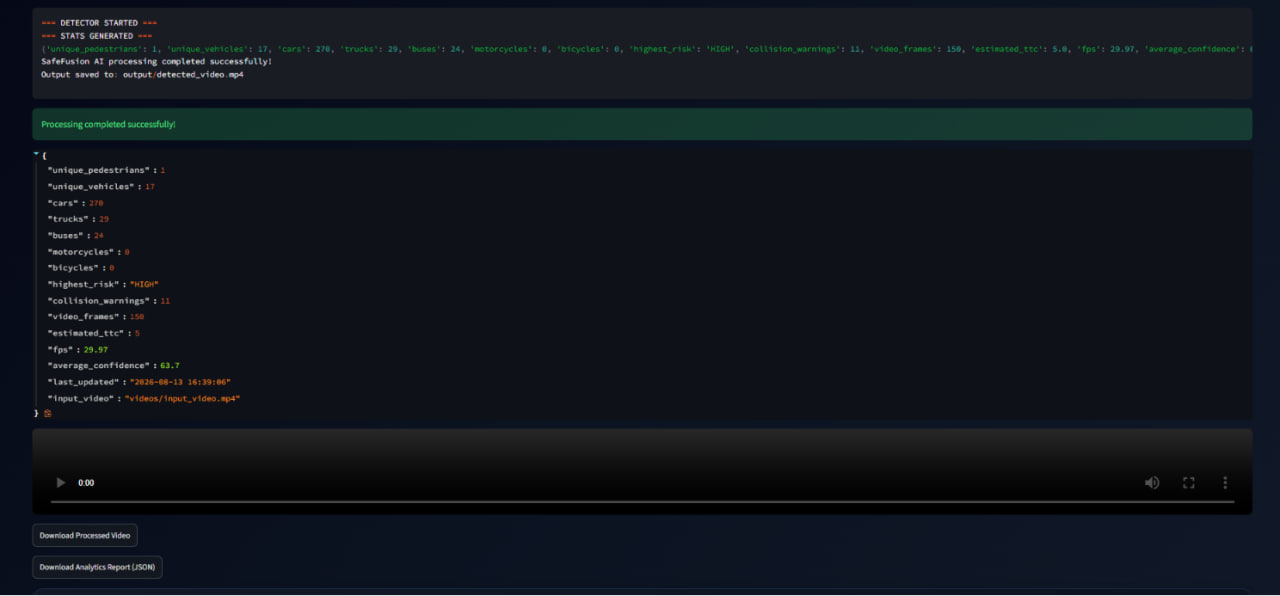
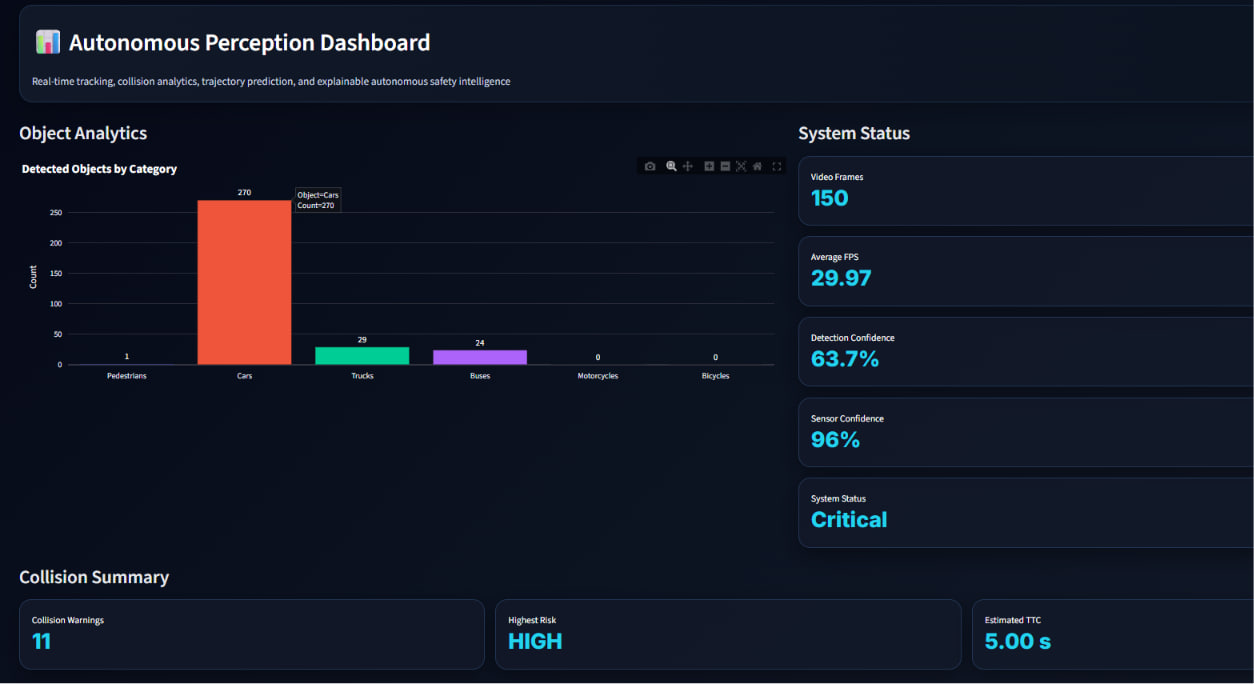
The processed video includes bounding boxes, tracking IDs, lane visualization, distance estimation, collision alerts, and TTC information. The dashboard provides analytics such as object counts, processing FPS, detection confidence, collision warnings, highest risk level, and explainable safety recommendations. The application also allows users to download both the processed video and a detailed analytics report.
How we built it
We developed SafeFusion AI X using Python as the core programming language. YOLO11 was used for real-time object detection, and ByteTrack was integrated for multi-object tracking across video frames. OpenCV handled video processing, lane visualization, and graphical overlays. We built the interactive user interface using Streamlit, and Plotly was used to create dynamic charts and dashboard components.
The complete pipeline includes video upload, object detection, object tracking, distance estimation, Time-to-Collision prediction, risk classification, explainable AI decision support, and downloadable analytics reporting.
Challenges we ran into
One of the biggest challenges was integrating multiple computer vision components into a single real-time application. Synchronizing YOLO11 detection with ByteTrack tracking, maintaining stable performance during video processing, updating dashboard statistics dynamically, and debugging Streamlit integration required several iterations.
We also spent significant time improving the clarity of collision alerts, lane visualization, and dashboard presentation so that the system could be easily understood during a live demonstration.
Accomplishments that we’re proud of
We successfully built a working end-to-end prototype that performs real-time object detection, multi-object tracking, collision risk prediction, explainable AI decision support, and dashboard analytics within a single application. The system generates a processed video with visual safety overlays and a downloadable analytics report, making it useful for demonstrations, research, and future autonomous vehicle development.
What we learned
This project gave us hands-on experience with computer vision, object detection, multi-object tracking, real-time video processing, explainable AI, and building interactive AI applications. We learned how to integrate multiple technologies into a complete working product, optimize performance, and present AI-generated insights in a way that is understandable to human users.
Future scope
In the future, SafeFusion AI X can be extended by integrating LiDAR, radar, GPS, and thermal camera data for true multi-sensor fusion. More advanced trajectory prediction models such as LSTM or Transformer-based networks can improve collision forecasting accuracy. The system can also be deployed on NVIDIA Jetson or other edge AI platforms and integrated directly into autonomous vehicle or ADAS systems for real-world testing and deployment.


Log in or sign up for Devpost to join the conversation.