-
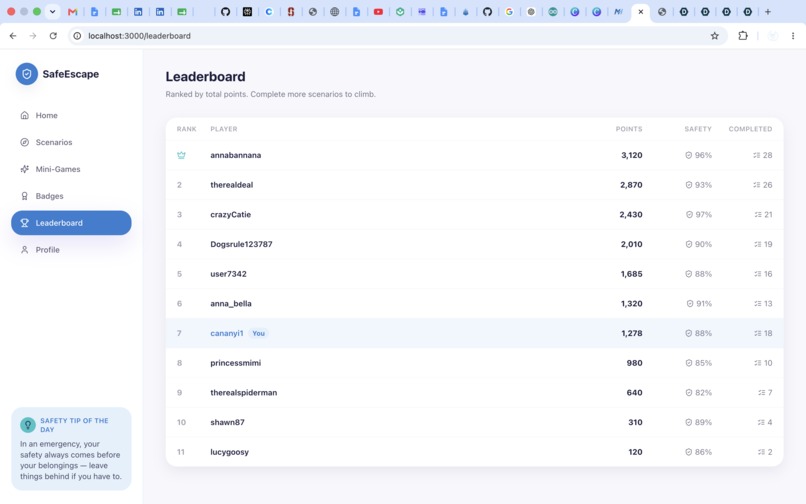
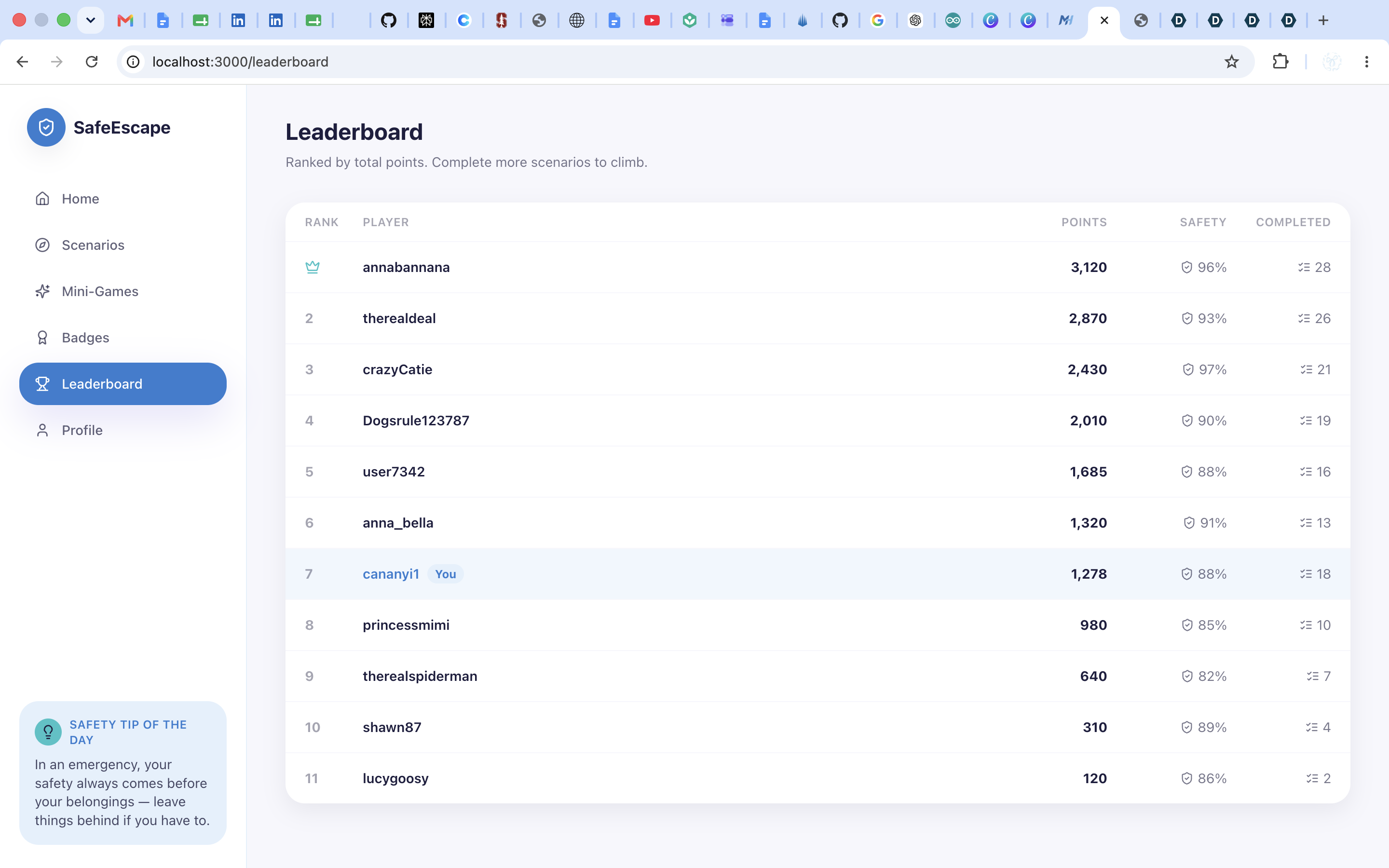
Leader Board to see how you rank against different players.
-
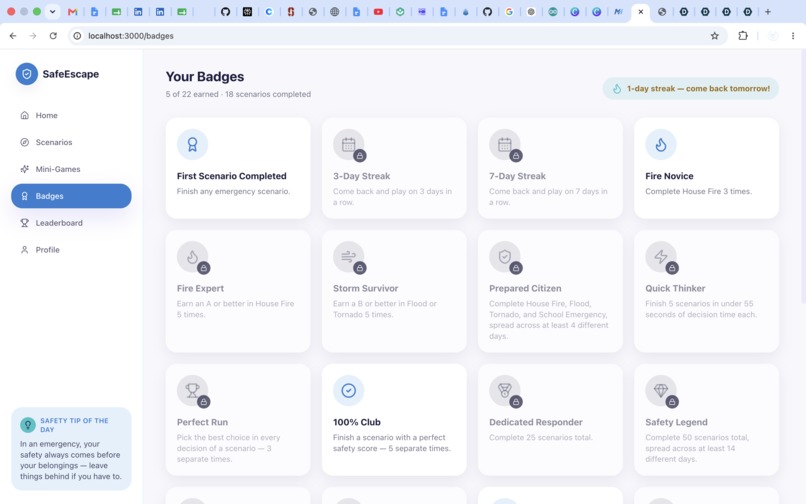
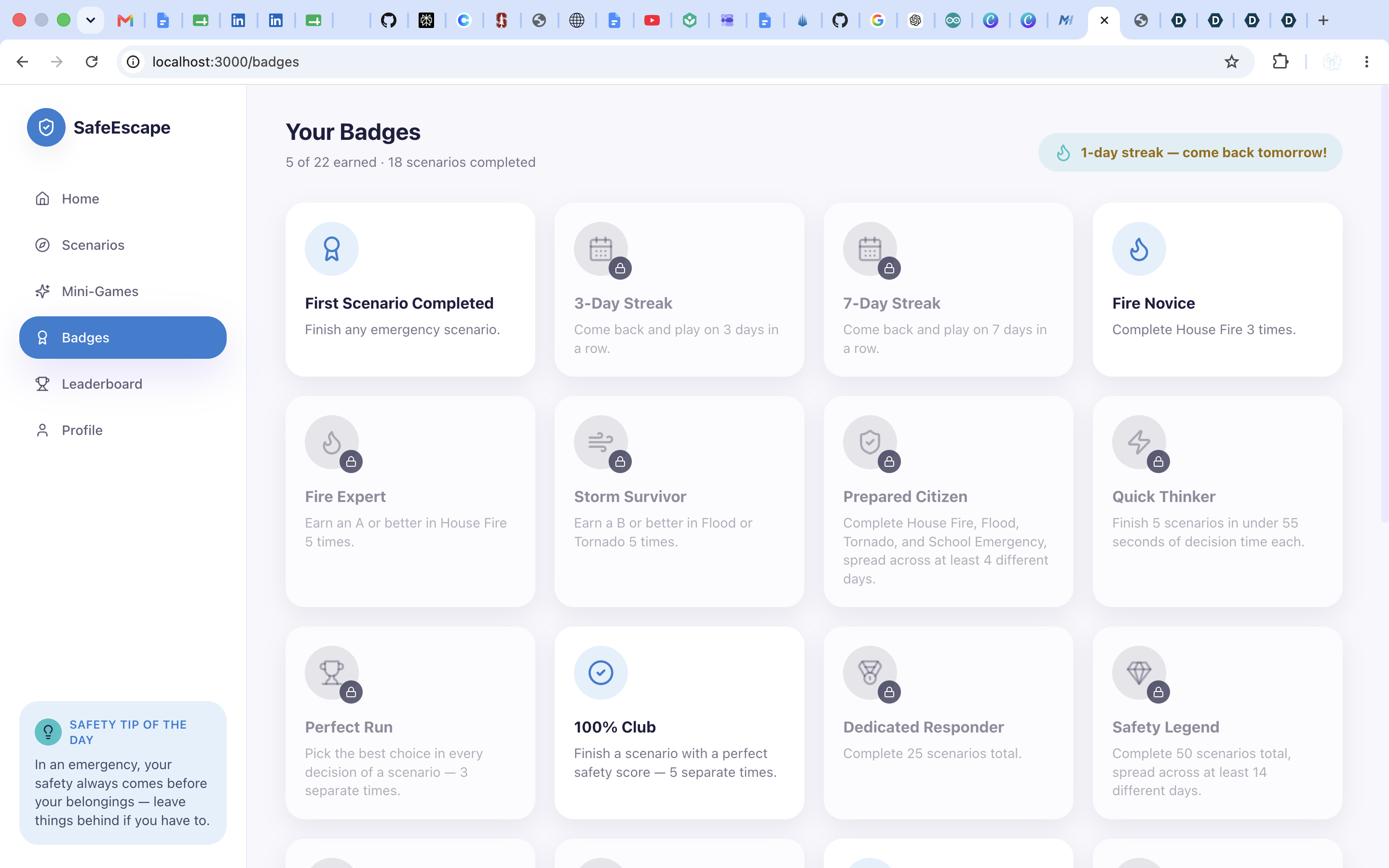
As you play the different scenarios, you can unlock more badges.
-
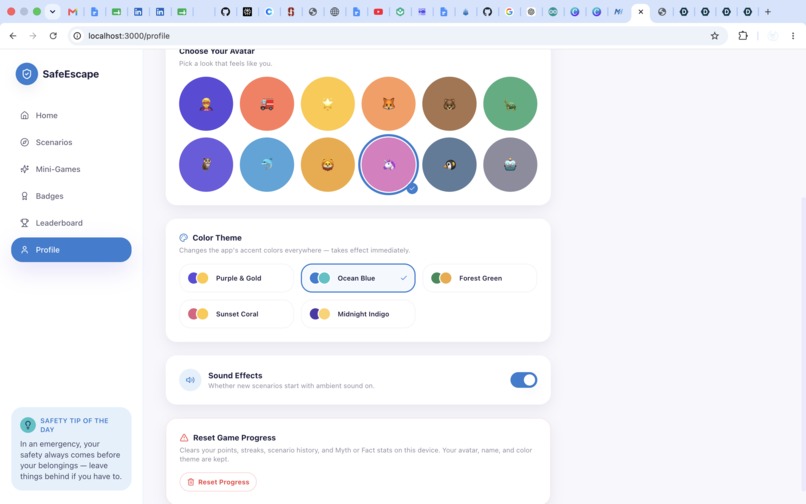
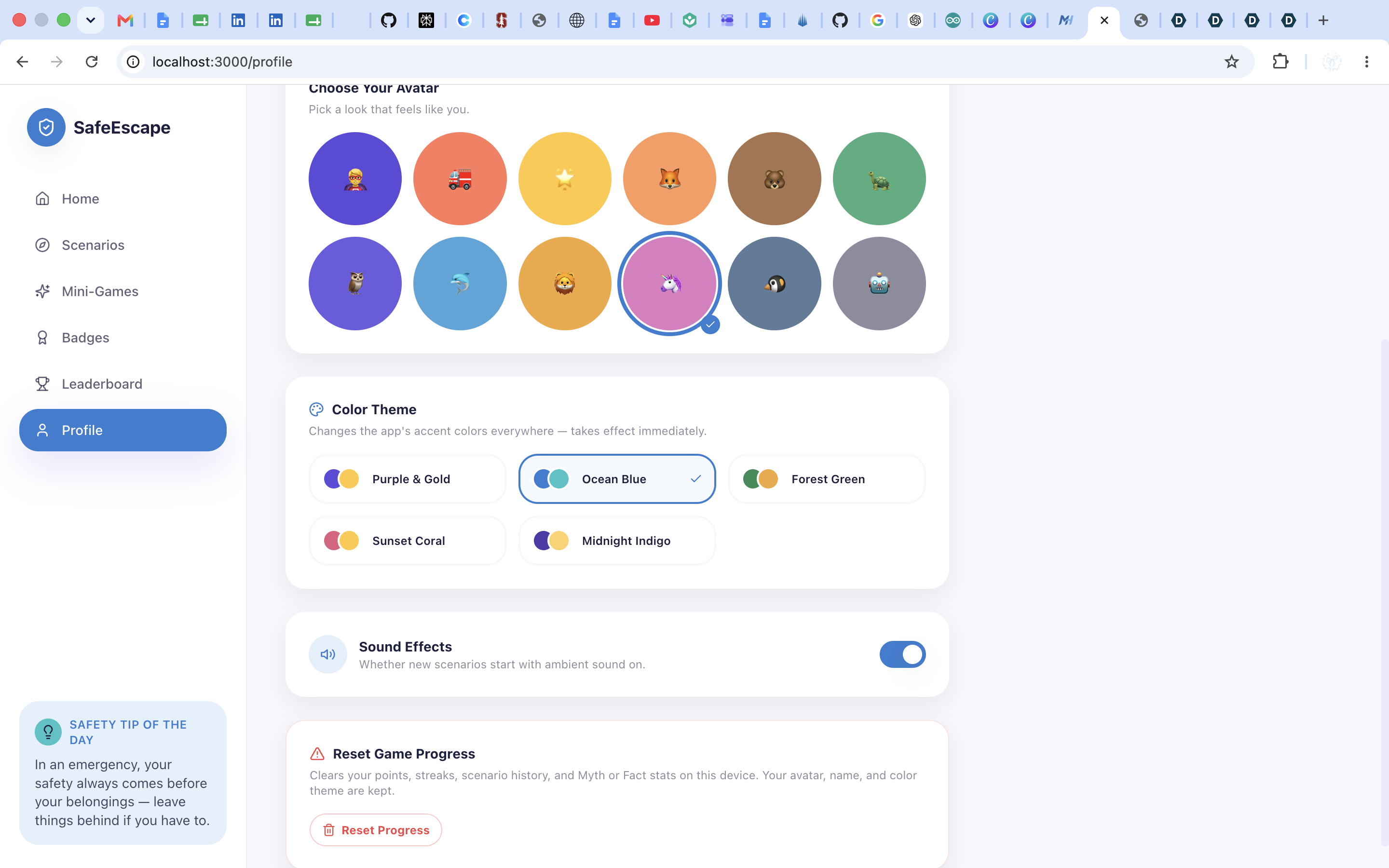
Profile Page
-
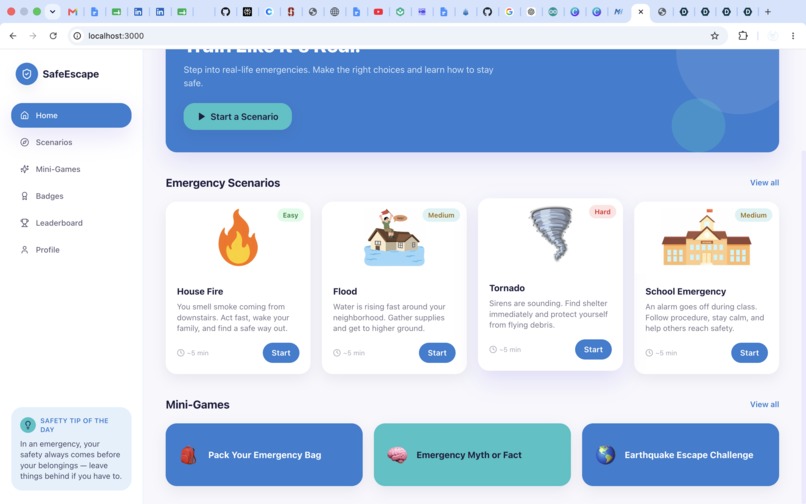
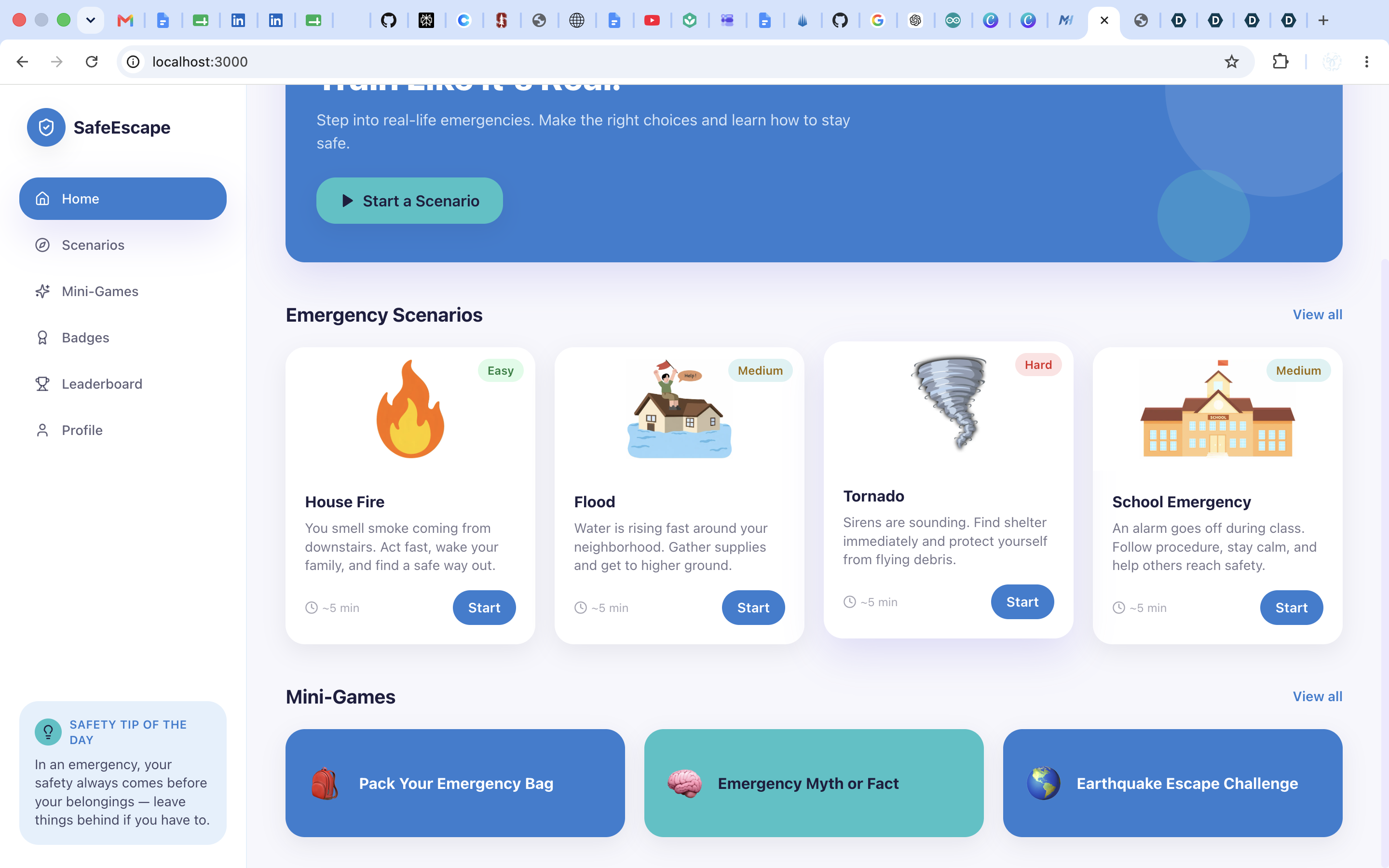
Main homepage - the two main colors are customizable
-
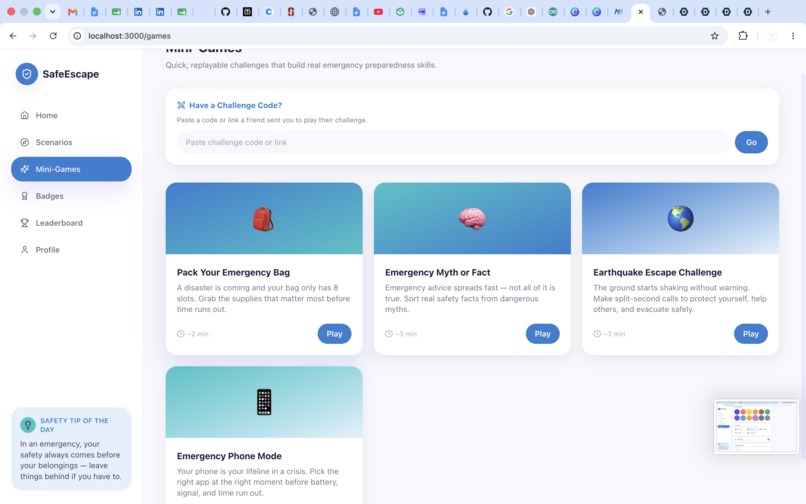
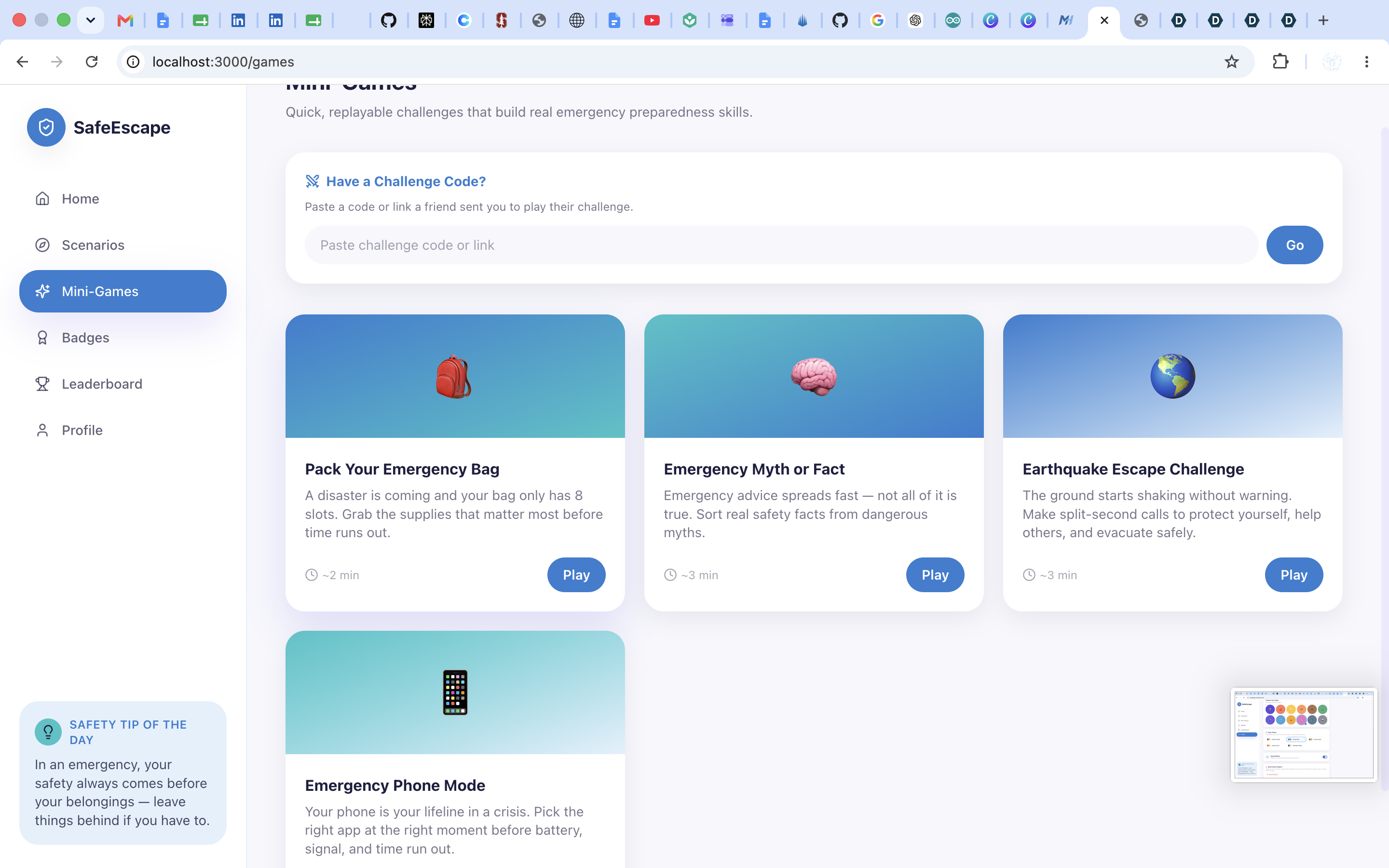
This is where you can play all the mini games, and accept a challenge invite from a friend.
Inspiration
Our inspiration for this project was our little cousins. Last year, we realized that many children know emergencies are dangerous but do not know what actions to take when they happen. We wanted to create a fun and engaging way for kids to learn important safety skills before they are ever faced with a real emergency.
What it does
SafeEscape is an interactive emergency preparedness game that teaches kids how to respond during disasters like floods, fires, and tornadoes. Players make real-time decisions that affect the outcome of each scenario. The game also includes mini-games that teach important safety tips and preparedness skills beyond the main challenges.
How we built it
We built SafeEscape using Claude as our AI pair programmer, working feature by feature, from the core scenario engine and branching story logic, to mini-games like Pack Your Bag and Emergency Phone Mode, to a Challenge a Friend" system for sharing scores with friends. The stack is Next.js, TypeScript, Tailwind CSS, and Framer Motion, with all progress and badges stored locally in the browser.
Throughout the process, we focused on making the interface simple, engaging, and accessible for younger user: bright colors, large rounded cards, and game-like feedback (confetti, animated scores, badge unlocks) instead of static text and forms, so the experience feels intriguing for a kid.
Challenges we ran into
One of our biggest challenges was balancing education and fun. We wanted SafeEscape to teach accurate safety information without feeling like a traditional lesson. Creating realistic scenarios with meaningful choices and different outcomes required careful planning and testing.
Accomplishments that we're proud of
We are proud that we transformed an important but often overlooked topic into an experience that kids can actually enjoy. SafeEscape makes emergency preparedness interactive, memorable, and less intimidating while helping children develop confidence in their ability to respond.
What we learned
Through building SafeEscape, we learned how to design for younger audiences, turn real-world problems into engaging solutions, and combine technology with education. We also learned the importance of user testing and making sure our project solves a meaningful problem.
What's next for SafeEscape
We hope to expand SafeEscape with more emergency scenarios, additional mini-games, personalized difficulty levels, and partnerships with schools and organizations to help more kids learn life-saving skills.
Built With
- claude
- typescript


Log in or sign up for Devpost to join the conversation.