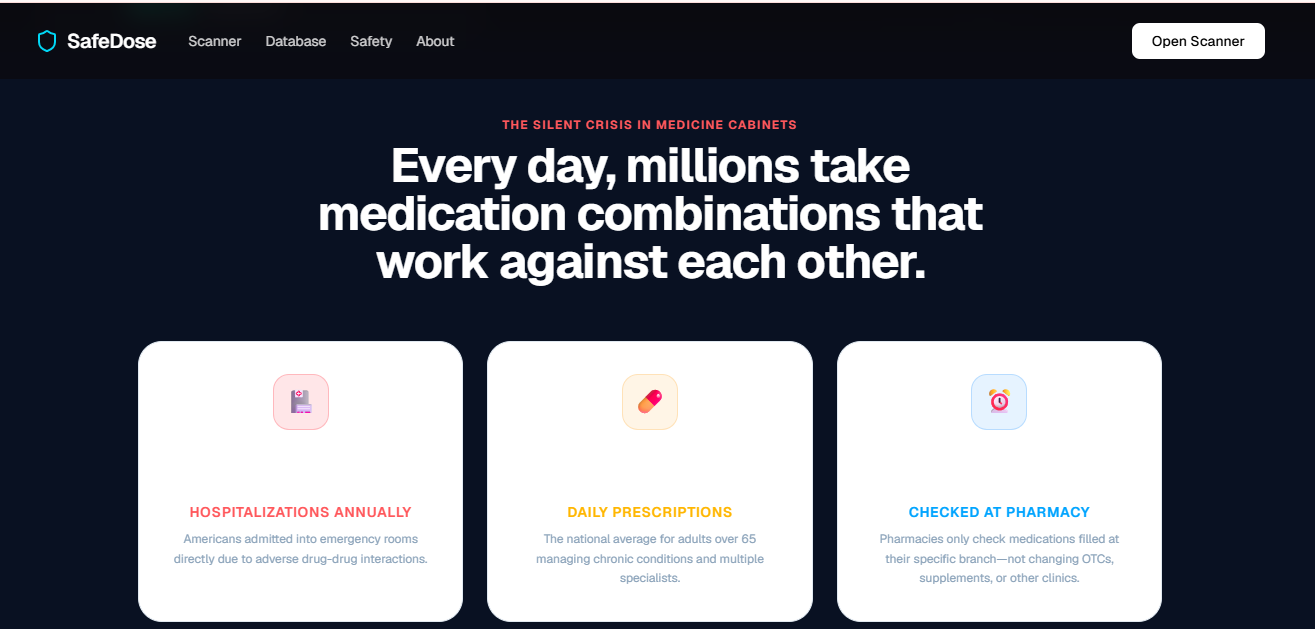
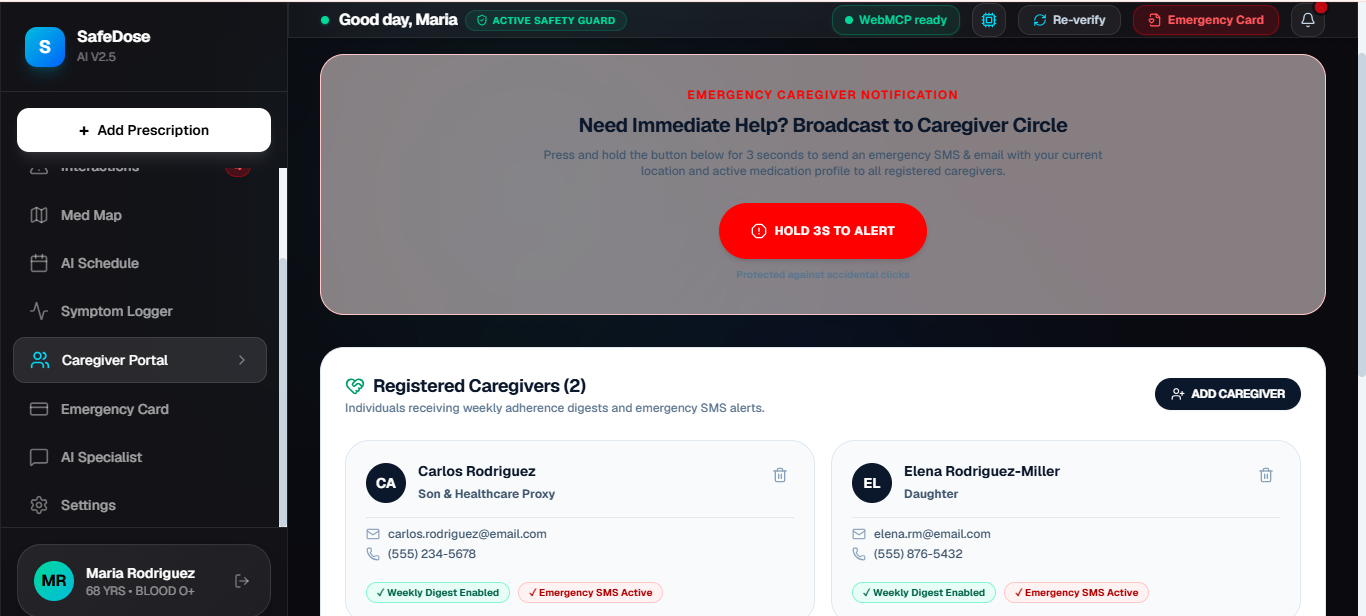
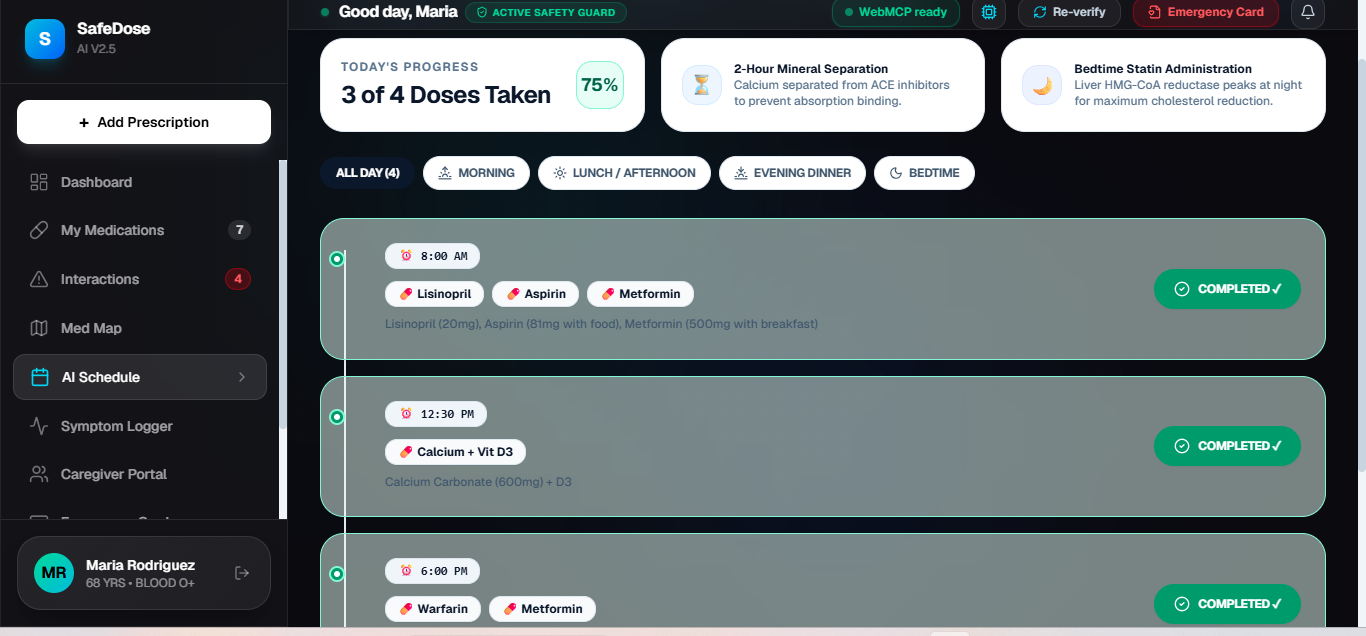
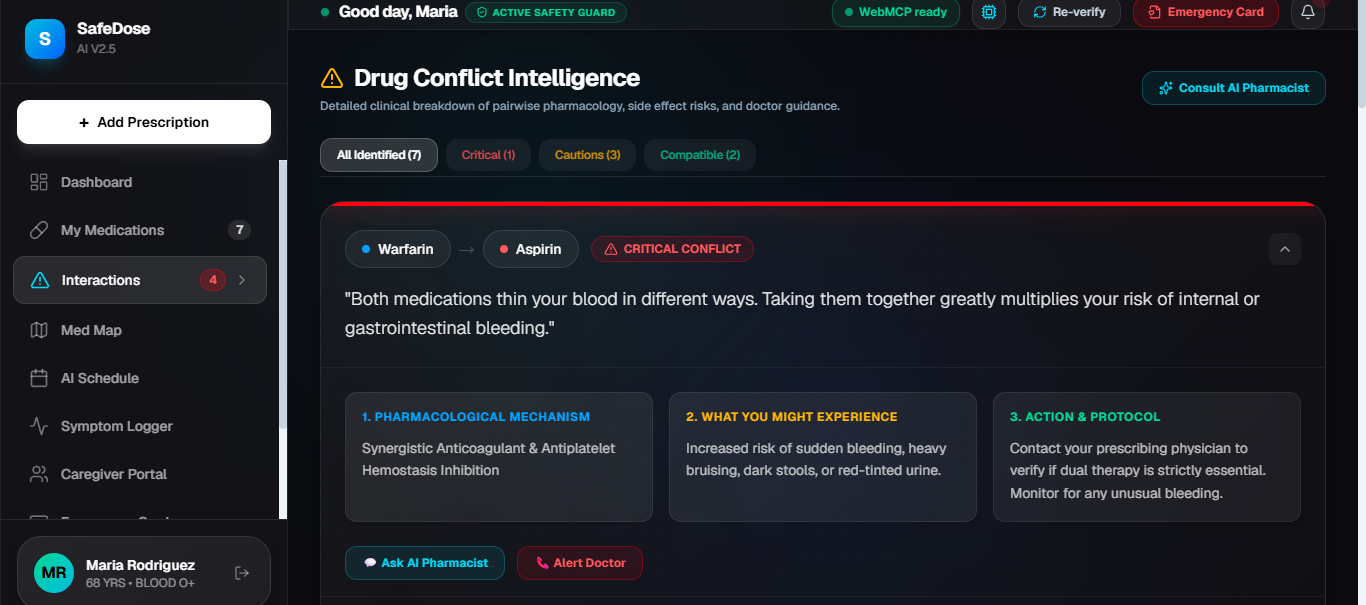
SafeDose: AI Medication Safety Tutor ✦ Inspiration Medication instructions often tell people what to take, but not why combinations may be risky. We wanted to make medication-safety knowledge easier to understand for the public and more useful for pharmacy students exploring simulated cases. Our goal: turn every medication list into a clear, personalized lesson in safer care.
◈ What it does SafeDose is an AI-powered medication interaction tutor. Actual workflow 📥 Add or scan → 🧾 Build a regimen → 🔍 Detect interactions → 🧠 Explain the mechanism → ⏰ Optimize timing → 💬 Ask the AI Specialist → 👩⚕️ Discuss with a professional
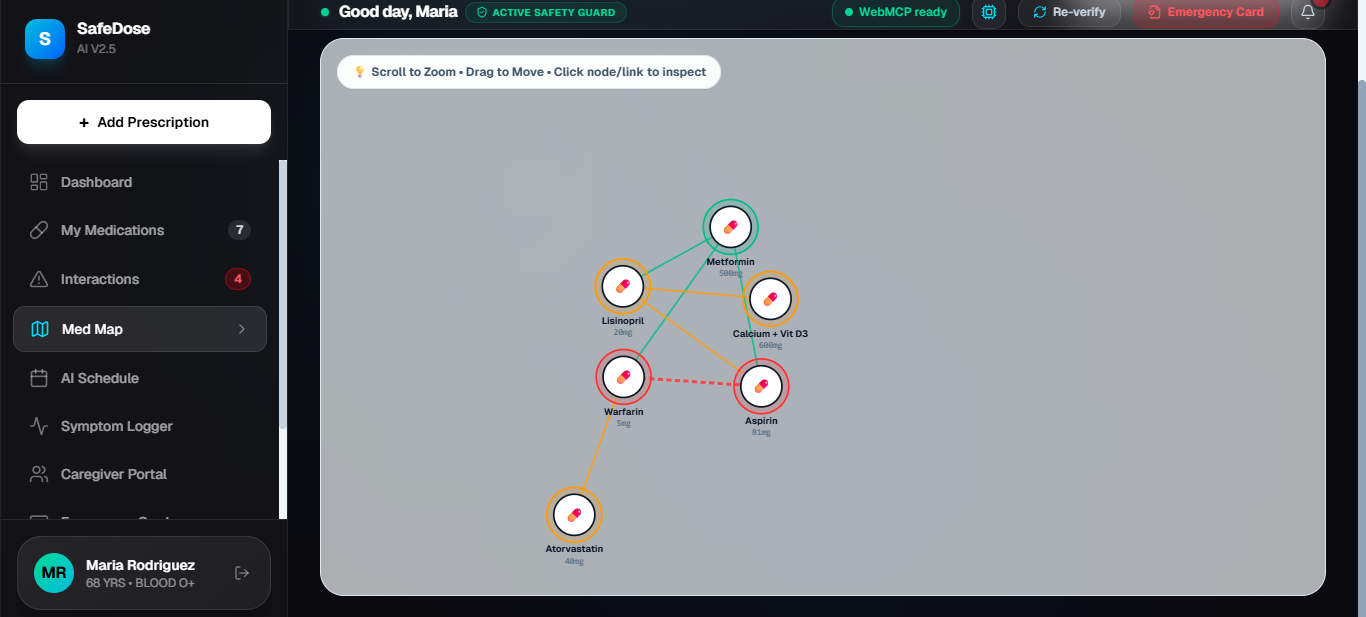
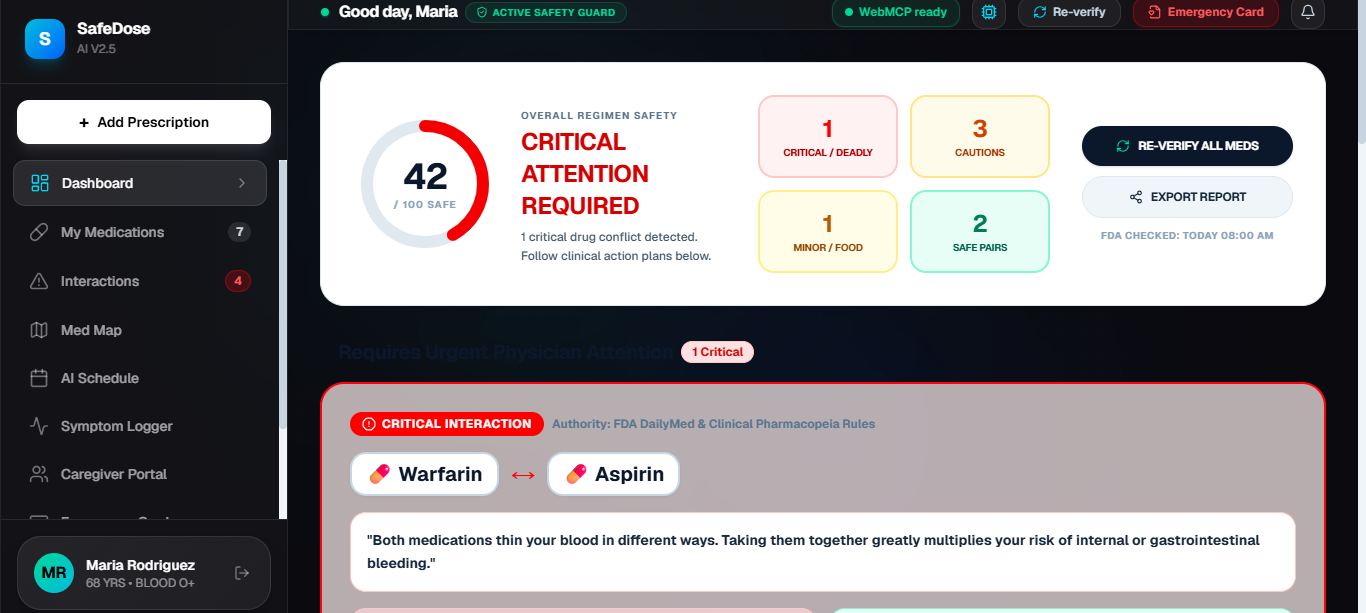
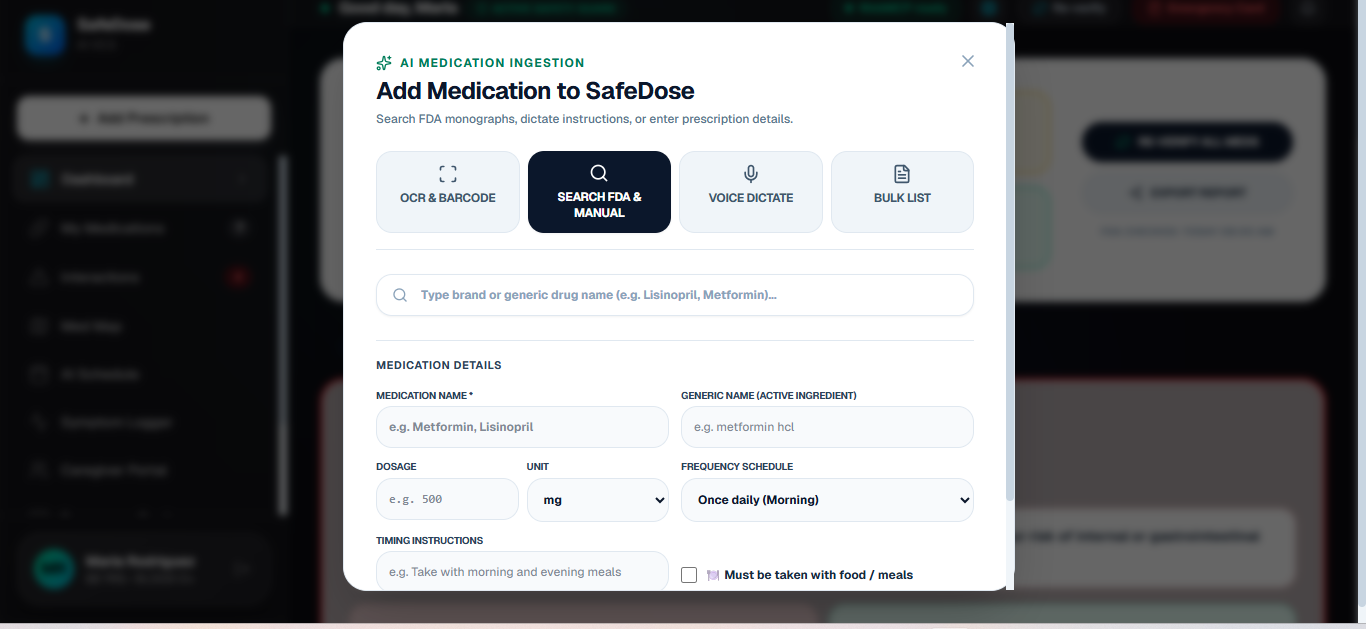
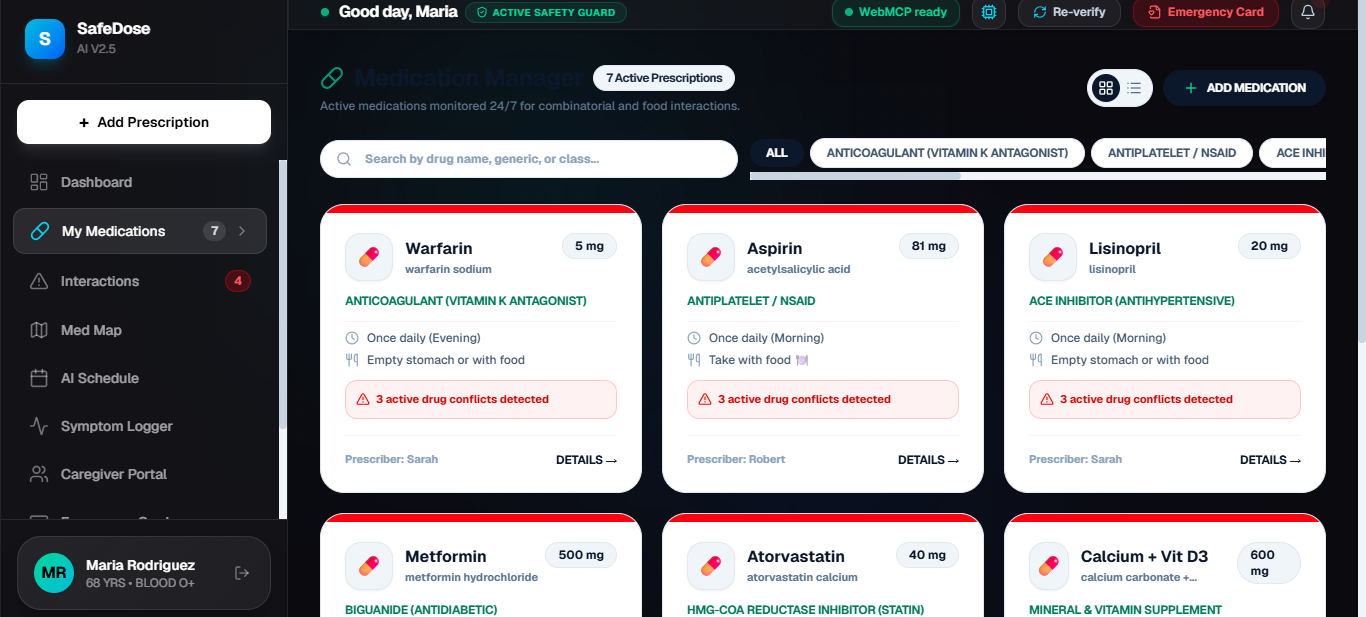
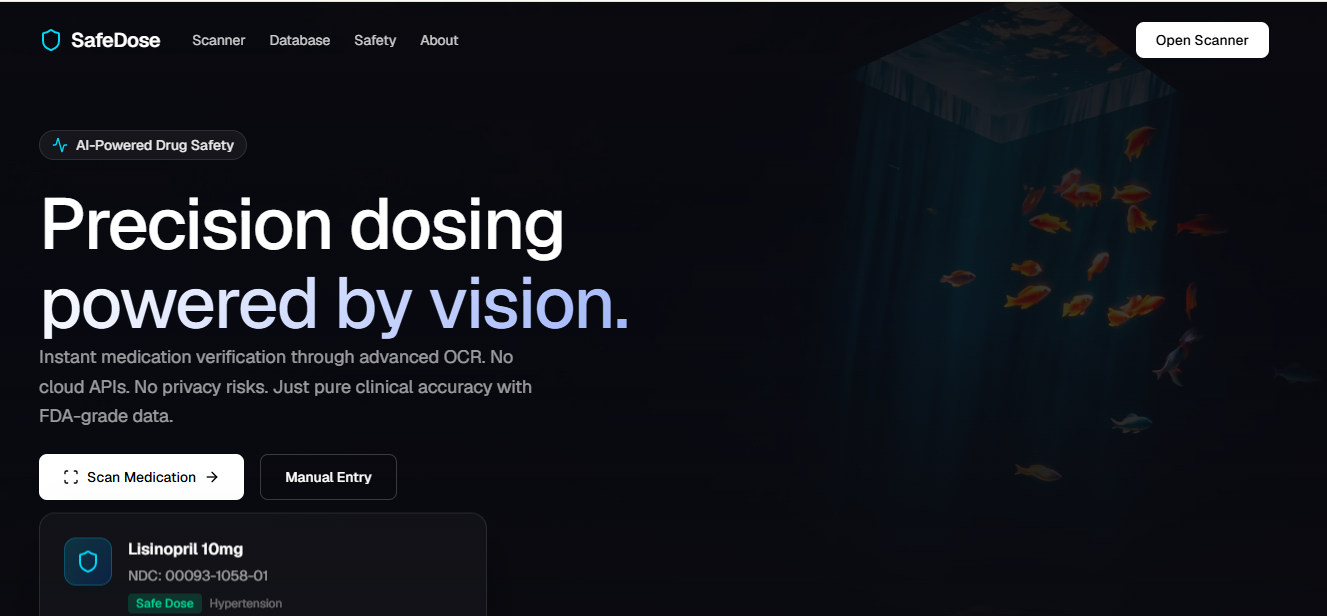
Users can enter medications manually or use the OCR/barcode ingestion path. SafeDose organizes drug names, dosages, classes, frequency, food instructions, and timing. It identifies potential medication, food, and supplement conflicts and presents severity categories such as critical, caution, minor, and compatible.
Each finding includes a plain-English explanation, warning signs, timing guidance, and questions to discuss with a pharmacist or physician. Pharmacy students can use simulated regimens to study interaction mechanisms and practice patient-friendly counseling. SafeDose is an educational reference and decision-support prototype. It does not diagnose, prescribe, or replace professional medical advice.
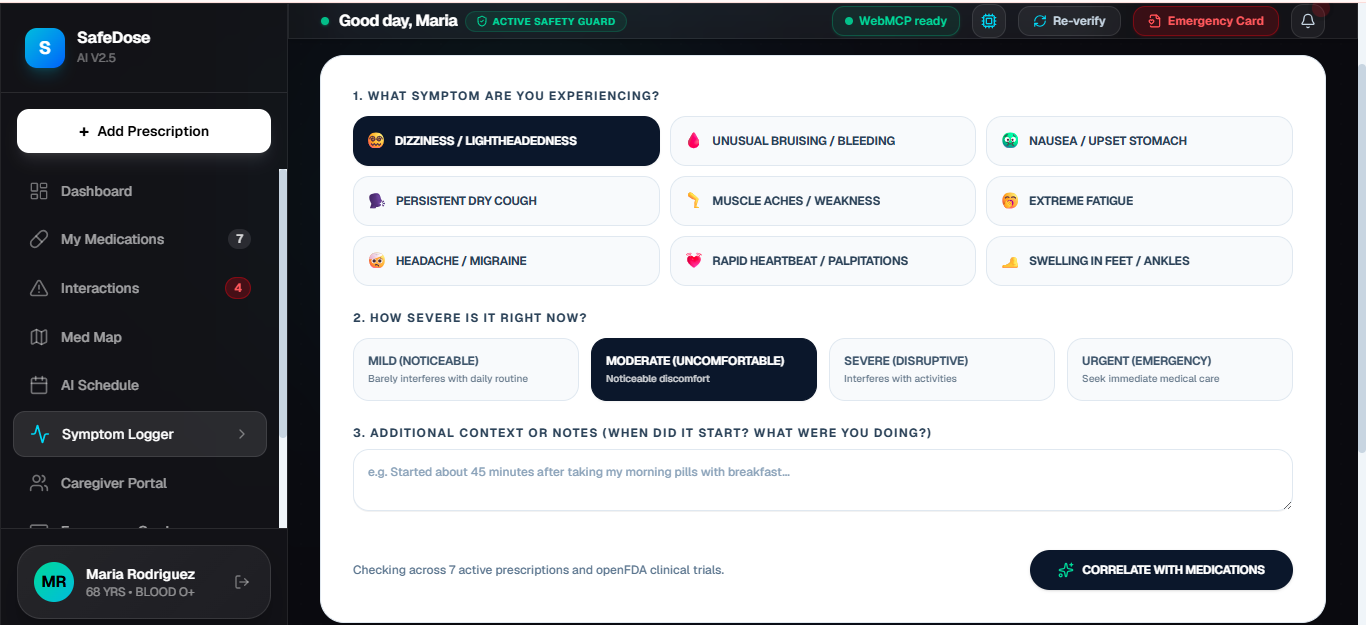
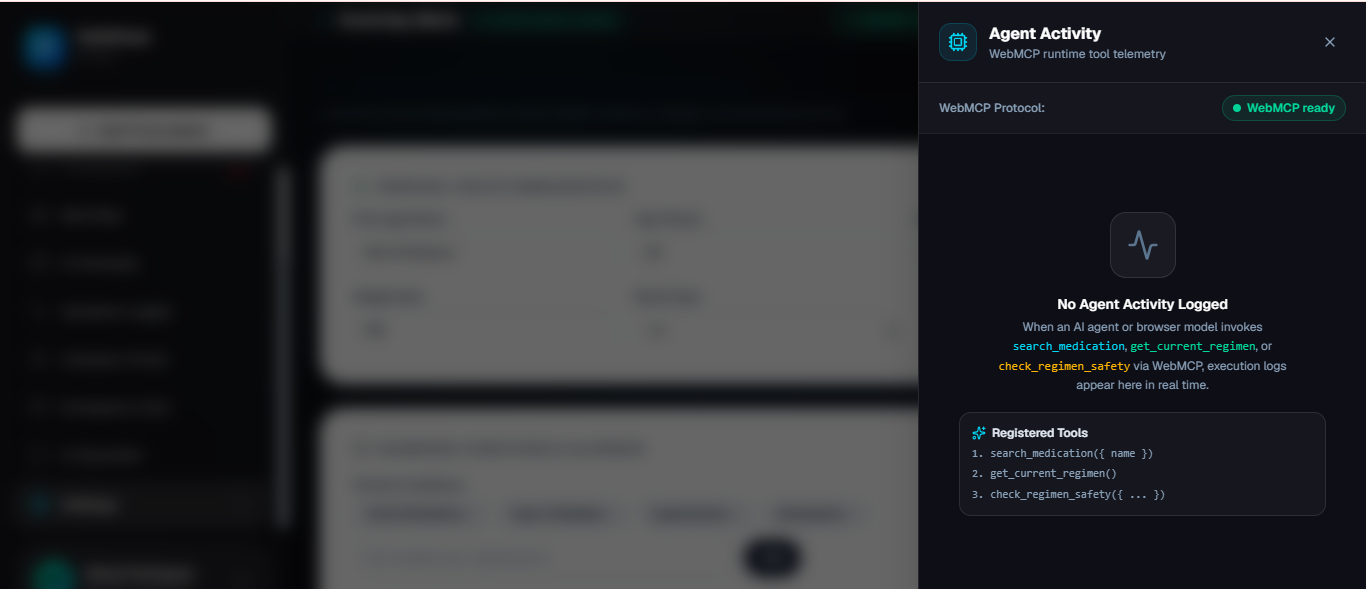
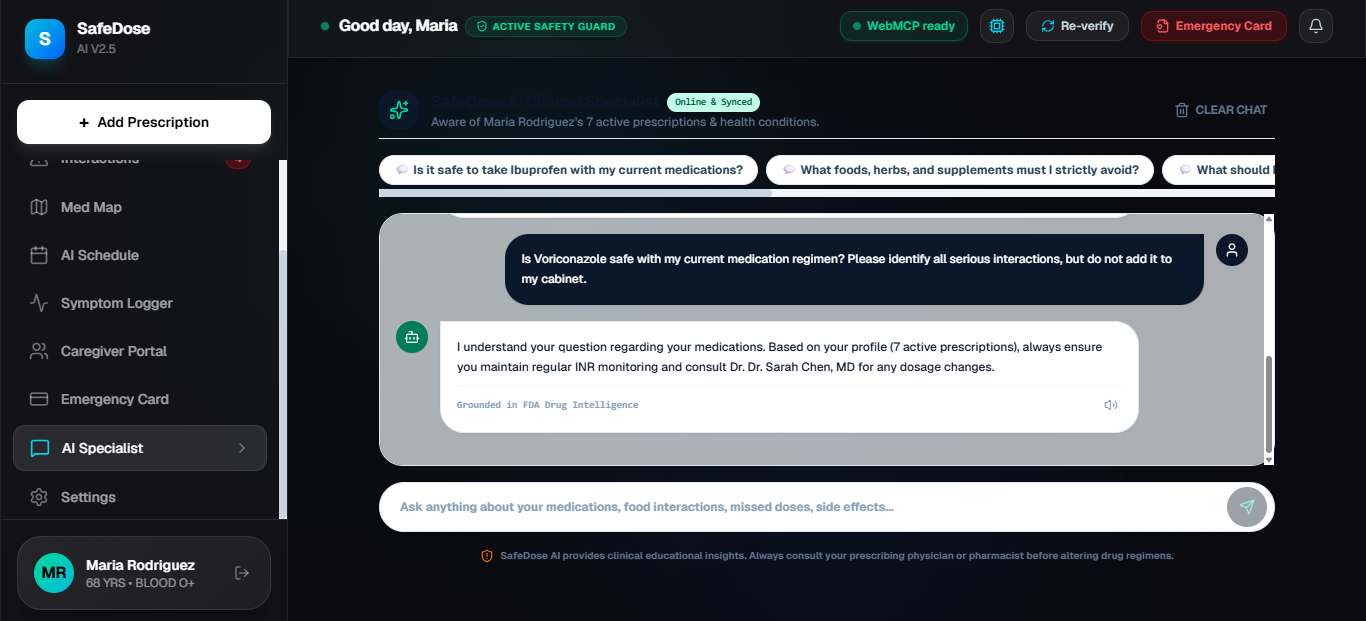
⚙ How we built it SafeDose is a React web application deployed on Vercel. 🖥️ Interface: React-based responsive dashboard with medication cards, interaction panels, schedules, and AI chat. 📚 Data layer: FDA/openFDA-related medication information and NLM RxNorm-related lookup paths where configured. 🤖 AI layer: AI-assisted interaction analysis, schedule generation, symptom-oriented analysis, and regimen-aware conversation. 📷 Ingestion: Browser-based OCR and barcode-scanning path using Tesseract.js, plus manual entry and sample labels. 🔌 Agent layer: WebMCP-compatible read-only tools: •search_medication •get_current_regimen •check_regimen_safety The product combines structured medication data with AI-generated explanations while keeping medical disclaimers visible.
⚠ Challenges we ran into ⚖ Safety versus simplicity: Medication interactions are nuanced, so we avoided reducing every result to only “safe” or “unsafe.” We added severity levels, explanations, warning signs, and professional-review guidance. 🗣️ Different audiences: The public needs simple language, while pharmacy students need mechanisms and monitoring concepts. We designed the experience to support both levels. 📷 Browser limitations: Camera access is not available in every environment. Manual entry and sample-label flows keep the prototype usable when OCR cannot access a camera. 🔌 WebMCP availability: WebMCP depends on the host browser. We kept the core application functional while exposing read-only agent tools when supported.
★ Accomplishments that we're proud of •✅ Built a working medication-ingestion workflow. •🔍 Created interaction detection with severity classification. •🧠 Translated complex risks into plain-English explanations. •⏰ Generated timing adjustments and daily medication schedules. •💬 Added a regimen-aware AI Specialist. •📷 Included OCR/barcode ingestion and manual fallbacks. •🔌 Added WebMCP-compatible read-only agent tools. •🛡️ Preserved a clear boundary between education and prescribing.
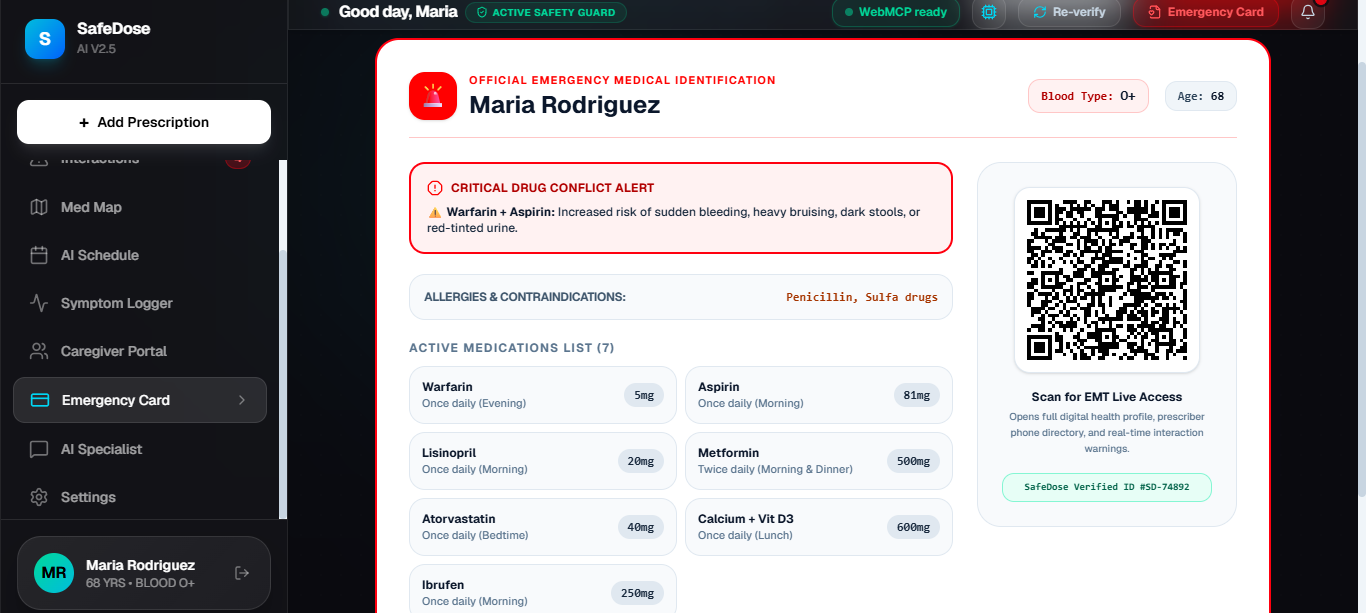
Our strongest demonstration is the simulated Warfarin–Aspirin case: the learner sees the interaction, understands why bleeding risk may increase, reviews warning signs, and identifies the need for qualified clinical review.
◆ What we learned AI must improve understanding, not just produce text. The most valuable AI features are the ones that personalize explanations around a specific regimen.
Case-based learning is powerful. A learner understands interactions better when they can explore a realistic simulated medication profile instead of reading an isolated definition. Safety language matters. Health applications need conservative claims, source transparency, disclaimers, and clear referral to qualified professionals. Fallbacks are essential. Camera access, WebMCP support, and browser capabilities vary, so the core learning workflow must remain functional without optional integrations.
→ What's next for SafeDose: AI Medication Safety Tutor 🎓 Public Learning Mode: Plain-English explanations, definitions, warning signs, and questions for pharmacists. 💊 Pharmacy Student Mode: Drug classes, interaction mechanisms, monitoring concepts, and counseling practice. 🧩 Test Your Knowledge: Predict the highest-risk interaction before revealing the AI explanation. 🗣️ Counseling Practice Lab: Explain an interaction to a simulated patient and receive AI feedback on accuracy and clarity.
🔗 Source transparency: Link each educational explanation to its supporting drug-information reference.
SafeDose’s future is to help people understand medication risks and ask better questions—not to replace clinical expertise.
Built With
- ai
- barcode
- css
- gemini
- javascript
- language
- learning
- machine
- natural
- ocr
- openfda
- processing
- react
- responsive
- rxnorm
- scanning
- tailwind
- tesseract.js
- vercel
- webdesign
- webmcp


Log in or sign up for Devpost to join the conversation.