The problem
Sensitive documents are often shared or printed in unsafe environments: public computers, cybercafés, messaging apps, and shared printers.
Passports, diplomas, contracts, medical records, and financial documents can be downloaded, copied, forgotten, or accessed by unauthorized people. Most existing solutions protect document storage, but provide limited control over how documents are actually used.
Our solution
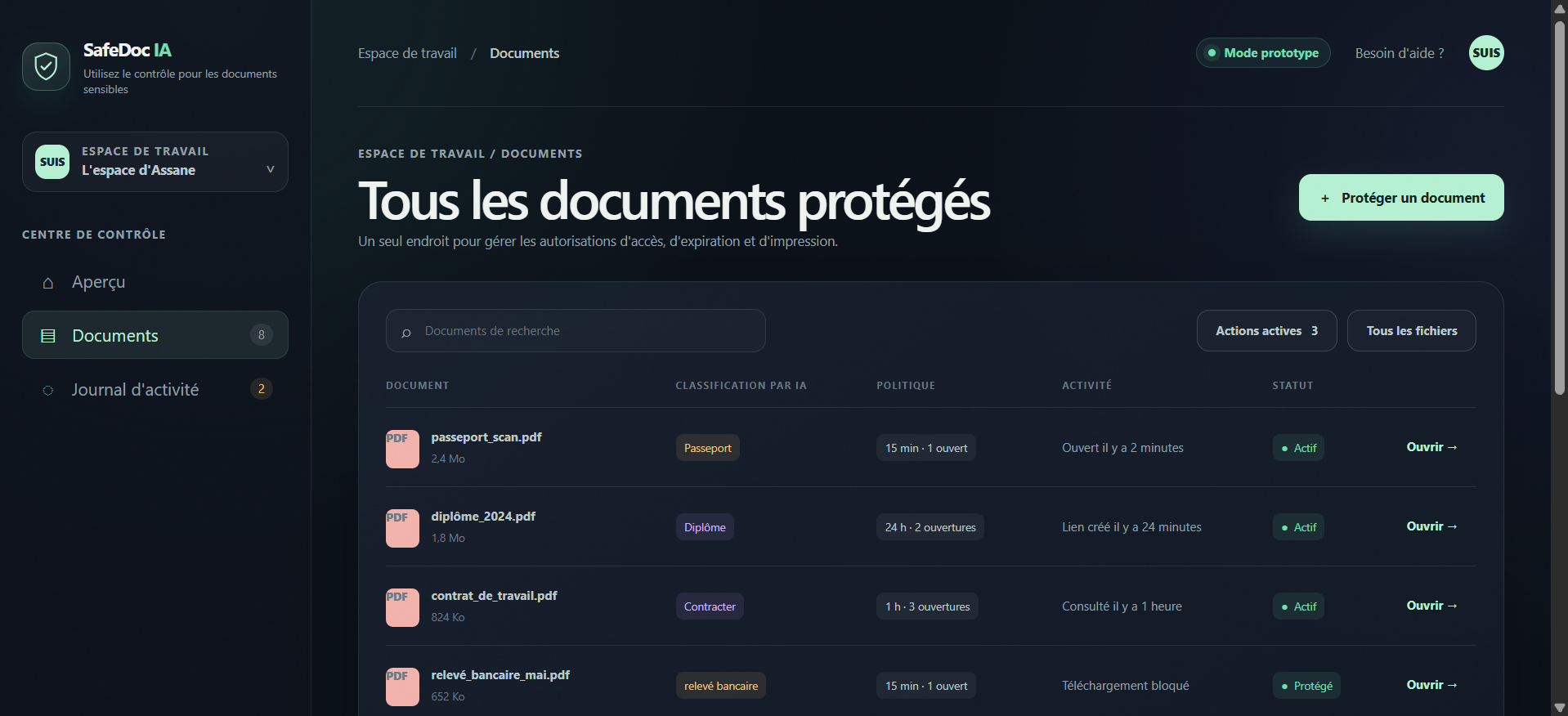
SafeDoc AI is an intelligent document-use control platform. It helps users share, view, and print sensitive documents while maintaining control over access.
Document owners can define rules such as:
- expiration time;
- maximum number of openings;
- download permission;
- printing permission;
- one-time access;
- access verification with OTP.
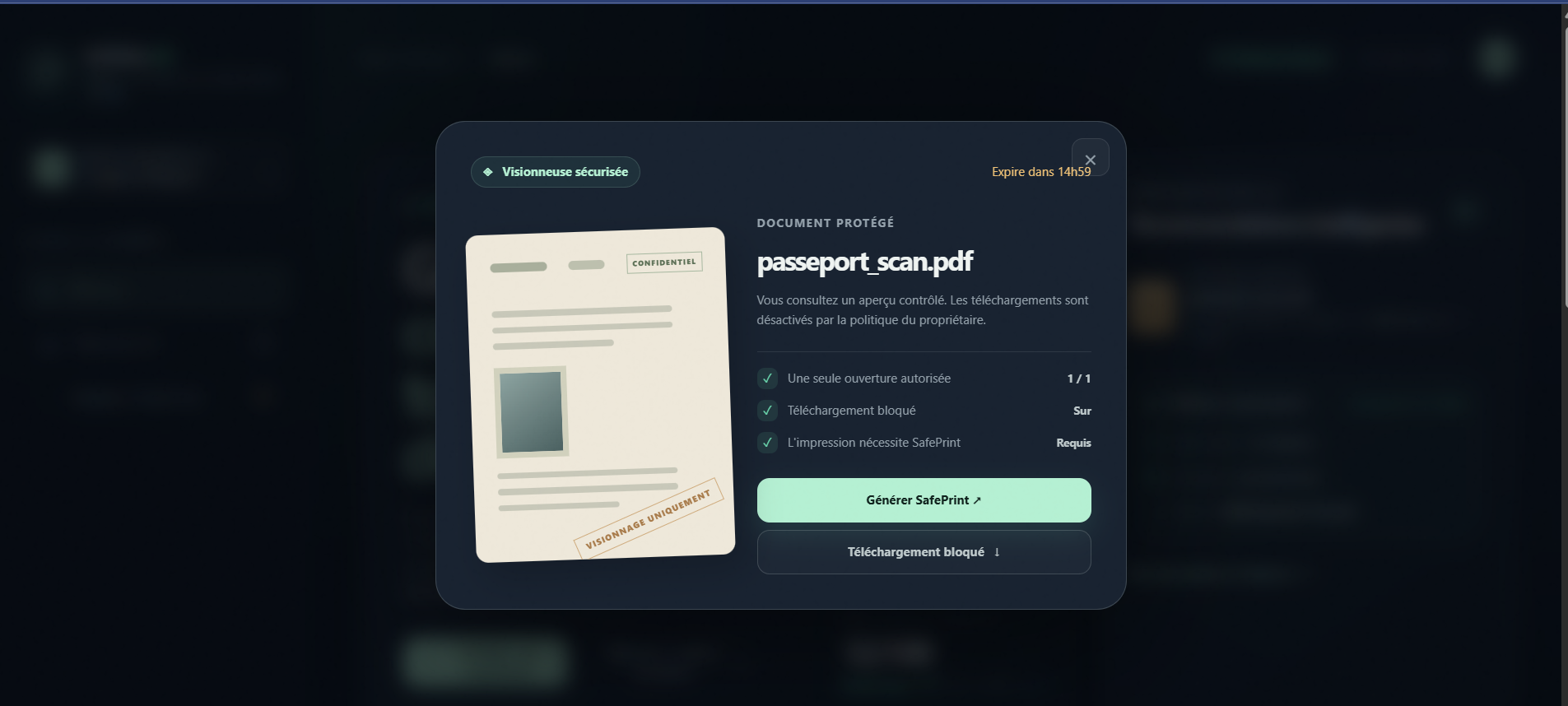
Recipients can view the document through a secure viewer instead of receiving a permanent downloadable copy.
AI-powered protection
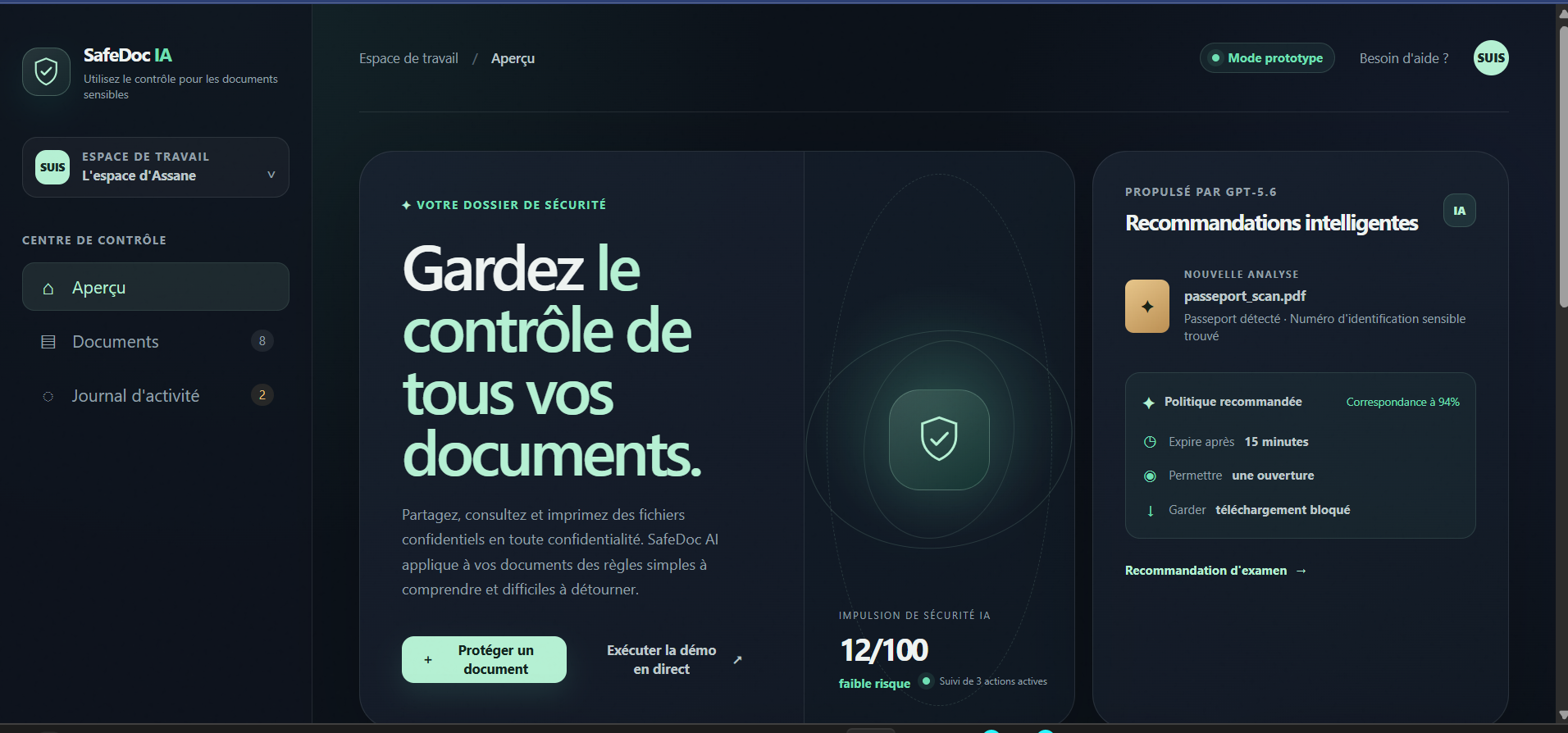
SafeDoc AI uses GPT-5.6 to make document security easier and more adaptive.
The AI can:
- classify documents such as passports, diplomas, contracts, invoices, and medical records;
- detect sensitive information;
- recommend security settings;
- generate a short document summary;
- identify and explain suspicious activity.
For example, when SafeDoc detects a passport, it can recommend disabling downloads, allowing only one opening, and setting a short expiration time.
SafePrint
Our key innovation is SafePrint.
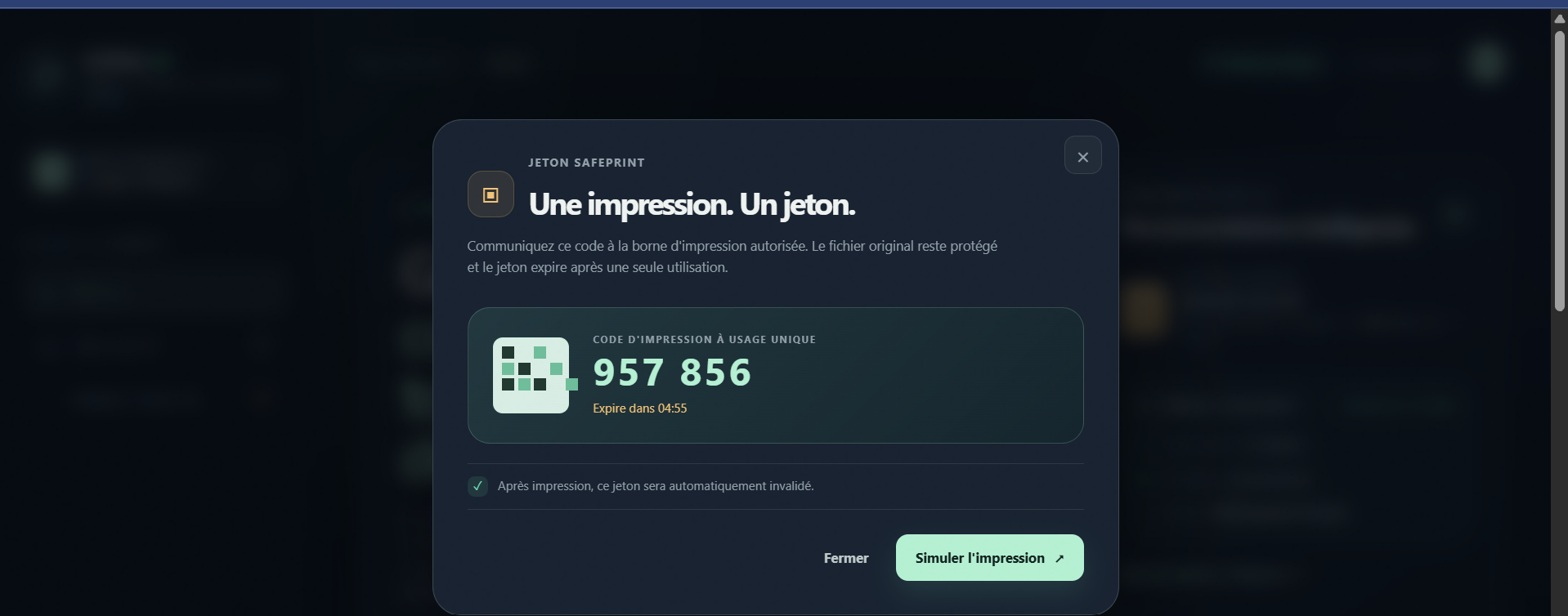
Instead of sending a PDF to a public or shared computer, the document owner generates a one-time print token. The authorized person enters the token or scans a QR code at the printing station.
The original file remains controlled by SafeDoc. Once the document has been printed, the token is immediately invalidated and cannot be reused.
This makes SafeDoc especially useful for students, job seekers, and citizens who need to print confidential documents in cybercafés or other shared environments.
How we built it
The frontend was built with Next.js, React, TypeScript, and Tailwind CSS. The backend uses FastAPI and Python, with PostgreSQL for structured data and S3-compatible storage for documents.
JWT authentication protects user accounts, while the access-control layer enforces expiration, opening limits, download restrictions, and print-token invalidation.
GPT-5.6 is used for document classification, security recommendations, summaries, and risk explanations.
Challenges
One of our biggest challenges was balancing usability and security. Security rules must be strict enough to protect documents without making the experience difficult for ordinary users.
We also had to separate AI recommendations from enforcement. GPT-5.6 can explain and recommend policies, but the backend is responsible for applying the final access rules deterministically.
What we learned
We learned that document security is not only about encryption or storage. It is also about controlling access, understanding context, and limiting what happens after a document is shared.
SafeDoc AI showed us how AI can make security decisions more understandable and practical for everyday users.
What's next
Future versions could include integrations with cybercafés, schools, public services, and organizations that handle sensitive documents.
We also plan to add stronger device verification, privacy-preserving redaction, multilingual support, and more advanced risk detection.
Built With
- fastapi
- gpt-5.6
- jwt
- next.js
- postgresql
- python
- qr
- react
- s3
- tailwind-css
- typescript


Log in or sign up for Devpost to join the conversation.