-
-
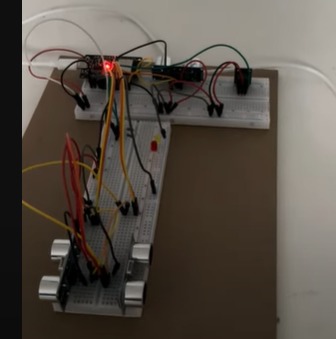
The Hardware
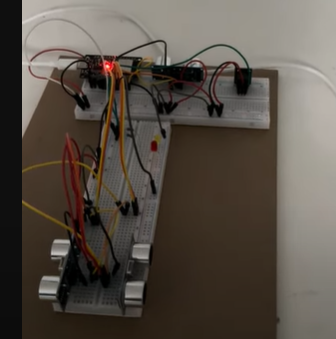
About the Project
SafeCycle is a bicycle safety application designed to improve real-time proximity detection, helping cyclists stay safe on the road. The project was built as part of the WallyHacks 2025 hackathon, where our goal was to combine technology and safety to make cycling a more secure experience.
Inspiration
The inspiration for SafeCycle came from the growing concern over bicycle safety. Cyclists often face danger on the road, especially when vehicles come too close without adequate warning. We wanted to create a solution that would alert cyclists in real-time, preventing accidents and improving safety. With the rise of smart technologies, we saw an opportunity to integrate proximity sensors and create a system that could provide cyclists with up-to-the-minute information about their surroundings.
What it does
SafeCycle provides cyclists with real-time proximity detection using ultrasonic sensors. The application continuously collects data from these sensors and displays it on a live dashboard, allowing cyclists to monitor their environment. If an obstacle is detected within a certain unsafe distance, the system triggers audio and visual alerts, alerting the cyclist to potential hazards. This ensures that cyclists can take timely action to avoid accidents.
How we built it
We built SafeCycle using a combination of hardware and software. On the hardware side, ultrasonic sensors were used to detect obstacles in the environment. These sensors provided real-time data, which was then processed and displayed through a web-based dashboard.
On the software side, the backend was built using Python and Django, handling the sensor data and serving it via a REST API. The frontend was developed using JavaScript and React, providing a user-friendly interface to display the data in real time. WebSocket integration ensured that the updates from the sensors were pushed to the dashboard without delay, while a moving average filter helped smooth out sensor readings.
Challenges we ran into
While building SafeCycle, we faced several challenges:
Sensor Calibration: The ultrasonic sensors needed to be calibrated correctly to ensure accurate distance readings. We had to test and fine-tune the sensors to ensure they could provide reliable data in various environments.
Real-Time Data Handling: Integrating real-time sensor data with a web dashboard using WebSocket presented some challenges. We had to make sure that the system could handle multiple sensor inputs simultaneously without lag.
Frontend Design: Designing an intuitive and responsive frontend that could display data clearly was challenging. We had to focus on keeping the dashboard user-friendly while ensuring it could display data in real-time without overwhelming the user.
Hardware-Software Integration: Connecting the hardware with the backend system was tricky, especially when working with sensors in a live environment. We spent a lot of time ensuring the data was transmitted correctly from the sensors to the web interface.
Accomplishments that we're proud of
- Successfully integrating real-time proximity detection with ultrasonic sensors.
- Building a live dashboard that displays sensor data in real-time using WebSockets.
- Implementing both audio and LED alerts based on detected distances to ensure the safety of the cyclist.
- Creating a smooth user experience by filtering out noisy sensor readings with a moving average filter.
What we learned
Through this project, we learned a great deal about hardware integration, real-time data processing, and building a seamless full-stack application. Specifically, we gained valuable experience working with ultrasonic sensors, WebSocket communication, and handling real-time updates in web applications. The project also taught us how to focus on user-centered design, ensuring that the end-user (the cyclist) could easily interact with the application while on the road.
What's next for SafeCycle
In the future, we plan to expand SafeCycle by adding more advanced features, such as:
- Integration with other safety systems: We aim to integrate SafeCycle with other smart safety devices such as helmets and smart lights for a more comprehensive safety experience.
- Mobile app development: While SafeCycle currently operates through a web-based dashboard, we plan to develop a mobile app for cyclists to access real-time alerts on their phones. This would also be extremely beneficial to couriers and other people who ride bicycles consistently for last mile delivery, and we hope to partner with organizations like Purolator to provide a safer delivery experience for their employees.
- Data analytics: We hope to add a feature that tracks cycling patterns and provides feedback on how cyclists can improve their safety based on their riding habits.
- AI Integration: Ideally, we would like to be able to use a small camera mount in order to provide more accurate information to cyclists.
We also want to collaborate with more cyclists and collect user feedback to continuously improve the system and make cycling safer for everyone. Creating an anonymized dataset of the data we collect could also inspire futher grassroots initiatives to improve urban mobility.


Log in or sign up for Devpost to join the conversation.