Inspiration
In Bangladesh, ensuring the immediate safety of children during emergencies or sudden medical situations is a critical challenge. We wanted to build a tech-driven solution tailored for kids that provides instant emergency connection and smart, compassionate first-aid guidance in real-time, right from their mobile browsers.
What it does
SafeChild is a premium, mobile-responsive safety web app designed with a "Neon-Soft Minimalist" theme.
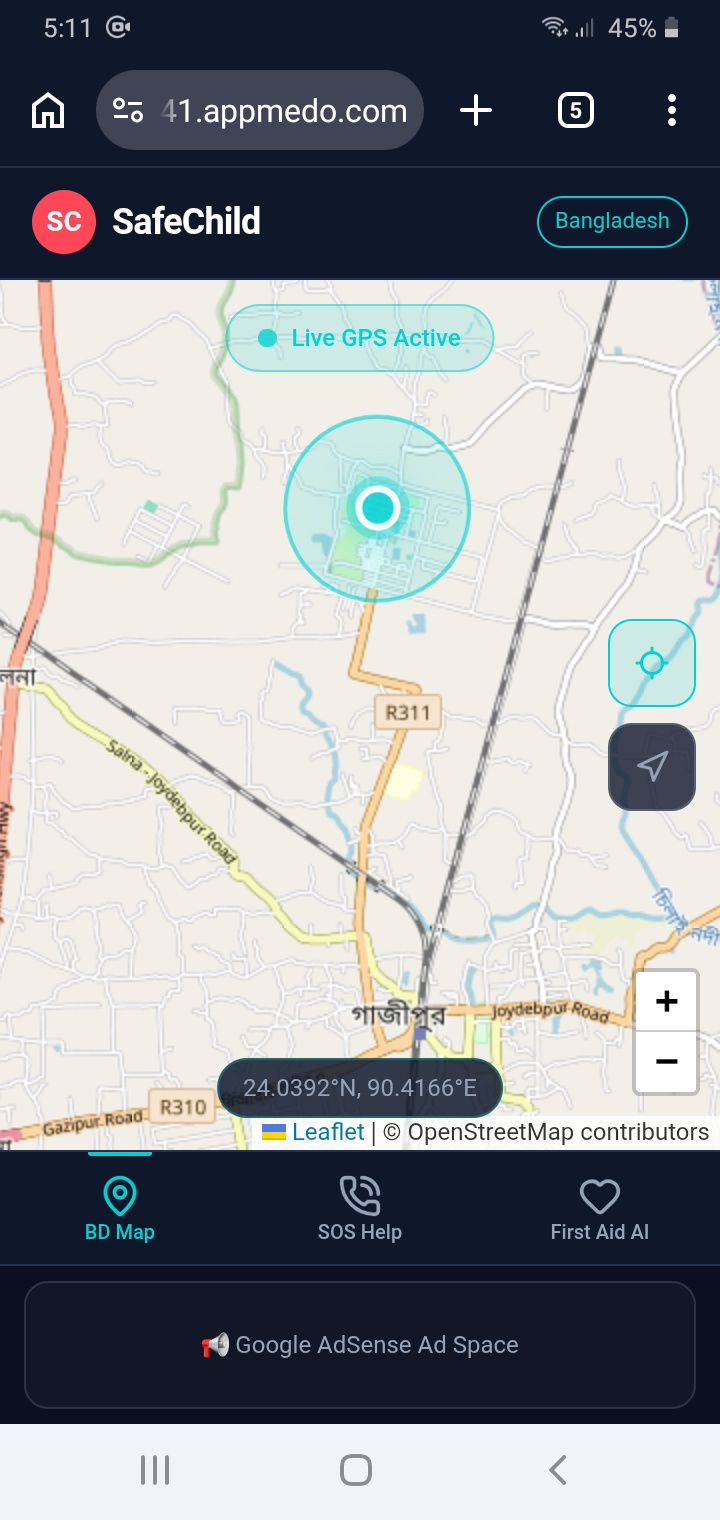
- Live Map: Integrates an interactive Leaflet.js map with HTML5 Geolocation to track the user's live position via a pulsing Electric Cyan marker.
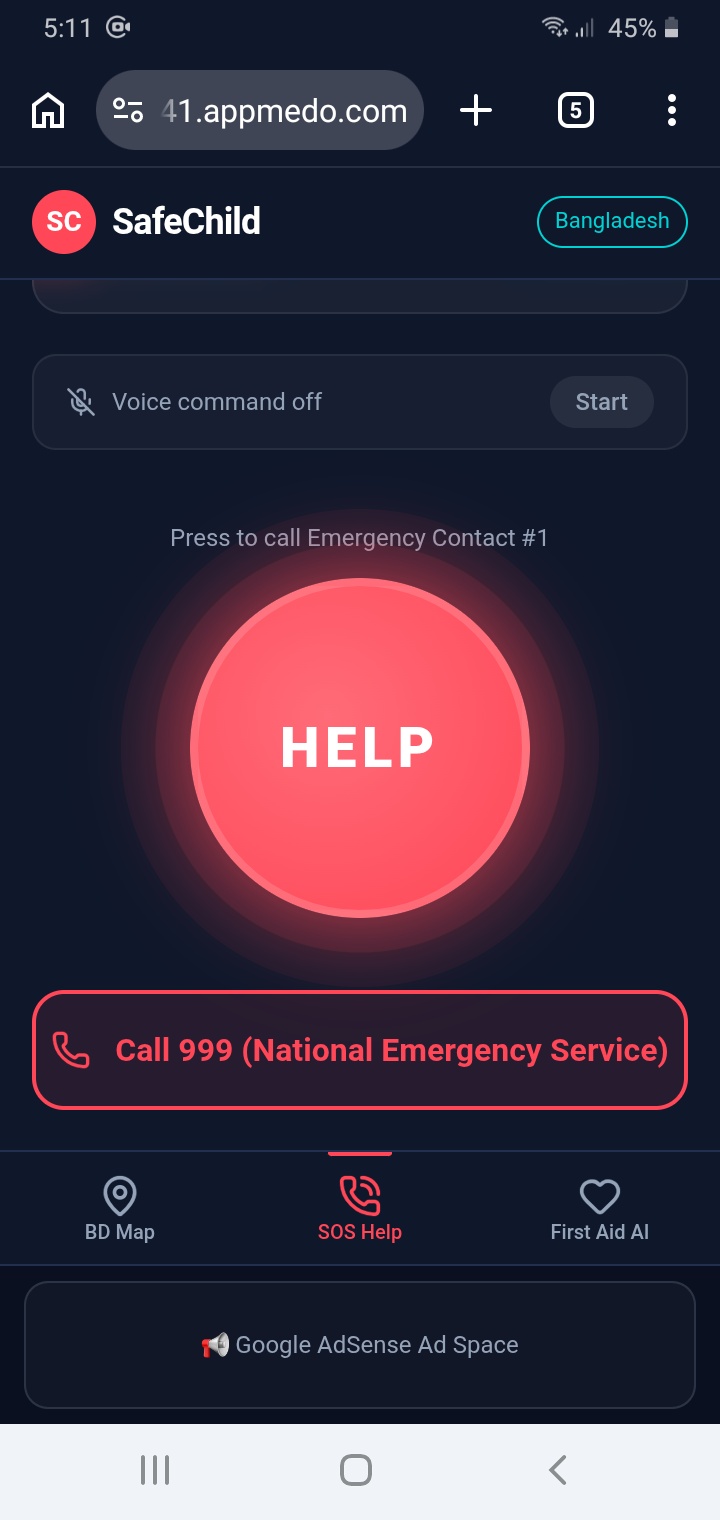
- Smart SOS: Features dual emergency contact inputs and an automated alternating calling logic triggered via a giant "HELP" button or voice command ("Help Help"). It also includes a direct backup button for national emergency service (999).
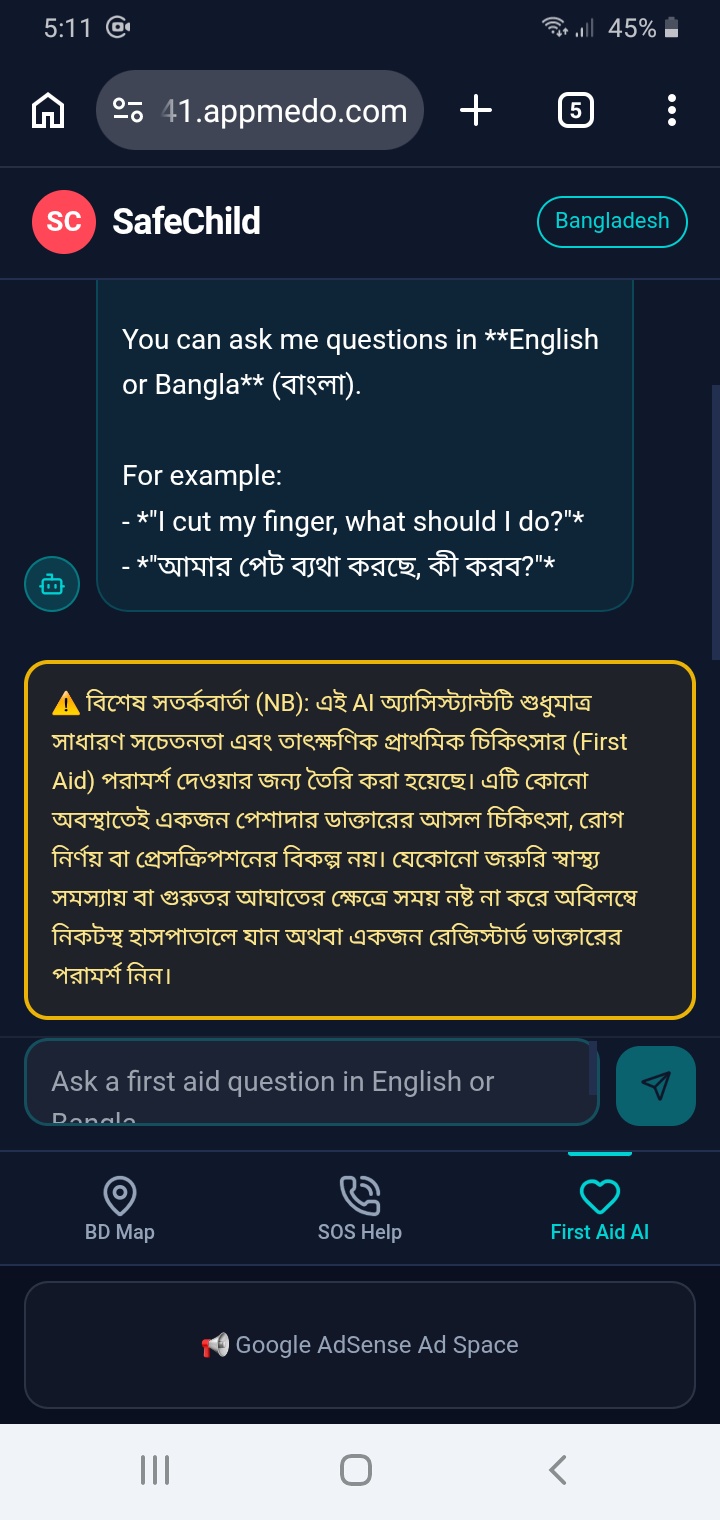
- First Aid AI: A secure, friendly AI chatbot powered by Gemini 2.5 Flash that acts like a primary doctor to provide easy step-by-step first-aid advice in English and Bangla.
How we built it
The web app is built using React, Vite, and TypeScript with a gorgeous dark midnight blue styling. For mapping, we integrated Leaflet.js and the native browser Geolocation API. The voice recognition utilizes the Web Speech API. The AI backend is securely powered by Gemini 2.5 Flash integrated via server-side Edge Functions on MeDo's platform gateway, ensuring the API keys remain completely safe and hidden from the frontend.
Challenges we ran into
One major challenge was optimizing the Leaflet map's marker rendering and state updates on mobile screens without causing lag. Additionally, handling voice command triggers smoothly across different mobile browsers required extensive testing with input focus and background listening APIs.
Accomplishments that we're proud of
- Successfully integrating real-time GPS and voice-activated SOS logic seamlessly into a minimalist mobile UI.
- Deploying a completely secure backend chat architecture that safely leverages Gemini 2.5 Flash without exposing sensitive credentials.
- Creating an interface that is highly intuitive and accessible for children during high-stress situations.
What we learned
We gained deep insights into deploying secure, platform-managed serverless Edge Functions and handling advanced browser APIs (like Geolocation and Speech Recognition). We also learned how to design dark-themed, high-contrast user interfaces that optimize readability during emergencies.
What's next for SafeChild
We plan to introduce offline functionality using Progressive Web App (PWA) features so the SOS trigger works even without cellular data. We also aim to add regional Bangla dialect support to the voice recognition system and integrate real-time hospital density mapping for faster navigation.
Built With
- edge
- gemini-2.5-flash-api
- geolocation-api
- leaflet.js
- medo
- react
- typescript
- vite
- web-speech-api


Log in or sign up for Devpost to join the conversation.