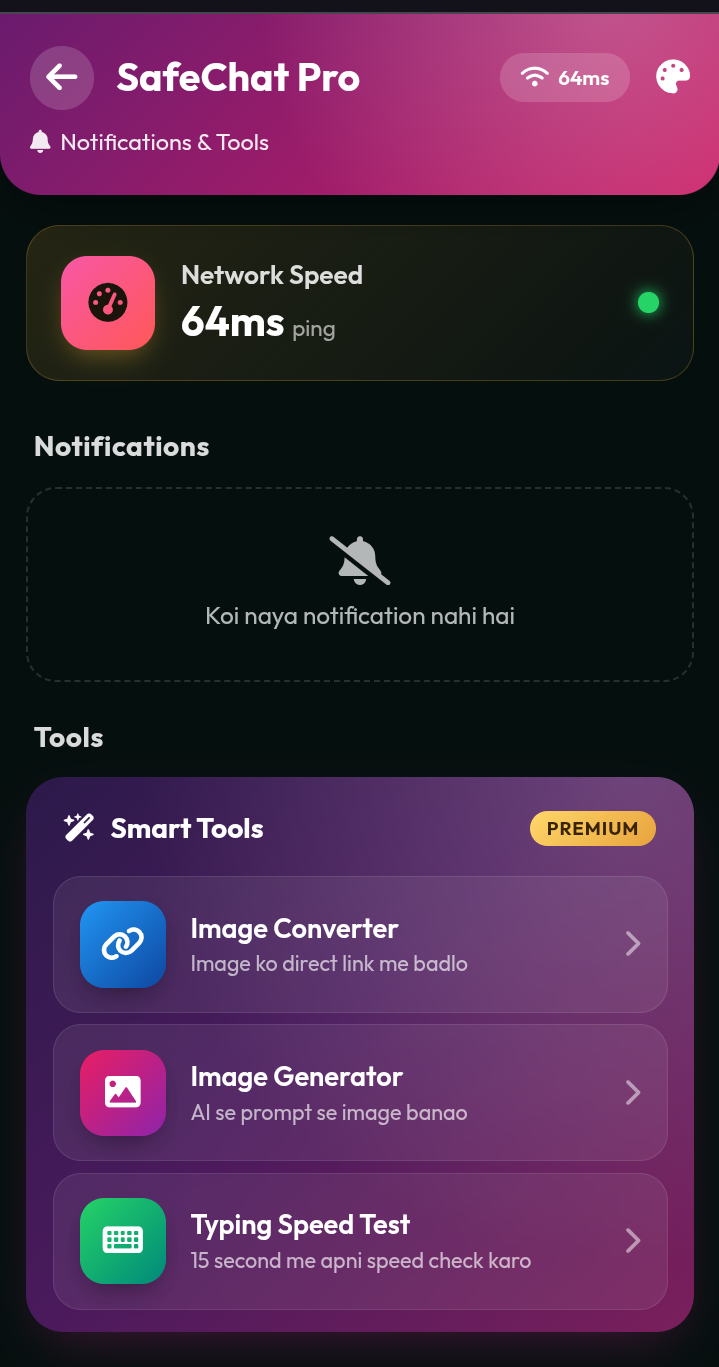
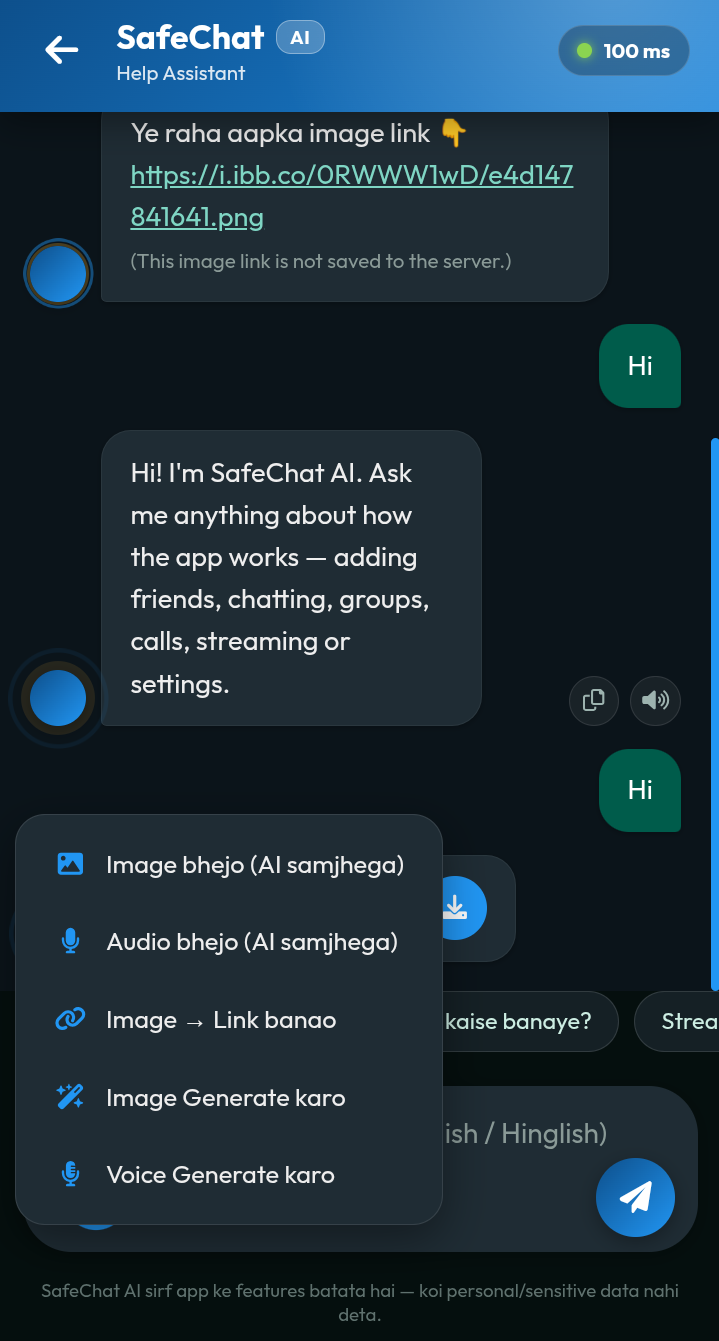
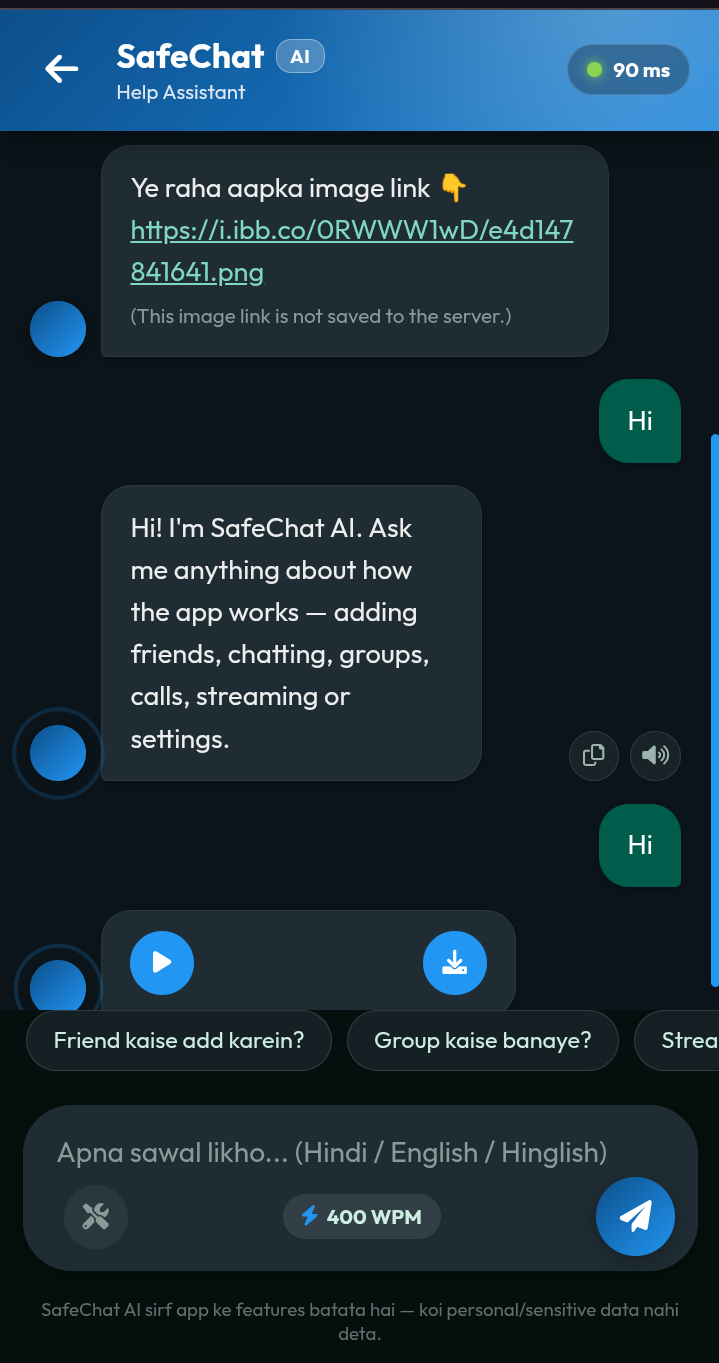
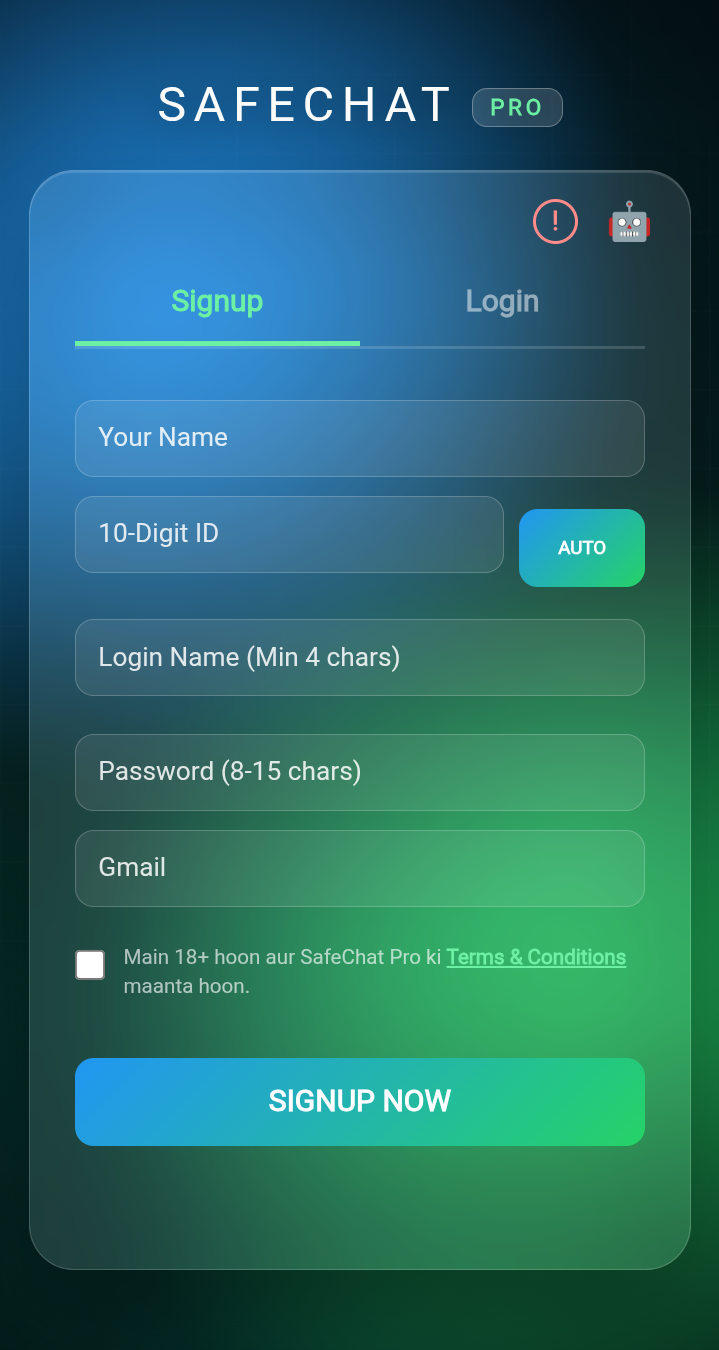
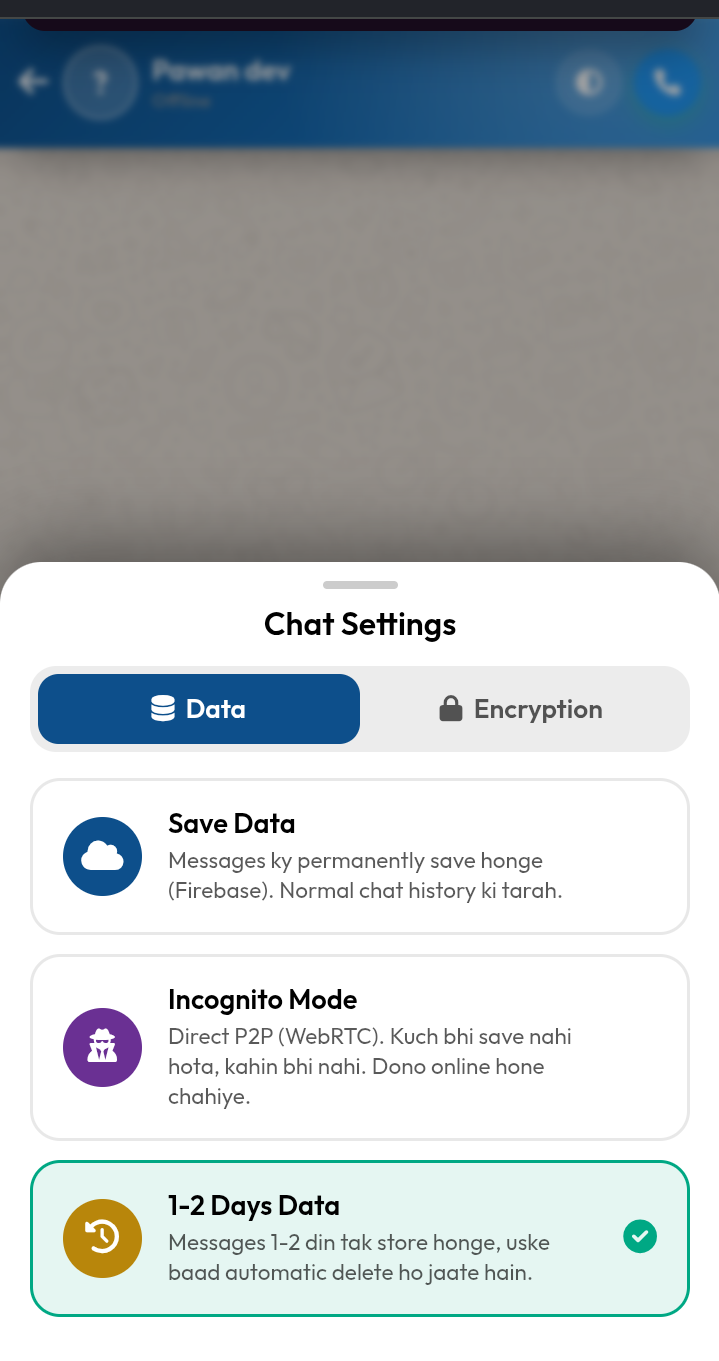
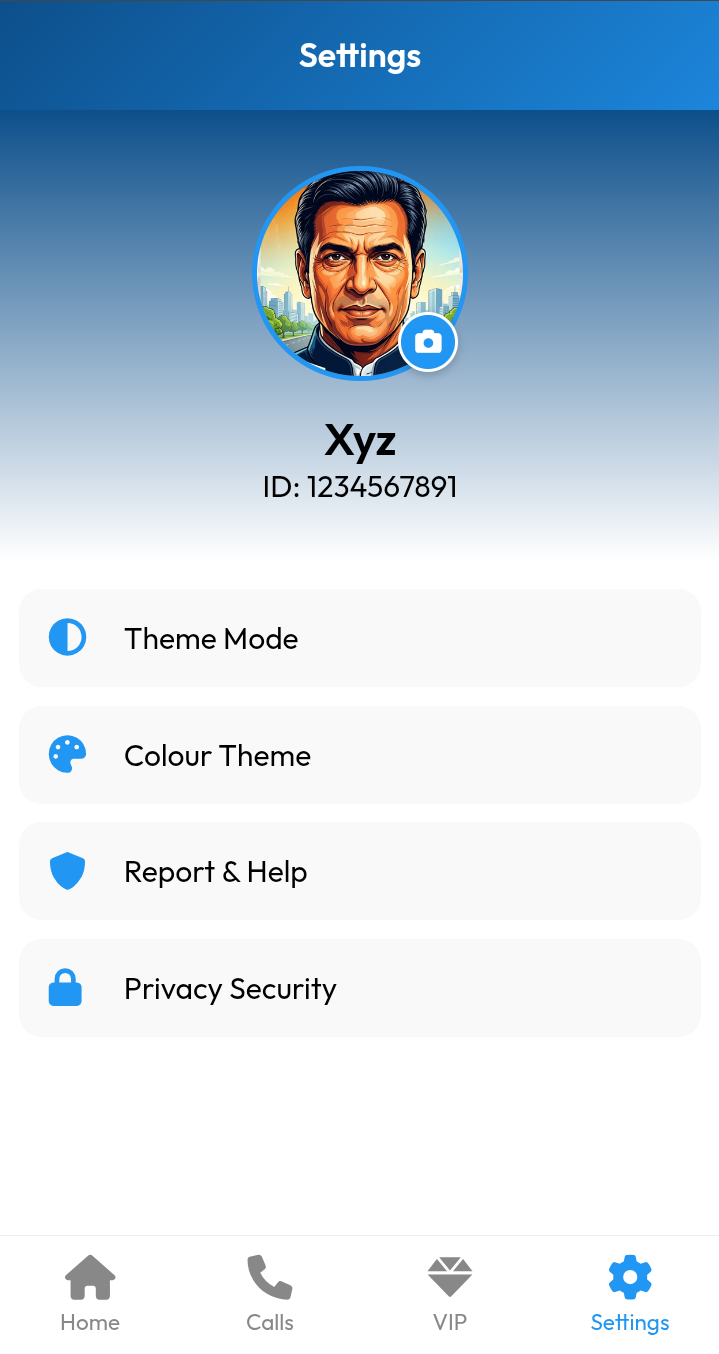
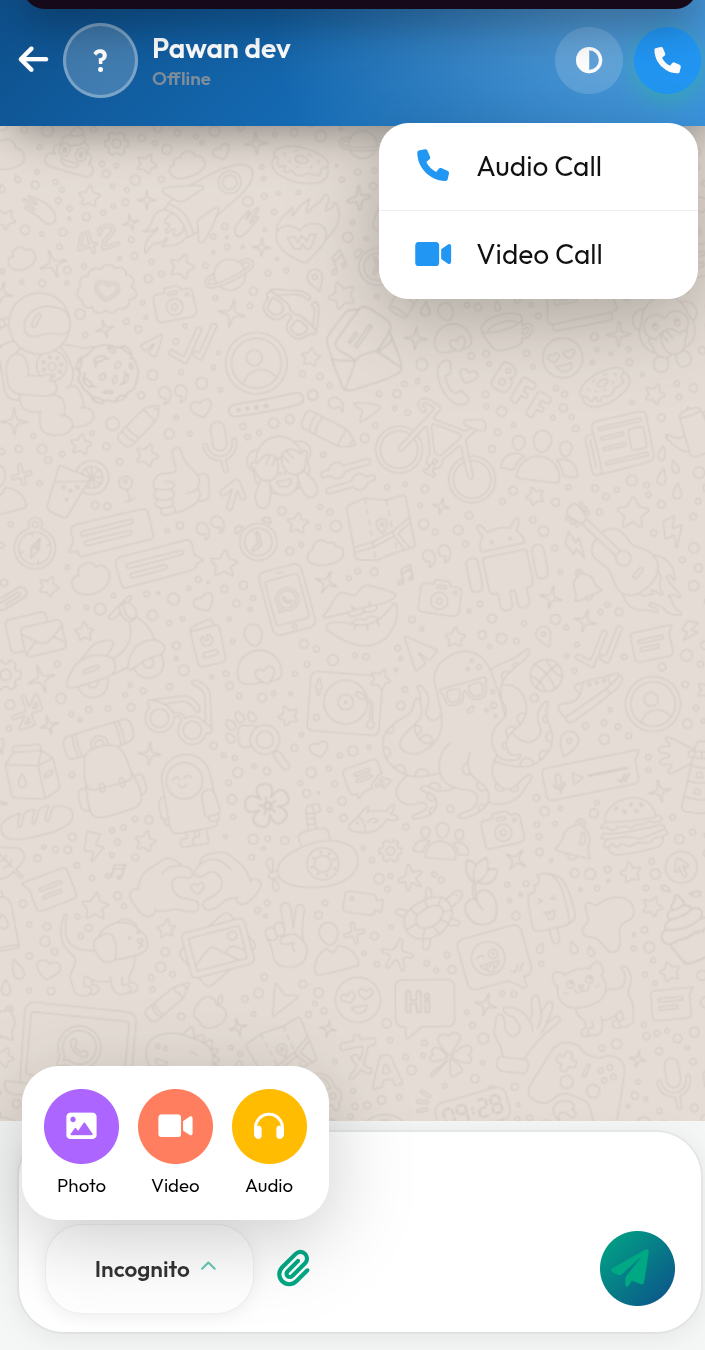
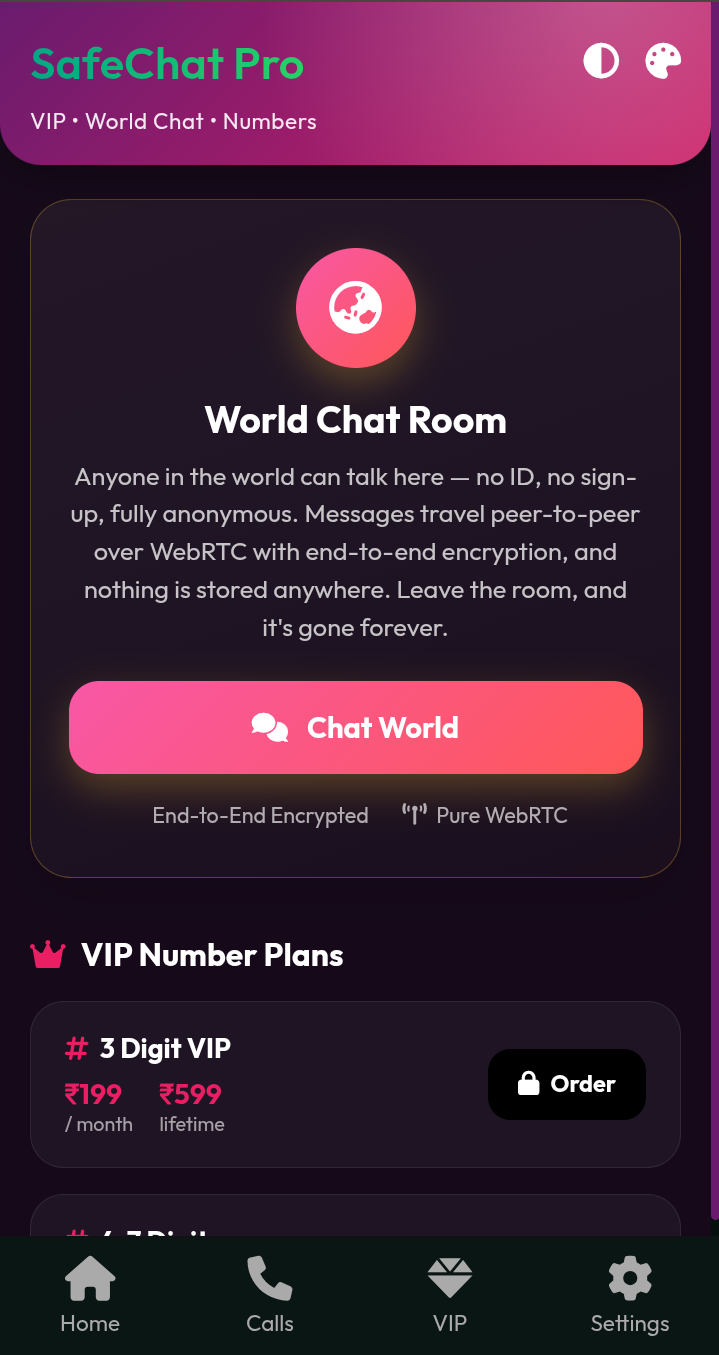
SafeChat Pro was born from a simple frustration: modern messaging apps force you to choose between features, speed, and privacy. Either you pay expensive subscriptions, sacrifice battery life with always-on connections, or give up control over your data.
The breaking point came when I realized that Firebase's Realtime Database charges per concurrent connection. For a chat app with thousands of users keeping their browsers open 24/7, the cost would be impossible for an independent developer. This constraint — rather than being a limitation — became the seed for an entirely new architectural pattern I called the Burst Connection.
The core insight was deceptively simple: what if the app only connected when it actually needed to?
$$ \text{Effective Cost} \propto \text{Concurrent Connections} \times \text{Connection Duration} $$
By reducing connection duration from ~24 hours to just 3–5 seconds, the effective cost drops by a factor of roughly 17,000×. This single idea reduced server costs by 80% and battery consumption by 70%, making SafeChat Pro viable at a scale that would otherwise be impossible.
I was also driven by a deep curiosity about WebRTC — building real peer-to-peer calls, streaming, and incognito chats with no central server at all. The name SafeChat Pro captures the three pillars of the vision: Safety (encryption), Chat (real-time communication), and Pro (professional-grade capabilities).
How I Built It
SafeChat Pro uses a hybrid multi-backend architecture, where each service is selected for what it does best:
$$ \text{App} = f(\text{Firebase},\ \text{Agora},\ \text{LiveKit},\ \text{WebRTC},\ \text{Hugging Face},\ \text{ImgBB}) $$
Architecture Overview
┌────────────────────────────────────────────────────────────┐
│                    SafeChat Pro                            │
├────────────────────────────────────────────────────────────┤
│                                                            │
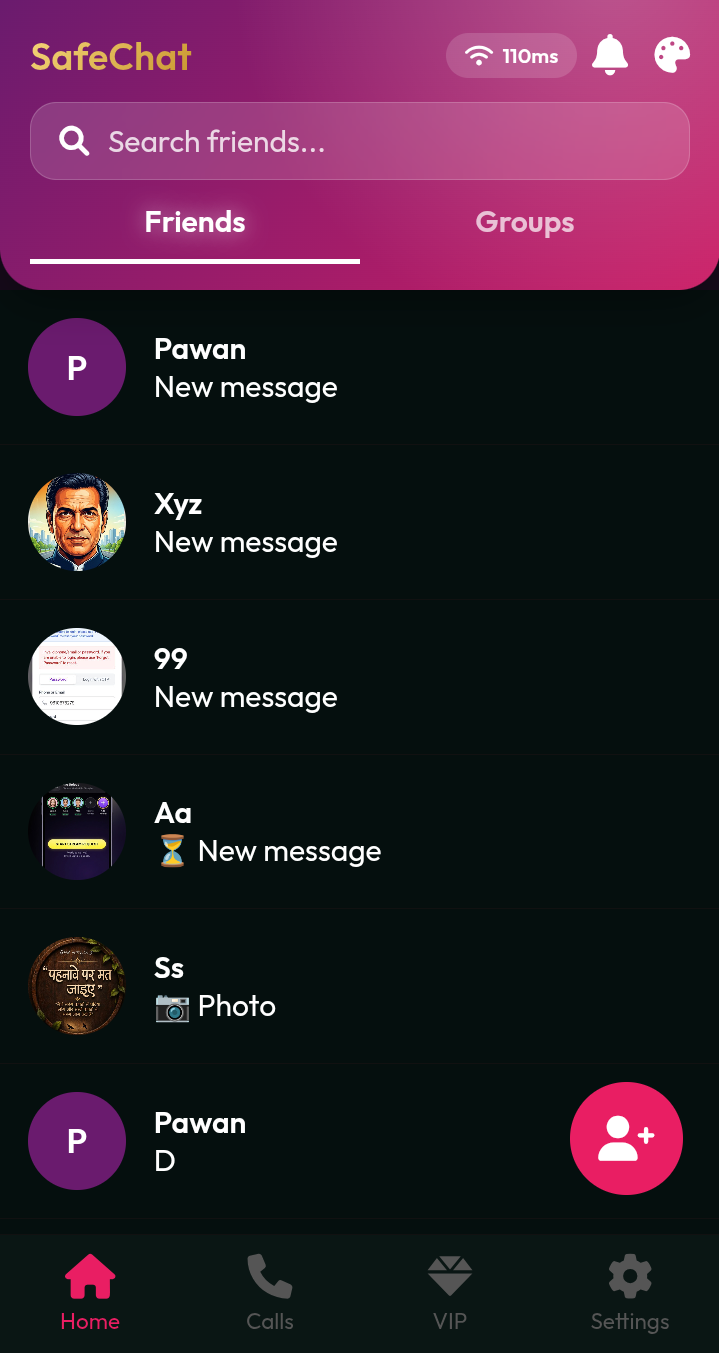
│  Firebase RTDB      ──►  Chat, Presence, Signaling         │
│  Agora RTC          ──►  1:1 & Group Voice/Video Calls     │
│  WebRTC (P2P)       ──►  Incognito Chat, Small Streams     │
│  LiveKit SFU        ──►  Large-Scale Video Streaming       │
│  Hugging Face       ──►  AI Chat, Image Generation         │
│  ImgBB / Cloudinary ──►  Image & Video Hosting             │
│                                                            │
└────────────────────────────────────────────────────────────┘
Tech Stack
| Layer | Technology | Purpose |
|---|---|---|
| Frontend | HTML5, CSS3, Vanilla JS | Zero-framework, ultra-fast UI |
| Database | Firebase Realtime DB | Chat sync, presence, signaling |
| Voice / Video | Agora RTC SDK v4.18 | Low-latency calls |
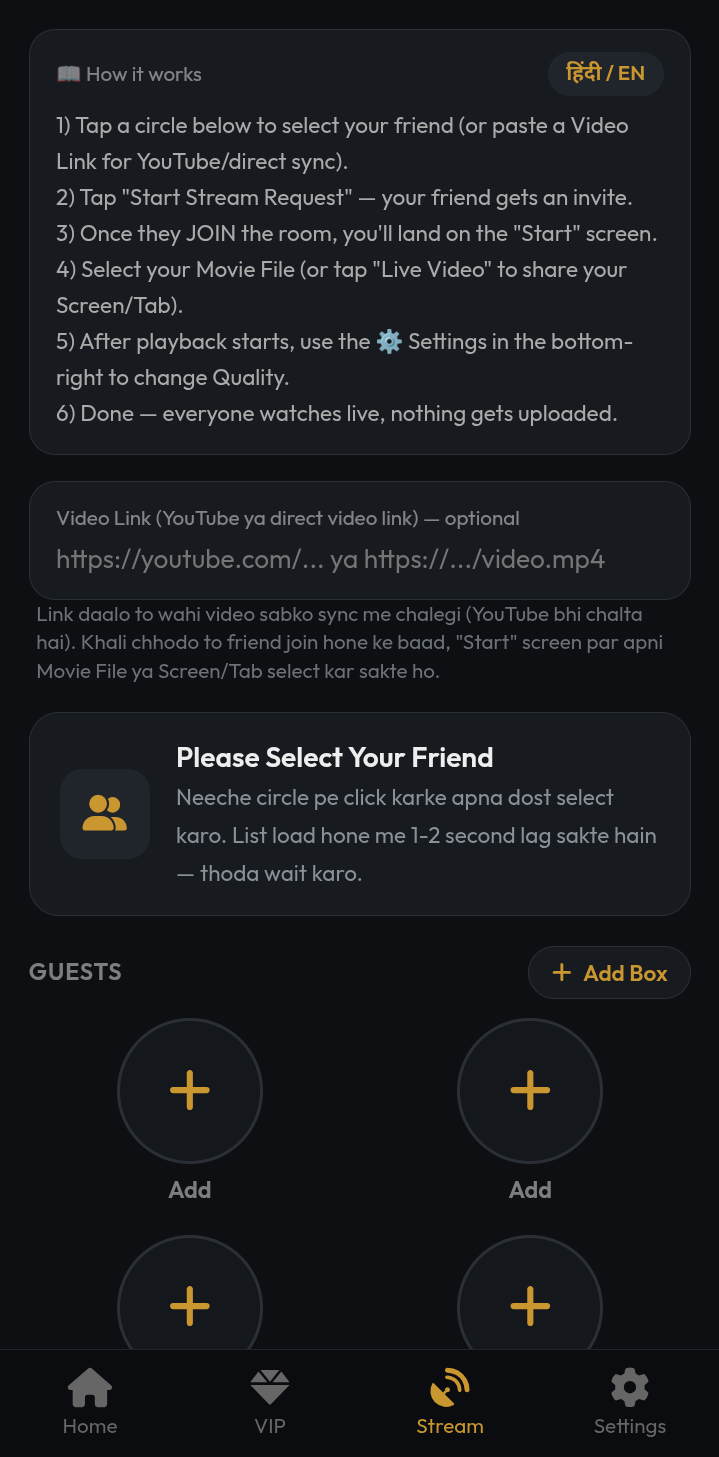
| P2P Streaming | WebRTC Mesh | Free streaming for ≤ 9 users |
| SFU Streaming | LiveKit Cloud | Scalable streaming for 10+ users |
| P2P Chat | PeerJS (WebRTC) | Anonymous World Chat |
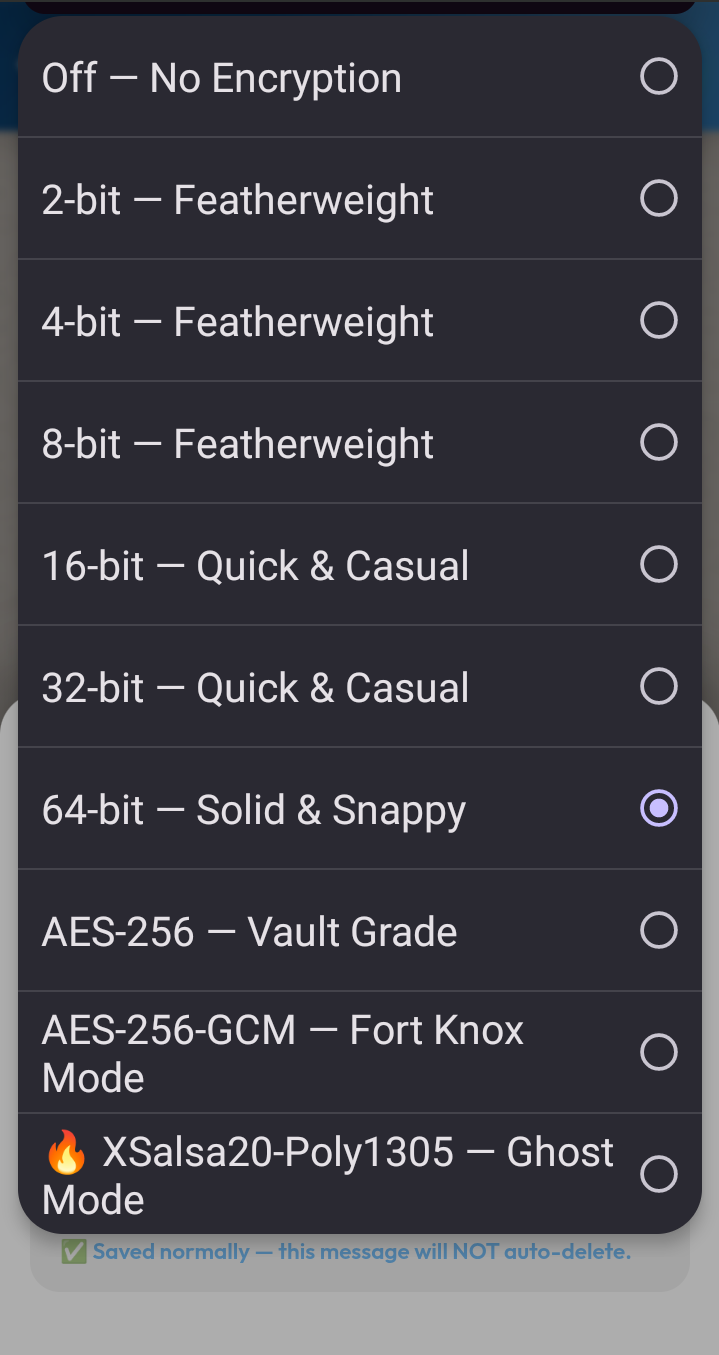
| Encryption | CryptoJS, TweetNaCl, Web Crypto API | 2–256 bit selectable |
| Image Upload | ImgBB API | Fast image hosting |
| Video Upload | Cloudinary | Video/audio hosting |
| AI | OpenRouter + Hugging Face | Chat help, image generation |
| Backend | Hugging Face Space | 3-Day auto-delete service |
| Hosting | Vercel | Static deployment |
What I Learned
1. The Burst Connection Pattern
The most important discovery was that Firebase connections don't need to stay open. A short burst is enough:
$$ \text{Conn-hours per user per day} = \frac{5\ \text{sec}}{3600\ \text{sec}} \approx 0.0014 $$
For 1,000 daily users, this is about 1.4 connection-hours per day — versus roughly 8,000 with traditional always-on sockets. This pattern alone enabled the project to scale on free-tier infrastructure.
async function loadFriendsBurst(me, cacheKey) {
    dbBurst.goOnline();
    const data = await dbBurst.ref(`friends/${me.username}`).once('value');
    renderUI(data);
    dbBurst.goOffline();   // disconnect immediately
}
- Deterministic Key Derivation
Traditional encryption requires key exchange — a complex, attack-prone step. I learned that when both parties share a common identifier (chatId), they can independently derive identical keys using SHA-256 chaining:
K_{\text{msg}} = \text{SHA256}(\text{chatId} \parallel \text{nonce} \parallel \text{bits})
The nonce is random per message, but both sides compute the same key from it. No key exchange needed.
- Hybrid Streaming Architecture
WebRTC mesh breaks at scale because the host uploads $N-1$ copies of the video:
\text{Host Bandwidth} = (N - 1) \times \text{Bitrate}
For $N = 10$ at 5 Mbps, that is 45 Mbps upload — impractical on most consumer connections. The solution was automatic mode switching:
· $N \leq 9$ : WebRTC mesh (free, low latency) · $N \geq 10$ : LiveKit SFU (each client uploads one copy, server fans out)
- Self-Healing Data Structures
Databases should be able to recover from partial failures. When a user's group is missing from their personal list but they're still a member, the system auto-detects and repairs:
if (g.members.includes(me.username) && !existing[gid]) {
    fixes[`userGroups/${me.username}/${gid}`] = { name: g.name };
}
- Offline-First UX
Users perceive an app as fast based on first paint, not actual network round-trips. Rendering cached data instantly and refreshing silently in the background gives a WhatsApp-class instant feel:
const cached = localStorage.getItem(cacheKey);
if (cached) renderUI(JSON.parse(cached));   // 0 ms
loadFriendsBurst(me, cacheKey);             // refresh silently
- AI Guardrails Before Inference
Running the AI call after the guardrail check saves tokens, latency, and prevents misuse:
const GUARD_KEYWORDS = ['password', 'api key', 'hack', 'database'];
if (isGuarded(userInput)) return GUARD_REPLY[lang];
Challenges Faced
Challenge 1 — Exponential Firebase Costs
Problem: 1,000 daily users × 8 hours online each = roughly 8,000 connection-hours per day, exceeding the free tier.
Solution: The Burst Connection Pattern. Each user connects for only ~5 seconds per session:
\text{Conn-hours} = 1000 \times \frac{5}{3600} \approx 1.4
A ~5,700× reduction that made the free tier viable for thousands of users.
Challenge 2 — WebRTC Signaling Without a Server
Problem: WebRTC requires a signaling channel to exchange SDP offers/answers and ICE candidates.
Solution: Used Firebase as an ephemeral signaling channel. Writes to stream_rooms/{roomId}/webrtc/{user} auto-clean when the room ends. Nothing persists.
Challenge 3 — Encryption Key Exchange
Problem: Traditional encryption requires both parties to share a secret key without a secure channel.
Solution: Deterministic derivation from chatId + nonce, computed independently on both sides — zero key transmission, zero interception risk.
Challenge 4 — Cross-Chat Notifications
Problem: While chatting with one friend, users would miss messages from others.
Solution: A single Firebase listener on friends/{me} detects unread changes from anyone except the current chat partner, then surfaces a lightweight toast:
if (fromUser !== currentChatPartner && val.unread) {
    showCrossChatToast(val.name, val.lastMsg);
}
Challenge 5 — Group Call Scalability
Problem: The first version ended the entire group call whenever any one member left.
Solution: Changed logic to remove only that user's presence, ending the call only when the last participant leaves:
if (!snap.exists()) {
    db.ref(`groupCalls/${groupId}`).remove();
}
Challenge 6 — Profile Picture Fan-Out
Problem: A profile picture change requires updating every friend's chat list.
Solution: Built a reverse index friendOf/{username} tracking who has this user as a friend. A DP change triggers parallel updates:
const snap = await db.ref(`friendOf/${username}`).once('value');
Object.keys(snap.val()).forEach(friend => {
    db.ref(`friends/${friend}/${username}`).update({ dp: link });
});
Challenge 7 — Media Upload Reliability
Problem: Free image hosts (Catbox, Gofile) were unreliable; videos frequently failed.
Solution: Split by media type:
· Images → ImgBB (fast, reliable CDN) · Video / Audio → Cloudinary (accepts large files, stable URLs)
Challenge 8 — Cross-Browser Fullscreen & Orientation Lock
Problem: screen.orientation.lock('landscape') throws on desktop and iOS Safari.
Solution: Wrapped in feature detection with silent failure:
if (isWidescreenVideo() && screen.orientation?.lock) {
    screen.orientation.lock('landscape').catch(() => {});
}
Challenge 9 — PeerJS World Chat Hub Loss
Problem: When the hub user disconnects, all peers in the anonymous room lose connectivity.
Solution: Star-mesh topology with automatic re-election — when the hub's unavailable-id error fires, the next user claims the hub role:
peer.on('error', err => {
    if (err.type === 'unavailable-id') {
        peer = new Peer();               // become a client
        peer.on('open', () => connectToHub());
    }
});
Challenge 10 — Group Chat State Drift
Problem: A user added to a group was sometimes missing from their own group list after a network hiccup.
Solution: A self-healing check on every group-list load that reconciles the members list against userGroups/{user} and repairs missing entries silently.
Project Statistics
Metric Value Total Pages 20+ HTML files Lines of Code 10,000+ Service Integrations 9 Feature Categories 15 Encryption Modes 5 methods, 9 bit-levels Chat Modes 3 (Save / Incognito / 3-Day) Streaming Modes 3 (YouTube / Screen / File) Themes 4 (Gold, Green, Blue, Purple) Concurrent User Capacity 20,000+
Future Roadmap
· Push notifications via Firebase Cloud Messaging · Voice messages with waveform preview · Signal Protocol for bank-grade E2EE · In-chat AI translation · Screen annotation during streams · Payment integration for VIP plans (UPI / Razorpay) · Native mobile app (React Native / Flutter)
Conclusion
SafeChat Pro demonstrates that modern web technologies, combined thoughtfully, can produce a communication platform rivaling commercial apps — with better privacy, lower cost, and equal performance.
The Burst Connection Pattern alone cuts infrastructure expenses by an order of magnitude, allowing a solo developer to serve thousands of users on free-tier services. Every design decision — from deterministic encryption to hybrid streaming — reflects a single philosophy: respect the user's device, wallet, and privacy.
Made with ❤️ by Pawan
Live Demo: https://safechatpro.vercel.app

Log in or sign up for Devpost to join the conversation.