Significant barriers to accurate and personalized sexual assault screening undermine the agency of the individual to pursue recovery, normalize social acceptance of sexual violence, and lead to higher rates of long-term mental health problems. We hope that our idea of leveraging natural language processing in the form of an unbiased, non-human assistant, can help solve this problem by encouraging intimate and honest disclosure of the user’s stories, and providing appropriate feedback and information to help the user build a plan of action. This will be a unique and highly impactful application of artificial intelligence to address a very important social issue.
Understanding the Problem
When someone is unable to recognize on their own that they have experienced a form of sexual violence, they will be highly unlikely to seek social, medical, or legal assistance, and will have an increased likelihood of developing chronic mental health issues. To begin the arduous road to recovery following sexual assault, an individual must first validate his/her experiences, and recognize that unwanted behavior had indeed occurred. This process is often the most challenging to tackle - Several factors such as: normalized peer behaviors, social stigma/embarrassment, and lack of clear memory due to alcohol or drugs create internal confusion and cause adoption of a powerless, or “victim” mentality. Non-resolution normalizes social acceptance of sexual assault, and leads to higher rates of depression, anxiety, and PTSD. Thus, the earlier the identification and intervention, the more likely it is possible to help survivors address the psychological consequences that follow sexual trauma. [http://vawnet.org/sites/default/files/materials/files/2016-09/AR_PsychConsequences.pdf]
One of the most notable findings from primary research was that survivors are scared/hesitant to reflect deeply on their experiences, talk openly about it with others, or do not receive ideal feedback from others when they do talk about it. Of the 7 individuals surveyed (ages 20-30), one person took 5 years, and another person took 2 years after the assault to realize that what had happened was actually rape. This can have profound mental health consequences that could be addressed if identified earlier. 6/7 respondents did NOT see a doctor or receive any other professional assistance or resource, thus it is likely that the resources available are not well-utilized.
Human-based communication barriers discourage proper screening and treatment. Some reasons for why survivors may not seek help are: they anticipate that system personnel would cause further psychological harm by not believing they had been assaulted or not caring about them, or that system assistance would intensify their painful feelings beyond their coping skills. Thus, current resources based on assistance from other humans (crisis hotlines, meetup groups, etc.) do not guarantee the respect and emotional sensitivity required to best help the individual. [https://www.ncbi.nlm.nih.gov/pubmed/19425342]
Furthermore, interviews with healthcare professionals suggests that medical resources and treatment for survivors is EXTREMELEY limited. Many clinicians feel they are "not trained to handle" such cases. If a patient is screened as positive for a sexual assault (which is rare, because (a) screening via written or oral exam is not standardized and depends on the individual provider to initiate it, (b) patients are not comfortable reporting because they might have to file a legal complaint, (c) patients are not honest or don't know themselves), they are handed a packet of generic information, and directed to the ER, which is an additional hassle for someone who has just undergone a sexual assault. The existing “it is up to the patient to deal with it” mentality makes it clear that an appropriate solution should directly benefit the individual.
The current medical and legal systems do not directly address the needs of survivors to understand their own situation and develop a plan of action At the ER, the individual may not receive prompt or emotionally sensitive treatment. Only some ER have specialized nurses who are trained to collect information about an assault, including a forensic exam, which is later given to the police, and hardly ever examined (backlog). Collecting forensic information, making a report to the police, STI screening, and taking the plan B pill are about the only things the front-line medical system can do to support survivors. At the end of all this, the individual is still responsible for starting a path to emotional and psychological recovery on his/her own. [http://www.nij.gov/topics/law-enforcement/investigations/sexual-assault/Pages/untested-sexual-assault.aspx] [http://vawnet.org/sites/default/files/materials/files/2016-09/AR_ScreeningforSV.pdf]
The Need We Are Addressing
We need a way to help individuals reflect on and recognize potential acts of sexual violence that is not fully dependent on medical or legal systems. This will help survivors become empowered and proactive in their recovery, and can serve as an educational tool to redefine healthy and unhealthy behaviors, key to undermining our current rape culture.
The core components of our solution:
- Honest disclosure, natural story-telling/conversation in a safe environment
- Appropriate, personalized feedback
- Early recognition, action plan, and follow up
Our Solution
Meet Stella, your trustworthy companion SafeBridge connects users to Stella, a non-biased third party AI agent powered by a natural language processing software, to encourage intimate and honest disclosure of user’s stories in the privacy of their own home, or anywhere with a mobile device.
How Stella works Stella passively makes sense of unstructured text shared by the user in a conversation to assist in revealing details of an incident that may be too subtle for a traditional survey or human screenings to discern. This can result in a more accurate screening of the nature of incidents, and can immediately inform current states of emotional trauma. Together with standardized inventories, Stella is better able to help the user understand his or her unique circumstances, and provides tailored recommendations to pursue a recovery plan.
Benefits for the User
Validate your experiences in a safe space Stella is here to help you tell your story and can help you understand, process, and feel validated in everything you’re going through. Stella is accessible anywhere, wherever you are most comfortable, via any mobile device, speaks multiple languages, and responds accordingly to user’s current state of mind, and cultural background. What you share with Stella is 100% confidential, with no risk of judgement or risk of communication error.
Understand your next steps, and build a plan to move forward Based on your responses and information you choose to share with Stella, you will receive information about your current psychological state, the definition of your situation as defined by the law/ your school, view comparative statistics from other anonymous respondents, and recommendations to build a plan.
A potential market: helping universities adhere to federal policies
SafeBridge can help universities understand trends of sexual violence on-campus, and set targets for improvement. In 2016-2017 fiscal year, Stanford budgeted $2.7M for programs designed to address federal priorities via the Clery Act, Title IX, and Violence Against Women Act Reauthorization. There are significant non-compliance penalties, and there are currently 281 active non-compliance investigations across 74 schools. [http://www.nytimes.com/2016/03/30/us/colleges-beef-up-bureaucracies-to-deal-with-sexual-misconduct.html?_r=0] [https://www.whitehouse.gov/sites/default/files/docs/sexual_assault_report_1-21-14.pdf]
Build safe learning environments and residential communities with data-driven campus reporting SafeBridge generates automated reports based on anonymous user data to inform the school of campus climate, safety, and student community health. This data can provide quantitative data on rates and classification of incidents, circumstances of incidents, and utilization of on-campus resources.
Facilitate utilization of on-campus resources and assess their efficacy We connect students to the most appropriate campus resources for their situation, and reduce the barriers to accessing them. We help the students set and adhere to a plan of action, and follow up with them to understand which programs were most useful to them.
Demonstrate your efforts towards Title IX compliance Use SafeBridge campus climate reports to set targets for growth, and help avoid penalties for Title IX violations.
Accomplishments that we're proud of
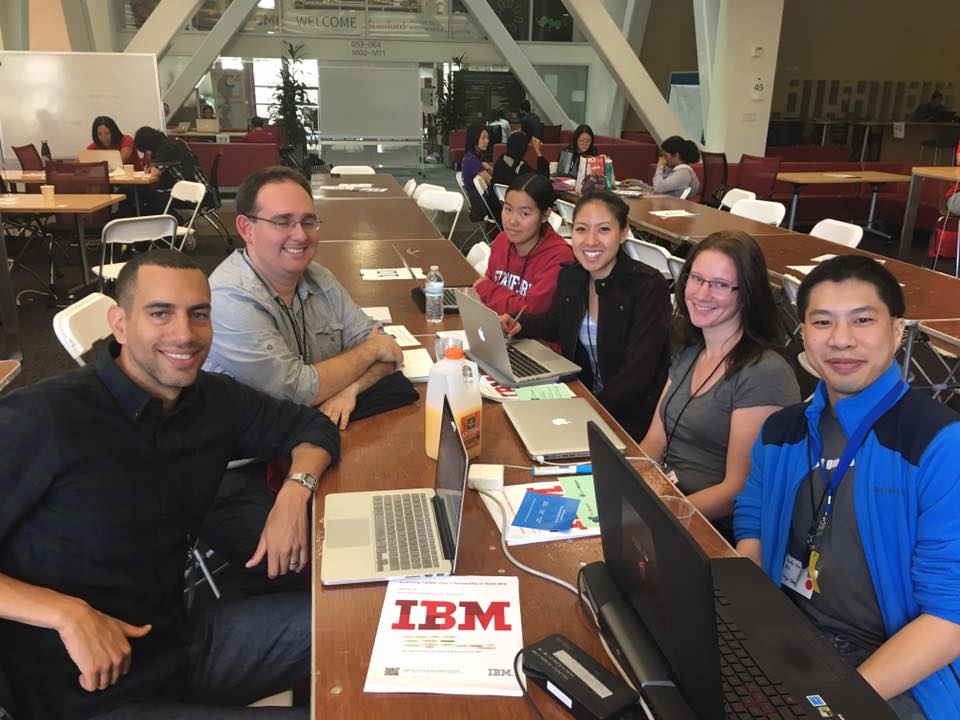
We were officially founded at the Stanford Health++ Hackathon on November 5-6, 2016! Out of over 70 initial need pitches and 50 teams, we were selected as one of the top 8 projects, and presented a final 10 minute pitch to a panel of esteemed judges.
What's next for SafeBridge
We are building a team of students, engineers, social workers, medical professionals, and other allies in this space. This is a great opportunity to get involved with a project that has a very important social mission, but is also technologically challenging and exciting.
Contact Us:
Founder - Ariane Tom [email protected]

Log in or sign up for Devpost to join the conversation.