-
-
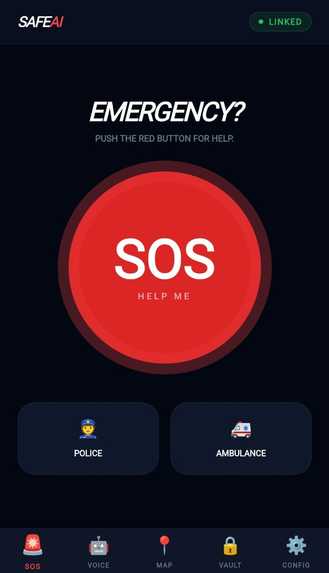
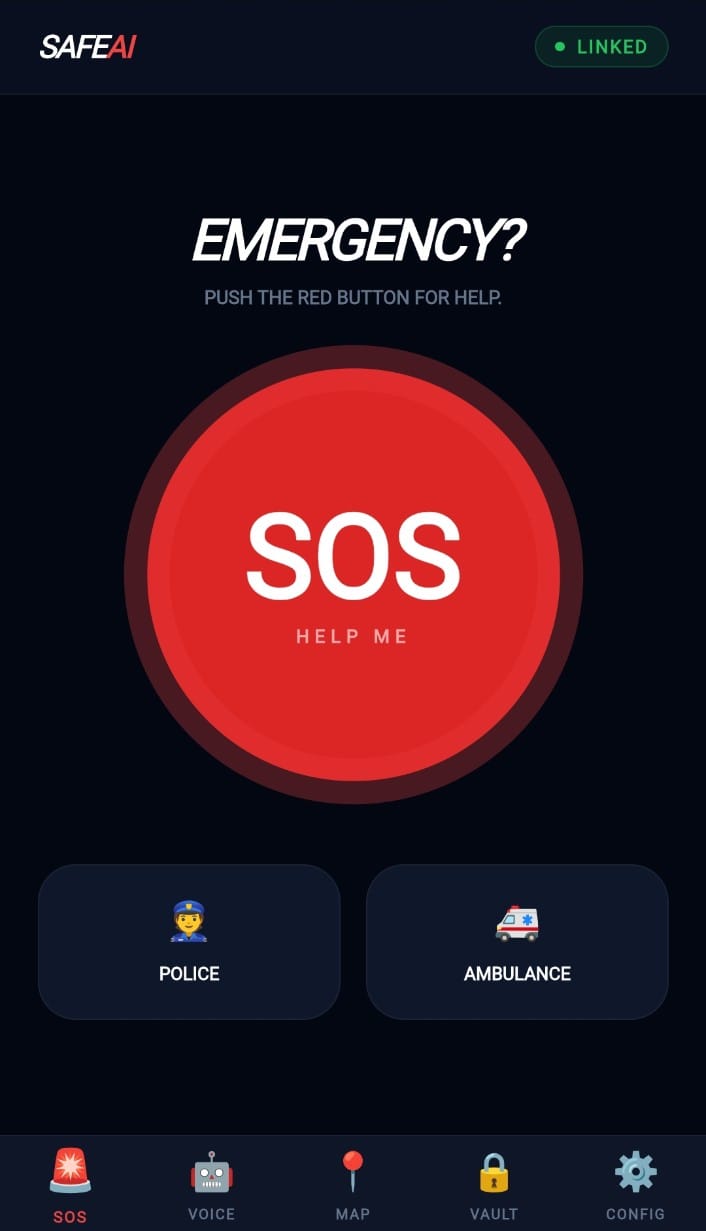
When seconds matter, SafeAI responds
-
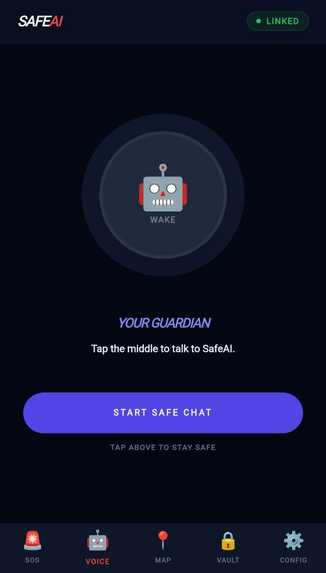
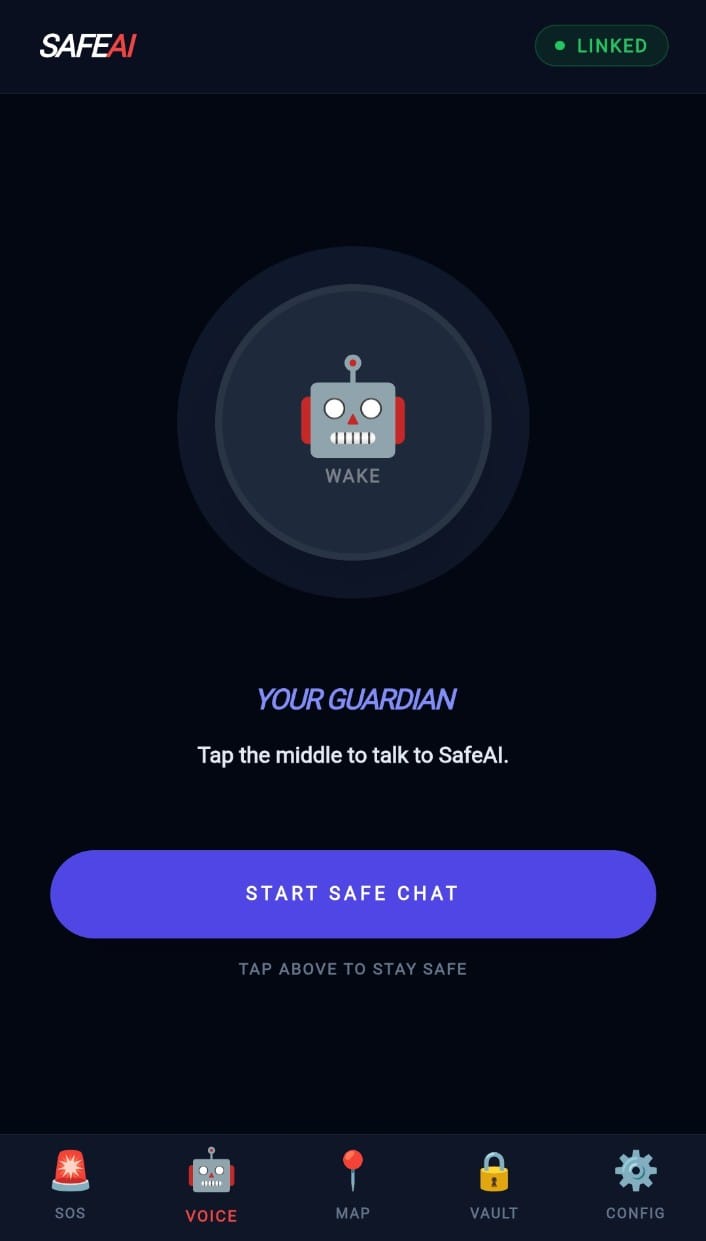
Stay Calm. SafeAI Is with You.
-
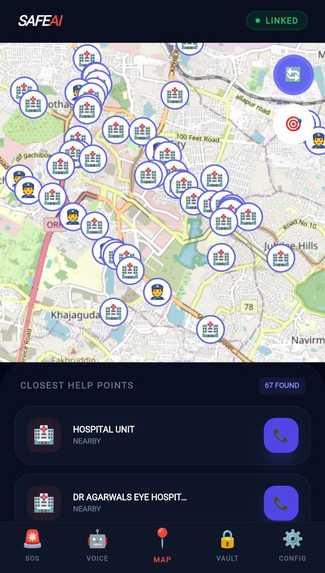
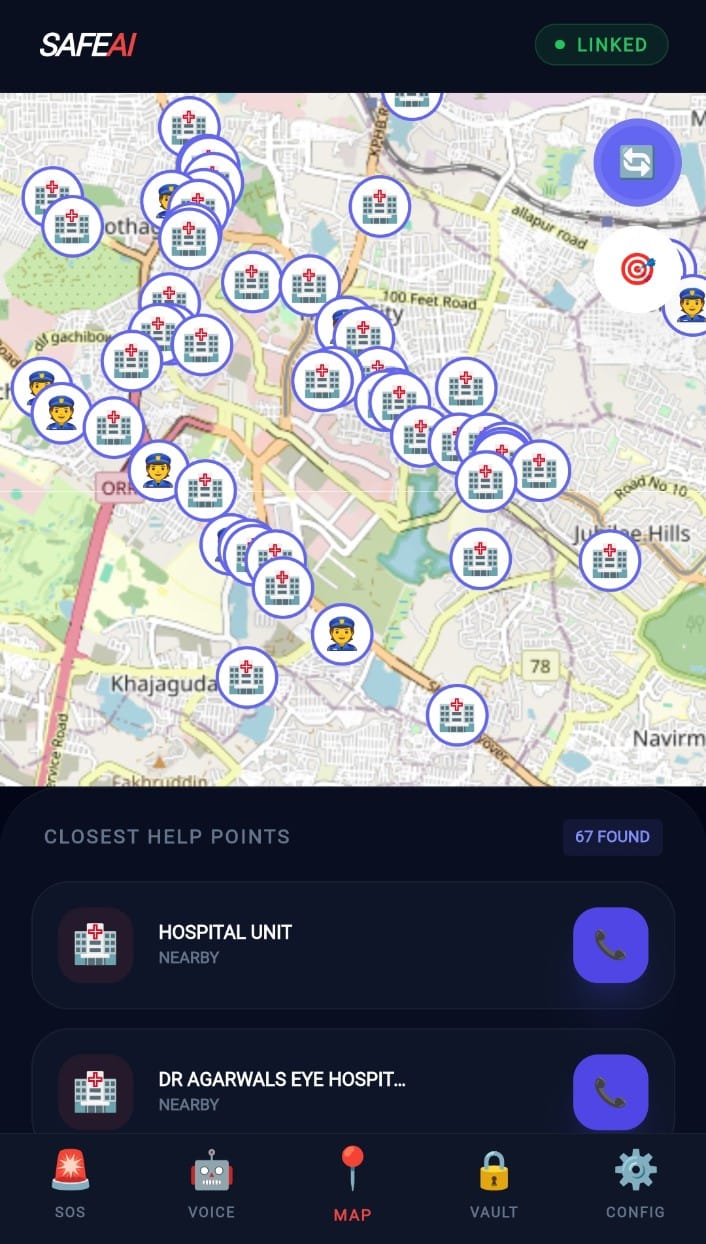
Nearest Help. One Tap Away
-
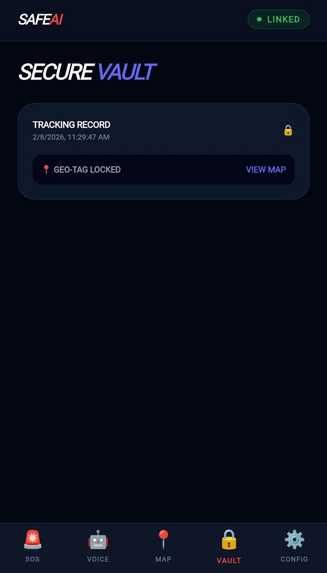
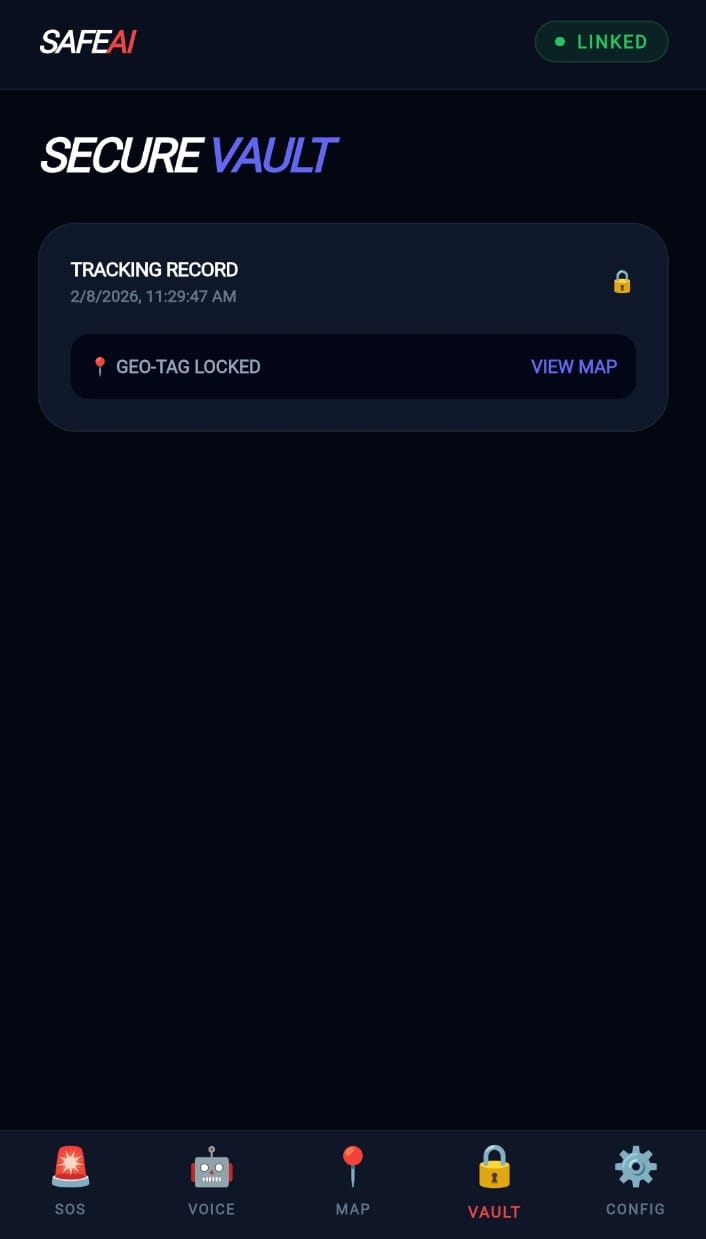
Every Moment Recorded. Every Truth Secured
-
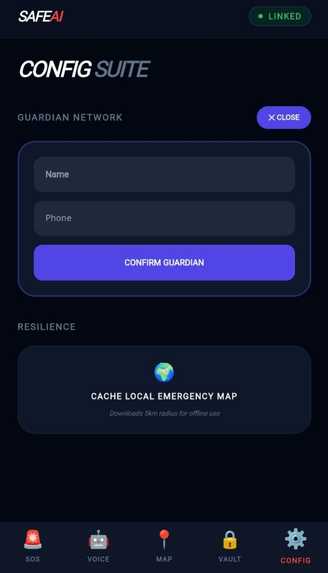
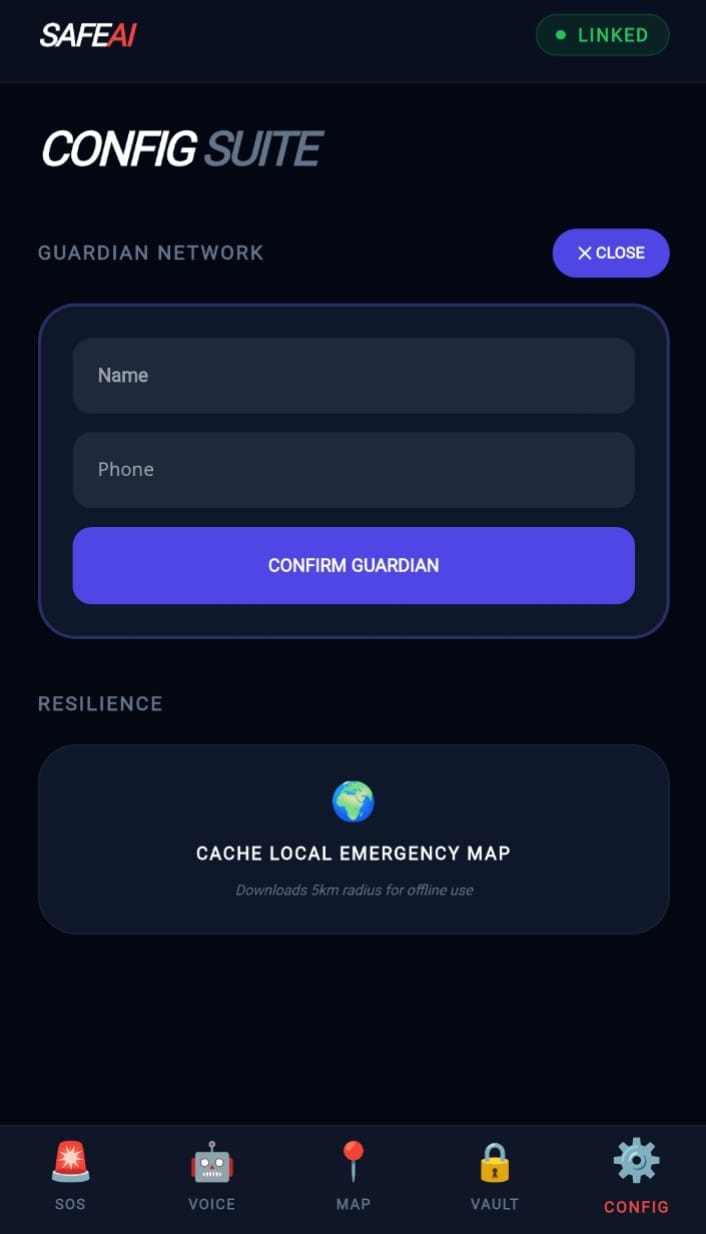
Your Network. Your Protection.
Inspiration
Emergencies don’t give warnings. A person can feel helpless in seconds — lost in a new city, facing danger at night, unable to speak the local language, or without internet access. In those moments, panic takes over, and people simply don’t know what to do next. I kept thinking, “What if everyone had someone guiding them during danger?” That question inspired me to create SafeAI — a personal safety guardian that stays with you anytime, anywhere, even offline.
What it does
SafeAI is an offline-first emergency safety and justice mobile app. With just one tap, it sends SOS alerts, shares GPS location through SMS, auto-calls emergency services, and starts recording encrypted audio and video as legal evidence. Its most powerful feature is an AI Voice Companion that talks to users in their own language, listens to their problem, gives step-by-step guidance, and can automatically trigger actions like calling police or sending alerts. Even without internet, SafeAI still works using SMS, GPS, and offline storage.
How we built it
I built SafeAI using React Native with TypeScript for the mobile app. The backend was developed using Node.js and Express.js. I integrated GPS tracking, SMS services, secure encrypted storage, cloud sync, and an AI assistant powered by Google Gemini for real-time voice interaction and multilingual support.
Challenges we ran into
The biggest challenge was making the app truly work offline. Most apps depend heavily on the internet, but emergencies often happen without connectivity. Designing SMS fallbacks, offline storage, and auto-sync systems was complex
Accomplishments that we're proud of
I’m proud that SafeAI works even without internet and still provides instant help. The AI Voice Companion feels like talking to a real person during panic situations. Building a solution that can genuinely save lives — not just a demo app — is my biggest achievement.
What we learned
Through SafeAI, I learned how to design offline-first architectures, handle device-level services like GPS and SMS, integrate AI into real-world use cases, and build technology focused on human safety. Most importantly, I learned that technology is most powerful when it solves real problems and protects people. SafeAI is not just an app I built — it’s something I created to ensure that no one ever feels alone in an emergency.
What's next for SafeAI
SafeAI is just the beginning. My next goal is to make it a fully deployable, real-world safety platform that can protect millions of people globally. I plan to enhance the AI Voice Companion with smarter, real-time decision-making so it can automatically detect threats, understand emotions, and provide faster, more accurate guidance during emergencies.
I also want to integrate wearable devices like smartwatches for instant SOS triggers, add live location sharing for families, and partner with local police stations, hospitals, and NGOs to create a connected emergency response network. Expanding support for more languages and improving accessibility for elderly and differently abled users is another key priority.
On the technical side, I aim to strengthen end-to-end encryption, implement cloud backups, and optimize offline-first performance so the app works reliably even in remote areas with poor connectivity. Finally, I plan to launch SafeAI on both Android and iOS stores, gather real user feedback, and continuously improve the system based on real-world scenarios.
My vision is simple — to make SafeAI a trusted personal safety guardian that anyone, anywhere in the world, can rely on during their most critical moments.

Log in or sign up for Devpost to join the conversation.