-
-
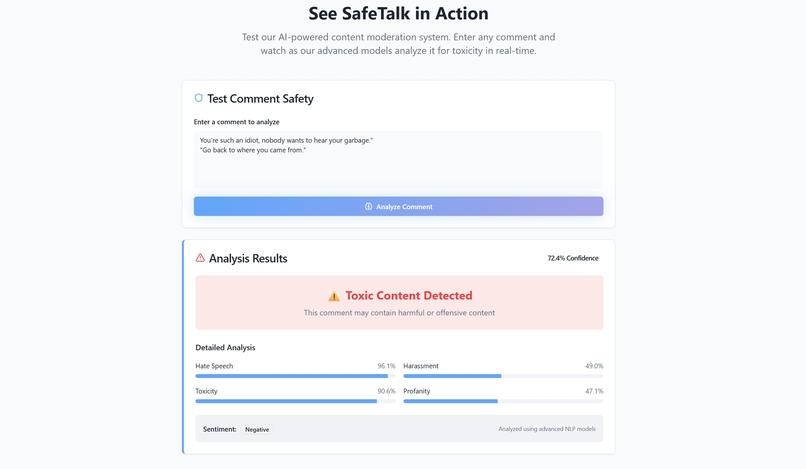
2 THAT DETECTS THE TOXIC COMMENTS
-

SLIDE3 used techs
-
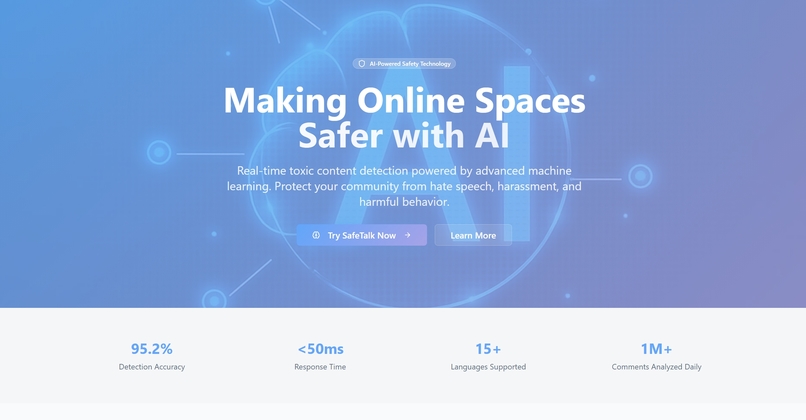
SLIDE1

Inspiration
What it does
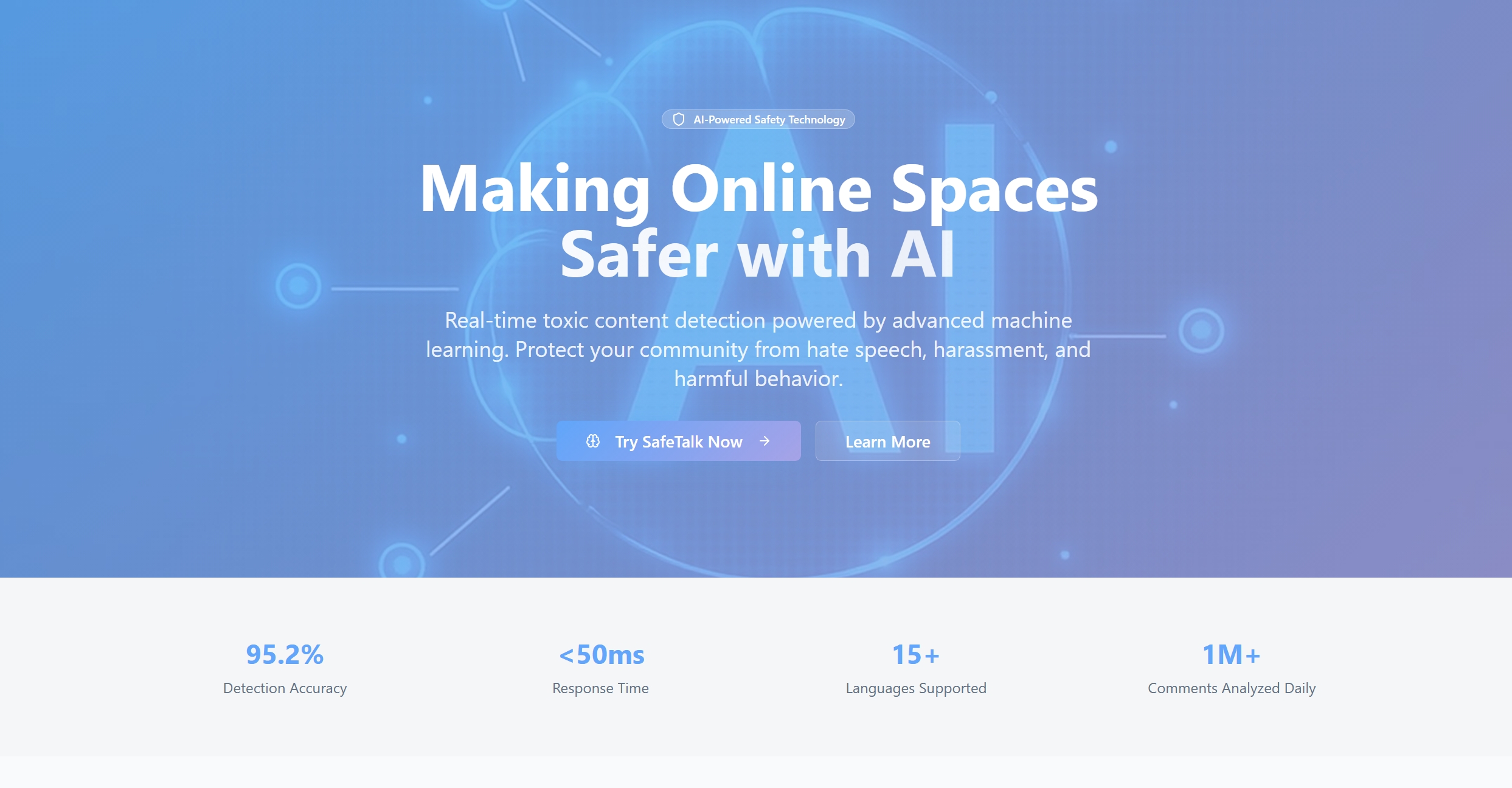
The internet has connected people across the world, but it has also opened doors to hate speech, cyberbullying, and toxic behavior. I was inspired to work on this project after noticing how online communities often struggle to moderate harmful comments effectively. Manual moderation is slow and often subjective, which means harmful messages can spread before action is taken. This motivated me to create SafeTalk, an AI-powered tool that detects and filters toxic content in real-time, helping social platforms remain safer and more inclusive.
How we built it
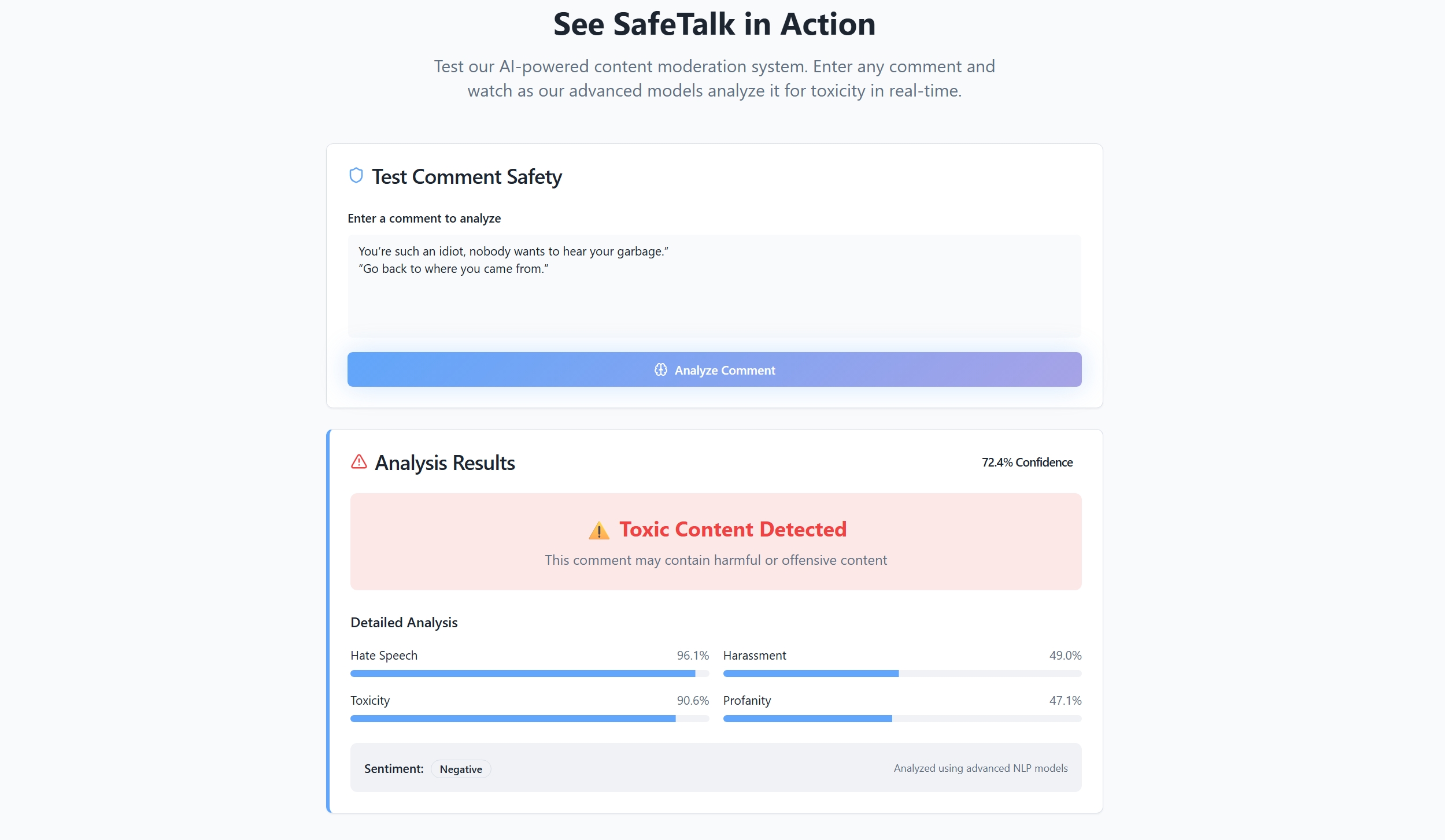
Data Collection & Preprocessing Baseline Models Deep Learning Models Implemented LSTM and GRU models to better capture context in sequences. Transformer Fine-Tuning Evaluation Deployment Created a demo UI where users can type a comment and instantly see whether it’s safe or flagged as toxic.
Challenges we ran into
Data Imbalance Sarcasm & Context Performance vs. Speed Bias in Data
Accomplishments that we're proud of
Successfully built an AI model that can detect hate speech and toxic comments with strong accuracy. Managed to fine-tune BERT and integrate it into a simple, real-time demo application where anyone can test comments instantly. Overcame challenges with imbalanced data by applying class weighting and sampling strategies, which significantly improved detection rates. Designed a system that doesn’t just work in theory but can be scaled and adapted to real-world platforms like forums, chats, or social networks. Most importantly, we’re proud that SafeTalk has the potential to make online spaces safer and more inclusive.
What we learned
How different NLP techniques (from TF-IDF to deep learning and transformers) compare in performance for text classification. The importance of choosing the right evaluation metrics (F1-score, precision, recall) instead of relying only on accuracy. Real-world AI systems need fairness and bias checks, otherwise they may unintentionally discriminate against certain groups. Learned to balance model complexity vs. deployment speed, since real-time filtering requires fast predictions. Team collaboration and iterative testing were key — starting with a simple baseline before moving to advanced models kept the project on track.
What's next for safe talk
Multilingual Support Context-Aware Detection Explainability Features Integration with Platforms Continuous Learning
Built With
- docker-apis-&-datasets:-kaggle-toxic-comment-dataset
- huggingface-models-tools:-github
- huggingface-transformers-data-processing:-pandas
- javascript-backend:-fastapi-/-flask-frontend:-react.js-/-streamlit-machine-learning-&-nlp:-scikit-learn
- languages:-python
- nltk
- postman
- safetalk.csv
- spacy-databases:-postgresql-/-mongodb-cloud-&-deployment:-aws-/-google-cloud
- tensorflow-/-pytorch

Log in or sign up for Devpost to join the conversation.