-
-
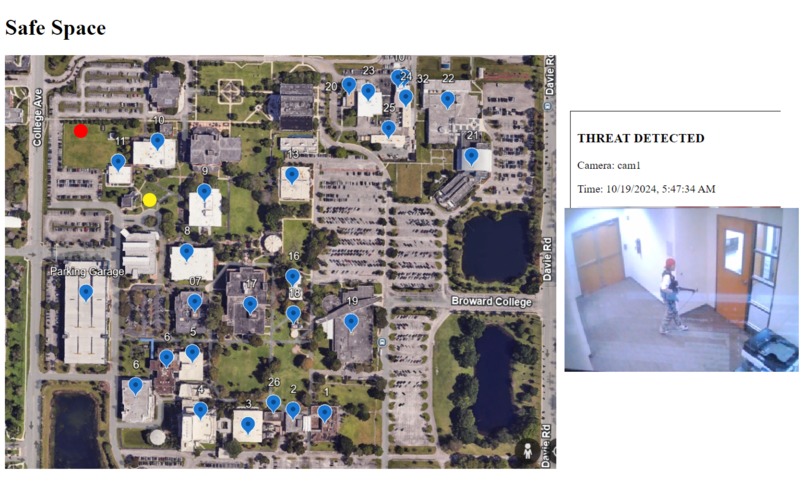
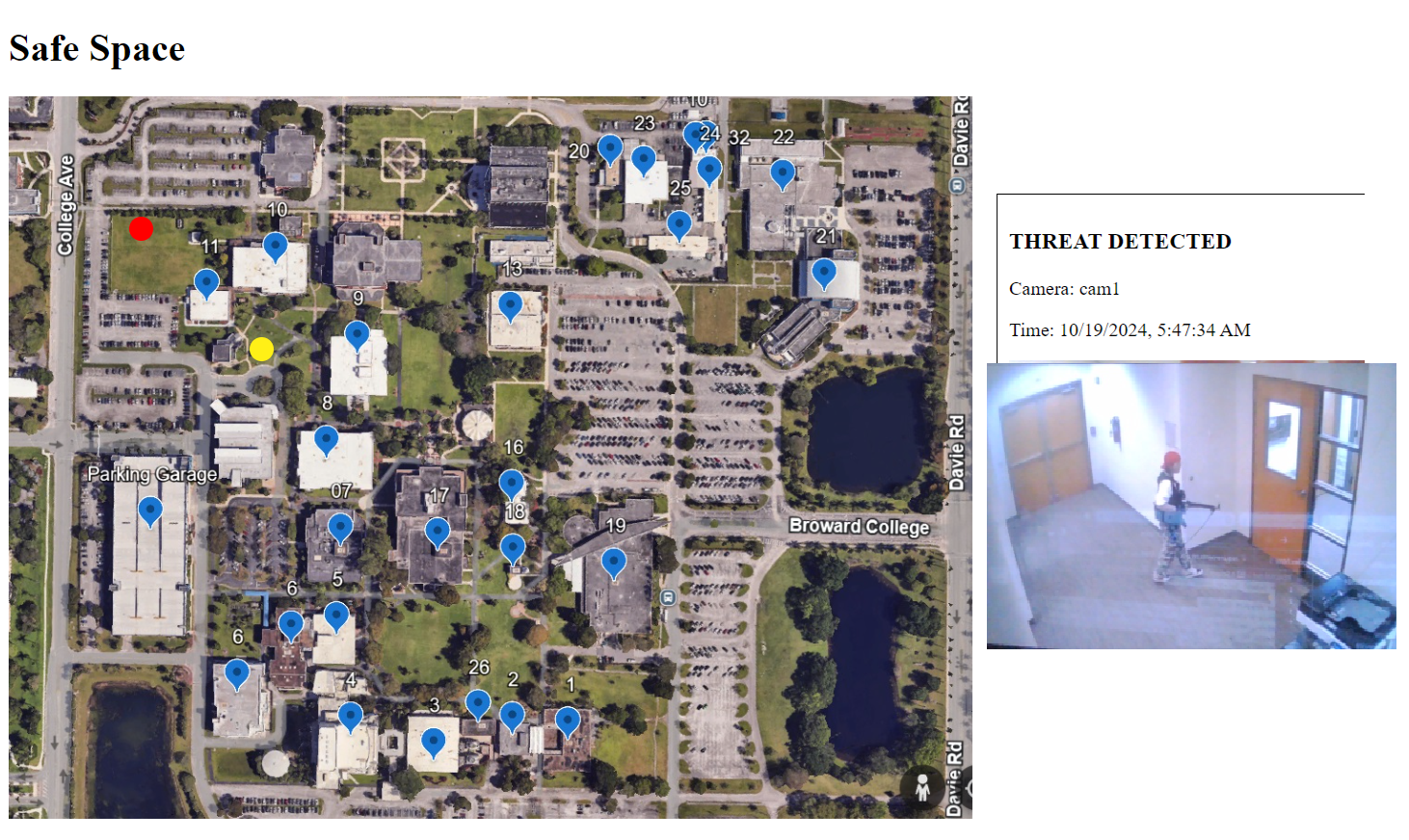
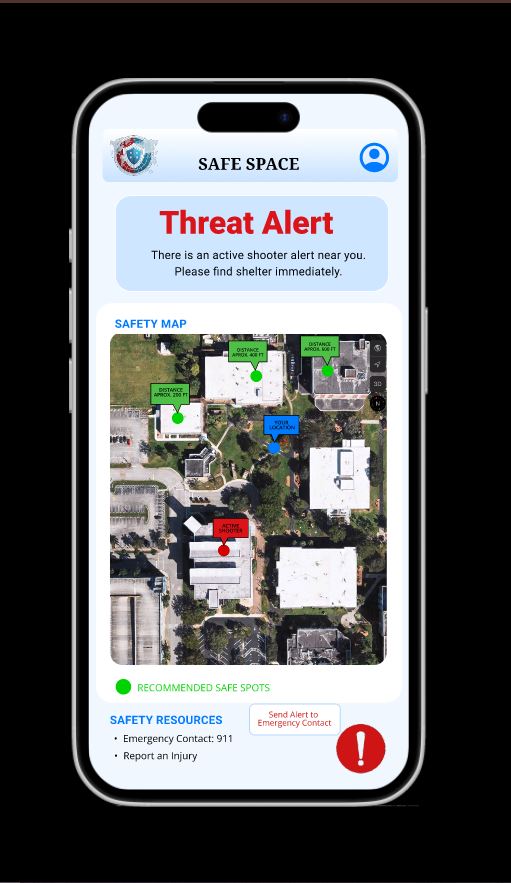
Stationary cameras detect threats and creates alerts with a snapshot of the trigger.
-
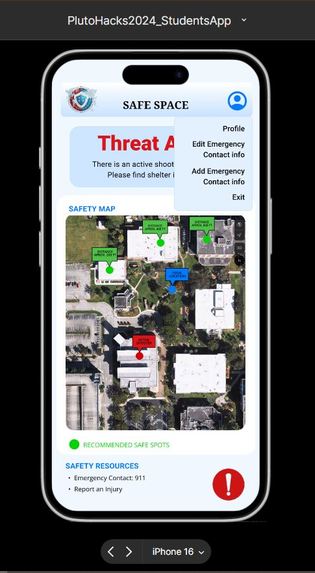
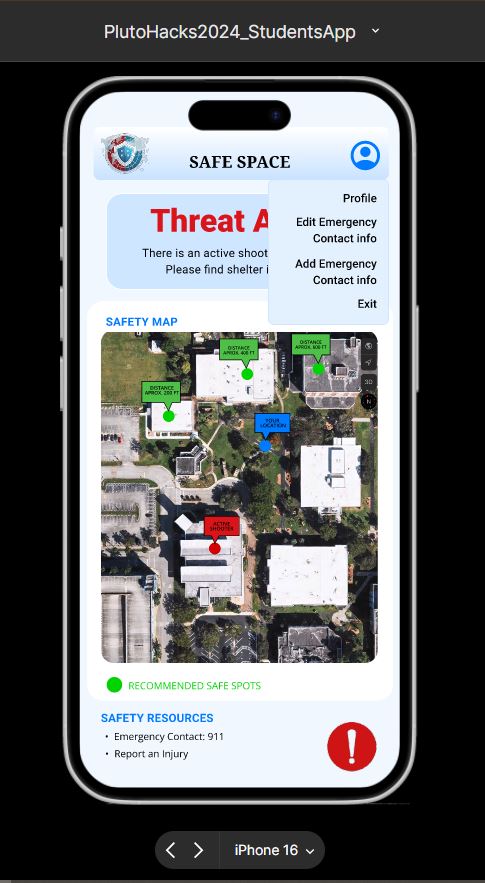
Emergency contact information is stored on the app.
-
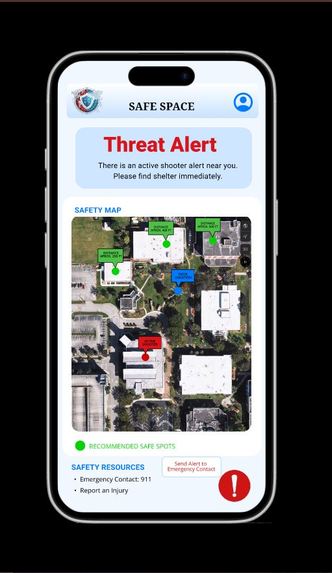
Authorities can identify safe/secure locations.
-
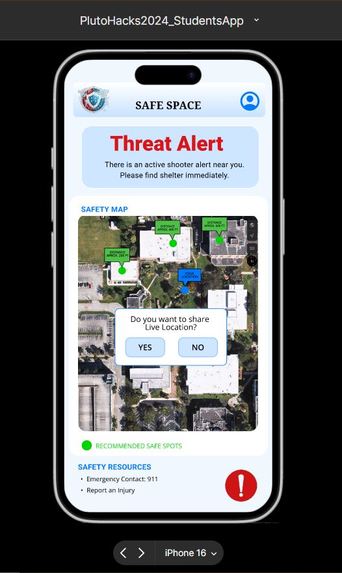
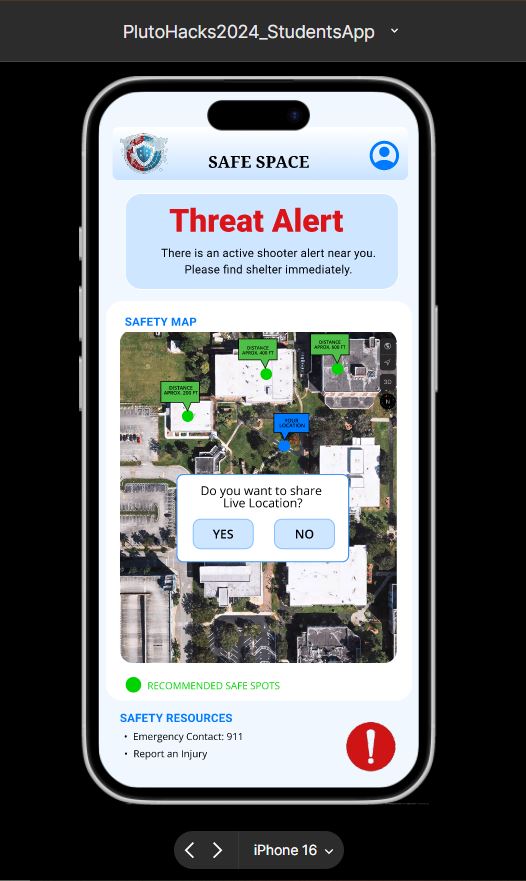
Live location sharing with authorities for immediate assistance.
-
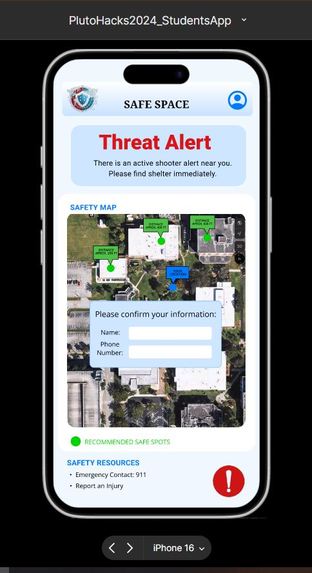
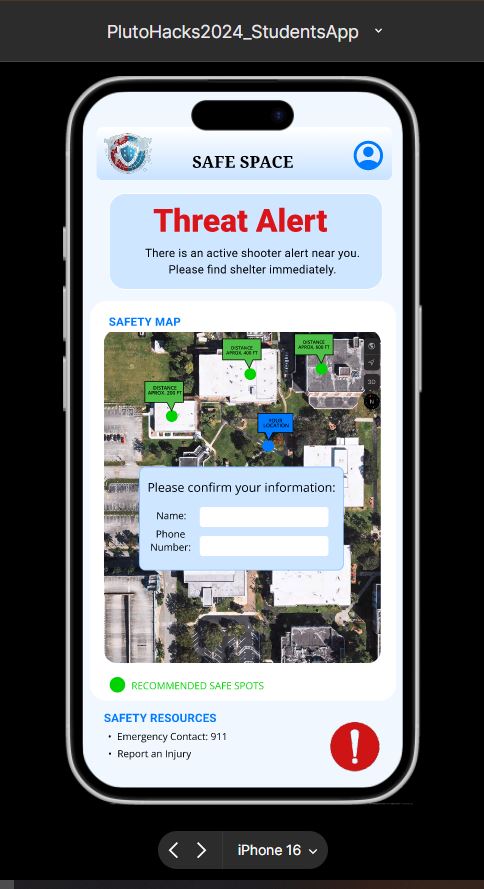
Authentication via SMS and callback by authorities.
-
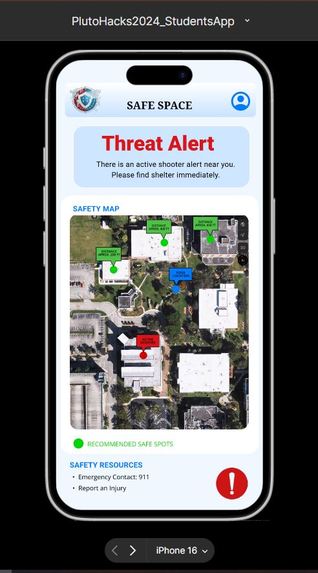
Threat alert monitoring.
Inspiration
The increasing concerns about school safety and the need for rapid, reliable communication during emergencies inspired us to create Safe Space. Our goal was to build a system that empowers students, staff, and authorities to act proactively and make informed decisions in critical moments.
What it Does
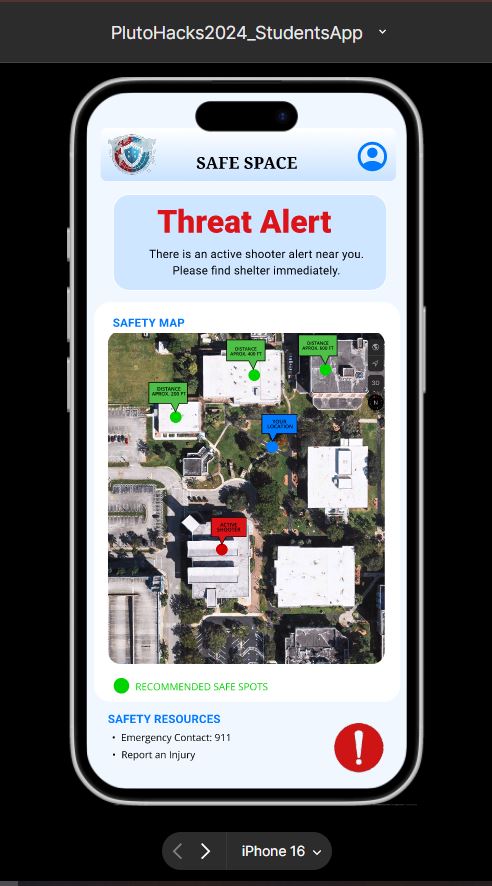
Safe Space is a real-time school safety alert system that detects threats via camera feeds and instantly notifies the relevant authorities. Additionally, it provides students and staff with a live, interactive map that shows the precise location of threats, safe zones, and evacuation routes, accessible through a link sent directly to their phones. A planned feature is allowing students to report suspicious activity with a photo, which would undergo AI verification to minimize false flags.
How We Built It
We used Flask and WebSockets to manage real-time communication between the server and users. The system processes camera feeds through a custom threat detection algorithm and displays alerts on an interactive map interface. Although SMS functionality and a security personnel web portal are still in development, these elements are key aspects we plan to fully integrate in the future.
Challenges We Faced
One of our greatest challenges was ensuring the real-time processing of camera feeds with minimal delay, while also implementing a highly accurate threat detection algorithm. We also worked diligently on designing an intuitive map interface that provides clear, actionable information during emergencies. Additionally, we faced difficulty getting the API keys and authentication running. Instead of abiding by best practices of using local environmental variables stored privately, we used a temporary expiring API key for demonstration purposes. Moving forward, using a more secure authentication approach will be essential for scalability and safety.
Accomplishments We're Proud Of
We’re proud of developing a seamless system capable of detecting threats in real time and instantly communicating essential safety information. Our intuitive map interface ensures that students, staff, and authorities receive accurate, timely information, empowering them to respond effectively during emergencies.
What We Learned
Throughout the project, we learned to integrate multiple technologies—from Flask for backend processing to real-time map updates—while maintaining system performance and accuracy. We also gained valuable experience in real-time communication protocols and developing threat detection algorithms.
What's Next for Safe Space
We aim to enhance the threat detection algorithm with machine learning to further improve accuracy and reliability. Switching to YOLO AI for edge computing would optimize real-time threat processing, enabling rapid object detection and reaction. We also plan to integrate large language models (LLMs) for secondary review, which will further reduce false positives and enhance system accuracy.
Another crucial feature we're working on is giving students and staff the ability to verify their identities, mark themselves safe, and share their locations with authorities. Autonomous, proactive decision-making by students and faculty—before law enforcement arrives—could be critical in saving lives. Delays between the onset of an emergency and law enforcement arriving on the scene can be up to 30 minutes, and the actions taken by students and staff during this time are vital. Empowering individuals to make informed decisions and take proactive steps, such as moving to safe areas or marking themselves safe, can significantly improve outcomes during these critical moments.
In the future, using an edge model to identify harmful actions, dangerous objects, and threatening language to prompt a threat alert to security would significantly enhance the system's response capabilities. Expanding communication channels, integrating push notifications, and enabling automated lockdowns are also part of our vision to make Safe Space a robust safety solution.
Built With
- css
- figma
- flask
- html
- javascript
- openai
- python
- websockets


Log in or sign up for Devpost to join the conversation.