-
-
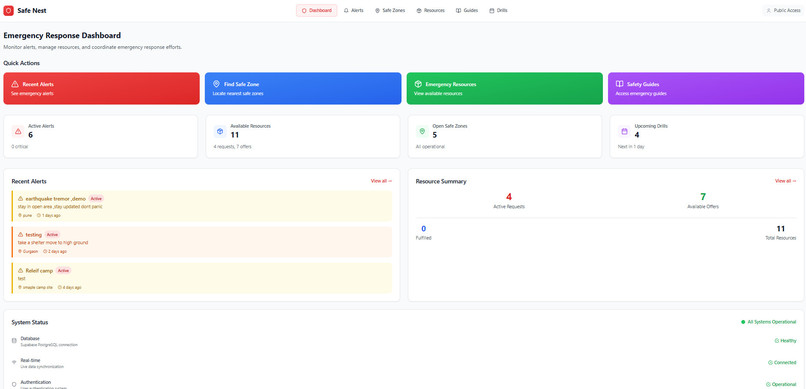
Dashboard
-
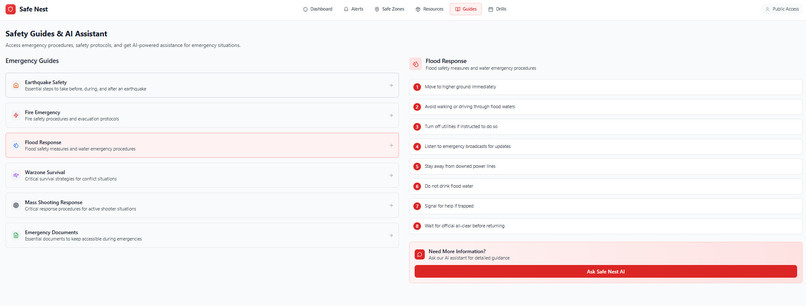
safe nest AI assistance
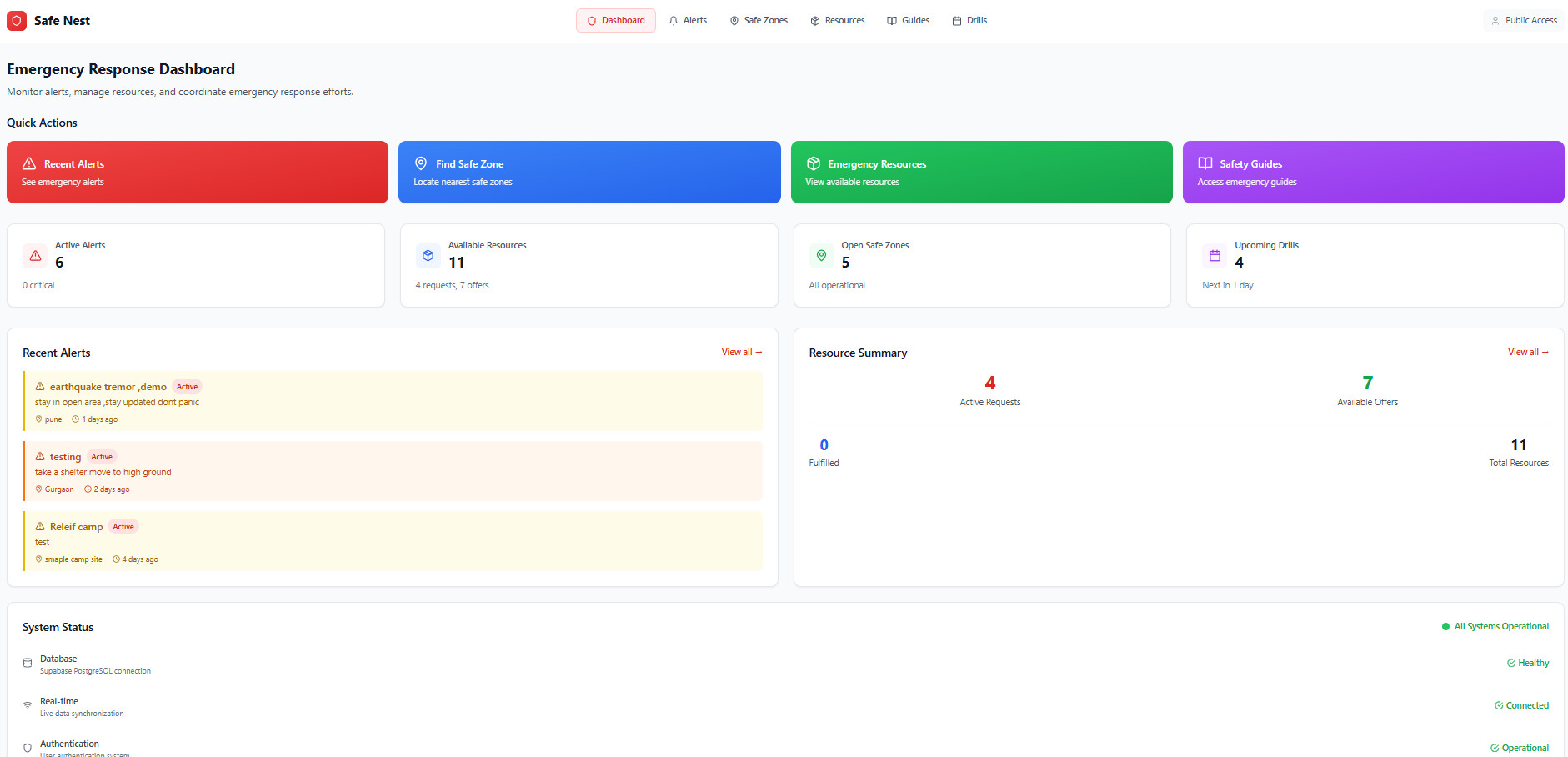
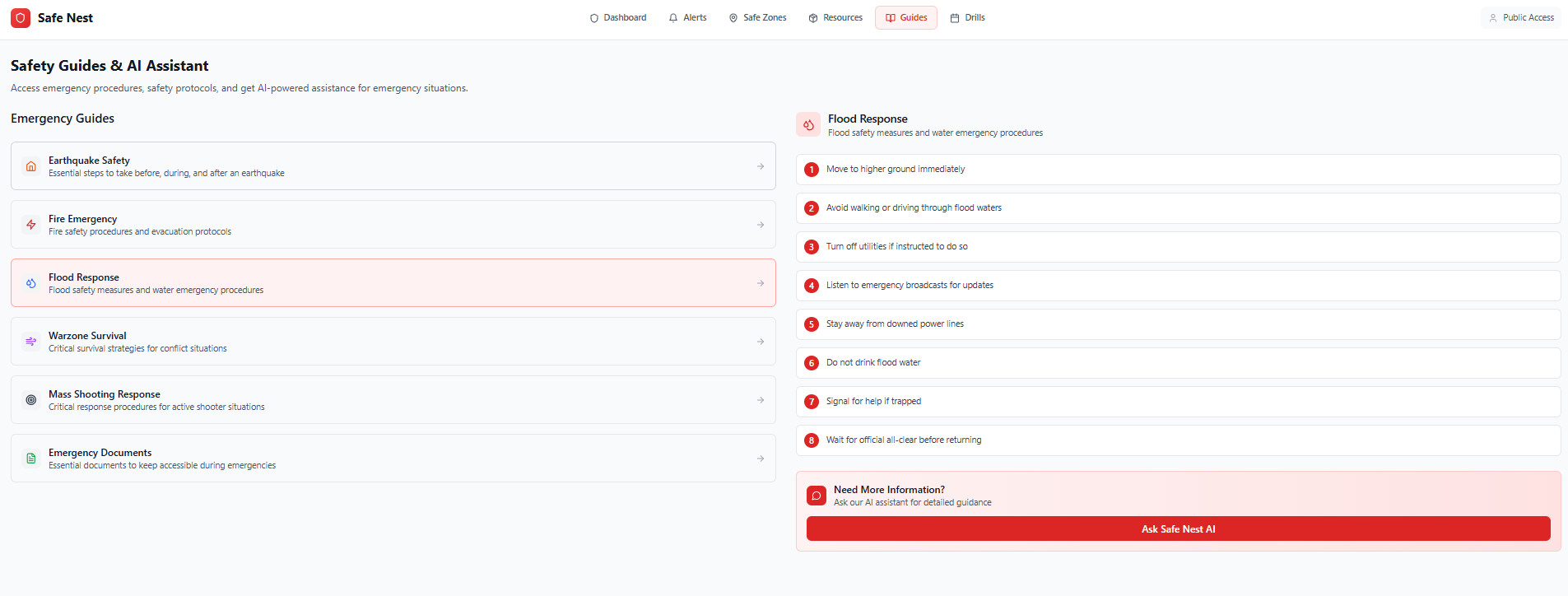
Project Story: Safe Nest – AI-Powered Emergency Response Platform
About the Project
In today’s world, chaos erupts suddenly — natural disasters, mass shootings, or even conflict zones — and in these critical moments, people often don’t know what to do or where to go. This reality inspired me to create a platform that could act fast, provide guidance, and support communities when they need it most.
That’s how Safe Nest was born — a web-based emergency response app with less UI, more intelligence, and the potential to be replicated at scale by governments or organizations.
What Inspired Me
I kept thinking:
“What if, in a moment of crisis, someone had a smart assistant that knew what to do, where to go, and how to help others?”
Seeing the increasing number of emergencies around the world and the lack of accessible, real-time tools for the average person, I knew there had to be a better way. I wanted to build something that could guide, protect, and empower people during emergencies — powered by technology, not just alerts.
How I Built It
I developed Safe Nest completely solo using a modern, scalable tech stack:
Frontend: React + TypeScript + Tailwind CSS
Backend: Supabase (Auth, Realtime DB, Edge Functions)
Mapping: Leaflet.js with OpenMap API
AI Integration: Claude AI for safety guidance and scenario-specific instructions
Realtime Features: Bolt.Supabase and Supabase’s real-time listener helped me simulate emergency broadcasts and coordinate responses
Bolt and other AI tools helped me go from idea to more than just a prototype — I was able to build a fully working web platform with meaningful features.
What I Learned
How to use AI as a coding and logic assistant, not just for content or chat
Deepened my skills in Supabase, real-time systems, and scalable database design
Hands-on experience integrating AI into real-world use cases (safety guides, scenario simulations)
The importance of UX during crisis — users need clarity, speed, and simplicity
Challenges Faced
Designing an app for critical, high-stress scenarios — every second counts, so UI/UX had to be ultra-clear and efficient
Making the map and location-based features accurate with limited geospatial tools
Balancing real-time data streaming with performance
Building and testing emergency features without real crisis data (manually simulating scenarios)
Safe Nest is still evolving, but it already stands as a working, scalable solution that can save lives.
Note: For best visibility, use the desktop version — Safe Nest is currently web-only.
Built With
- claude
- leaflet.js
- react
- supabase
- typescript


Log in or sign up for Devpost to join the conversation.