-
-
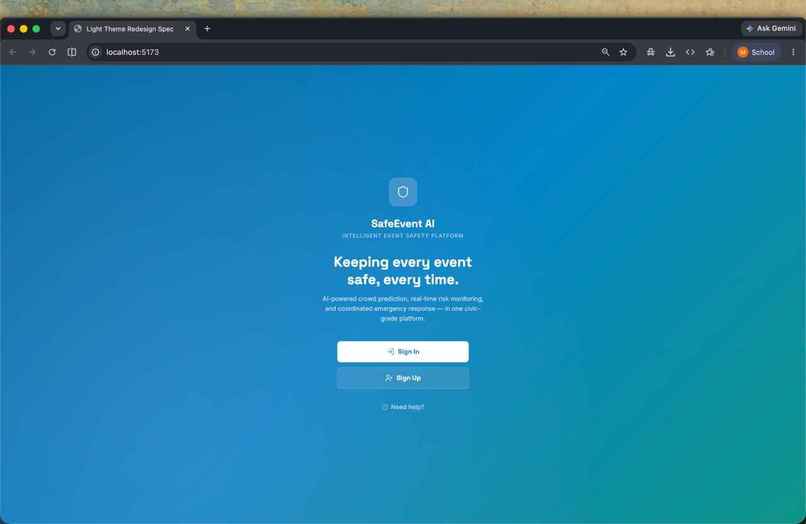
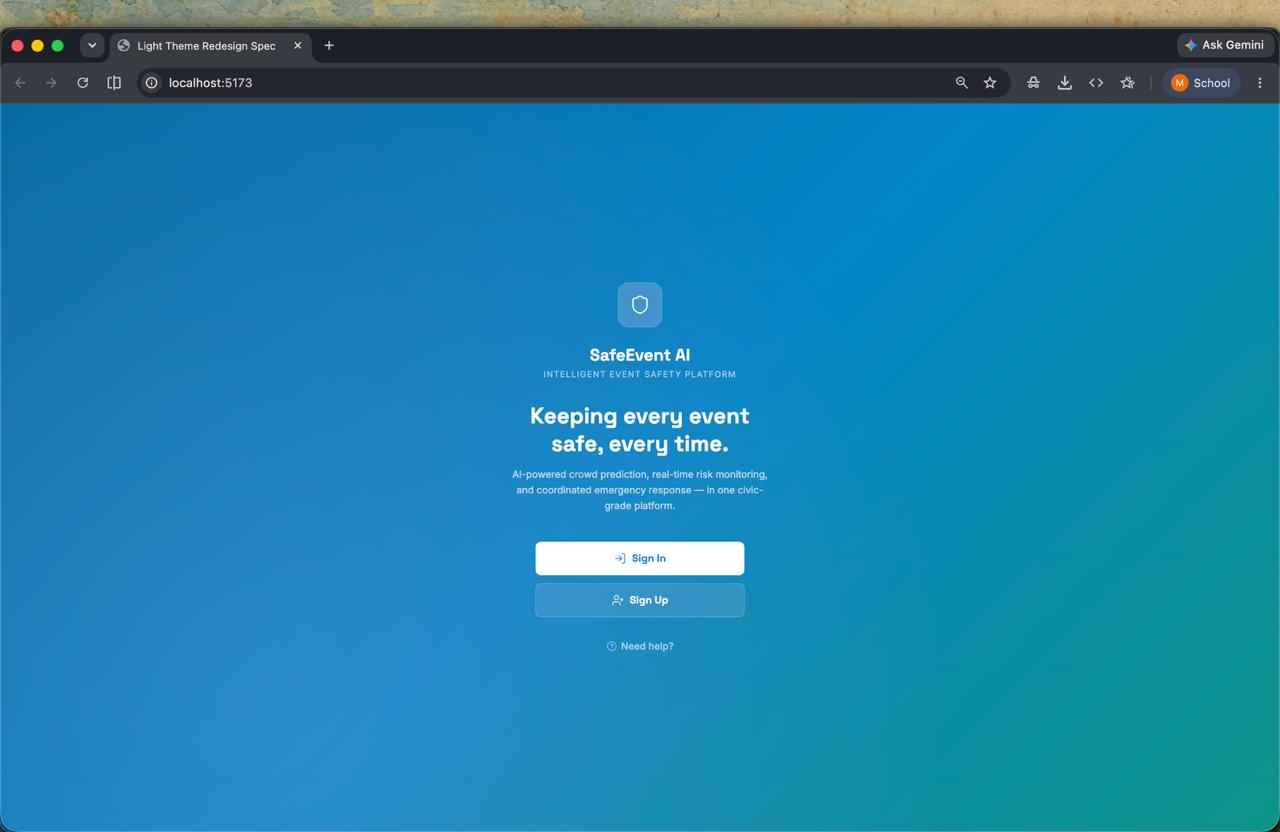
Landing Page(This is the first page of Safe Event AI,contains simple login/sign up)
-
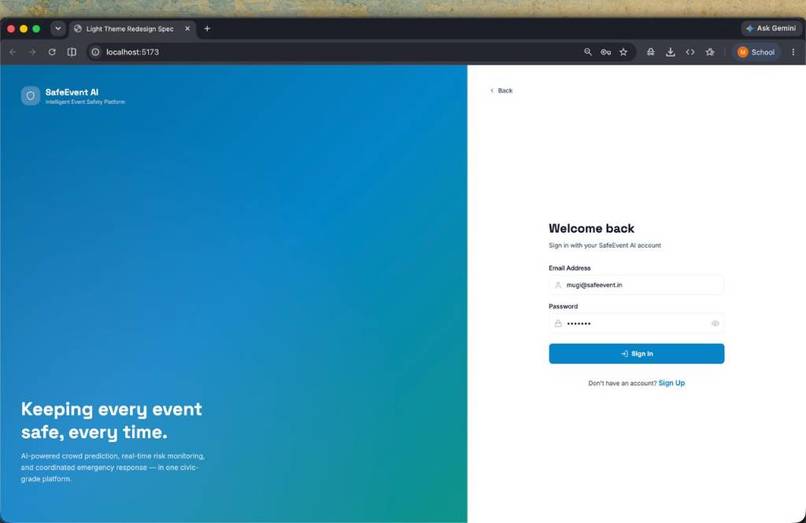
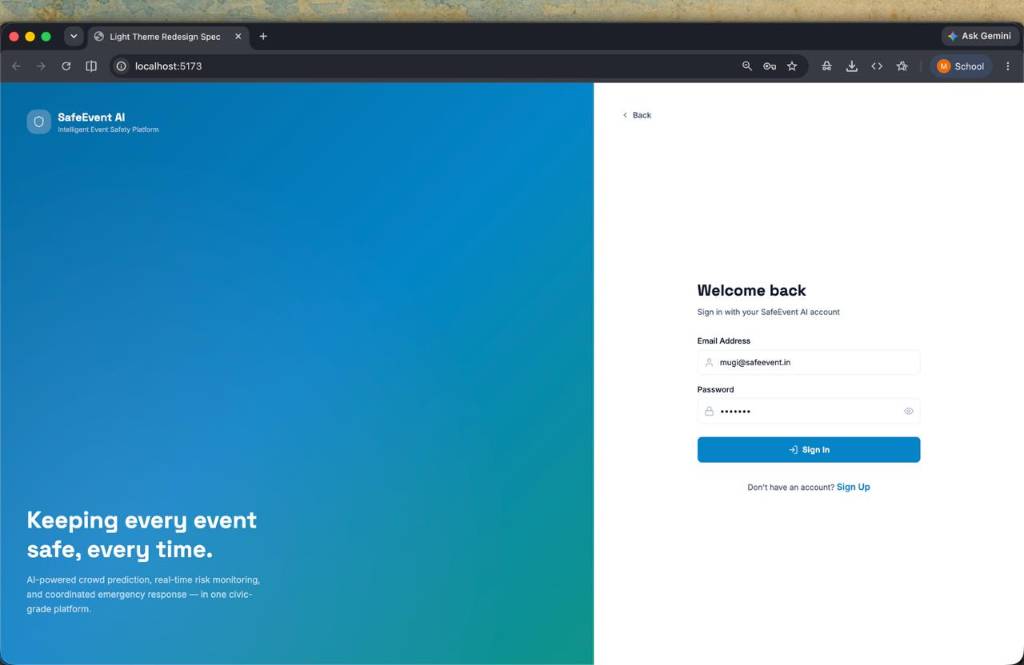
Login/Authentication(new user sign up page)
-
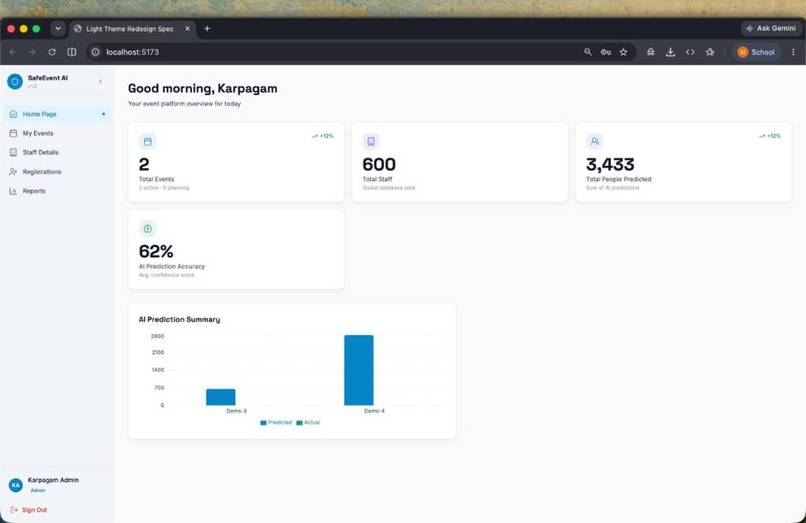
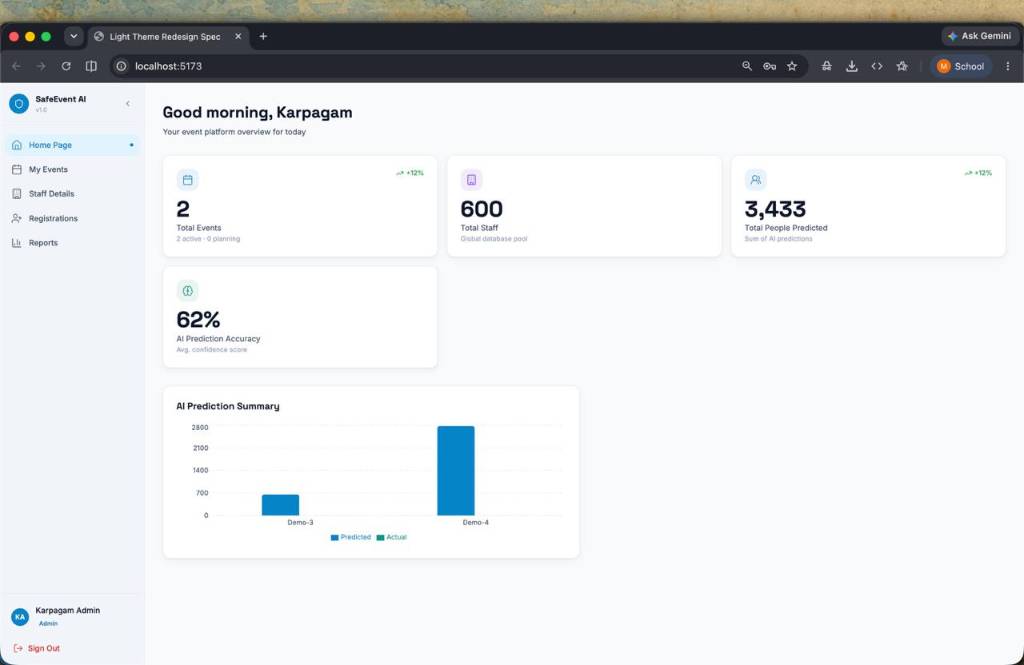
Admin Dashboard(Shows total events,total staffs,total people predicted and how accurate AI has predicted)
-
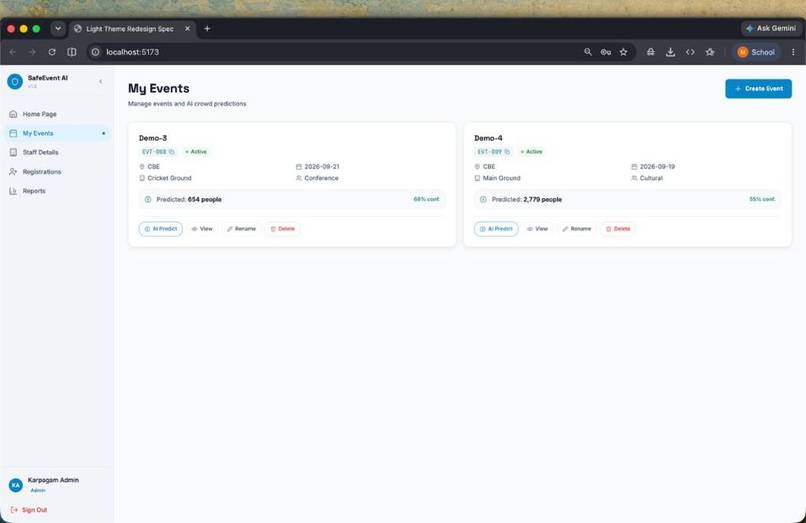
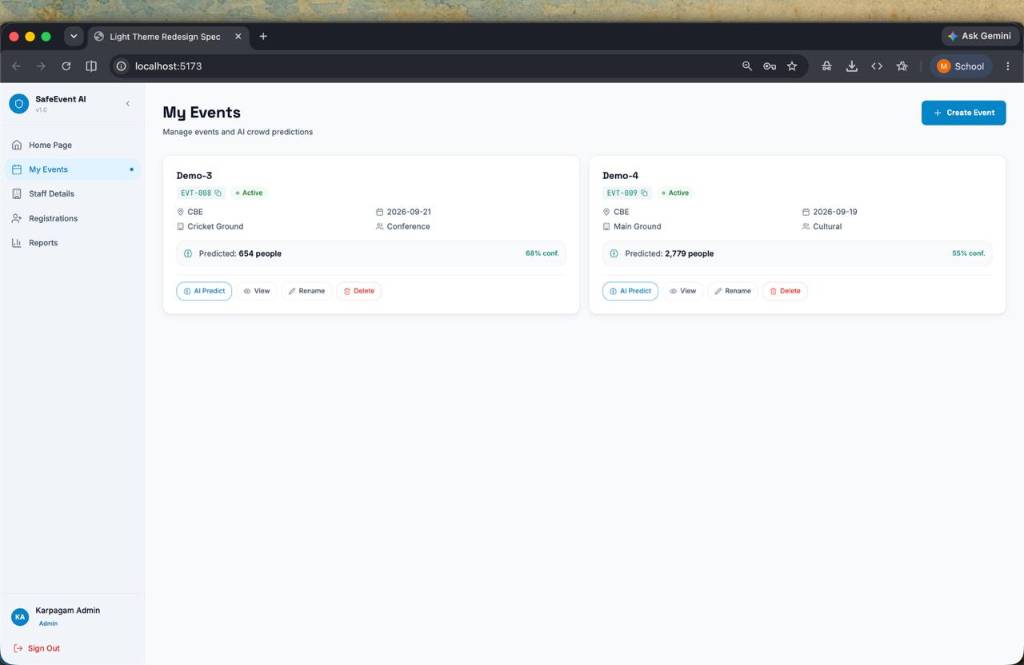
Admin Page(My events and AI prediction)
-
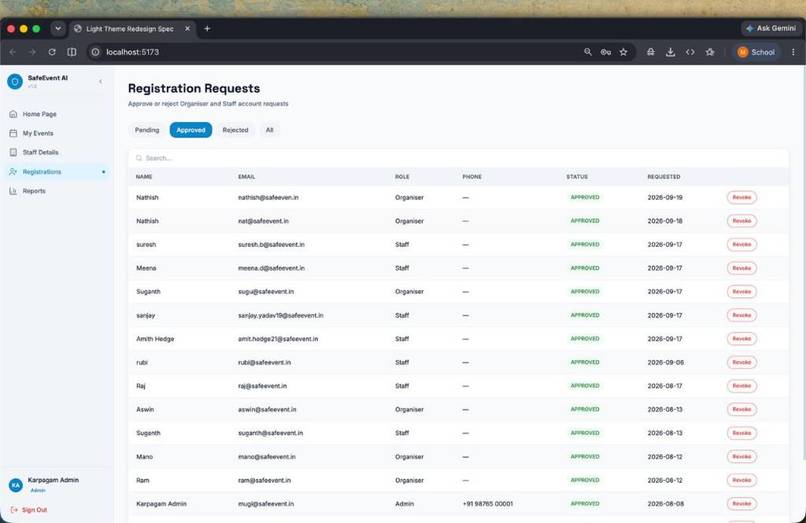
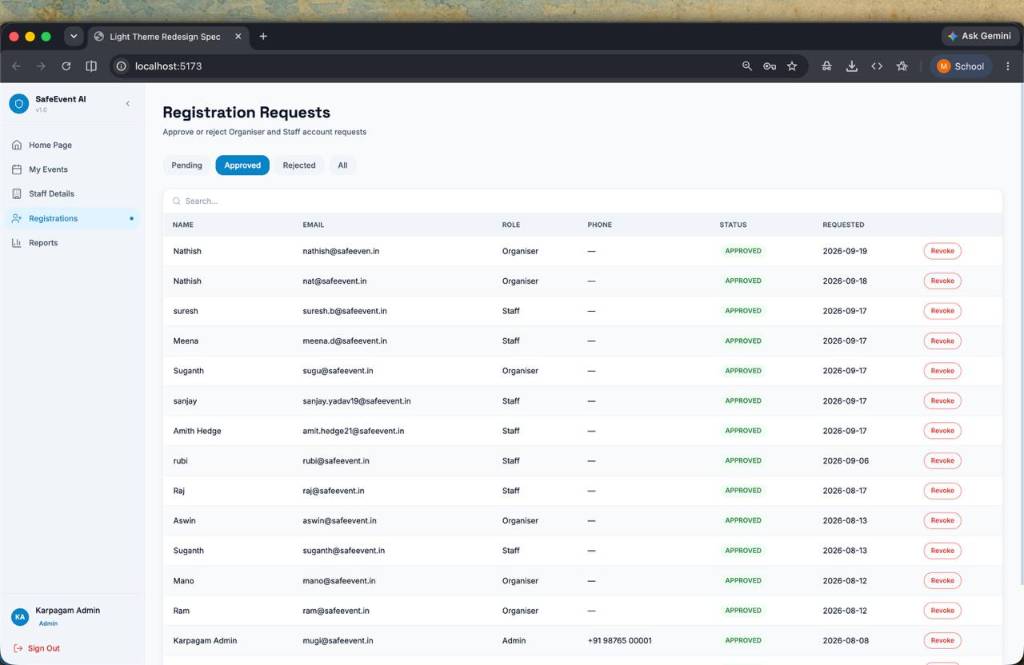
Admin Page(Approval of requests when new user gots sign up)
-
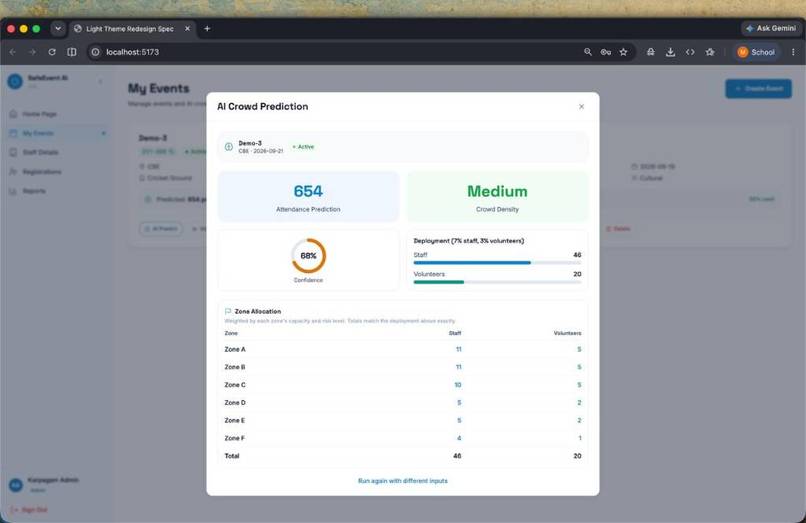
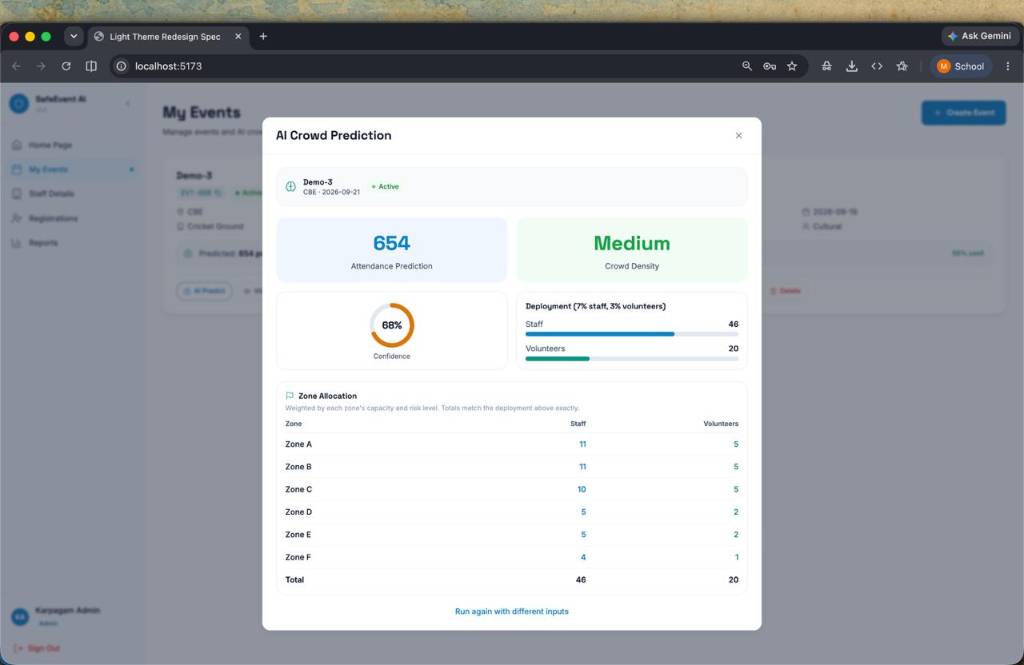
AI Prediction(This is the main part of Safe Event AI,this predicts expected crowd ,how risky each zone is and zone risk status)
-
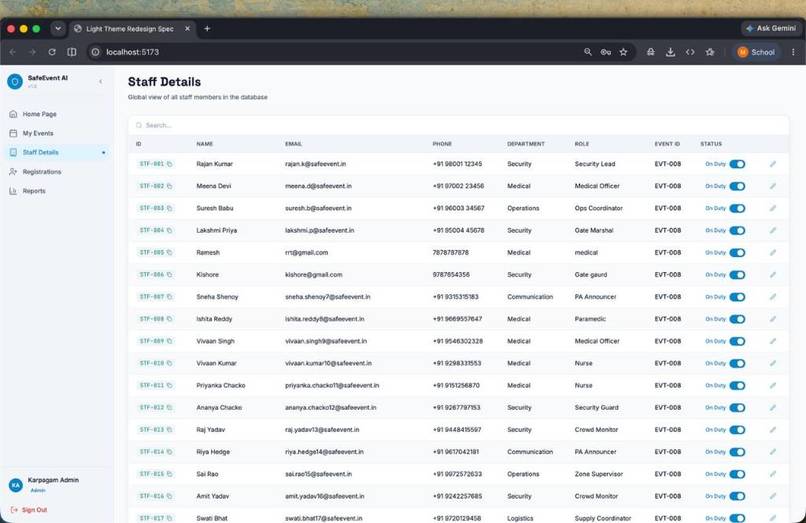
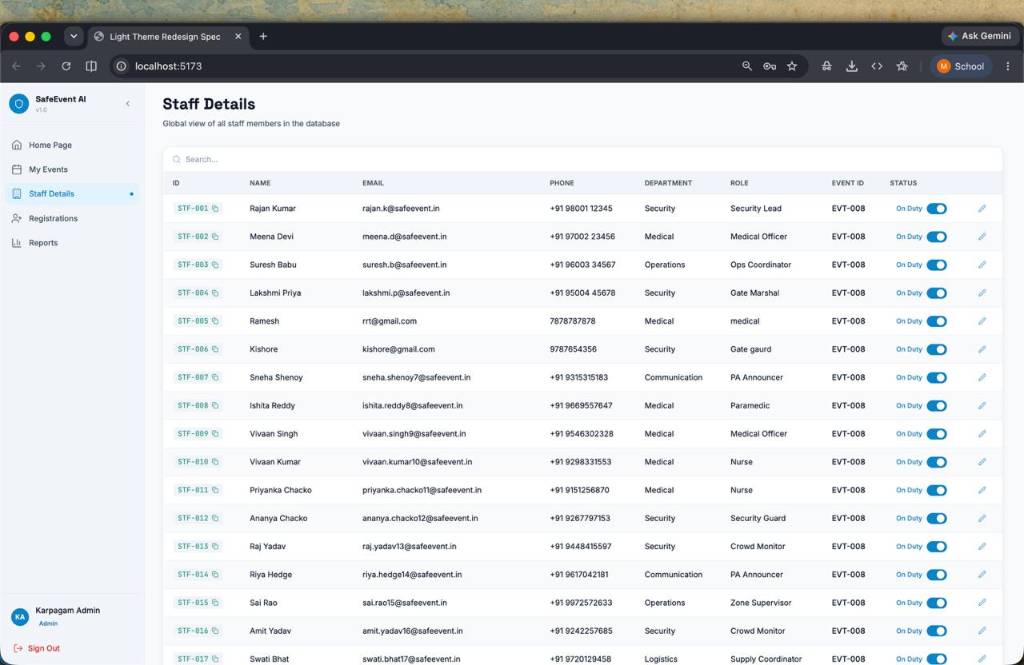
Admin Page(Staff Details)
-
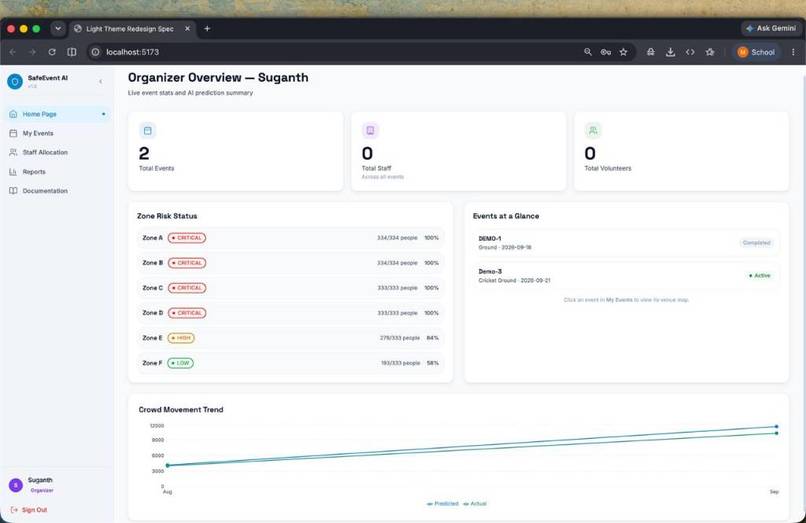
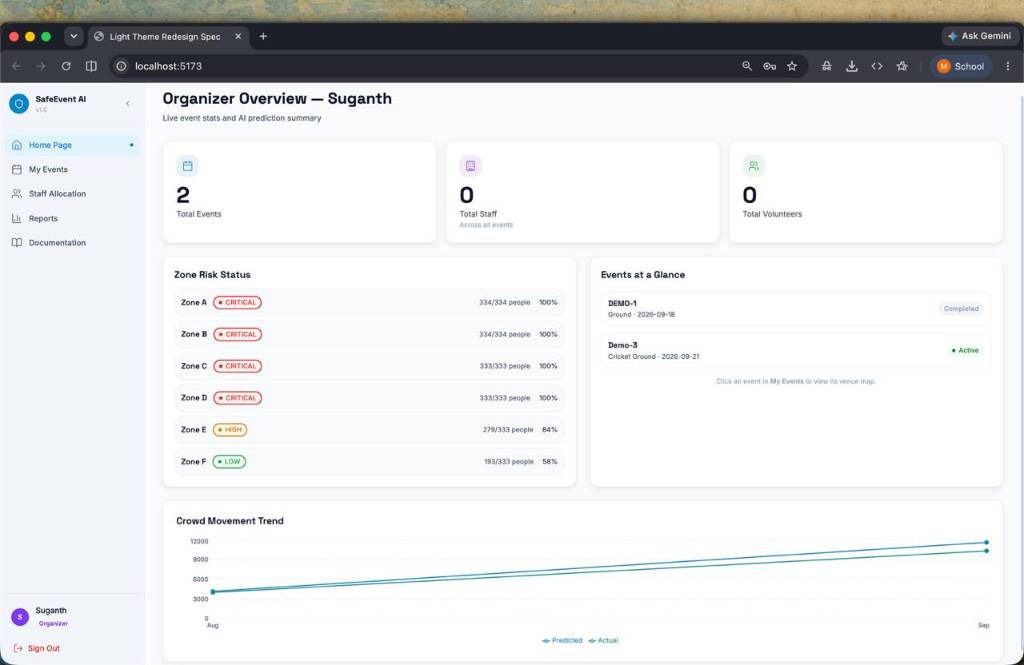
Organizer Dashboard(This is what a organizer sees on their page,their events,zone risk status and number of events they attended)
-
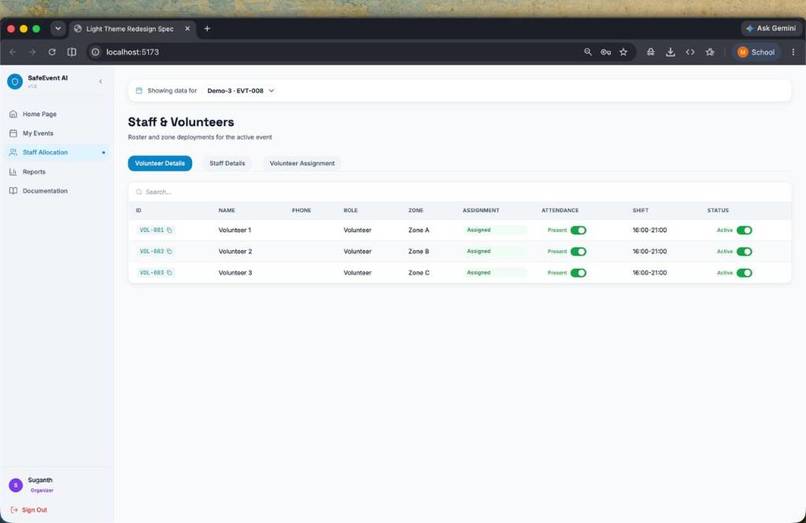
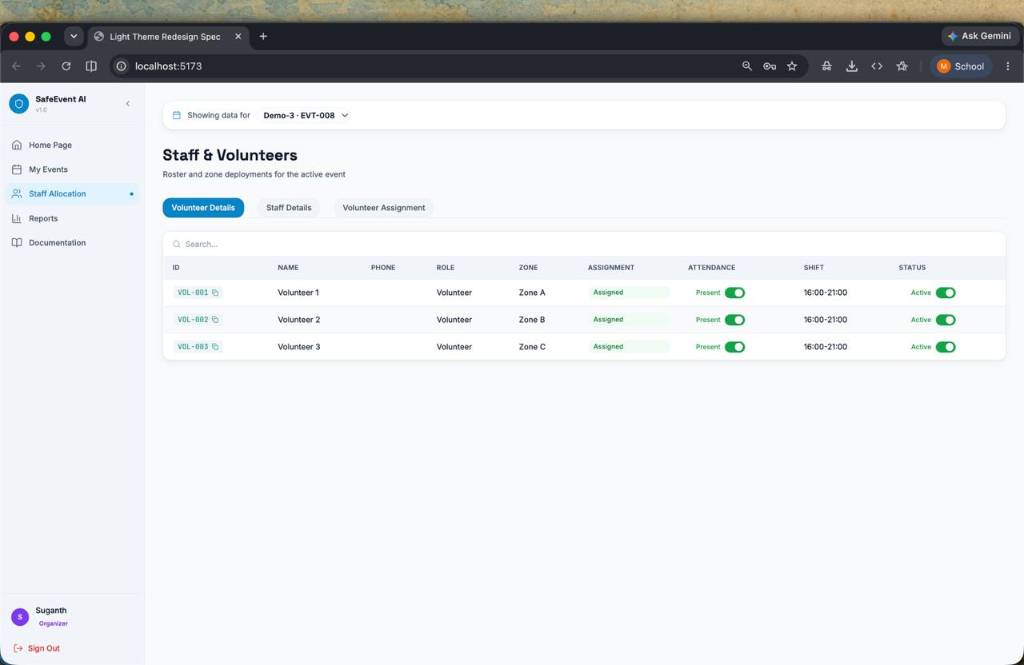
Organizer Page(This contains staff allocation and volunteer allocation details)
-
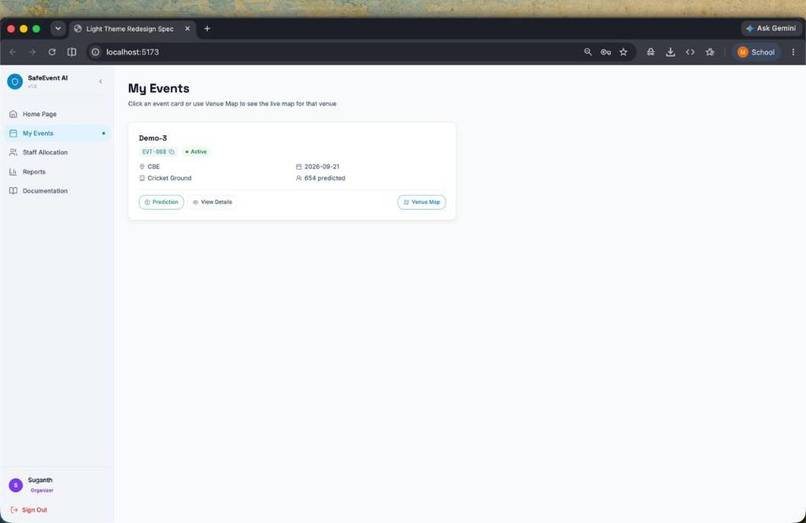
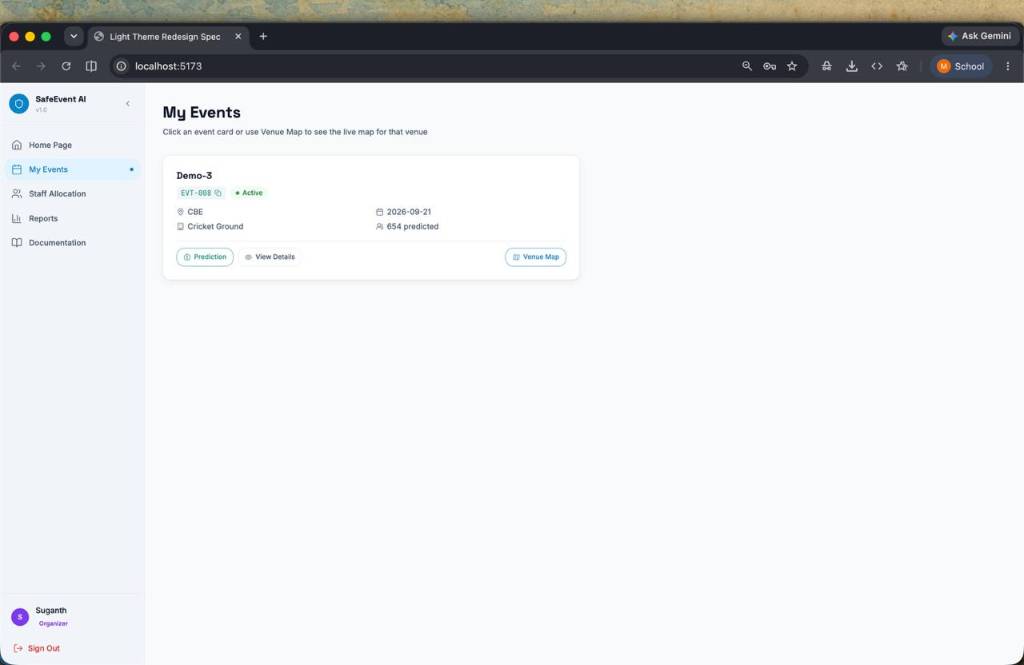
Organizer Page(My Events)
-
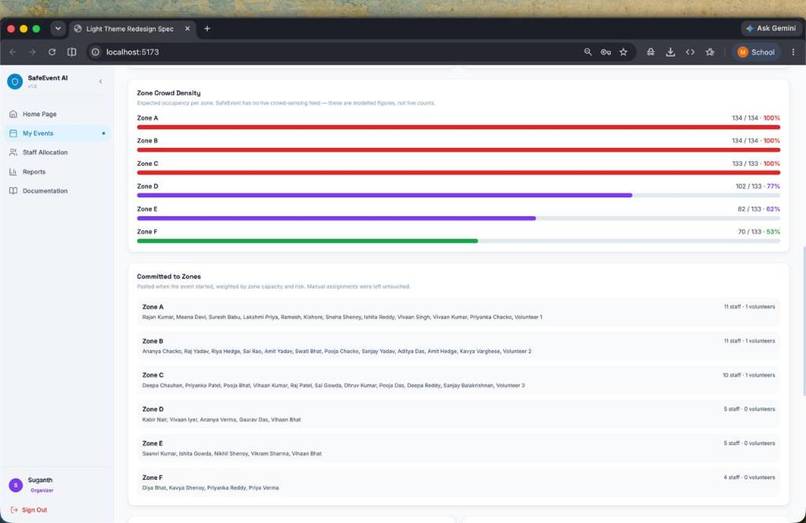
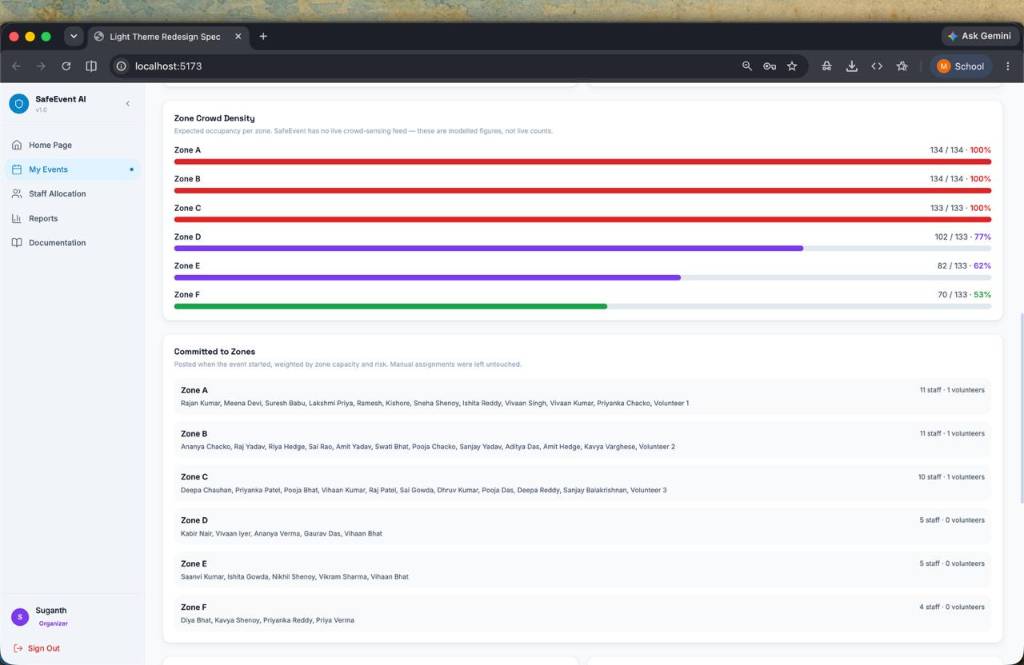
Zone density & Assignments(This shows how full each zone actually is and which staff/volunteer got assigned for each zones)
-
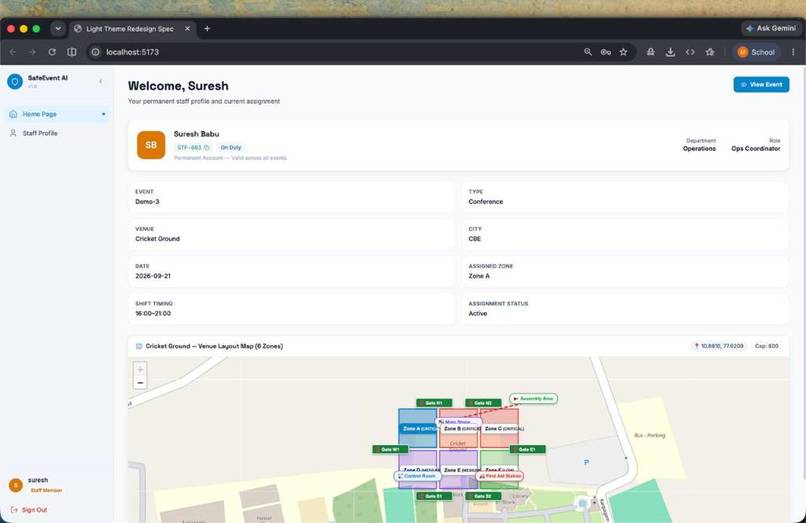
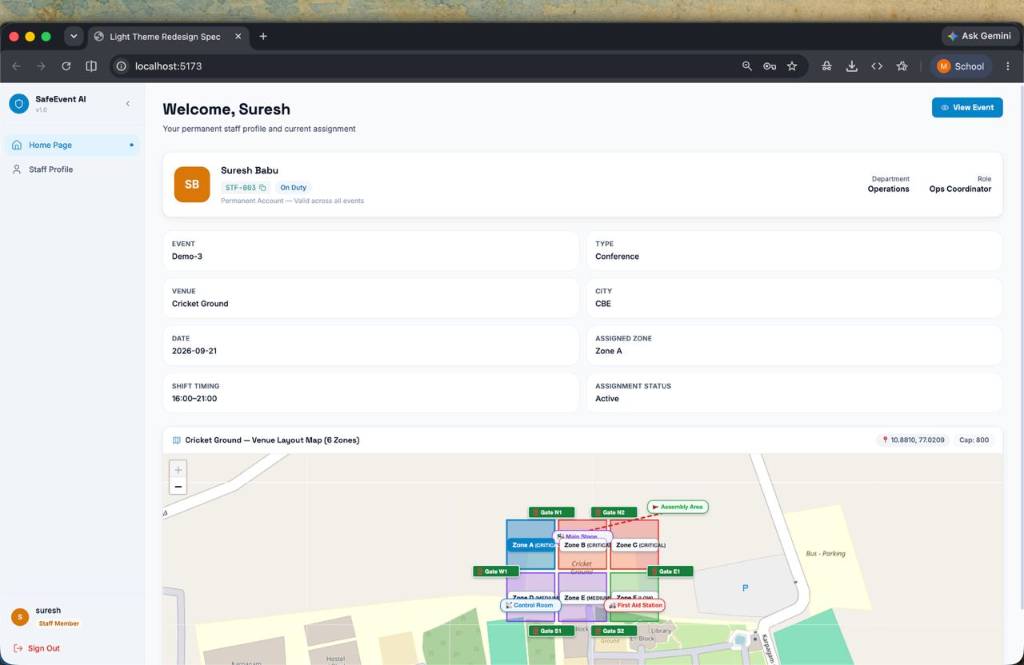
Staff Dashboard(This is what a staff member can see,their own events ,zone and shift timing and live venue map)
-
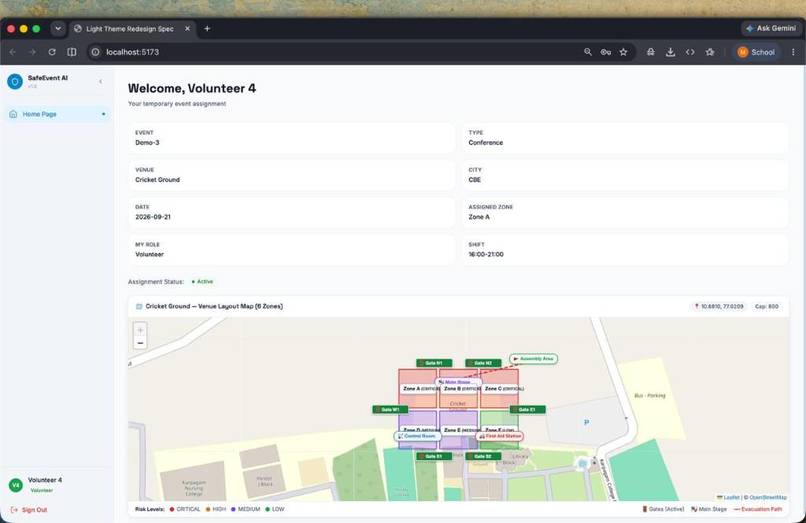
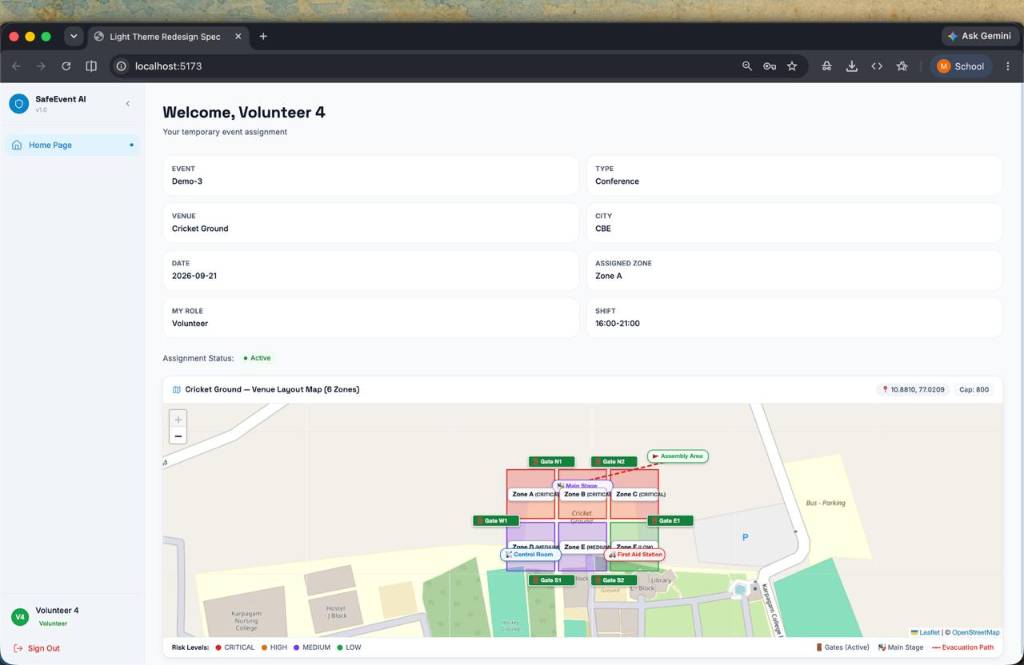
Volunteer Dashboard(This is what a volunteer member can see,their events ,zone,shift time and zone details)
Inspiration
We started the project , when we had face big annoyance during college fest and heard many big events , cultural fest stampede attacks and faced improper staff allocation problem resulting in that so we have started to work on that.
What it does
Our Safe Event AI works , when an organizer creates an event , mark out the zones of the venue and then gets AI prediction by (social media hype , previous years same event data ) and gets expected crowd using it, and how risky each zone is and exatly how many staffs and volunteers to put where , this all are predicted.Once when the event goes live ,our system will automatically posts the staff and volunteer members by the prediction , so there not be any manual assignments .Staff can see their own zone and shift on their phone and Volunteer can join an active using event code .Then Admin gets an proper approval screen(Nobody can becomes an organizer or staff member just by signing up,the admin needs to approve for them).There is also an live map showing zone risk in real time , so anyone can see it and know about those things.
How we built it
We have build it using a two-service backend(one small service just for login/accounts and a bigger one that handles everything about the actual event(zones,staffs,volunteers and predictions).The AI part runs on a separate python service (a random forest model ,genetic algorithm model and )splits the staff and volunteers across zones based on risk.Front end is using React with Leaflet for the map integration and everything runs on an plain MYSQL database.
Challenges we ran into
The challenges that we initially faced was on the side of AI prediction, initially the the AI prediction is using math.random(), which gave random confidence score for every predictioppn on a same event. Next is connecting the technologies, our backend is build using SpringBoot whereas our AI service is build using Python, connection both was a big challenge, so we created custom HTTP clients with proper timeouts to make sure the AI service wouldn't slow down or block our database operations. Next was Ensuring Safe Zone Allocation, simple calcullations could just assign zero satffs or volunteers to samller zones. Since that could lead to a safety issue, so we developed a custom method that guarantees every zone gets at least one staff while distribution.
Accomplishments that we're proud of
End-to-End Encrytion : we succesfully brought together multiple technologies under time pressure. Our Own Machine Learning Model : we trained our own Random Forest model and build a synthetic data generator to simulate realistic social media activity and event hype. Practical Safetyb Logic : our zone allocation system ensures that every zone receives a minimum level of staffing based on its risk. Making complex Data Easy to understand : we turned complex AI outputs like prediction, confidence and crowd density into a simple and intutive dashboard.
What we learned
Through the process of building SafeEvent AI, we learned that building a AI system involves much more than getting a accurate predictions. Connecting our Reac frontend, java Spring boot backend, and python Flask AI service also gave us a practical understanding of microservices, JWT authentication ,API coummunication, and handling failures. Most importantly we learned that algorithms need to account real world situations. Our staff allocation system showed us that even mathematically correct calculations can create unsafe results if practical constraints aren't considered. Working with multiple technologies under tight deadline also taught us to be much more careful with API contracts, data formats, and comminication between different services.
What's next for Safe Event AI
Our next goal is to make SafeEvent AI more responsive to what is happening to during the event. Replacing the current Synthetic social media data with live data from X, Instagram, and Facebook ,so the crowd preduction can be updated based on the real time data.We have also planned to integrate IoT devices such as CCTV based crowd monitoring to compare actual crowd density and predicted density . Another area we want to improve is emergency management by developing dynamic evacuation routes that can suggest safer exits based on the location of hazard. Finally we planned to build a dedicated mobile app for security staff and volunteers , allowing them to receive zone updates task changes , and emergency notifications directly on their phones.
Built With
- css-frontend:-react
- flask
- html
- javascript
- json-web-token-(jwt)
- languages:-java
- machine-learning
- microservices-machine-learning-&-data:-scikit-learn
- node.js-backend-&-architecture:-spring-boot
- numpy
- pandas
- python
- rest-api
- spring-security
- sql
- tailwind-css

Log in or sign up for Devpost to join the conversation.