-
-
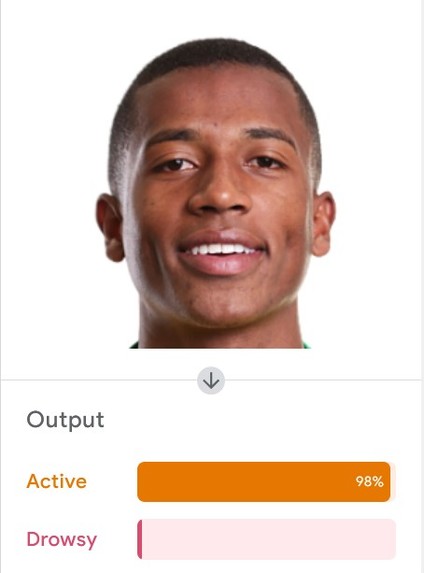
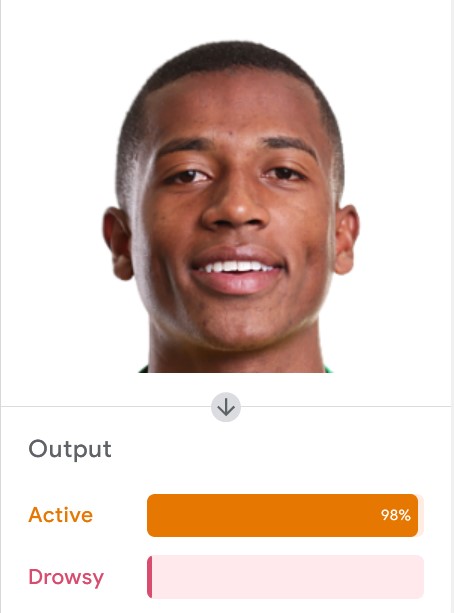
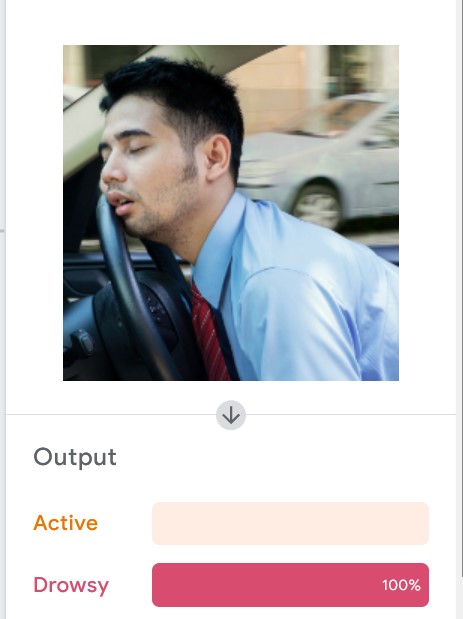
Demo of our initial ML model-1
-
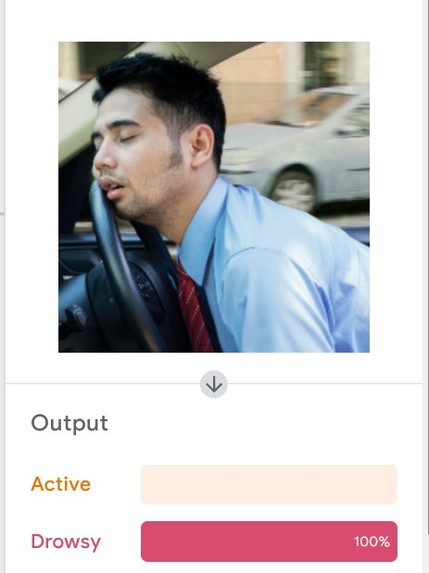
Demo of our initial ML model-2
-
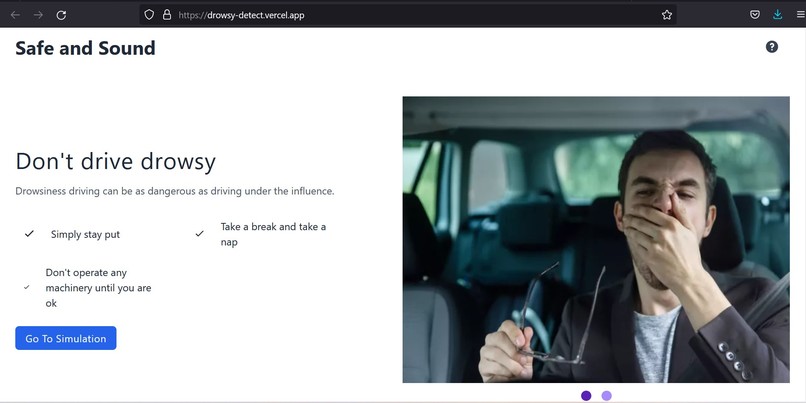
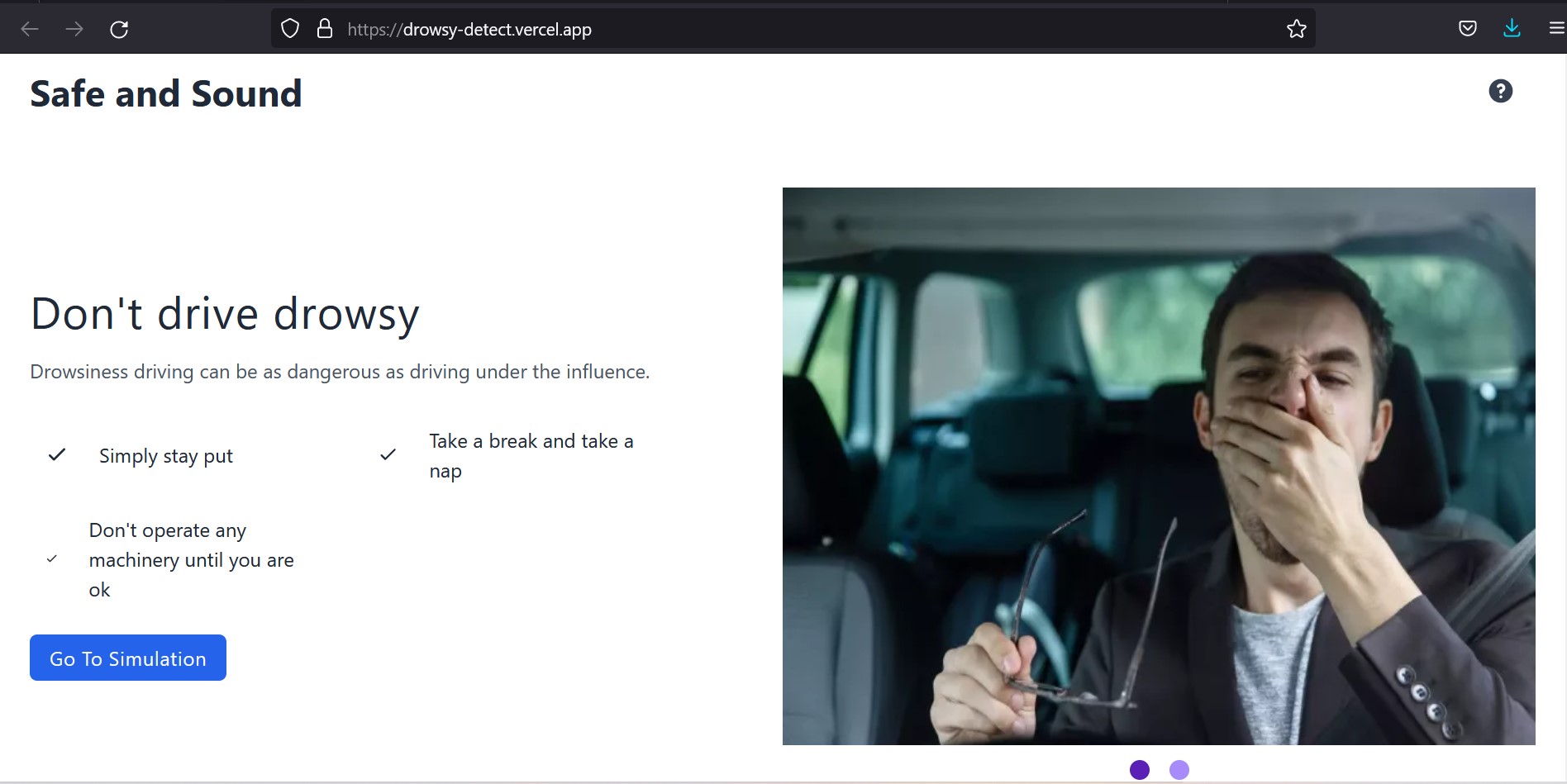
The landing page of our application
Inspiration
The initial inspiration for 'Safe and Sound' came from watching a news broadcast about a fatal car crash The crash occurred when the driver worked for odd hours and dozed off while driving. Drowsy driving is so dangerous because it mirrors so many symptoms of drunk driving: blurred vision, slowed reaction time, and poor decision making. Statistics show that 60% of all adult drivers have driven while being drowsy, while more than 37% percent have at one time fallen asleep while driving, which is a worrying situation. 100,000 police-reported crashes and over 1,500 deaths are the results of drowsy driving each year. The cost of drowsy-driving crashes at about 13% of the total $836 billion in societal costs of traffic crashes. (NHTSA) Even the most experienced drivers can be susceptible and miss the warning signs that it's no longer safe to be behind the wheel of a motor vehicle. So, an application which warns alerts the user(by ringing an alarm) when the initial signs of fatigue or drowsiness are observed, can save many lives. Although emergency alarms which recognize the initial signs of fatigue are available in some luxury cars, we propose to make it available on a wider scale through this ML model.
What it does
Our application tackles the rising number of road accidents due to fatigue or drowsiness while driving. Drowsy driving has costly effects on the safety, health, and security of not only the person driving but also the pedestrians. Whether fatigue is caused by sleep restriction due to a new baby waking every couple of hours, a late or long shift at work, hanging out late with friends, or a long and monotonous drive for the holidays – the negative outcomes can be the same. These include impaired cognition and performance leading to motor vehicle crashes. Our application alerts the users(by ringing an alarm) when they are on the verge of dozing off. It reminds the user to take a short break before continuing on his journey so as to combat accidents.
How we built it
We used Google Teachable Machine and Tensorflow to train and develop our ML model. Then, we used Google Cloud Services to deploy it. We built the user-friendly frontend of our application primarily using HTML and CSS. We used JavaScript to use the results of the ML model in our application and trigger the alarm when signs of drowsiness are observed(i.e., when the probability of the driver being drowsy crosses the 70% benchmark). We used github to manage our project.
Challenges we ran into
We tried using YOLO and Pytorch to train our ML model but we ran into errors. It was then that we decided to use Google Teachable Machine to train our model instead.
Accomplishments that we're proud of
Two out of three members in our team are first time hackers. So, it was our first time collaborating on a project using ML. However, we could successfully pull it off and complete it on time. Also, it was our first time using Google Teachable Machine. So, initially, we couldn't figure out how to use our ML model in our application. However, we figured it out later.
What's next for Safe and Sound
We are working on making "Safe and Sound" available on Google Play Store and App Store as well for a greater reach.
Built With
- css
- git
- github
- google-cloud
- google-teachable-machine
- html5
- javascript
- tensorflow


Log in or sign up for Devpost to join the conversation.