-
-
Safaricog
-
-
-
-
Inspiration
In Nigeria, the cost of evaluating and managing cognitive disabilities is often very high, even for families who are aware that their child needs help. In many African countries, classrooms are also overcrowded, with high teacher-to-pupil ratios and rigid, standardized teaching methods. Educators are expected to teach all children the same way, regardless of their cognitive strengths, weaknesses, or learning styles. As a result, children with slower processing speed, limited phonemic awareness, attention challenges, or weaker working memory skills often fall behind. These children move from class to class without receiving the support they need, while others with naturally stronger cognitive abilities continue to excel. Many parents are unaware that their child’s struggles in school may be due to underlying cognitive challenges and not a lack of intelligence or effort, so the issues go undetected. Over time, this creates a widening gap in learning outcomes that the system has come to accept as normal. SafariCog was inspired by the need to break that cycle by making early cognitive assessment accessible, affordable, and actionable for every child, especially those who are overlooked in traditional classrooms.
What it does
SafariCog was created to change that reality. As an early childhood educator, I’ve seen firsthand how children learn at different paces and in different ways. I’ve often wished for a tool that could help teachers identify each child’s unique cognitive profile early, so that no learner is left behind. SafariCog is that tool.
What it does:
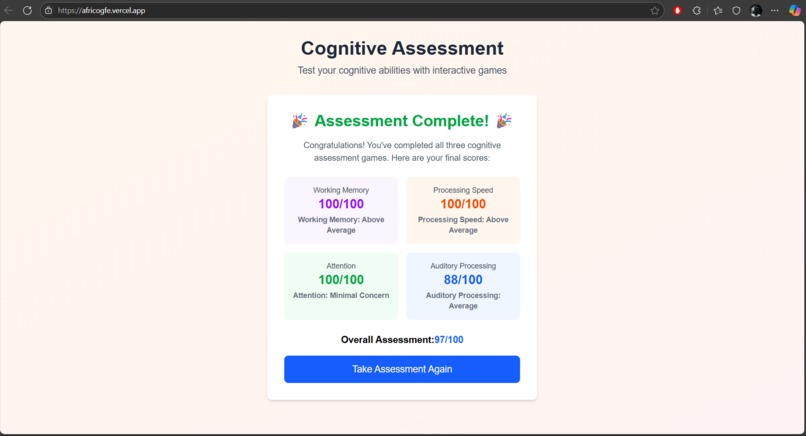
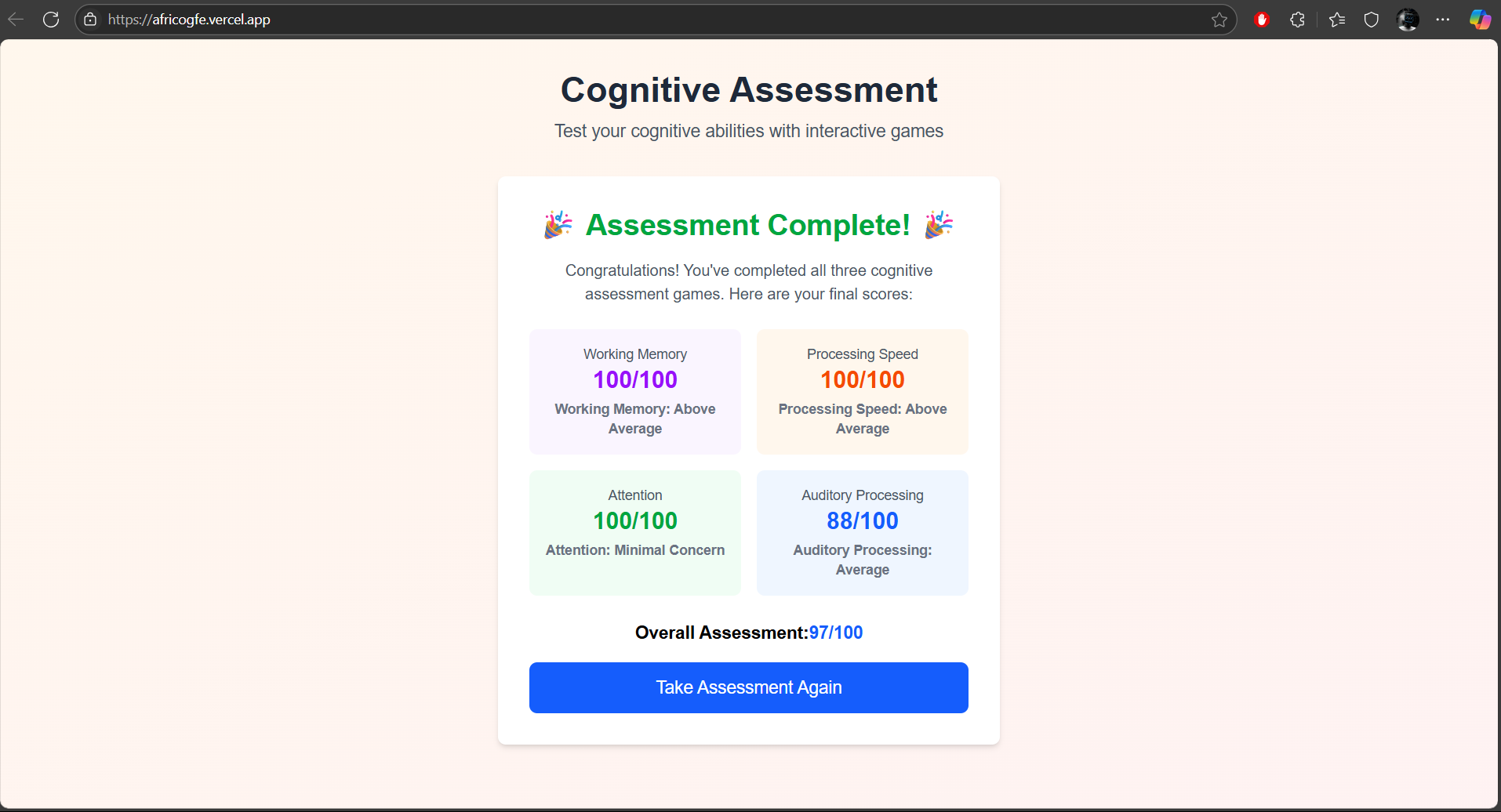
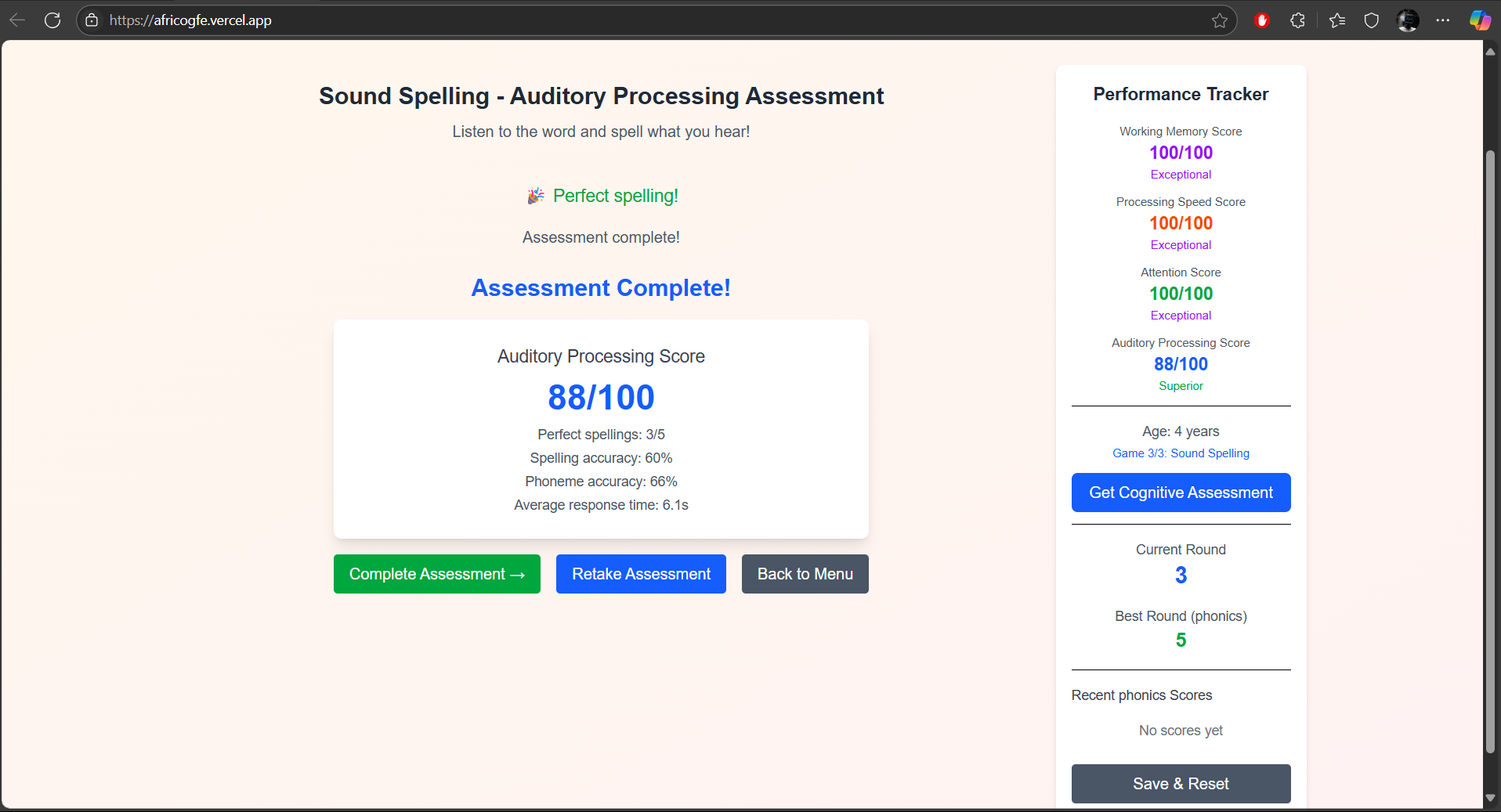
SafariCog empowers teachers to understand every learner, especially in resource-constrained environments. Through early cognitive screening it identifies each child’s unique strengths and challenges across areas such as processing speed, working memory, attention, and phonemic awareness. Based on these insights, the educators can generate personalized learning recommendations and Individualized Education Plans (IEPs) tailored to each child’s needs. By equipping teachers and caregivers with actionable data, SafariCog ensures that support is not just reactive but proactive, helping every child thrive, not just the top performers. We envision SafariCog as a scalable, inclusive solution for equitable education across Africa, where every child has the opportunity to succeed, regardless of their learning differences.
How we built it
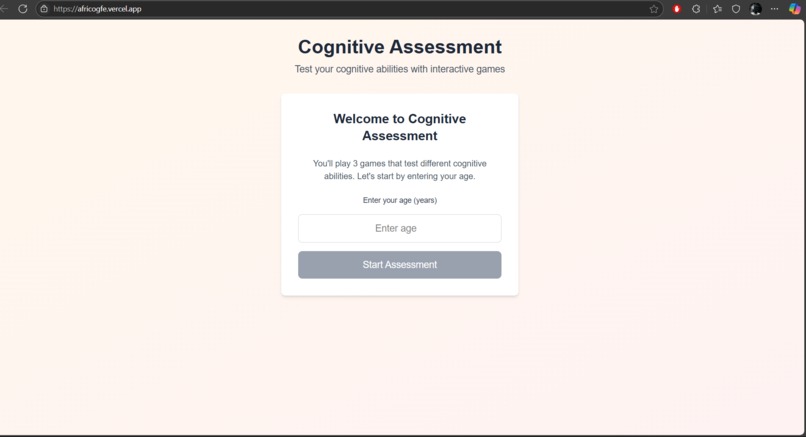
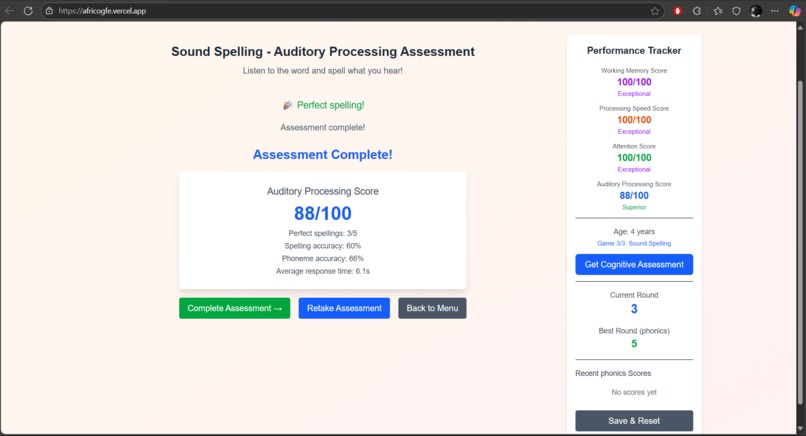
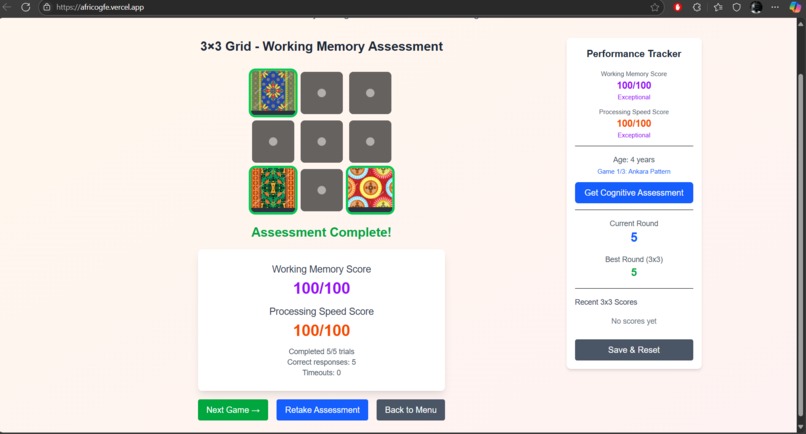
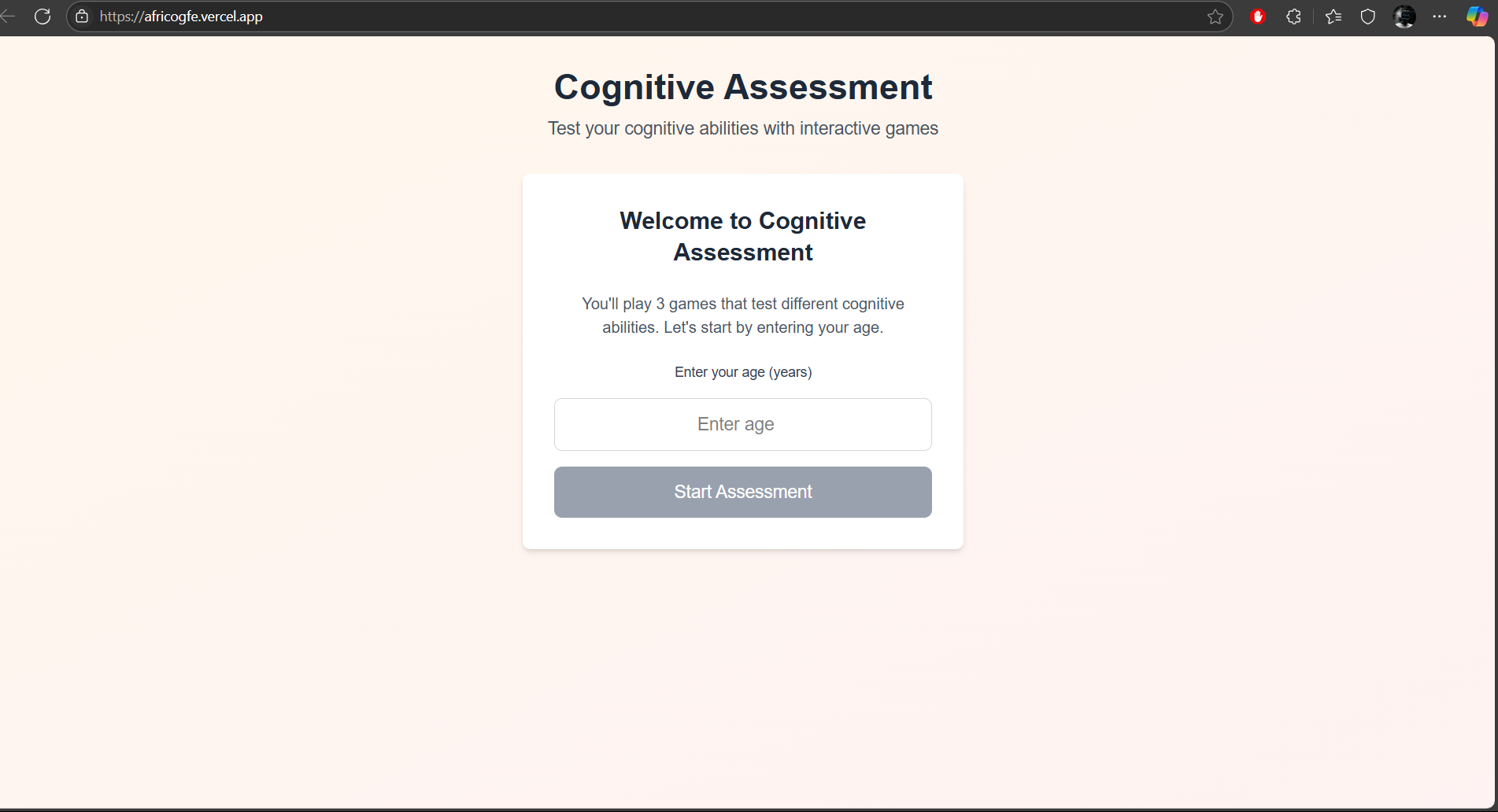
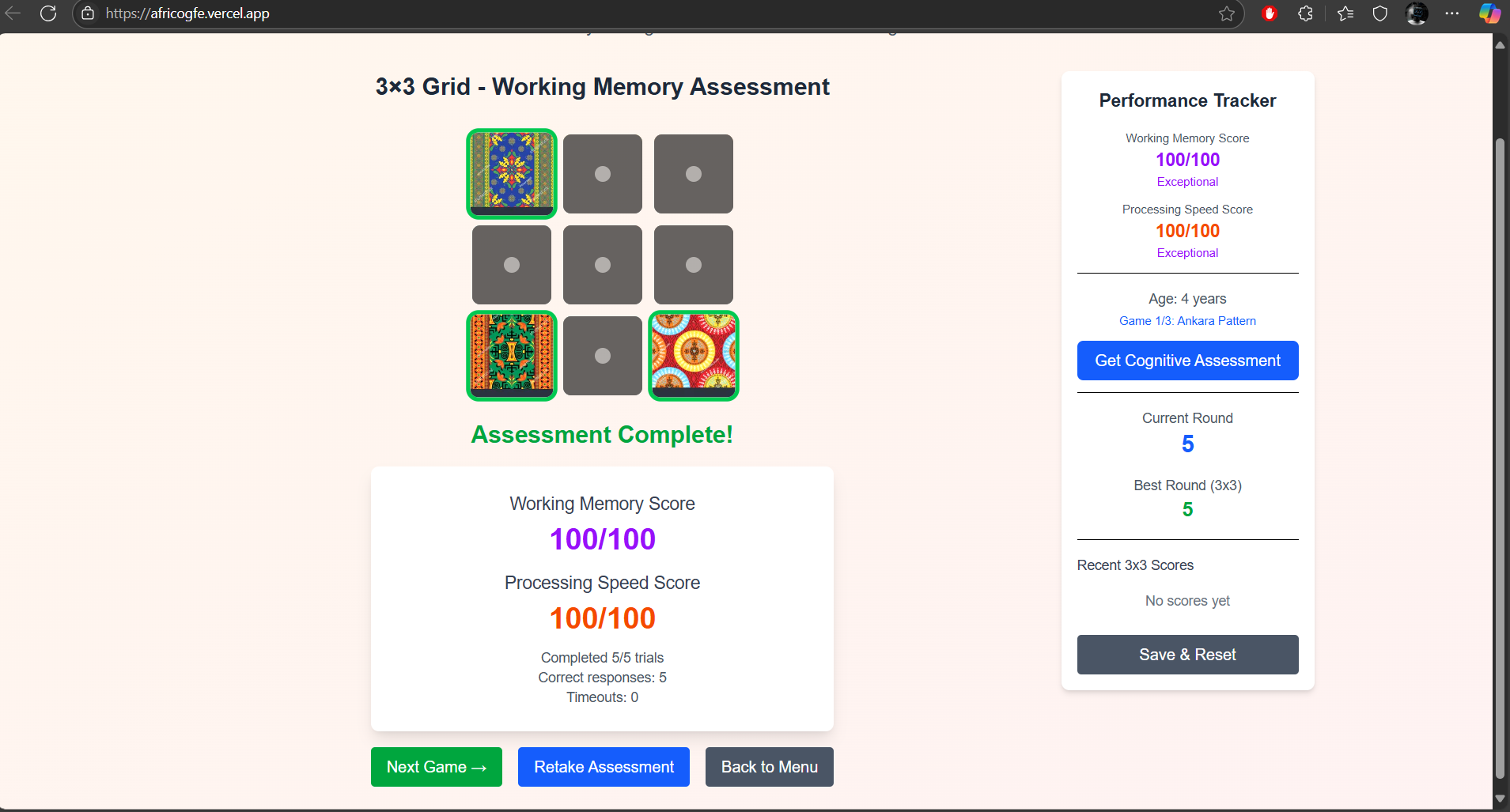
SafariCog is a web-based cognitive screening platform designed to assess key learning-related skills such as processing speed, working memory, attention, and phonemic awareness. The platform simulates these assessments using child-friendly games and rating scales, ensuring the experience is engaging and accessible for learners. Powered by Machine Learning, SafariCog analyzes each child’s responses and automatically generates result that quantifies the child's cognitive ability. We based the assessment structure on evidence-informed cognitive frameworks, but due to limited access to real diagnostic data, we developed a clinically informed synthetic dataset to train, test, and validate the system. The result is an intuitive, data-driven tool built for scale, capable of helping educators support diverse learners, even in low-resource settings.
Challenges we ran into
Challenges we ran into: One of the major challenges we faced was the lack of access to real-world diagnostic data, which is essential for training and validating AI-driven educational tools. Cognitive assessment data is often sensitive, expensive, and rarely available in open-source formats, especially in African contexts. To overcome this, we designed and generated a clinically informed synthetic dataset, modeled after established cognitive frameworks. This allowed us to prototype and test SafariCog’s core features while maintaining data privacy and relevance. We also had to ensure that the assessments remained engaging and developmentally appropriate for children while still being technically robust enough to provide meaningful results. Striking this balance between clinical depth, child-friendliness, and scalability was both a creative and technical challenge.
Accomplishments that we're proud of
Accomplishments that we're proud of: We are proud to have designed and built SafariCog, a fully functional web-based application that simulates cognitive assessments through engaging, child-friendly games and questionnaires. Despite limited access to real-world diagnostic data, we successfully developed a synthetic dataset of 2,000 records, modeled on clinically validated frameworks, to train and test the platform effectively. One of our most impactful achievements is the integration of Machine Learning to generate results that can be used by educators to generate personalized Individualized Education Plans (IEPs) for each learner, offering targeted strategies based on their unique cognitive profiles. We also built a visual dashboard featuring radar charts and performance summaries to help educators interpret each child’s strengths and weaknesses. Above all, we’ve proven that it is possible to create an accessible, low-cost cognitive screening tool capable of supporting equitable education across resource-limited African communities.
What we learned
Through this project, our team of eight discovered the power of collaboration, adaptability, and shared commitment. Despite our diverse schedules, we worked together to simulate child-friendly cognitive assessment modules that are both engaging and effective for early screening. We deepened our understanding of data-driven learning design, translating raw assessment results into personalized, meaningful recommendations for young learners. This involved creating interactive dashboards that visualized cognitive performance in a way that is simple and insightful for both educators and caregivers. Beyond technical development, this project taught us the value of empathy, accessibility, and cultural relevance, especially when designing tools for underserved communities. We came away not only with stronger technical and research skills, but also with a deeper sense of responsibility in building inclusive educational technologies.
What's next for SafariCog
The next phase for SafariCog is to conduct pilot testing in real classroom settings to validate the effectiveness of our cognitive assessments. We plan to collaborate with schools, early childhood centers, and special education professionals to refine the platform based on real user feedback. We are also working to expand the dataset by partnering with clinicians and educators to collect anonymized cognitive screening data that will improve the accuracy of our Machine Learning models. Additionally, we aim to integrate multilingual support to serve children across diverse African regions, ensuring language is not a barrier to early diagnosis and intervention. Ultimately, our goal is to scale SafariCog into a widely accessible tool that empowers teachers, supports parents, and gives every child, regardless of background or ability, the opportunity to reach their full potential.
Built With
- nextjs
- python
- typescript
- vercel


Log in or sign up for Devpost to join the conversation.