-
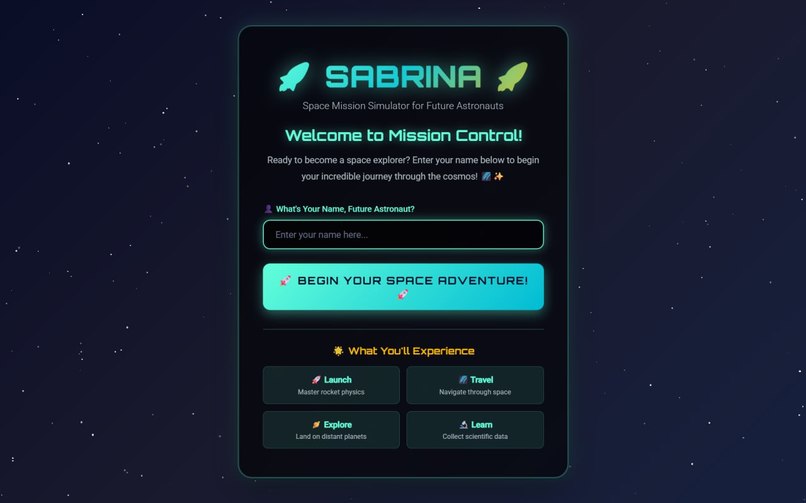
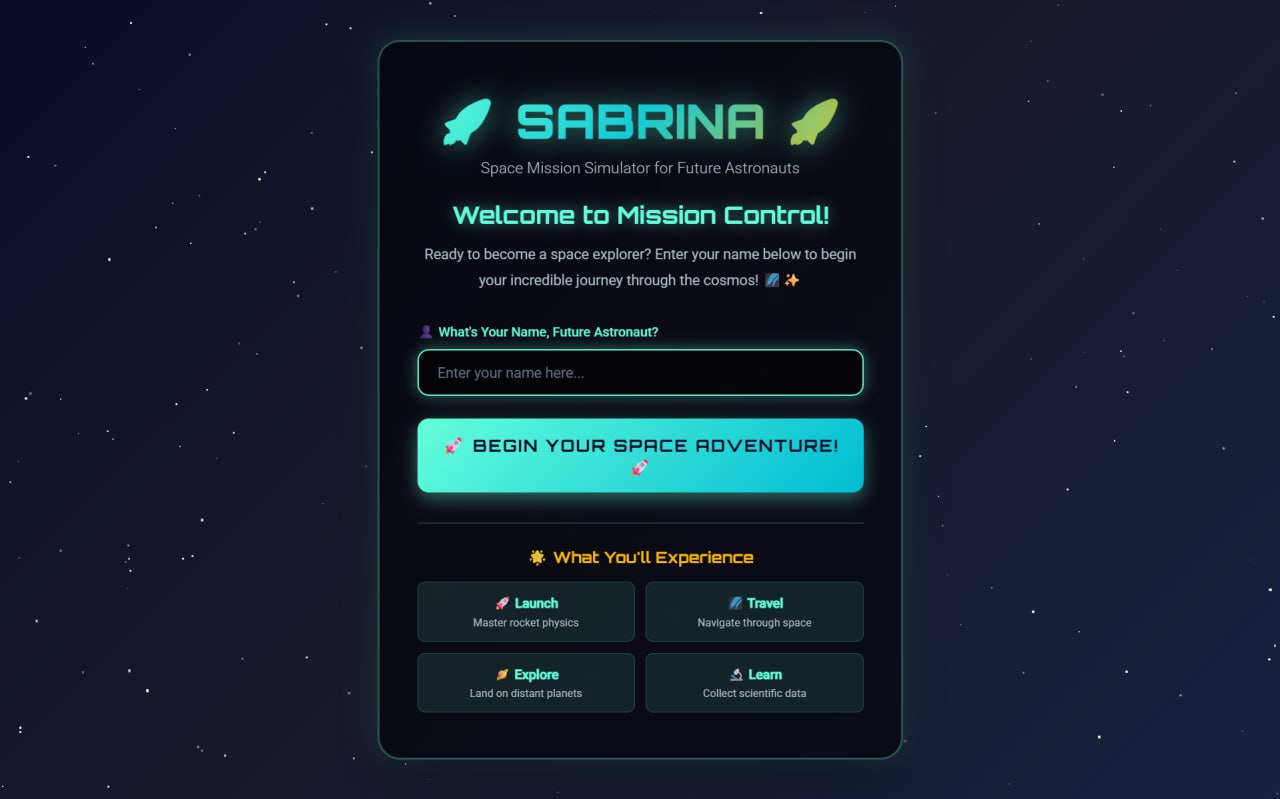
UI - first window
-
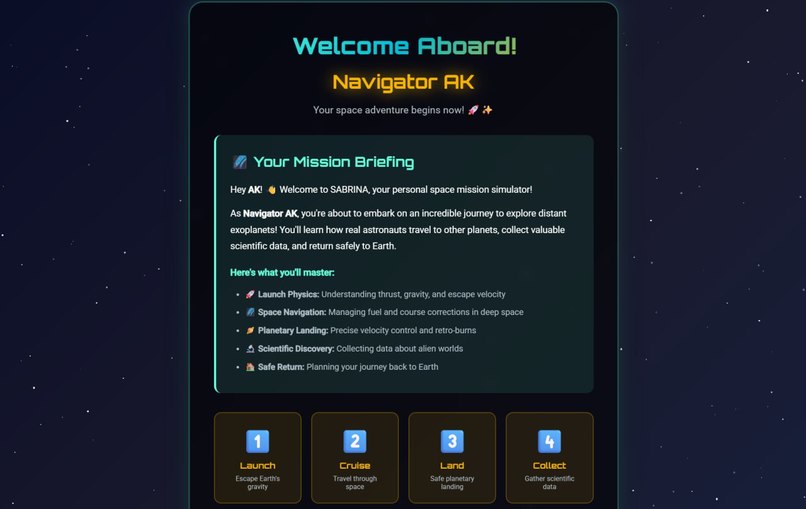
Project goals
-
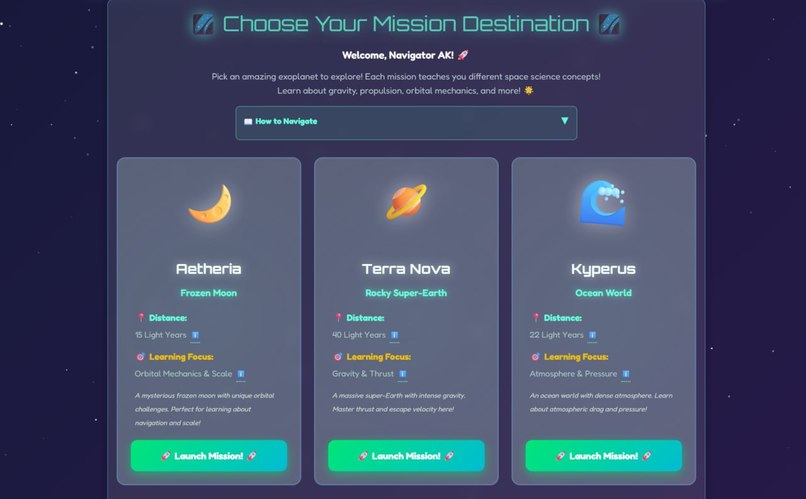
Interactive piece
-
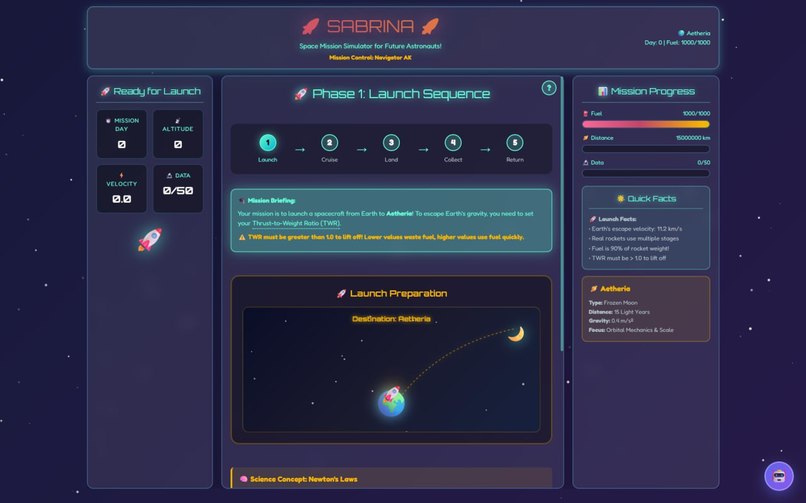
Interactive piece
Inspiration
We were inspired by the simple idea that every child should be able to explore space, not just those who can afford expensive camps or private programs. Real astronaut training can cost tens of thousands of dollars, and even short youth space experiences often cost more than an average family can pay. Yet curiosity about space begins early — when students dream of rockets, planets, and the unknown. We wanted to make that experience free, accessible, and educational.
What it does
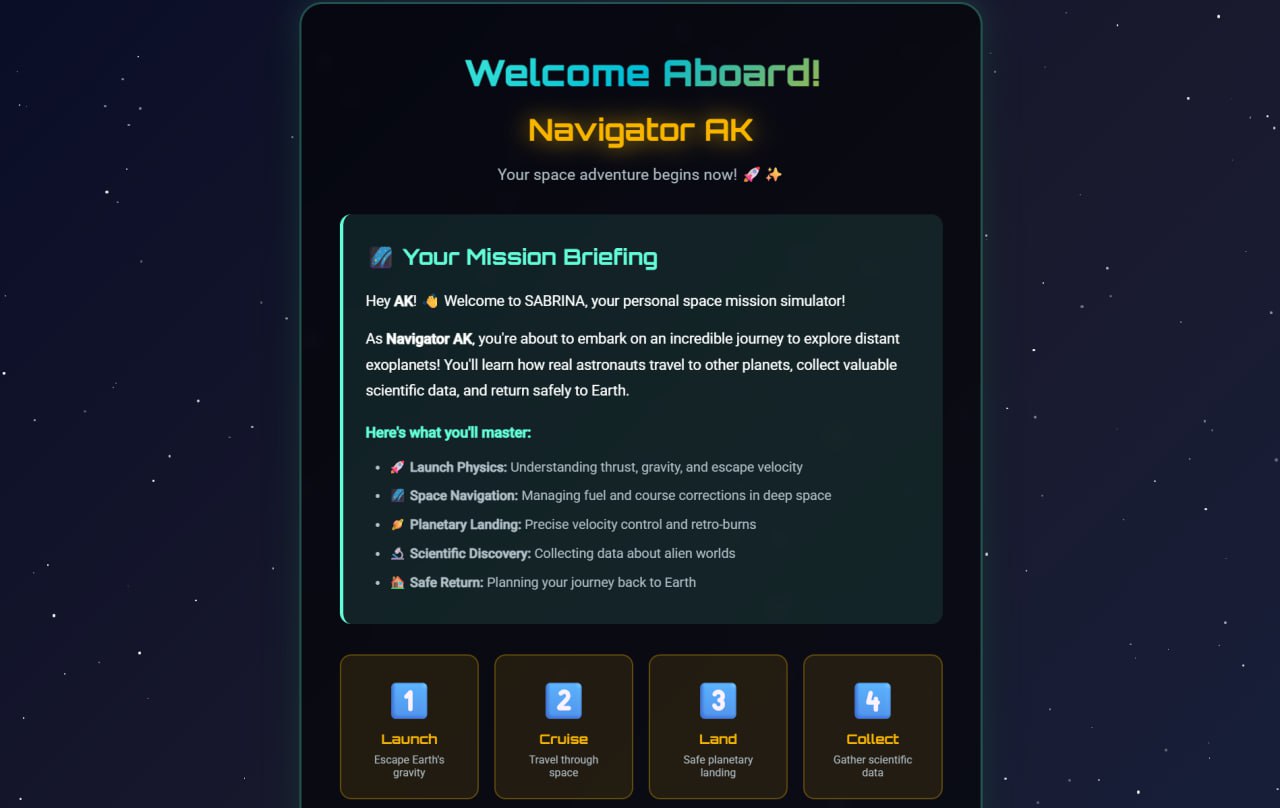
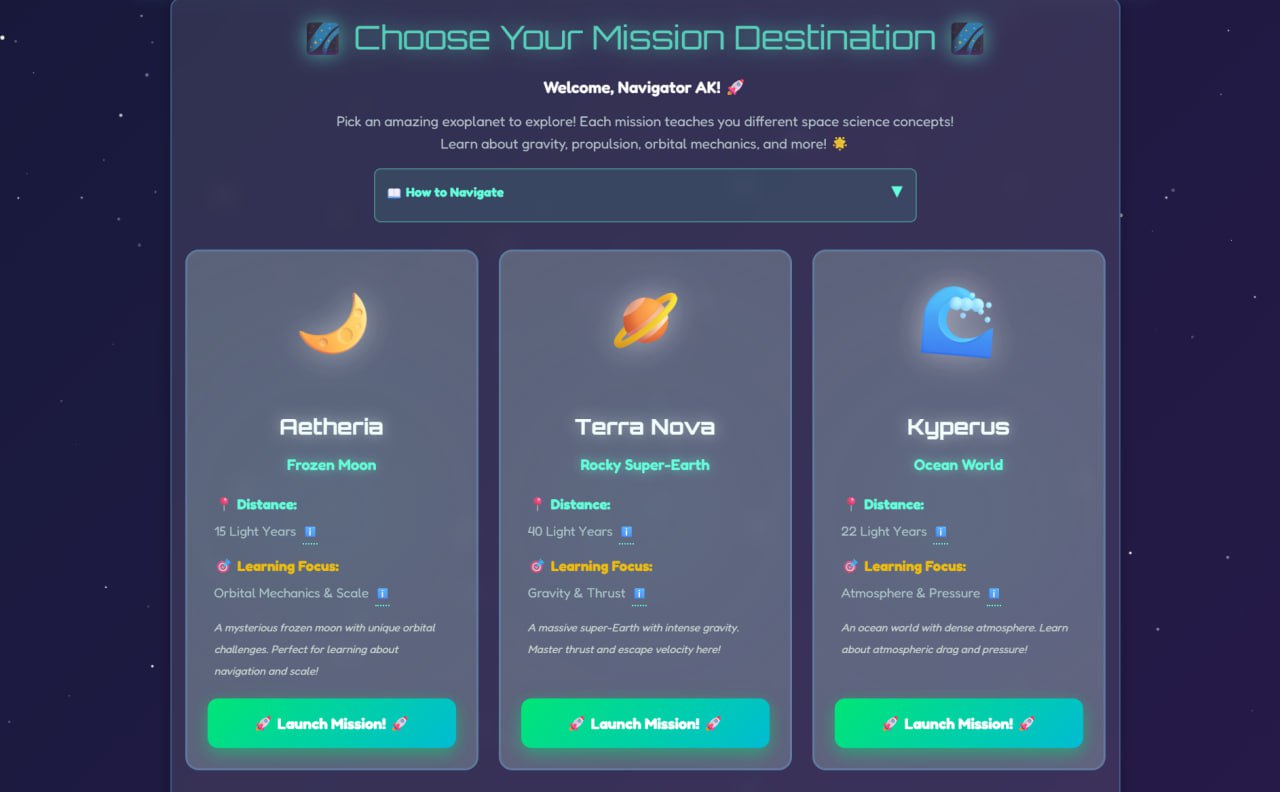
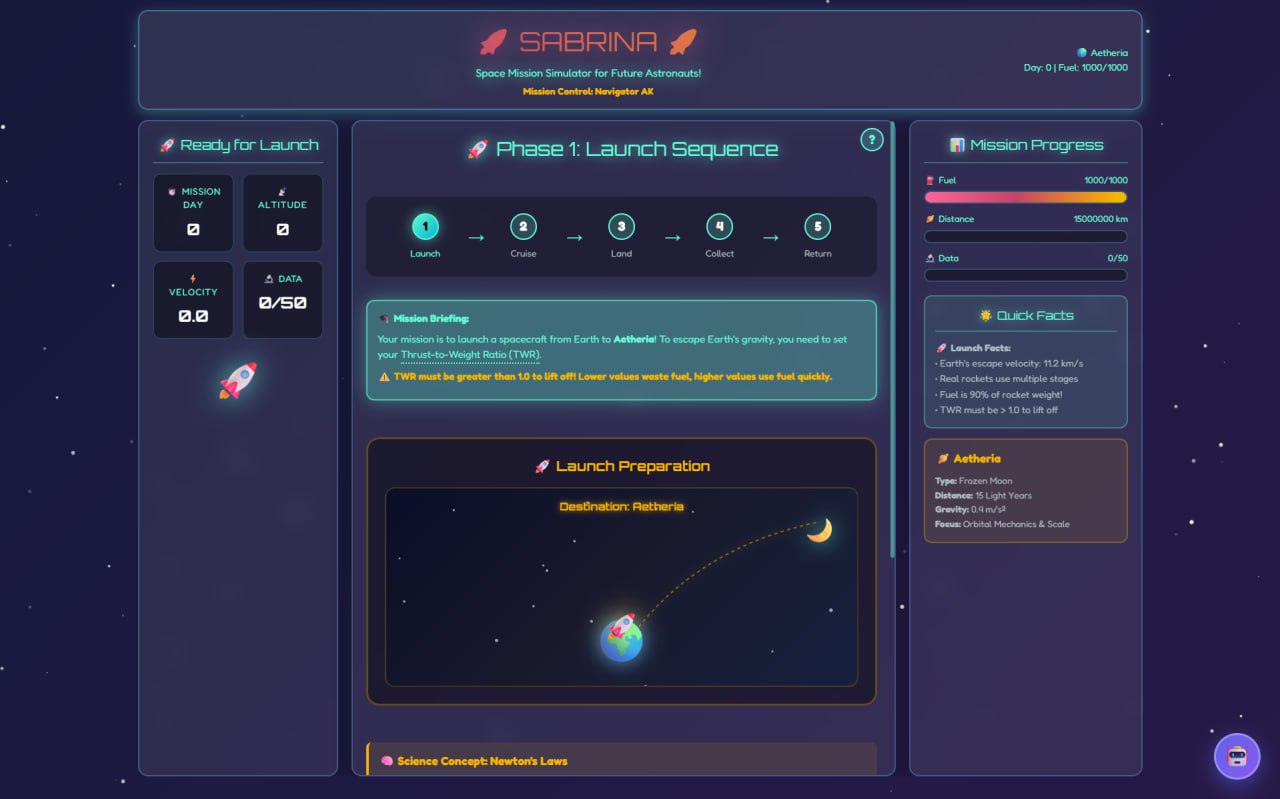
SABRINA is a web-based simulator where middle-school students can plan missions, learn real physics like thrust-to-weight ratios, and analyze exoplanet atmospheres — all from a classroom computer or home laptop. Our goal was to make space science not only understandable but also exciting.
How we built it
We built SABRINA using Python (Flask) for the backend and Jinja2 templates for the interface. Our MissionState system tracks each mission phase — launch, cruise, landing, and surface science — using real physics values like gravity and thrust-to-weight ratio. We designed the frontend to update dynamically based on progress, showing clear feedback for every choice. All planet and atmosphere data are stored in an internal database, and we prepared an AI-tutor API endpoint to explain mistakes and concepts. Finally, we tested our mission logic with unit tests to keep the simulation stable and classroom-ready.
Challenges we ran into
Our biggest challenges came from trying to balance realism with accessibility. Real orbital mechanics equations are complex, but we wanted SABRINA to run smoothly and make sense to 12-year-olds. We struggled with making the simulation feel authentic without overwhelming users. We also faced technical challenges with state management, testing mission transitions, and connecting an AI tutoring API for explanations. Another challenge was designing the educational flow — how to turn each mission phase into a learning moment instead of just a gameplay step. Through trial, research, and lots of debugging, we turned those challenges into lessons — and made SABRINA both educational and fun.
Accomplishments that we're proud of
We are proud of generating a simulation that is accessible for every student for free, hat helps students with limited resources to visualize and solve problems related to space. We are also proud of achieving an engaging user interface that keeps students interested, but at the same time, not overwhelming. Implementing an AI that provides real-time feedback and answers students' questions into the simulator was one of the successes of the project.
What we learned
Throughout this project, we learned how to combine STEM education and software design into one meaningful experience. We learned to build a full Flask web application with mission logic, physics equations, and state tracking. We learned how to use real-world space data to create believable simulations. We discovered how to design a user experience that explains complex ideas — like spectroscopy or orbital mechanics — in simple, visual ways. Most importantly, we learned how powerful technology can be when it’s used to inspire learning and curiosity, not just to display information.
What's next for SABRINA
We want to grow SABRINA into a free digital classroom for space education — helping young learners not just dream about space, but understand it. Next, we plan to add real NASA exoplanet data and a teacher dashboard for tracking progress. Our goal is to teach the next generation not only space science, but also problem-solving, critical thinking, and curiosity by implementing different challenges and constraints in our missions.


Log in or sign up for Devpost to join the conversation.