-
-
-
-
-
-
-
-
-
-
-
-
-
Sabotage Rulebook
-
-
Inspiration
This game was inspired by two kinds of players: those who love the satisfying rhythm of approachable management and time-management games, and those who would rather poke at a game’s systems just to see how much trouble they can cause. Games like I Am Cat showed us how much fun can come from giving players the freedom to create their own mischief and unexpected moments. We wanted to bring that same playful sense of chaos into a management sim, where understanding the system is not only about running it efficiently, but also about discovering how far you can bend it without losing control. The goal was to create something immediately approachable, but with enough humor, experimentation, and mischief to make players want to keep testing what they can get away with.
What it does
Sabotage King: Laundromat Mayhem is a single-player, comedic stealth-management sim where you play as a secret agent sent by the Agency to work undercover at a rival laundromat.
To look like the perfect employee, you need to keep customers happy, move orders quickly, earn cash, and help the laundromat turn a profit. At the same time, the Agency wants you to quietly annoy customers, mess up orders on purpose, and create just enough chaos to keep the mission moving.
A Simple, Fast Management Loop – with a Mischievous Twist
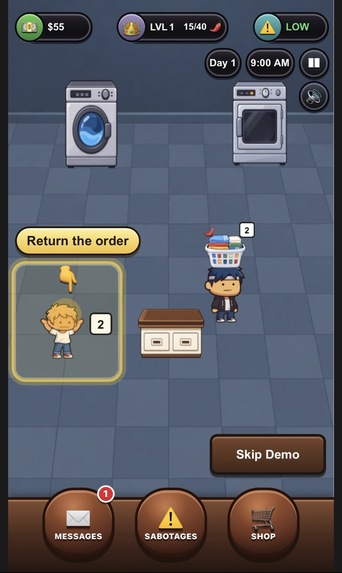
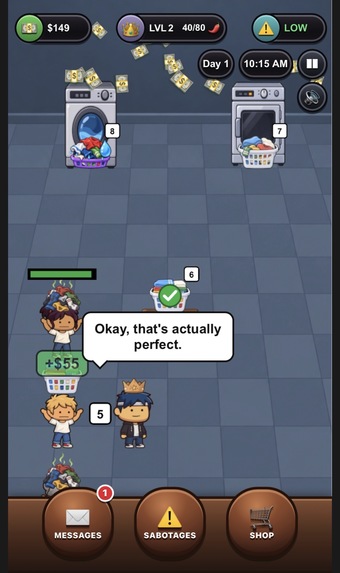
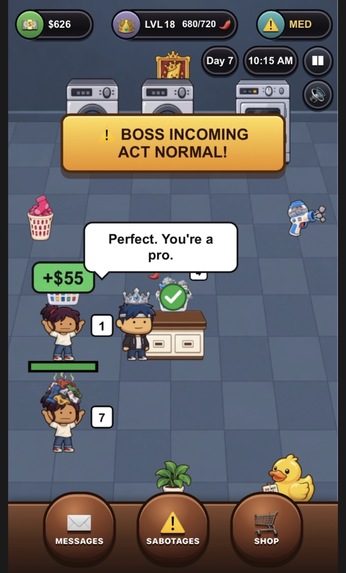
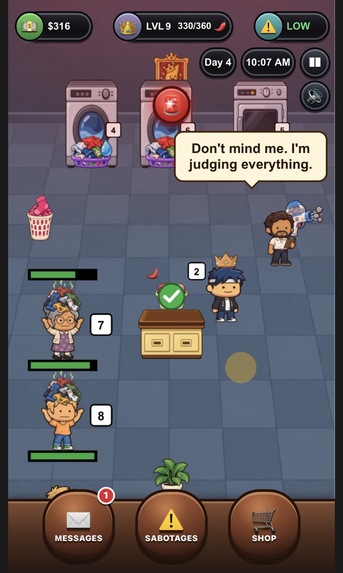
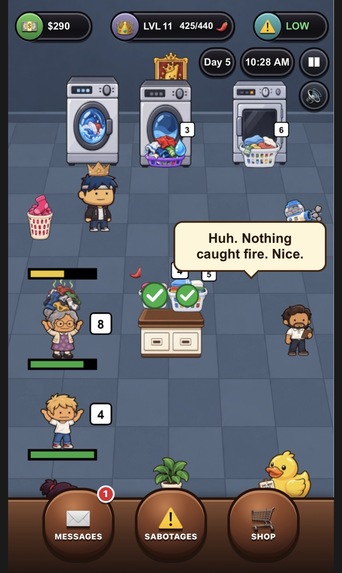
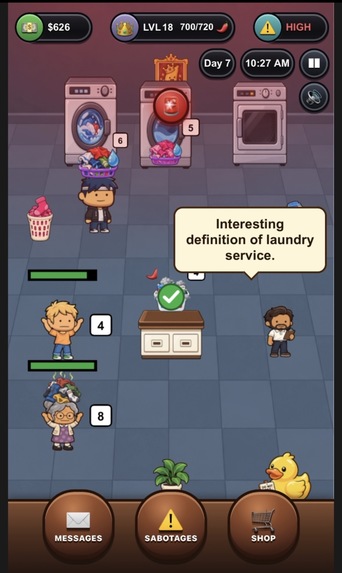
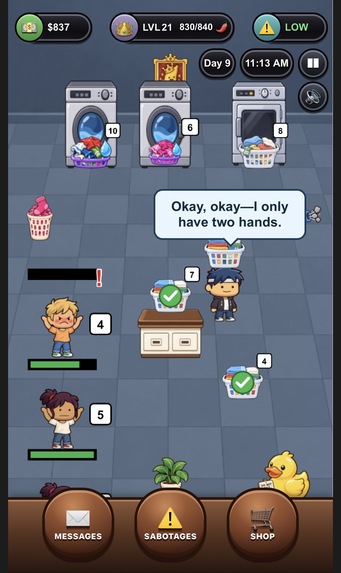
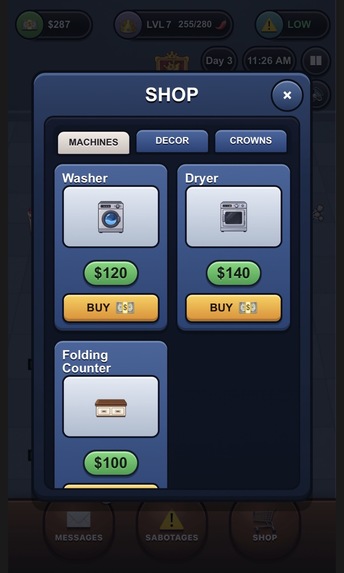
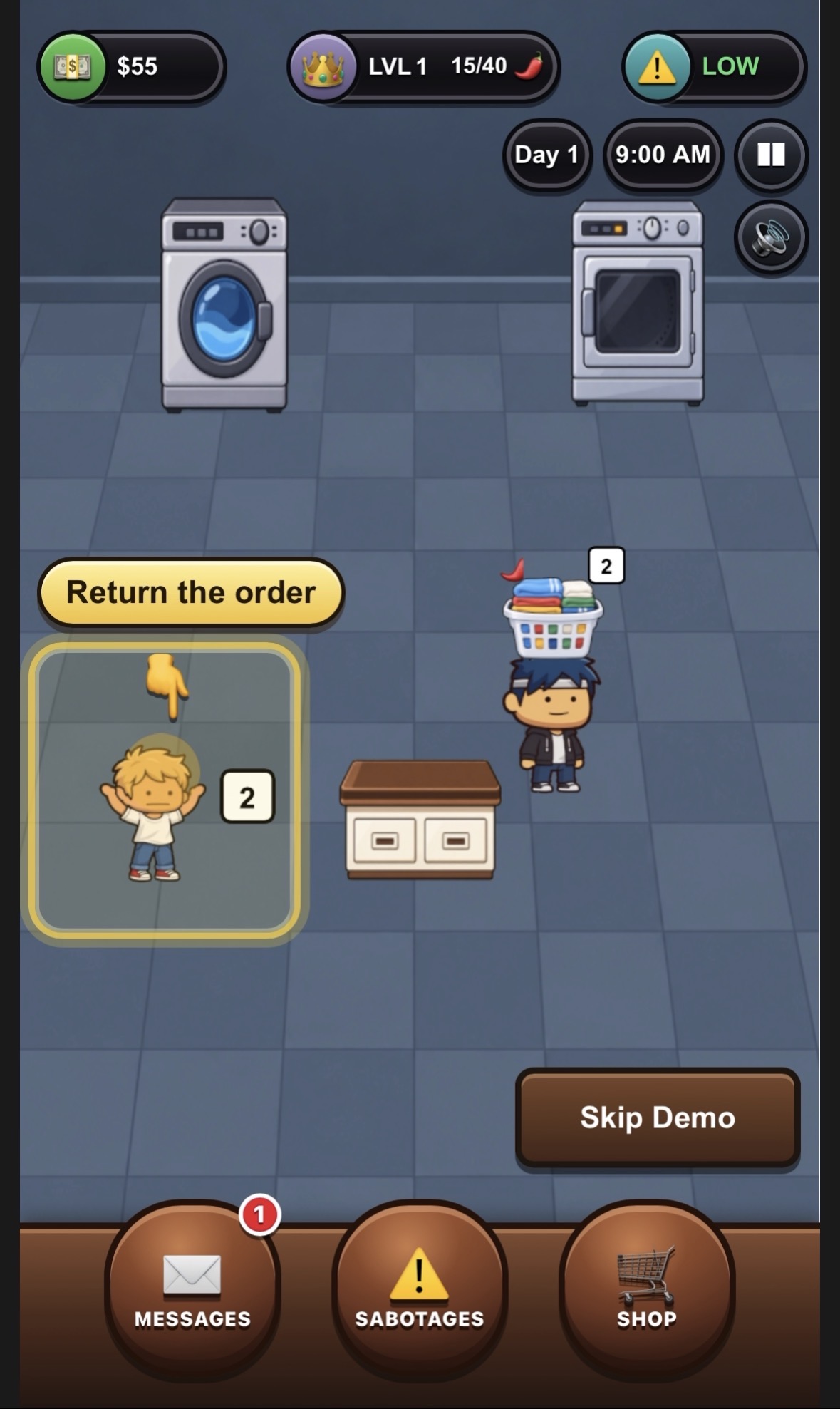
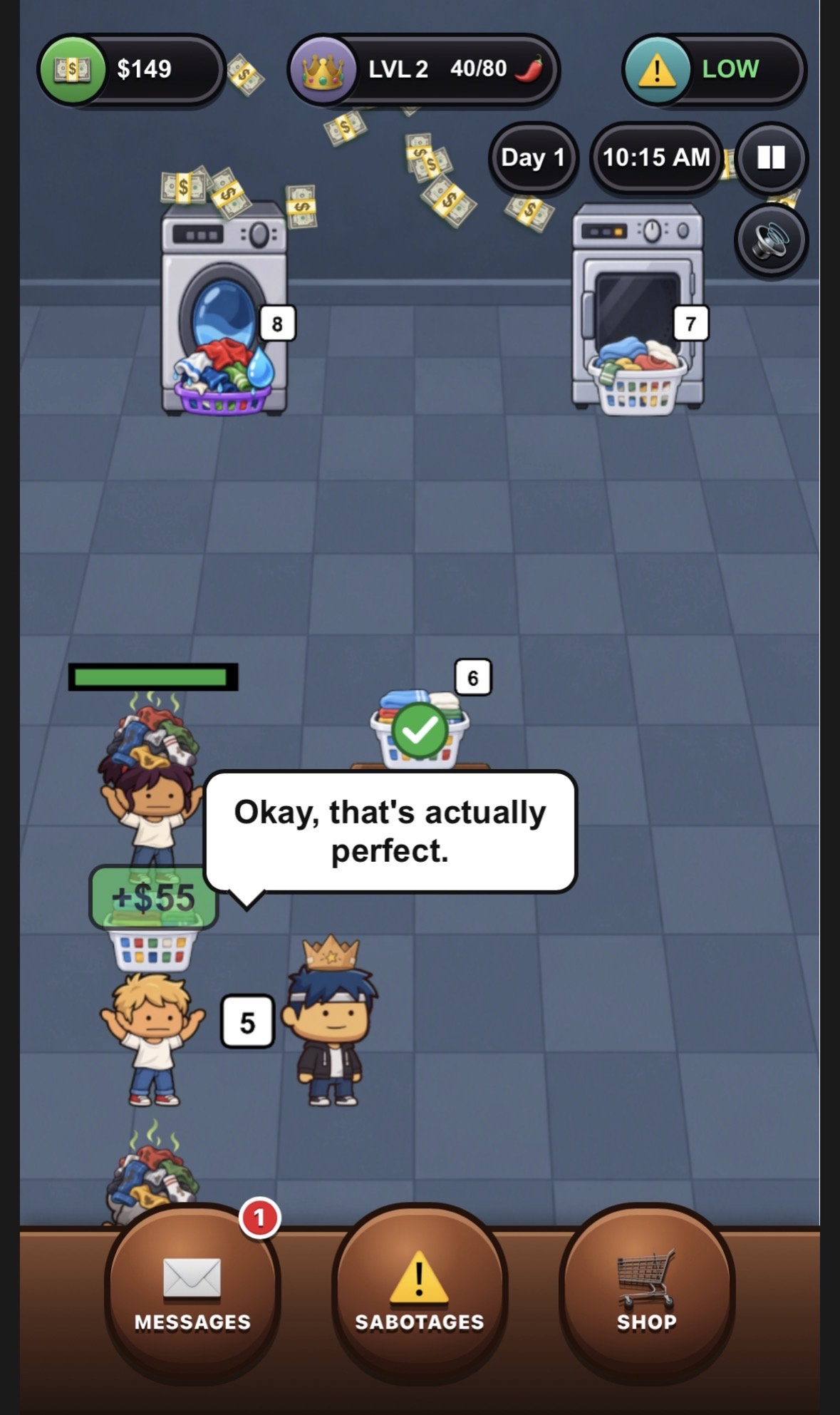
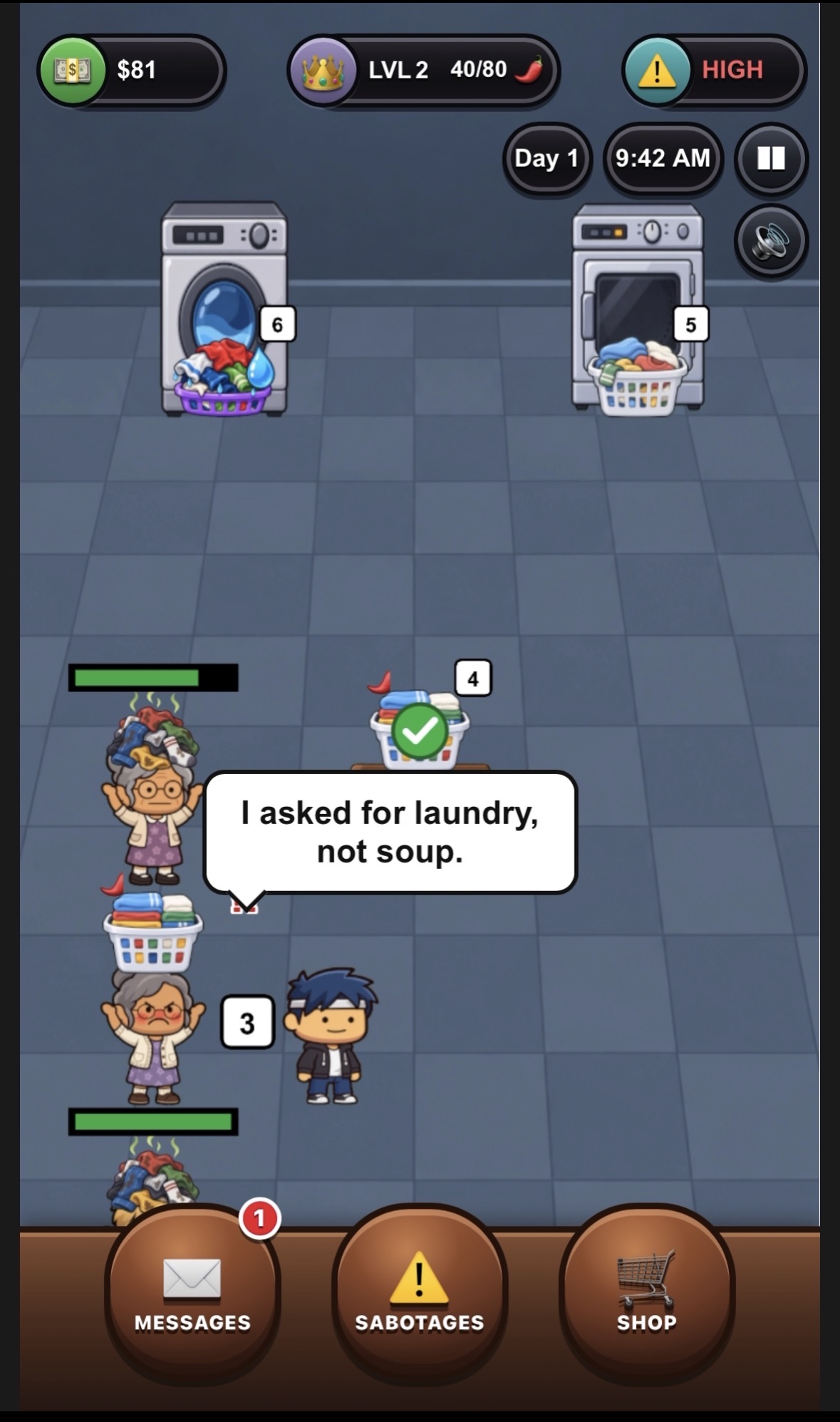
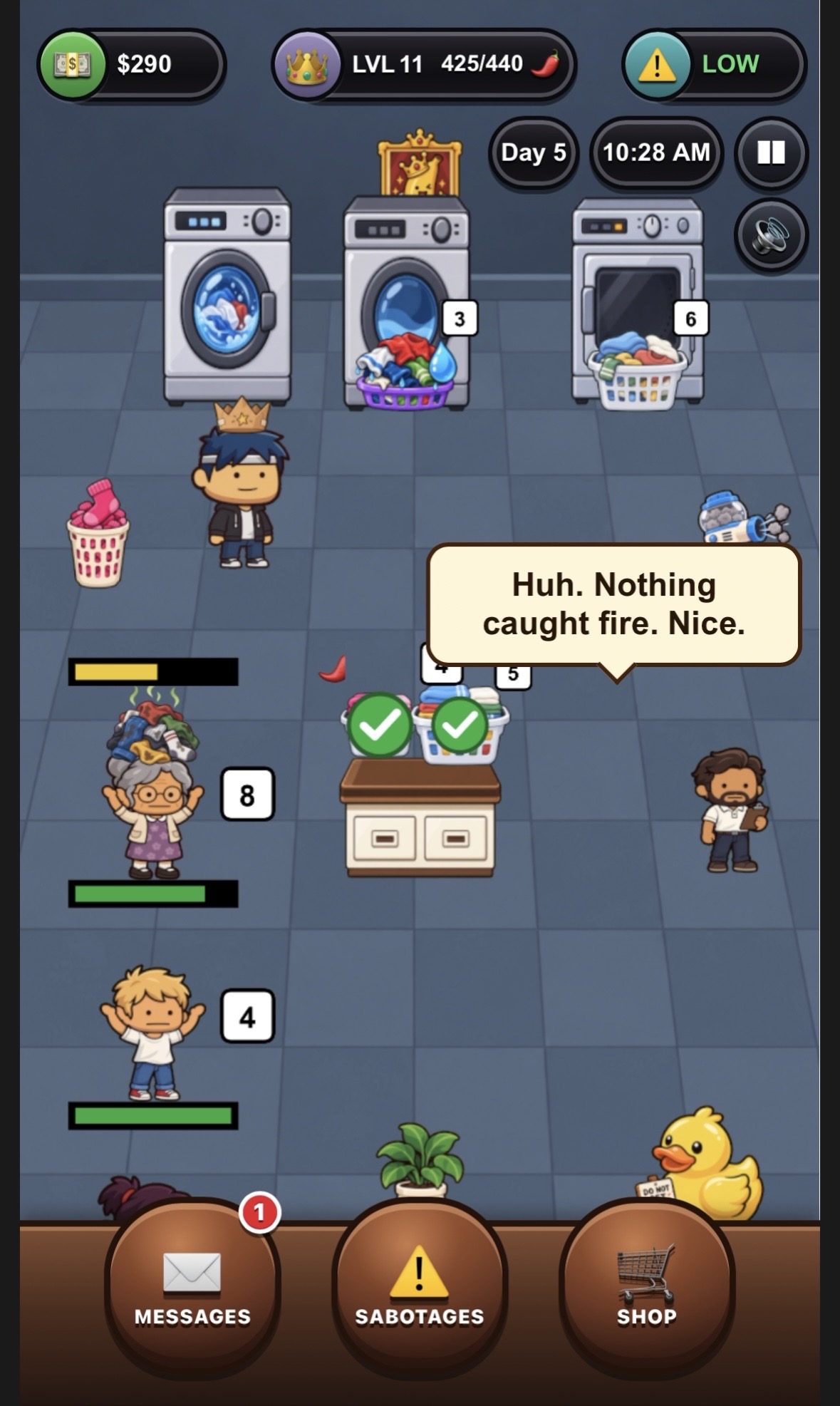
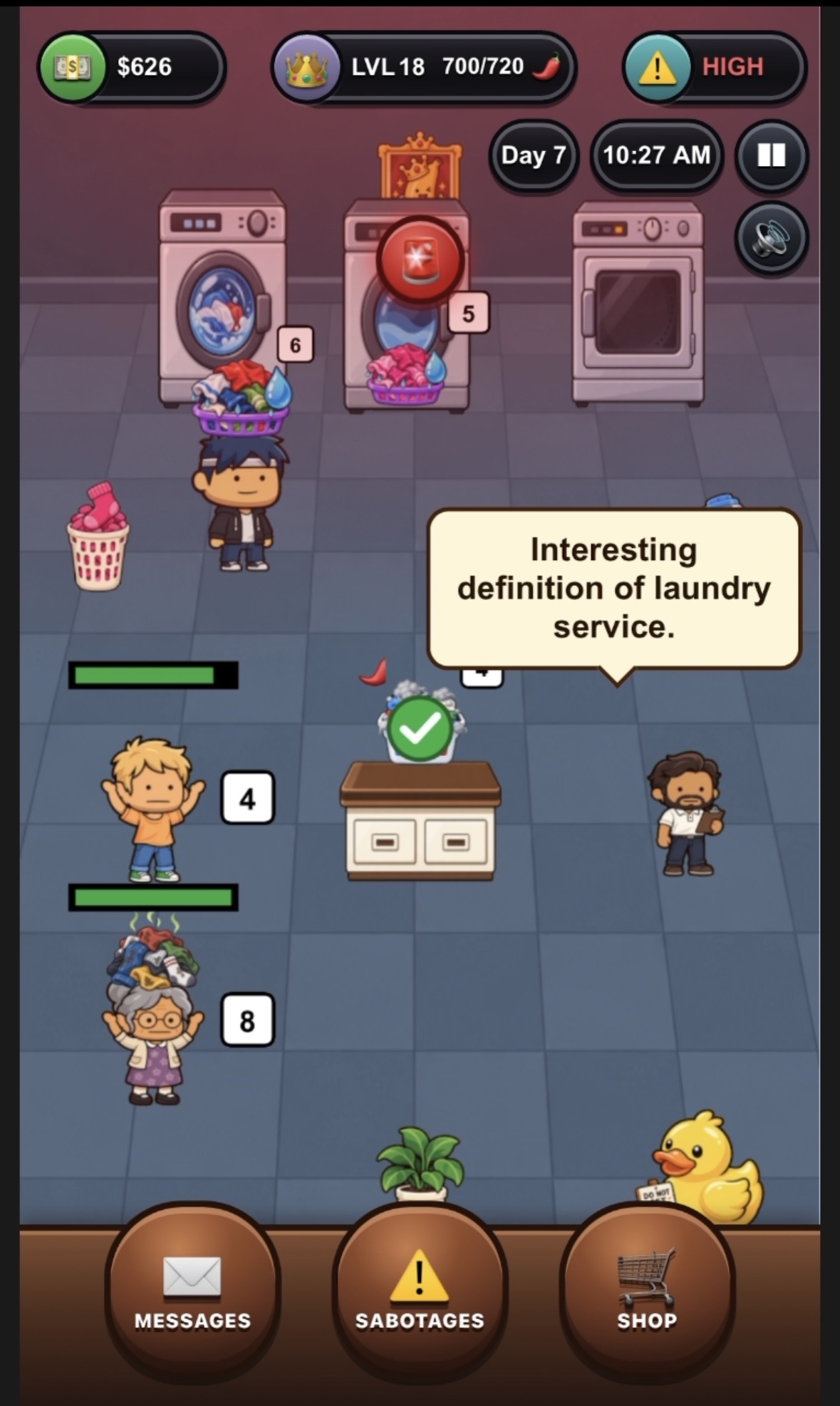
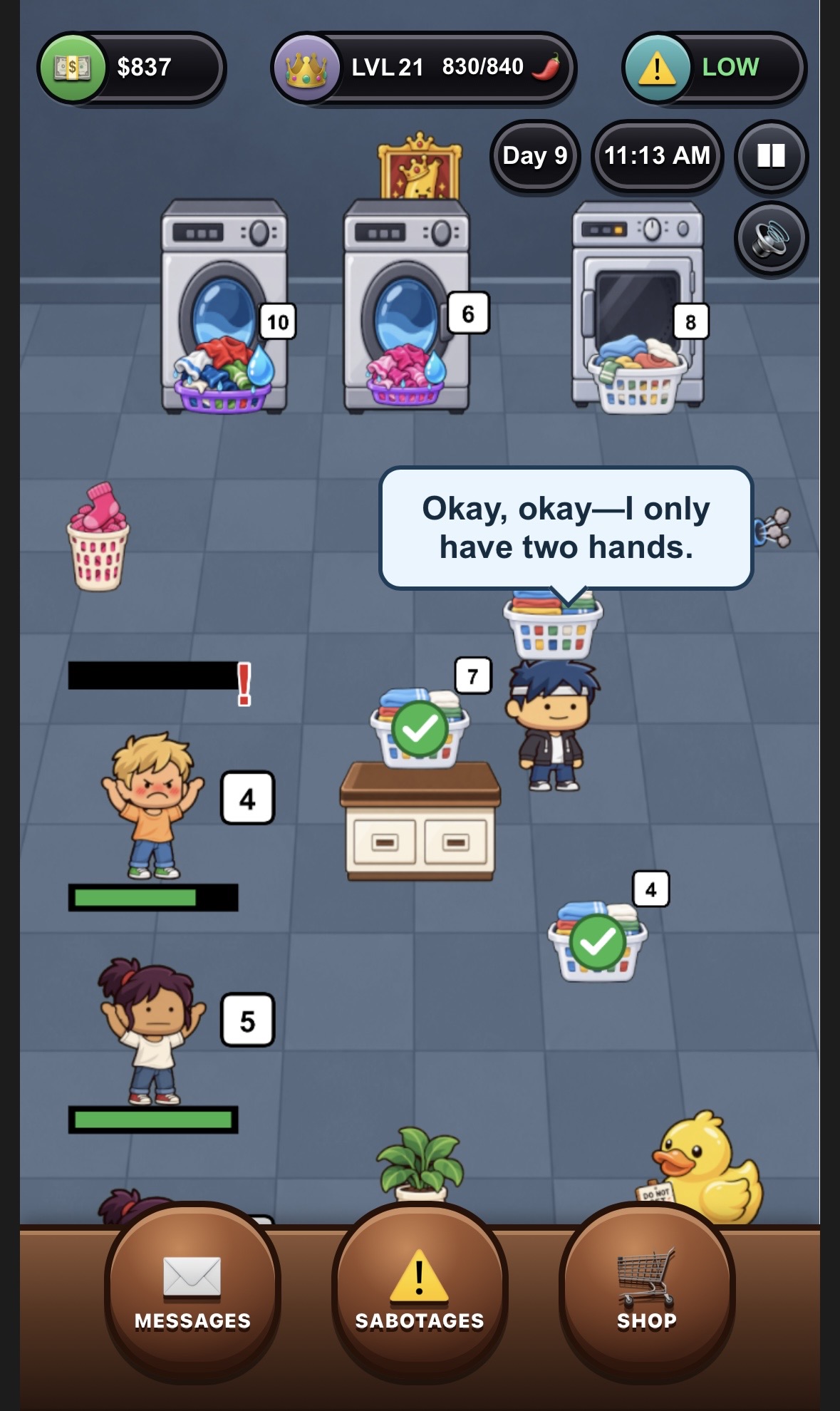
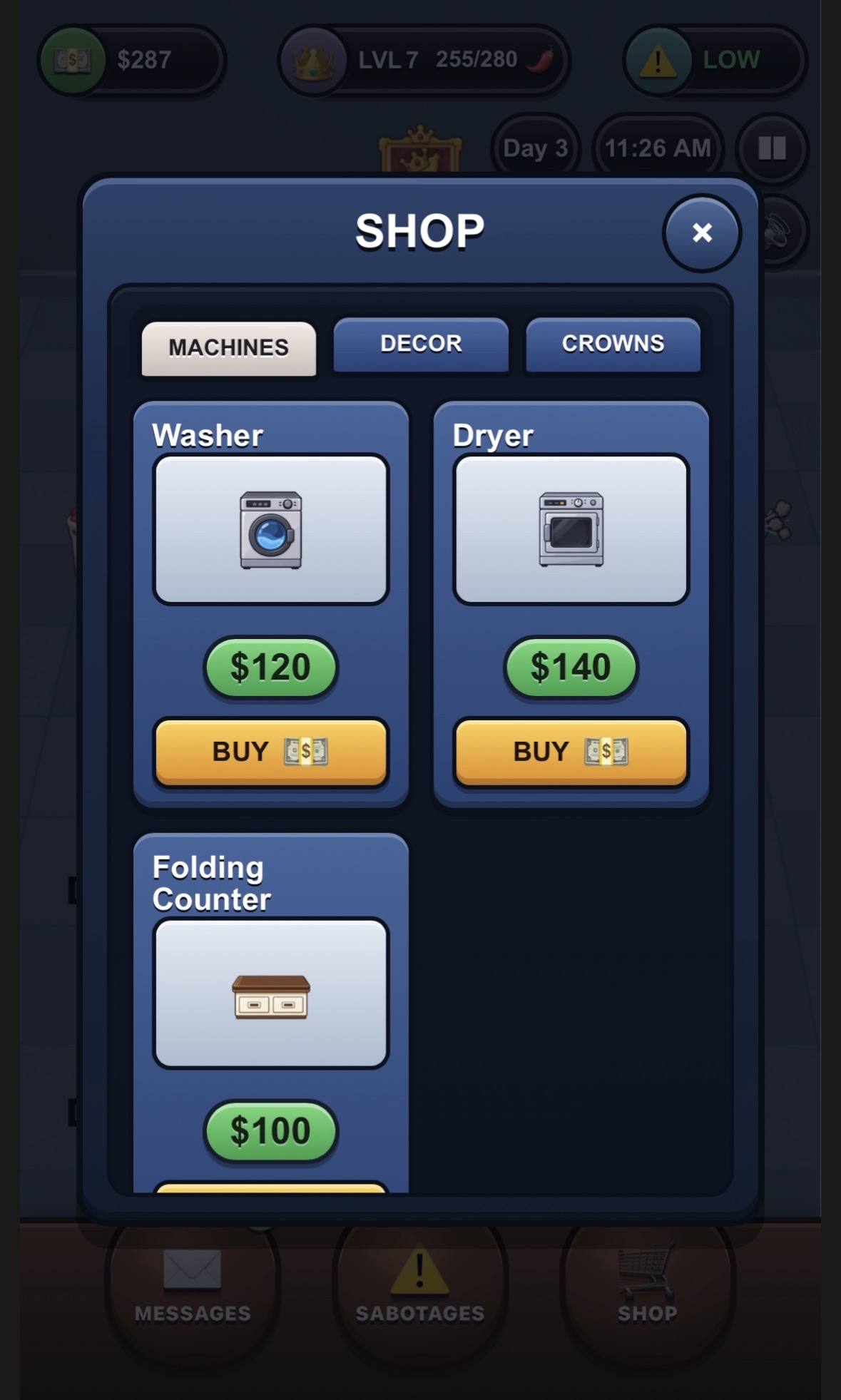
Each shift lasts just 4.5 real-time minutes, running from 9:00 AM to 1:00 PM in-game to keep the core gameplay loop under five minutes, focused, and easy to jump into. The whole game is built for satisfying one-thumb portrait play: tap customers, laundry, and machines to move around the laundromat and collect → wash → dry → fold → return each order. The management loop starts familiar: serve customers, keep machines moving, manage time, and earn money. The pressure ramps up fast as more customers arrive and patience bars start dropping. Wait too long and you can lose a new order entirely; keep a pickup customer waiting and they become angry, cutting into your payout.
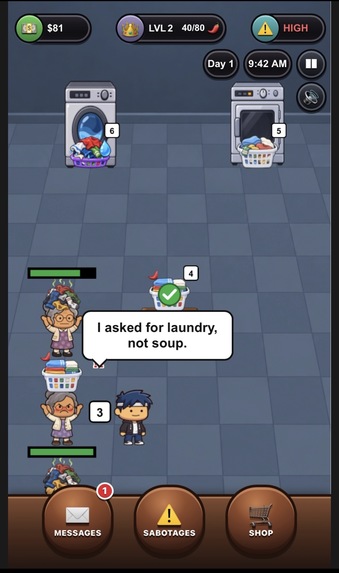
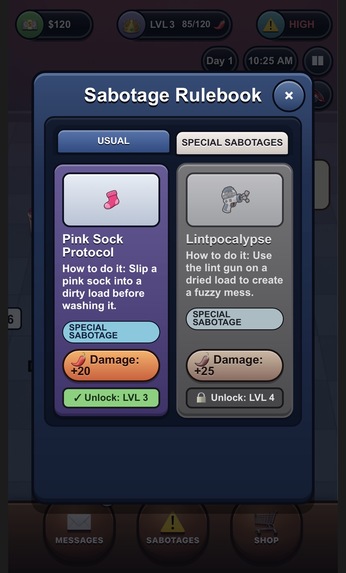
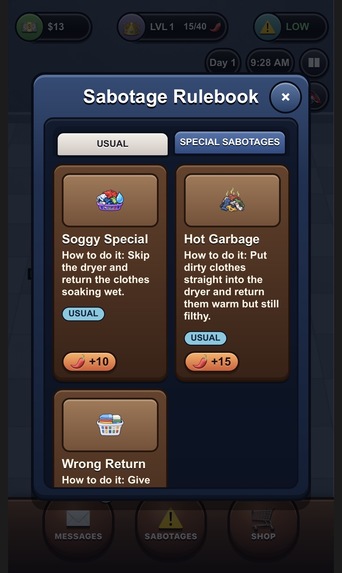
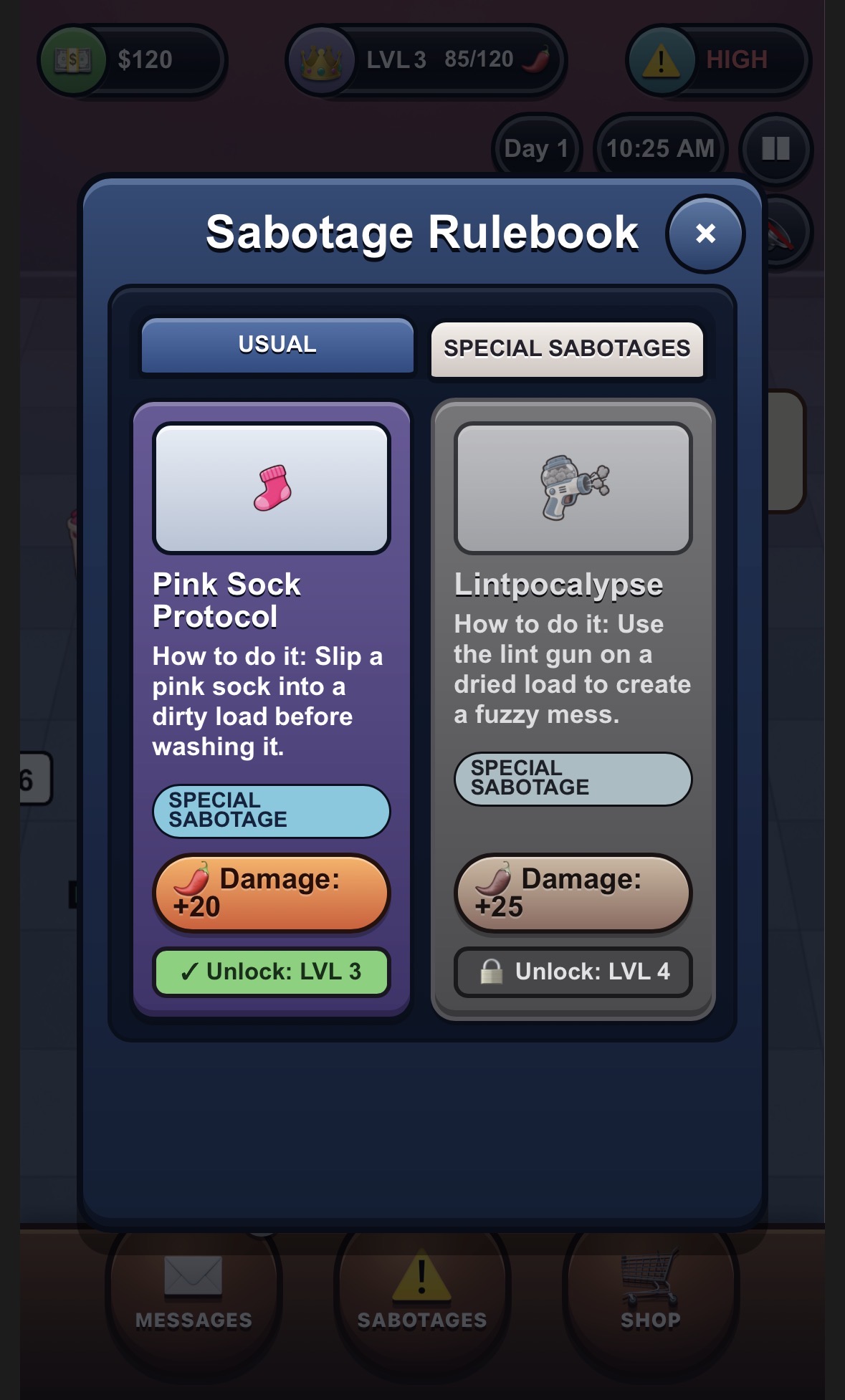
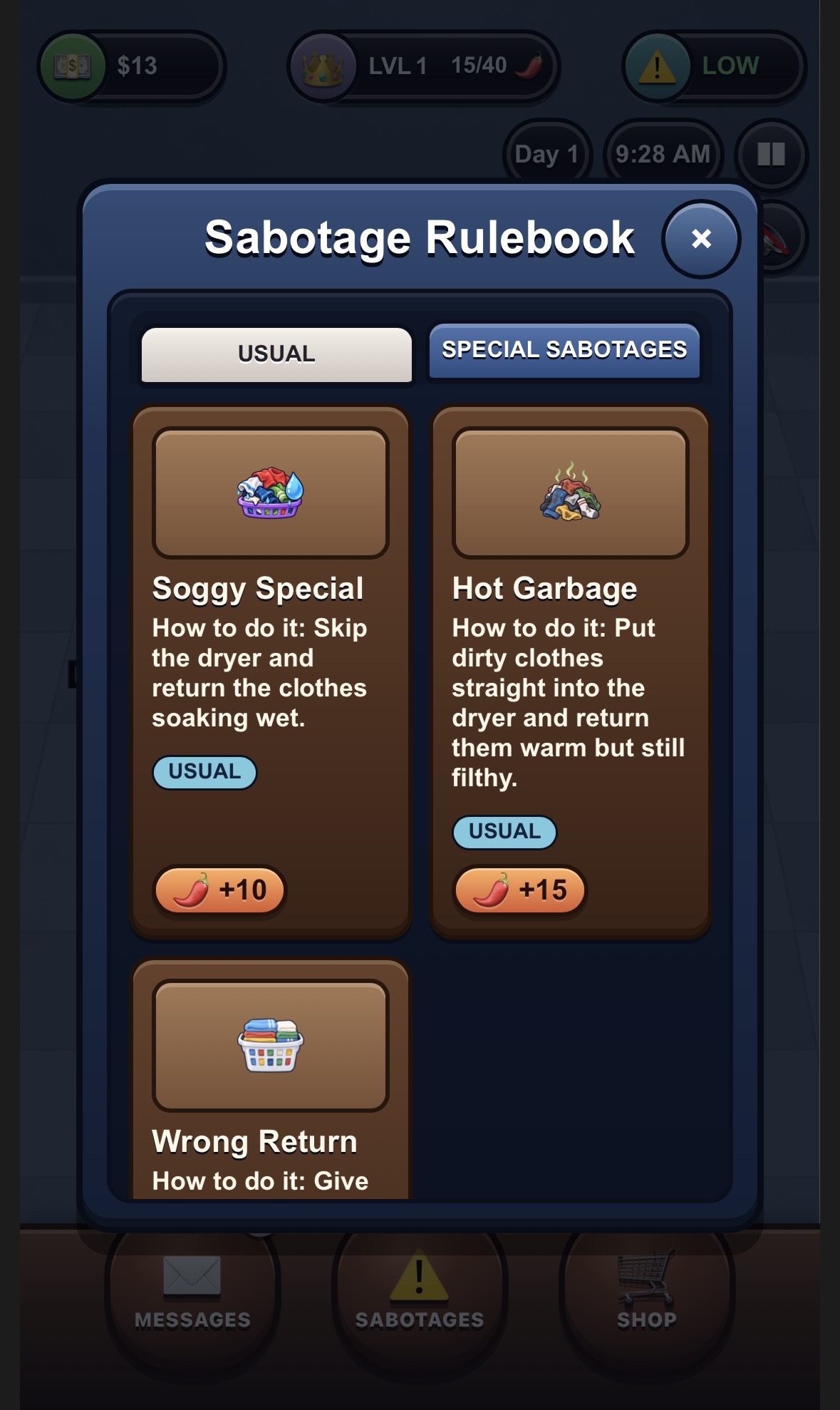
The mischievous twist is that you are also tasked with sabotaging those same customers to earn Damage Points for the Agency. The very workflow you optimize for speed, profit, and customer happiness can be deliberately twisted against them: send dirty clothes straight into the dryer for Hot Garbage, fold soaking-wet laundry into a Soggy Special, or hand over the wrong basket for a Wrong Return. As you progress, you unlock more creative sabotages like Pink Sock Protocol and Lintpocalypse, adding new ways to create chaos inside the same management loop. That extra objective makes a familiar service game more unpredictable, strategic, and funny.
Risk, Suspicion, and the Boss
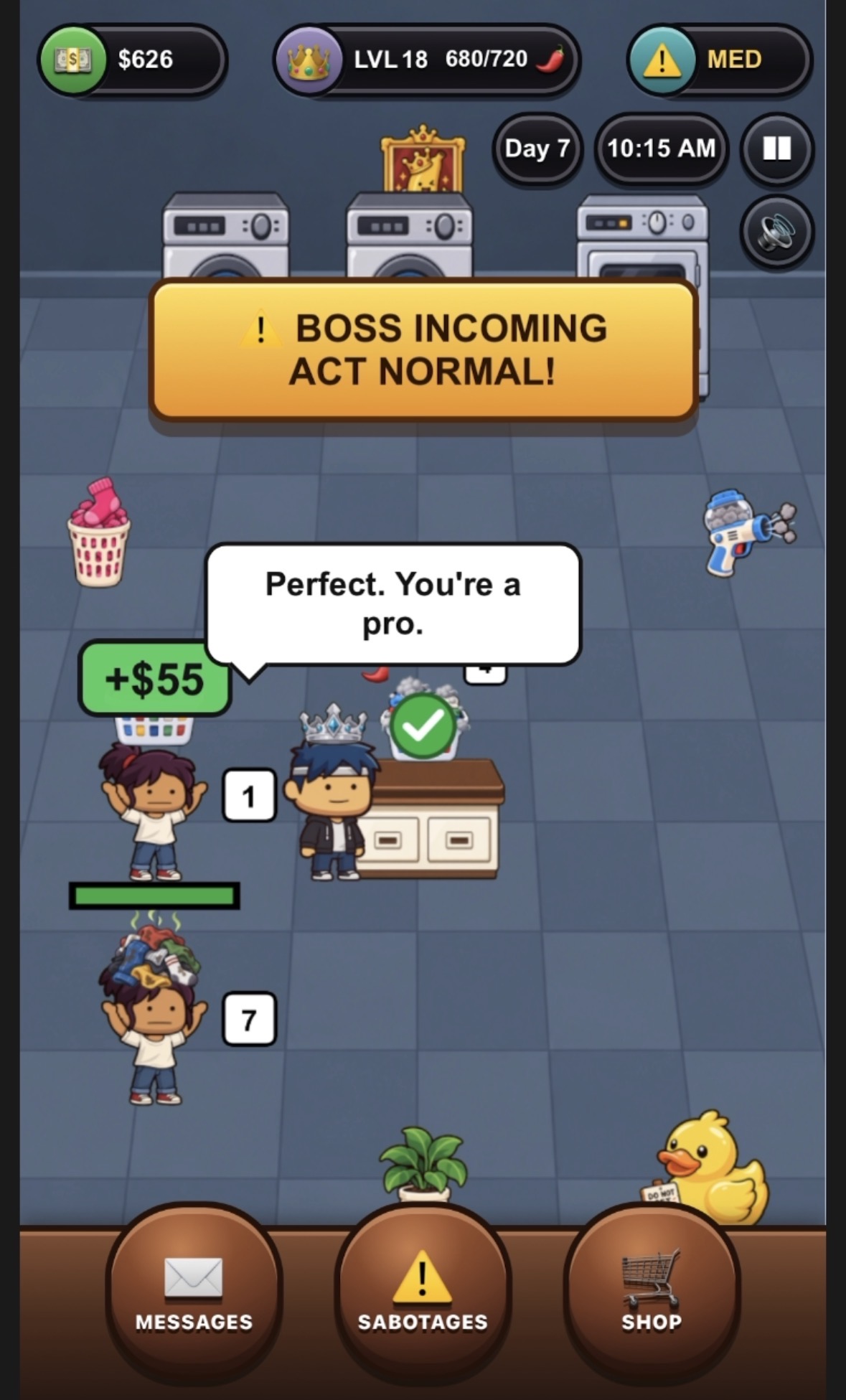
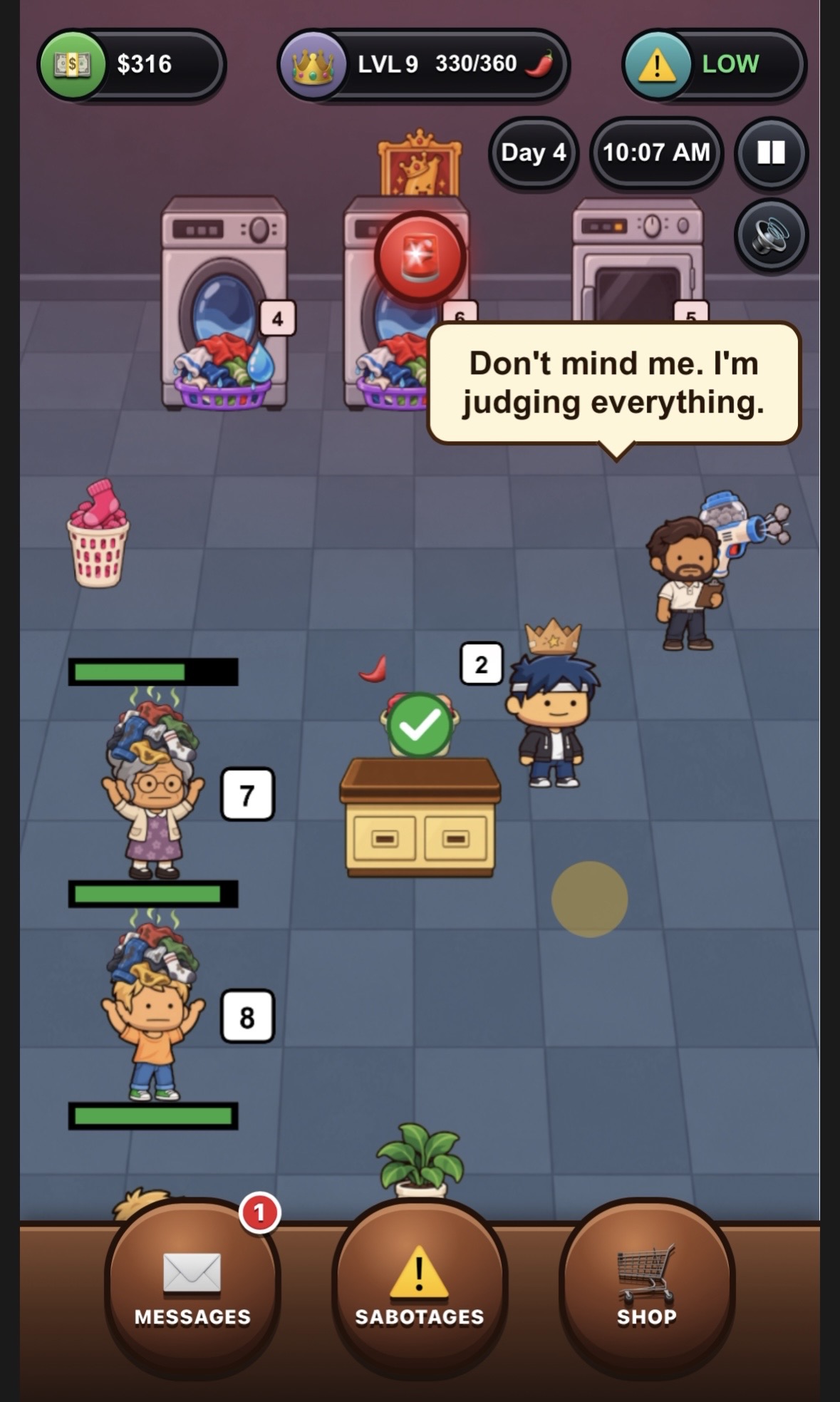
Every sabotage is a tradeoff. Damage moves your Saboteur progression forward, while higher Suspicion can chip away at that progress. Perfect service earns more money and helps bring Suspicion back down, so causing the most chaos is not always the best move. Once per shift, the boss also drops in for a surprise inspection. Get caught sabotaging and Suspicion spikes while your paycheck can take a hit. From there, it is your call: push your luck for bigger chaos, or play the perfect employee and keep things under control.
Two Verdicts. One More Shift.
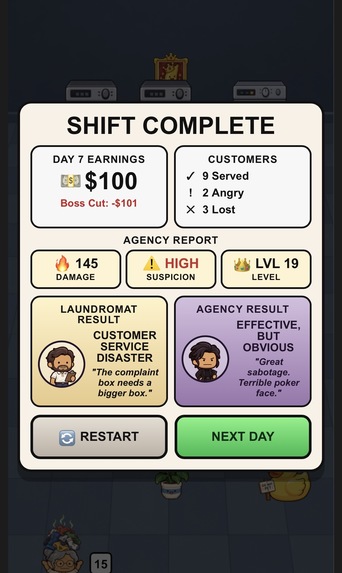
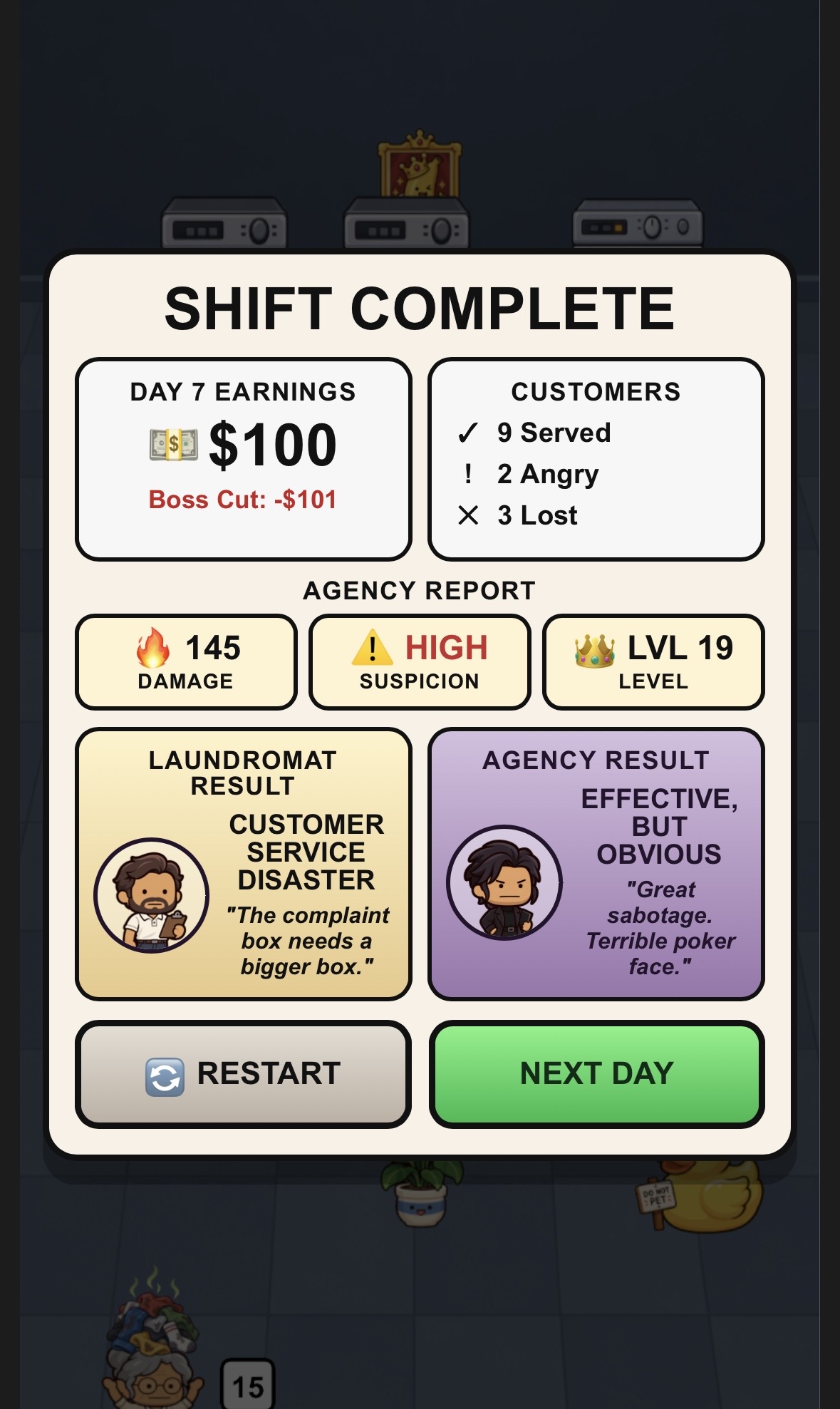
When the shift for the day ends, you are evaluated by both sides of your double life: your Laundromat Boss judges earnings and customer service, while the Agency judges Damage, Suspicion, and sabotage performance. You might be a model employee but a weak saboteur, cause huge chaos but make yourself painfully obvious, or find the sweet spot between both. Either way, the result gives you something to optimize on the next run.
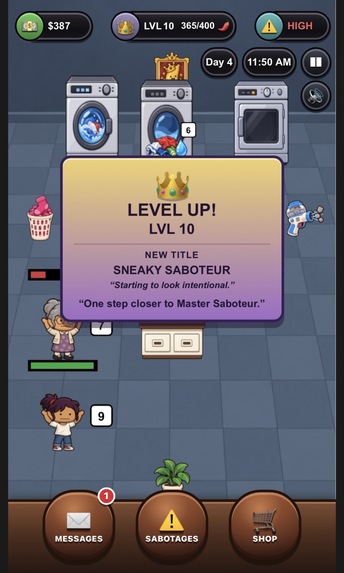
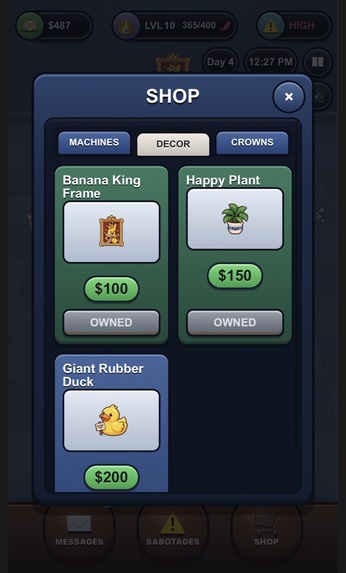
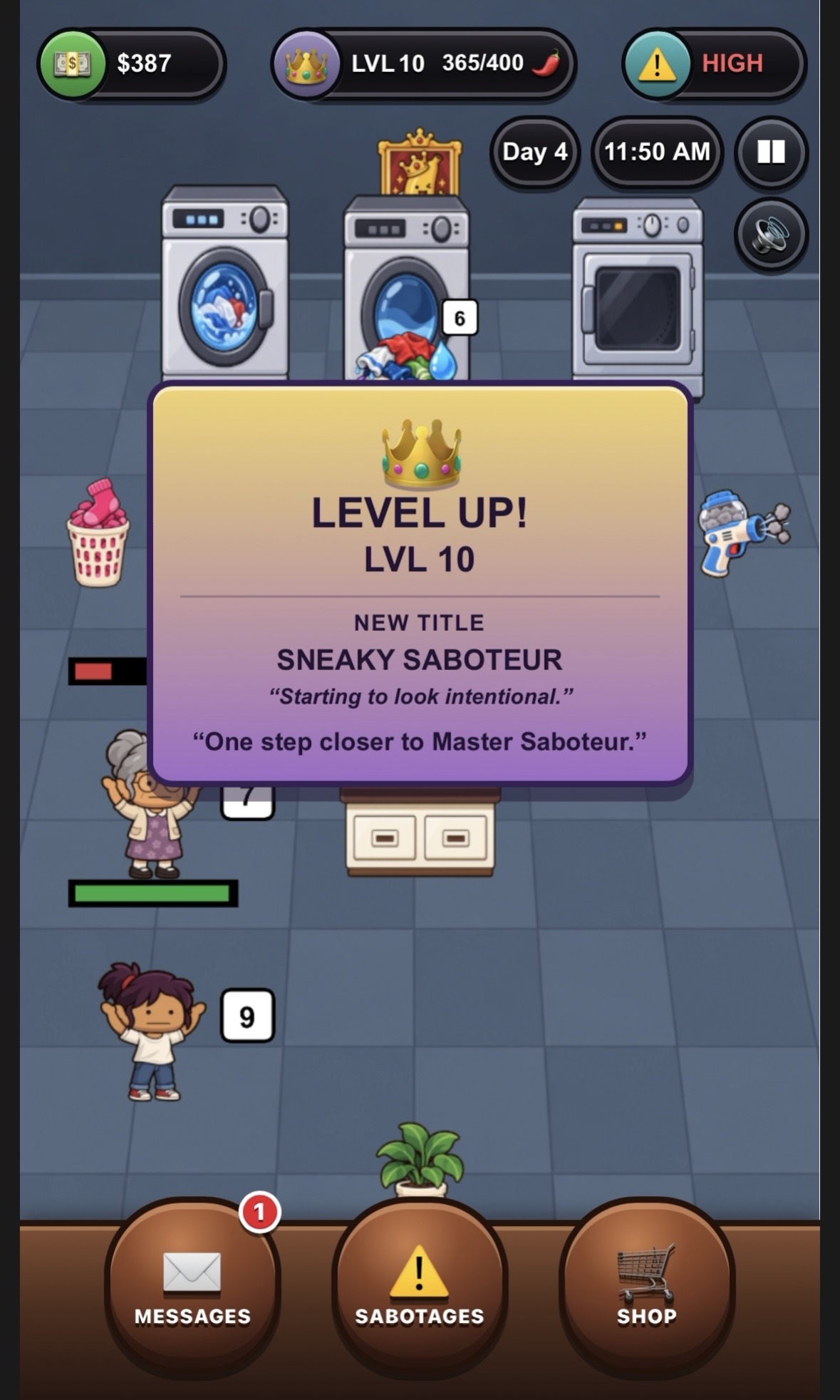
Progression is designed to feel quick & satisfying inside the short gameplay loop. Almost immediately, you are earning cash, increasing Damage, and unlocking rewards–so even a single 4.5-minute shift feels meaningful. That momentum carries into Day 2, Day 3... Day 7 and beyond with more money, more sabotage techniques, and more ways to play.
The goal is simple: keep improving, keep experimenting, and keep chasing that “just one more shift” feeling.
How we built it + AI Tools
The game was entirely prompt-built in VS Code using OpenAI Codex (GPT-5.6 Sol)
| Area | How we built it |
|---|---|
| Development | We built the game in phased milestones with Codex, manually playtesting each phase and feeding bugs and edge cases back for targeted fixes. We maintained a Build Log with 16 phases and 181 entries tracking implementations, fixes, and locked decisions. |
| Architecture | The game runs in a fixed 9:16 portrait Three.js scene with touch-first controls. Pointer Events + Raycasting power one-thumb tap-to-move interactions, while state-driven systems keep gameplay synchronized. All game logic lives in readable, unminified index.html, with Three.js stored locally and all assets loaded through relative paths for fully offline play. |
| AI Assets | 100% of the game visuals & assets are also AI generated. |
What we're proud of
Seeing our design translate into the game we imagined - It was rewarding how quickly the ideas we had in our heads could become playable systems we could immediately test & tweak.
Making the prototype feel like a real game, not a rushed demo - the prototype currently includes embedded onboarding, repeatable 4.5-minute daily shifts, funny reactive dialogue, end-of-shift evaluations, and multi-day progression. There is still plenty of room for polish and growth, but the prototype already gives players a strong feel for what the full game could become.
Challenges & What We Learned
As the game grew, context management became just as important as prompting. We used a repository-level
AGENTS.mdas a persistent source of project context for Codex – capturing architecture decisions, interaction rules, state constraints, and protected behavior – so later changes stayed aligned with the existing codebase.Playtesting shaped the mobile experience. Small tweaks to timing, spacing, UI clarity, and feedback often improved the experience more than adding new features, reinforcing that good mobile feel comes from iteration, not just implementation.
What's next for Sabotage King
We're excited to:
- Get the prototype in front of more players + use their feedback to catch anything we may have overlooked, to refine the overall gameplay experience before potentially rebuilding it.
- Add more unlockable sabotages such as Shrink Surprise, Burnt Toast, Static Attack, and chain-reaction sabotages to give players new ways to create chaos as they advance.
- Add event-specific sound effects + increase shift variety with new daily targets, machine problems, tougher Boss behavior & new customer types to keep progression fresh.
Built With
- gpt-5.6-sol
- html5
- javascript
- openaicodex
- three.js
- visual-studio-code


Log in or sign up for Devpost to join the conversation.