Inspiration
Modern content creators, podcasts, and marketing teams spend nearly 70% of their time on tedious administrative tasks—manually editing long videos into short clips, generating transcripts, performing keyword research, writing tailored social captions, and cross-posting across multiple networks. We were inspired to build Sabd Studio (CreatorFlow) as a unified AI Content Operating System that eliminates this tool fragmentation and transforms long-form media into platform-ready, SEO-optimized content in just a few clicks.
What it does
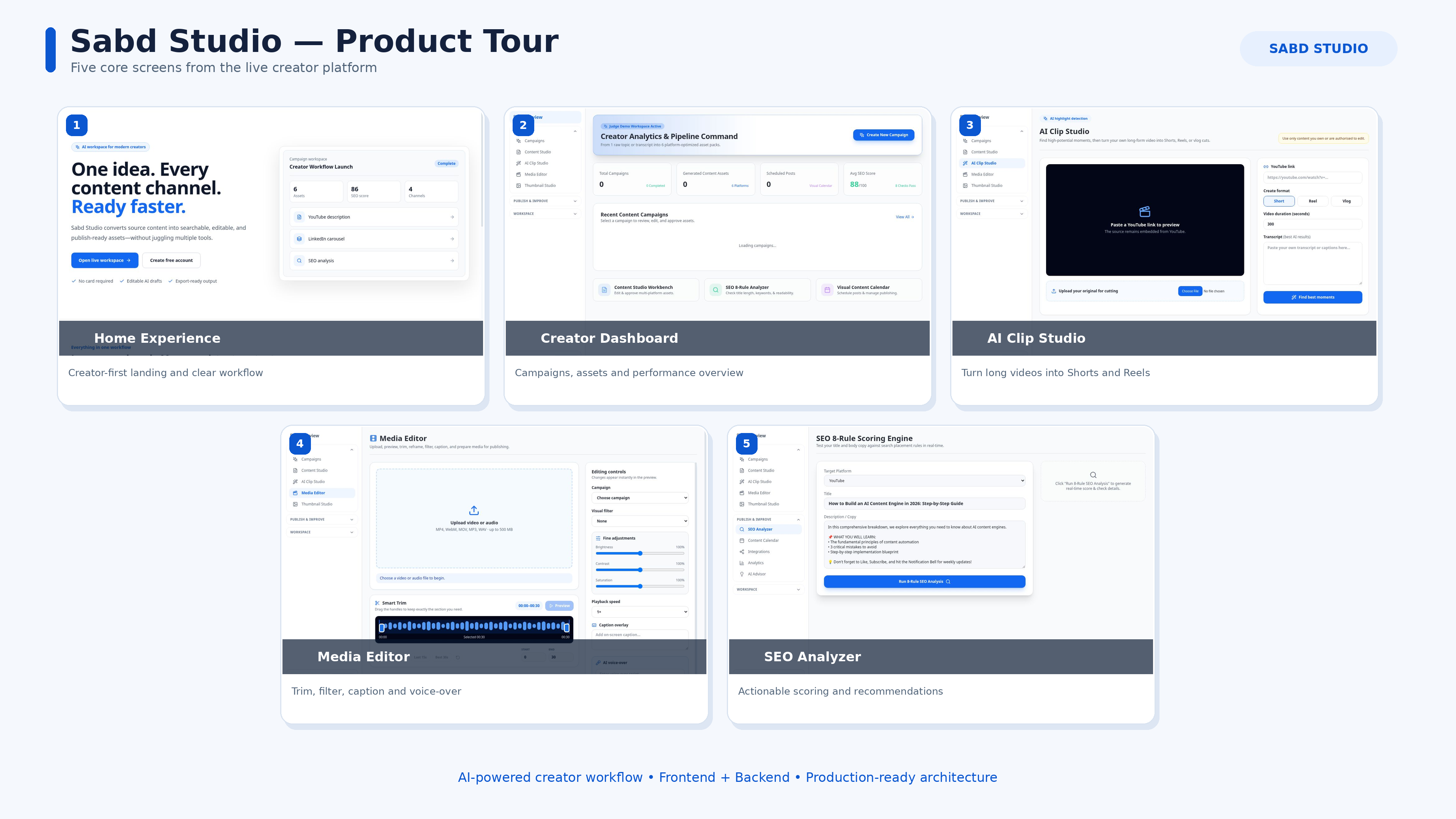
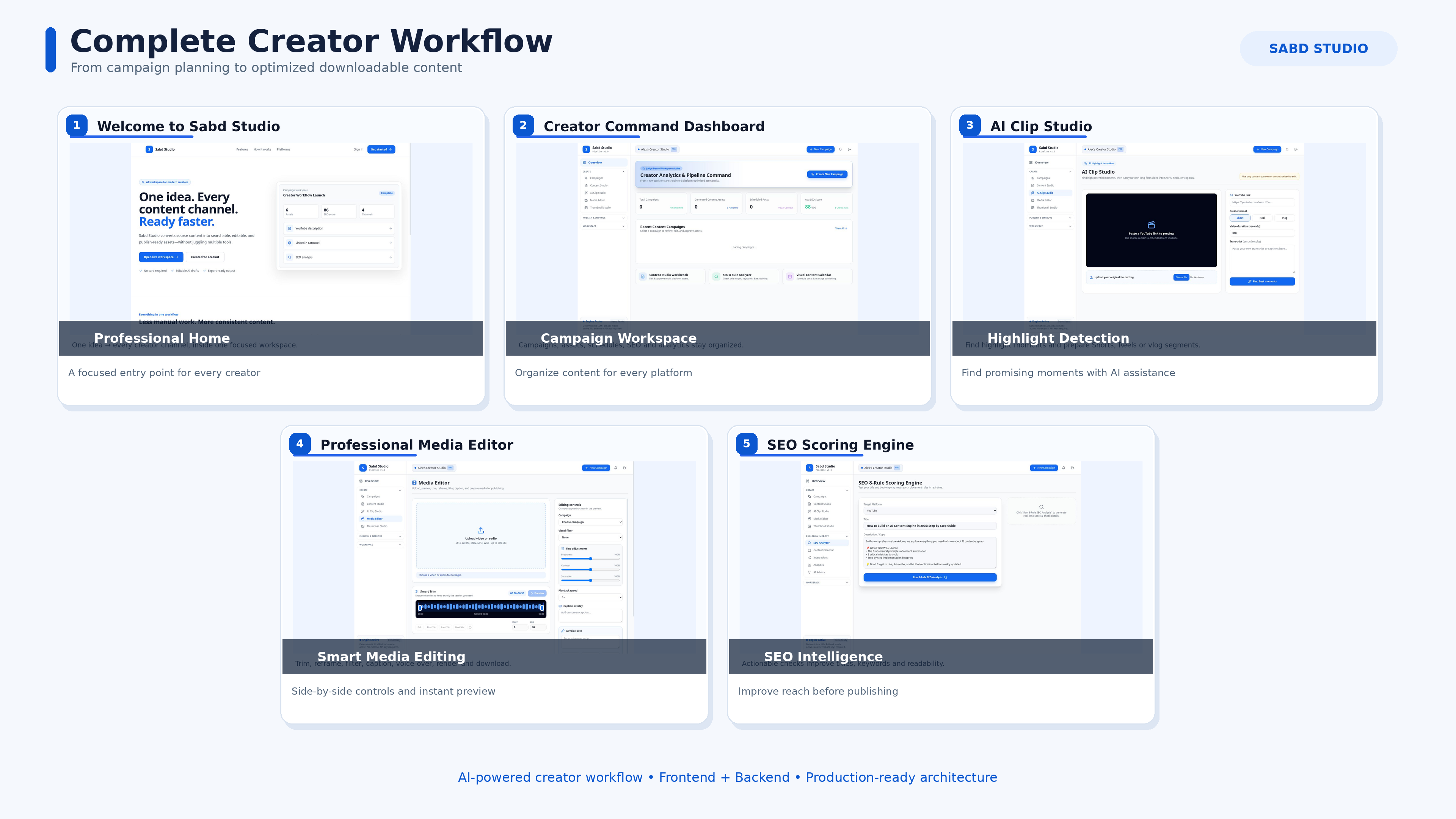
Sabd Studio serves as an all-in-one content creation engine: AI Studio & Auto-Clipper: Upload long-form audio/video to generate automatic transcripts, AI captions, and viral short vertical clips (Shorts/Reels). SEO & Growth Intelligence: Real-time keyword optimization, hashtag discovery, and viral topic recommendations. Multi-Platform Publisher: Plan and automate scheduling across YouTube, Instagram, LinkedIn, and Twitter/X. Brand Identity Kits: Maintain consistent brand voice, custom fonts, and guidelines auto-applied to generated copy
How we built it
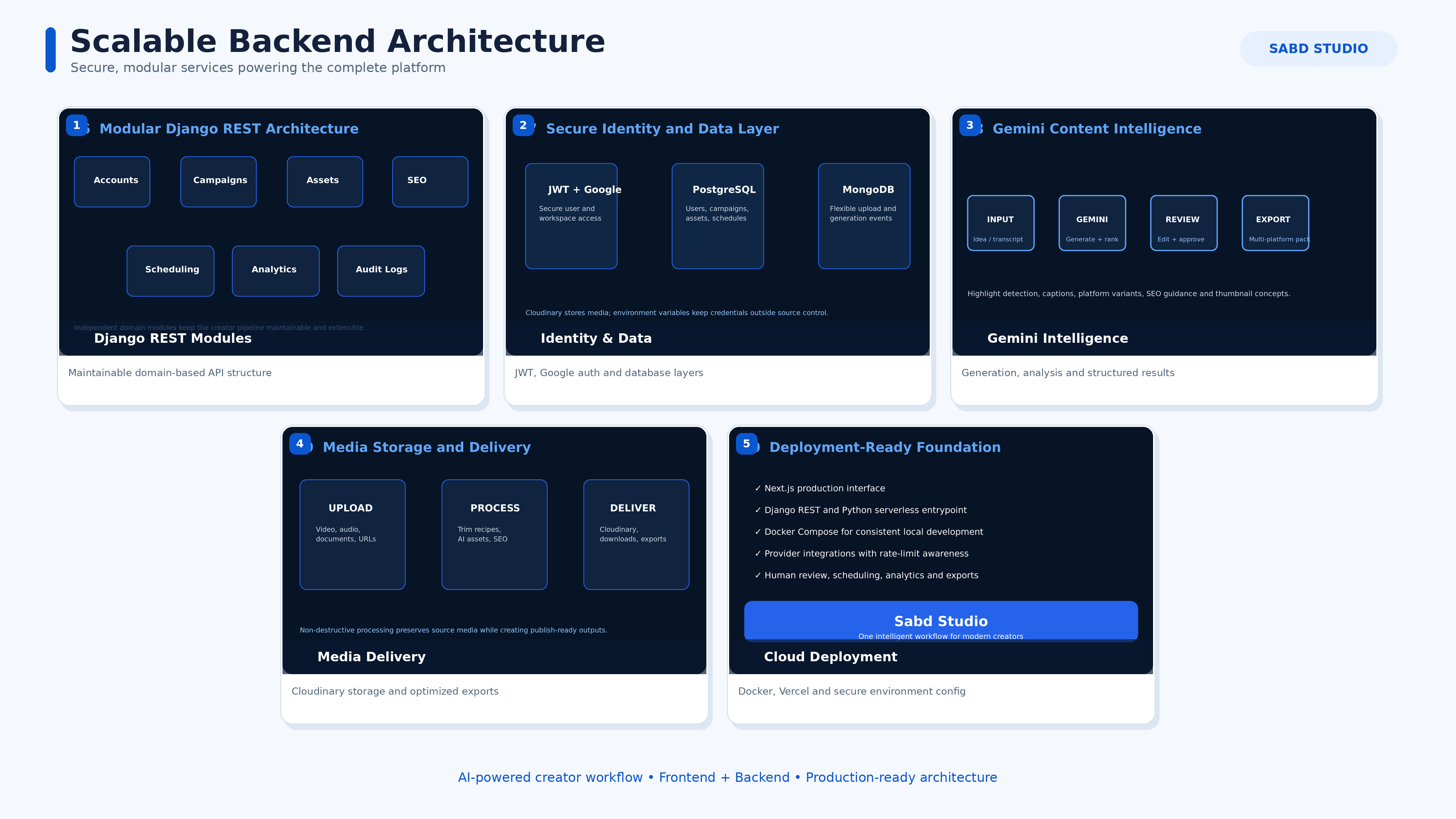
We architected a scalable, full-stack application using modern cloud-native tools: Frontend: Built with Next.js 14 (App Router), TypeScript, Tailwind CSS, and Lucide React UI icons. Backend: Engineered with Python and Django 5.1 / DRF for core domain business logic, campaign management, and JWT-authenticated APIs. Async Workers & Processing: Used Celery powered by Redis to handle long-running asynchronous background jobs like audio-to-text transcription and video rendering. Storage & Hosting: PostgreSQL for relational database management and AWS S3 / Cloud storage for handling media assets, thumbnail previews, and video files.
Challenges we ran into
Asynchronous Media Workflows: Processing large audio/video files without clogging the main server thread required fine-tuning Celery background tasks and managing persistent WebSocket updates. Unified Brand Persona Integration: Engineering prompt pipelines so generated social posts strictly followed saved Brand Kit guidelines without losing creative tone. Multi-Channel API Rate Limits: Managing distinct rate limits and token refreshments across various platform integrations while preserving scheduling reliability.
Accomplishments that we're proud of
Successfully connected complex AI transcription, SEO analysis, and multi-platform publishing into a clean, seamless Next.js dashboard. Optimized background worker performance so transcription and short-clip generation execute asynchronously in seconds rather than minutes. Created an intuitive studio interface that allows creators to edit media timelines, adjust thumbnails, and schedule posts from a single view.
What we learned
Deepened our mastery of orchestrating heavy Python media-processing workflows using Celery task queues. Standardized state management between server components and interactive media tools in Next.js 14. Learned the nuances of multi-tenant workspace permissions and API OAuth flows across popular media networks.
What's next for sabd studio
AI Voice Cloning & Auto-Dubbing: Multi-language auto-dubbing for global content reach. Advanced Video Analytics: Deep engagement heatmaps predicting audience drop-off points before publishing.Auto-Repurposing Pipelines: Fully autonomous workflows that listen to RSS video feeds and auto-generate clips, thumbnails, and drafts automatically.
Built With
- amazon-web-services
- celery
- css3
- django
- django-rest-framework
- docker
- html5
- jwt
- next.js
- node.js
- postgresql
- python
- react
- redis
- rest-api
- tailwind-css
- typescript
- vercel

Log in or sign up for Devpost to join the conversation.