-
-
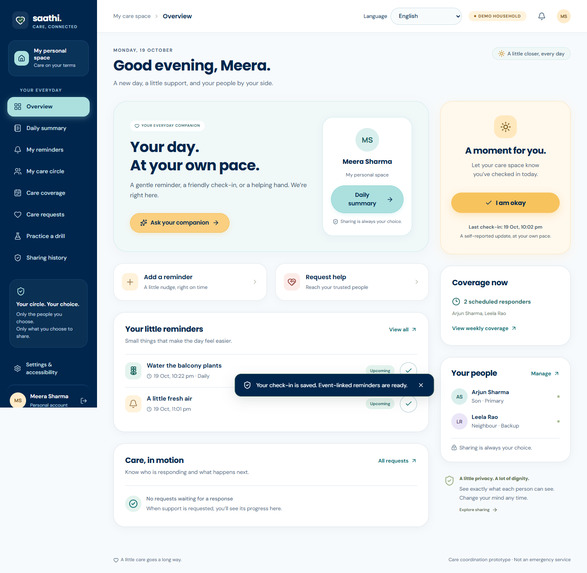
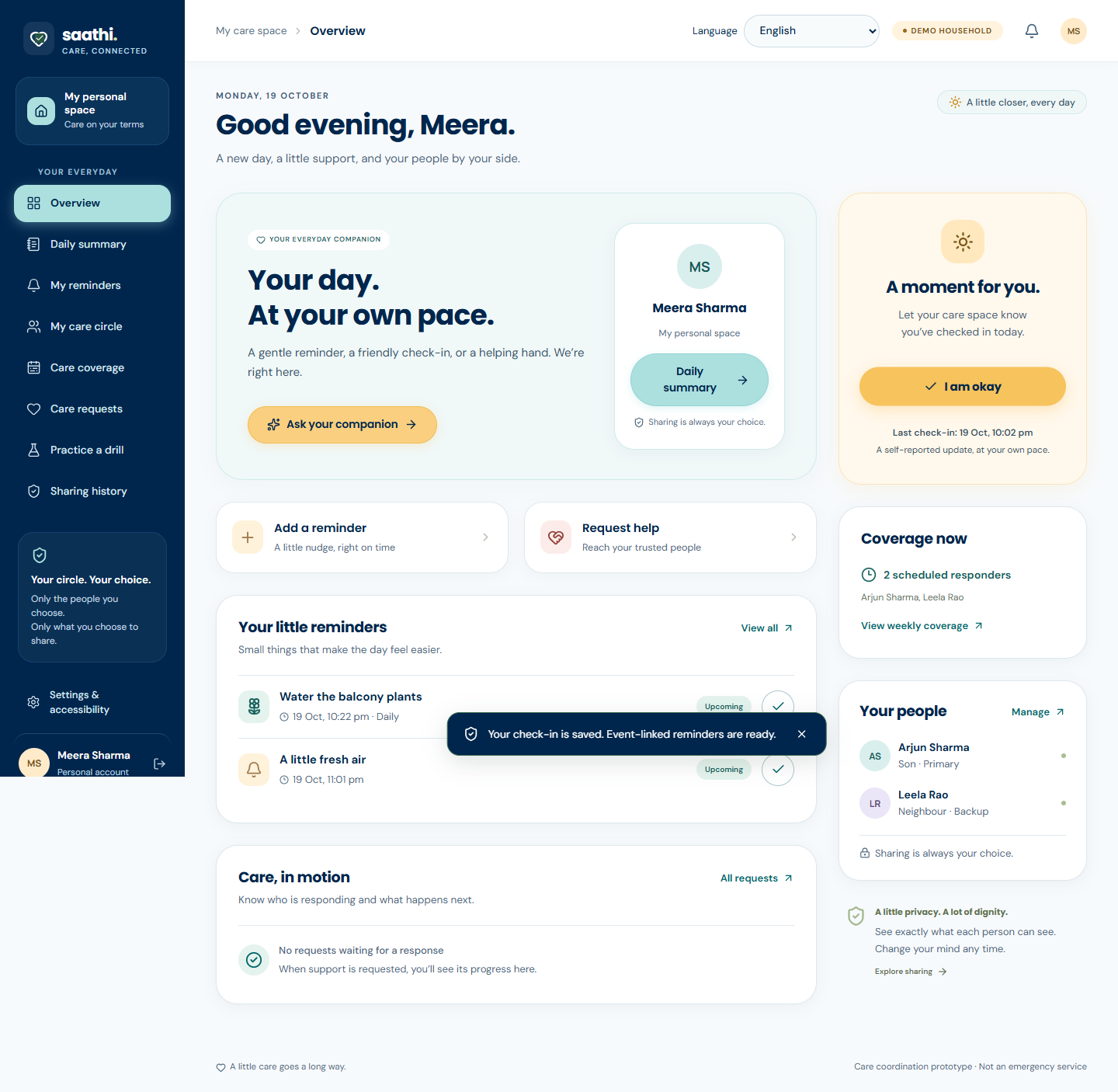
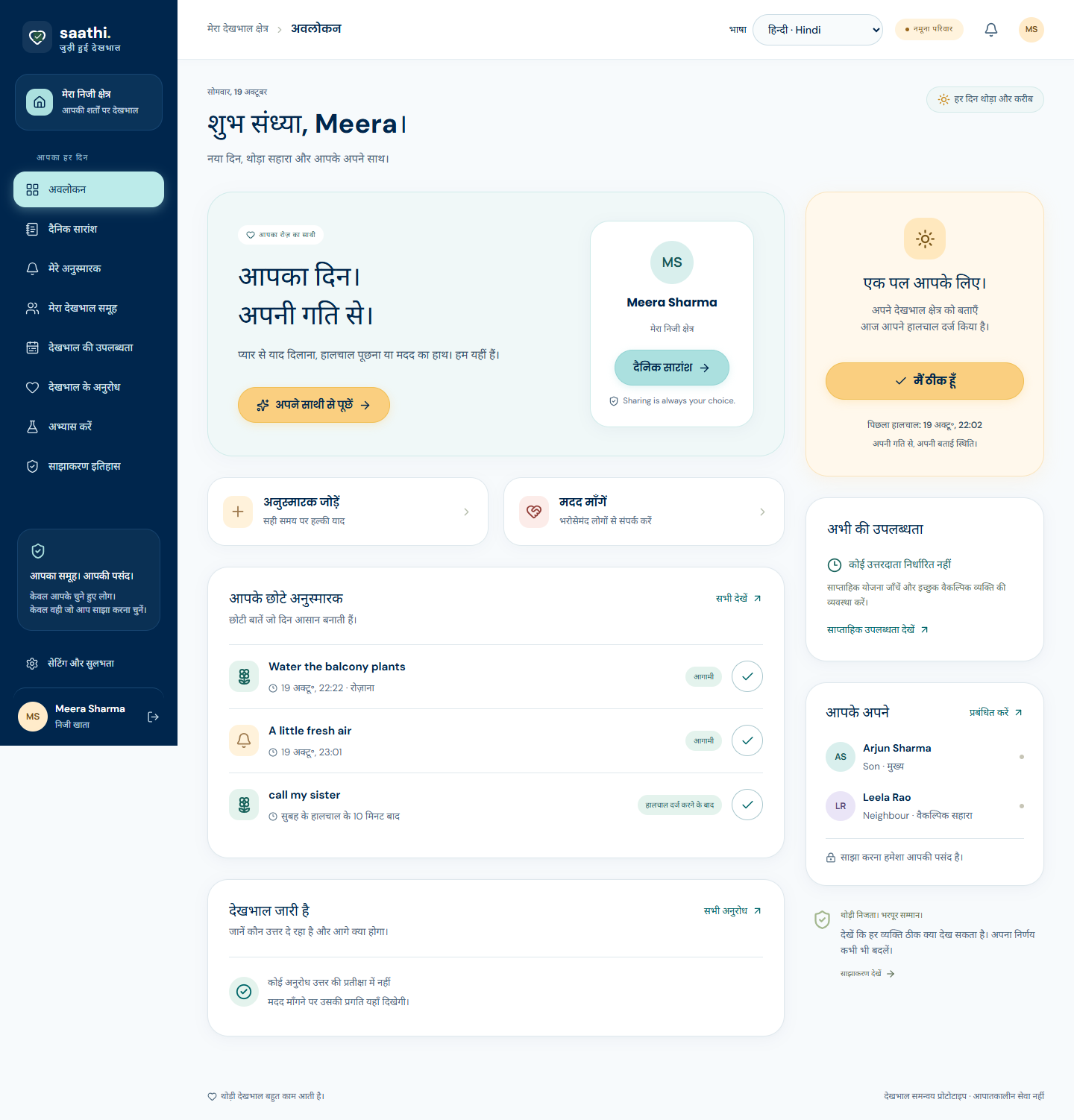
Meera’s dashboard brings daily check-ins, reminders, care requests, and trusted contacts together.
-
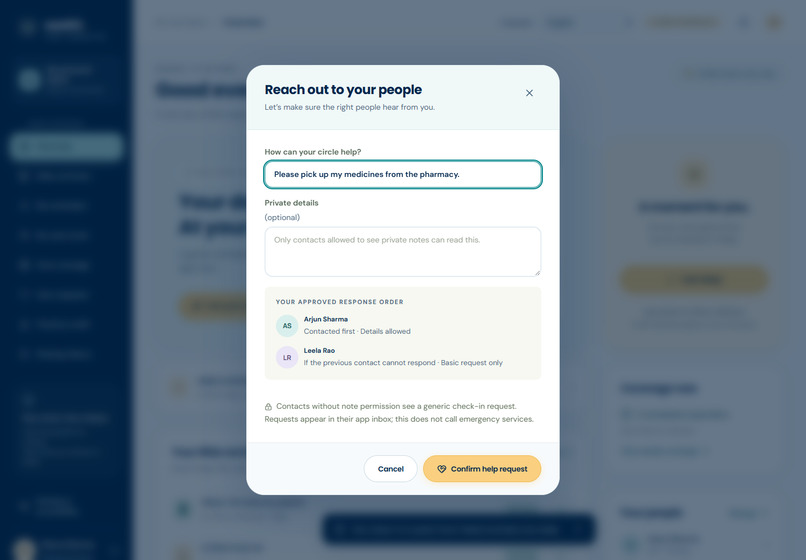
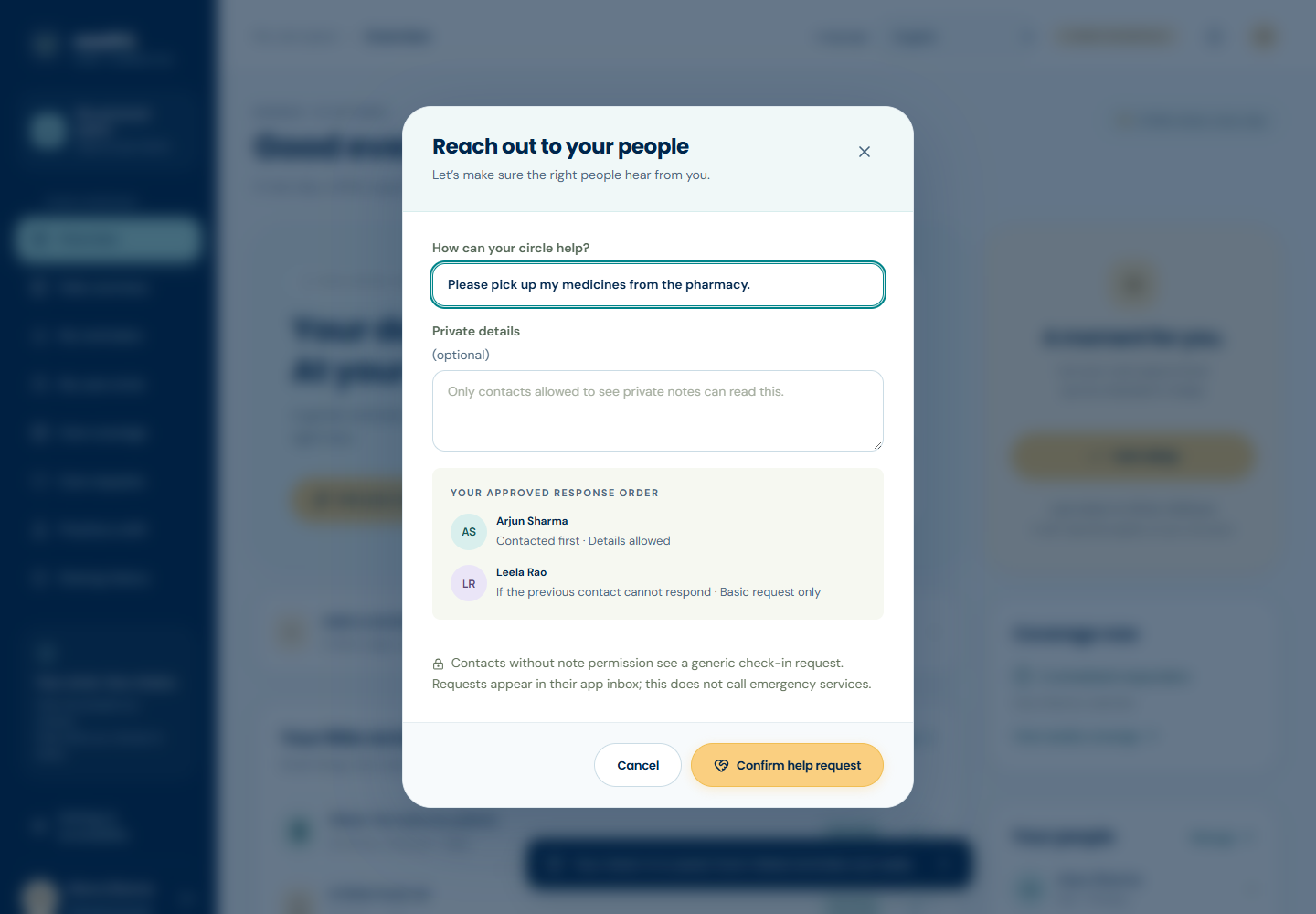
Review a support request and approved caregiver response order before sending.
-
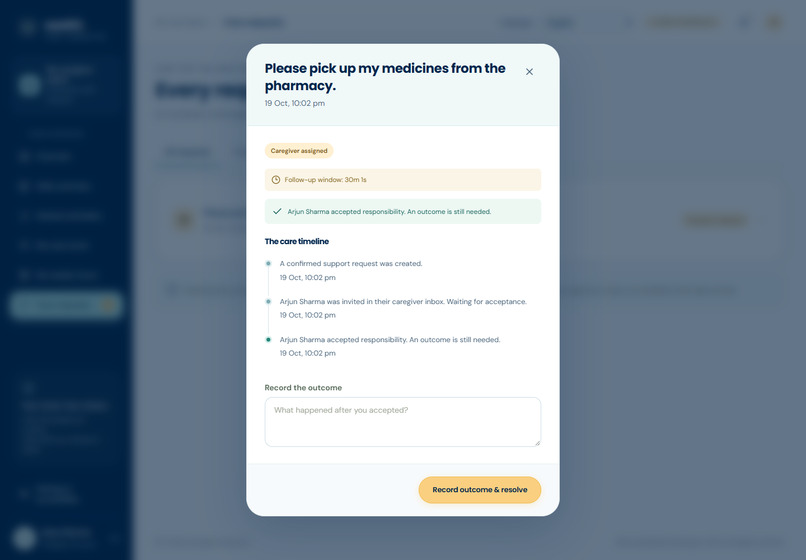
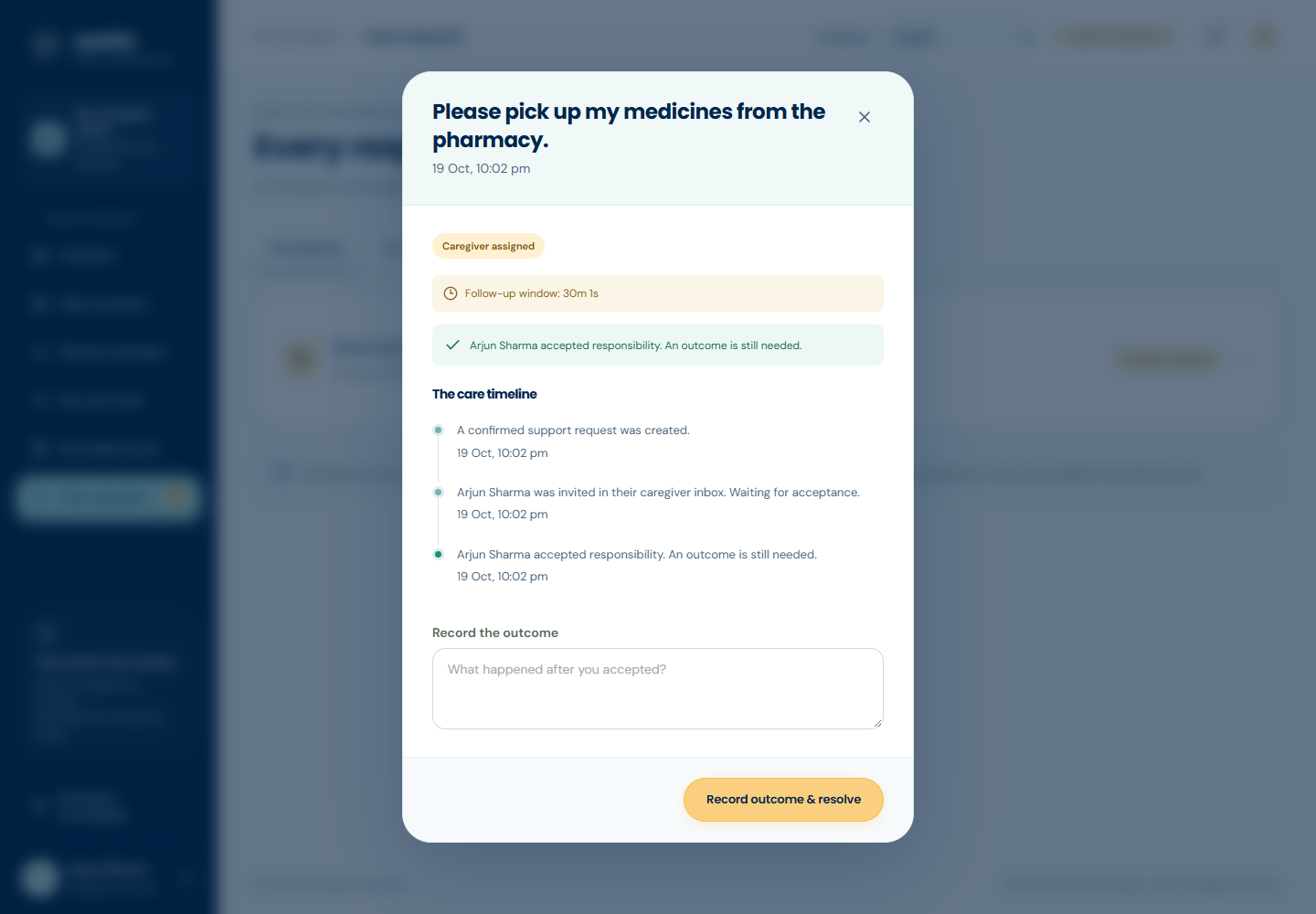
Arjun accepts responsibility, making it clear who is handling the request.
-
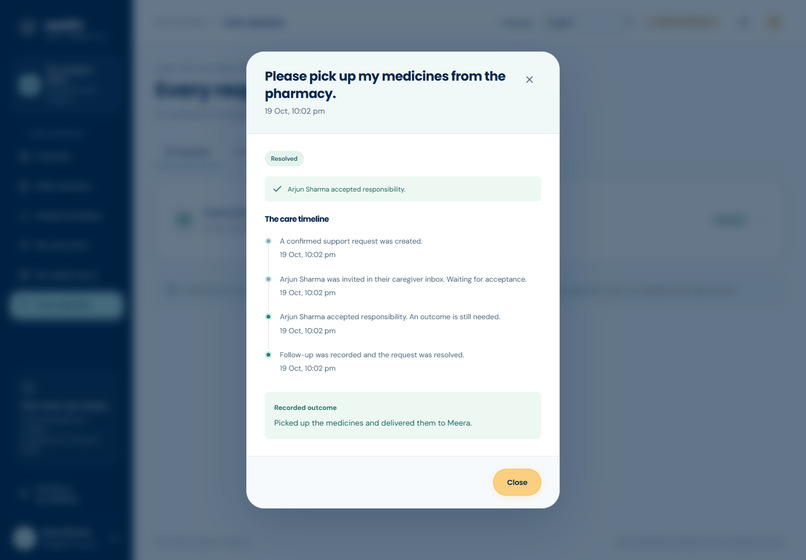
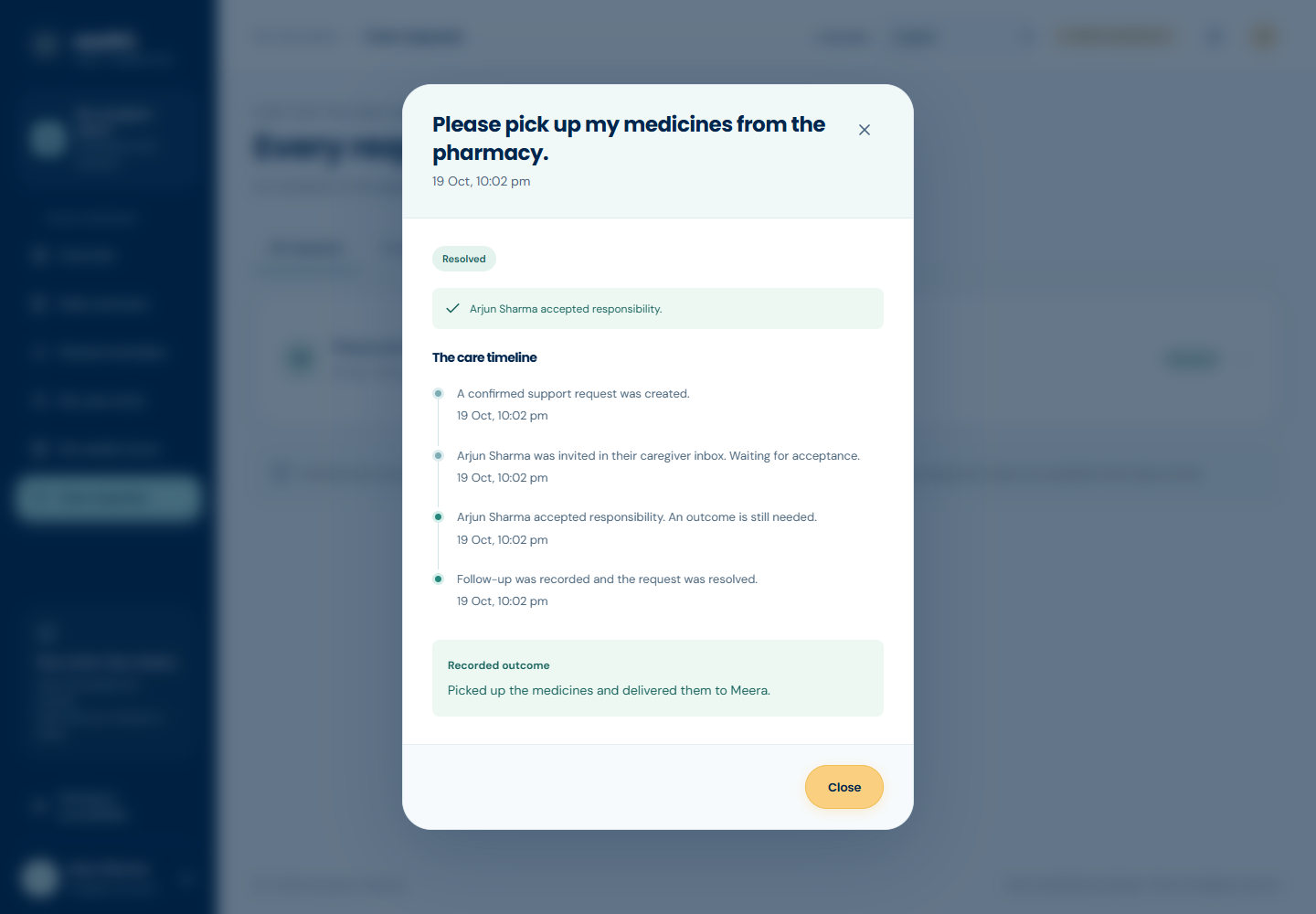
A recorded outcome closes the request and shows what support was provided.
-
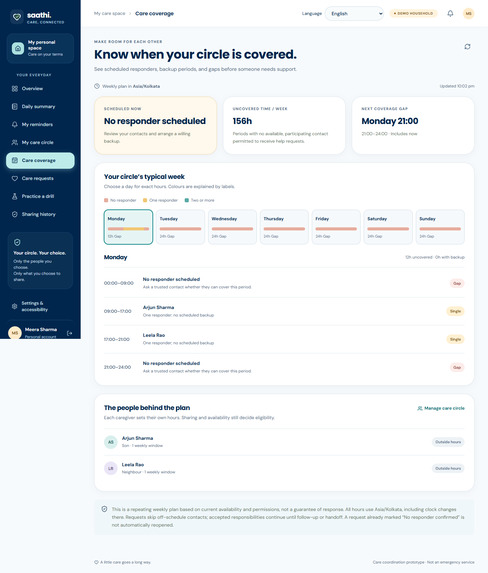
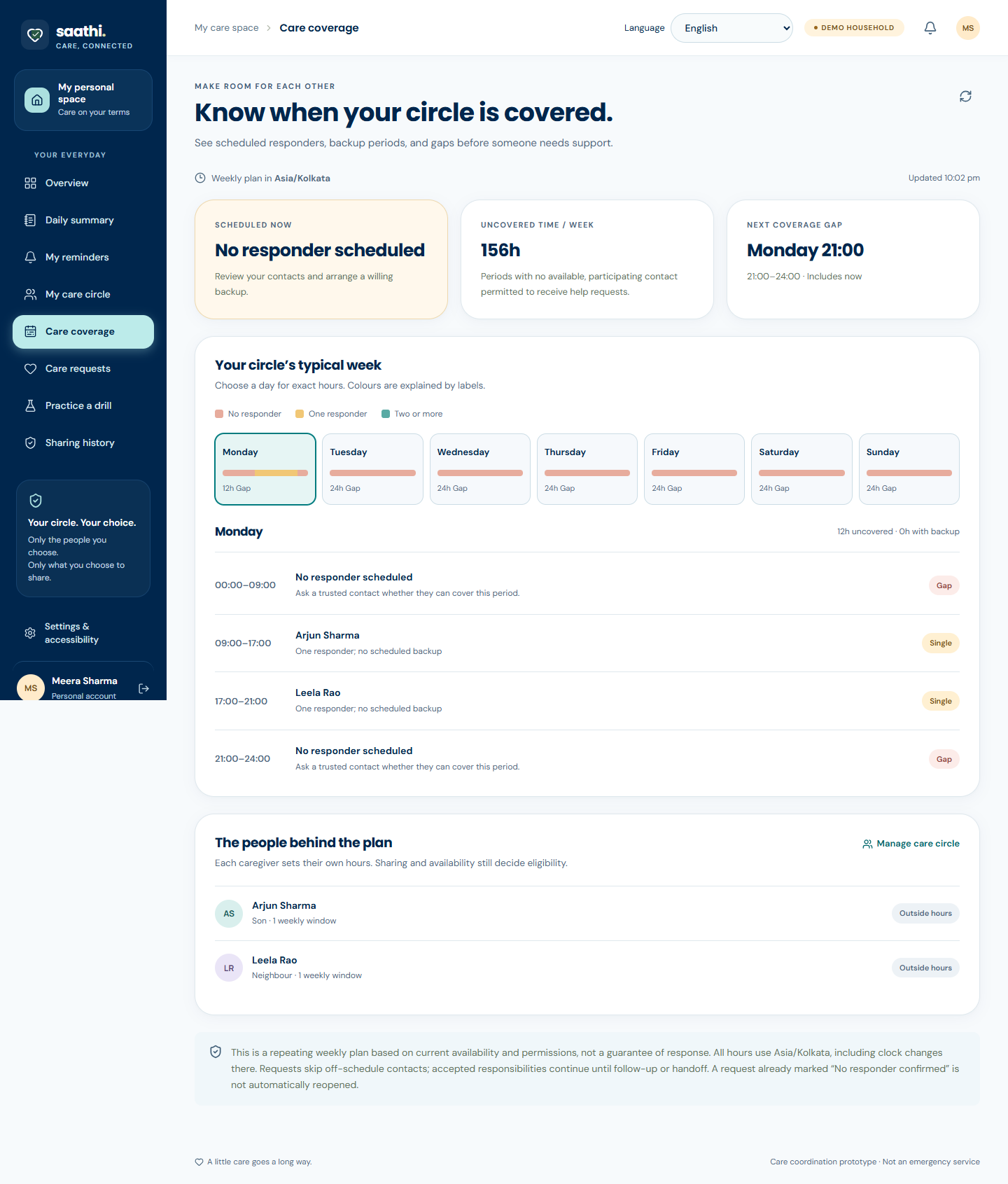
Weekly coverage shows caregiver availability and gaps so families can plan ahead.
-
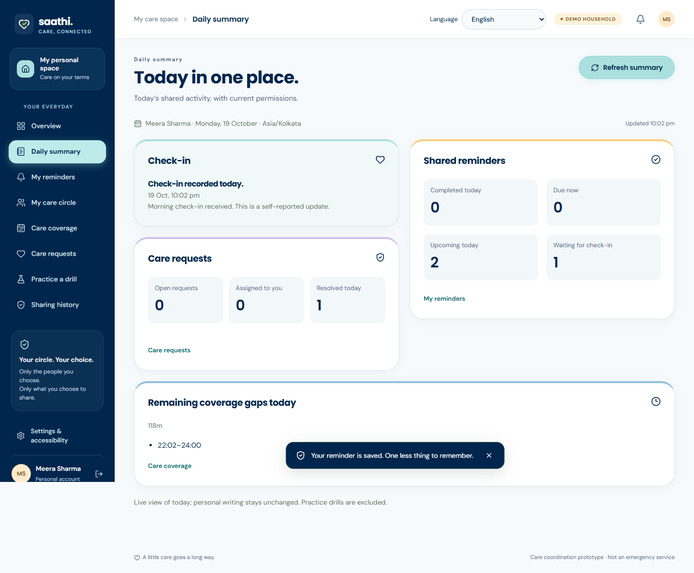
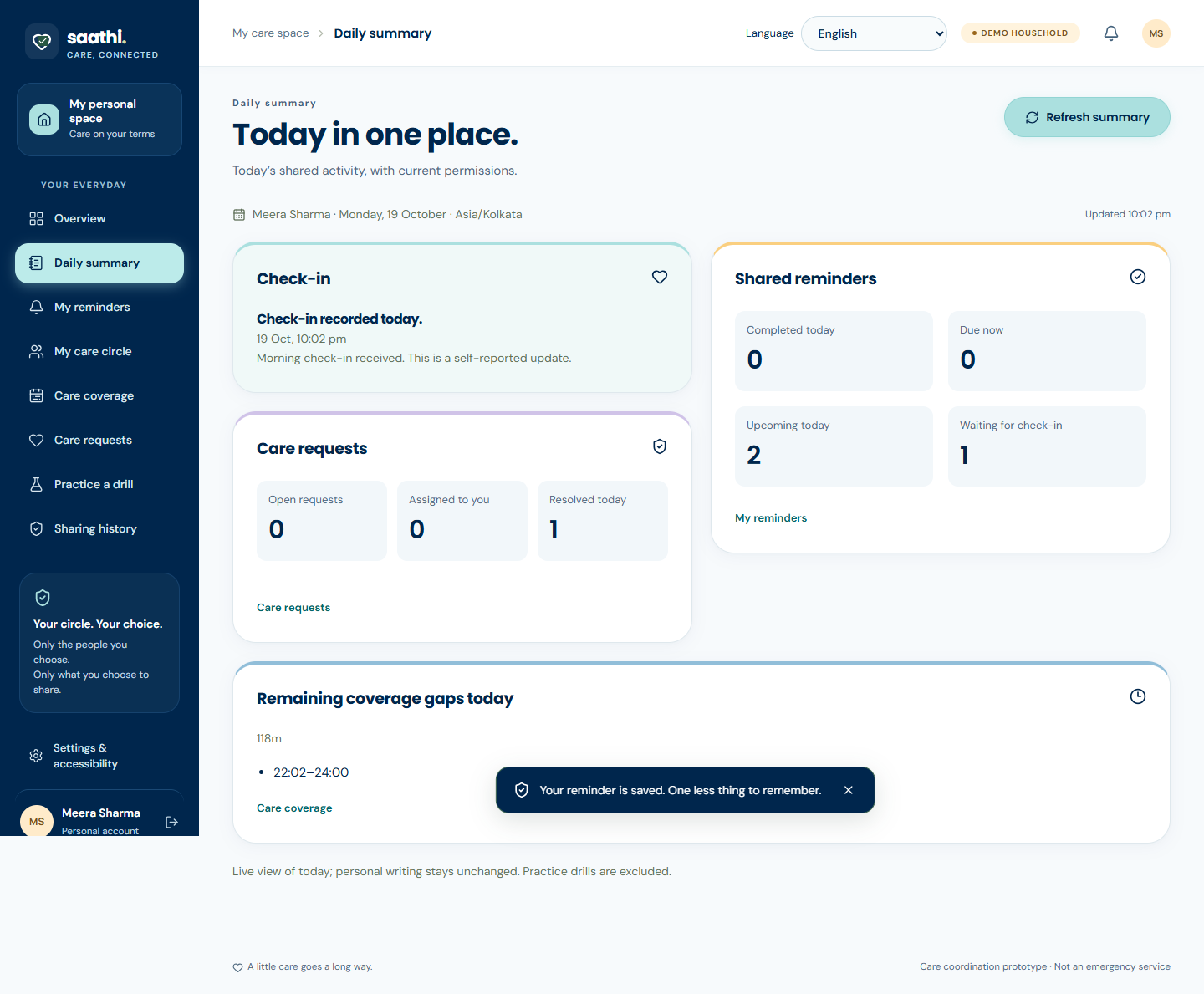
Today’s check-in, reminders, care requests, and remaining coverage in one summary.
-
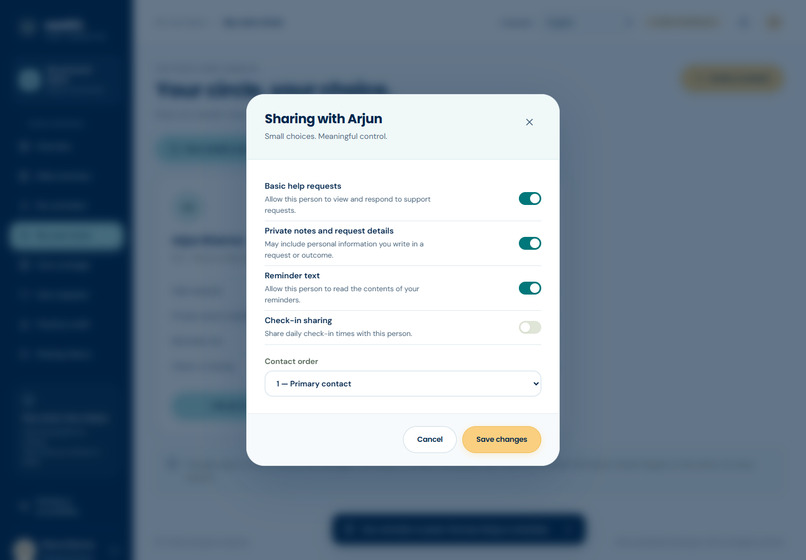
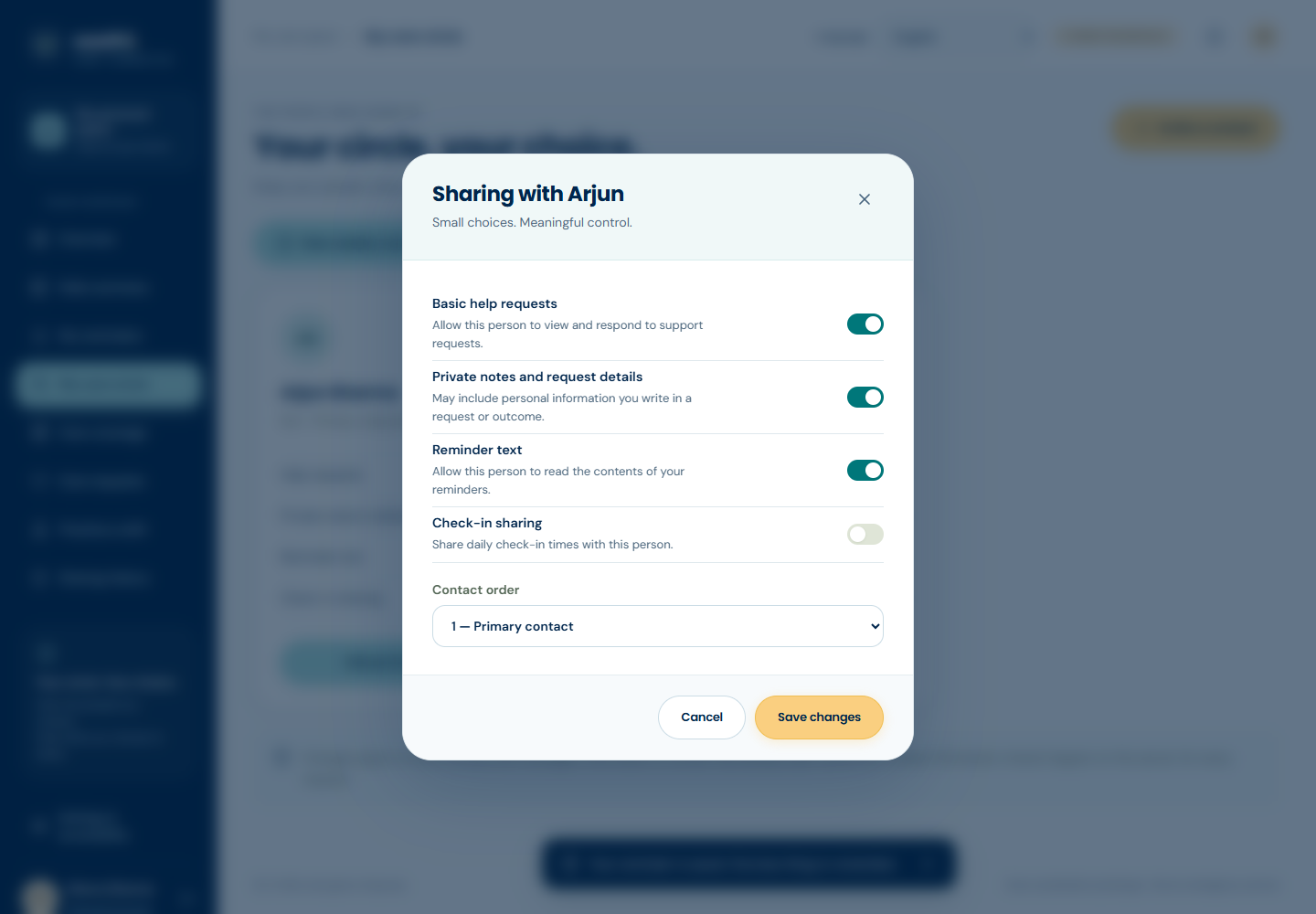
Older adults choose which requests, notes, reminders, and check-ins each contact can access.
-
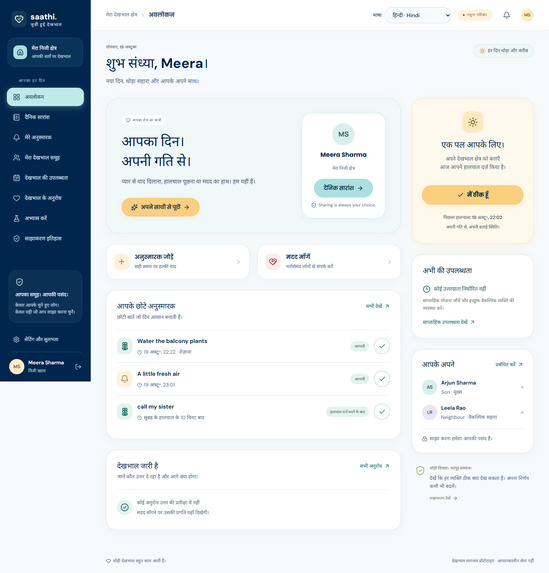
Regional-language interfaces help family members use Saathi in their preferred language.
-

A responsive mobile dashboard keeps everyday care coordination accessible on smaller screens.

Inspiration
When an older adult asks for help, a family message can leave everyone wondering: who is handling it, and has it been done?
Saathi Care AI grew from that coordination problem. The goal is to help older adults stay independent while giving trusted contacts a clear way to share responsibility.
The project was inspired by the Suraksha elder-care case study from Team StarBugs and is an independent implementation.
What it does
Saathi connects older adults and caregivers through a shared care workflow.
Older adults can check in, create reminders, request support, and decide what each contact can see. Caregivers can accept requests, record outcomes, and set weekly response hours.
Key features include:
- Care requests with primary and backup routing.
- Explicit acceptance and outcome tracking.
- Fixed-time and check-in-based reminders.
- Weekly coverage planning with visible gaps.
- Daily summaries of check-ins, reminders, and requests.
- Contact-specific permissions for personal information.
- English and 14 regional-language interfaces.
- Responsive layouts, larger text, and app installation support.
Saathi coordinates everyday support; it does not provide medical advice or emergency response.
How we built it
The frontend uses React, TypeScript, and Vite. The backend uses Express on Node.js, with SQLite storing accounts, reminders, requests, permissions, and schedules.
A server-side worker processes persisted deadlines for reminders and caregiver responses. Database transactions prevent two caregivers from claiming the same request.
Optional AI interpretation converts supported everyday-language inputs into proposals that users review before confirming. The core demo also works without an external AI provider.
The application is deployed on Render. Playwright browser tests, backend tests, and accessibility checks support verification of the main workflows.
Challenges we ran into
A key challenge was making request status meaningful. Sending a notification does not mean someone has accepted responsibility, and acceptance does not mean the task is complete. Separate workflow states make these differences visible.
Privacy also needed consistent enforcement. Sharing permissions are checked on the server across dashboards, request details, summaries, and previews.
Scheduling required handling household timezones and precise availability windows. Persisting deadlines also allows processing to resume after a server restart.
Accomplishments that we're proud of
The prototype demonstrates a complete support journey: Meera creates a request, Arjun accepts responsibility, and an outcome is recorded.
It brings that workflow together with reminders, caregiver coverage, daily summaries, and individual sharing controls. Unanswered requests remain visible, and eligible backups can be contacted.
The application also provides regional interfaces and a responsive mobile layout without requiring an AI subscription for the core experience.
What we learned
Clear ownership matters as much as the initial request. A useful coordination tool needs to show what is needed, who has accepted it, and what still needs attention.
Privacy decisions need to be enforced throughout the application. Language support also requires more than translated buttons: fonts, layout direction, and understandable consent wording all matter.
Automated checks help verify behavior, but testing with older adults and caregivers remains essential.
What's next for Saathi Care AI
The next step is usability testing with older adults and caregivers, focusing on request creation, status clarity, sharing controls, and mobile navigation.
Further plans include:
- Reviewing regional translations with fluent speakers.
- Validating opt-in notifications with a real provider.
- Testing installation and recovery on physical devices.
- Adding stronger account-deletion and data-retention controls.
- Improving the interface based on user feedback.
The current demonstration uses fictional profiles. Real-world care outcomes have not yet been evaluated.


Log in or sign up for Devpost to join the conversation.