-
-
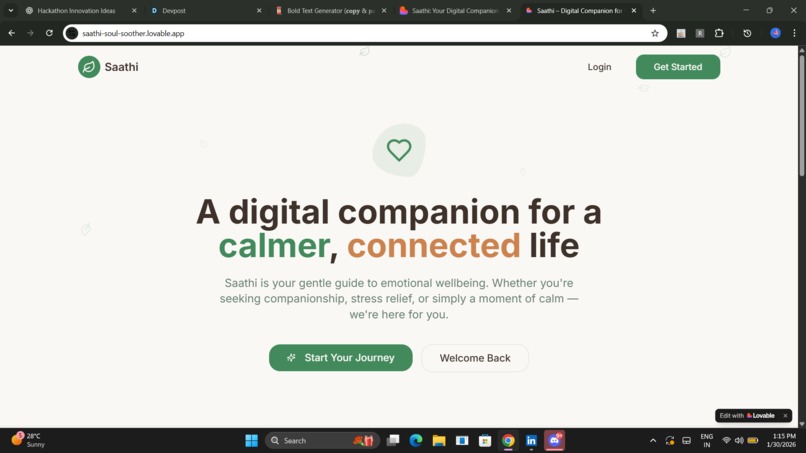
starting the website
-
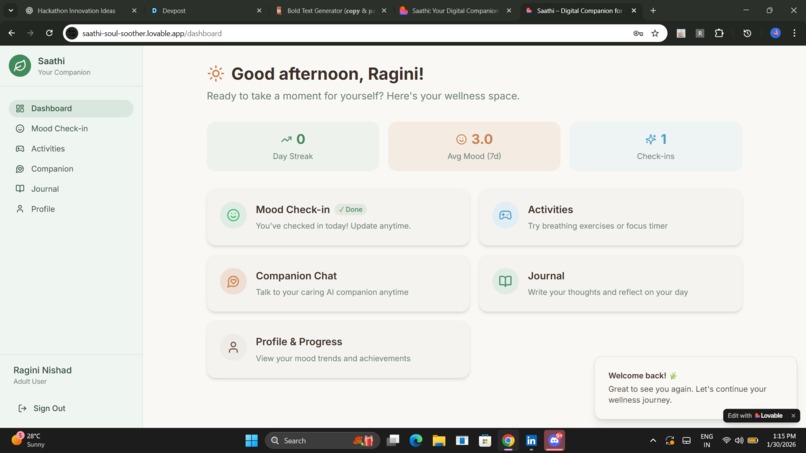
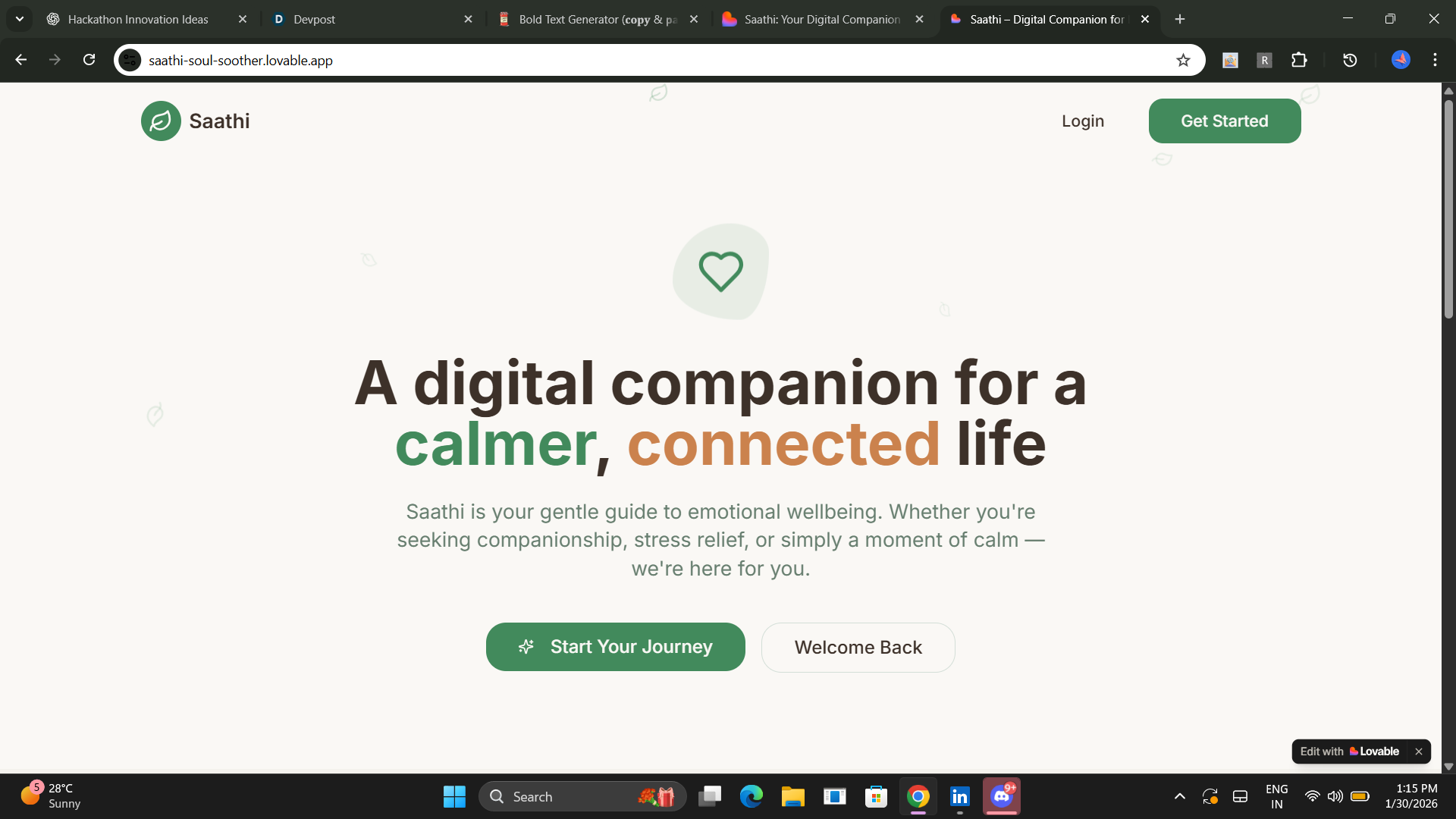
home page
-
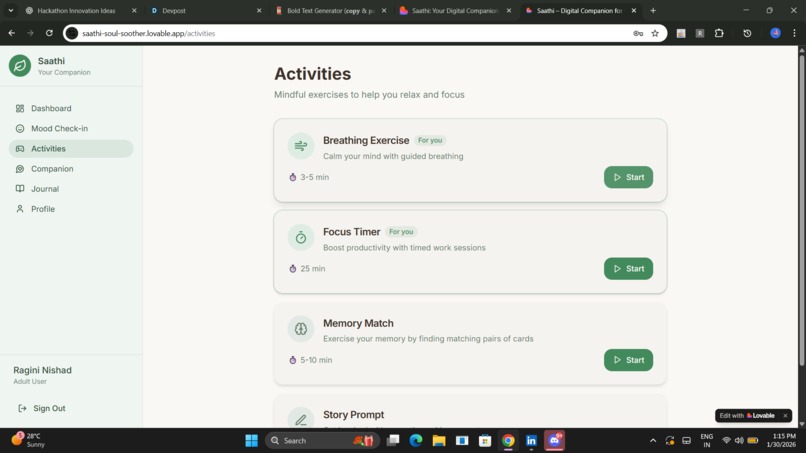
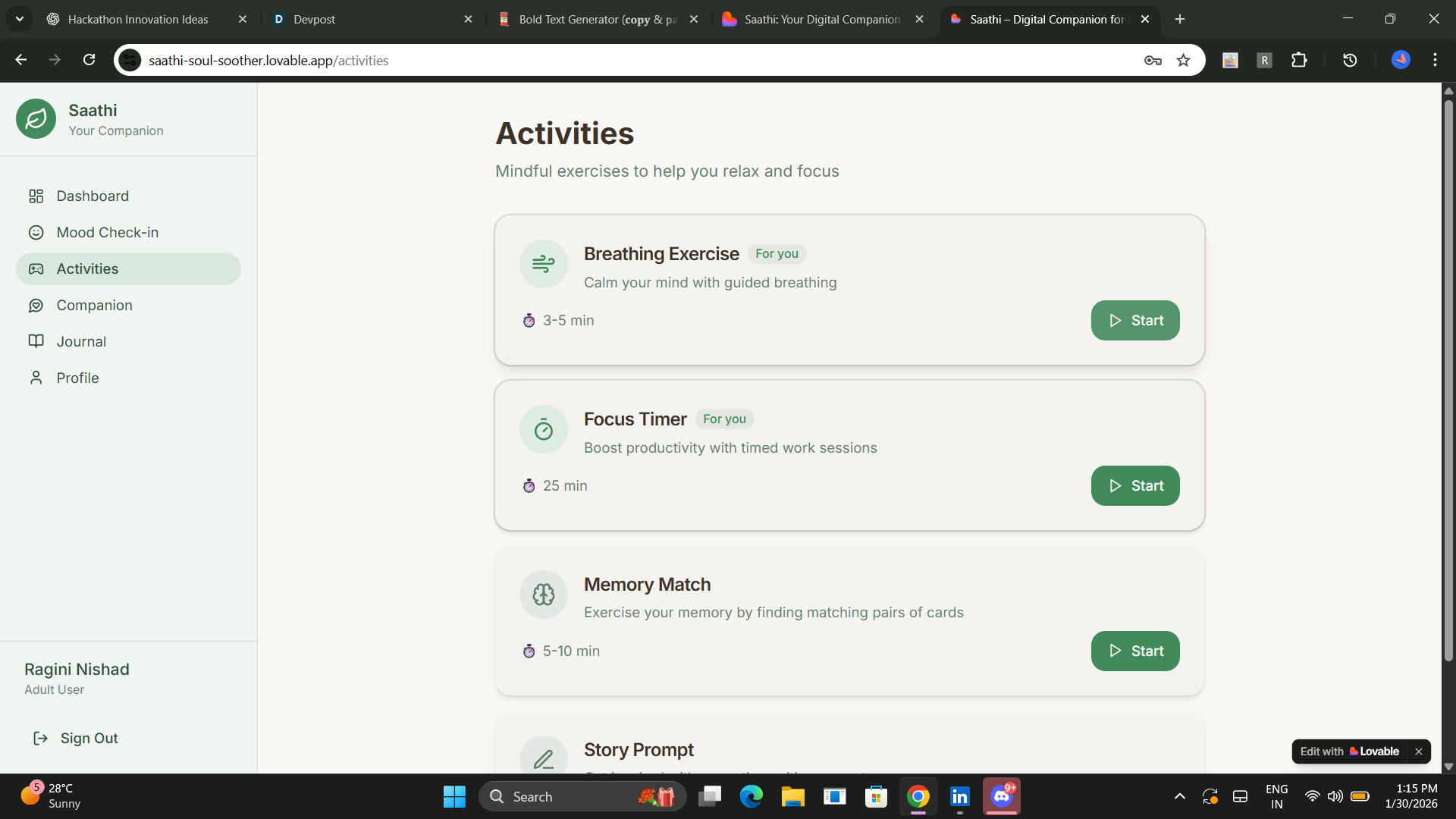
activities section
-
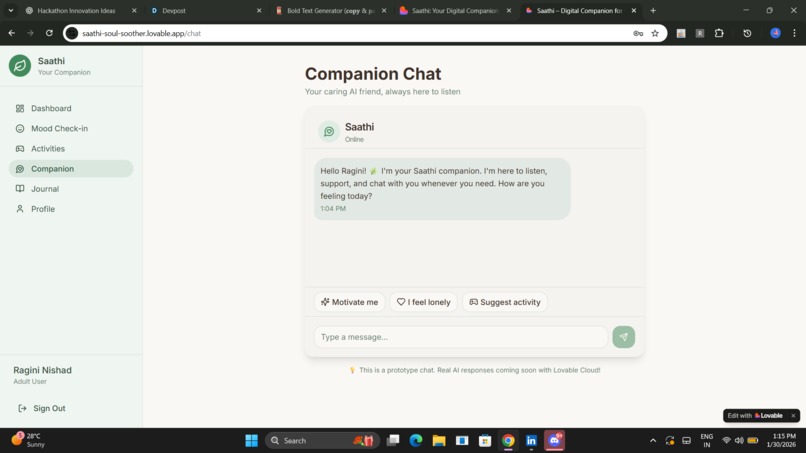
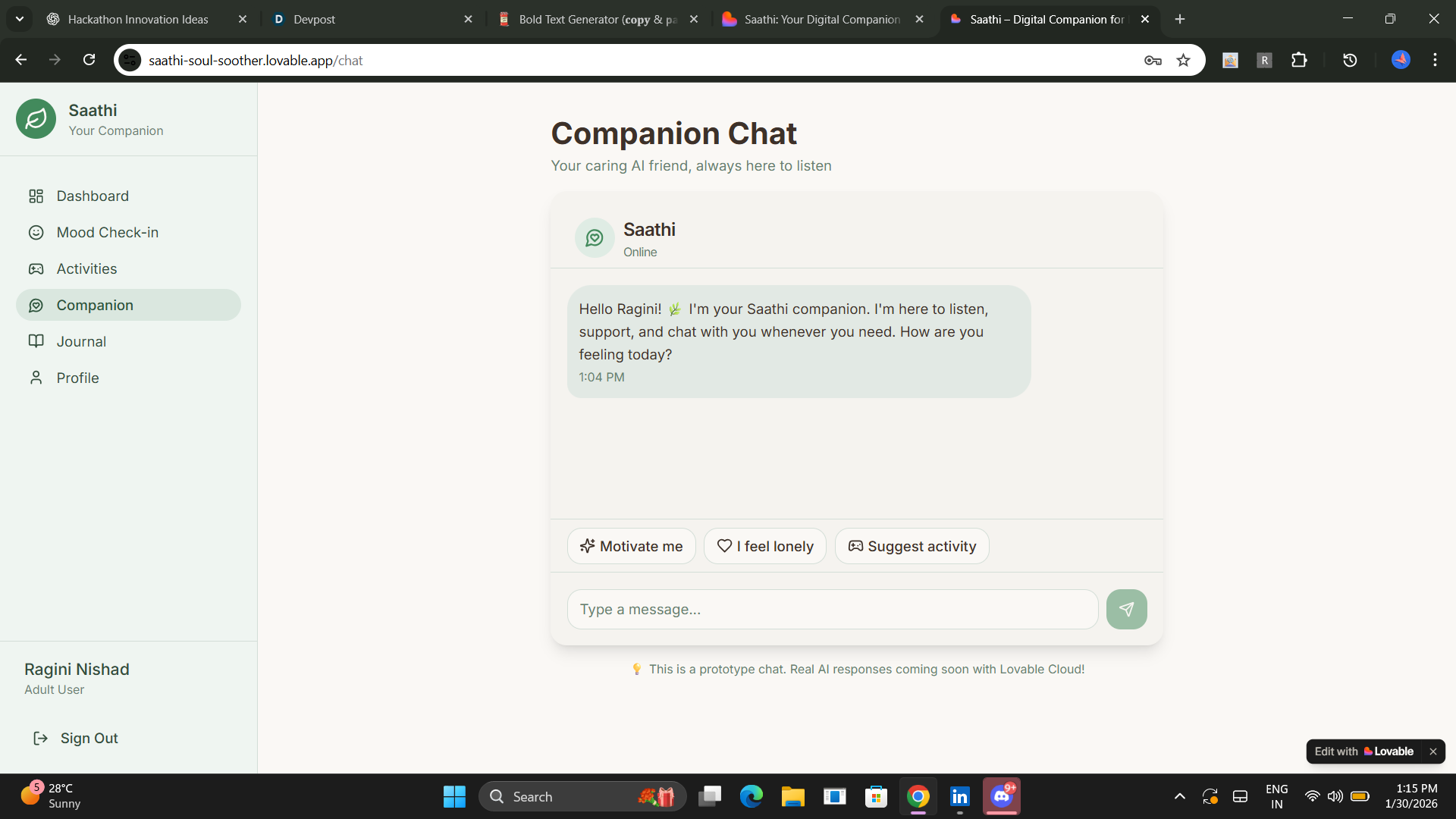
companion chat
Saathi – A Digital Companion for Emotional Wellbeing
🌟 Inspiration
The idea for Saathi came from noticing two connected problems in daily life.
Many older adults feel lonely and unheard, while many younger people struggle with constant stress and pressure.
I wanted to create one shared digital space where:
- elders could feel accompanied, valued, and mentally active, and
- younger users could relax, reflect, and feel motivated.
The aim was not to replace real therapists, but to offer a gentle, always-available companion that encourages small daily habits for better emotional wellbeing.
📚 What I Learned
Building this project taught me that simple, repeatable actions can improve mental health:
- Daily mood tracking reveals emotional patterns.
- Journaling reduces stress and increases clarity.
- Light brain activities help elders stay cognitively engaged.
- Sharing stories across generations creates belonging.
Technically, I learned how to:
- design accessible UI for different age groups,
- structure a project using microservices,
- connect frontend to multiple REST APIs,
- and apply basic sentiment analysis to personalize responses.
To summarise weekly emotions, I used an average mood score:
[ \text{Weekly Mood Average} = \frac{1}{7}\sum_{i=1}^{7} m_i ]
where ( m_i ) is the mood value of each day.
🛠️ How I Built the Project
The system is divided into small services that work together.
Frontend
- Responsive and accessible web UI
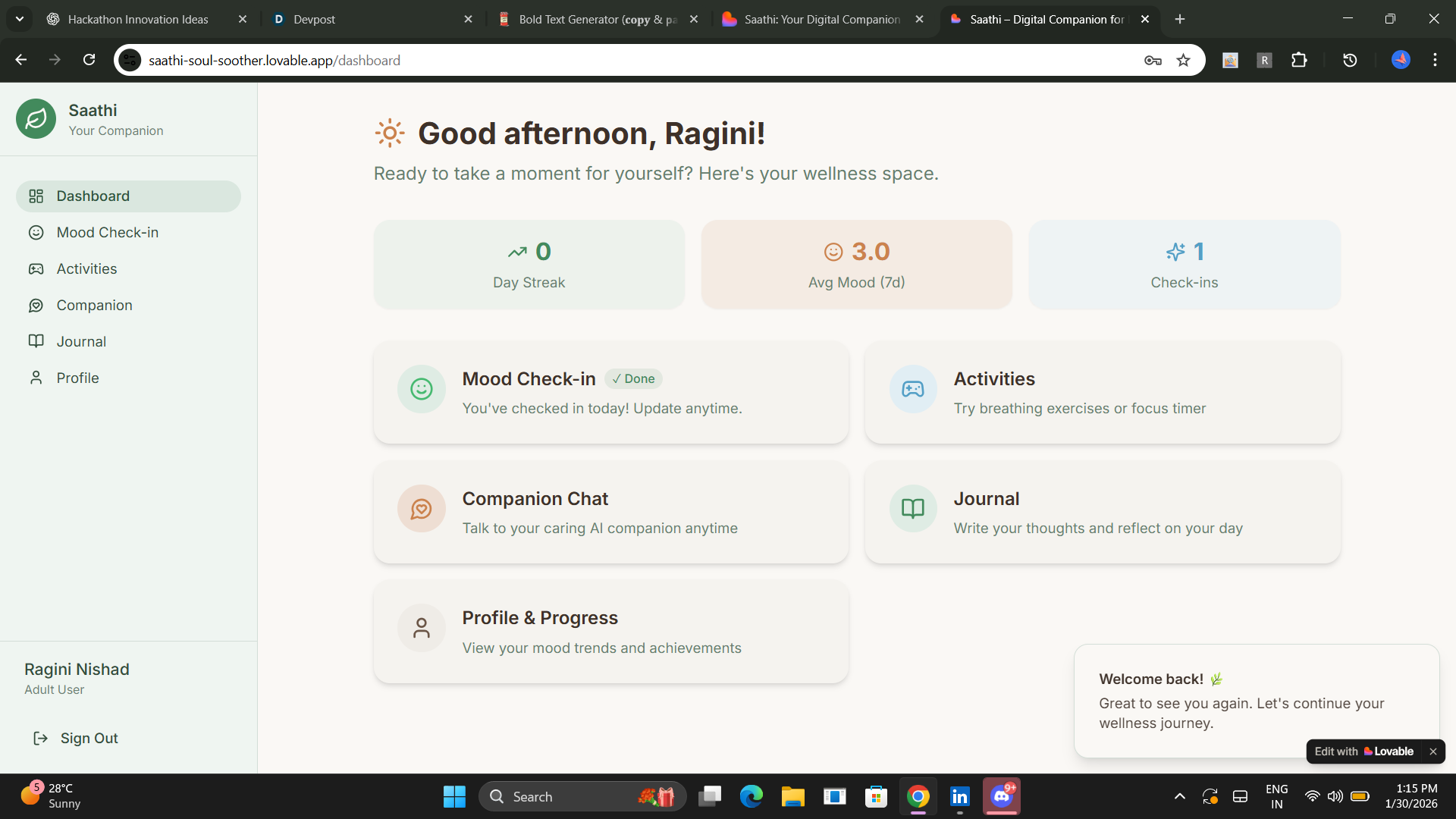
- Pages: Signup, Login, Dashboard, Activities, Chat, Journal, Community, Profile
Backend Microservices
- Auth Service – user signup/login
- Mood Service – daily check-ins and mood history
- Activity Service – games, breathing, streaks
- Chat Companion Service – motivational conversations
- Journal Service – saves entries + sentiment analysis
- Community Service – shared posts and reactions
- Recommendation Service – suggests activities based on mood
When a user writes a journal entry, a simple sentiment score is computed:
[ s = \frac{\text{positive words} - \text{negative words}}{\text{total words}} ]
- If ( s < 0 ): show calming support
- If ( s \approx 0 ): show motivation
- If ( s > 0 ): encourage sharing positivity
This makes the app feel adaptive and personal.
✨ Key Features
- Emoji-based daily mood check-in
- Memory and quiz games for elders
- Breathing exercises and focus timer for stress relief
- AI motivational chat companion
- Private journaling with instant supportive feedback
- Safe intergenerational community wall
- Weekly mood analytics and activity streaks
🚧 Challenges Faced
Designing for all ages
Needed large, simple elements for elders but still modern for young users.Support vs realism
The chatbot had to be caring without acting like a real therapist.Microservice coordination
Managing multiple APIs and data flow increased complexity.Lightweight personalization
Creating smart recommendations without heavy ML models.
💡 Impact
Saathi shows how small digital interactions can:
- reduce loneliness,
- encourage reflection,
- and connect generations through shared positivity.
Future improvement can track mood change over time:
[ \Delta m = m_{\text{this week}} - m_{\text{last week}} ]
If ( \Delta m < 0 ), the system can proactively offer extra support.
❤️ Final Thought
Saathi is built on one belief:
Everyone deserves to feel heard, supported, and connected—every day.

Log in or sign up for Devpost to join the conversation.