
I know, this is the ugliest product demo video ever made. Time is up on devpost but I promise something way cooler on our website https://saane.app/ :)
Inspiration
Saane was born out of my frustration with the current state of voice transcription apps for everyday knowledge workers.
Most tools feel disconnected from the rest of my workflow. They come with rigid, predefined ways of organizing and using information, forcing me to adapt my workflow to the product instead of giving me simple building blocks to create my own.
Privacy was another concern. Some of the best tools openly state that they store voice recordings and may use them for training, sometimes offering significant discounts in exchange for permission to do so. But it isn't always clear how that voice data will ultimately be used or shared.
Saane takes a different approach by exploring what the hardware already in our hands can do while trying to be as agent-friendly as possible.
More and more work is being done with agents. Saane makes sure every voice note and transcription you create can easily become part of those workflows using one of the simplest and most universal formats available: plain text files.
What it does
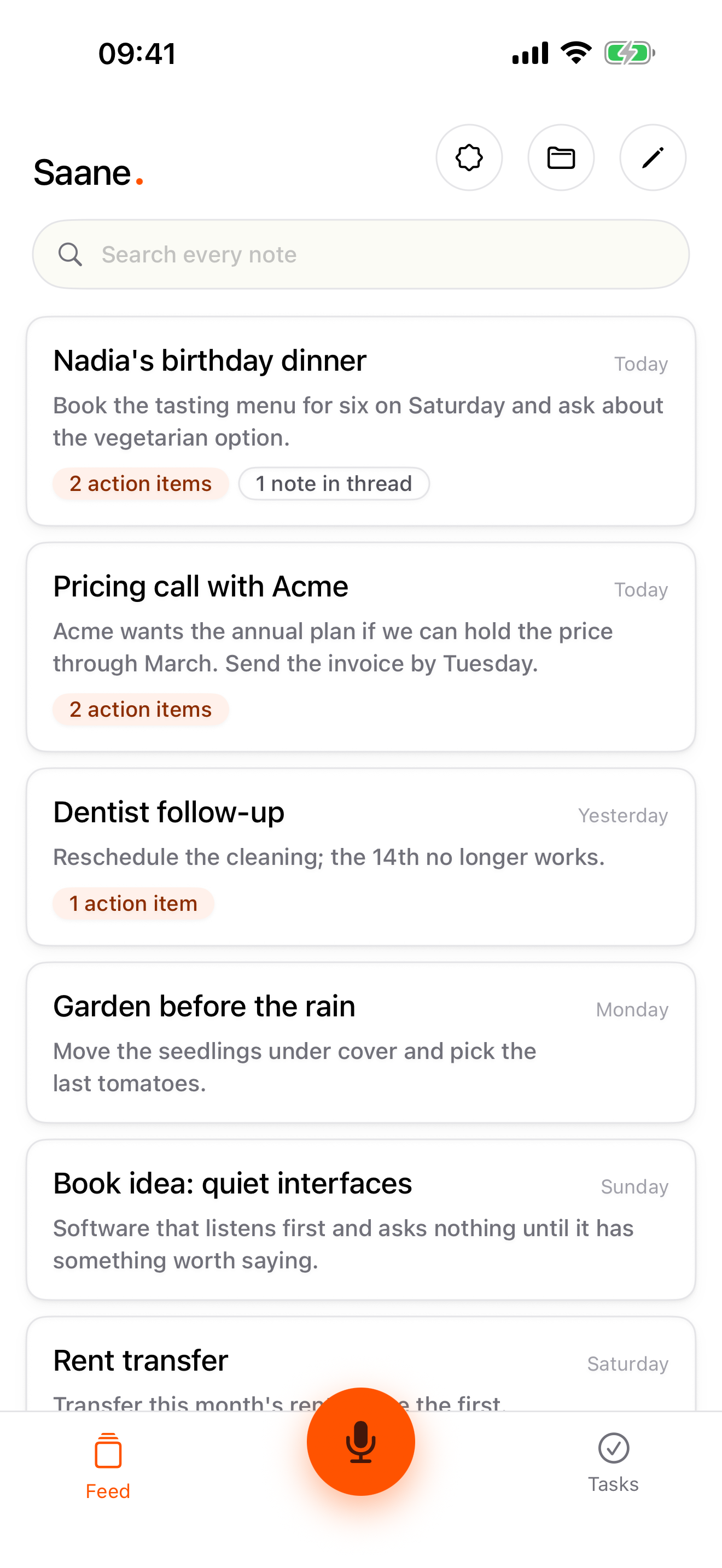
Saane is a voice transcription app built to take full advantage of modern iPhone hardware.
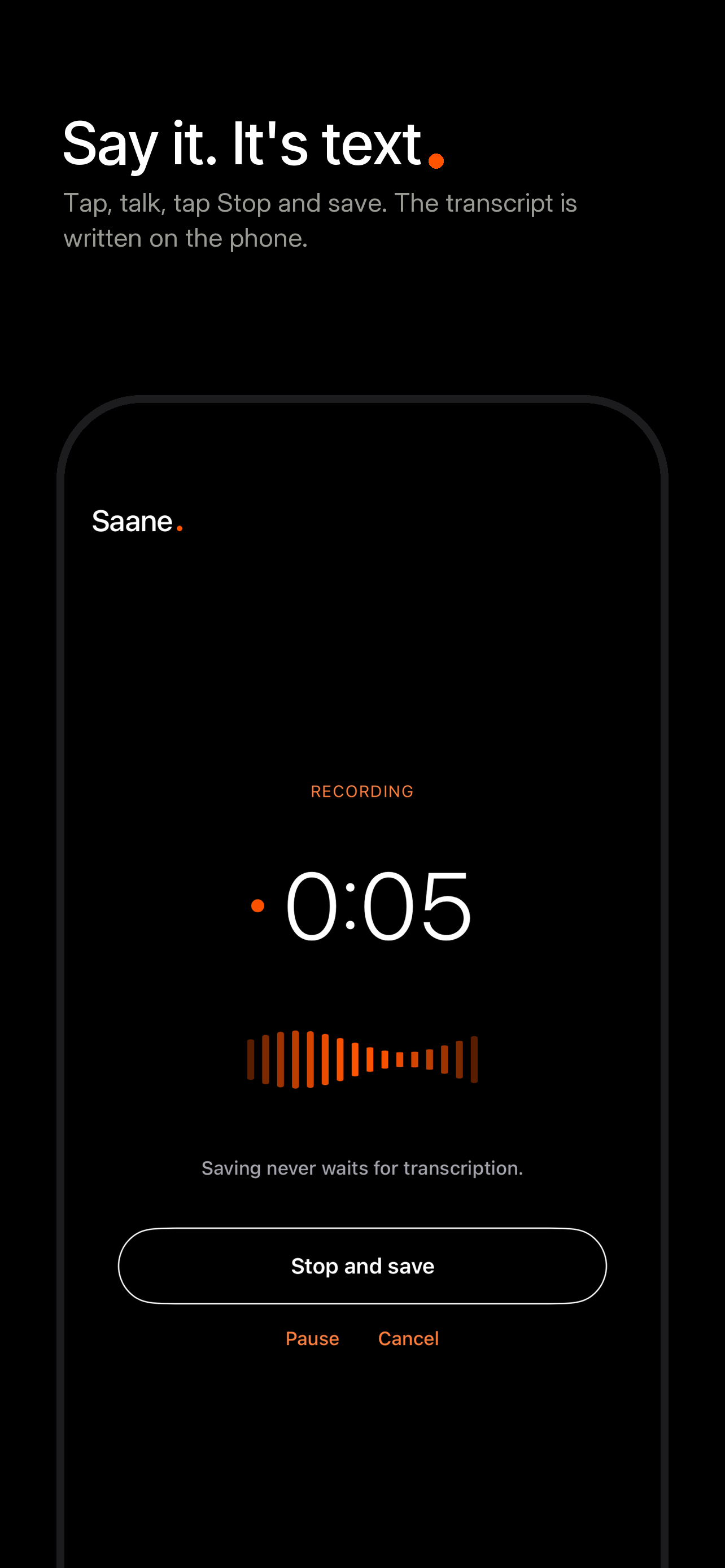
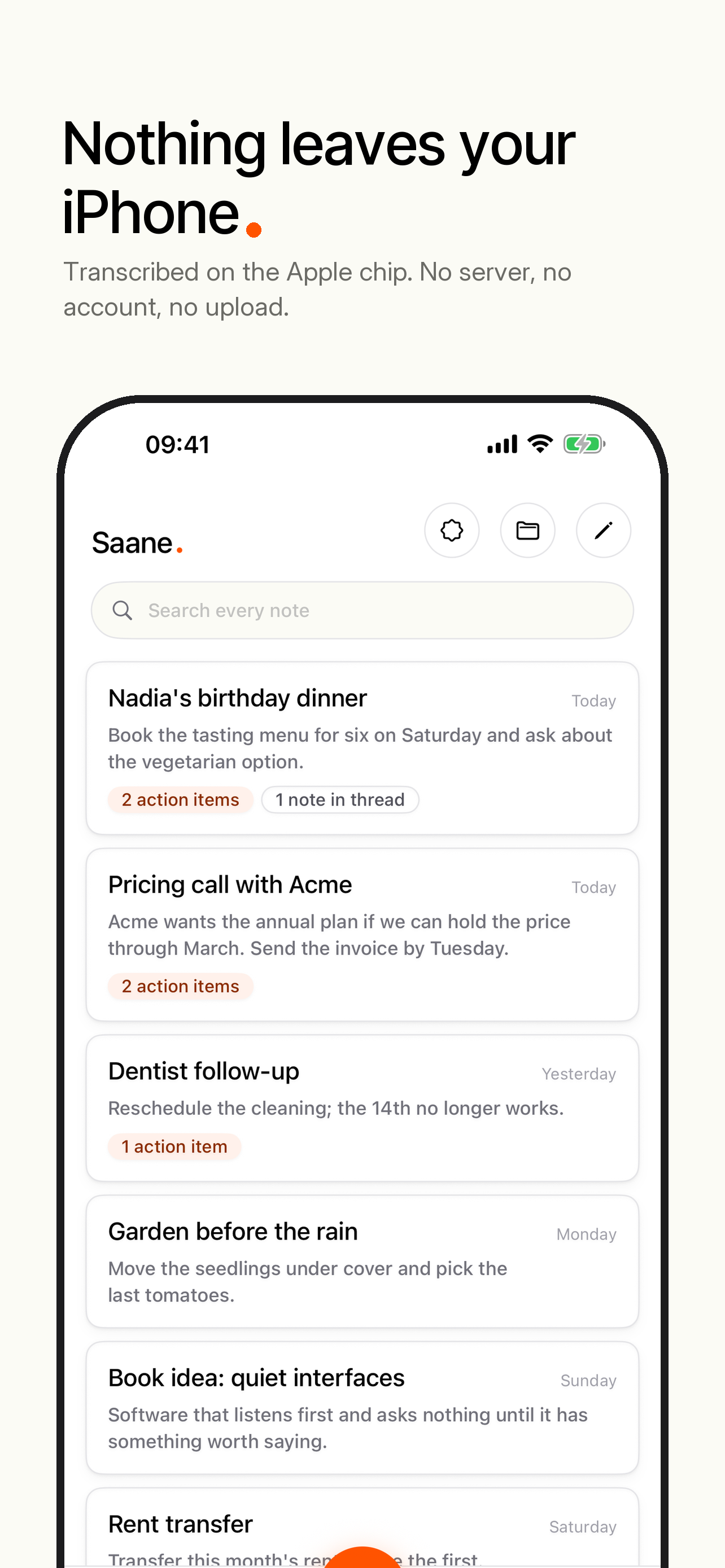
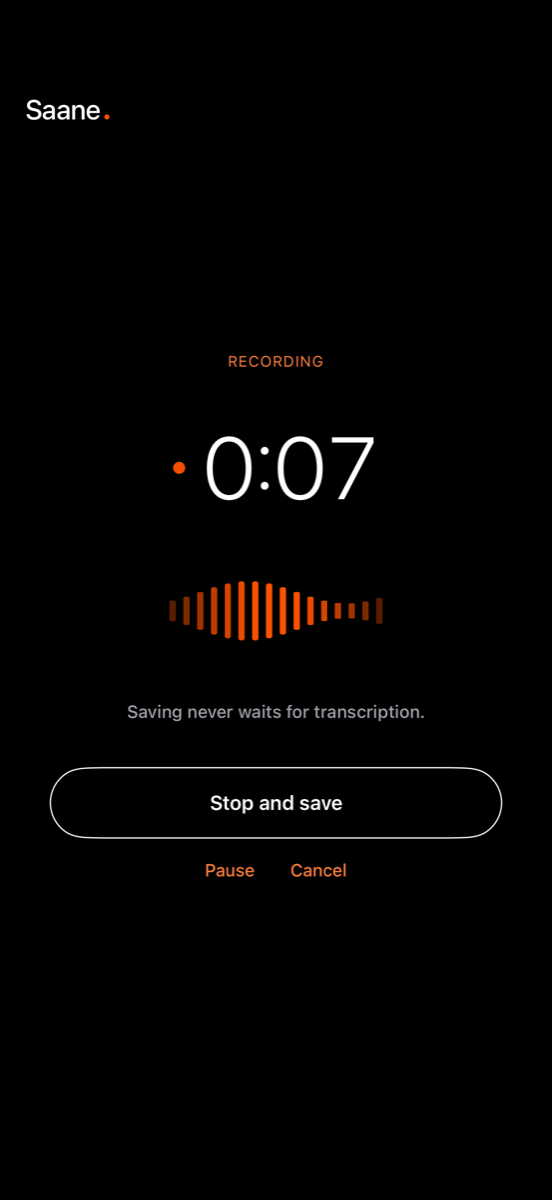
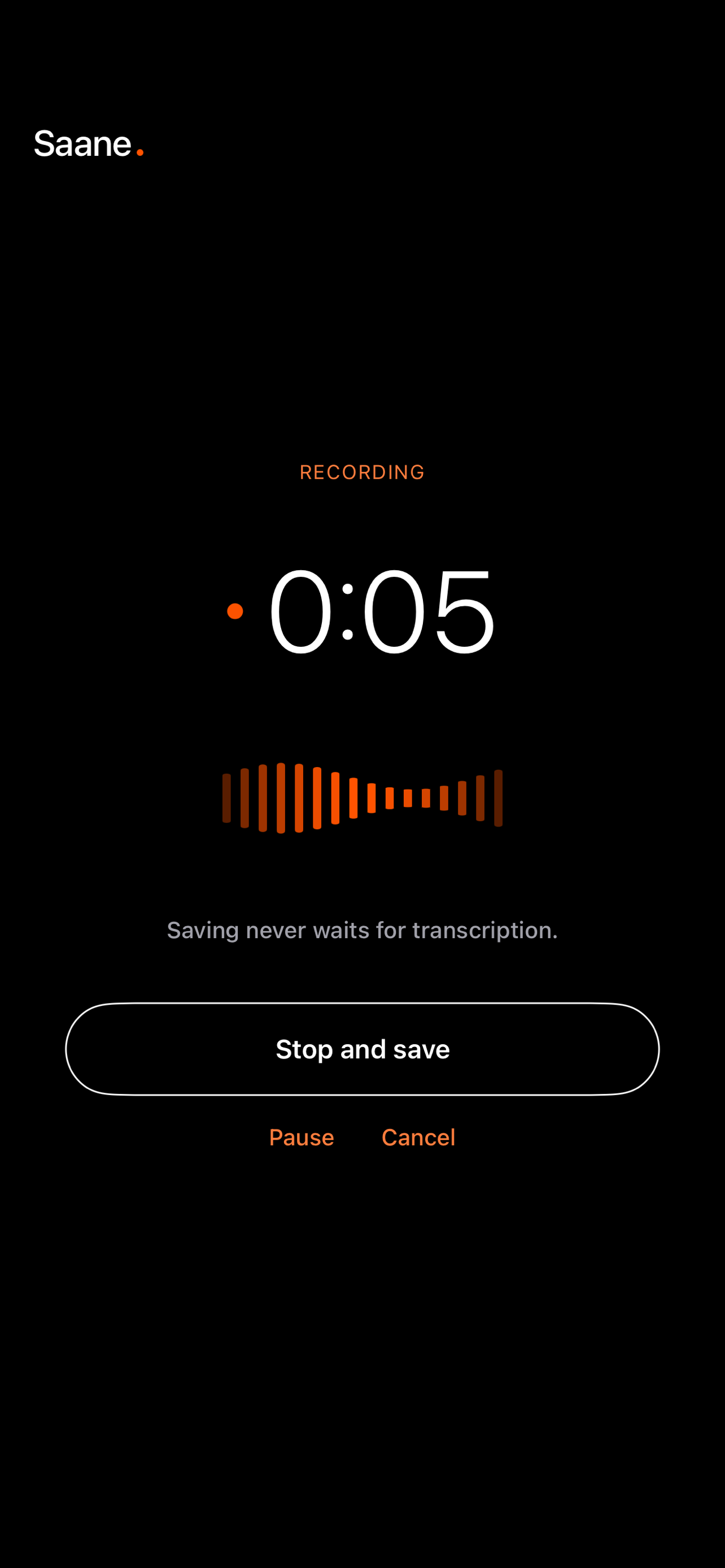
It records voice notes and transcribes them entirely on-device, without ever sending your recordings to a server.
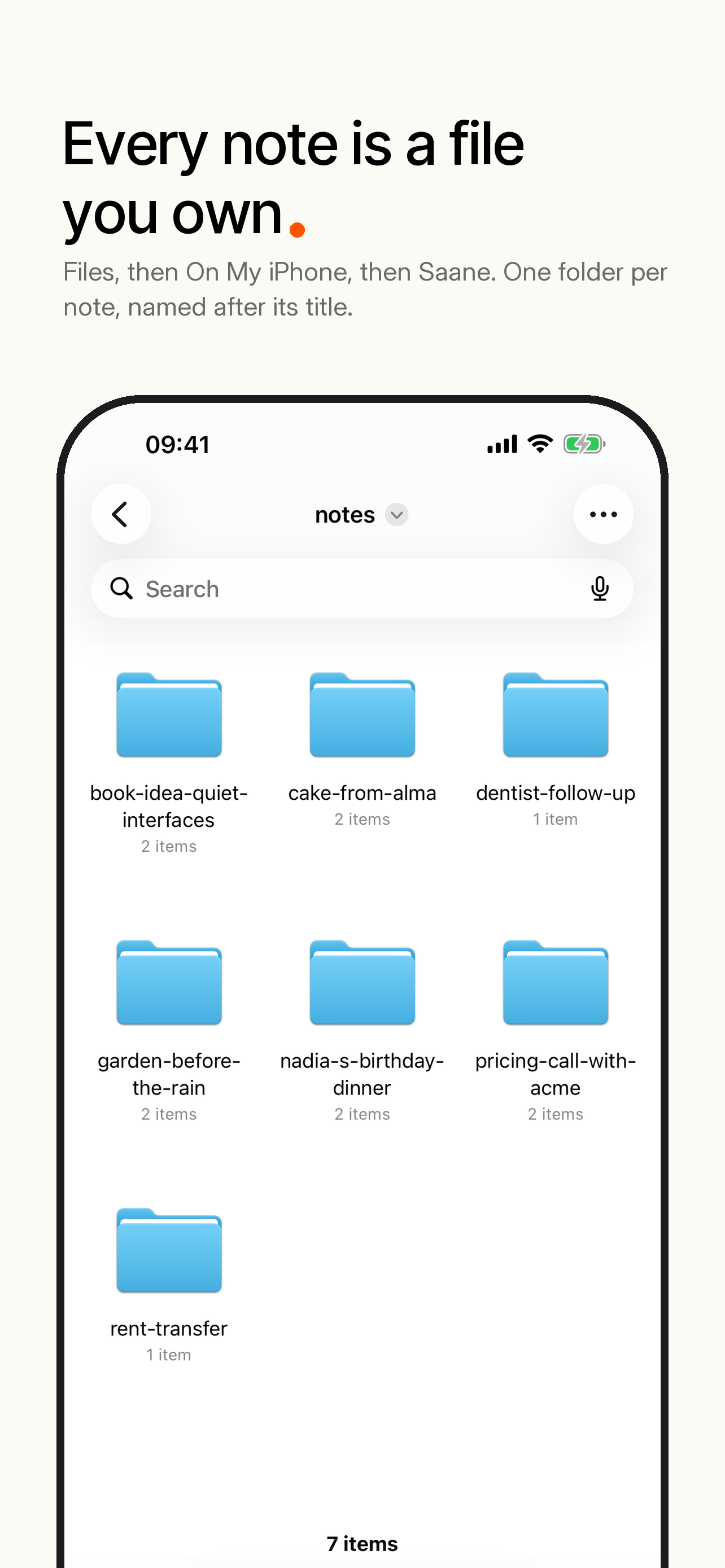
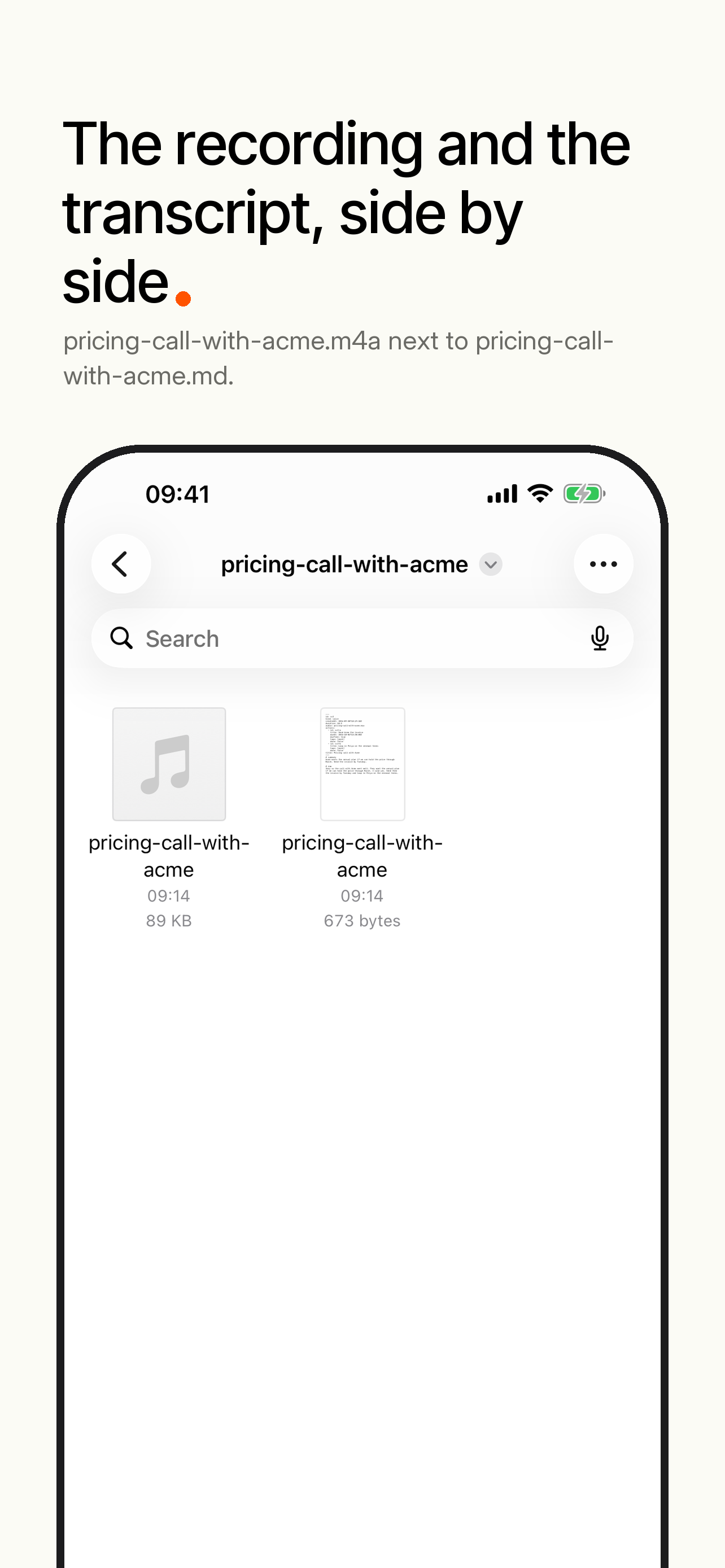
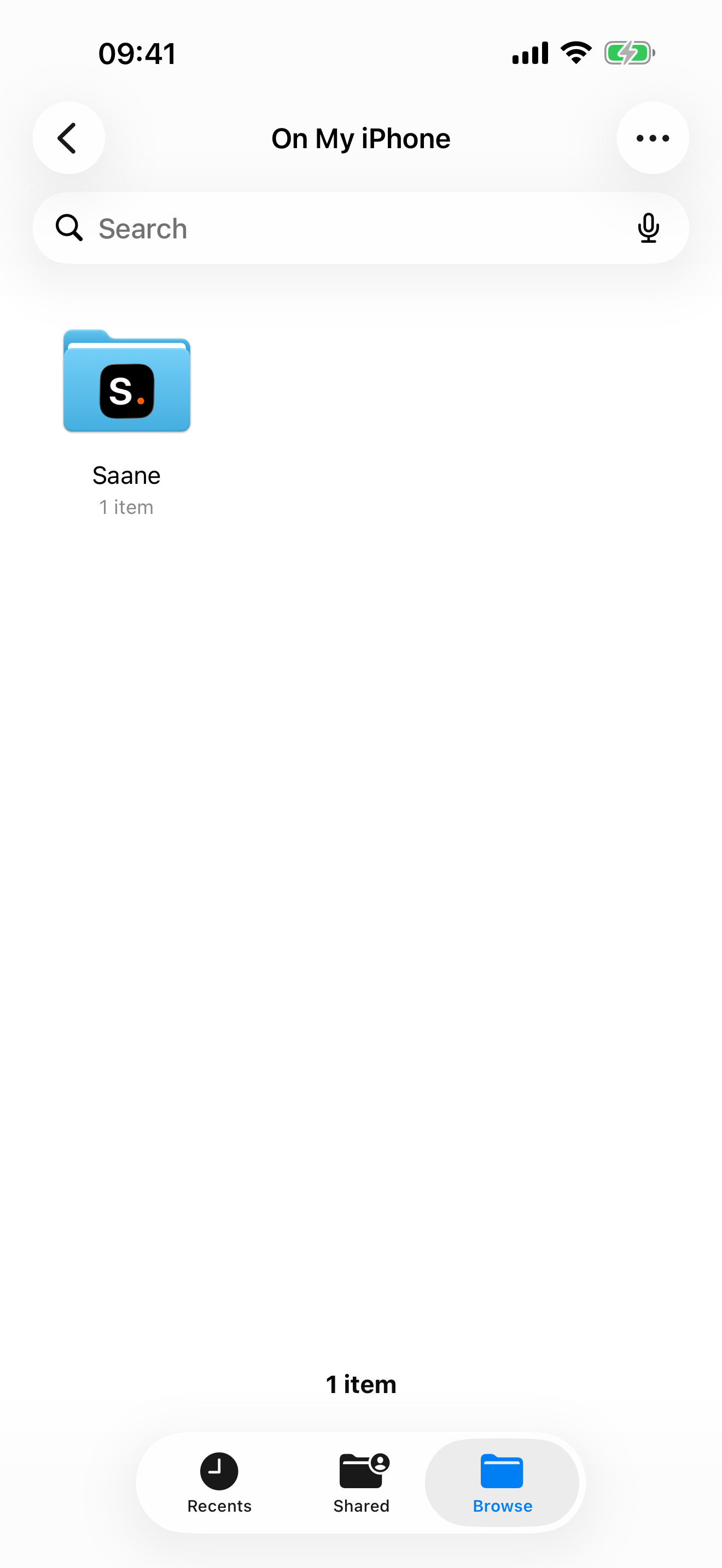
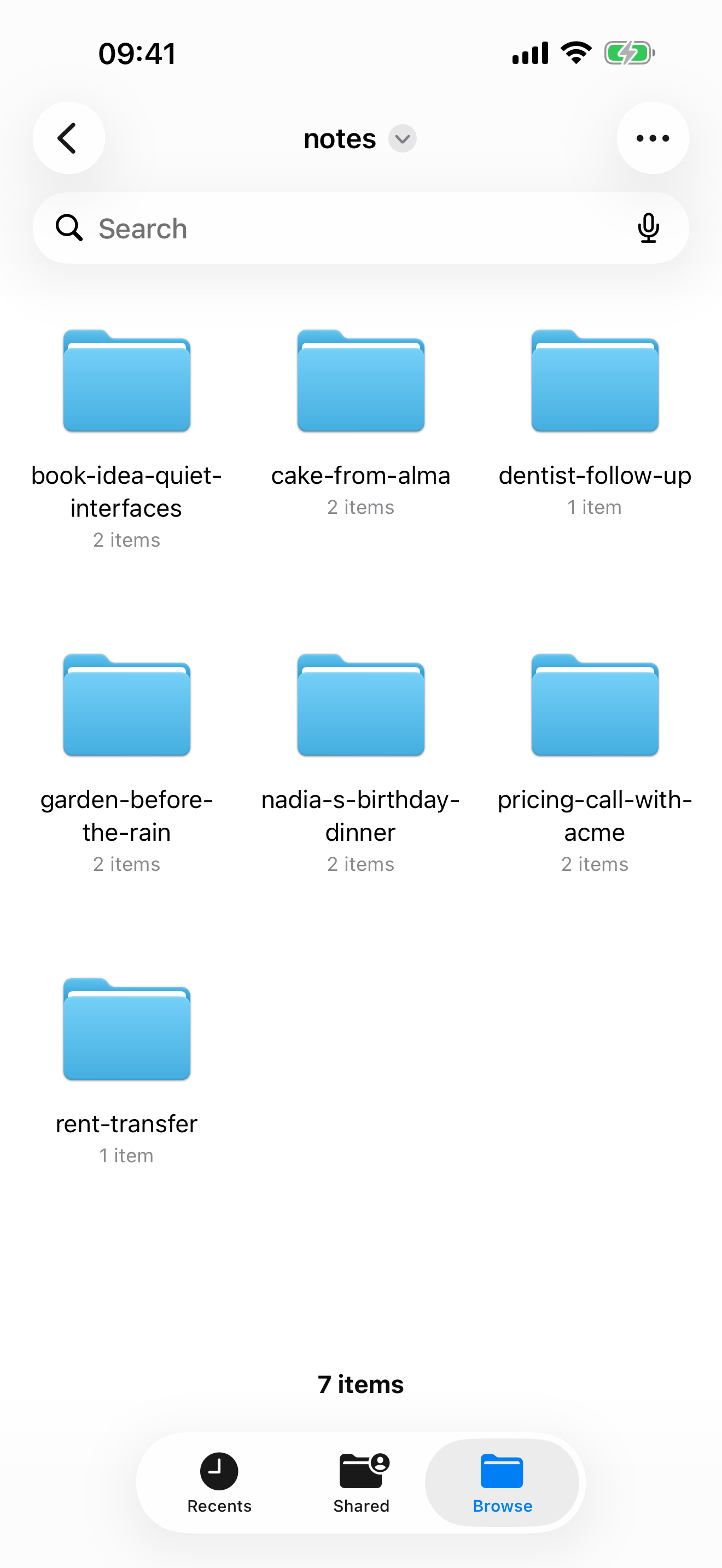
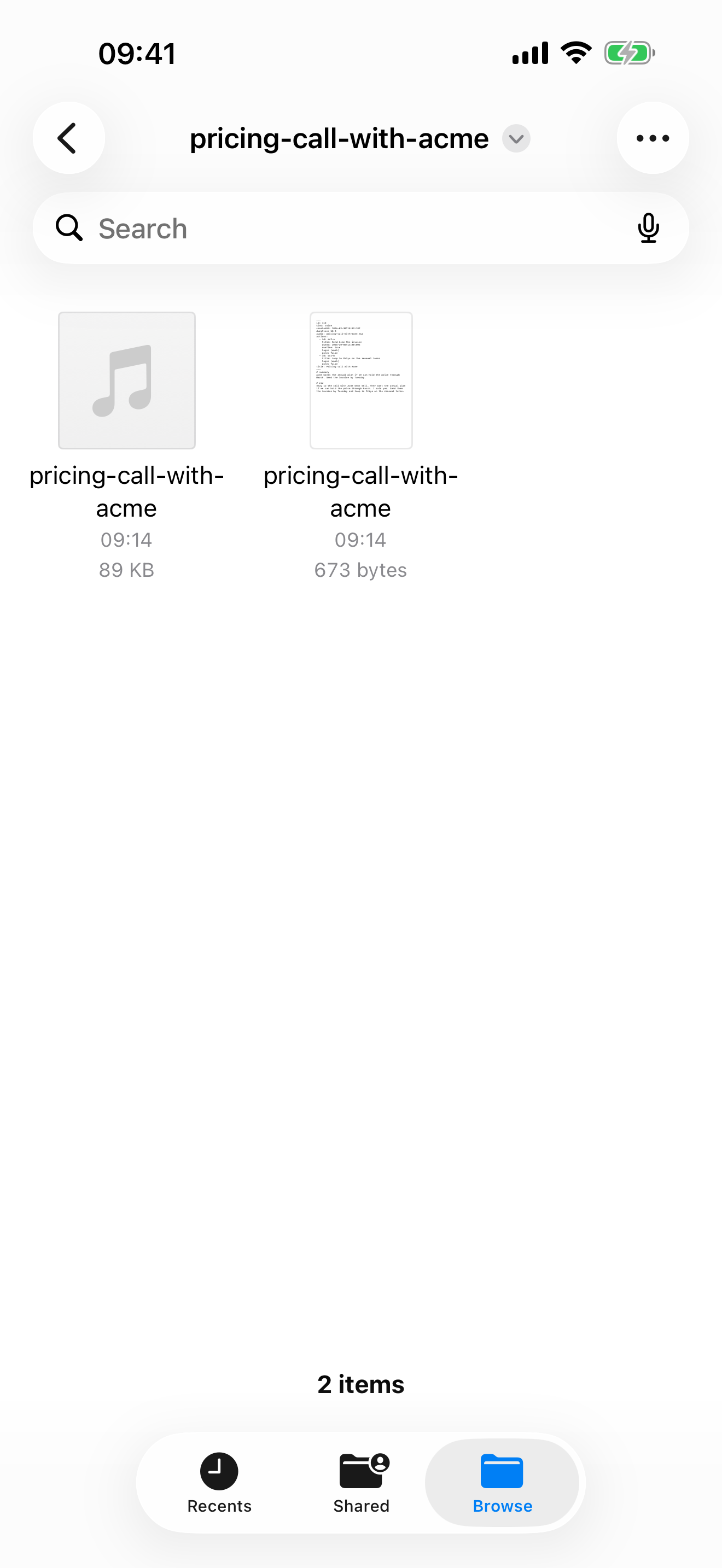
Your recordings and transcripts are then organized in a simple directory as raw audio and plain-text files, making them easy to access, move, inspect, and use with the agents and tools of your choice.
How we built it
Saane is built with Swift, Apple's native frameworks, and nothing else.
No transcription servers, cloud processing, etc. It's local end-to-end.
Challenges we ran into
The current generation of Apple hardware is remarkably capable. Mobile chips have advanced to the point where modern iPhones can handle workloads that just a little ago, would have been associated with desktop-class hardware like the M1. But running everything locally still comes with tradeoffs.
In our initial benchmarks, which we'll publish soon, Saane performs slightly behind some of the more established cloud-based transcription tools in accuracy. It's still close enough to make fully local transcription a practical alternative with plenty of room for optimization.
Accomplishments that we're proud of
Saane actually started as an Electron desktop app.
After experimenting with Apple's hardware and on-device capabilities, I saw a much more interesting opportunity in building a truly private companion for knowledge workers that takes advantage of the hardware already available across Apple devices.
Moving from an Electron prototype to a fully native iOS app completely changed the direction of the product.
Instead of building another transcription service, Saane became an exploration of what personal software can look like when powerful models run locally and the user's data stays in files they control.
What we learned
Saane is officially my first iOS app released on the App Store, so building it taught me nearly everything I currently know about the iOS ecosystem.
Despite having some machine-learning experience, I'm primarily a Product Engineer with a background in web development. Learning Swift and native Apple development was one of my goals for this year because I wanted to explore something completely outside my usual domain.
Saane is the first real product to come out of that endeavor.
Along the way, I learned a lot about Swift, native Apple APIs, on-device inference, audio processing, performance constraints, and what modern mobile hardware is actually capable of.
What's next for Saane Voice Notes
Saane is the first in a family of apps designed to help people capture, sharpen, and uncover connections between their thoughts. All locally, using the best of what current Apple hardware has to offer.
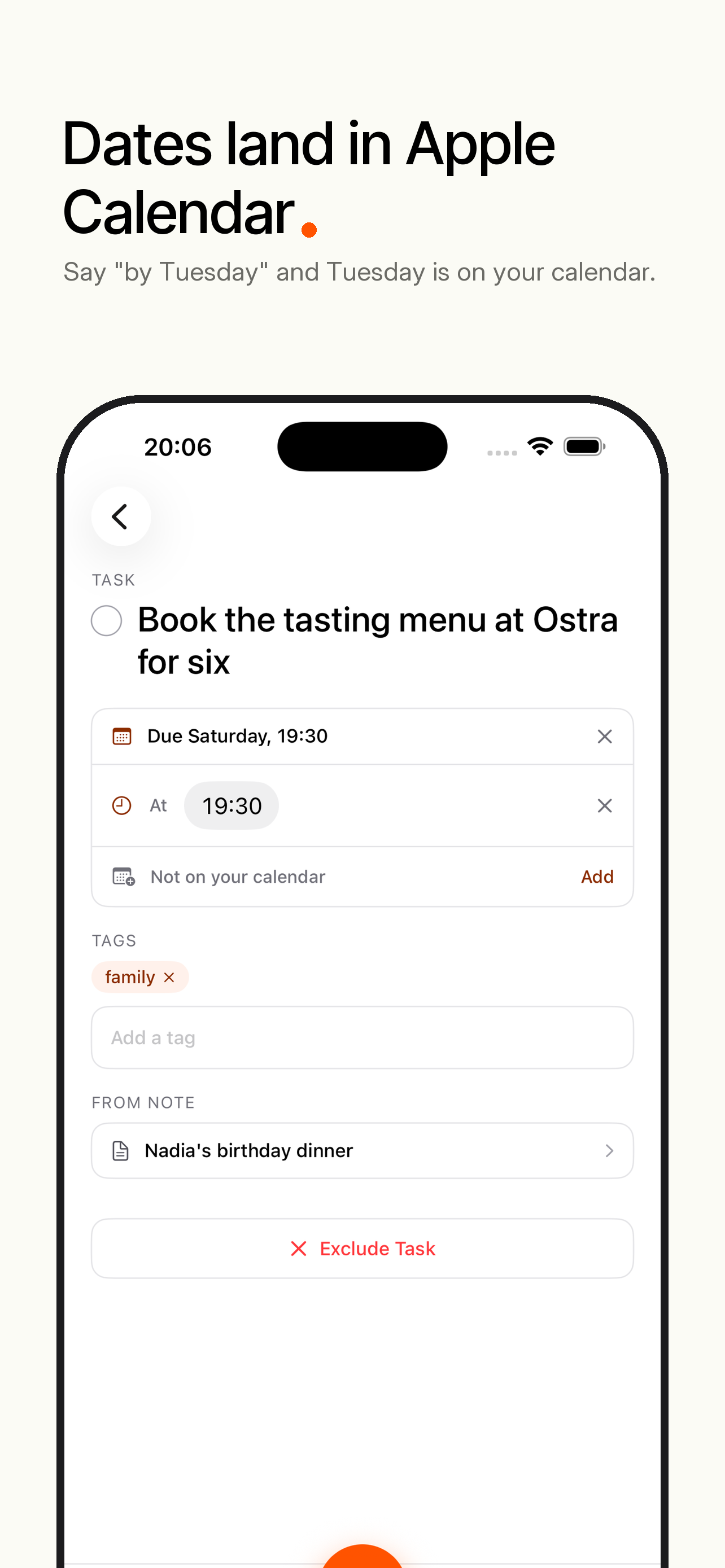
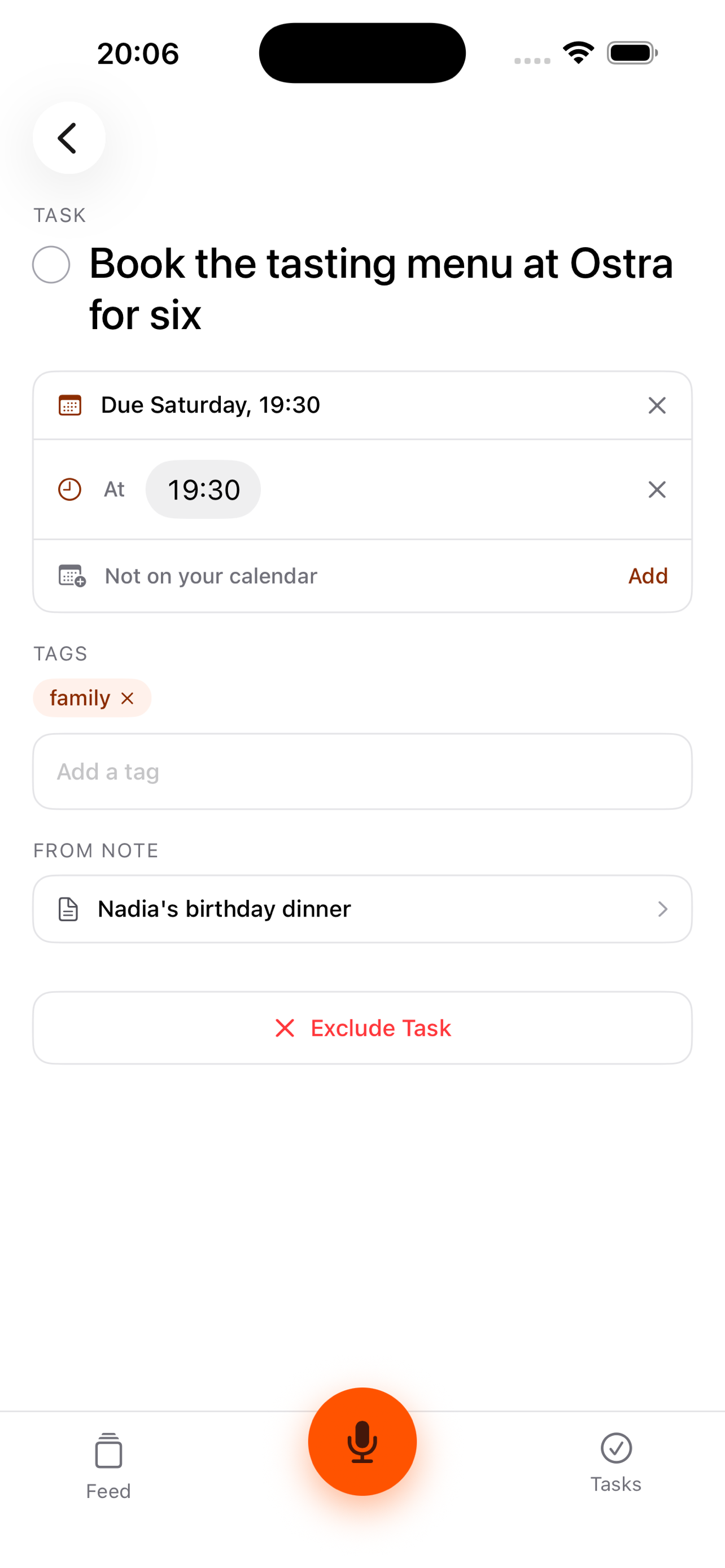
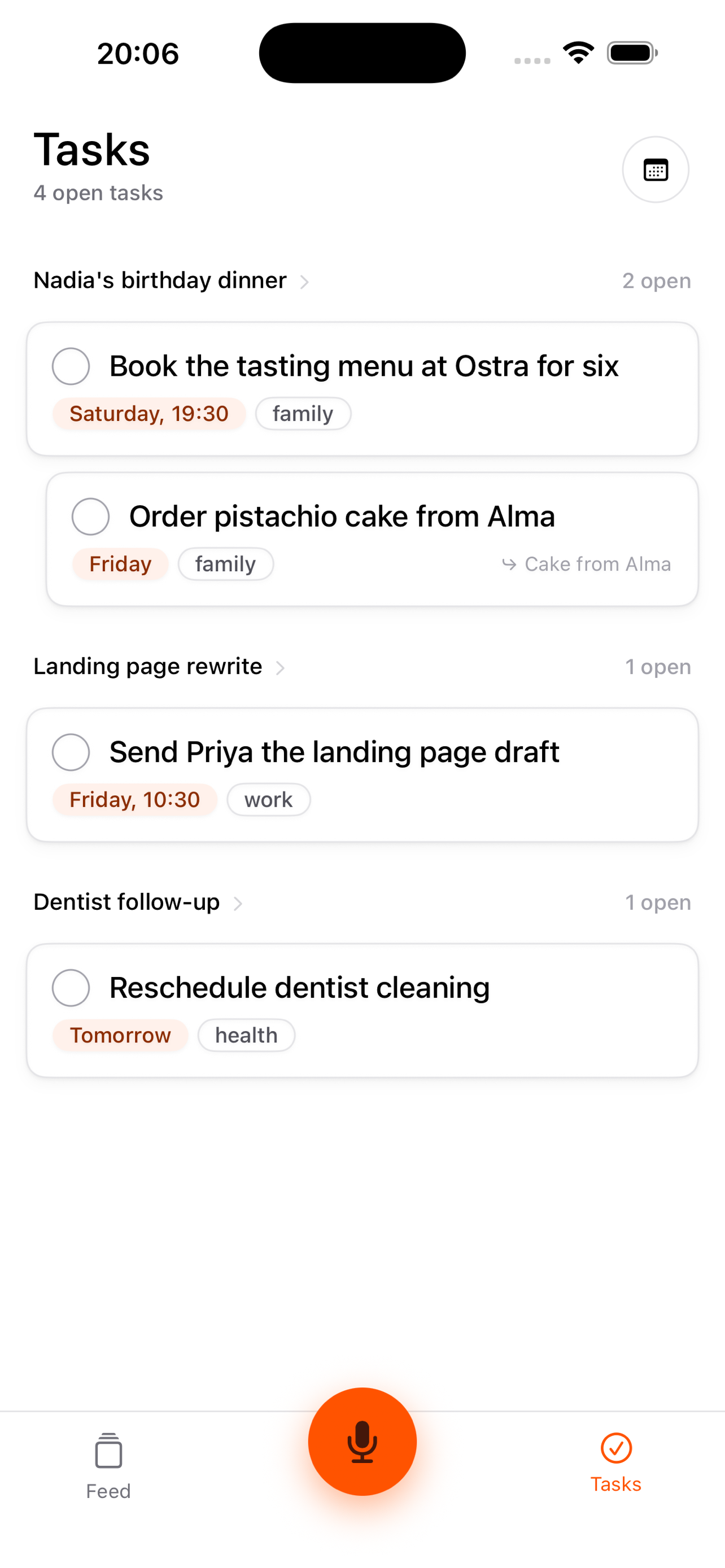
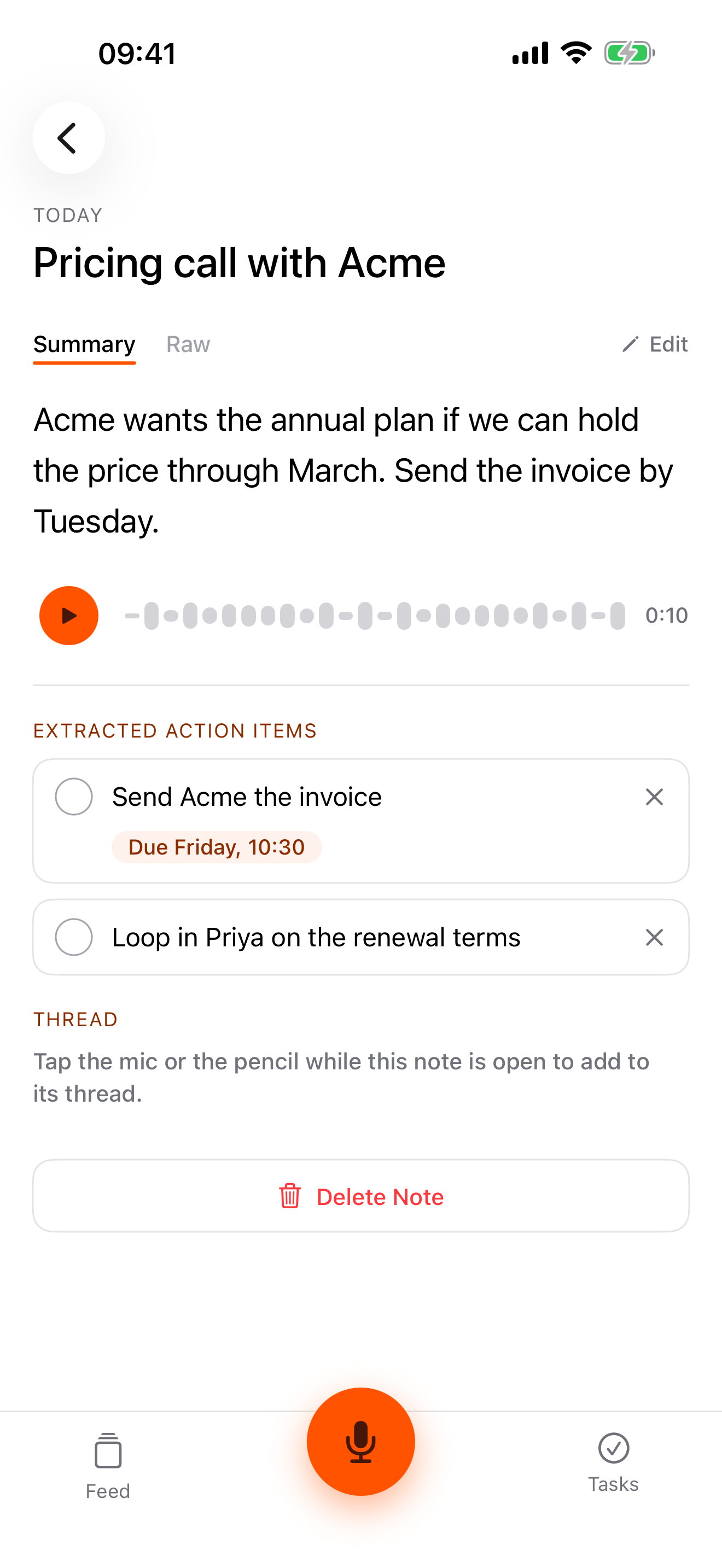
Today, Saane can transcribe voice notes entirely on-device. It can also identify actionable tasks from recordings and turn them into calendar items.
Next, Saane will expand across the Apple ecosystem with an Apple Watch companion and a much more ambitious macOS app.
The long-term moat is that your thoughts should remain yours, live in formats you control, and still be immediately useful to the agents you choose to work with.


Log in or sign up for Devpost to join the conversation.