-
-
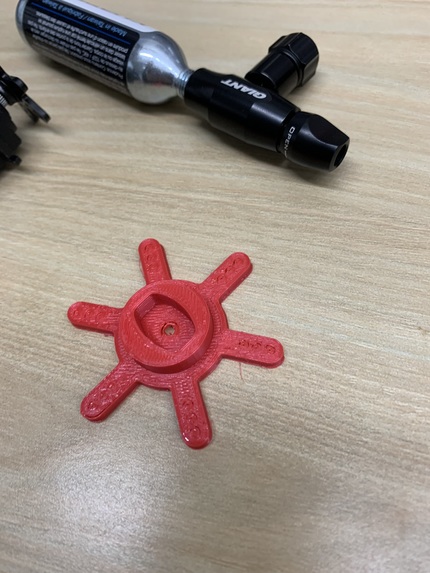
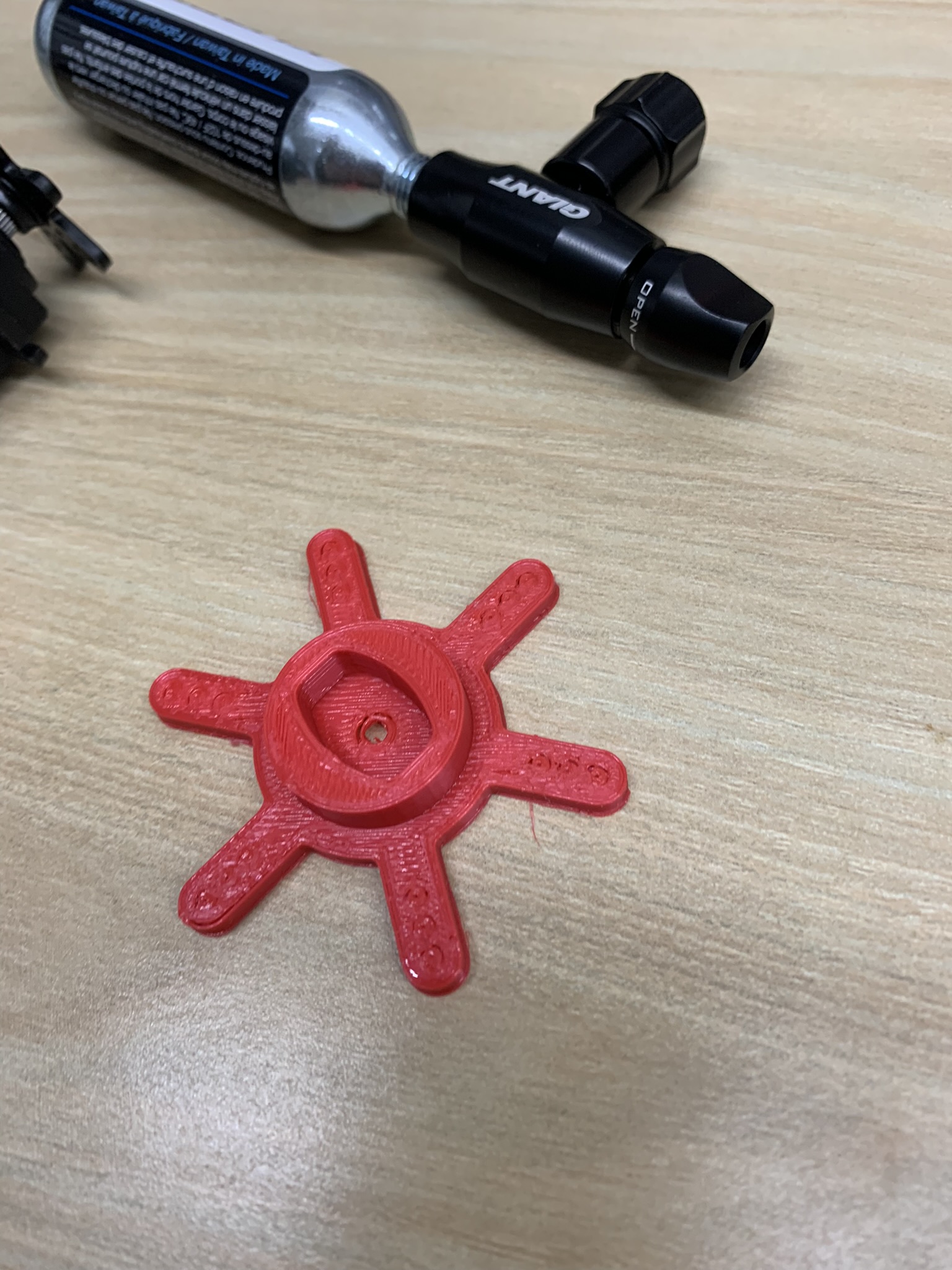
3D printed attachment that allows the servo to open the CO2 tank and inflate the device.
Inspiration
Our front-end hacker Joseph presented the idea of a life-saving swim device following a conversation with an aunt on New Year’s Eve. His aunt explained to him that she was considering enrolling her daughter in swim instruction classes, but decided against it due to the cost, and the premise that “She just doesn’t swim all that much”. Water safety is critically undervalued and is a large reason for the over 150 fatal, and 600 non-fatal drownings that occur in Canada alone each year. This device can be utilized by inexperienced swimmers, but also more experienced swimmers traversing uncertain and potentially dangerous water.
Features
- Heart rate sensor
- Radio frequency modules for communication between device and parents
Build Process
Our build process consisted of a lot of testing electronics. Before integrating all of our features, we tested them separately to ensure that they worked properly in the way needed for the project. Building this project also required some cadding (Computer Aided Design) and 3d printing.
Challenges
One major challenge we had was that the servo library was conflicting with the radio frequency module library. To fix this we had to switch to a different servo library.
Accomplishments that we're proud of
We are very proud that we were able to create a working prototype of this project in less than a day.
What we learned
We learned that SPI communication pins can be wired to multiple sensor modules. This means we can connect the SD card reader and the NRF sensor to the same pins without conflict.
What's next for S.O.S : Safety On the Sea
There are a lot of features that we have planned for the next phase of the SOS product. These include:
- Real time data sent to an app
- A pulse oximeter to measure blood oxygen levels
- Physical warning such as an alarm sound
- GPS capabilities to monitor location
- Notify parents via SMS


Log in or sign up for Devpost to join the conversation.