-
-
Banner
Inspiration
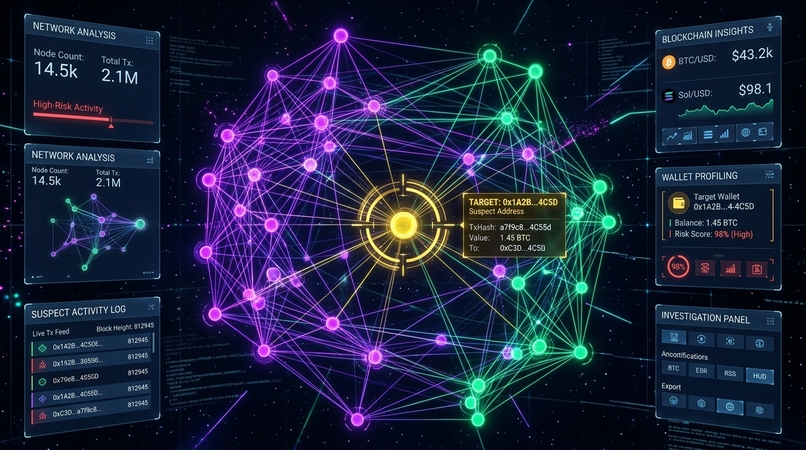
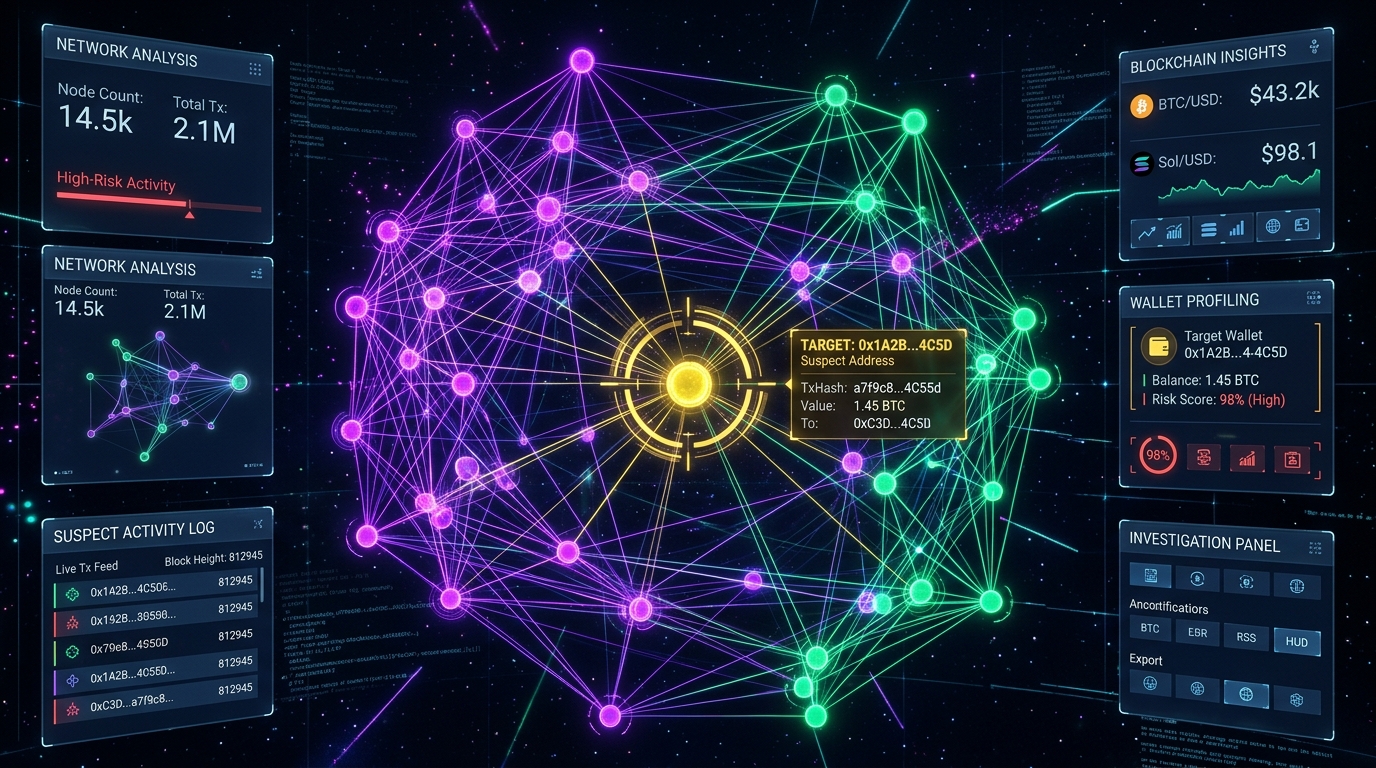
Tracing on-chain transactions during a fast-moving exploit or de-peg is brutal on 2D block explorers with dozens of open tabs. We created S.O.L.V.E.R. (Solana On-Chain Live Visualization & Exploration Engine) to give developers and security analysts a 3D, interactive flight deck that turns complex block history into clear, spatial intelligence.
What it does
S.O.L.V.E.R. connects directly to Solana mainnet to stream live transaction history for any wallet address into an interactive 3D spatial graph. The application parses raw blockchain data into a client-side DuckDB database, allowing users to run instant SQL queries to filter and analyze transaction flows right in their browser. Crucially, S.O.L.V.E.R. integrates the new W3C WebMCP standard, enabling AI agents to autonomously control the 3D camera, execute data filters, and highlight suspicious wallet activity alongside human analysts.
How we built it
We built the application using React 18, TypeScript, and Vite, leveraging Three.js and React Three Fiber to render the glowing 3D node graph. To process on-chain data entirely in the browser, we integrated DuckDB-Wasm alongside @solana/web3.js for live RPC communication. We used the @mcp-b/webmcp-types library to register WebMCP tools via document.modelContext, creating a seamless bridge between AI agents and our UI. For production, we crafted a multi-stage Dockerfile that packages a Caddy web server, which is deployed and running live on PaaS.
Challenges we ran into
Our biggest hurdle was getting DuckDB-Wasm to bundle cleanly inside Vite's production environment, which required handling WebAssembly binaries and Web Worker imports with specific URL directives. We also had to build a robust multi-endpoint RPC fallback system to handle public Solana rate-limits smoothly. Finally, implementing the experimental WebMCP standard meant designing a resilient polyfill fallback so the app works flawlessly on both standard and AI-enabled browsers.
Accomplishments that we're proud of
We are thrilled to have built a fully functional 3D forensics tool that runs 100% client-side with zero backend server dependencies for data processing. Achieving sub-millisecond SQL query execution over live blockchain data in WebAssembly was a massive win for us. Furthermore, being among the first applications to natively implement W3C WebMCP for AI-driven 3D canvas control showcases how AI agents can operate inside modern web apps.
What we learned
Building S.O.L.V.E.R. taught us how to effectively combine 3D graphics state with browser-level AI agent protocols. We learned how to manage camera lerping and smooth animations without interfering with user controls, as well as how to harness in-browser WebAssembly to offload heavy data parsing from servers directly to the client.
What's next for S.O.L.V.E.R.
Moving forward, we plan to implement real-time WebSocket streams so new blocks automatically pop into the 3D graph the second they are mined on-chain. We are also expanding the 3D engine to support multi-wallet cluster analysis, allowing analysts to map complex token-siphoning networks across hundreds of addresses simultaneously. Eventually, we want our AI agents to act as fully autonomous 24/7 sentinels that flag exploit patterns as they happen.
Built With
- duckdb
- node.js
- react
- solana
- three.js
- typescript
- w3c
- webmcp

Log in or sign up for Devpost to join the conversation.