Inspiration
Choosing a university can get overwhelming really fast.
You end up with dozens of tabs open, rankings that all say different things, deadlines everywhere, and still no clear answer to the most important question: is this university actually right for me?
Parents and counsellors want to help too, but most of the time they're working with scattered information or aren't really part of the process.
We're students ourselves, and we kept thinking there had to be a better way to do this. So we built the app we wished we had.
Ryze brings university discovery, planning, and applications into one place, while keeping the people supporting you in the loop.
What it does
Ryze is your compass for university & beyond.
Students start with a simple step-by-step onboarding that helps Ryze understand what they're looking for.
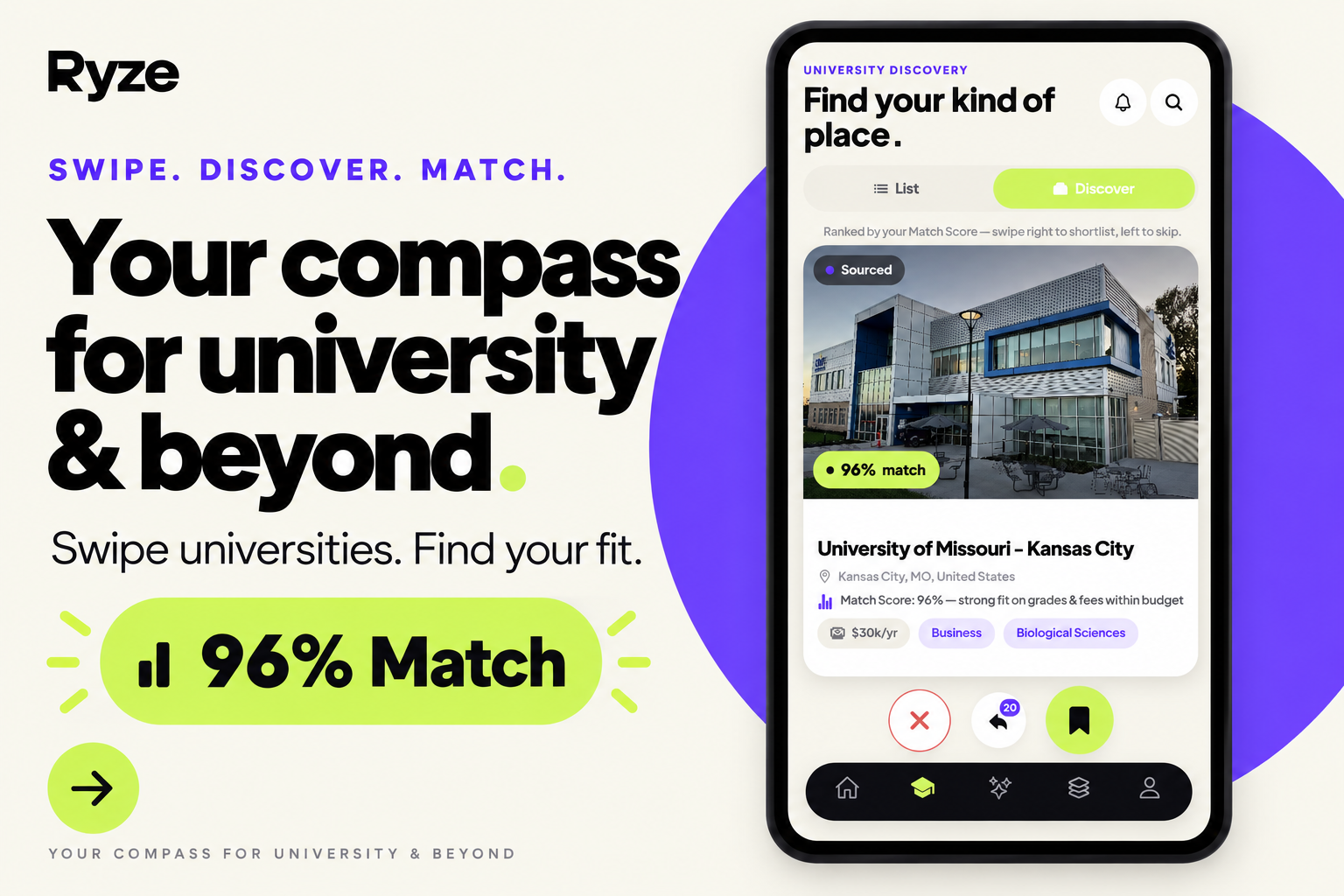
Then comes university discovery. Instead of scrolling through endless lists, students can swipe through universities — almost like Tinder, but for uni. Swipe right to save, swipe left to skip.
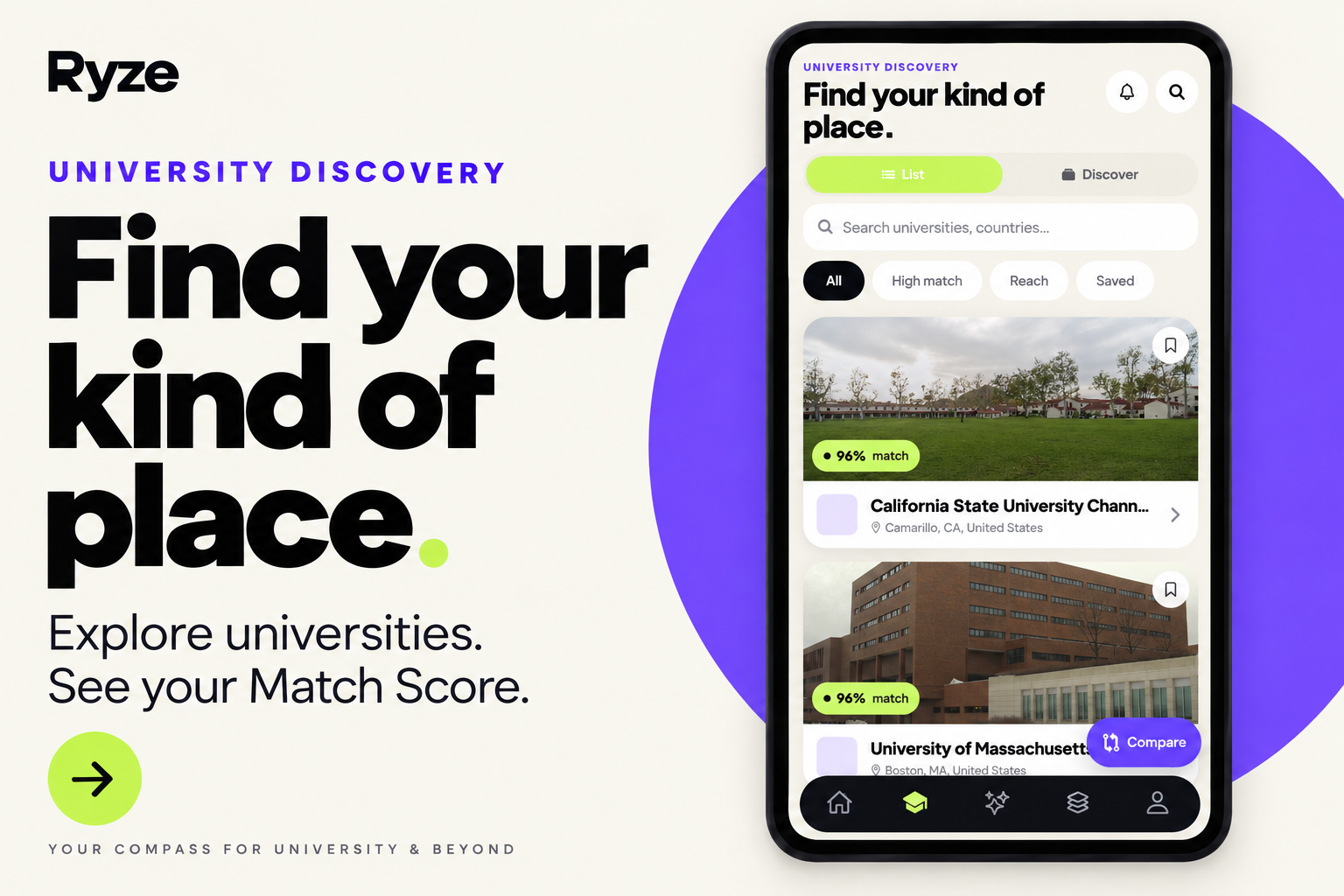
Ryze also gives each university a match score based on the student's profile, helping students understand which universities could actually fit what they're looking for.
We currently have 10,259 universities from around the world in the app.
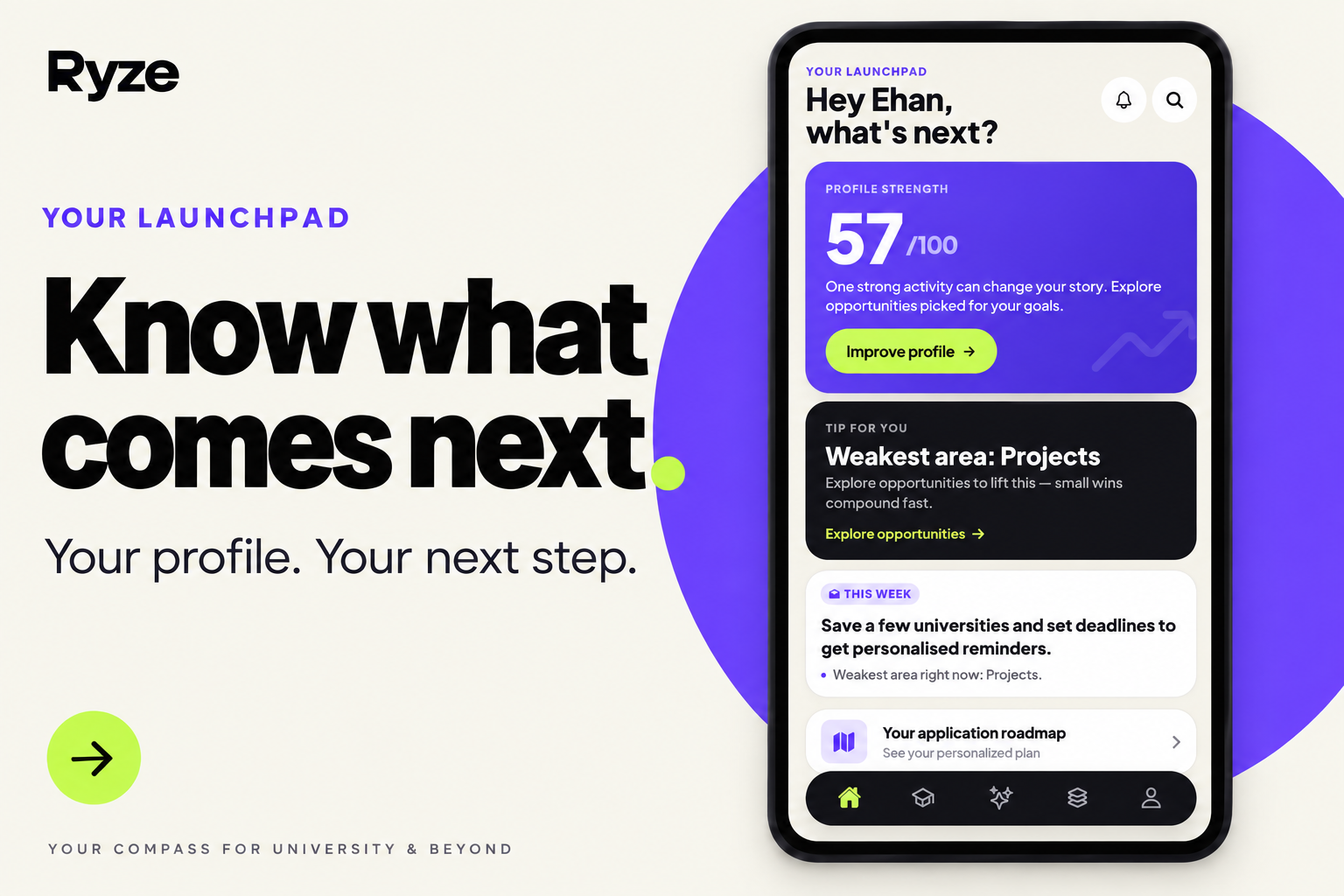
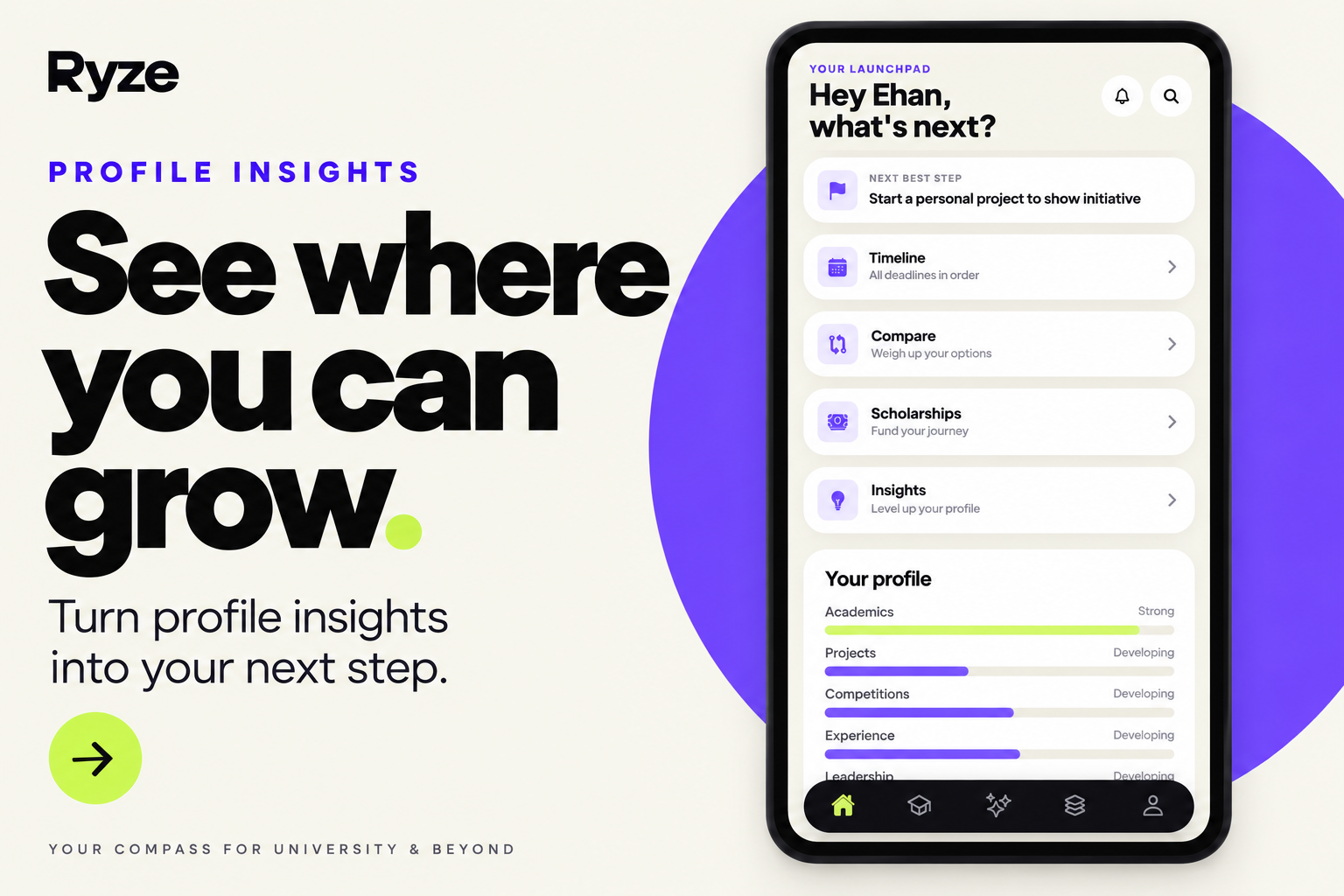
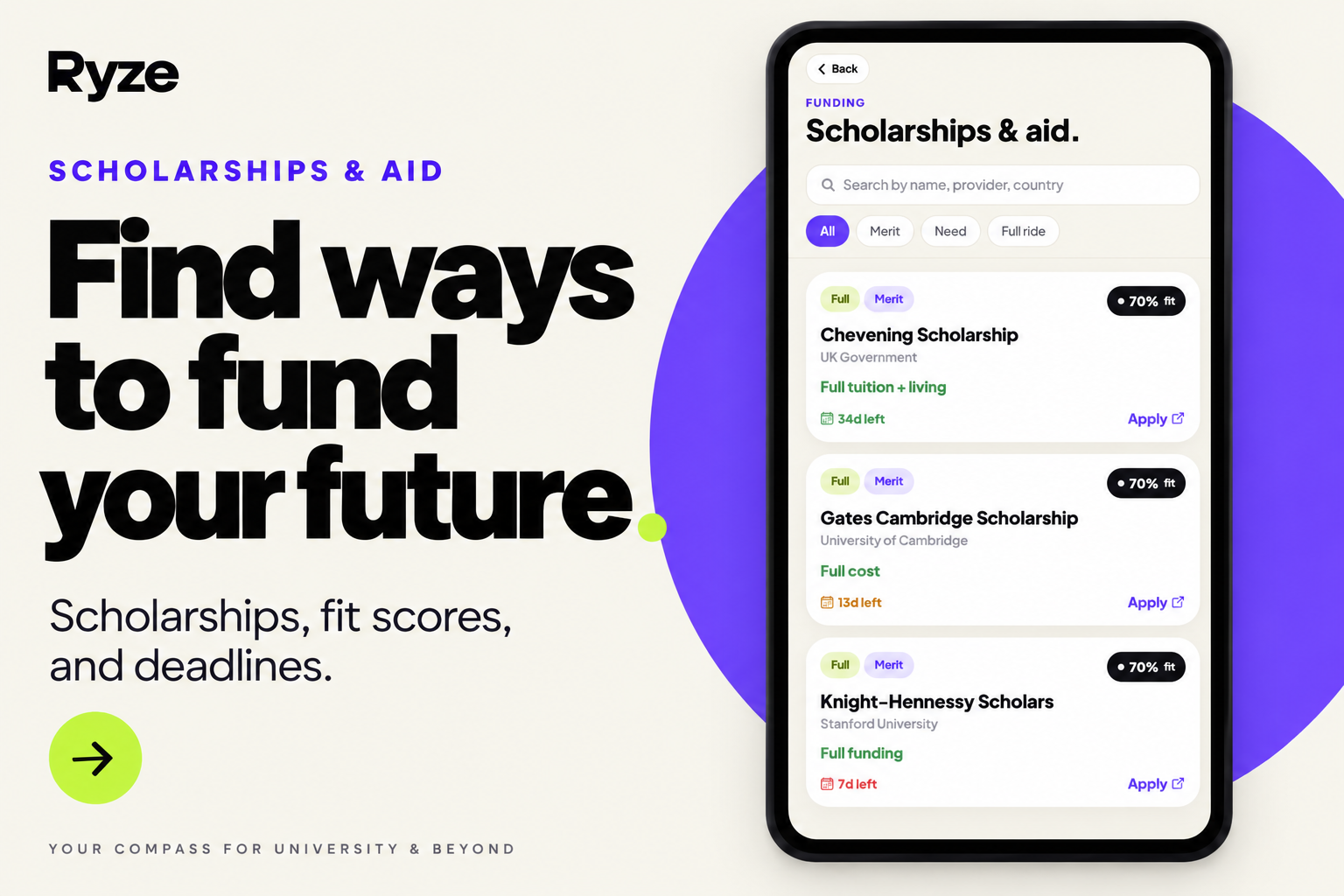
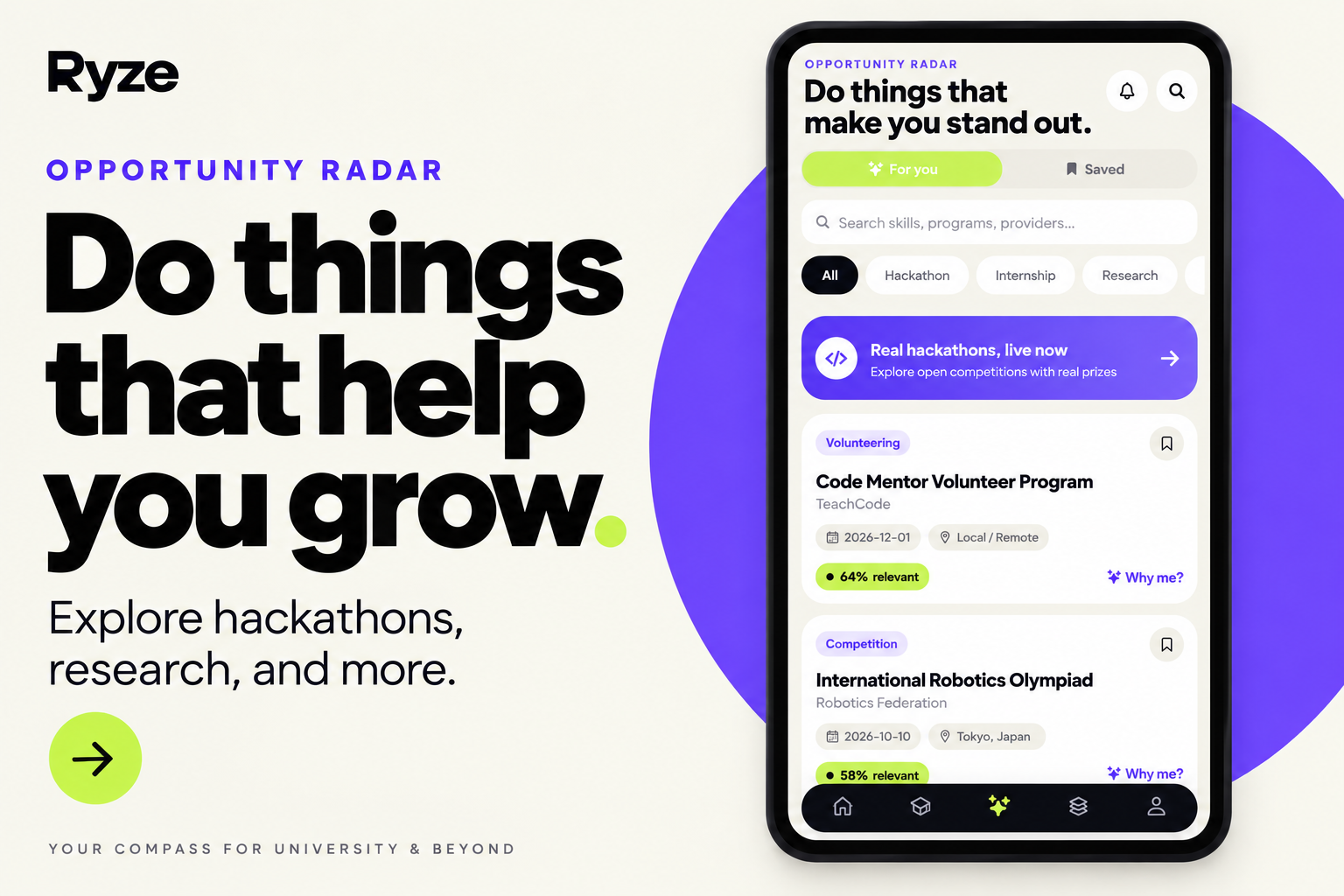
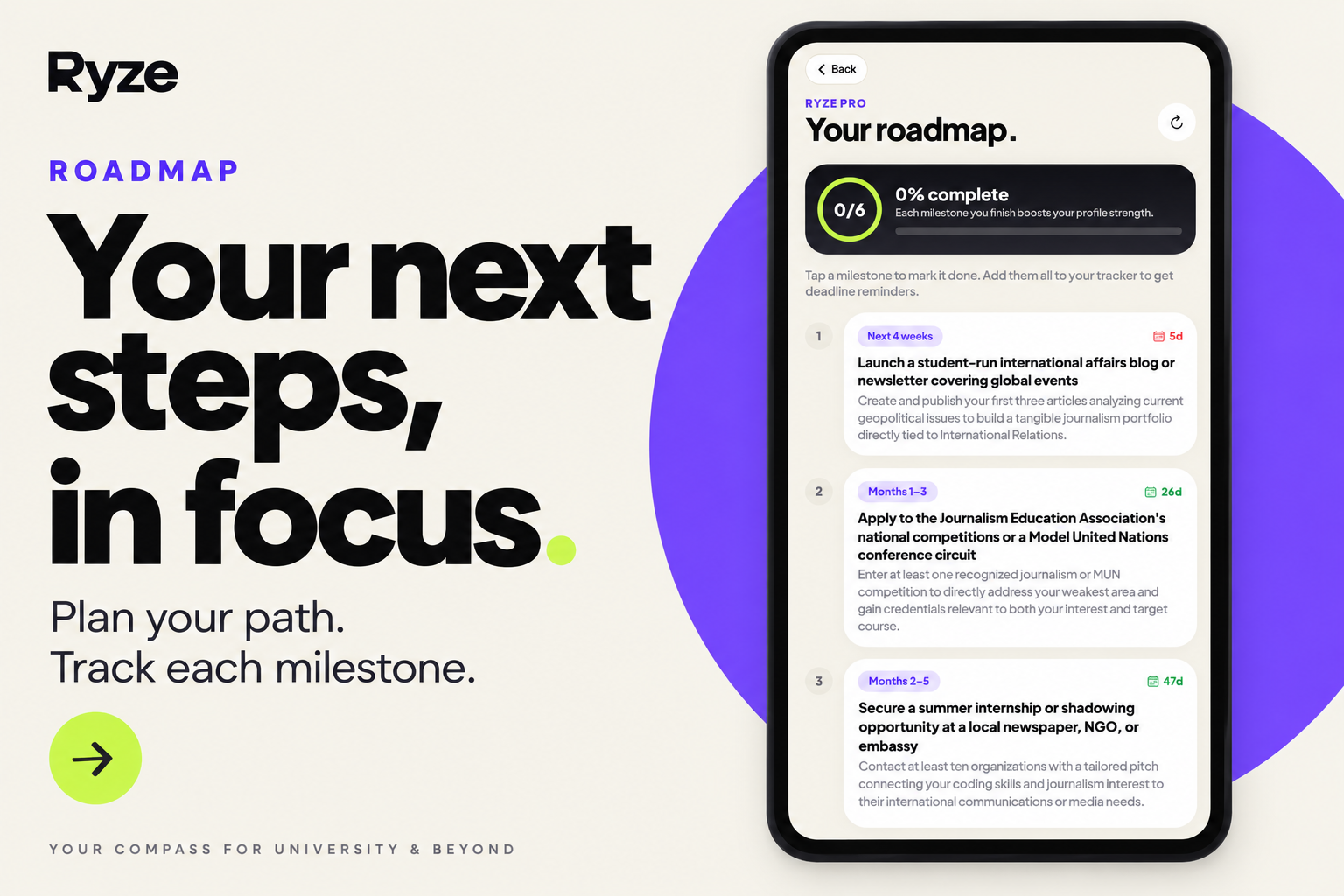
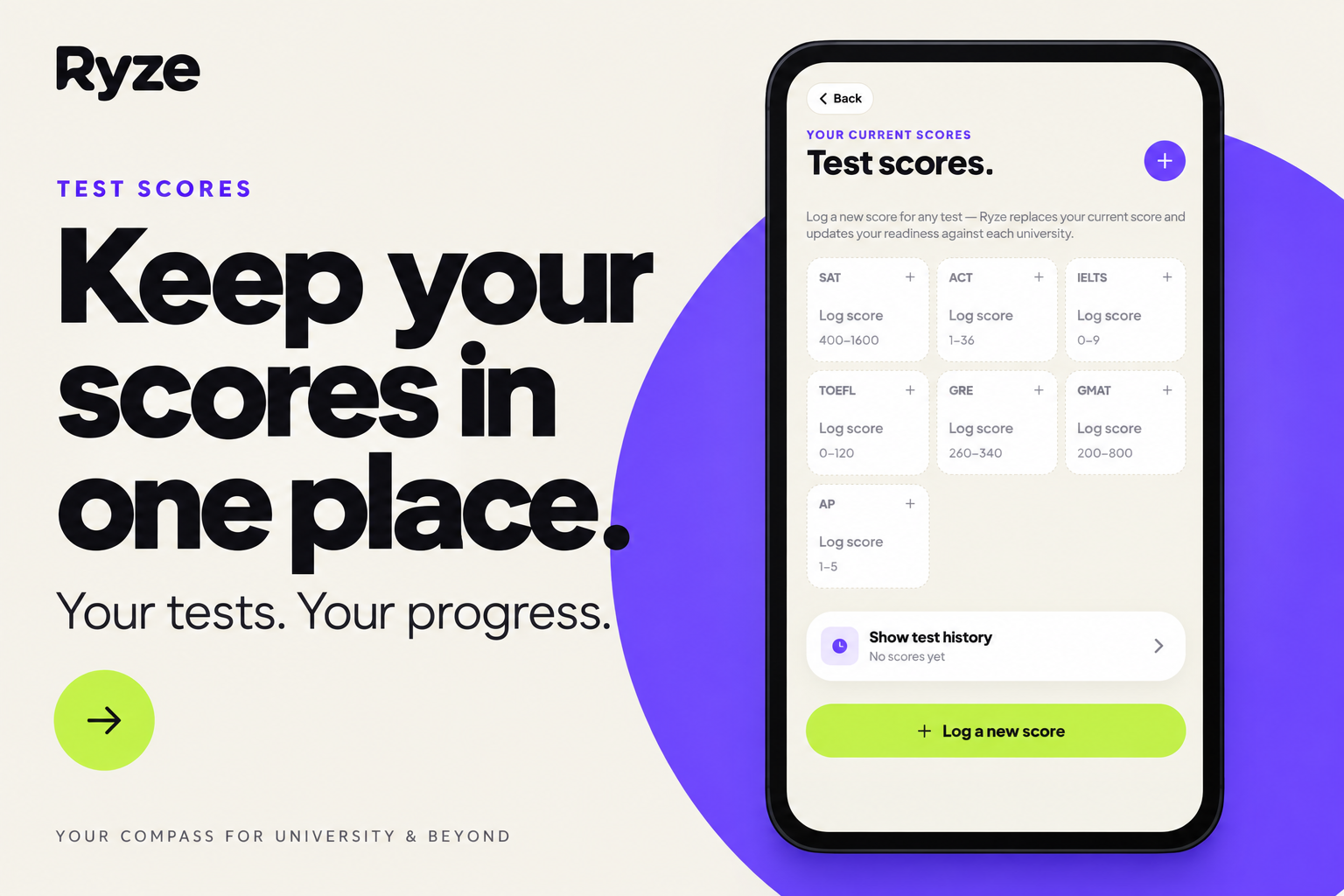
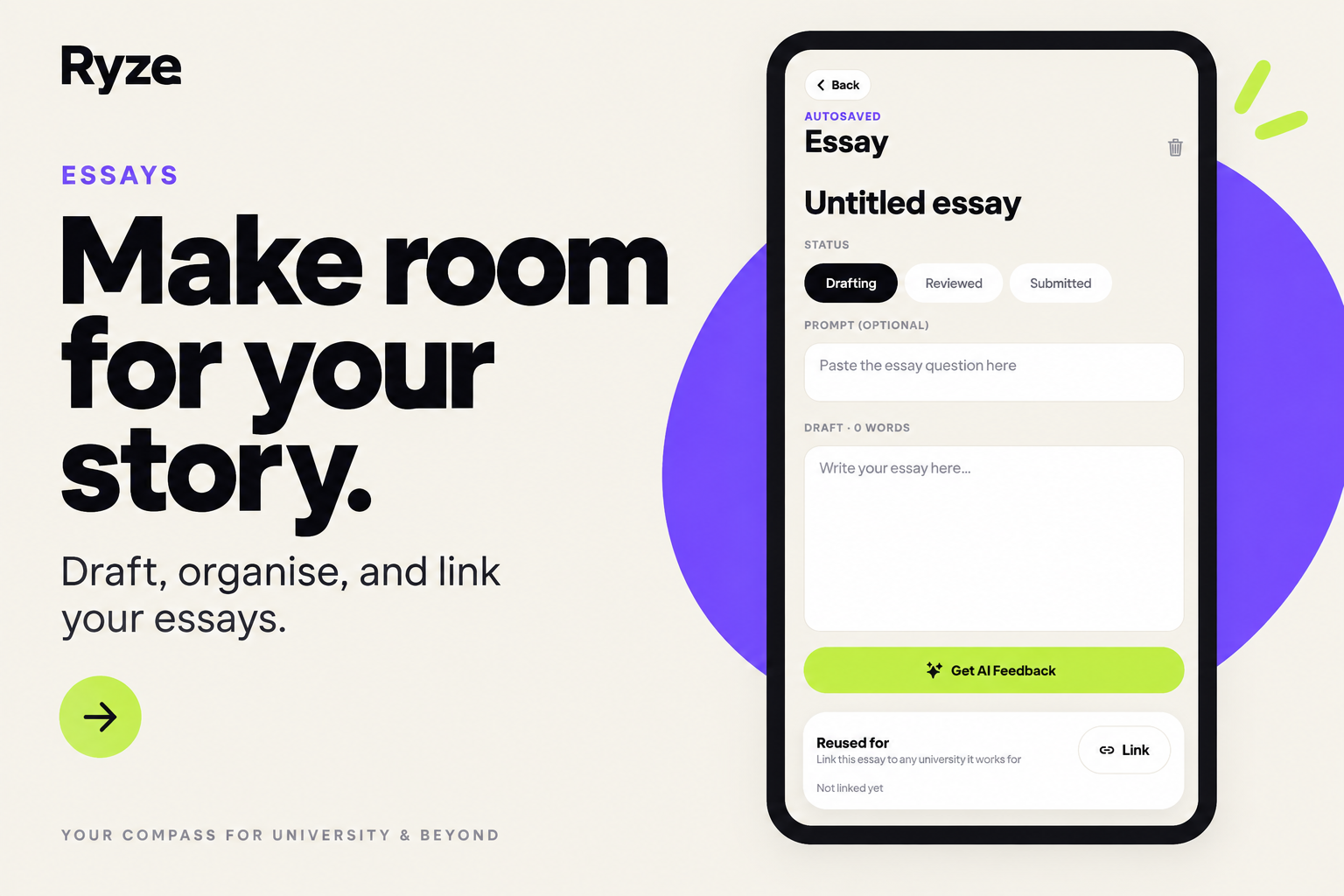
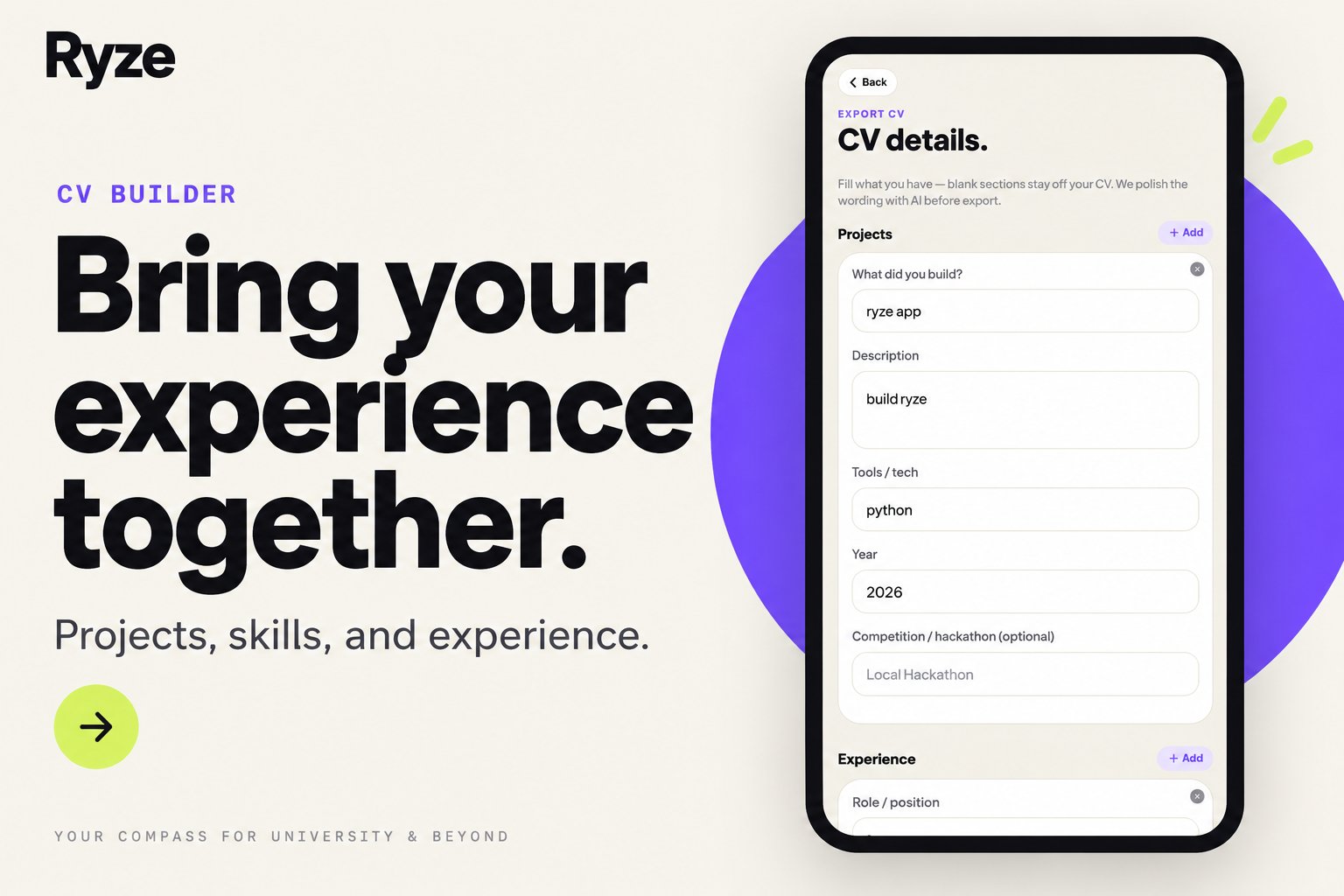
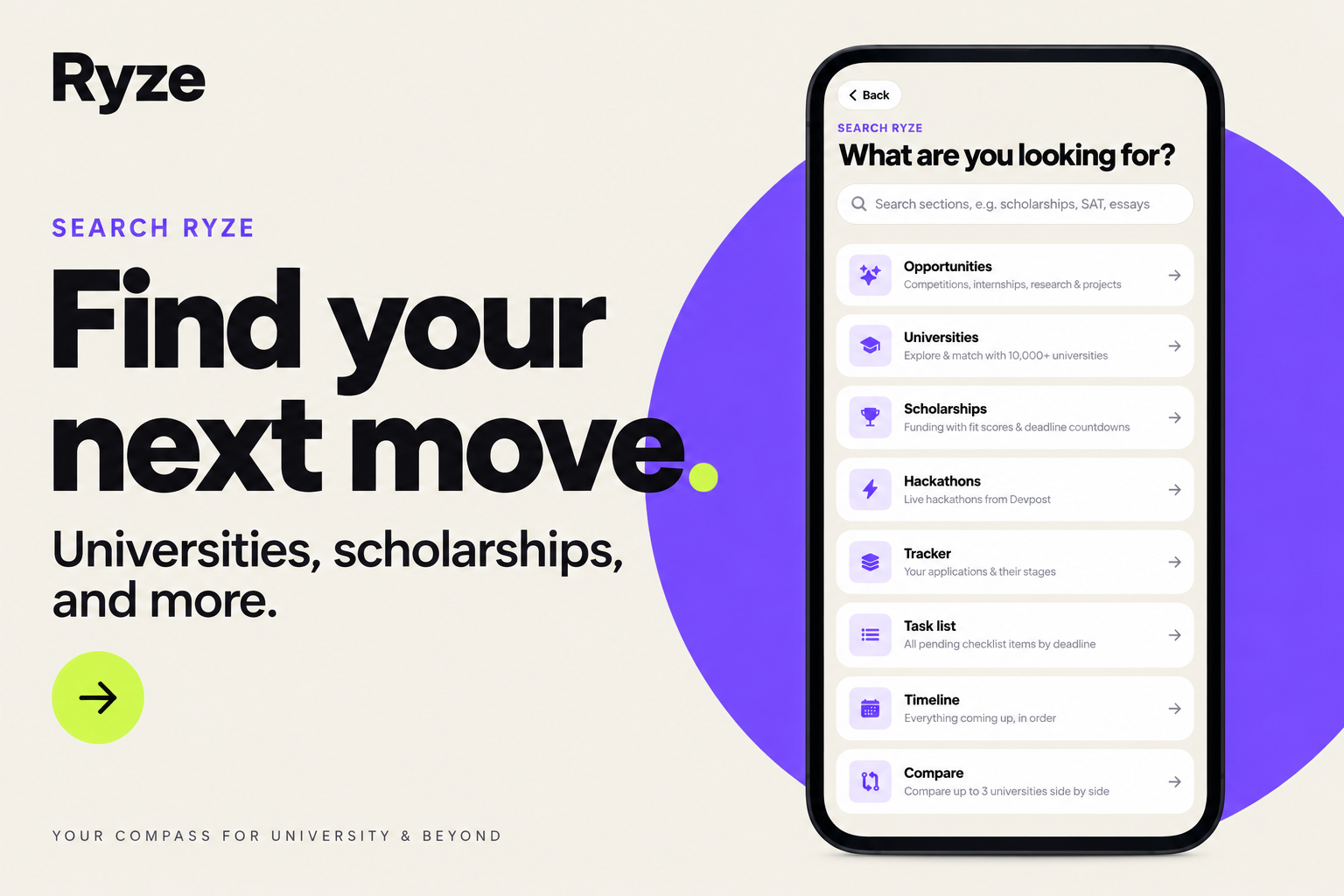
Students can compare universities side by side, explore courses and scholarships, build a university roadmap, manage application tasks and checklists, work on essays, track test scores, view profile insights, and create a CV.
For US universities, we've also integrated the College Scorecard API for live search and university data.
But university planning usually isn't something students do completely alone.
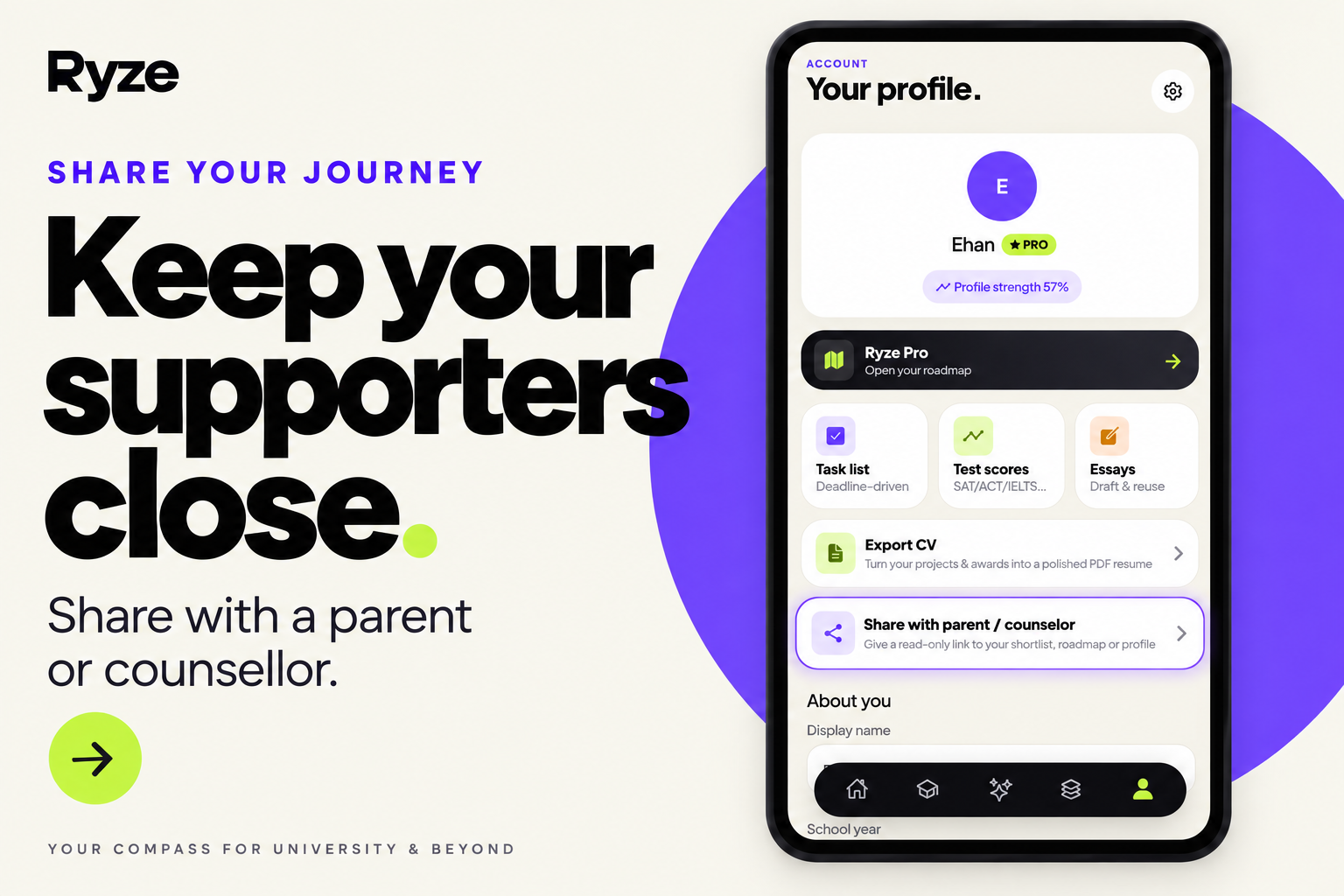
That's why Ryze also includes dedicated parent and counsellor dashboards. They can stay updated on the student's progress without taking over the process.
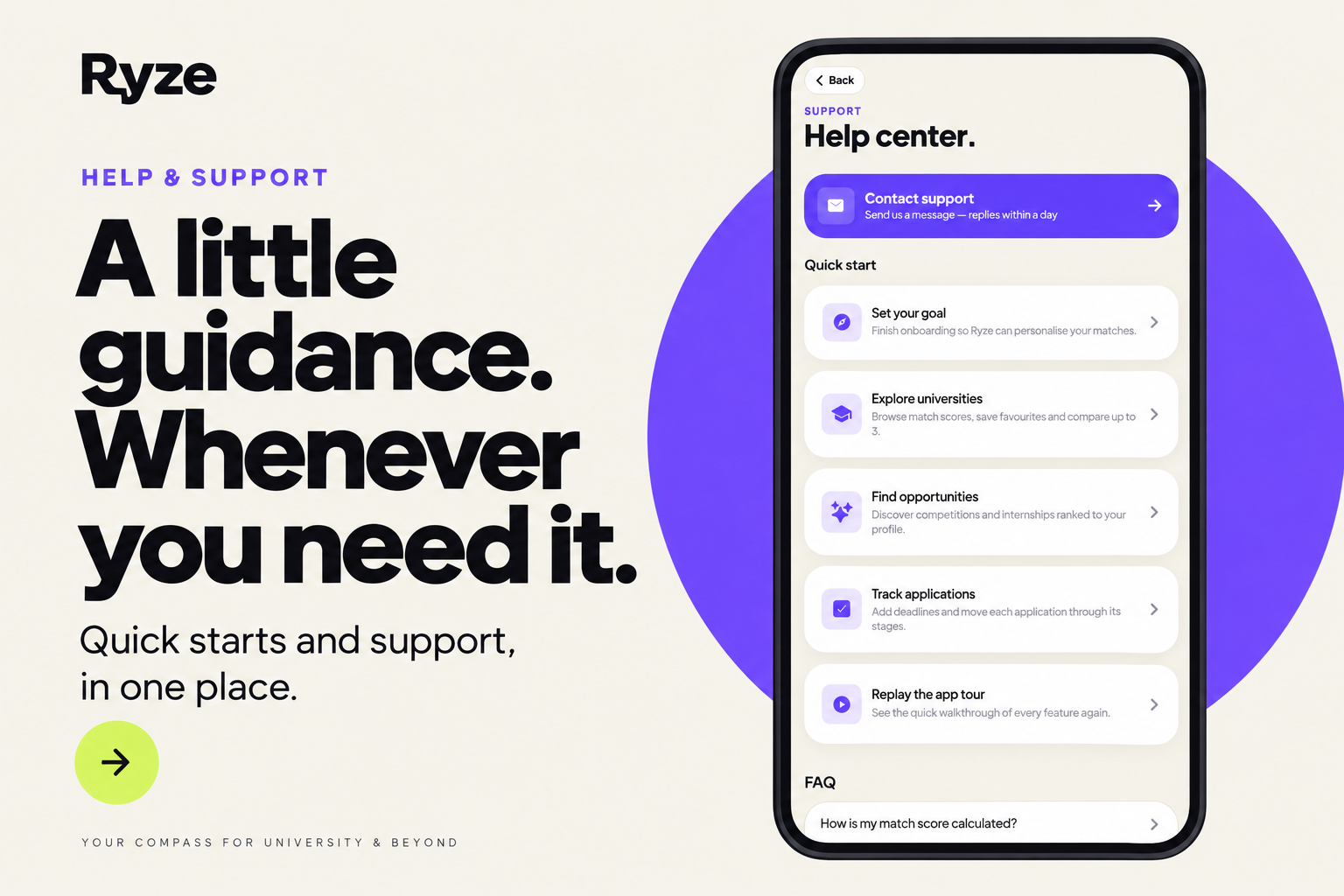
Students can share university lists, keep track of deadlines, sync important dates to their calendar, receive notifications, and get support when they're stuck.
Ryze is free to get started, while Ryze Pro unlocks additional premium features. RevenueCat powers the subscription system, paywall, and access to those Pro features.
How we built it
Ryze is built with Expo and React Native, using Expo Router for navigation.
Our backend runs on FastAPI with MongoDB, and authentication supports email and password with JWT as well as Continue with Google.
Our global university database contains 10,259 universities, while the College Scorecard API gives us live access to US university data.
We use Expo's native capabilities for features such as notifications and calendar integration.
For Ryze Pro, RevenueCat handles subscriptions and entitlements, allowing us to control which features become available when a student upgrades.
We also used Emergent to help us build, test, and iterate on the product much faster.
Challenges we ran into
One of the biggest challenges was university data.
Our own dataset is global, while the College Scorecard API only covers universities in the US. We had to figure out how to make both sources work together without making search feel like two completely different experiences.
The match score was another challenge. We didn't want to throw out a random percentage that looked impressive but meant nothing. We wanted the score to reflect the student's actual profile and preferences in a way that was genuinely useful.
We also learned pretty quickly that some features behave very differently outside a simulator. Notifications and calendar sync needed testing on real devices, which added another layer to development.
And honestly, one of the hardest parts was simply keeping everything consistent. Ryze grew into a lot more screens than we originally expected, so making the whole app still feel like one product took a lot of iteration.
Accomplishments that we're proud of
We're proud that Ryze became more than just a hackathon prototype.
It has a database of 10,259 real universities, rather than a small set of fake demo data.
We built swipe-based university discovery to make researching universities feel less like homework, and added match scores to help students narrow down their choices.
We built separate experiences for students, parents, and counsellors because university applications aren't something students go through completely alone.
And we integrated a real RevenueCat-powered Pro subscription and paywall, rather than simply designing a premium screen that doesn't actually work.
Most importantly, Ryze was built by students, for students.
What we learned
One of the biggest things we learned is that students don't necessarily need more information.
There's already too much information.
What they need is a clear next step.
Giving students a match score, letting them quickly save universities, and turning the process into smaller actions made university research feel much more manageable than staring at another huge list.
We also realised how important parents and counsellors are in this process. A lot of university tools focus entirely on the student, even though there are usually several people helping them make the decision.
On the technical side, we learned a lot about building a real mobile product — from combining different university data sources to integrating RevenueCat into an Expo app and properly gating premium features.
What's next for Ryze
We don't want Ryze to stop helping a student once they've picked a university.
The next step is expanding Ryze into the rest of student life.
We're working on a study helper with an AI-powered study planner that can help students plan what to study, understand where they're struggling, and improve over time.
We're also building a student wellbeing section focused on academic stress and burnout.
The bigger idea behind Ryze is simple:
One app that supports students from figuring out where they want to go, to actually getting there — and beyond.


Log in or sign up for Devpost to join the conversation.