-
-

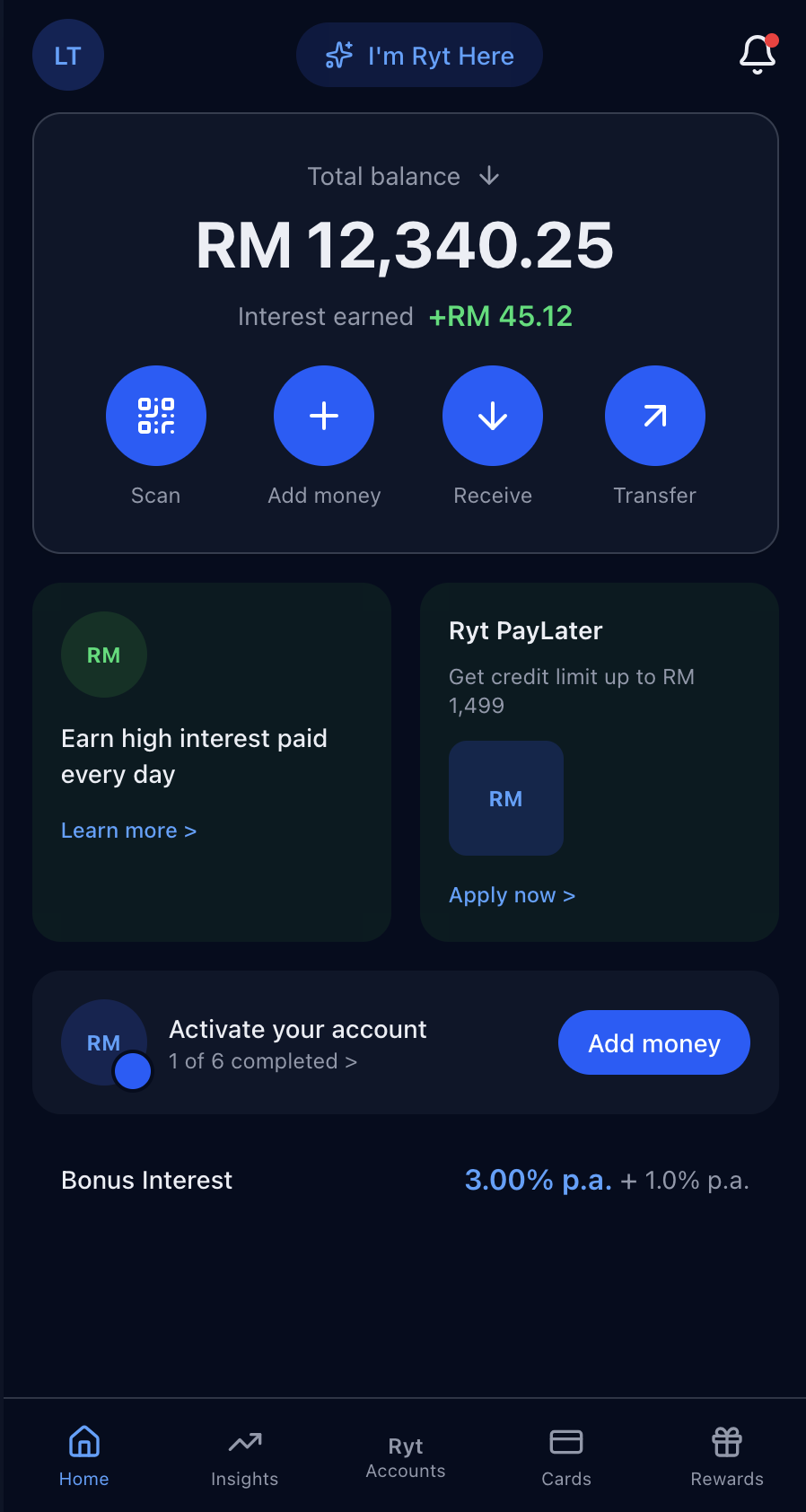
Home Page
-
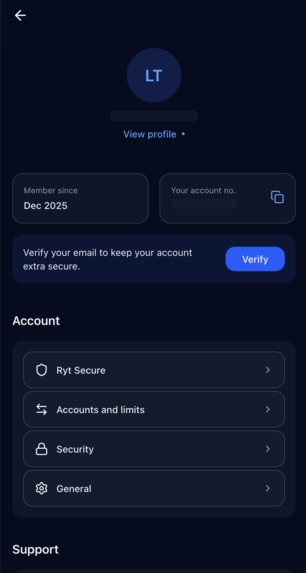
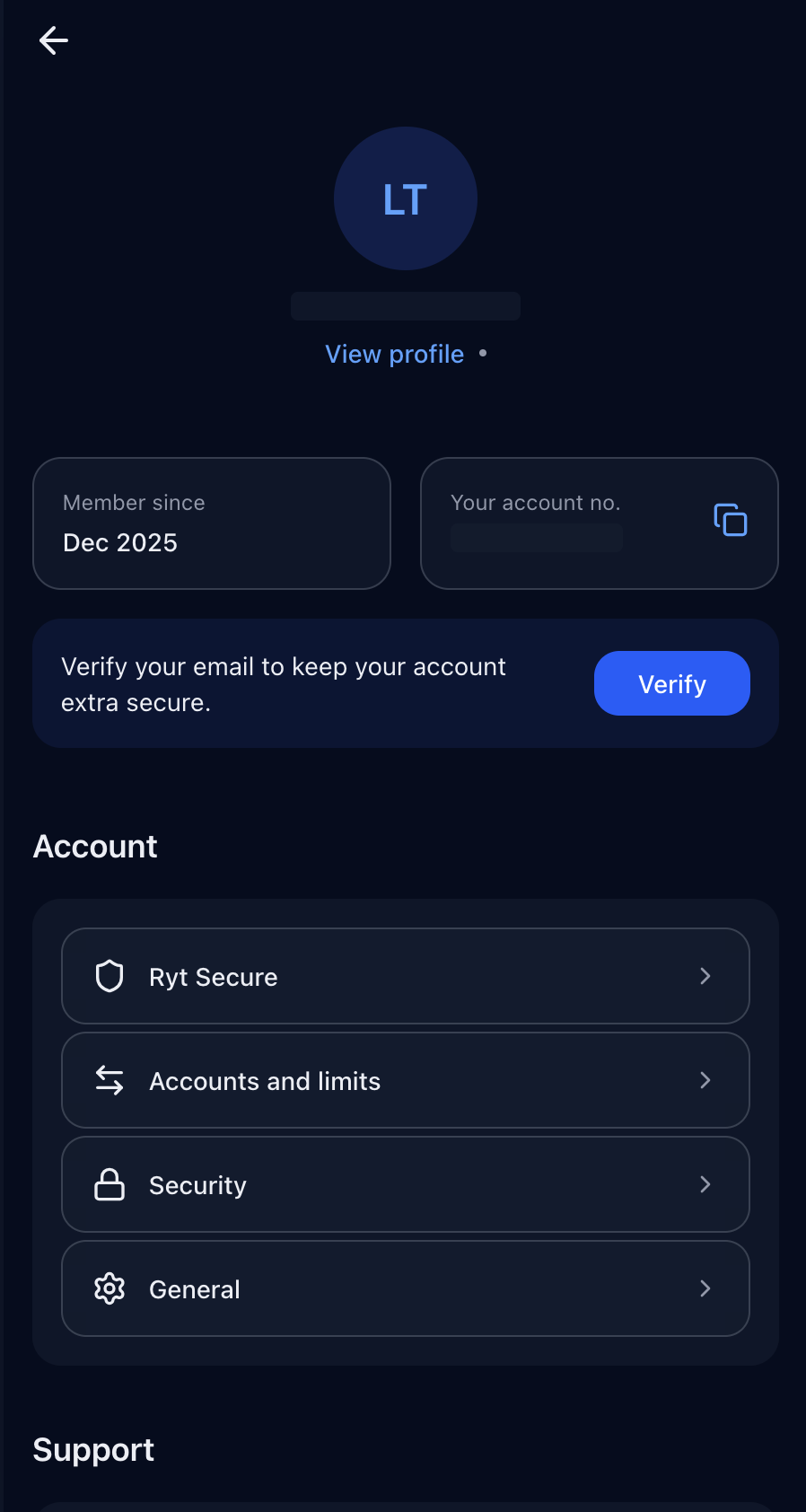
User Profile / Setting Page
-

Security Setting Page
-

Change Transaction Limit Setting Page
-
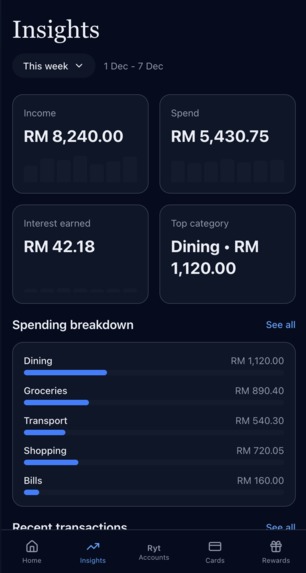
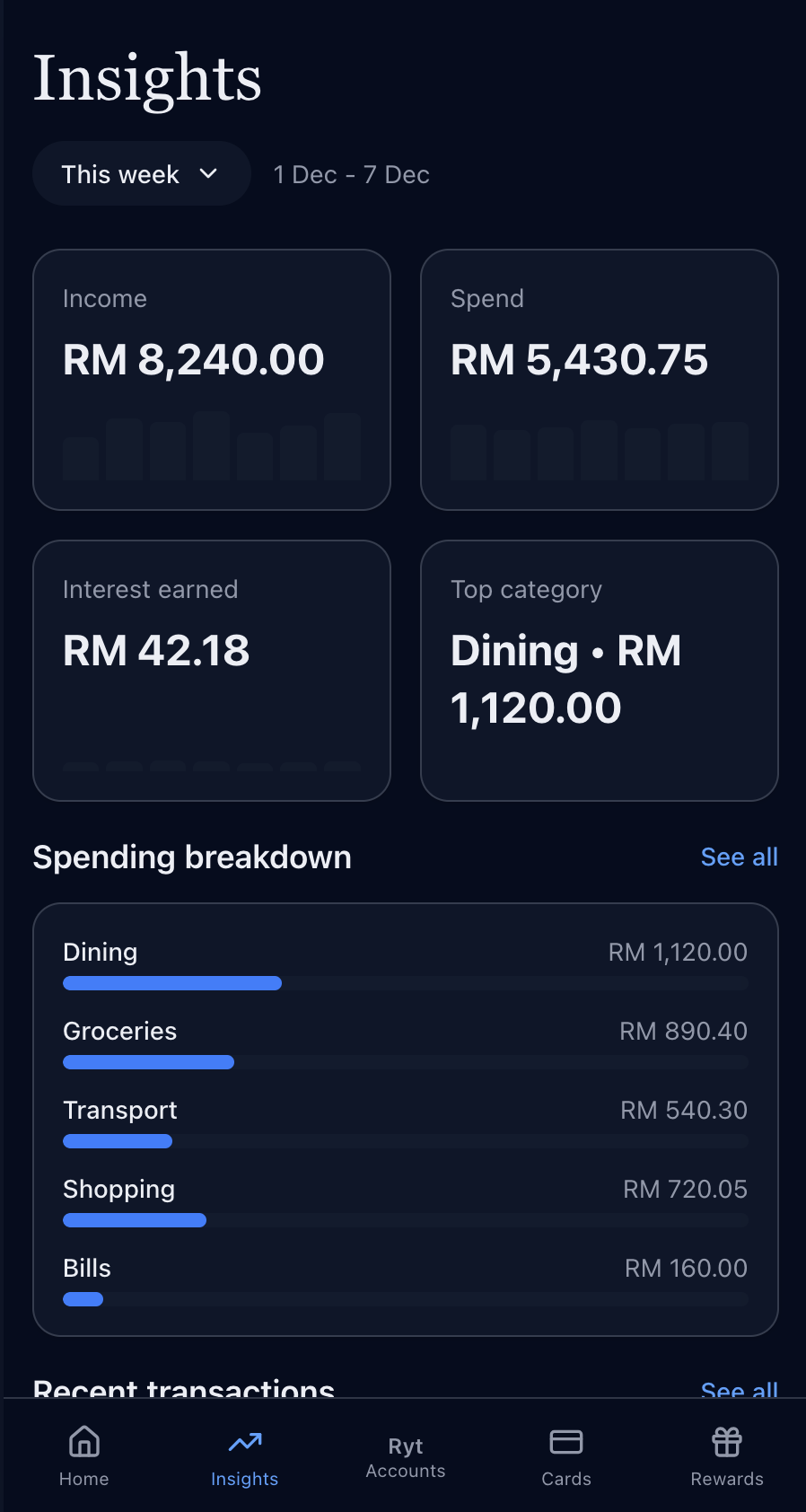
Insight Page
-
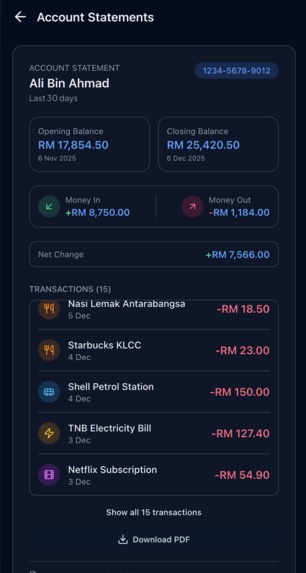
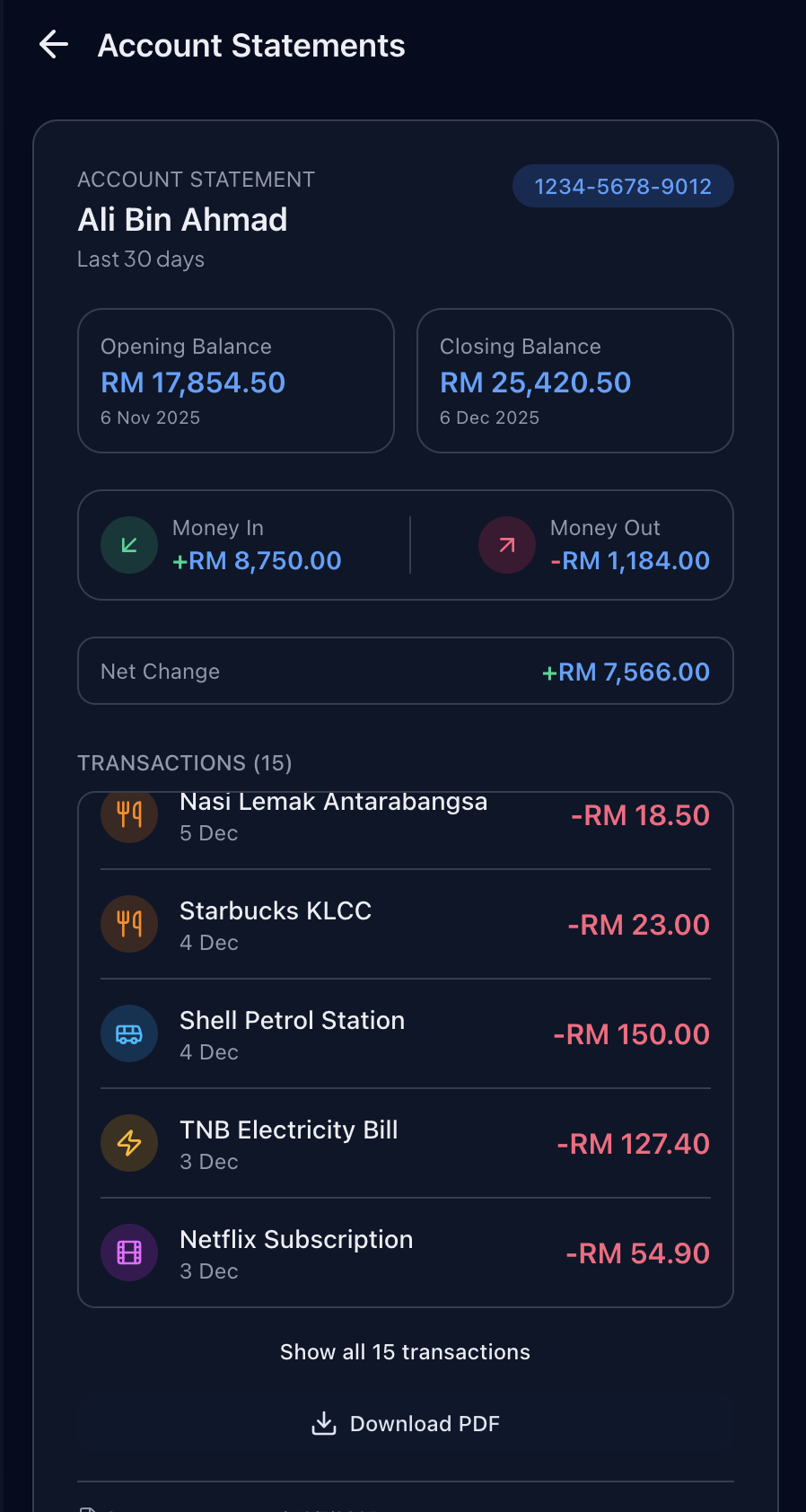
Account Statement Page
-
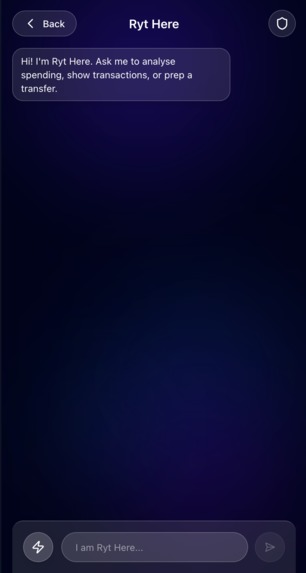
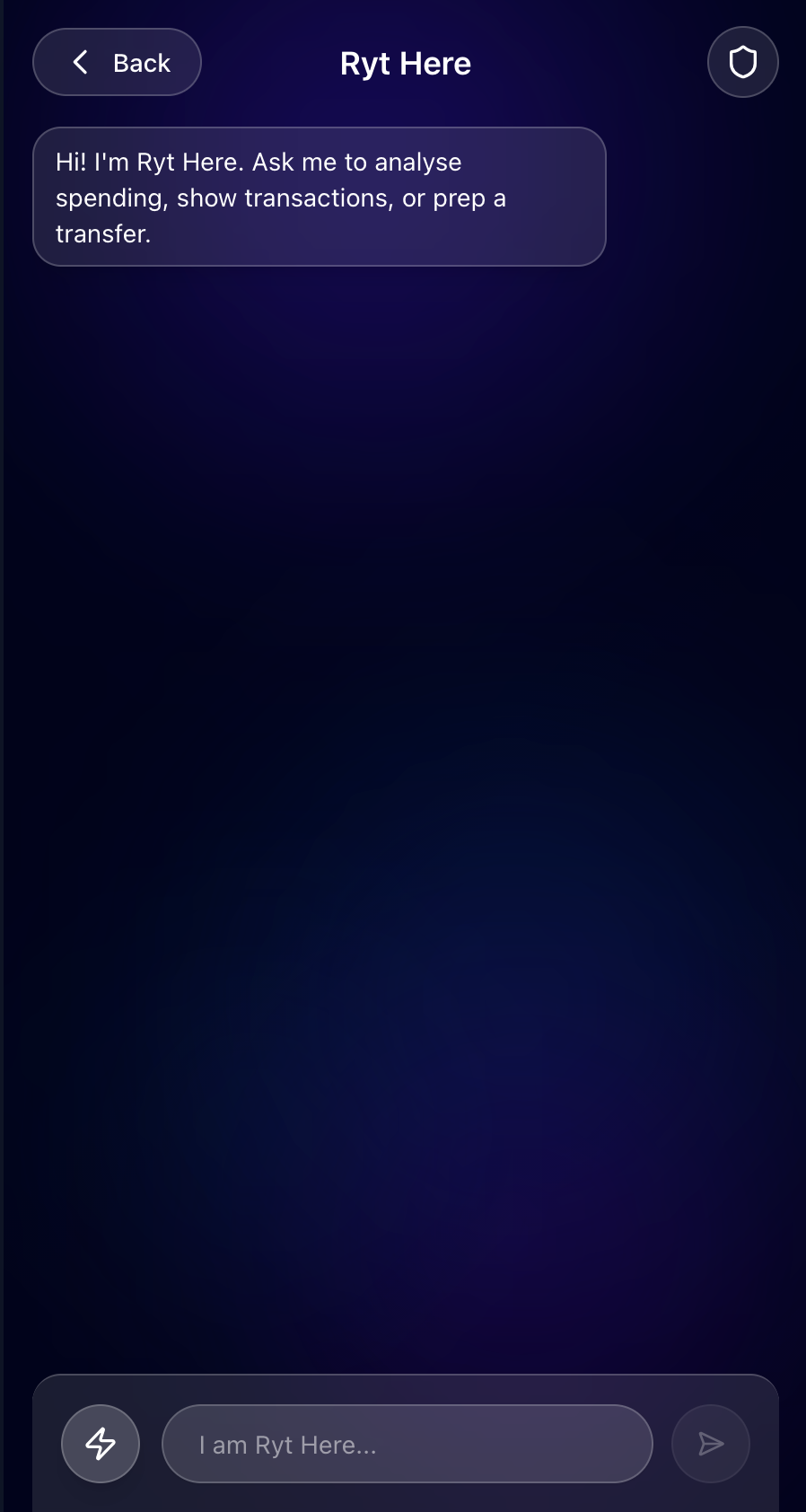
I'm Ryt Here AI Chat Interface


Inspiration
We wanted to rethink how people interact with their bank. Modern banking apps still rely heavily on dashboards, menus, and manual inputs — even though most users already know what they want, just not where to tap. Those deeply nested settings are so annoying frfr. With the rise of LLMs, we saw an opportunity to build a banking experience that feels as natural as talking to a personal banker.
Our goal: make financial management effortless, conversational, and deeply intuitive.
What it does
Ryt-here Ryt-now is an AI-powered digital banking experience that lets users manage their finances entirely through natural language. The app can:
- Change all settings
- Reminds users of sus settings they might wanna change
- Show and analyze recent transactions
- Generate detailed account statements for any timeframe
- Transfer money with automatic limit checks
- Visualize spending patterns with charts
- Freeze/unfreeze cards instantly
- Set and adjust transaction limits interactively
- Create and track savings goals
- Request money through payment links and QR codes
- Add new contacts on the fly
- Provide real-time account balance and card status
In short, it functions like a smart, always-available personal banking assistant.
How we built it
We built Ryt Here as a full conversational banking application powered by Claude Sonnet 4.5 from Anthropic. The frontend and backend work together to process user prompts, interpret intents, and perform corresponding banking operations.
We structured the system around real financial workflows — from transaction filtering to spending analysis — and designed a natural, intuitive conversational interface on top of them.
The entire application is deployed on Vercel for a seamless, fast, production-grade experience.
Challenges we ran into
- Designing a natural banking conversation flow that feels intuitive yet remains safe and accurate
- Handling complex financial queries like spending breakdowns, category filtering, and multi-step instructions
- Ensuring reliability and clarity when generating account statements, charts, and action confirmations
- Building agent-like capabilities so the AI can take actions, not just answer questions
- Balancing functionality with safety, especially around transfers and card controls
- A vulnerability discovered by CodeRabbit
Accomplishments that we're proud of
- Creating a fully functioning agentic banking assistant powered by Claude
- Delivering real-time financial operations (statements, transfers, limits, analysis) through simple chat messages
- Building visual spending charts and interactive tools directly integrated into the AI flow
- Designing an experience that feels modern, smooth, and practical — not just a proof-of-concept
- Shipping a complete, polished hackathon-ready app in a short timeframe
What we learned
- How to design and structure agentic AI interactions for real-world tasks
- How natural language interfaces change the way users expect to interact with apps
- The importance of clear guardrails when AI performs financial operations
- Better techniques for parsing, summarizing, and visualizing transaction data
- How to create a conversational experience that is both simple and powerful
What's next for Ryt-here Ryt-now
- Adding biometric authentication for secure high-risk operations
- Improving multi-turn memory so the assistant can understand financial habits over time
- Connecting to real banking APIs for true production use
- Expanding insights such as subscription detection, anomaly alerts, and budgeting advice
- Supporting multilingual conversations
- Making the AI agent even more proactive — reminding users about bills, goals, or unusual activity
Built With
- anthropic-api
- next.js
- react
- shadcn
- typescript
- vercel

Log in or sign up for Devpost to join the conversation.