-
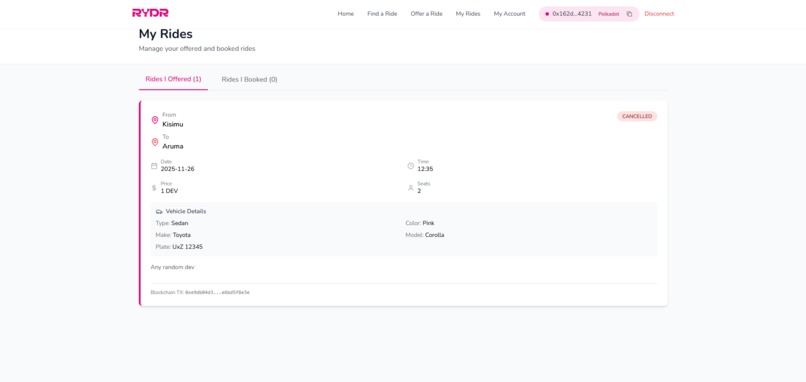
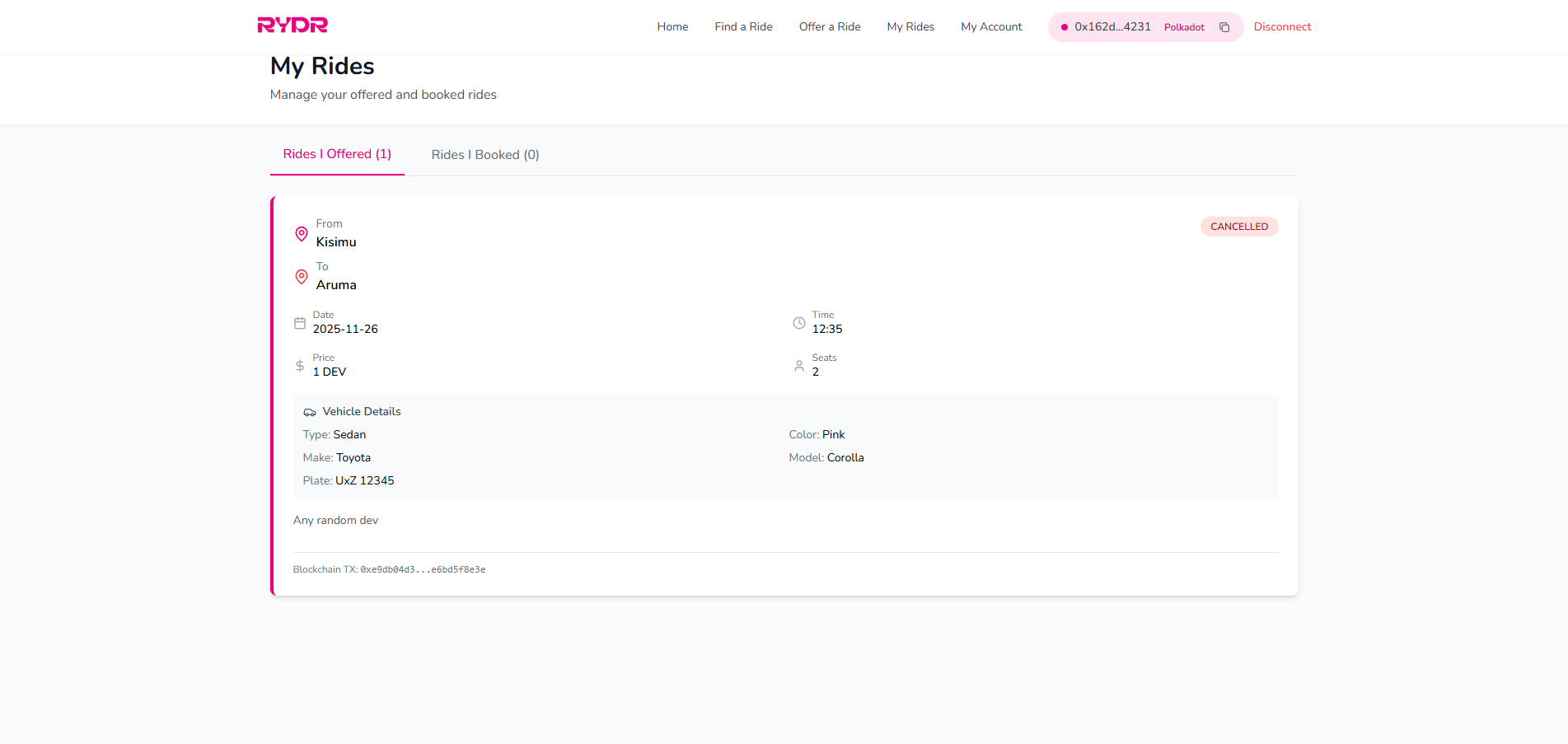
My Rides
-
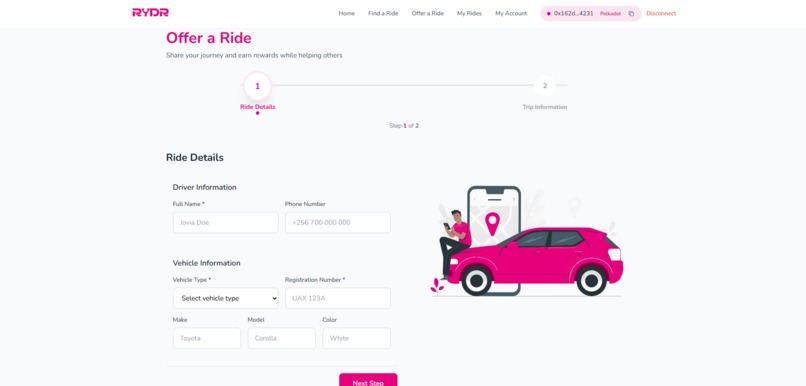
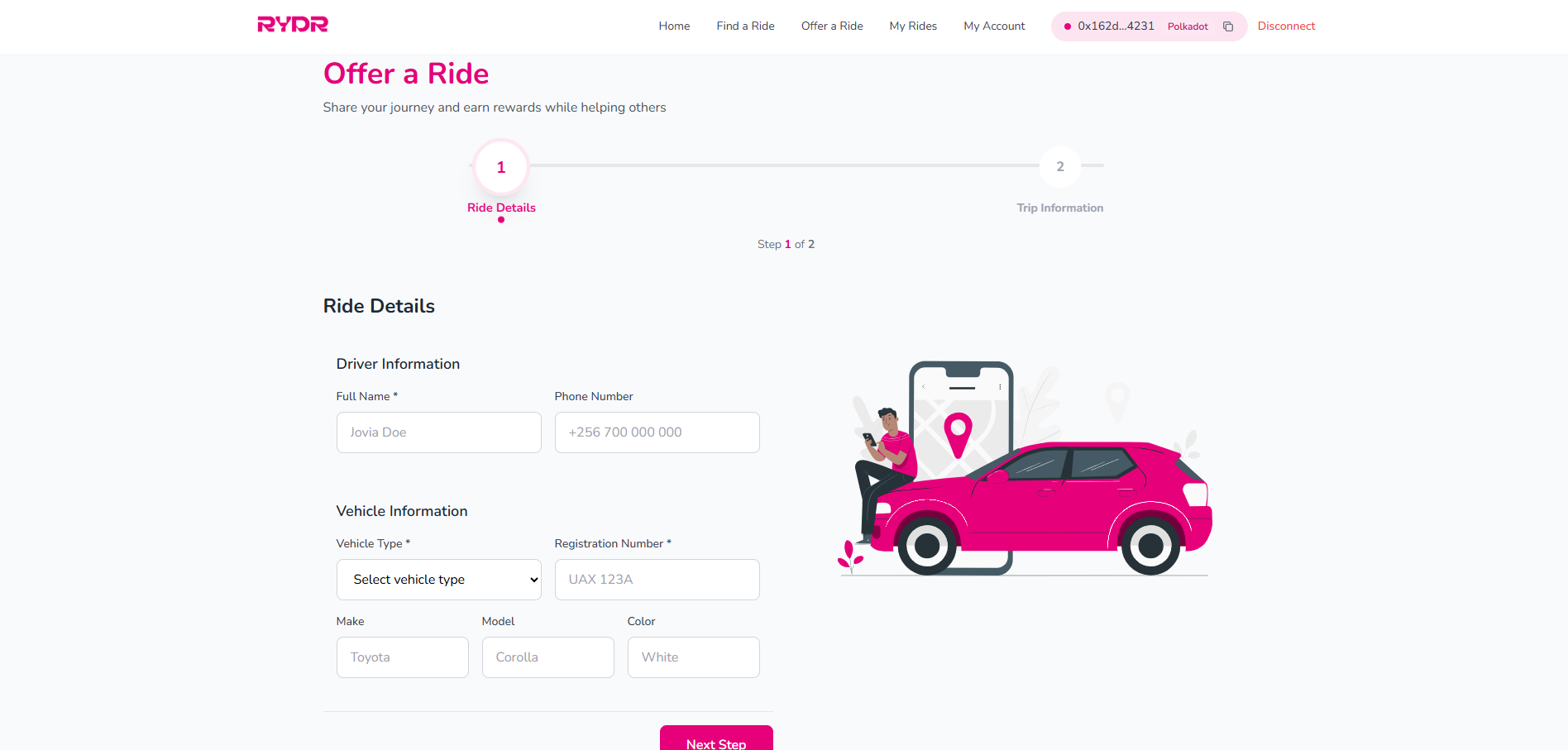
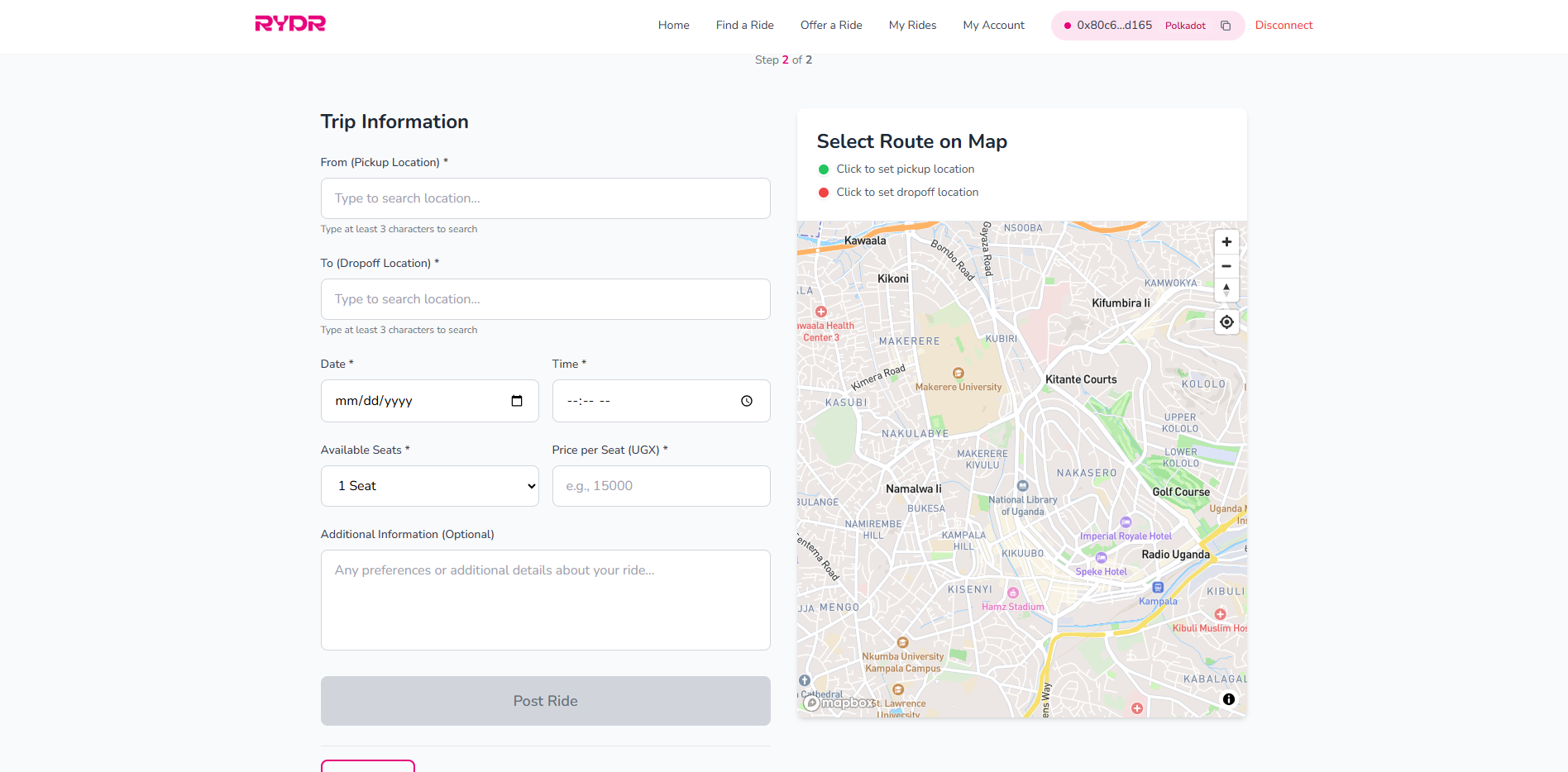
Offer a ride
-
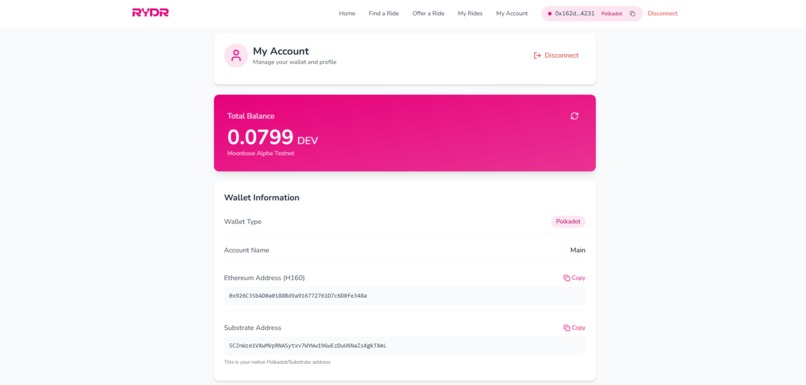
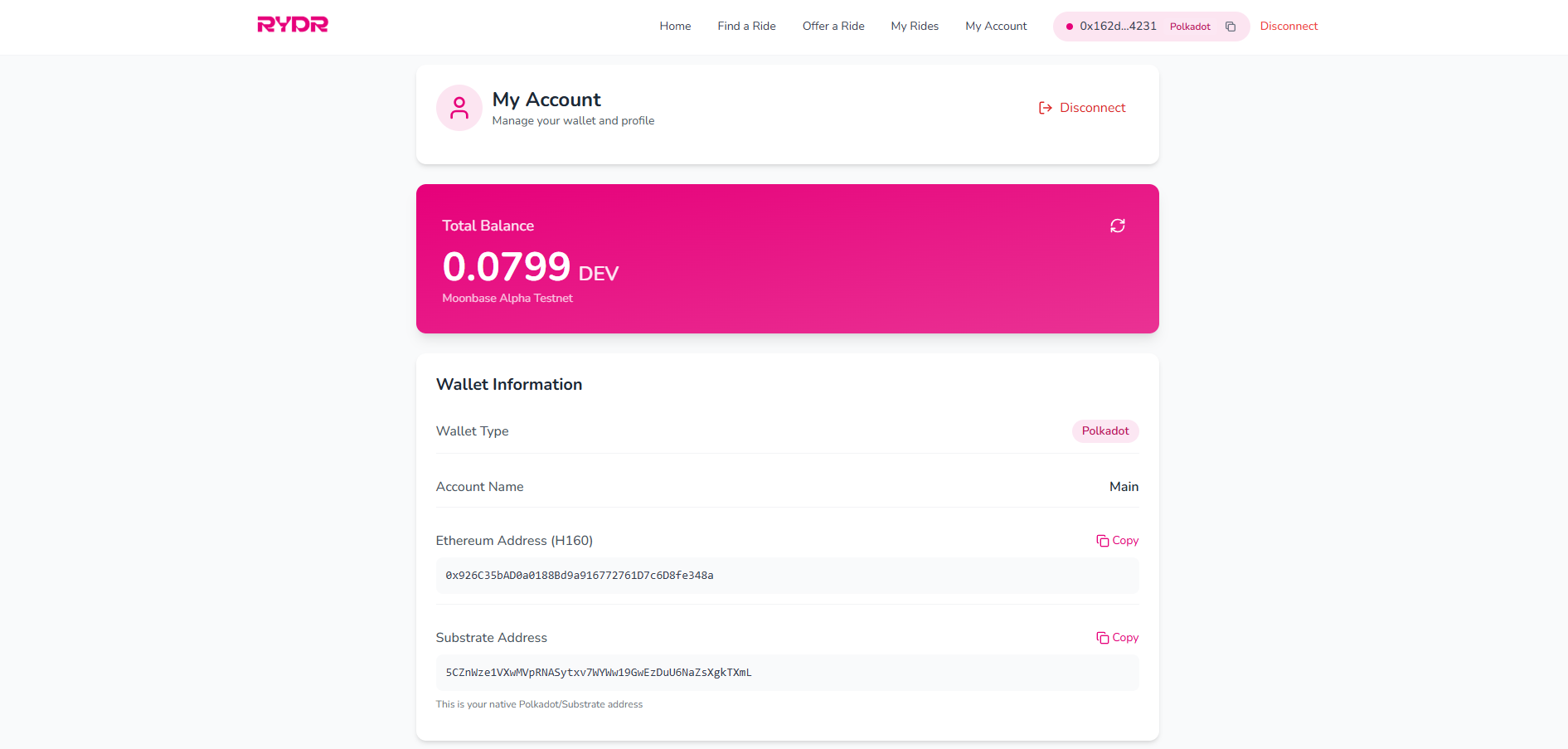
My account
-
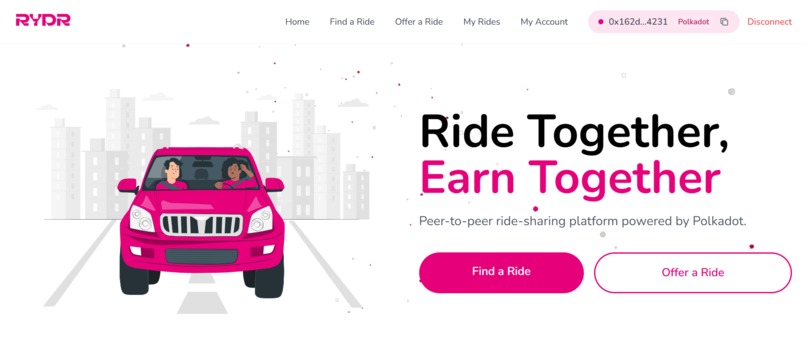
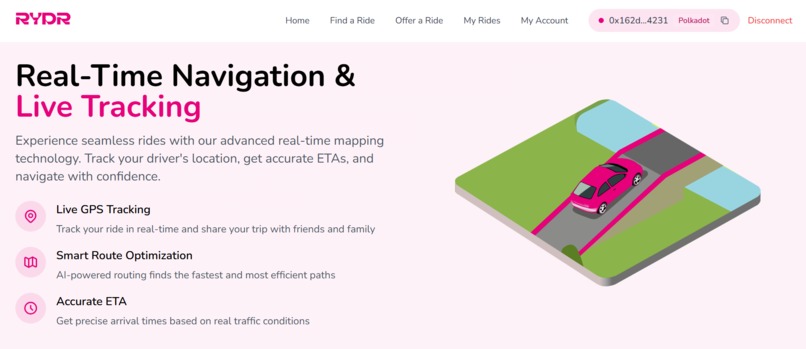
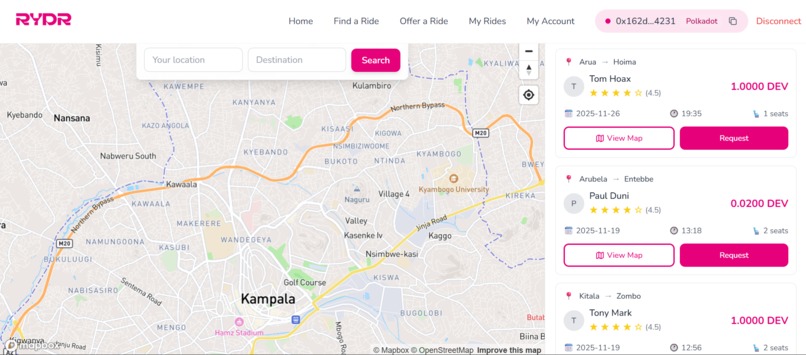
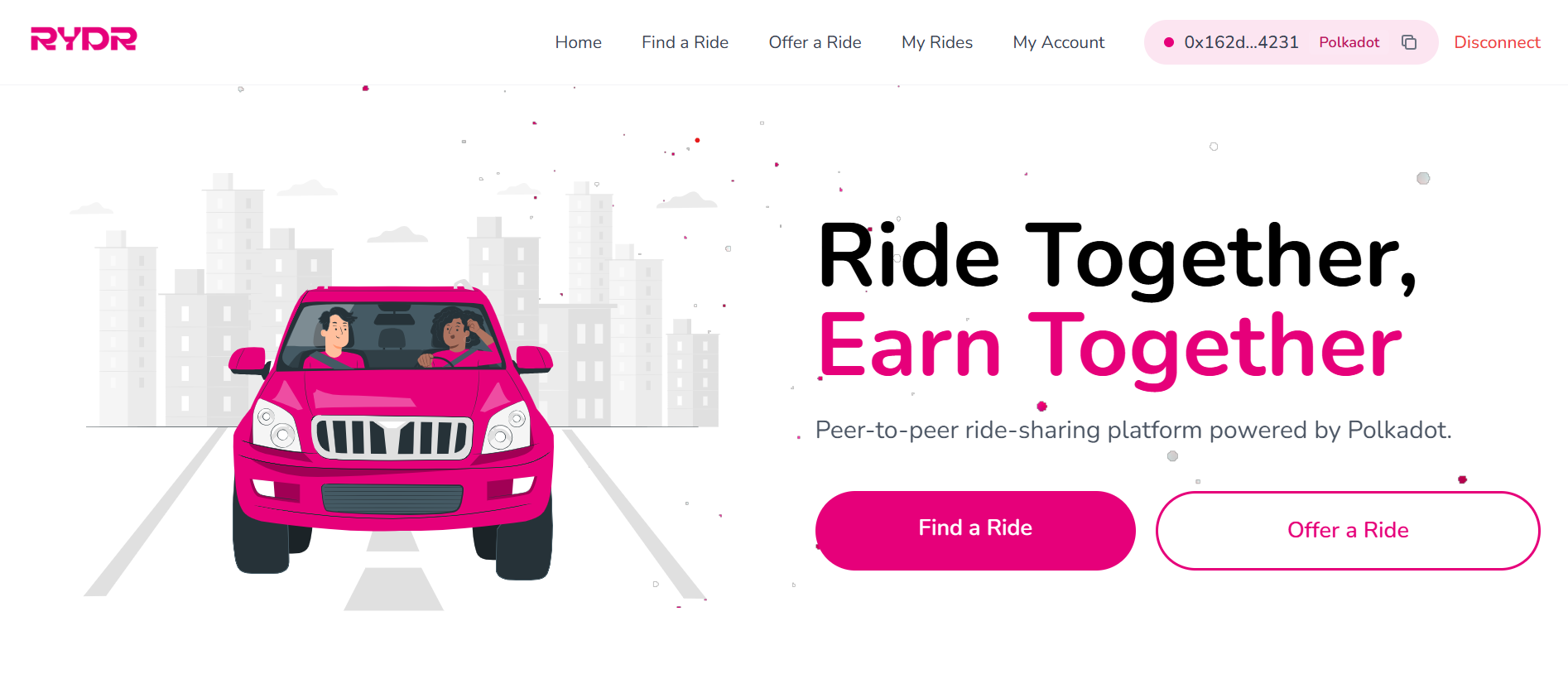
Home Page
-
-
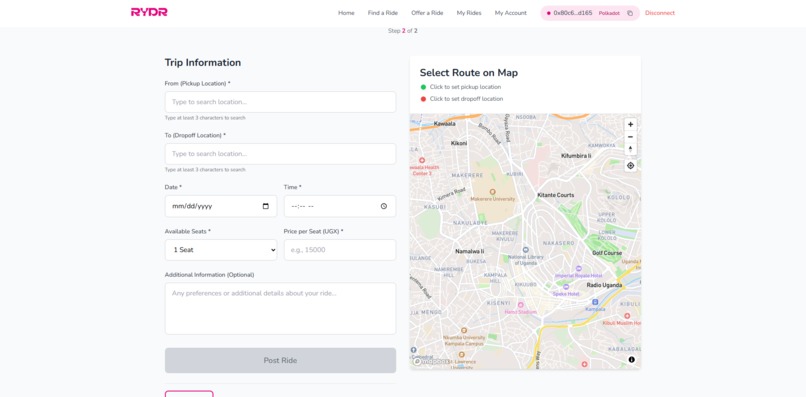
Trip information
-
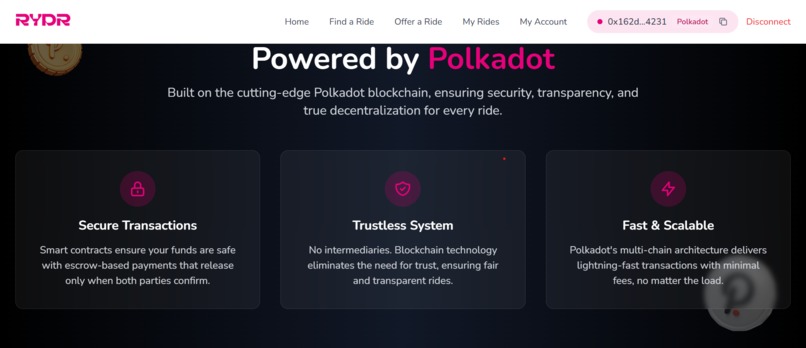
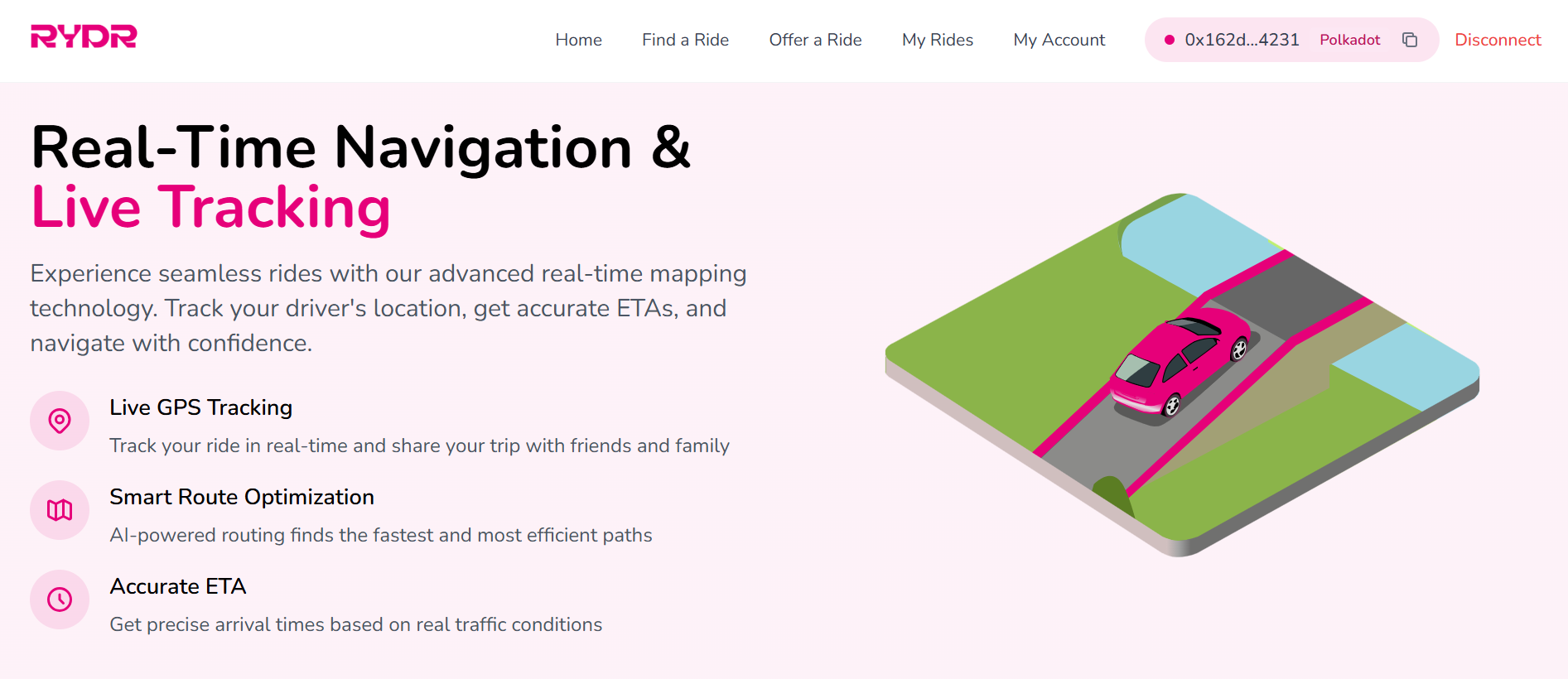
Featur
-
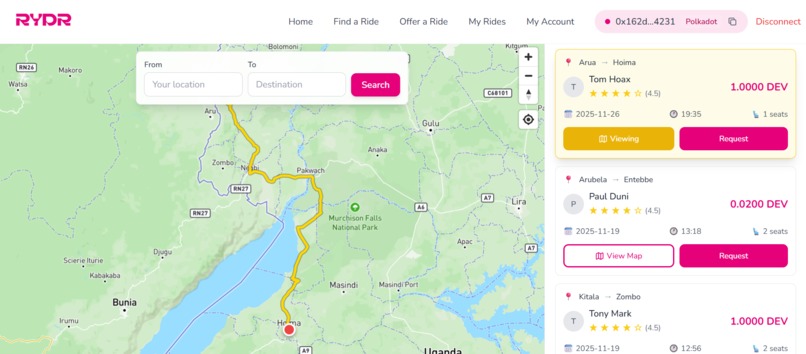
Find a Ride
-
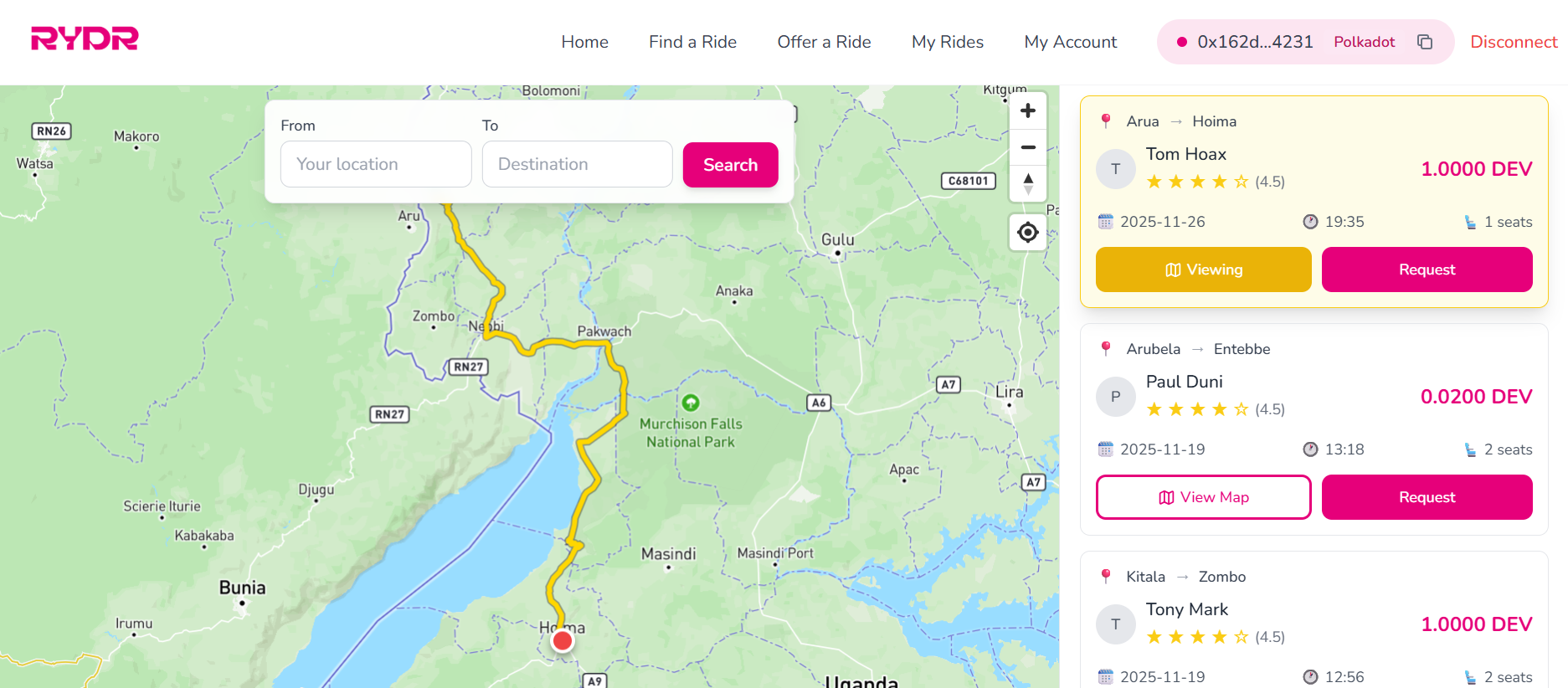
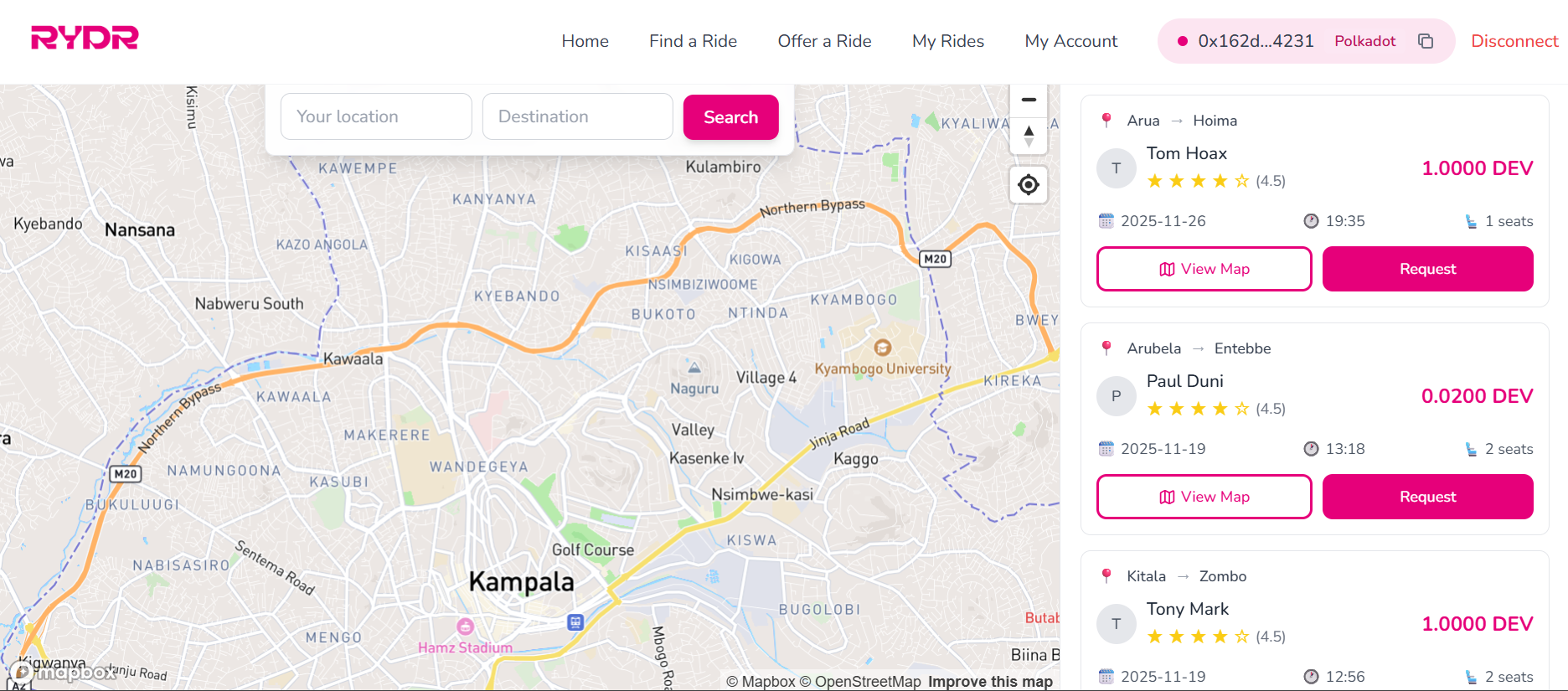
RYDR - Decentralized Ride-Sharing on Polkadot
Inspiration
Living in Uganda, I've watched friends and family struggle with expensive ride-sharing apps that take 25-30% commission from drivers. Meanwhile, passengers worry about payment disputes and hidden fees. I thought: what if blockchain could solve this? Not just as a tech experiment, but as a real solution that puts money back in drivers' pockets and gives passengers transparent, trustless transactions.
The math is simple but powerful:
$$\text{Driver Earnings}_{\text{Traditional}} = \text{Price} \times (1 - 0.25) = 75\% \text{ of fare}$$
$$\text{Driver Earnings}_{\text{RYDR}} = \text{Price} - \text{Gas Fee} \approx 95-98\% \text{ of fare}$$
That's a 20-25% increase in earnings for the same work. For a driver making 10 rides/day at $15/ride, that's an extra $825/month - enough to change lives.
What it does
RYDR is a peer-to-peer ride-sharing platform where:
- Drivers post rides with their route, timing, and price
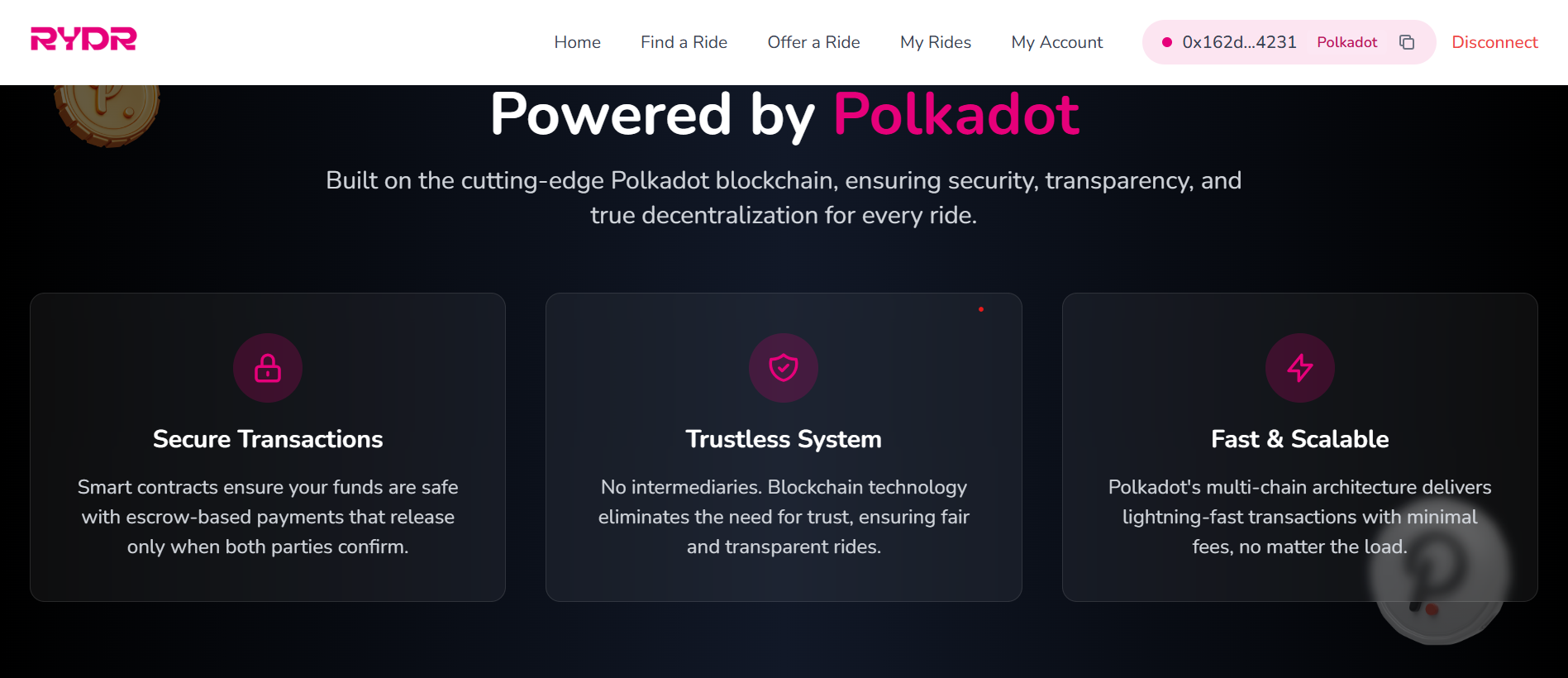
- Passengers book rides and pay upfront - funds are held in escrow
- Smart contracts automatically release payment when the ride completes
- Both parties connect using familiar wallets (MetaMask or Polkadot wallets like SubWallet)
The magic happens through Moonbase Alpha - drivers keep 95%+ of fares instead of 75%, passengers get transparent pricing, and nobody needs to trust a middleman.
How we built it
Frontend Stack:
- React + Vite for a snappy user experience
- Tailwind CSS for responsive design
- Mapbox for interactive route visualization
Blockchain Layer:
- Solidity smart contract deployed on Moonbase Alpha (Polkadot's EVM-compatible parachain)
- Dual wallet support: MetaMask and Polkadot wallets (SubWallet, Talisman)
@polkadot/extension-dappfor native Polkadot integration
Backend:
- Appwrite for storing ride metadata (coordinates, driver info)
- Hybrid approach: blockchain for money, database for speed
The smart contract handles escrow:
function bookRide(uint256 rideId) external payable {
    require(msg.value == rides[rideId].price, "Incorrect payment");
    rides[rideId].passenger = payable(msg.sender);
    rides[rideId].status = RideStatus.Booked;
    // Funds held in contract until release
}
## Challenges We Ran Into

### 1. The Network Confusion
At **3 AM**, I deployed to the **Base network by mistake**, then spent hours debugging why my **Moonbase** contract wasn't responding.
**Lesson learned:** always double-check your **Chain ID**!

### 2. Two Wallet Types, One App
Supporting both **MetaMask (Ethereum)** and **SubWallet (Polkadot)** was tricky. SubWallet has its own **EVM account** that's different from the **Substrate address** conversion.
I had to detect which wallet was active and route transactions accordingly:

```javascript
if (isSubWallet) {
  // use EVM account from SubWallet
} else {
  // MetaMask flow
}
3. Coordinate Chaos
Mapbox uses [lng, lat] arrays, Appwrite stores {lat, lng} objects.
I kept placing markers in the ocean 🌊.
The fix was simple but took too long:
const correctedCoords = [location.lng, location.lat];
4. The BigNumberish String Error
When canceling rides, I mistakenly passed Appwrite document ID (hex string) instead of the blockchain ride ID (number).
Smart contracts do NOT like that.
Added a proper field:
{
  "blockchainRideId": 42
}
Accomplishments We're Proud Of
✨ It actually works! You can create a ride, book it with DEV tokens, and the escrow releases correctly.
✨ Dual wallet support — full integration for both Ethereum (MetaMask) and Polkadot (SubWallet).
✨ Real-world potential — could genuinely help drivers in my community earn more.
✨ Learned so much — Substrate ↔️ EVM compatibility, wallet systems, hybrid storage patterns.
What We Learned
Technical
- Moonbeam's unified accounts are genius — one address for Substrate + EVM.
- Gas estimation often tells you why a transaction will fail.
- Hybrid storage (blockchain + database) is ideal for dApps.
Design
- Users don't care about decentralization — they care about saving money and avoiding disputes.
- Wallet UX matters — every extra step reduces conversions.
- Better errors →
"Ride already booked" instead of "BAD_DATA".
Philosophy
- Not everything belongs on-chain.
- Use blockchain for trust, databases for speed.
- Familiar UX is key for Web3 adoption.
What's Next for RYDR
Short-term
- Add on-chain reputation system.
- Ride scheduling (book later).
- React Native mobile app.
Medium-term
- Deploy to Moonbeam Mainnet → Astar → Acala.
- DAO governance for fee decisions.
- Add an insurance pool.
Long-term
- Cross-chain payments via XCM (DOT → GLMR).
- AI route optimization.
- Expand to logistics — packages and delivery.
Dream Big
What if every gig worker kept 95% of their earnings instead of 70%?
Blockchain makes that possible.
RYDR is just the beginning.
Built with ❤️ for the Polkadot Hackathon.


Log in or sign up for Devpost to join the conversation.