-
-
Ryango, All You Need, in One Place

Inspiration
The idea for Ryango is inspired by the daily challenges we, as students at CMU-Africa, face in managing our academic and social lives. From missing important announcements in cluttered inboxes to struggling to join and stay updated with extracurricular activities, from missing on exact shuttle live location to track our meal subscription, we realized that campus resources were fragmented across multiple platforms and systems. In addition, we observed that accessing resources like event recordings or important documents meant switching between different social media platforms, making it hard to stay informed. These pain points inspired us to create an all-in-one platform that would simplify access to essential university services, streamline communication, interact with course overviews during registration and provide a single point for all resources. Our goal is to build a tool that could solve the logistical, academic, and social challenges faced by not only students but faculty as well, while fostering a more connected and efficient campus experience.
What it does
Ryango includes many features, not limited to:
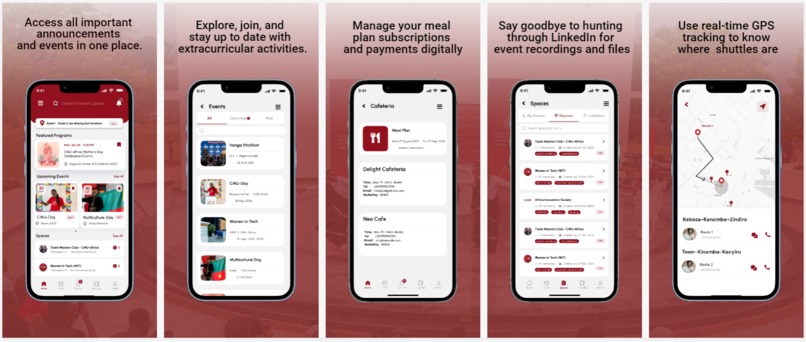
- Centralized Announcements: An intuitive interface that allows students to access real-time announcements, events schedule, eliminating the need to go through email inbox, agenda, piazza and canvas.
- Spaces : One of the standout features is the consolidated resource hub. Instead of having to check different social media platforms (like YouTube or Facebook or LinkedIn) for videos of past events, we created a single repository where all event recordings, important documents, and resources (like academic policies and course catalogs) can be accessed through links. This makes it easier for members to find information quickly, whether it's a video of a guest speaker or guidelines for course selection. These resources are organized into spaces to facilitate categorization and accessibility by the CMU-Africa community members.
- Cafeteria Payment System: A digital payment system for Delight and Neo Café, allowing students to manage their meal subscriptions and payments online, streamlining the process and reducing reliance on manual paper-based systems.
- Bus Tracking System: Using real-time GPS data, the bus tracking feature will allow students to know the exact location of university shuttles, so they can plan their commute more efficiently.
- AI Chatbot FQA: The AI-powered chatbot will assist students in finding essential information, such as office hours, event details, or campus locations. Mentorship Network: Connect junior and senior students for guidance
How We Built It
We designed the UI prototype with ease of use and accessibility in mind, using Figma to create an interactive model with seamless transitions across different features. These interactive prototypes allowed us to visualize user journeys and create a fluid experience for students. The key features of the platform aim to solve a range of problems faced by students:
- Centralized Announcements: We created an intuitive interface where students can access real-time announcements and view personalized schedules. This reduces the clutter of emails and ensures that users are always up to date on their academic commitments and university updates.
- Club Joining and Management: We designed a user-friendly system for discovering and joining student clubs, where students can explore clubs, view upcoming events, and stay updated with club news. The prototype interactions highlight smooth navigation and notifications, ensuring students stay informed about extracurricular activities and opportunities.
- Spaces Resources: Our Figma prototype visually integrates all resources—videos of past events, documents, academic policies, and course catalogs—into a single, searchable interface. This allows students to quickly find and access important information without needing to navigate between social media platforms like YouTube or Facebook.
- Cafeteria Payment System: The prototype for the digital payment system for Delight and Neo Café allows students to manage meal subscriptions and make payments directly online. The interactions we built show how students can subscribe, pay, and track their subscription, replacing inefficient paper-based systems with an accessible digital alternative.
- Bus Tracking System: We designed an interactive bus tracking feature using Figma, which simulates real-time GPS data. Users can view the current location of university buses and plan their commute efficiently. The transitions between the map and notification screens ensure that this feature feels smooth and accessible to users.
Technologies to be used We plan on developing a mobile and web application for Ryango by utilizing a set of programming languages to make it more user-friendly. Mobile Development: Flutter, Dart Web Development: Flutter, Dart, Node.js, MySQL, Social Media APIs.
Challenges we ran into
- Time Constraints: Given the limited time during the hackathon, implementing all the planned features proved difficult. We had to prioritize certain features over others to ensure a self-explanatory prototype.
- Consolidating Spaces: One of the toughest challenges was the structuring the spaces. Centralizing videos, documents, and event recordings from different platforms into one place required creating a seamless user experience. The challenge was making the content easily searchable and accessible, while ensuring they are associated with relevant topics.
- Clubs and Event Management: While designing the feature for joining and managing student clubs, we faced the challenge of creating a system that would allow for real-time updates and interaction, ensuring students could easily participate in events and activities.
Accomplishments that we're proud of
- Figma Design Prototype: During the hackathon, the team successfully created a comprehensive Figma design prototype that covers all the key features of the platform, including announcements, timetable management, bus tracking, cafeteria subscriptions, and the academic Q&A forum. This prototype visually represents the user journey and provides a clear vision of the platform’s functionality.
- Extensive User Research: The team conducted interviews with more than 10 people, including students and staff, using carefully crafted questions to identify key pain points and understand user needs. This research directly informed the design and feature set of the platform, ensuring it solves real problems faced by the CMU-Africa community.
What we learned
Throughout the development process, we learned a lot, both from a technical perspective and in terms of understanding the user experience:
- User-Centric Design: Conducting surveys and gathering feedback helped us realize how important it is to put users at the center of the development process. We learned how diverse the needs of students are, especially when it comes to balancing their academic, social, and extracurricular commitments.
- Resource Consolidation: One key takeaway was the challenge of consolidating resources (social media links, documents, and announcements) in one place. We learned about content management and how to create a searchable, easy-to-navigate system.
What's next for Ryango
- Alumni Engagement: Building connections with alumni for career guidance and networking Enhanced AI Assistant: A more robust chatbot that can handle complex queries concerning course overview, and degree plan advices based on student’s envisioned career path and prior competences
- Academic Q&A Forum: A Piazza-like feature that can enhance academic discussions, promoting peer learning and collaboration.
- Scaling to other educational institutions: Ryango being a community platform, it will be beneficial to other educational institutions.
- Developing the web platform.


Log in or sign up for Devpost to join the conversation.