Inspiration
We realized that it wasn't necessarily just potential patients that were potentially getting the bad end of the stick from many health insurance cos. it could also be independent pharmacies. Pharmacy Benefit Managers, or PBM's are insurance middlemen that routinely deny a pharmacy its full claim for a given set of medication for no valid reason. CVS and Walgreens may be able to muscle around the PBM's, but your local pharmacy may heavily struggle with such a procedure.
What it does
Our customers just see their own portals where they submit claims from. However, now RxSolve comes in between our customers and the PBM's to ensure that the PBM's cannot rip off our customers. Our AI agents fight with the PBM until we can figure out a path to being fully reimbursed for our claims. Our agent is only satisfied after recovering as much cash as possible from the PBM for a given claim.
How we built it
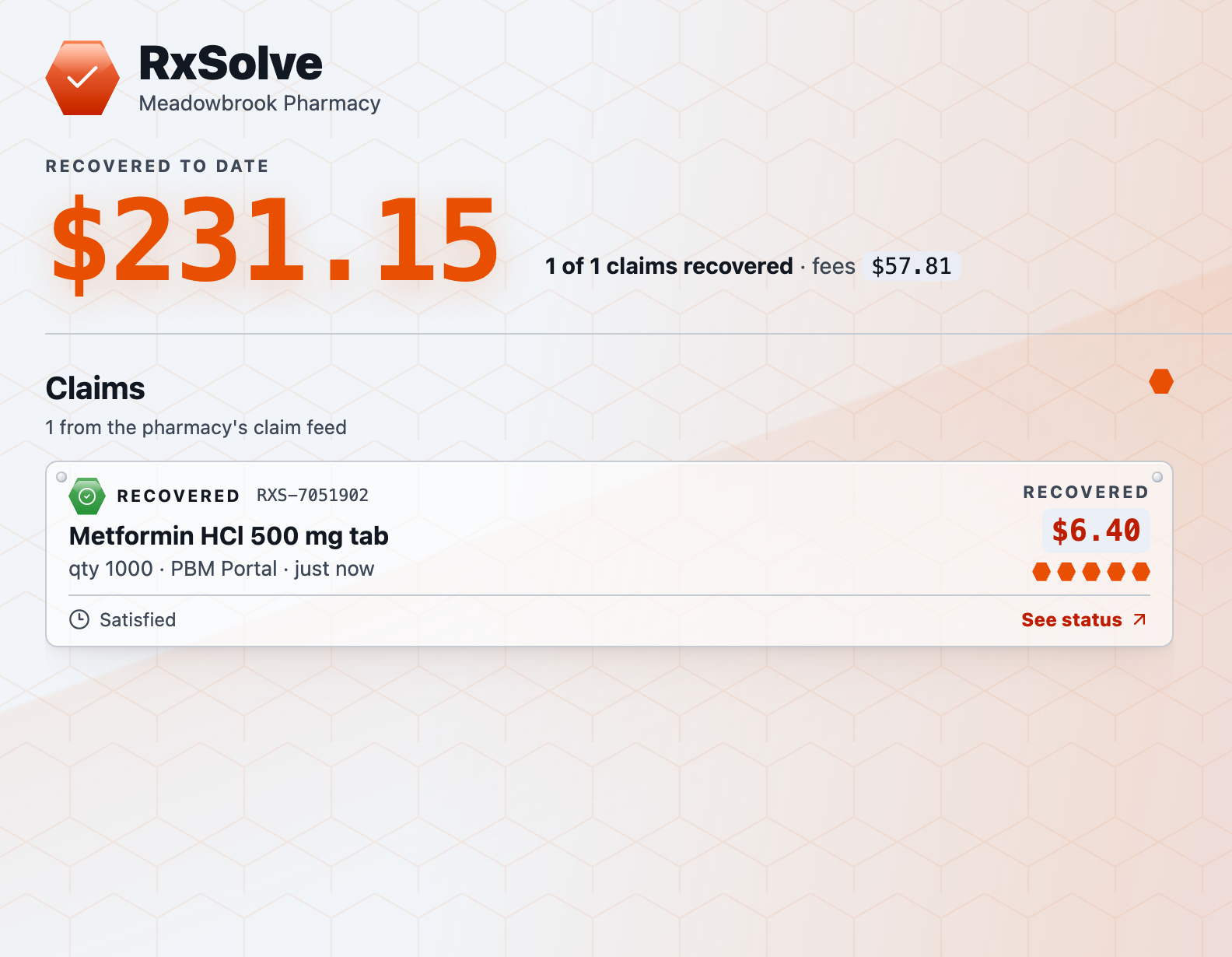
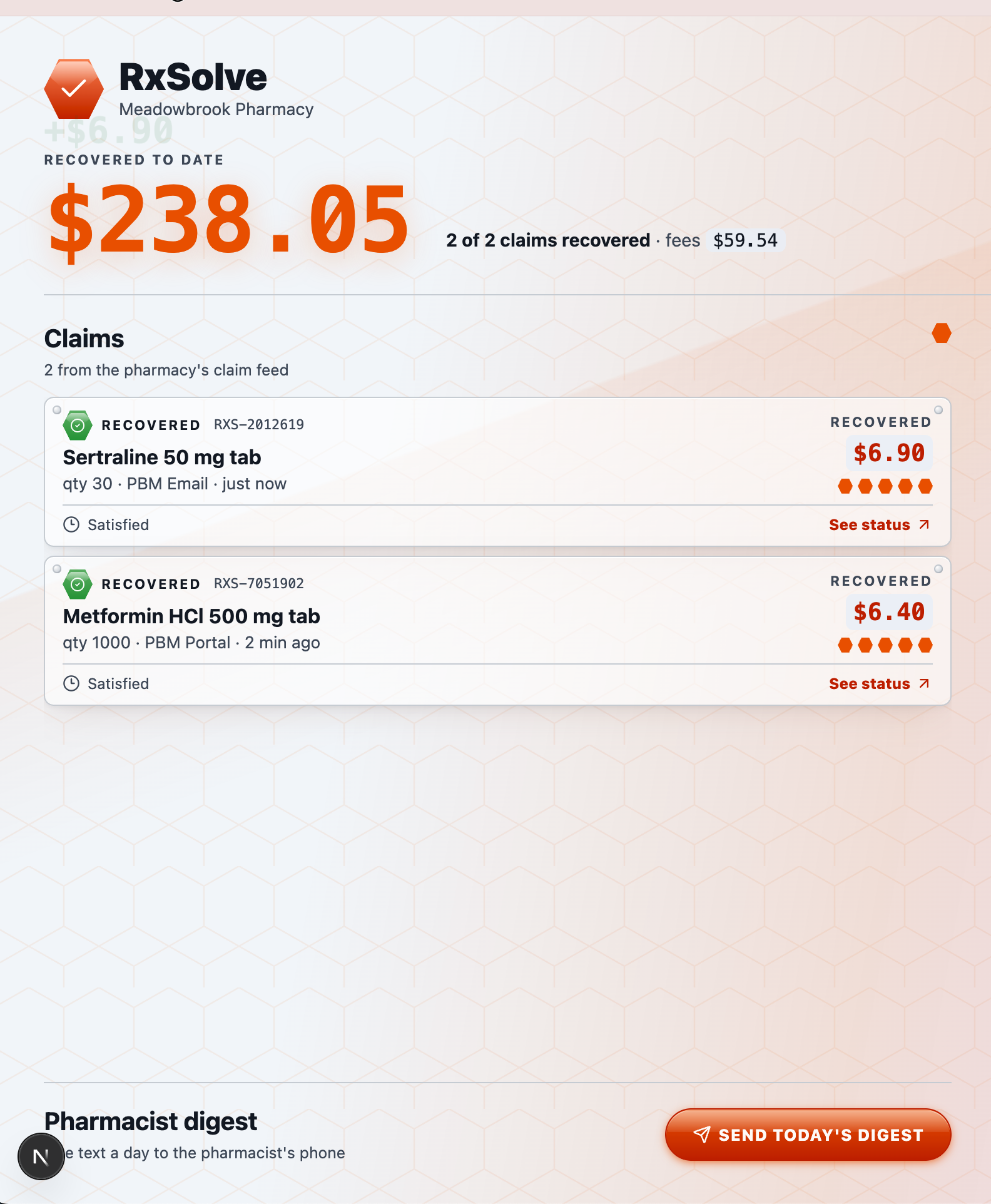
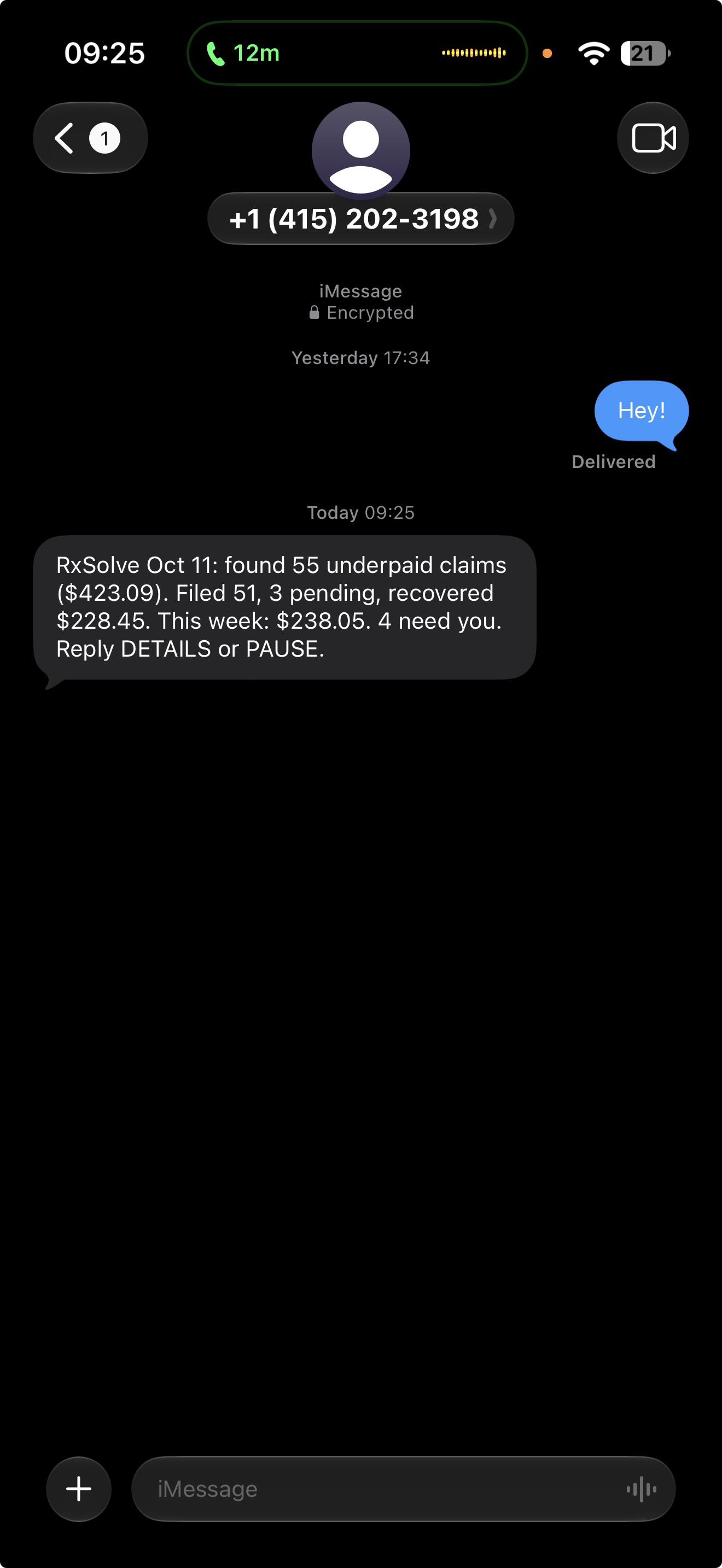
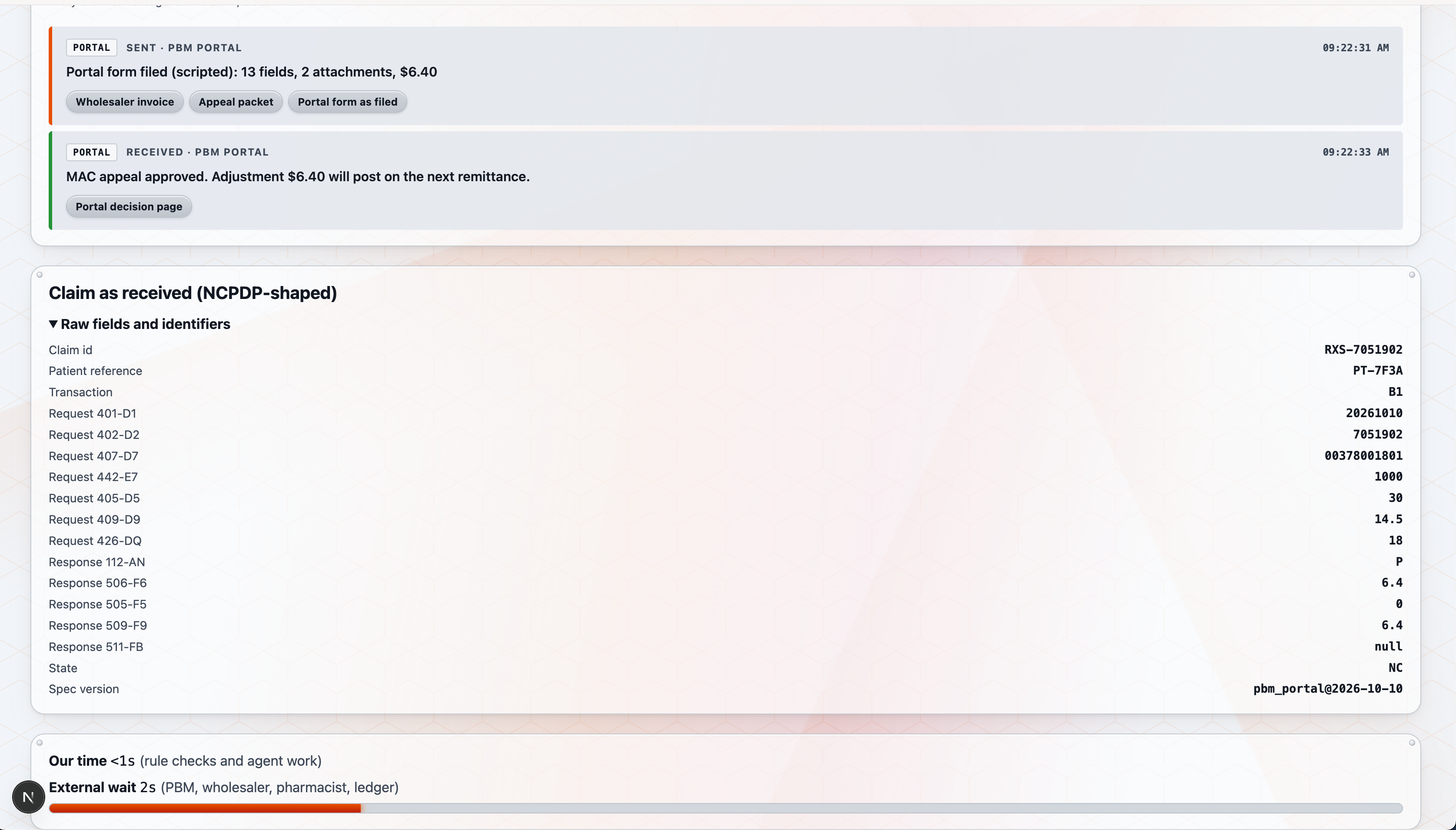
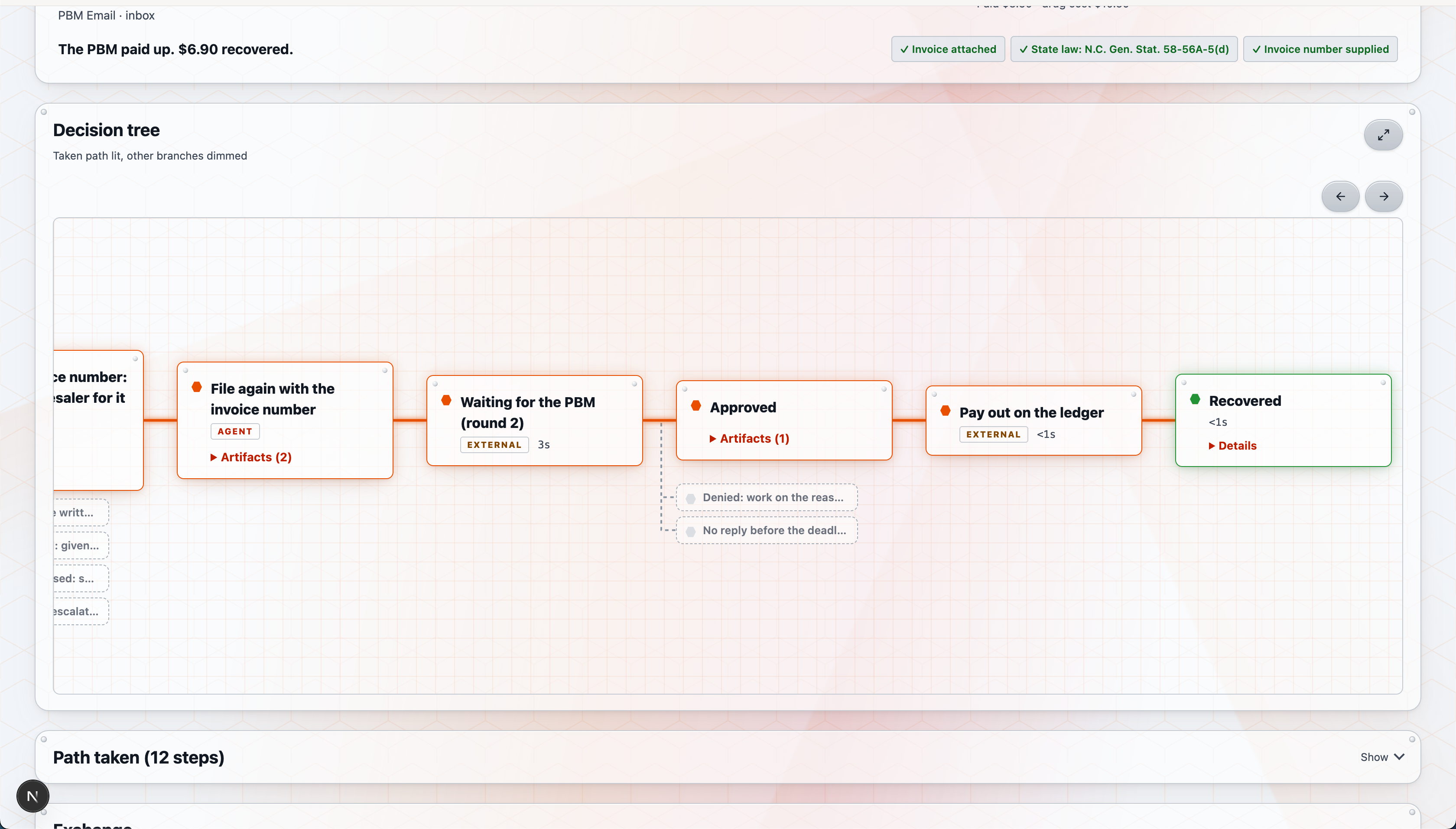
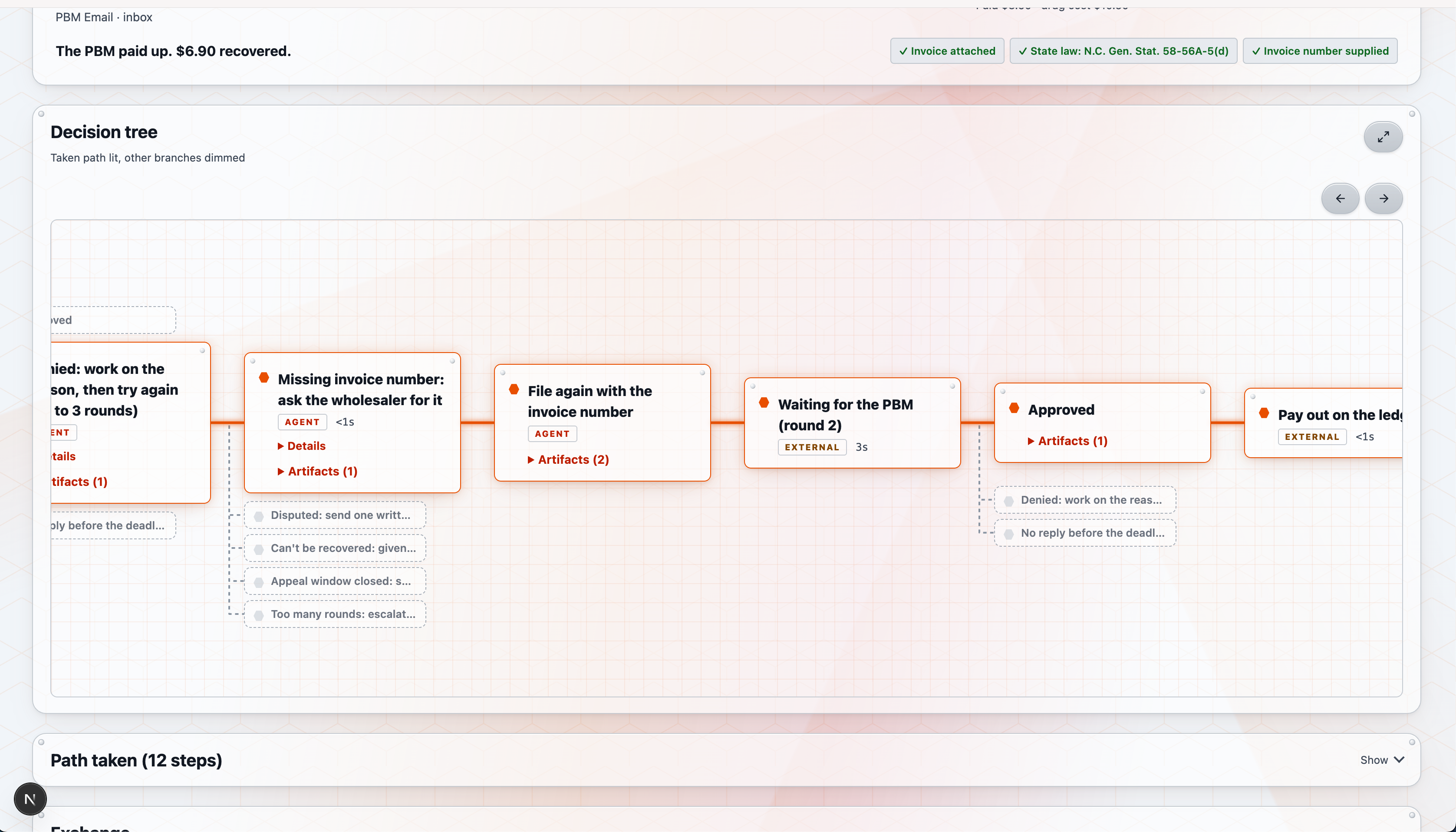
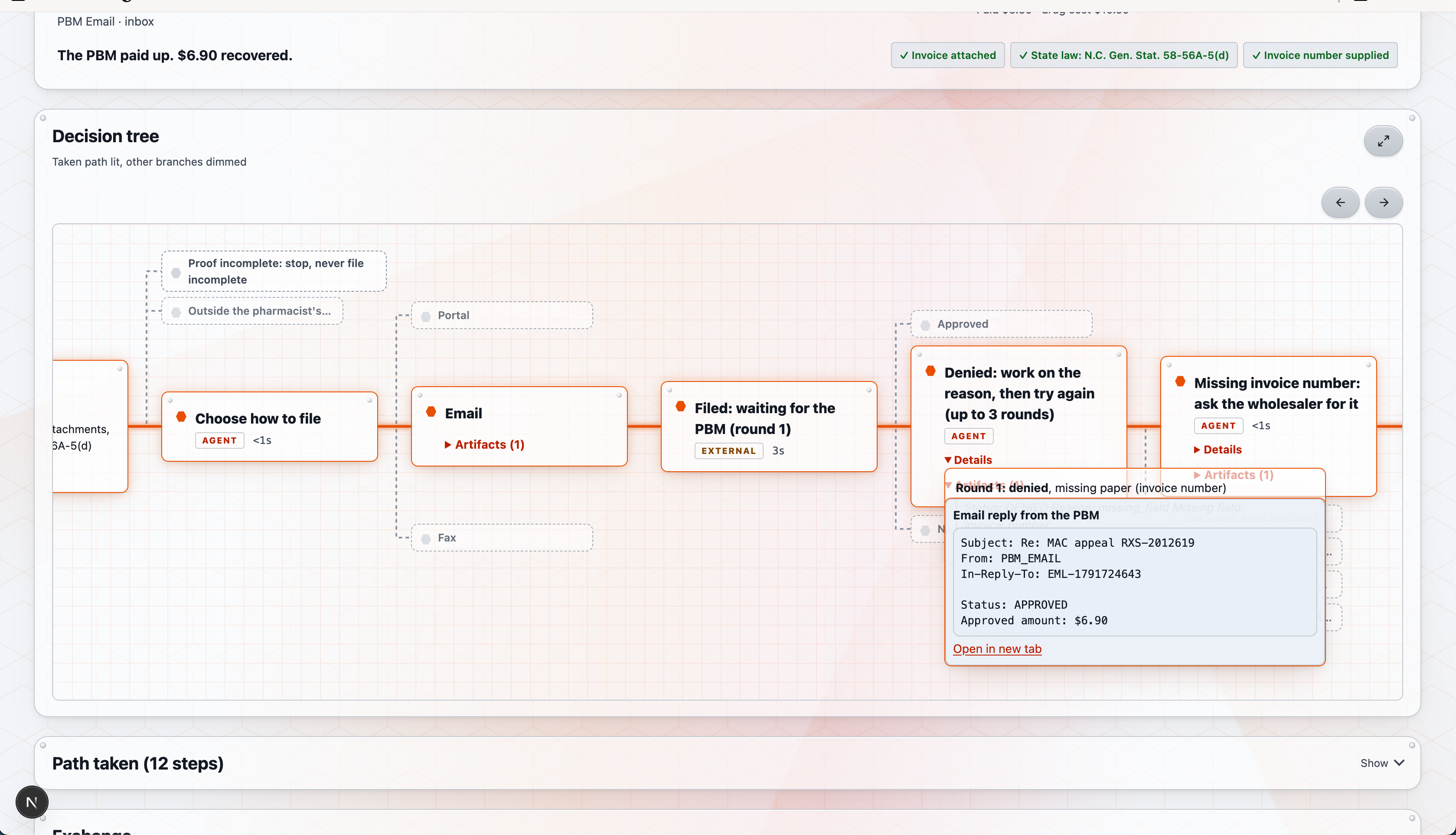
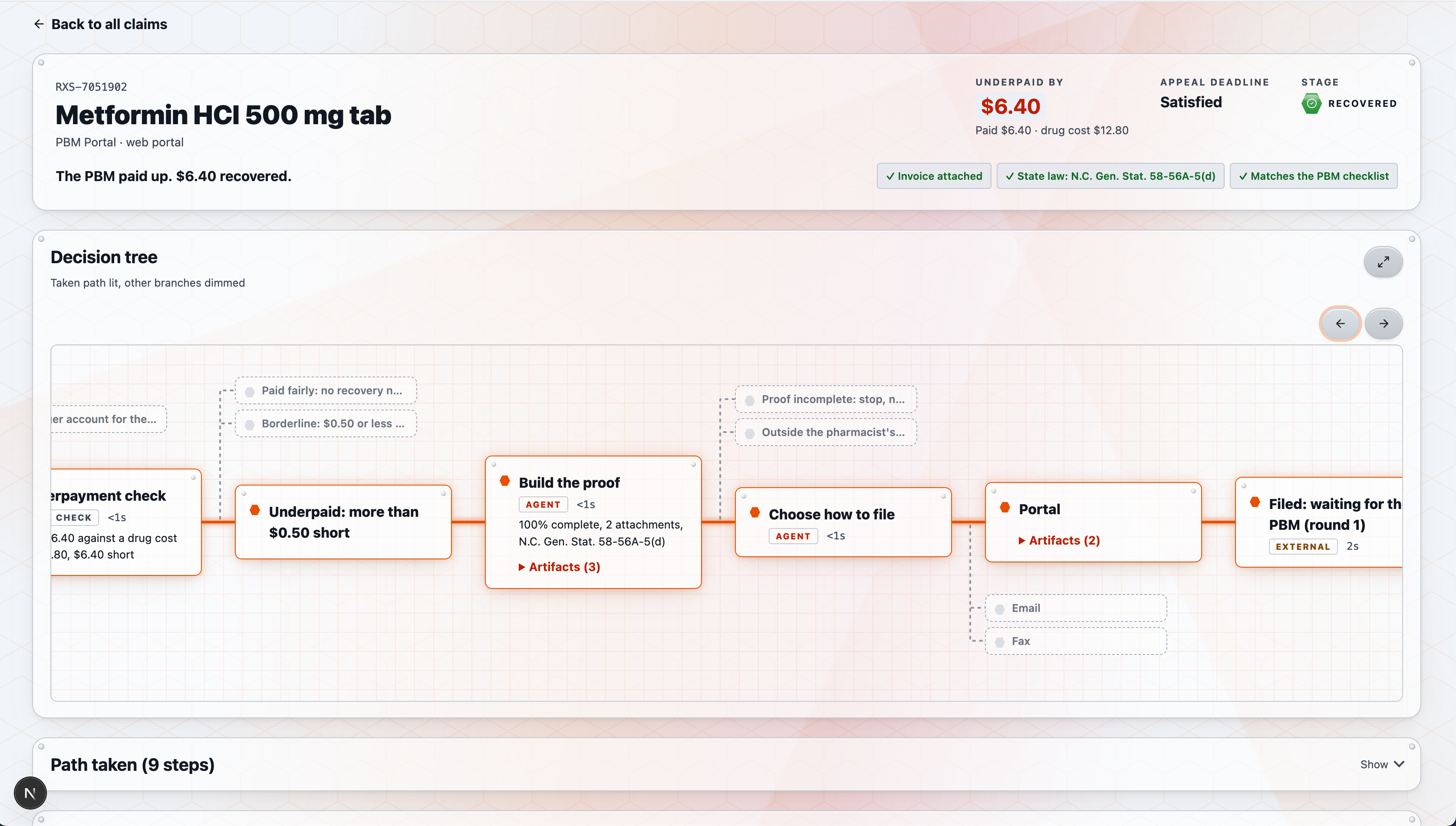
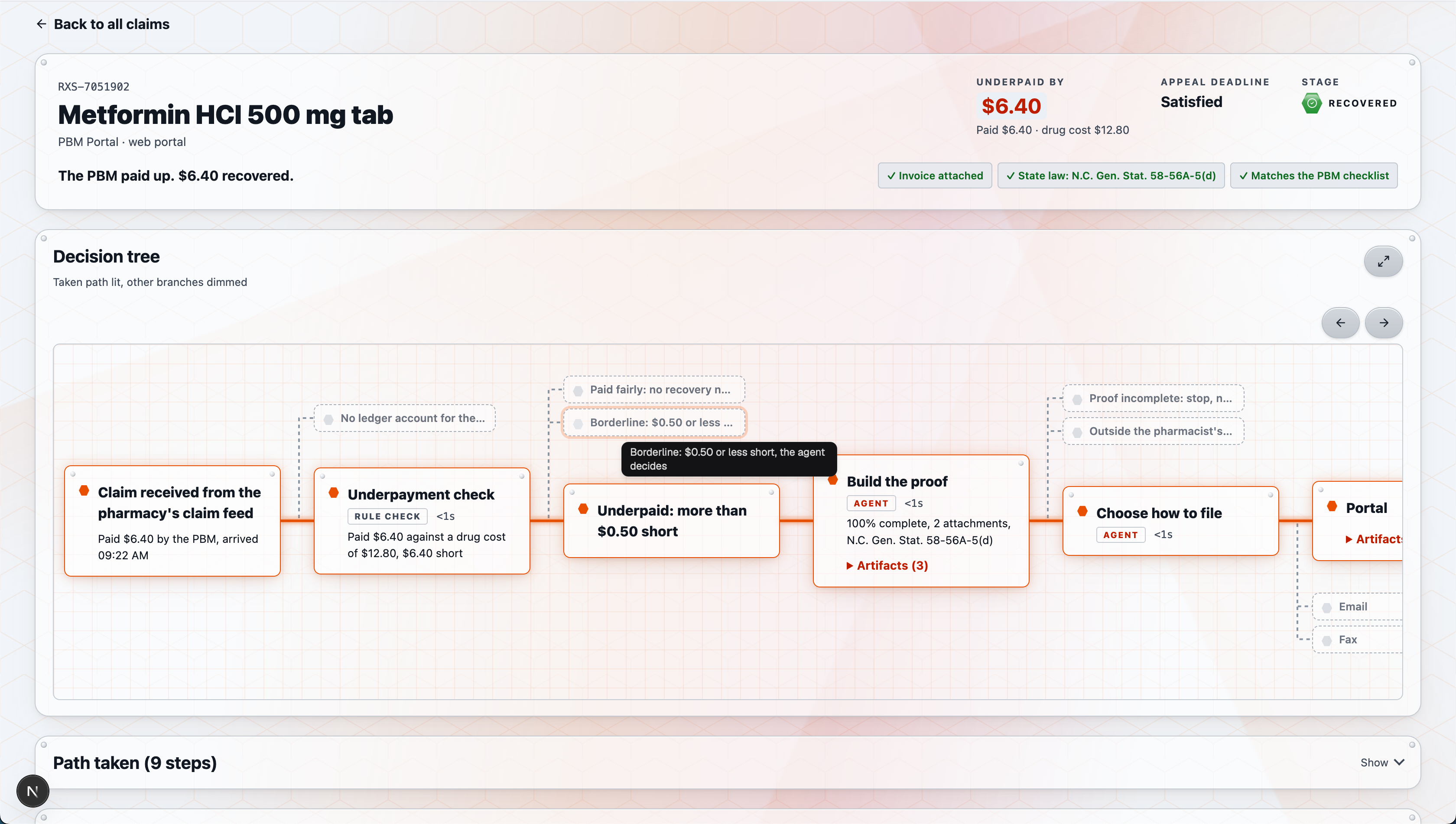
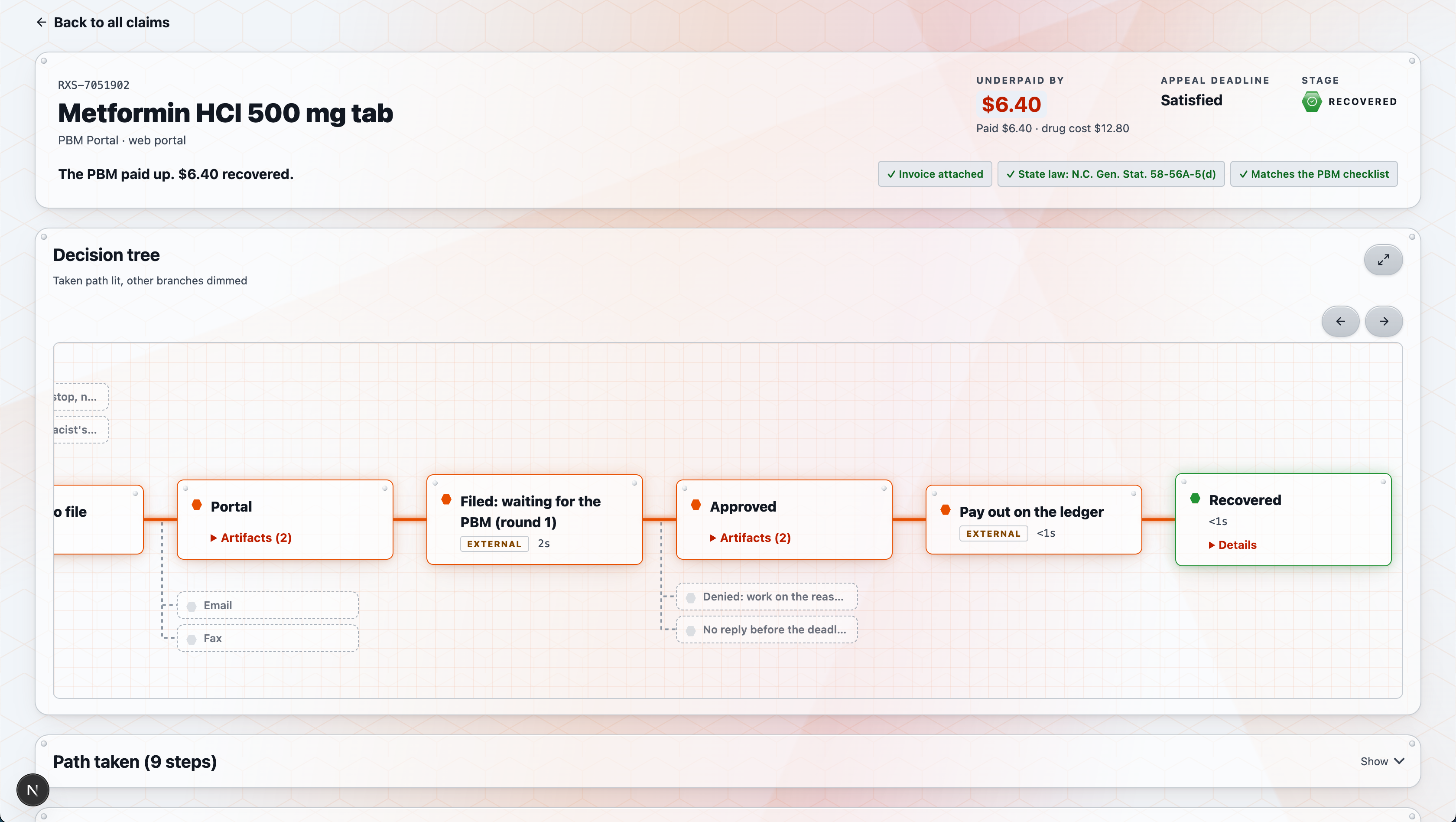
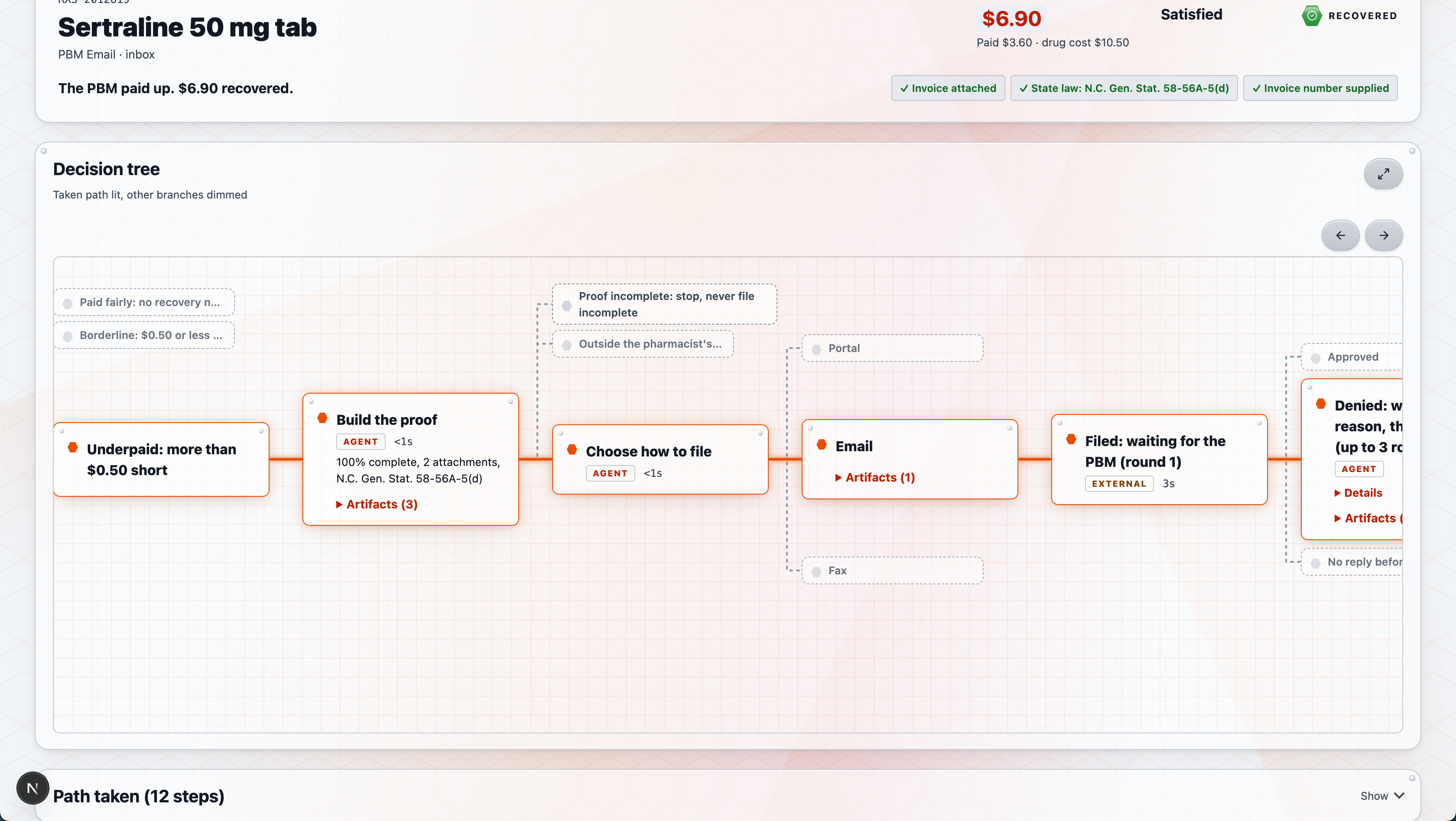
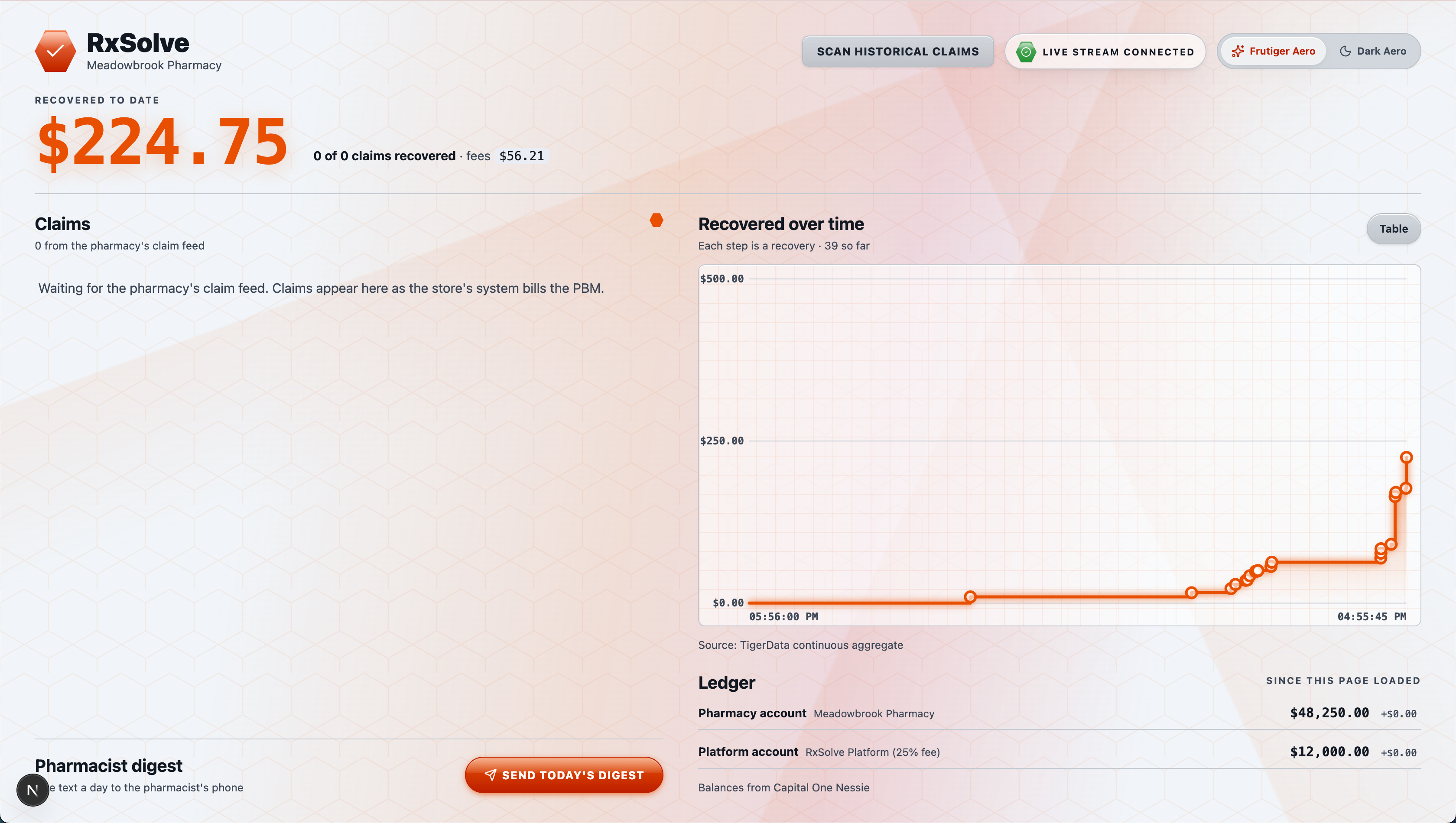
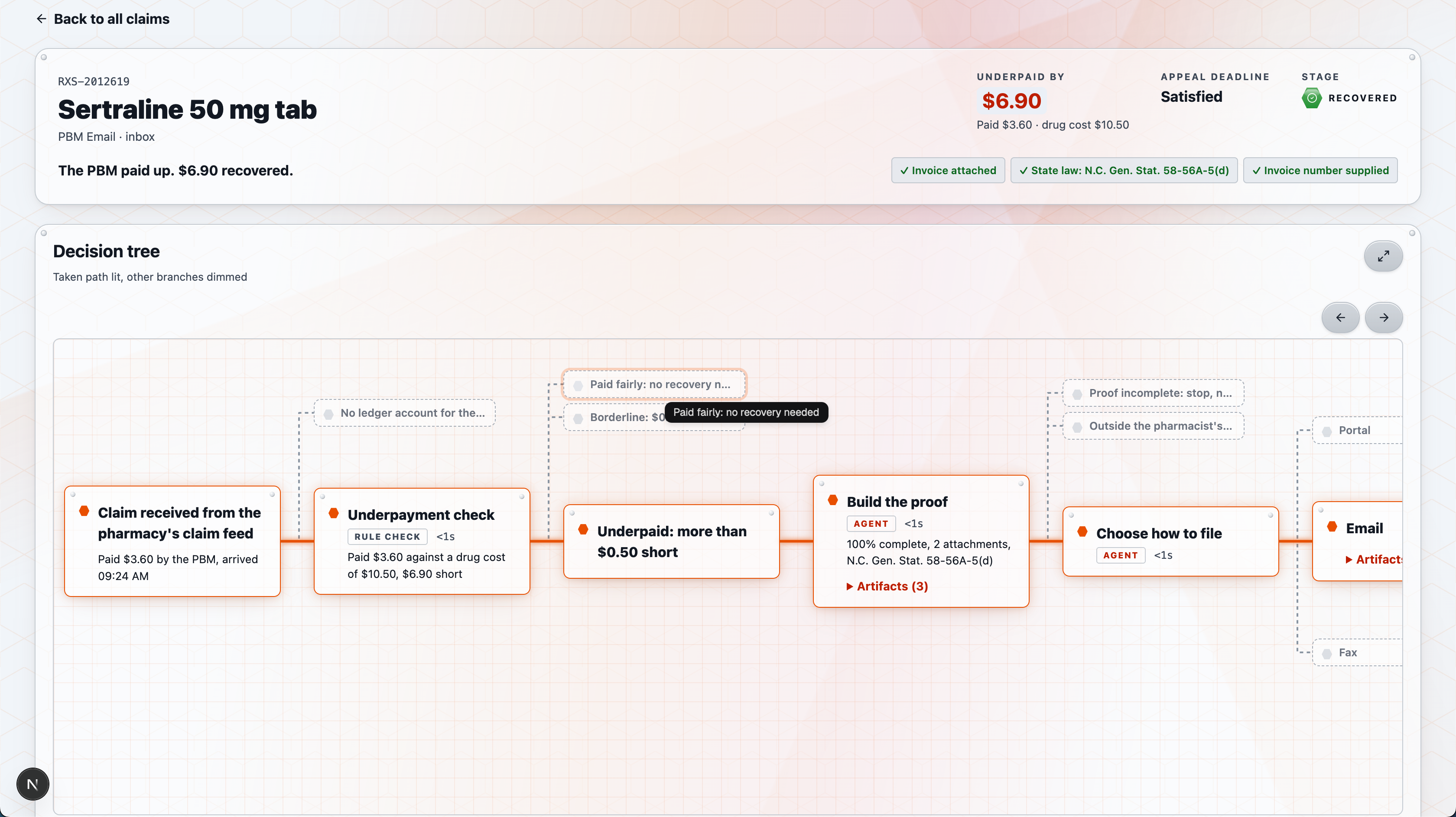
We built RxSolve as a TypeScript/Bun monorepo with three main pieces: an API orchestrator, a standalone PBM simulator, and a dashboard. The API checks paid claims for underpayment, gathers evidence, and routes appeals through simulated portal, email, or fax channels. Gemini helps with evidence extraction and negotiation, while deterministic rules handle clear underpayments and PBM decisions. The dashboard shows the claim journey, evidence and communications, ledger activity, and recovery chart. A separate PMS mock demonstrates that the pharmacy can keep using its existing workflow. TigerData stores claim and event data, and Capital One Nessie provides the sandbox ledger.
Challenges we ran into
PBM appeals don’t follow one universal process: each channel can require different evidence, and a seemingly small omission, like an invoice number or wholesaler attestation, can block a claim. We had to make those differences visible while ensuring the agent never files with incomplete evidence or invents missing facts. At the end of the day minor imperfections in the agent could cost our client pharmacies huge repayment potential. Integrating with the Nessie sandbox also required adapting our logical transfers to the API’s actual transaction behavior.
Accomplishments that we're proud of
We built a working end-to-end demonstration of a paid claim being identified as underpaid, routed through an appeal, supplied with missing wholesaler information, and recovered. The demo covers three distinct appeal channels, such as portal, email, and fax and shows their artifacts alongside each claim’s status.
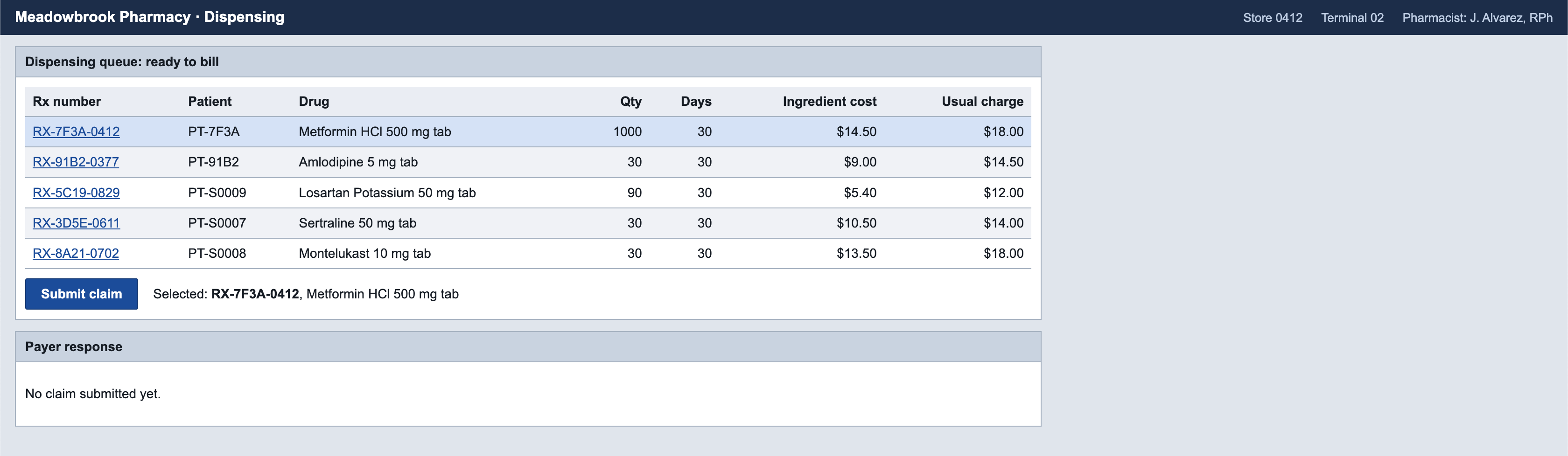
We’re also proud that the pharmacy PMS stays separate from RxSolve: the claim enters through the pharmacy’s (mock, we dont have access to a real pharmacy) system, while recovery work happens alongside it. This means that our agents operate independently of a certain pharmacy's system, and the pharmacy does not need to use our application all the time, rather just setting up once and being able to rely on us.
What we learned
We learned that automating a workflow is more than just guiding models to their next steps. It always needs clear rules about what the system may decide, evidence for what it does, and a safe path to stop and ask a person when information is missing or uncertain.
What's next for RxSolve
We’d expand support for unfamiliar PBM forms, with strict limits on which fields an agent can fill, and further test the optional browser-based portal and voice features. Long-term, we’d validate the workflow against real pharmacy and PBM requirements before moving beyond a simulated demo environment, and see how we can scale out solution to those pharmacies.
Built With
- elevenlabs
- gemini
- photon
- python
- tigerdata
- typescript


Log in or sign up for Devpost to join the conversation.