Inspiration
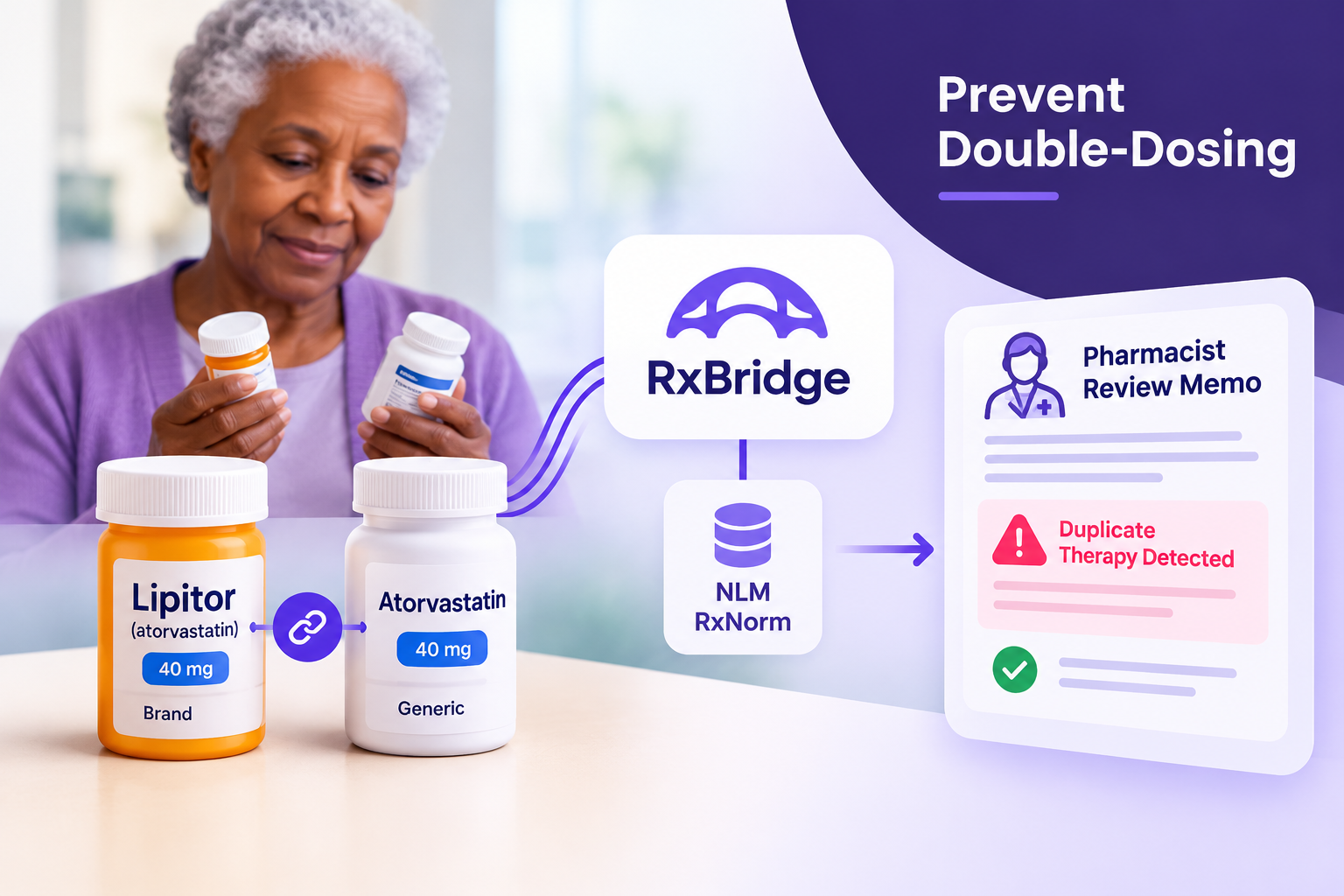
Every year, thousands of elderly patients are re-hospitalized because of a simple naming mistake. A hospital prescribes generic Atorvastatin, but at home they still have brand Lipitor. To them, it's two different pills. To their body, it's a double dose. I wanted to stop this preventable error at the critical post-hospital transition.
What it does
RxBridge prevents post-hospital double-dosing. It scans 1) the hospital discharge order and 2) the home medicine cabinet. It grounds every drug name via NLM RxNorm API to its active ingredient (RXCUI), detects brand-generic duplication, flags toxicity risk, and instantly generates a Pharmacist Consultation Memo the family can show before the next dose.
How we built it
I built it entirely with Anti-Gravity Agent anti Devpost challenge skills
I prompted the agent to scaffold a full-stack app for the reconciliation UI, RxNorm API integration for grounding, rule-engine for duplication + dosage logic, and PDF generation for the pharmacist memo. Anti-Gravity handled code generation, API wiring, and UI states.
Challenges we ran into
I ran into coding agent limit
Accomplishments that we're proud of
I went from idea to working, testable clinical safety tool in hours using Anti-Gravity.
What we learned
Brand names hide chemistry. Most medication reconciliation tools just list drugs; they don't explain why two names are dangerous. Grounding via RxNorm and translating it into human, actionable safety language is where the real value is.
What's next for Rxbridge
- Camera scan of pill bottles at home
- Integration with FHIR discharge summaries
- More duplication classes: drug-drug interactions, renal dosing, duplicate therapy class
- Direct share to retail pharmacist
